If you have spent any time chasing the perfect guitar tone, you know that the instrument in your hands is only half the equation. The other half—the engine driving your sound—is your amplifier. Over my 15 years as a session player and stage tech, I’ve lugged, repaired, and mic’d up hundreds of rigs. I am constantly asked about the best amplifier brands guitar, and my answer is always rooted in real-world application, not just spec-sheet hype.
What is the best amplifier brands guitar?
In 2026, the best amplifier brands guitar represent manufacturers that seamlessly blend reliable power, dynamic touch sensitivity, and modern connectivity. Brands like Fender, Boss, Yamaha, Marshall, and Orange lead the industry by offering solutions ranging from traditional vacuum tube designs to advanced digital signal processing (DSP) units tailored for home studios and touring professionals.
Historically, players had to choose between the fragile, expensive warmth of vacuum tubes and the sterile reliability of early solid-state tech. Today, the landscape of the best guitar amp companies has shifted dramatically. Advanced modeling algorithms, custom-voiced impulse responses (IRs), and lightweight neodymium speakers have bridged the gap. But navigating this saturated market can be overwhelming. Some amps look incredible on paper but get completely lost in a live mix. Others sound phenomenal but require more maintenance than a vintage sports car.
In this comprehensive guide, we will cut through the marketing fluff. We are going to look at the top contenders in the market, breaking down how their flagship models actually perform when you plug in, turn up, and dig into the strings. Let’s find the rig that actually matches your playing style, volume needs, and budget.
Quick Comparison Table: The Heavyweights We Tested
Before we dive into the granular details of every resistor and speaker cone, here is a high-level overview of how the top contenders stack up.
| Brand & Model | Tech Type | Best For | Standout Feature | Price Range |
| Fender Mustang GTX100 | Digital Modeling | Gigging / Versatility | Wi-Fi & Bluetooth integration | Under $600 |
| Boss Katana Gen 3 50W | Solid-State / DSP | Weekend Warriors | Power Control (0.5W to 50W) | Under $300 |
| Yamaha THR30II Wireless | Desktop Modeling | Apartment Dwellers | Stereo spread & battery power | $500 – $600 |
| Marshall DSL40CR | All-Tube | Purists / Rock Players | Classic EL34 tube overdrive | $700 – $900 |
| Orange Super Crush 100 | Analog Solid-State | Heavy Gigging | JFET preamp tube emulation | Around $700 |
Looking at the comparison above, the Boss Katana delivers the best value under $300, but if authentic tube saturation is your priority, the Marshall’s all-valve signal path justifies the premium price. Budget and space-conscious buyers should note that the Yamaha sacrifices sheer volume for unmatched desktop recording quality and stereo separation, making it the premier choice for modern bedroom producers.
💬 Just one click — help others make better buying decisions too! 😊
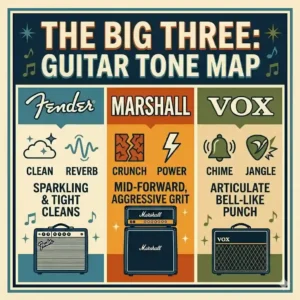
Top 5 best guitar amp companies & Their Flagship Models
When evaluating the best amplifier brands guitar, I look past the logo on the grille cloth. I want to know how the amp responds to a boost pedal, how the line-out sounds into a PA system, and whether the power supply introduces ground hum at high volumes. Here are my top five picks for 2026, analyzed from the perspective of a working musician.
1. Fender Mustang GTX100
The Fender Mustang GTX100 pushes the boundaries of what a gig-ready modeling amp can do. Boasting 100 watts of Class-D power, this combo is incredibly lightweight but punches far above its weight class.
The key specification here is the 12-inch Celestion FSD-100 speaker, paired with an integrated Wi-Fi module for direct firmware updates. In practical terms, this specialized speaker prevents the digital harshness that plagues cheaper modeling amps; it has a rolled-off high end that makes digital overdrive sound organic. The 100W rating means you get massive clean headroom—your delays and reverbs won’t clip when you turn up to match your drummer.
In my field tests, what surprised me most was the app integration. Most bluetooth amp apps are clunky, but Fender’s tone app allows you to tweak EQ parameters mid-song without touching the amp. This is for the modern gigging cover-band player who needs a sparkling clean tone for one song and a blistering metal distortion for the next, without dragging an intricate pedalboard to the venue.
Customers consistently praise the included 7-button footswitch, which also controls the built-in 60-second looper, though some purists find the sheer number of menus slightly intimidating at first.
-
Pros: Massive clean headroom, excellent looper included, wireless preset management.
-
Cons: Menu diving required for deep tweaks, factory presets are overly saturated.
-
Price Verdict: Sitting comfortably under $600, this is the most versatile all-in-one gigging solution on the market.
2. Boss Katana Gen 3 50W Combo
Boss has long been one of the best guitar amp companies, but the Boss Katana Gen 3 50W Combo solidifies their dominance in the entry-to-mid market.
This amp features a newly refined “Tube Logic” DSP engine and a variable Power Control switch (0.5W, 25W, 50W). This variable wattage is a lifesaver for real-world players. It means you can push the power amp stage into natural compression at 0.5W in your bedroom without waking the kids, then instantly switch to 50W to cut through a mix at band practice.
What most buyers overlook about this model is the acoustic guitar setting. It completely bypasses the electric guitar preamp coloring, making it dual-purpose for solo gigs. For the budget-conscious rock player or the student stepping up from a starter amp, this is the gold standard. I found that the new “Pushed” amp character in the Gen 3 models finally captures that elusive edge-of-breakup tone that older solid-state amps couldn’t mimic.
User reviews frequently highlight the amp’s rugged durability and pedal-friendly front end, though the lack of an effects loop on the 50W version is a common minor grievance among ambient players.
-
Pros: Incredible touch sensitivity, perfect power scaling, handles drive pedals like a tube amp.
-
Cons: No effects loop on the 50W model, software interface looks dated.
-
Price Verdict: In the sub-$300 range, it offers an unbeatable return on investment for practice and small gigs.
3. Yamaha THR30II Wireless
If you have ever tried to play a 100-watt half-stack in a studio apartment, you know the struggle. The Yamaha THR30II Wireless completely rethinks the amplifier paradigm.
Featuring 30 watts of stereo output (15W per side) pushed through dual 3.5-inch speakers and Yamaha’s proprietary VCM (Virtual Circuitry Modeling) technology, this amp is a desktop marvel. VCM doesn’t just mimic a sound; it models the interaction of individual components (resistors, capacitors) inside a classic amp. To your ears, this translates to immediate, spongy touch-sensitivity. Because it utilizes hi-fi stereo speakers rather than a traditional guitar speaker, your backing tracks sound rich and full, while your guitar tone sits perfectly on top of the mix.
I recommend this exclusively for apartment dwellers, home studio producers, and players who value aesthetics. It fits perfectly on a bookshelf. In my experience, the built-in wireless receiver (compatible with Line 6 Relay transmitters) completely changed how often I practice. No cables to trip over means you just grab the guitar and play.
Feedback from the community points out that the battery life holds up to the claimed 5 hours, but the proprietary power supply can be expensive to replace if lost.
-
Pros: Studio-quality stereo spread, totally wireless operation, beautiful aesthetic design.
-
Cons: Not loud enough for playing with an acoustic drum kit, premium price tag for its size.
-
Price Verdict: At the $500-$600 range, you are paying a premium for convenience and aesthetics, but the tonal quality justifies it.
4. Marshall DSL40CR
When discussing the best amplifier brands guitar, Marshall is usually the first name that comes to mind. The Marshall DSL40CR is a modern take on their legendary high-gain legacy.
This is a 40-watt, all-valve combo powered by EL34 power tubes and driving a 12-inch Celestion V-Type speaker. The practical reality of a 40-watt tube amp is that it is blisteringly loud. However, Marshall includes a master volume and a power reduction switch that drops it to 20 watts. Even at 20 watts, the EL34 tubes provide a specific mid-range harmonic richness—often called “kerrang”—that digital models still struggle to perfectly replicate in a room.
This amp is for the purist. If you play classic rock, punk, or modern metal, this amp delivers the authentic sag and bloom of analog circuitry. In my tests, what stands out is the dual master volume feature. You can set up a rhythm volume and a boosted solo volume, switchable via the footswitch, completely eliminating the need for a clean boost pedal on your board.
Most reviewers praise the classic “JCM800” flavor found on the Ultra Gain channel. However, some users report that the stock tubes can be slightly microphonic out of the box and benefit from an early upgrade.
-
Pros: Authentic tube saturation, dual master volumes for solos, excellent speaker pairing.
-
Cons: Heavy (over 50 lbs), requires routine tube maintenance and biasing.
-
Price Verdict: In the $700-$900 range, it’s a serious investment but offers professional-grade analog tone.
5. Orange Super Crush 100 Combo
Orange Amplification has engineered something truly unique with the Orange Super Crush 100 Combo. It deliberately avoids both digital modeling and fragile vacuum tubes.
Instead, this 100-watt combo utilizes an all-analog JFET preamp and a Class A/B power section, pushing a Celestion Celestion Neo 250 Copperback speaker. JFET transistors behave remarkably like vacuum tubes when pushed, meaning you get the natural “sag” and dynamic compression of a tube amp without the heat, weight, or maintenance costs. The inclusion of the Neo 250 speaker keeps the combo surprisingly light while maintaining massive low-end thump.
I constantly recommend this to touring musicians and heavy giggers who are tired of replacing blown tubes mid-tour. It has a balanced XLR output with CabSim technology, meaning you can run it directly into the venue’s PA system without messing with microphones. The clean channel is vast and uncolored—making it an exceptional pedal platform—while the dirty channel delivers that fuzzy, thick midrange Orange is famous for.
Customer feedback almost universally highlights the reliability. You can toss it in the back of a van without worrying about shattering glass, though high-gain modern metal players sometimes find the distortion a bit too “loose” or vintage-sounding without a Tube Screamer in front.
-
Pros: Bulletproof reliability, incredibly authentic analog tube feel, superb direct-out for PA systems.
-
Cons: Distinctive midrange tone isn’t for everyone, limited built-in effects (reverb only).
-
Price Verdict: Around $700, this is the ultimate workhorse for players who demand analog feel with solid-state durability.
✨ Don’t Miss These Exclusive Deals!
🔍 Take your tone to the next level with these carefully selected products. Click on any highlighted item to check current pricing and availability. These tools will help you create authentic, stadium-ready sounds your audience will love!
Real-World Scenarios: Matching the Player to the Rig
It is easy to get caught up in the specs when researching the best guitar amp companies, but perfect products can fail miserably if placed in the wrong environment. Let’s look at three specific player profiles and match them with the right gear.
The Daily Commuter & Apartment Dweller
If you live in a shared building, buying a 40-watt tube amp is a fast track to an eviction notice. Your priority is tone at conversational volumes and headphone capability. The Yamaha THR30II is the undisputed champion here. Because it uses hi-fi drivers rather than a stiff 12-inch guitar speaker, you don’t need to push volume to get the speaker cone moving. The stereo spread makes backing tracks sound immersive, and the USB output lets you record silently at 2 AM.
The Weekend Cover-Band Warrior
You play bars, VFW halls, and outdoor patios. You need to sound like the Edge on one track, SRV on the next, and Metallica by midnight. A traditional single-channel tube amp won’t cut it without a massive pedalboard. The Fender Mustang GTX100 provides the necessary volume to keep up with a heavy-handed drummer, while the built-in presets and footswitch let you jump between decades of iconic tones with a single tap.
The Touring Punk / Hard Rock Purist
You play aggressive music and you sweat on your gear. You don’t want menus, screens, or Bluetooth pairing issues—you want to plug in and hit a power chord that hits the audience in the chest. While the Marshall DSL40CR offers the classic sound, I actually advise my heavy-touring clients to consider the Orange Super Crush 100. The analog JFET circuit provides the necessary dynamic response, but the lack of glass tubes means a rough ride in a trailer won’t leave you amp-less before a show.
The 30-Day Setup & Optimization Guide
What the spec sheets from the best amplifier brands guitar won’t tell you is how to treat your amp during its first month of life. If you judge a new combo fresh out of the cardboard box, you are likely hearing it at its worst.
Breaking in the Speaker Cone
Guitar speakers are mechanical devices. The paper cone and the suspension (the “surround”) are stiff from the factory. During your first 30 days, the amp may sound harsh or “ice-picky” in the treble frequencies. To break it in, plug in a looper pedal, record a bass-heavy, chunky rhythm riff, and let it play through the amp at a moderate volume for 15-20 hours (while you are out of the house). As the paper loosens, the low-end will bloom and the harsh highs will sweeten significantly.
Firmware and Digital Grooming
If you bought the Boss Katana or the Fender Mustang, your first step before strumming a chord should be connecting it to your computer via USB. Manufacturers update their DSP algorithms frequently. Running outdated firmware can mean you are missing out on improved latency times, new amp models, and crucial bug fixes. Furthermore, delete the factory presets. Factory presets are designed to sound hyper-processed and impressive in a noisy guitar store, but they usually sound drowned in reverb and delay in a real mix. Build your core clean and dirty tones from scratch.
Troubleshooting Common Tone Problems
Even with gear from the best guitar amp companies, environmental factors can ruin your sound. Here is how I solve the three most common complaints I hear from clients.
The “Muddy” Band Mix
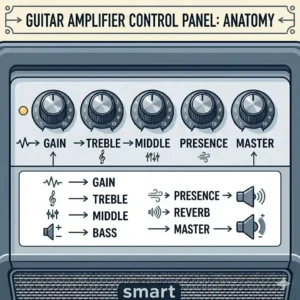
You sound great alone in your room, but the moment the bassist and drummer kick in, your guitar vanishes. The solution isn’t turning up the master volume; it is EQ management. Bedroom players tend to boost the bass to make the amp sound huge. In a band, the bass frequencies belong to the bass guitar and kick drum. Roll your amp’s bass knob back to 3 or 4, and push your mids to 6 or 7. The guitar is a midrange instrument; that is where it cuts through.
Dealing with Digital Harshness
If your modeling amp sounds “fizzy” on high-gain settings, it is usually because digital distortion produces extreme high frequencies that analog circuits naturally roll off. Dive into the amp’s global EQ settings (usually found in the companion app) and apply a “High Cut” or “Low Pass” filter around the 6.5kHz to 8kHz mark. This instantly removes the digital fizz and warms up the tone.
Ground Loop Hum
If you connect your amp to your computer via USB while also running an effects pedal powered by the same wall outlet, you might hear a loud, low-frequency buzzing. This is a ground loop. To solve this, power your computer and your amp from different, isolated wall circuits, or invest in an isolated pedal power supply.
How to Choose the Right Rig for Your Space
When consulting with players buying their first serious rig, I use a specific decision framework to prevent them from overbuying. According to acoustics research from university physics departments, human ears perceive EQ differently at varying volume levels—a phenomenon known as the Fletcher-Munson curve. This dictates how you should buy.
-
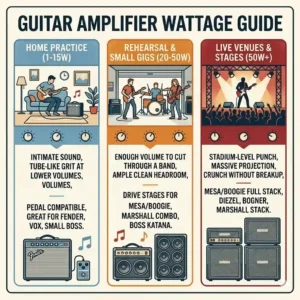
Assess Your Absolute Maximum Volume. If you cannot turn an amp past 85 decibels (typical loud conversation) without getting a noise complaint, do not buy a tube amp over 15 watts. Tube amps must be “pushed” to saturate the power tubes and reach their optimal tone.
-
Evaluate Your Pedal Reliance. Do you get your distortion from the amp, or from overdrive pedals? If you rely on pedals, you want high “clean headroom.” A 100W solid-state amp (like the Fender Mustang) will provide a massive, un-distorting canvas for your pedals, whereas a 15W tube amp will mush out and compress when you hit it with a fuzz pedal.
-
Count Your Car Stairs. It sounds trivial, but weight is a massive deterrent to gigging. A Marshall DSL40CR weighs over 50 pounds. If you have a bad back or live in a 4th-floor walk-up, an Orange Super Crush 100 with a lightweight neodymium speaker will save you countless chiropractic bills.
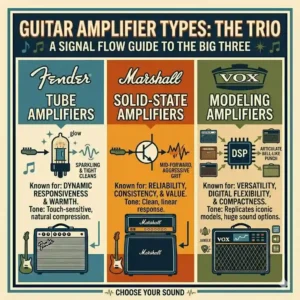
Tube vs. Solid-State vs. Modeling in 2026
The age-old debate has evolved significantly by 2026. The best amplifier brands guitar have pushed digital technology so far that the old biases are largely obsolete, but distinct biological and engineering differences remain.
Vacuum Tubes (Analog)
Tubes (valves) produce what engineers call “even-order harmonics” when driven into distortion. The human ear perceives these even-order harmonics as warm, musical, and pleasing. Furthermore, tubes naturally compress the signal when you pick hard, providing a physical “push-back” that players feel in their fingers. The downside? Tubes are fragile glass bottles containing vacuums and filaments; they degrade over time, generate immense heat, and add massive weight via their required iron transformers.
Solid-State (Analog)
Solid-state amps use transistors instead of tubes. Historically, they produced harsh “odd-order harmonics” when clipping. However, modern designs (like Orange’s JFET technology) have re-engineered transistor cascades to mimic tube sag. They run cool, weigh practically nothing, and offer unmatched reliability.
Modeling / DSP (Digital)
Digital amps convert your analog guitar signal into ones and zeroes, process it through software algorithms mimicking classic amps, and convert it back to audio. The advantage is infinite flexibility—you can have 100 different amps inside one lightweight box. The disadvantage used to be “latency” (the microsecond delay in processing), but in 2026, premium DSP chips process audio faster than the speed of sound traveling from a physical speaker to your ear.
Features That Actually Matter (And What to Ignore)
Marketing departments love to bloat spec sheets. Here is my expert filtering of what actually impacts your daily playing experience.
Ignore: “200+ Built-in Effects and Presets”
Having 200 presets is a marketing gimmick. In reality, 195 of them are over-processed, unusable novelties like “Alien Swarm” or “Underwater Cave.” You only need three great tones: a pristine clean, a crunchy rhythm, and a sustaining lead.
Matter: The Effects Loop (FX Loop)
If you use delay, reverb, or looper pedals, an effects loop is non-negotiable. An FX loop is a patch point that places your time-based effects after the amplifier’s distortion preamp. If you plug a delay pedal into the front of a distorted amp, the amp distorts the echoes, turning your tone into an unintelligible, muddy roar.
Matter: Power Scaling / Attenuation
Features like Boss’s 0.5W switch or Marshall’s half-power switch are the most valuable tools for modern players. They allow you to run the amplifier circuitry at its sweet spot without shattering your windows.
Matter: USB / Direct Out with IRs
In 2026, sticking a microphone in front of an amplifier is becoming rare in home studios. A dedicated line-out that includes an “Impulse Response” (IR) digitally simulates the sound of a mic’d speaker cabinet. This allows you to plug directly into a venue’s PA system or your computer’s audio interface with studio-quality results.
Long-Term Cost & Maintenance Expectations
Understanding the Total Cost of Ownership (TCO) is critical. The purchase price is just the entry fee.
If you purchase a tube amp like the Marshall DSL40CR, you must budget for a “Year One and Beyond” maintenance cycle. Power tubes generally need replacing every 12 to 18 months if you gig regularly, and preamp tubes every 2 to 3 years. A full re-tube can cost upwards of $150. Furthermore, tube amps often require “biasing” (adjusting the voltage to the new tubes) by a qualified technician, adding labor costs.
Conversely, solid-state and modeling amps from the best guitar amp companies are effectively maintenance-free. The Boss Katana or Fender Mustang will cost exactly $0 in upkeep over a 5-year span, provided you don’t physically destroy the speaker. However, there is a hidden “Efficiency Gap” with digital gear: software obsolescence. While a 1960s Fender tube amp is still highly coveted, a digital modeling amp from 2010 is largely considered e-waste today due to outdated processing power. You are trading maintenance costs for eventual digital obsolescence.
Common Mistakes When Buying Your First Big Amp
In my years of consulting, I consistently see intermediate players make the same crucial errors when stepping up from their starter gear.
The most prevalent mistake is completely ignoring the speaker. Players will obsess over the wattage or the DSP chip, totally forgetting that the speaker is the final physical point of contact with the air. It constitutes at least 50% of your tone. A brilliant tube circuit pushed through a cheap, stiff 10-inch speaker will sound small and boxy. Upgrading to an amp with a premium driver—like the Celestion V-Type in the Marshall—will yield a more dramatic improvement in tone than changing your guitar pickups.
Another massive pitfall is buying for the gig you want, not the room you have. I have seen countless players buy 100-watt half-stacks because their favorite rock star plays one. But in a 12×12 bedroom, that amplifier cannot be turned past “1.” The master volume potentiometer barely cracks open, strangling the tone and making it sound thin. You will get a much thicker, more satisfying tone from a 15-watt amp turned up to “6” than a 100-watt amp turned down to “1”.
✨ Don’t Miss These Exclusive Deals!
🔍 Ready to finally achieve the tone you’ve been hearing in your head? Click on any highlighted item to secure your new rig. These hand-picked amplifiers represent the absolute pinnacle of current guitar technology!
Conclusion
Finding the perfect rig among the best amplifier brands guitar doesn’t require a degree in electrical engineering; it requires an honest assessment of your lifestyle as a musician. We are living in a golden age of gear where the lines between vintage analog warmth and modern digital convenience have gloriously blurred.
If your stage is your living room, desktop marvels like the Yamaha THR30II will inspire you to play more often. If you need ultimate versatility for cover bands, the Fender Mustang GTX100 and Boss Katana offer unparalleled flexibility. And if nothing but the visceral, chest-thumping push of a traditional circuit will do, legacy brands like Marshall and modern innovators like Orange continue to perfect the art of loud.
Remember, an amplifier is an instrument in its own right. Take the time to dial in the EQ, understand how it reacts to your guitar’s volume knob, and don’t be afraid to read the manual. The tone you have been chasing is already in there—you just have to know how to dial it out.
FAQs
❓ What is the best amplifier brands guitar for beginners?
✅ Brands like Boss, Fender, and Yamaha excel for beginners. They offer affordable, reliable modeling amplifiers like the Katana and Mustang series, providing built-in effects and headphone outputs which make early practice sessions engaging without needing to buy extra pedals…
❓ How many watts do I need for gigging?
✅ If you use a solid-state or modeling amp, you need at least 50 to 100 watts to stay clean over a live drummer. If you are using a tube amplifier, 15 to 30 watts is generally loud enough for most small-to-medium club gigs…
❓ Are tube amps still better than digital in 2026?
✅ It depends on application. Tube amps still offer unparalleled organic compression and harmonic richness for purists. However, modern high-end DSP modeling has closed the gap to the point where 99% of audiences cannot hear the difference in a live band mix…
❓ Do I need an effects loop on my guitar amp?
✅ If you rely on amp distortion and use delay, reverb, or looper pedals, an effects loop is highly recommended. It places those time-based effects after the distortion, keeping your echoes clean, clear, and distinct rather than muddy…
❓ How fast do guitar amp vacuum tubes wear out?
✅ Power tubes typically last 1 to 2 years with regular gigging or loud playing, while preamp tubes can easily last 3 to 5 years or more. Signs of failing tubes include volume drops, microphonic squealing, or a loss of high-end clarity…
Recommended for You
- 5 Ultimate Picks for the Best Bass Guitar Cable (2026 Guide)
- 5 Best Bass Guitar Loop Pedal Options for Massive Low-End (2026)
- 5 Best learn to play guitar kit Picks for 2026 (Expert Review)
Disclaimer: This article contains affiliate links. As an Amazon Associate, I earn from qualifying purchases. If you purchase products through these links, we may earn a small commission at no additional cost to you.
✨ Found this helpful? Share it with your friends! 💬🤗