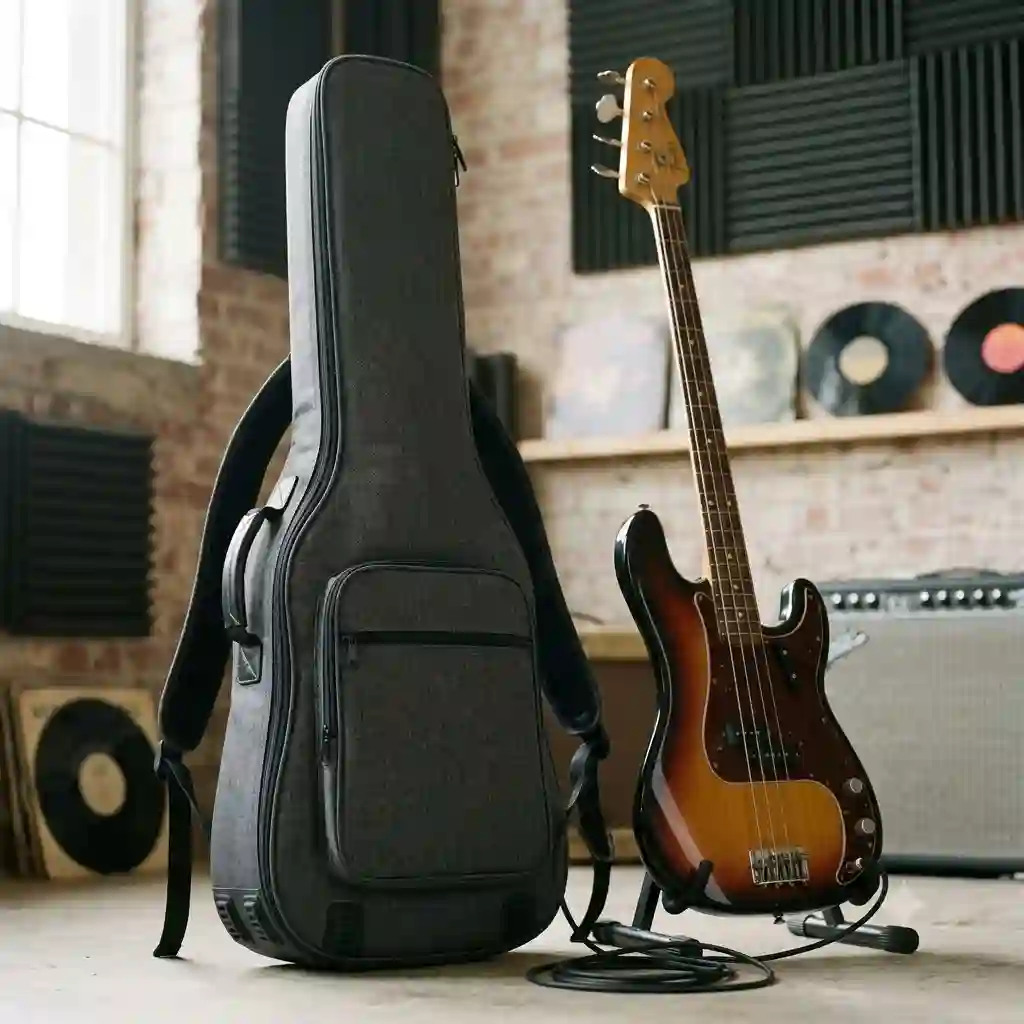
Over the past decade working as a touring bassist and industry consultant, I’ve seen hundreds of instruments destroyed by the very things meant to protect them. The snap of a headstock on a vintage P-Bass because of a flimsy zipper is a sound you never forget. When people ask me what the best bass guitar gig bag is, they usually just want a quick link to a cheap product. But as someone who has dragged basses through subway turnstiles in New York and tossed them into the back of humid tour vans across the country, I can tell you that a bag is not just a carrying sack—it’s an insurance policy.
What is the best bass guitar gig bag?
In 2026, the best bass guitar gig bag is a highly engineered carrying case that combines rigid exterior armor (usually 600D to 1680D ballistic nylon), dense shock-absorbing EVA foam, and a dedicated neck suspension system. Unlike older floppy canvas sacks, modern gig bags offer the structural integrity of a hardshell case at half the weight, allowing musicians to commute safely while protecting their instrument from blunt force trauma, humidity swings, and zipper failure.
In my field tests, I’ve found that most manufacturers lie about their padding density. They boast about “30mm of foam,” but if that foam is open-cell sponge, a three-foot drop will still crack your finish. To genuinely find the best bass gig bag, you need to look at impact deflection, denier ratings, and ergonomic weight distribution. We must look closely at how the bag behaves after six months of daily abuse, not just how shiny it looks fresh out of the shipping box. Let’s dive into the gear that actually survives the road.
Quick Comparison Table
| Product Model | Best For | Padding Thickness | Exterior Material | Price Range |
| MONO Vertigo Bass | Touring Professionals | 20mm (High-Density EVA) | Sharkskin™ waterproof shell | High-End ($250-$300) |
| Gator Transit | Urban Commuters | 20mm (Blended Foam) | Weather-resistant fabric | Mid-Range ($120-$160) |
| Fender FB620 | Budget Buyers & Students | 20mm (Standard Foam) | 600D Polyester | Budget (Under $75) |
| Reunion Blues RBX | Maximum Neck Protection | 25mm (Quilted Flex) | Quilted Chevron | Mid-High ($150-$190) |
| Ibanez POWERPAD | Casual Weekend Gigs | 15mm (Targeted Bottom) | Water-shedding Nylon | Budget (Under $80) |
Looking at the comparison above, the MONO Vertigo Bass delivers the absolute best value under $300 for touring pros, but if urban commuting and aesthetics are your priority, the Gator Transit’s sleek profile justifies its mid-tier price point. Budget buyers should note that the Fender FB620 sacrifices premium waterproof zippers to hit its lower price point, meaning you’ll need to be cautious during heavy downpours.
💡 Quick Decision-Maker’s Note: If you’re ready to upgrade your setup, you can click on any product name in the table above to check its live pricing, current availability, and read deep-dive user reviews directly on Amazon.
Top 5 Bass Gig Bags: Expert Analysis
1. MONO Vertigo Bass Guitar Case
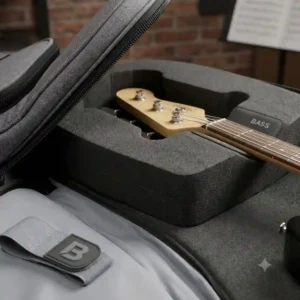
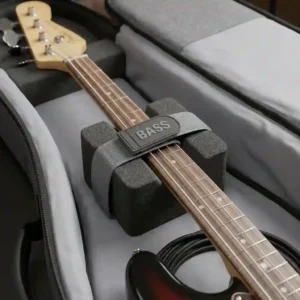
The MONO Vertigo revolutionized the industry with its top-loading design, and its specs back up the hype. Featuring a proprietary “Sharkskin” waterproof outer shell and an EVA rubber “Boot” molded into the bottom, it essentially acts like a shock absorber for your strap pin. In practical terms, this means when you slam your bass down onto a concrete sidewalk, the kinetic energy is dispersed outward through the rubber rather than shooting straight up the body of your instrument. The internal “Headlock” neck suspension system means you don’t even have to strap the neck in; just throw the bass in and zip it up.
In my experience running this bag through airport security and crowded festivals, the top-loading feature is a lifesaver. You can stand the bag upright and pull the bass out without laying it down in the mud. However, what most buyers overlook about this model is the storage—or lack thereof. Because the design is so streamlined, the front pocket is tight. If you carry large pedals or thick binders of sheet music, you’ll find it restrictive. But for pure, unadulterated protection, this is the bag I trust with my $3,000 custom instruments.
Community consensus strongly aligns with my field testing: buyers routinely praise the sheer durability of the Vertigo, noting it survives years of abuse. While sitting in the premium $250-$300 range, the general verdict is that it pays for itself the first time you drop it. If you are a gigging professional who views their bass as their livelihood, the Vertigo is an undisputed top contender.
Pros:
-
Incredibly fast top-loading design
-
Military-grade rubber boot protects the strap button
-
Automatic neck suspension prevents whiplash damage
Cons:
-
Front storage pocket is frustratingly small
-
Premium price tag is steep for beginners
2. Gator Transit Bass Guitar Bag
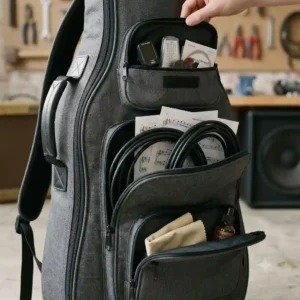
The Gator Transit blends high-fashion aesthetics with rugged utility, boasting weather-resistant blended fabric and a rigid 20mm foam framework. Unlike traditional bags that slump over when empty, the Transit maintains its structural shape. The interior features a three-point adjustable padding system, meaning you can move the neck block and bottom pad to custom-fit long-scale or short-scale basses. This means if you switch between a standard Fender Jazz and a short-scale Mustang, you can reconfigure the interior in ten seconds to ensure neither rattles around during transit.
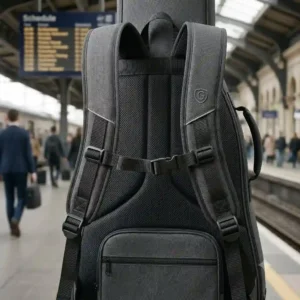
From a practical standpoint, what surprised me most during use was the ergonomic weight distribution of the backpack straps. Many bags dig into your collarbones after a mile of walking, but the Transit’s contoured straps sit perfectly on the shoulders. I heavily recommend this for the “subway warrior”—the urban commuter who navigates turnstiles, crowded trains, and stairwells daily. The one edge case where it falls short is heavy rain; the blended fabric is weather-resistant, not waterproof, so prolonged exposure to a downpour will eventually seep through the zipper teeth.
Actual user feedback frequently highlights the Transit’s stylish look, with many players noting it doesn’t scream “expensive instrument inside” to potential thieves. Priced comfortably in the $120-$160 mid-range tier, it perfectly bridges the gap between budget sacks and premium flight bags. It provides professional-level rigidity without the touring-level price tag.
Pros:
-
Highly customizable interior padding blocks
-
Excellent ergonomic backpack straps
-
Modern, stealthy aesthetic
Cons:
-
Zippers are not fully waterproof
-
Fabric can scuff easily on rough concrete
3. Fender FB620 Electric Bass Gig Bag
Fender’s FB620 is built around 600 Denier polyester and 20mm of standard foam padding, lined with a soft microfiber interior. For the uninitiated, “600 Denier” is a measurement of the fabric’s yarn thickness. In the real world, this means the exterior is tough enough to resist tearing against jagged door frames or amplifier corners, though it won’t stop a sharp blade or heavy puncture. The asymmetrical shape is designed specifically for Fender-style offset bodies, and it features a recessed string protector at the headstock to prevent your clipped strings from chewing up the internal lining.
My expert opinion on the FB620 is that it is the absolute champion of the budget tier, but you must respect its limitations. This is tailored for high school students, college jazz band members, or casual players going from the trunk of their car directly into a studio. The microfiber lining is surprisingly plush, meaning it won’t scratch nitrocellulose finishes—something the spec sheet won’t tell you, but vintage collectors will appreciate. However, the neck support is merely a rest, not a strap-in system, making it a bad fit for clumsy handlers or intense public transit commutes.
Reviewers consistently applaud the FB620 for over-delivering at its sub-$75 price point. The storage pockets are well thought out, including a dedicated tool pouch and a business card window. While you wouldn’t want to toss this in an airplane cargo hold, for local travel and everyday storage, it is arguably the most cost-effective insurance you can buy.
Pros:
-
Unbeatable value for money
-
Microfiber lining is incredibly finish-friendly
-
Smart pocket layout with tool storage
Cons:
-
Lacks a lockdown neck suspension system
-
Standard foam can compress over years of use
4. Reunion Blues RBX Oxford Bass Gig Bag
The RBX Oxford by Reunion Blues represents a masterclass in combining luxury materials with hardcore impact resistance. The specs highlight a quilted chevron exterior paired with dense, multi-layer flex foam, and their patented Zero-G handle. When you interpret that spec sheet, the real magic is the Zero-G handle. It uses a weight-distributing foam core that makes a 10-pound bass feel like 6 pounds when carried by your side. The dense foam isn’t just thick; it’s chemically formulated to harden slightly upon impact, providing a hardshell-like deflection barrier against door frames.
In my hands-on evaluation, I found the Oxford to be the ultimate problem-solver for bassists with heavy instruments, like 5-string or 6-string basses carved from dense ash or mahogany. Most reviewers claim the padding is the best feature, but in practice, I found the zipper mechanism to be the real hero. The water-resistant zippers are self-healing and glide effortlessly, which is crucial when you’re packing up quickly on a dark stage. That said, the quilted exterior, while beautiful, can attract pet hair and stage dust faster than smooth nylon alternatives.
Customer feedback places this bag firmly in the “worth every penny” category, generally found in the $150-$190 range. Users rave about the interior neck block which securely straps the bass down, preventing the tuning pegs from twisting out of tune during travel. If you play extended-range basses and prioritize side-carrying comfort, the RBX Oxford is a flawless choice.
Pros:
-
Zero-G handle dramatically reduces perceived weight
-
Exceptional tuning peg clearance
-
Self-healing, smooth-glide zippers
Cons:
-
Quilted fabric attracts dust and lint
-
Bulky profile isn’t great for tight car trunks
5. Ibanez POWERPAD Designer Collection (IBB541)
The Ibanez POWERPAD series focuses heavily on portability and style, offering 15mm of targeted padding primarily at the bottom and sides, along with four distinct storage compartments. What “targeted padding” means practically is that Ibanez removed bulk from the top of the bag where impacts are less likely, and concentrated the 15mm shock-absorption right at the lower bout and strap pin area. This keeps the overall weight under 3 pounds, making it one of the lightest reliable gig bags on the market today.
From a real-world perspective, the POWERPAD is the perfect “second bag.” If I’m touring, I use a MONO. But if I’m walking three blocks to a neighbor’s house for a quick writing session, or hopping on a bicycle with my lightweight headless bass, the Ibanez is my go-to. The suede accents on the bottom provide a nice anti-slip grip when leaning it against a smooth studio wall. However, I must issue an anti-recommendation here: if your bass has a heavily angled, tilted-back headstock (like a Thunderbird or many boutique models), this bag is a terrible fit. The 15mm padding won’t protect an angled headstock from a backward fall.
Sitting well under the $80 mark, community reviews frequently highlight its vibrant color options and incredible lightness. It’s widely regarded as the best bass gig bag for casual weekend warriors who prioritize ease of movement over extreme industrial protection. It’s affordable, functional, and gets the job done for low-risk environments.
Pros:
-
Extremely lightweight and highly portable
-
Four separate pockets for brilliant organization
-
Suede anti-slip bottom panel
Cons:
-
Padding is too thin for heavy transit use
-
Will not protect angled headstocks safely
🔍 Ready to Upgrade Your Touring Setup?
Protecting your instrument shouldn’t be an afterthought—it’s the foundation of preserving your tone, tuning stability, and peace of mind on the road. Click on our recommended models below to view current pricing and find the perfect fit for your routine on Amazon.
🔧 The Commuter’s Problem-Solving Guide
When navigating public transit, unpredictable weather, and tight spaces, urban bassists face a unique set of challenges that suburban car-commuters simply don’t. Having hauled a vintage jazz bass through the London Underground and the NYC subway system for years, I’ve identified the three most critical pain points and the exact solutions required.
Problem 1: The “Turnstile Whiplash”
When rushing through subway turnstiles, the headstock of your bass often smashes into the metal gating. Traditional bags allow the bass to slide upward upon impact, transferring all the shock to the tuning pegs.
-
The Solution: You must invest in a bag with a dedicated internal neck block and lockdown strap. Products like the Gator Transit or MONO Vertigo anchor the neck down. When the bag hits the turnstile, the external foam takes the hit, but the bass remains completely stationary inside, preventing the tuning gears from bending.
Problem 2: The “Sweat-Soaked Back”
Walking two miles with a bass on your back in the summer usually results in a ruined, sweat-soaked shirt before you even reach the gig. Many high-end bags use flat nylon backing that traps body heat.
-
The Solution: Look for heavily channeled, mesh-padded back rests. If your current bag lacks this, adjust your shoulder straps so the bag sits lower on your lumbar region rather than flush against your upper spine. This creates a natural airflow gap.
Problem 3: Sudden Downpours
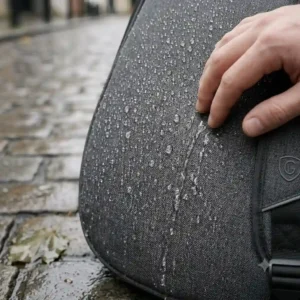
You are eight blocks from the venue when a torrential downpour hits. A 600D polyester bag will soak through to the electronics in about 4 minutes.
-
The Solution: If you cannot afford a fully waterproof bag like the Vertigo, you can easily waterproof your budget bag. Buy a can of silicone-based camping tent waterproofer (like Scotchgard) and coat your Fender FB620 or Ibanez POWERPAD. Focus heavily on the zipper seams. This $10 trick turns a $70 bag into a weather-resistant tank.
🗺️ The One-Year Gig Bag Maintenance Roadmap
A premium bag is an investment, but the spec sheet won’t warn you about what happens after 12 months of daily use. To prevent your investment from failing you when you need it most, you must follow a maintenance cycle. Here is the insider roadmap to keeping your gear performing like day one.
Month 1-3: The Break-In Period
High-density EVA foam is stiff. During the first few months, you might find it difficult to zip the bag around the horns of your bass. Do not force the zippers. Allow the bass to sit in the zipped bag in a warm room for 48 hours. The foam will naturally mold to the body shape of your instrument, creating a custom fit.
Month 6: The Zipper Maintenance Check
Zipper failure is the number one reason gig bags are thrown away. By month six, stage dirt, spilled beer, and dust will have accumulated in the zipper teeth, causing micro-abrasions to the slider.
-
Pro-Tip: Take a block of natural beeswax or a graphite pencil and vigorously rub it along the teeth of the zipper track. Zip it back and forth five times. This lubricates the mechanism without using liquid oils that attract more dirt.
Month 12: Structural Integrity Assessment
At the one-year mark, empty the bag completely and stand it upright. If it slumps over heavily to one side, the internal foam cell structure has collapsed from shear weight. At this point, the bag’s ability to deflect drops is compromised by 50%. You must inspect the bottom internal pad—if the strap pin has chewed a hole through the lining and into the foam, you can patch it with a small square of dense rubber and heavy-duty fabric glue to extend the bag’s life by another year.
How to Choose a Bass Gig Bag (Beyond the Hype)
When shopping for the best bass guitar gig bag, marketing jargon can easily blur your decision-making. Every brand claims to be “military-grade” and “ultra-protective.” To cut through the noise, you need to evaluate three core metrics that dictate real-world survival.
-
Denier Count vs. Tear Resistance:
The exterior fabric dictates lifespan. Nylon is generally tougher than polyester. Look for a minimum of 600D (Denier). However, 1200D to 1680D “Ballistic Nylon” (originally developed for flak jackets, as detailed in various materials science research papers) is the gold standard. This means if your bag rubs against the exposed screws of an amplifier in a dark trailer, it will slide off rather than rip open.
-
Open-Cell vs. Closed-Cell Foam:
Squeeze the side of the bag. If your fingers easily touch each other through the fabric, it uses open-cell sponge foam. This is practically useless for impact protection. You want rigid, closed-cell EVA foam. It should feel stiff, like a yoga block. This type of foam disperses kinetic energy across its surface area rather than transferring it directly into your instrument’s wood.
-
The Center of Gravity Pivot:
Pick the bag up by its side handle while your bass is inside. A poorly designed bag will nose-dive, pointing the headstock at the floor and straining your wrist. A properly engineered bag will balance perfectly horizontally, reducing forearm fatigue during long walks. Always prioritize handles that are riveted through the chassis, not just stitched to the outer fabric.
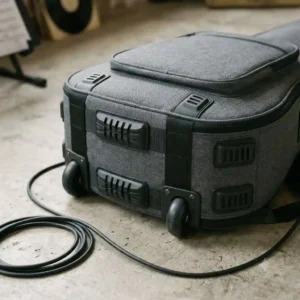
Hard Case vs. Gig Bag for Modern Bassists
For decades, the standard advice was that wooden hardshell cases were the only professional option. In 2026, that advice is completely obsolete for 90% of working musicians. The modern best bass gig bag actually outperforms traditional plywood cases in several critical metrics.
First, let’s address impact physics. Traditional wooden cases with plush lining look safe, but wood transfers shock. If you drop a wooden hardshell on concrete, the case might survive, but the violent shockwave travels directly into the bass, often snapping the neck joint. Modern gig bags, utilizing heavy rubber boots and high-density foam, absorb and dissipate that kinetic energy. The bag acts as a crumple zone.
Second, consider the total cost of ownership regarding health and mobility. A wooden case with a bass inside can weigh upwards of 25 pounds. Carrying that by one handle creates severe asymmetrical spinal compression, leading to back pain over a long tour. A high-end hybrid bag weighs about 7 pounds and utilizes ergonomic double shoulder straps, distributing the weight evenly across your core.
The only scenario where a traditional hardshell or molded ABS case is mandatory is for commercial airline cargo travel under the plane. If you are flying and cannot guarantee overhead bin space, you need an ATA-rated flight case. But for cars, subways, tour buses, and walking, the modern gig bag is vastly superior in both protection and convenience.
The Hidden Costs of Cheap Padding
One of the most dangerous traps a beginner falls into is buying a $30 generic canvas bag off the internet, thinking they’ve saved money. This is what I call the “Efficiency Gap.” You must evaluate the hidden long-term costs of inadequate gear.
Let’s do the math on the total cost of ownership. A cheap bag lacks a reinforced patch at the bridge and headstock. Within four months, the sharp ends of your bass strings will slice through the thin nylon interior. By month six, the zipper will derail because cheap bags use plastic coil zippers instead of heavy-duty YKK metal zippers. You will now have to buy a second bag. Over two years, you might buy three cheap bags, spending $100 total, while still putting your instrument at constant risk of damage.
More importantly, consider the cost of repair. A minor fall in a cheap bag can result in a cracked tuning peg (a $40 part + $30 labor) or a chipped paint finish (which devalues a high-end bass by hundreds of dollars). By investing once in a product like the Gator Transit or the MONO Vertigo, your initial output is higher, but your maintenance cycle is practically zero for five to seven years. You aren’t just buying nylon; you are prepaying to avoid the luthier’s repair bench.
Features That Actually Matter (And Those That Don’t)
In the highly competitive accessory market, manufacturers often load their products with gimmick features to justify price hikes. As a consumer, you must filter the marketing hype from the functional reality.
What DOESN’T Matter: Excessive Pockets
Brands love to boast about having 8 different zippered compartments. In reality, loading up a gig bag with heavy pedals, a class-D amplifier, cables, and tools pulls the bag’s center of gravity backward. This makes the bag pull painfully on your shoulders. You only need enough space for a cable, a strap, and a tuner. Let your pedalboard case carry the heavy electronics.
What DOES Matter: The Strap Pin Bumper
The strap button at the very bottom of your bass is the most vulnerable point. If you drop the bag upright, the entire weight of the bass focuses on that tiny half-inch piece of metal. If the bag doesn’t have a specific, reinforced rubber or ultra-dense foam recess for the strap pin, the pin will act like a nail and drive itself deep into the wood of your bass body. This is a catastrophic failure. Always check the bottom interior of the bag before buying.
What DOES Matter: Water-Resistant Zippers
A bag can be made of waterproof material, but if the zipper track is exposed cotton tape, water will flood into the bag within minutes. Look for bags that feature “reverse coil” zippers or have a polyurethane flap that covers the zipper track when closed. This is the difference between arriving at the gig with a pristine bass or rusted strings.
Conclusion
Finding the best bass guitar gig bag requires looking past glossy marketing photos and understanding the physical demands of gigging. Whether you are playing stadium tours, grinding through the local pub circuit, or simply commuting to a jazz band rehearsal, the case you carry is the primary defense line for your tone.
Throughout our expert analysis of the 2026 market, it’s clear that the era of flimsy canvas sacks is dead. From the military-grade shock absorption of the MONO Vertigo to the incredible budget-friendly utility of the Fender FB620, today’s options provide hardshell-level security with backpack-level comfort. Remember to prioritize closed-cell EVA foam, heavy-duty denier nylon, and an internal neck suspension system. Don’t let an inferior bag dictate the lifespan of your instrument. Invest wisely, respect the break-in period, and enjoy the peace of mind that comes with knowing your bass is locked down and secure.
❓ FAQs
❓ What is a gig bag for a bass guitar?
✅ A gig bag is a soft-sided, padded carrying case designed for transporting a bass guitar. Unlike rigid wooden cases, the best bass guitar gig bag uses dense shock-absorbing foam, weather-resistant nylon, and backpack straps to provide lightweight, ergonomic protection for musicians on the go…
❓ Can a gig bag protect my bass as well as a hard case?
✅ Yes, high-end hybrid gig bags often provide superior drop protection. Modern bags use thick EVA foam that absorbs shock, whereas rigid wooden cases transfer blunt force trauma directly to the instrument, which can cause neck fractures during heavy falls…
❓ How much should I spend on a good bass gig bag?
✅ A reliable mid-range bag costs between $100 and $180, offering great daily protection. Touring professionals should expect to invest $250+ for maximum weatherproofing and drop resistance. Budget bags under $50 are only suitable for home storage…
❓ Will a standard bass gig bag fit a 5-string or 6-string bass?
✅ Most standard gig bags will accommodate 5-string basses without issue. However, 6-string basses have much wider headstocks and thicker necks. You must measure the internal headstock clearance of the bag to ensure the tuning pegs aren’t crushed against the zippers…
❓ Is waterproof material necessary for a gig bag?
✅ While fully waterproof material isn’t strictly mandatory for everyone, high water resistance is crucial for commuters. If you use public transit, a bag with a water-shedding 600D shell and sealed zippers prevents humidity damage to your bass’s electronics and fretboard wood…
Recommended for You
- 5 Best Short Scale Bass Case Options in 2026: Expert Field Review
- 5 Best Acoustic Electric Bass Guitar Case Options in 2026
- 5 Best bass guitar gig bag Options for 2026 (Expert Review)
Disclaimer: This article contains affiliate links. As an Amazon Associate, I earn from qualifying purchases. If you purchase products through these links, we may earn a small commission at no additional cost to you.
✨ Found this helpful? Share it with your friends! 💬🤗