
A bass guitar gig bag is a soft, padded carrying case designed specifically to transport and protect bass instruments. Unlike rigid hardshell cases, these bags utilize foam layers, weather-resistant outer shells (like Nylon or Cordura), and backpack-style straps to provide a lightweight, ergonomic, and highly mobile solution for commuting musicians, while absorbing moderate impact during travel.
In my 10+ years as a touring bassist and backline consultant, I’ve seen more instruments damaged by poorly designed cases than by actual stage mishaps. I remember tossing my gear into the back of a cramped Ford Transit van during a winter tour in 2018—that was the year I learned the hard way that a cheap zipper will always blow out when you are already 20 minutes late for soundcheck. The modern electric bass guitar gig bag has evolved dramatically since then. We aren’t just looking at thin nylon sleeves anymore; today’s top-tier options feature hybrid honeycomb frames, EVA rubber drop-pads, and suspended neck cradles.
When you are hauling a 9-pound piece of wood through a crowded subway or cramming it into an overhead bin, you need more than just generic foam. You need a structural fortress that won’t ruin your posture. In this comprehensive guide, I’m taking you beyond the manufacturer spec sheets. I will break down exactly how these bags perform after six months of daily abuse, why certain “premium” features are actually marketing fluff, and how to find the exact electric bass gig bag that matches your specific touring or commuting lifestyle.
Quick Comparison: Top Picks for 2026
Before we dive into the microscopic details of denier ratings and zipper gauges, let’s look at a high-level overview of the top performers in my field tests.
| Model | Price Range | Padding / Protection | Best For | Standout Feature |
| MONO Vertigo | $250 – $300 | Premium EVA / Hybrid | Heavy Commuters | Top-loading design |
| Gator Transit | $100 – $150 | 20mm High-Density | Weekend Warriors | Weather-resistant shell |
| Fender FB620 | $60 – $80 | 20mm Micro-Fleece | Budget/Students | Asymmetrical shape |
| Reunion Blues RBX | $150 – $180 | Quilted RBX Foam | High-Impact Travel | Zero-G handle |
| Protec Contego | $180 – $220 | Honeycomb Frame | Pro Touring | Hard-case alternative |
Looking at the comparison above, the Fender FB620 delivers the best value for anyone under a strict budget, but if you are dealing with daily subway commutes, the structural integrity of the MONO Vertigo justifies the steeper price tag. Mid-tier buyers should note that the Gator Transit beautifully bridges the gap, sacrificing some of the extreme drop protection of the Protec Contego in favor of a much lighter, commuter-friendly weight.
💬 Just one click — help others make better buying decisions too! 😊

Top 5 Bass Gig Bags: Expert Analysis
Amazon listings will throw a dozen acronyms at you. Here is what these bags actually feel like when you are carrying them three miles across town in the rain.
1. MONO Vertigo Bass Guitar Case
The MONO Vertigo revolutionized the industry with its patented Top-Loading design, allowing you to pull your bass out from the top while standing.
The bag features a molded EVA rubber “Boot” at the bottom and a fully suspended “Headlock” neck system. What this means in practice is that you can physically drop this bag directly onto its bottom strap pin from waist height without the pin punching through the fabric and chipping your instrument’s finish—a notorious flaw in older gig bags. In my field tests, the top-loading feature was an absolute lifesaver on cramped stages where laying a case flat on the floor simply isn’t an option.
This is the ultimate professional choice for urban commuters and touring artists who rely heavily on public transit. If you are flying or taking subways daily, this is your fortress. Customers consistently rave about the neck suspension, though some smaller players note the bag feels a bit bulky.
-
Pros: Incredible bottom drop protection, saves stage space, waterproof Sharkskin shell.
-
Cons: Very limited storage pockets, higher price point.
-
Price Verdict: In the $250-$300 range, it represents a high initial investment but effectively eliminates the need to replace damaged instruments, offering exceptional long-term ROI.
2. Gator Transit Bass Guitar Bag
The Gator Transit offers a brilliant middle ground with its weather-resistant blended fabric exterior and rigid interior frame.
It boasts a 20mm thick foam padding covered in a micro-fleece interior, complemented by a removable three-point interior padding system. Amazon describes the fabric as “weather-resistant,” but I’ll interpret that for you: you can get caught in a 15-minute drizzle walking to your car, but I wouldn’t leave it exposed in a torrential downpour. What surprised me most was the three-point interior pad system; it allows you to custom-fit the bottom bumper to accommodate offset body shapes (like a Jazz Bass), preventing the instrument from shifting while you walk.
I highly recommend this for the “Weekend Warrior”—the gigging musician who mostly travels by car and occasionally needs to walk a few blocks to the venue. Feedback often highlights the stylish, urban look of the bag, though some wish the backpack straps had a bit more breathability.
-
Pros: Highly adjustable interior, aesthetically pleasing canvas look, massive exterior pocket.
-
Cons: Straps can feel warm against the back, less rigid than hybrid cases.
-
Price Verdict: Sitting comfortably in the $100-$150 range, this is arguably the best “bang for your buck” for the active local musician.
3. Fender FB620 Electric Bass Gig Bag
Fender’s FB620 is a sleek, asymmetrical bag featuring 600 Denier polyester and custom molded zippers.
The 600D polyester is an important spec here. This means the fabric is highly resistant to snags and tears from sharp objects like cymbal stands or door frames. However, the 20mm padding is slightly softer than the dense foam used in the Gator. The asymmetrical shape isn’t just for looks—it actively reduces the bag’s footprint, preventing the headstock from banging into low doorways, a common frustration for bassists.
This is the ideal bass guitar gig bag for students, beginners, or anyone who keeps their bass at home 90% of the time and only travels for occasional lessons or jams. Users love the ergonomic handle, but a few have pointed out that extremely long scale basses might be a tight squeeze.
-
Pros: Very affordable, surprisingly durable zippers, lightweight.
-
Cons: Minimal neck support, not suited for heavy impact or flights.
-
Price Verdict: Usually found around $60-$80, it completely outclasses the generic, unbranded sleeves you usually find at this price point.
4. Reunion Blues RBX Bass Gig Bag
The Reunion Blues RBX features a striking quilted chevron exterior and the proprietary RBX protection system with a dense foam surround.
The spec sheet brags about the “Zero-G” handle. In reality, this means the handle is situated exactly at the center of gravity for an average bass, actively fighting “neck dive” while you carry it briefcase-style. If you’ve ever carried a poorly balanced bag where the neck keeps dipping toward the pavement, you know how quickly that causes forearm fatigue. The dense foam surround provides a level of rigidity that feels almost like a hard case, minus the bruising on your shins.
I steer heavy-duty gigging musicians toward this bag if they want maximum protection but hate the aesthetic of tactical, utilitarian gear. Most reviewers claim it feels indestructible, but in practice, I found the exterior pocket a bit too tight for thick three-ring binders.
-
Pros: Phenomenal weight distribution, highly rigid sides, premium aesthetic.
-
Cons: Tight storage compartment, slightly heavier than average bags.
-
Price Verdict: Valued in the $150-$180 range, it offers top-tier structural integrity without crossing the $200 threshold.
5. Protec Contego Pro Pac Bass Guitar Case
The Protec Contego blurs the line between bag and case, featuring a honeycomb frame and thick shock-absorbing foam.
When Protec mentions a “honeycomb frame,” they mean there is actual rigid, lightweight plastic surrounding the perimeter of the bag. You cannot bend or fold this case. If someone accidentally stacks a lightweight guitar amp on top of this in the tour van, your bass is going to survive. It also features a heavily padded, adjustable neck block that acts like a vise, keeping the instrument perfectly still.
This is for the serious touring pro who wants hard-case protection but requires backpack straps for mobility. It is a favorite among orchestral and session players. Users praise its absolute tank-like build, though the rigid frame means it takes up just as much space as a traditional hard case.
-
Pros: Hard-case level crush resistance, massive storage pockets, excellent zippers.
-
Cons: Cannot be folded for storage, heavy.
-
Price Verdict: In the $180-$220 range, it is an incredible investment for anyone who relies on their instrument for income.
✨ Don’t Miss These Exclusive Deals!
🔍 Take your gigging setup to the next level with these carefully selected products. Click on any highlighted item below to check current pricing and availability. These tools will help you achieve the ultimate protection and peace of mind on the road!
Year-One Maintenance Cycle & Packing Guide
A premium bass guitar gigbag can last a decade, but only if you understand how to treat it during the first year. Most musicians treat soft cases like laundry bags, leading to premature zipper blowouts and worn-out padding.
The 30-Day Zipper Hack
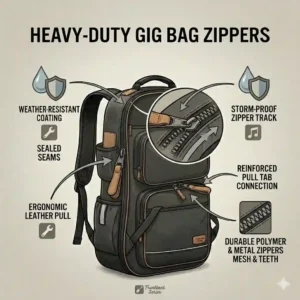
When you first receive your bag, the heavy-duty weather-sealed zippers will likely be stiff. A common mistake is yanking them around corners. Expert Tip: Use a simple graphite pencil or a specialized zipper wax (like Gear Aid) to lubricate the teeth on day one. This prevents microscopic fraying of the surrounding fabric, which is the number one cause of bag failure.
Strategic Pocket Loading
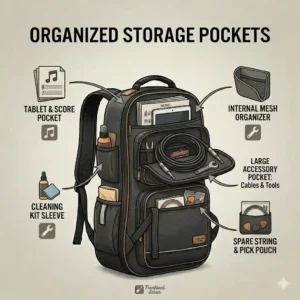
Bass guitars are inherently long and often neck-heavy. If you load your heavy cables, pedals, and tablets into the top headstock pocket (if your bag has one), you are creating a pendulum effect. This will destroy your posture and cause the bag to sway dangerously into pedestrians. Always pack your heaviest items—like a micro-amp head or heavy coiled cables—in the lowest, bottom-front pocket. This acts as a ballast, anchoring the bag to your lower back.
Cleaning Cordura and Sharkskin
After six months of gigging, your bag will accumulate sweat, spilled beer, and grime. Never put these bags in a washing machine; the agitation destroys the internal foam cell structure. Instead, use a soft bristle brush and a mixture of warm water and mild dish soap. Spot clean, and always air dry completely before storing your bass inside to prevent hardware tarnishing from trapped humidity.
Real-World Case Studies: Finding the Perfect Match
It’s easy to say “buy the most expensive one,” but in the real world, the “perfect” bag depends entirely on your environment. Let’s look at the anti-recommendation logic: why a perfect bag might be terrible for you.
Profile A: The Subway Commuter (Urban Environment)
You live in Brooklyn or Chicago, commuting on crowded trains. You need to stand up holding your instrument vertically to save space.
-
The Match: MONO Vertigo. The top-loading feature means you don’t need to lay the case flat on dirty train station floors to take the bass out.
-
The Anti-Match: Protec Contego. Its rigid frame makes it incredibly bulky, and you will undoubtedly hit fellow passengers with it when navigating turnstiles.
Profile B: The Session Player (Gear-Heavy)
You drive from studio to studio. You need to carry an iPad, two specialized cables, a DI box, sheet music, and a strap.
-
The Match: Gator Transit or Protec Contego. Both have expansive, gusseted front pockets that expand to swallow gear.
-
The Anti-Match: MONO Vertigo. For all its brilliance, its front pocket is notoriously flat. If you try to shove a thick DI box in there, you’ll stretch the fabric to its breaking point.
Profile C: The Rehearsal Room Regular (Light Duty)
You play in a cover band once a week. Your bass goes from your climate-controlled bedroom to your car trunk, to the studio, and back.
-
The Match: Fender FB620. You simply don’t need marine-grade drop protection. Save your money and invest it in a better set of strings.
How to Choose the Right electric bass gig bag
When navigating the overwhelming sea of options, follow this expert decision framework to cut through the marketing noise:
-
Measure Your Scale Length First: Not all bags fit a 35-inch scale or a 5-string bass with an elongated headstock. Always check internal dimensions against your bass’s total length (usually 46-48 inches for standard basses).
-
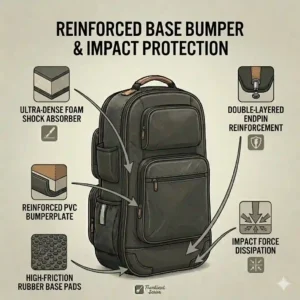
Evaluate the Bottom Bumper: Press your thumb into the bottom interior of the bag. If you can easily feel the exterior fabric, the padding is insufficient. Look for bags with dense rubber or EVA inserts at the strap-pin contact point.
-
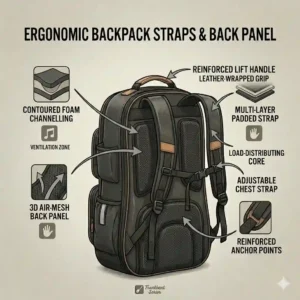
Check the Strap Rivets: Don’t just look at the padding on the backpack straps; look at how they connect to the bag. Box-stitched and riveted straps will survive years of hauling; simple single-line stitching will tear within six months.
-
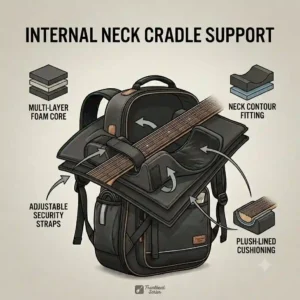
Assess Neck Support: A bag without a neck cradle allows the headstock to support the weight of the instrument if dropped. Choose bags with a Velcro or block suspension system to isolate the neck from impact.
-
Look for YKK Zippers: If the specs don’t explicitly state the zipper brand, they are cutting corners. A busted zipper renders a $200 bag instantly useless.
Features That Actually Matter (And Those That Don’t)
Marketing departments love to invent proprietary terms for standard materials. Let’s filter the hype so you know what you are actually paying for.
The Myth of “Waterproof” vs “Water-Resistant”
Many brands boast “waterproof” materials. While the fabric itself (like 1000D Nylon or PVC-backed Cordura) might repel water perfectly, the bag as a whole is almost never waterproof unless it features aquaguard, rubberized zippers. If water is going to get in, it gets in through the zipper teeth or the seams. Don’t pay a premium for “waterproof fabric” if the zippers are standard exposed metal.
Denier Ratings Explained
You’ll see numbers like 400D, 600D, or 1000D. Denier measures the thickness of the fabric’s individual threads. A 600D bag is perfectly fine for everyday use. Upgrading to 1000D (often found in military-grade gear) adds incredible abrasion resistance, meaning it won’t scuff if dragged on concrete. However, higher denier also means a heavier bag. If you prioritize lightweight travel, 600D is the sweet spot.
Foam Density Trumps Thickness
Brands love to boast about “30mm of padding!” However, 30mm of cheap, spongy open-cell foam offers far less protection than 15mm of dense, rigid closed-cell EVA foam. Open-cell foam compresses completely upon impact, transferring the shock directly to your bass. Always prioritize density over sheer thickness.
Gig Bags vs. Hard Cases: The 2026 Reality Check
The old industry rule used to be: “Bags for practice, hard cases for tours.” In 2026, thanks to advances in polymer and foam engineering, that line is entirely blurred. Let’s look at the current reality.
| Feature | Premium Gig Bag (e.g., MONO) | Traditional Hard Case |
| Drop Impact | Superior (absorbs shock) | Poor (transfers shock to instrument) |
| Crush Weight | Moderate (can flex under heavy loads) | Superior (protects against stacking) |
| Mobility | Excellent (backpack straps, ergonomic) | Poor (heavy, one-handed carry only) |
| Storage | Highly versatile external pockets | Limited internal compartments |
Looking at the table above, the traditional hard case really only wins in one category today: crush weight. If you are throwing your bass into the belly of an airplane or under a stack of PA speakers in a trailer, you absolutely need a hard case or a flight case.
However, for sheer drop impact, a high-end gig bag actually performs better. As noted by industry experts on forums like TalkBass and in articles by Premier Guitar, a wooden hard case has zero “give.” If you drop it, the kinetic energy transfers directly through the rigid wood into the wood of your bass, frequently resulting in snapped headstocks inside unbroken cases. A premium bag acts like a crumple zone in a car, absorbing the energy before it reaches the wood.
Common Mistakes When Buying a bass gig bag
Even seasoned players make critical errors when upgrading their transportation gear. Here is what I consistently see:
Ignoring the Strap Pin Dilemma
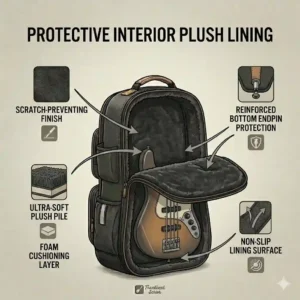
Most basses have a metal strap pin protruding from the very bottom. Over time, the weight of the bass focuses entirely on that half-inch piece of metal, acting like a drill bit against the bottom of your bag. If you buy a bag without reinforced bottom padding, you will eventually drill a hole right through it. Expert fix: If your current bag lacks this, cut a thick piece of dense foam or use an old mousepad, slice a small hole in it, and slip it over your strap pin before putting the bass in the bag.
Over-Tightening Backpack Straps
Musicians often hike their bags up as high as possible, thinking it improves posture. While it helps your lower back, raising the bag too high means the headstock now extends significantly above your head. You will invariably smash the top of the bag into a doorframe, potentially damaging the tuning pegs. Keep the bag adjusted so the top is roughly level with the top of your head.
Assuming One Size Fits All
While a standard Fender Precision or Jazz bass will fit in 95% of bags, players with Gibson Thunderbirds, headless basses, or extended-range 6-strings often buy standard bags and find they don’t zip. Always physically measure your instrument’s length and lower bout width before hitting the buy button. To learn more about standard gig bag dimensions and history, you can reference the Wikipedia page on Gig bags.
✨ Don’t Miss These Exclusive Deals!
🔍 Secure your tone! Whether you are a bedroom practicer or a touring veteran, having the right bag saves you money in repairs. Click any highlighted link to find the best current deals and start traveling with confidence.
Conclusion
Finding the perfect bass guitar gig bag is an exercise in balancing protection, mobility, and your actual daily routine. As we’ve seen, throwing money at the most expensive bag isn’t always the right answer if it doesn’t match your specific commuting reality.
If you take public transit every day, prioritize vertical top-loading features and thick bottom bumpers. If you toss your gear into a van full of drum hardware, you need the rigid sidewalls of a hybrid case. Remember to look past the marketing jargon—focus on denier ratings, zipper quality, and structural neck support over flashy colors or “waterproof” claims. Your bass is an extension of your creative voice; it deserves a travel companion that works just as hard as you do on stage. Invest wisely, maintain your zippers, and you’ll easily get a decade of reliable use out of your purchase.
FAQs
❓ What is the difference between a bass gig bag and a guitar gig bag?
✅ Bass gig bags are significantly longer and wider to accommodate the extended scale length (typically 34-35 inches) and larger body of a bass guitar. A standard electric guitar bag will be several inches too short for any standard bass…
❓ Are gig bags safe for flying with a bass guitar?
✅ Only premium hybrid bags (like MONO or Protec) should be gate-checked. Standard soft bags offer zero crush protection in the cargo hold. Always try to carry it on and ask the flight attendant to store it in the coat closet…
❓ Can a bass gig bag fit two basses?
✅ Yes, specialized “dual” gig bags exist, featuring two separate heavily padded compartments. They are excellent for gigging musicians who need a backup instrument, though they are very heavy fully loaded and require robust shoulder straps…
❓ How much should I spend on a good electric bass gig bag?
✅ For home storage and light transport, $60-$90 is sufficient. For regular gigging and commuting, expect to spend between $130 and $200. Professional touring models with hybrid frames and advanced neck suspension typically range from $250 to $350…
❓ Do all bass bags protect against humidity and temperature changes?
✅ No. Soft bags offer very little thermal insulation compared to hardshell cases. Do not leave your gig bag in a hot car trunk or freezing garage, as rapid temperature shifts can warp your bass neck and damage the finish…
Recommended for You
- 5 Top Picks for the best bass tube amplifier Options (2026 Expert Guide)
- 5 Best At Home Guitar Amps for Incredible Tone in 2026 (Expert Tested)
- Best Guitar Amp Under 200: 5 Powerhouse Picks for 2026
Disclaimer: This article contains affiliate links. As an Amazon Associate, I earn from qualifying purchases. If you purchase products through these links, we may earn a small commission at no additional cost to you.
✨ Found this helpful? Share it with your friends! 💬🤗