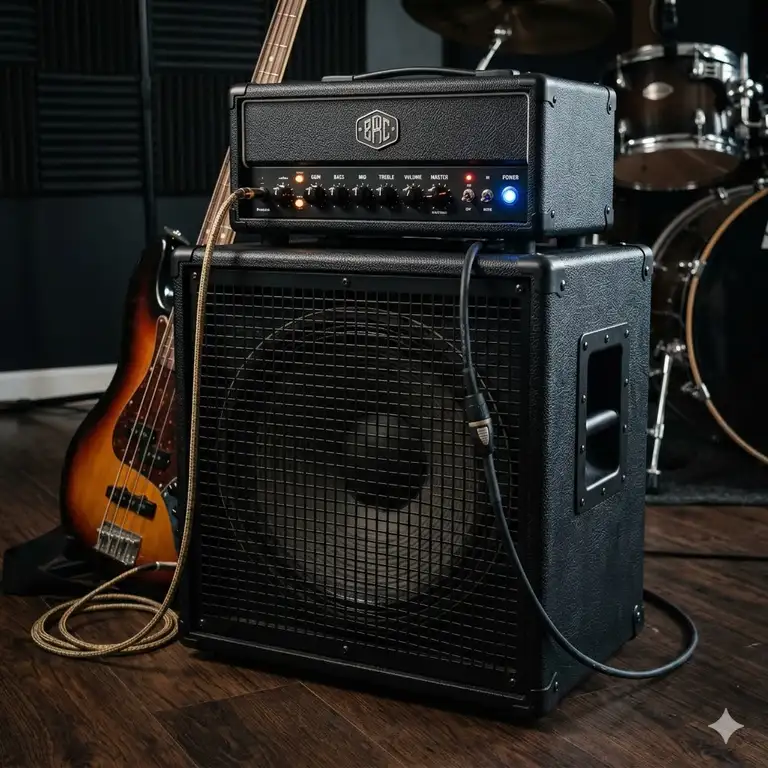
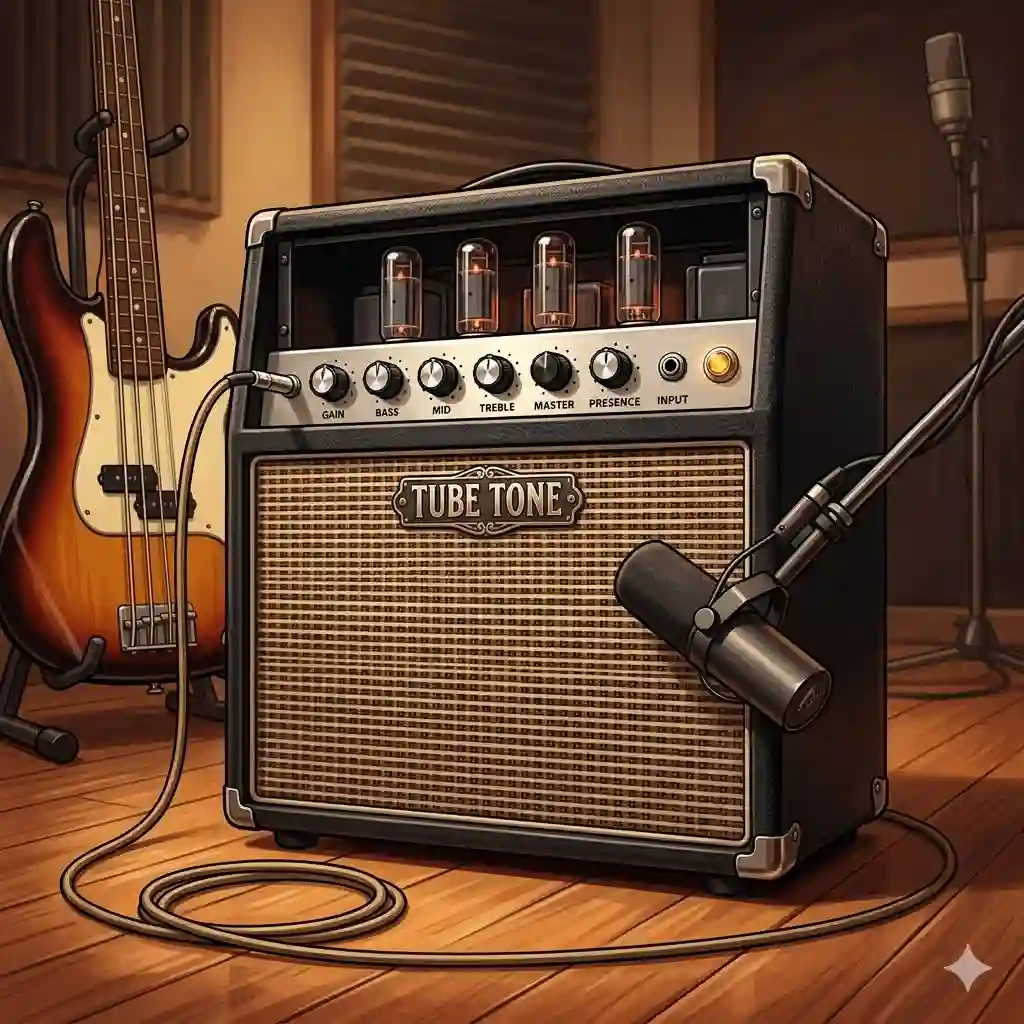
If you have spent any amount of time chasing the “holy grail” of low-end tone, you have inevitably landed on the concept of vacuum tubes. But what exactly is a tube bass amp combo? In short, it is an integrated unit containing both the amplifier circuitry—which utilizes vacuum tubes in the preamp, power section, or both—and the speaker cabinet in a single, transportable enclosure.
In my 15 years as a studio engineer and touring bassist, I have realized that while modern Class D amplifiers offer incredible portability, nothing compresses, saturates, and “breathes” quite like a tube bass amp combo. When you push the front end of a tube amp, it doesn’t just get louder; it generates second-order harmonic distortion that our ears perceive as musical, warm, and thick.
However, finding the right one in 2026 is tricky. Pure, all-tube combos are rare due to their immense weight, leading many manufacturers to adopt a “hybrid” approach: pairing a lush, 12AX7-driven tube preamp with a lightweight, high-headroom solid-state power section. Whether you are looking for that classic 1960s Motown thump, modern aggressive grit, or just unparalleled touch sensitivity, this guide will break down the exact models that deliver on their promises, looking past the marketing hype to what actually works on stage and in the studio.
Quick Comparison Table: Top Picks for 2026
| Model | Tube Configuration | Power Rating | Speaker Size | Price Range | Best For |
| Ashdown CTM-30-112 | All-Tube (ECC83/EL84) | 30 Watts | 1×12″ | $1,200 – $1,400 | Studio recording & vintage tone |
| Orange Terror Bass | Hybrid (12AX7 Preamp) | 500 Watts | 2×12″ | $1,000 – $1,200 | Aggressive rock & heavy gigging |
| Fender Bassman 500 Neo | Hybrid (12AX7 Preamp) | 500 Watts | 2×10″ | $1,300 – $1,500 | Vintage aesthetic with modern power |
| Mesa/Boogie WalkAbout | Hybrid (12AX7 Preamp) | 300 Watts | 1×12″ | $1,500 – $1,800 | Boutique clarity and portability |
| Ampeg Heritage B-15 | All-Tube (6SL7/6L6) | 30 Watts | 1×15″ | $3,500+ | Ultimate collectors & session pros |
Looking at the comparison above, the Orange Terror Bass delivers the best value for gigging musicians needing stage volume, but if pure, unadulterated harmonic richness in the studio is your priority, the Ashdown CTM-30-112’s all-tube design justifies its lower wattage limitation. Budget buyers should note that true all-tube power sections command premium prices, making the hybrid Fender Bassman an excellent middle ground for those wanting the “tube feel” without breaking their backs or bank accounts.
💬 Just one click — help others make better buying decisions too! 😊
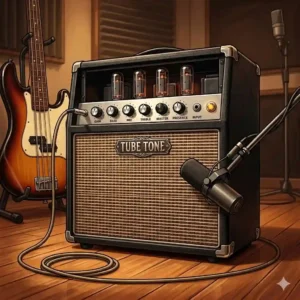
Top 5 Tube Bass Amp Combos: Expert Analysis
1. Ashdown CTM-30-112
The Ashdown CTM-30-112 brings legitimate all-tube architecture to a manageable combo footprint, featuring a gorgeous dual-tube preamp and an EL84 power section.
At 30 watts, the spec sheet might scare off gigging musicians, but in the tube world, 30 watts of pure tube power pushes air differently than a 30-watt solid-state amp. This translates to an incredibly touch-sensitive response where digging into the strings naturally pushes the amp into a smooth, musical overdrive. The 12-inch custom speaker is specifically voiced to handle the complex mid-range frequencies that tubes excel at reproducing.
In my experience, this is an absolute secret weapon for recording. What most buyers overlook about this model is the passive tone stack. Unlike active EQs that boost frequencies, this passive EQ cuts them, meaning every knob turn is highly interactive. If you are a gigging metal bassist, this isn’t for you. But if you are a studio owner or a blues/jazz player playing intimate venues, this is sonic perfection.
-
Customer Feedback: Users rave about the warm, vintage tone and the beautiful VU meter, though some complain it lacks the headroom needed for loud drummer-led rehearsals.
-
✅ Pros: 100% pure tube signal path, incredibly musical overdrive, stunning retro aesthetics.
-
❌ Cons: 30 watts limits live use without PA support, heavier than modern Class D combos.
-
Verdict: Sitting in the $1,200 – $1,400 range, it is an exceptional value for purists who prioritize tone over sheer volume.
2. Orange Terror Bass Combo
The Orange Terror Bass Combo pairs a 12AX7-driven tube preamp with a massive 500-watt Class D power section, packed into a robust 2×12 enclosure.
The standout feature here is how Orange managed to retain the chaotic, glorious grit of their AD200 all-tube head in a hybrid format. The 500W power section handles massive dynamic peaks without folding, meaning when you slam a low B string, the amp responds with terrifying clarity. The isobaric speaker design—where one speaker sits behind the other—delivers the low-end frequency response of a massive 4×10 cabinet but in a footprint half the size.
I’ve taken this amp on several club tours, and what the specs won’t tell you is how aggressively it cuts through a dense mix. The tube preamp compresses naturally when pushed, acting like a built-in limiter. It is best suited for rock, punk, and metal players who need their bass to growl rather than purr.
-
Customer Feedback: Gigging bassists praise its massive volume-to-size ratio and aggressive tone, while funk/R&B players often find it too inherently “dirty.”
-
✅ Pros: Unbelievable low-end from the isobaric design, true tube-like grit, surprisingly portable.
-
❌ Cons: Difficult to get a perfectly “clean” hi-fi tone, idiosyncratic EQ takes getting used to.
-
Verdict: Usually found in the $1,000 – $1,200 range, it is the ultimate workhorse for aggressive players who need stage volume and portability.
3. Fender Bassman 500 Neo Combo
Combining iconic 1960s Blackface aesthetics with modern engineering, the Fender Bassman 500 Neo Combo features a two-channel tube preamp mated to a lightweight 500-watt power section.
This amp’s secret weapon is its dual-channel design: a vintage channel that faithfully recreates the classic passive tone stack of the original ’60s Bassman, and an active overdrive channel. The dual 10-inch neodymium speakers drastically reduce the unit’s weight while maintaining lightning-fast transient response. This means slap bass techniques pop with crystal clarity, while fingerstyle playing retains a warm, pillowy bottom end.
From my consulting work, I’ve found this to be the ultimate “chameleon” amp. If you’re playing a wedding gig playing Motown classics, the Vintage channel is flawless. Switch over to the Overdrive channel with the footswitch, and you have instant gritty rock tones. The blend knob on the overdrive channel is critical—it lets you keep your clean, punchy low-end while adding tube saturation only to the upper mids.
-
Customer Feedback: Buyers love the versatility and the classic look, but some note the overdrive channel can sound a bit “fizzy” if the blend knob isn’t dialed in carefully.
-
✅ Pros: Extreme versatility with two distinct channels, lightweight neodymium speakers, gorgeous vintage aesthetic.
-
❌ Cons: Overdrive channel requires careful tweaking, wider chassis makes it slightly awkward to carry.
-
Verdict: Ranging from $1,300 – $1,500, it’s a brilliant investment for the working bassist who plays multiple genres in a single night.
4. Mesa/Boogie WalkAbout Scout 1×12
The Mesa/Boogie WalkAbout Scout 1×12 is legendary in bass circles, utilizing a multi-stage 12AX7 tube preamp, a tube-driven MOSFET power section, and a downward-firing passive radiator.
This isn’t your standard hybrid. Mesa’s Simul-State power section uses tubes in the driver stage before handing off to MOSFETs, resulting in a feel that is staggeringly close to an all-tube power amp. The downward-firing passive radiator essentially acts as a secondary “speaker” driven by internal air pressure, extending the low-frequency response far beyond what a typical 1×12 enclosure can produce.
My insider take: this amp is a marvel of acoustic engineering. However, what most reviewers miss is that the chassis can sometimes vibrate against the cabinet at high volumes on the low E string. A tiny strip of weather-stripping foam fixes this instantly. It is perfect for discerning tone-snobs, studio musicians, and upright bassists who need uncolored, three-dimensional warmth.
-
Customer Feedback: Loyalists claim it’s the best-sounding combo ever made, though some express frustration over its heavier weight compared to modern Class D micro-combos.
-
✅ Pros: Peerless tone quality, massive low-end from the passive radiator, removable head unit.
-
❌ Cons: Expensive for a 300W amp, heavier than modern competitors (around 50 lbs).
-
Verdict: At a premium $1,500 – $1,800 range, it justifies every penny through build quality and uncompromising, boutique sound.
5. Ampeg Heritage B-15
The Ampeg Heritage B-15 is the undisputed king of the recording studio. This is a meticulous, hand-wired reissue of the world’s most recorded bass amplifier, featuring a pure all-tube signal path (preamp, power amp, and rectifier).
This 30-watt, 1×15 “flip-top” design features a dual-channel preamp that lets you switch between the iconic 1964 and 1966 circuit voicings. The 6L6 power tubes compress in a way that solid-state amps simply cannot mimic, naturally sitting the bass perfectly in a mix without needing outboard studio compression. The 15-inch custom Eminence speaker rolls off the ultra-highs, delivering a warm, focused thump that defines classic rock and R&B.
I have tracked dozens of records with this exact model. The magic is in the tube rectifier. It creates “sag”—a slight, momentary drop in voltage when you hit a note hard, resulting in a smooth, blooming attack that feels incredibly organic under your fingers. This is not for live gigging over a heavy-hitting drummer; it is a precision studio instrument.
-
Customer Feedback: Studio engineers view it as a mandatory investment, while gigging musicians balk at the price and weight for live applications.
-
✅ Pros: The absolute pinnacle of recorded bass tone, impeccable hand-wired construction, true investment piece.
-
❌ Cons: Prohibitively expensive, heavy, low wattage limits live use.
-
Verdict: Sitting north of $3,500, it is a luxury item—but for professional studios, it pays for itself in saved mixing time.
✨ Don’t Miss These Exclusive Deals!
🔍 Take your low-end tone to the next level with these carefully selected products. Click on any highlighted item to check current pricing and availability. These tools will help you create authentic, stage-ready sound your bandmates will love!
Practical Usage Guide: Getting the Most Out of Your Tubes
Buying a tube bass amp combo is only the first step. Operating one requires a different mindset compared to solid-state gear. If you are transitioning from modern digital amps, the physical properties of vacuum tubes demand respect and care.
The Power-Up Sequence
Never just flip the power switch and start playing. Tubes require heat to operate efficiently. Always turn on the “Power” switch first, leaving the amp in “Standby” for at least 60 to 90 seconds. This allows the filament heaters to bring the tubes up to operating temperature. Hitting cold tubes with high voltage drastically reduces their lifespan and can lead to a phenomenon called “cathode stripping.”
Gain Staging for Tone
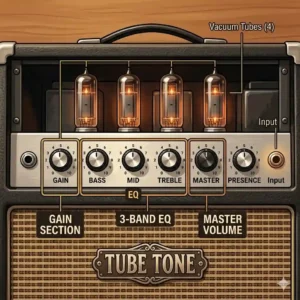
With a solid-state amp, the goal is usually to avoid preamp clipping at all costs. With a tube bass amp combo, clipping is a tool. To get a clean, punchy sound, keep your “Gain” low and your “Master Volume” high. To get that fat, compressed, Motown-style warmth, roll back the Master Volume and push the Gain to about 2 o’clock. This drives the 12AX7 preamp tubes into soft clipping, adding beautiful even-order harmonics that thicken your sound.
Impedance Matching (Crucial)
If you add an extension cabinet to your combo, you must understand impedance. All-tube power sections utilize output transformers that expect a specific load (usually 4 or 8 ohms). Mismatching the impedance on an all-tube amp can literally melt your output transformer—a repair that can cost upwards of $400. Always check the back panel and ensure your external cab matches the amp’s requirements.
Real-World Scenarios: Finding Your Perfect Match
A recurring theme in my consulting work is bassists buying the wrong amplifier for their specific lifestyle. Let’s look at three typical player profiles and the gear that actually fits their needs.
The Weekend Warrior / Bar Gigger
Profile: You play 2-3 times a month in cover bands. You deal with cramped stages, questionable PA systems, and load-ins up flights of stairs.
The Fit: You need a hybrid. The Orange Terror Bass or the Fender Bassman 500 Neo is your target. You get the warmth of a tube preamp, but the Class D power section keeps the weight under 40 lbs. An all-tube combo would break your back, and a 30-watt amp would get completely buried by your drummer’s cymbals.
The Home Studio Producer
Profile: You record mostly at home or in a dedicated project studio. You rarely play live, but you need world-class tone for your tracks.
The Fit: The Ashdown CTM-30-112. At 30 watts, it is too quiet for a loud rock gig, but for recording, it is a monster. Because it is lower wattage, you can actually turn it up to its “sweet spot” (where the power tubes start to saturate) without blowing the windows out of your house.
The Tone Purist / Jazz Musician
Profile: You play an active 5-string or an upright bass. Clarity, acoustic reproduction, and three-dimensional depth are your priorities.
The Fit: The Mesa/Boogie WalkAbout. The tube-driven MOSFET power section offers unparalleled transient response for fast, intricate playing. The passive radiator provides the necessary acoustic depth for upright bass, ensuring the fundamental frequencies project naturally.

Problem to Solution: Managing Tube Quirks
Problem 1: “Microphonic” Ringing
The Issue: You hit a specific note (often a G or G# on the E string) and hear a high-pitched ringing or glass-like rattling coming from the amp.
The Solution: This is a classic microphonic tube. Bass cabinets generate immense internal vibrations, which literally shake the delicate components inside the vacuum tube. To fix this, lightly tap each preamp tube with the eraser end of a pencil while the amp is on. The one that rings out through the speaker is the culprit. Swap it out for a high-quality replacement (like a JJ or Tung-Sol).
Problem 2: Loss of Low-End Definition
The Issue: Your amp used to sound tight and punchy, but after a year of gigging, it sounds “flubby” and loose, especially on the B or E string.
The Solution: Power tubes degrade slowly over time. The first thing to go is the low-end tightness and headroom. If you have an all-tube combo, it is likely time for a re-tube and a bias adjustment. If you have a hybrid amp, check your preamp tubes—while they last much longer than power tubes, a weak 12AX7 will struggle to push the power amp efficiently.
How to Choose a tube bass amp combo
When you decide to invest in a tube bass amp combo, evaluating the spec sheet requires a slightly different vocabulary than shopping for solid-state gear. Here is my definitive framework for choosing the right rig.
1. Understand the “Tube Wattage” Multiplier
If you have only played 500-watt Class D amplifiers, seeing a 30-watt or 50-watt tube amp might seem laughable. However, tube amps clip smoothly and organically. A solid-state amp must have massive headroom because when it clips, it creates harsh, unmusical square waves. A 50-watt all-tube bass amp often sounds as loud as a 200-watt solid-state amp because you can push it to its absolute limit musically.
2. Preamp Tubes vs. Power Tubes
Read the specs carefully. Is it a “Tube Preamp” (Hybrid) or an “All-Tube” amp?
-
Hybrid (Tube Preamp): Uses 1-3 small tubes (like 12AX7s) to color the sound, then uses a digital/solid-state power section to amplify it. Lighter, cheaper, highly reliable.
-
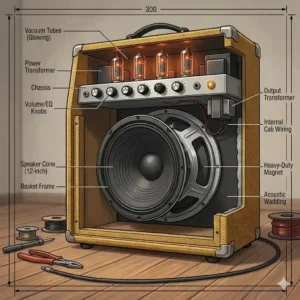
All-Tube: Uses large power tubes (like 6L6s, KT88s, or EL34s) alongside hefty output transformers. Heavy, expensive, requires maintenance, but offers the ultimate tone and “feel.”
3. Speaker Configuration Matters More
Tubes produce complex mid-range harmonics. Therefore, the speakers you pair them with are vital. 10-inch speakers (like a 2×10 combo) will emphasize the punchy, aggressive upper-mids of a tube drive. A 15-inch speaker will roll off the high-end fizz and emphasize the warm, pillowy bottom end. Choose the speaker size based on your genre: 10s for rock/slap, 15s for vintage R&B/Reggae.
Common Mistakes When Buying Bass Amplification
In my decade of consulting, I’ve seen bassists make the same expensive mistakes repeatedly. Avoid these pitfalls when shopping for your tube bass amp combo.
The “Weight to Tone” Delusion
The most common mistake is buying a 70-pound all-tube combo for local gigging, assuming you will “deal with the weight for the sake of tone.” After three months of lugging it out of a car trunk at 2 AM, 90% of bassists leave it at home and buy a lightweight Class D rig. Be brutally honest with yourself about your physical limitations and transport situation. If you gig frequently without roadies, go Hybrid.
Ignoring the Output Transformer (All-Tube Models)
On all-tube amps, the quality of the output transformer is arguably more important than the brand of tubes used. Cheap transformers “choke” low frequencies. If you find a suspiciously cheap all-tube bass amp, they likely skimped on the iron in the transformer. This results in a bass tone that sounds great in the bedroom but disappears entirely when the drummer starts playing.
Assuming All 12AX7s Sound the Same
Many buyers purchase a hybrid combo, decide they don’t like the overdrive character, and sell the amp. The spec sheet won’t tell you this, but swapping a $15 preamp tube can entirely change the amp’s character. Replacing a high-gain 12AX7 with a lower-gain 12AT7 or 5751 can give a notoriously aggressive amp a smooth, vintage character. Don’t sell the amp until you’ve experimented with a tube swap!
Tube Preamp vs. All-Tube vs. Solid State
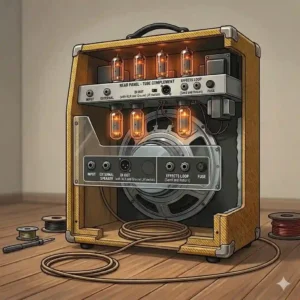
To truly appreciate what a tube bass amp combo offers, we have to look at the physics of sound amplification. According to resources from Wikipedia’s detailed breakdown on valve audio amplifiers, tubes and transistors handle signal clipping in fundamentally different ways.
The Solid State Experience
Solid-state amps (transistors/Class D) are incredibly efficient. They reproduce exactly what you put into them with clinical precision. However, when pushed beyond their limit, they introduce odd-order harmonic distortion. The human ear perceives odd-order harmonics as harsh, sterile, and fatiguing.
The All-Tube Experience
When a vacuum tube is overdriven, it produces even-order harmonic distortion. The human ear perceives this as “musical,” “warm,” and “thick”—literally adding octaves and fifths above the fundamental note. Furthermore, tube power sections naturally compress the signal, evening out the volume differences between your aggressive slapping and soft fingerstyle playing without the need for an external compressor pedal.
The Hybrid Middle Ground
A hybrid combo gives you the front-end even-order harmonics (the tonal “flavor”) but relies on a solid-state power section to do the heavy lifting of moving the speaker cone. You lose the power-amp compression and the “sag” of a tube rectifier, but you gain massive amounts of clean headroom and shave off 40 pounds of weight.
Long-Term Cost & Maintenance of Tube Rigs
Buying a tube bass amp combo is akin to buying a classic car; the initial purchase price is not the final cost of ownership.
The Re-Tube Cycle
If you buy an all-tube combo and gig with it twice a week, expect to replace your power tubes every 18 to 24 months. A matched quad of high-quality power tubes (like KT88s) can cost between $150 and $250. Preamp tubes, however, handle very little current and can easily last 5 to 10 years before needing replacement.
The Cost of Biasing
When you replace power tubes in an all-tube amp, you generally cannot just plug them in. The amp must be “biased”—a process of adjusting the electrical current to ensure the tubes operate efficiently without overheating. Unless the amp features an “auto-bias” circuit (which is rare), you will need to pay an amp technician around $75-$100 to bias the amp every time you change the power tubes.
Total Cost of Ownership: Over a 5-year period, a heavy-gigging bassist might spend an additional $300-$500 maintaining an all-tube combo. Hybrid amps, relying only on preamp tubes, practically eliminate this maintenance cost, making them far more economical over the long haul.
Features That Actually Matter (And Those That Don’t)
Marketing departments love to invent buzzwords. Here is an expert filter on what features actually impact your tone and quality of life.
Crucial: The D.I. Out Quality
In 2026, the Front of House (FOH) engineer will almost always take a Direct Injection (D.I.) signal from your amp to the PA system. If your tube bass amp combo has a cheap, noisy D.I., the audience will hear a bad tone, regardless of how good the amp sounds on stage. Look for amps with a balanced XLR output that offers a “Pre/Post EQ” switch and a Ground Lift.
Crucial: Passive/Active Inputs or Pad Switches
Active basses output a much hotter signal than passive vintage basses. If your amp doesn’t have a -15dB pad or a dedicated active input, an active bass will prematurely overdrive the first preamp tube, leaving you entirely unable to get a clean tone.
Overrated: Built-in Effects (Except Compression)
Many modern combos include built-in chorus, sub-octaves, or graphic EQs. In my experience, onboard effects are almost universally inferior to dedicated effect pedals. Do not base your purchasing decision on built-in digital effects. The only exception is a high-quality optical compressor, which pairs beautifully with tube gear.
✨ Elevate Your Sound Today!
🔍 Don’t settle for sterile bass tone. Click the highlighted links above to check availability and secure your new rig. The perfect low-end foundation is just a click away!
Conclusion
Finding the perfect tube bass amp combo in 2026 is a balancing act between the uncompromising pursuit of tone and the practical realities of gigging and recording. While true all-tube combos like the Ashdown CTM-30-112 or the Ampeg Heritage B-15 offer the absolute pinnacle of touch-sensitive, breathing bass tone, they demand a premium in both price and maintenance. For the vast majority of working bassists, modern hybrid designs like the Fender Bassman 500 Neo and the Orange Terror Bass bridge the gap brilliantly—delivering 90% of the tube magic while sparing your spine and your wallet.
Ultimately, your choice should be dictated by your primary use case. Prioritize tone and feel if you are in the studio, and prioritize wattage, headroom, and portability if you are gigging every weekend. Trust your ears, understand the maintenance involved, and enjoy the unparalleled warmth that only vacuum tubes can provide.
FAQs
❓ What is the main advantage of a tube bass amp combo?
✅ The primary advantage is the harmonic richness and natural compression vacuum tubes provide. Unlike solid-state amps, pushing tubes into overdrive creates musical, even-order harmonics that sit perfectly in a live mix or studio recording without sounding harsh…
❓ Are tube bass amps loud enough for gigging?
✅ Yes, but you must understand tube wattage. A 30-watt all-tube amp is much louder than a 30-watt solid-state amp because it can be pushed into clipping musically. However, for loud rock gigs, a 300W+ hybrid or 100W+ all-tube amp is recommended…
❓ How often do I need to replace the tubes?
✅ Preamp tubes (like 12AX7s) can last 5-10 years under normal use. Power tubes (like 6L6s or KT88s) degrade faster and typically need replacing every 1.5 to 3 years depending on how hard and frequently you play…
❓ Do I need to bias a hybrid tube bass amp combo?
✅ Generally, no. Hybrid amps only use tubes in the preamp stage, which are “cathode biased” and plug-and-play. Only amps with all-tube power sections typically require manual biasing by a technician when changing power tubes…
❓ Can I use pedals with a tube bass amp?
✅ Absolutely. Tube amps are famous for taking pedals exceptionally well. Overdrive and fuzz pedals sound much more natural when pushing the front end of a tube amp compared to a clinical solid-state input stage…
Recommended for You
- 5 Best bass cabinet and head Setups for 2026: Pro Performance Guide
- Bass Amplifier Bass: 5 Best Picks to Avoid 2026 Pitfalls
- 5 Epic Options: Finding the Best bass guitar tube amp in 2026
Disclaimer: This article contains affiliate links. As an Amazon Associate, I earn from qualifying purchases. If you purchase products through these links, we may earn a small commission at no additional cost to you.
✨ Found this helpful? Share it with your friends! 💬🤗