Finding the best bass guitar amps can feel like navigating a sonic maze. Whether you’re a bedroom bassist or gigging professional, your amplifier serves as the crucial bridge between your instrument and your audience. Moreover, the right bass amp doesn’t just amplify your sound—it shapes, colors, and defines your musical identity. In today’s competitive market, choosing from countless options requires understanding the intricate balance between power, tone, and practicality.
✨Was this helpful? Spread the word! 🚀
The landscape of bass amplification has evolved dramatically, transforming from simple volume boosters to sophisticated sound-shaping tools. Consequently, modern bassists enjoy unprecedented control over their sonic palette. From the punchy clarity of best bass combo amp units to the earth-shaking power of professional stacks, today’s amplifiers offer remarkable versatility. Additionally, innovations in digital processing and cabinet design have revolutionized what’s possible in both studio and live environments.
Understanding your amplification needs begins with honest assessment of your playing context. Furthermore, factors like venue size, musical style, and transport considerations significantly influence the ideal amp choice. Whether you need the portability of best small bass amp options or the commanding presence of top bass amps in professional settings, this comprehensive guide will navigate you through every consideration.
Bass Amp vs. Alternative Amplification Solutions
| Feature | Traditional Bass Amps | PA Systems | Modeling Amps | Home Studio Monitors |
|---|---|---|---|---|
| Portability | Medium to Low | Low | High | High |
| Tonal Character | Authentic tube/solid-state warmth | Clinical accuracy | Versatile modeling | Reference quality |
| Power Output | 50W-1000W+ | 500W-5000W+ | 15W-500W | 5W-100W |
| Setup Complexity | Simple plug-and-play | Complex routing required | Moderate learning curve | Simple connection |
| Live Performance | Excellent stage presence | Professional standard | Good for small venues | Not suitable |
| Recording Capabilities | Limited without DI | Excellent flexibility | Built-in USB/XLR | Designed for recording |
| Price Range | $200-$5000+ | $800-$8000+ | $300-$2000 | $150-$1500 |
💬 Just one click – help others make better buying decisions too!😊
🎸 Understanding Bass Amplification Fundamentals
The Science Behind Bass Frequency Reproduction
Bass amplification operates on fundamentally different principles than guitar amplification. Specifically, bass frequencies require significantly more power to achieve equivalent perceived volume levels. According to acoustic engineering research, low-frequency reproduction demands exponentially more energy than mid or high frequencies. This scientific reality explains why bass amps typically feature higher wattage ratings and larger speaker configurations.
The physics of bass reproduction involves moving substantial amounts of air to create audible low-frequency waves. Therefore, effective bass amplification requires careful consideration of speaker diameter, cabinet volume, and port design. Additionally, the interaction between amplifier headroom and speaker efficiency determines the system’s ability to reproduce clean, articulate bass tones at various volume levels.
Tube vs. Solid-State vs. Hybrid Technologies
Modern bass amplification employs three primary technologies, each offering distinct sonic characteristics. First, tube amplifiers provide natural compression and harmonic richness that many players find musically pleasing. However, tube amps require regular maintenance and typically offer less headroom per watt than solid-state alternatives.
Conversely, solid-state amplifiers deliver consistent performance, higher power efficiency, and lower maintenance requirements. Meanwhile, hybrid designs attempt to combine tube warmth in the preamp section with solid-state reliability and power in the output stage. Furthermore, modern digital processing has introduced modeling capabilities that can emulate various amp types within a single unit.
Speaker Configuration Impact on Tone and Performance
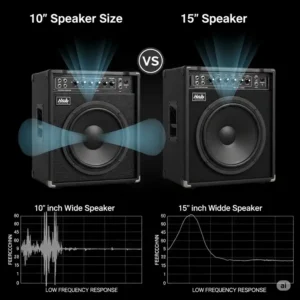
Speaker arrangement profoundly influences both tonal characteristics and power handling capabilities. For instance, multiple smaller speakers (like 4×10 configurations) typically provide better midrange clarity and faster transient response. Alternatively, larger speakers (such as 15-inch drivers) excel at reproducing fundamental bass frequencies with greater efficiency.
The relationship between speaker size and frequency response follows established acoustic principles. Consequently, 8-inch speakers emphasize upper midrange frequencies, 10-inch drivers balance punch with low-end extension, 12-inch speakers offer versatile performance across frequency ranges, and 15-inch and larger drivers maximize low-frequency output. Understanding these characteristics helps bassists select configurations that complement their playing style and musical requirements.
🔍 Detailed Analysis of the Best Bass Guitar Amps
Professional Powerhouses: Top-Tier Bass Amplification
The Ampeg SVT-CL Classic represents the gold standard in professional bass amplification. This legendary all-tube head delivers 300 watts of pure, uncompressed power through its complement of 6550 power tubes. Moreover, the SVT-CL’s distinctive midrange growl and natural compression have shaped countless recordings across genres from rock to jazz fusion. Additionally, its robust construction and road-tested reliability make it a favorite among touring professionals.
Key specifications include all-tube preamp and power sections, variable ultra-low and ultra-mid EQ controls, and compatibility with various cabinet configurations. Furthermore, the SVT-CL features a balanced XLR output with ground lift for direct recording applications. Professional bassists particularly appreciate its ability to maintain clarity and definition even at extreme volume levels.
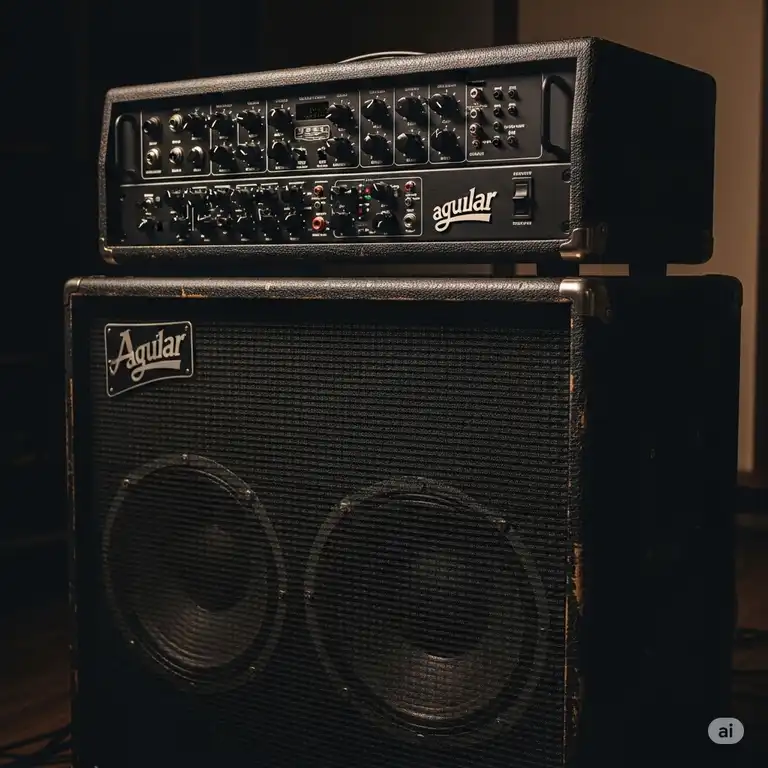
The Aguilar DB 751 combines vintage-inspired tone with modern reliability. Specifically, this tube-hybrid design delivers 751 watts of power while maintaining the musical compression characteristics of all-tube designs. The DB 751’s sophisticated EQ section includes sweepable midrange controls and a deep switch for enhanced low-end response. Additionally, its compact 2U rack format makes it practical for touring applications.
Versatile Combo Solutions: Best Bass Combo Amp Options
Combo amplifiers integrate amplifier and speaker in a single, portable package. The Markbass Little Mark Tube 800 exemplifies modern combo innovation, combining tube preamp warmth with 800 watts of solid-state power in a surprisingly compact format. Its advanced EQ section includes vintage loudspeaker emulator (VLE) and vintage microphone emulator (VME) controls for enhanced tonal versatility.
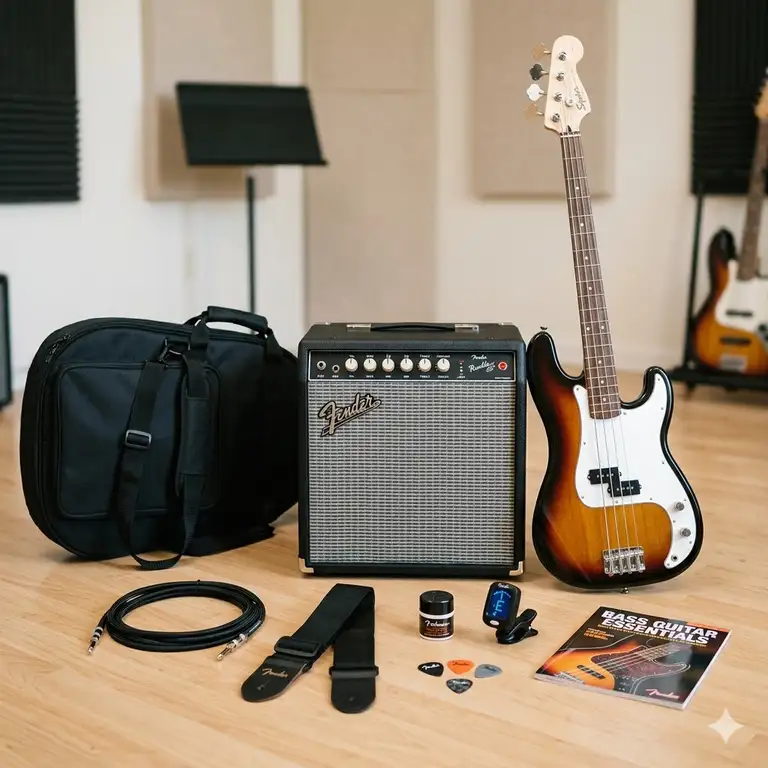
For intermediate players seeking professional features, the Fender Rumble 500 delivers exceptional value and performance. This 500-watt combo features Fender’s renowned build quality and includes useful features like overdrive, compression, and a comprehensive EQ section. Moreover, its lightweight design (36 pounds) makes it practical for regular transport while maintaining the tonal authority expected from larger amplifiers.
The Gallien-Krueger MB212-II represents the pinnacle of portable bass amplification. Its unique dual-chamber design houses two 12-inch speakers in optimized enclosures, creating the tonal benefits of separate cabinets within a single unit. Furthermore, the MB212-II’s 500-watt power section and sophisticated tone-shaping capabilities make it suitable for both practice and professional performance.
📊 Comprehensive Amp Comparison: Features and Performance
| Model | Power Output | Speaker Config | Weight | Price Range | Best For |
|---|---|---|---|---|---|
| Ampeg SVT-CL | 300W Tube | Head Only | 85 lbs | $2000-$2500 | Professional recording/touring |
| Aguilar DB 751 | 751W Hybrid | Head Only | 18 lbs | $1800-$2200 | Studio professionals |
| Markbass Little Mark Tube 800 | 800W Hybrid | 1×15″ combo | 44 lbs | $1500-$1800 | Gigging musicians |
| Fender Rumble 500 | 500W Solid-State | 2×10″ combo | 36 lbs | $600-$750 | Intermediate players |
| Gallien-Krueger MB212-II | 500W Solid-State | 2×12″ combo | 48 lbs | $900-$1100 | Versatile performers |
| Orange Terror Bass 1000 | 1000W Solid-State | Head Only | 7.7 lbs | $800-$950 | Modern metal/rock |
| Mesa/Boogie Subway D-800+ | 800W Class-D | Head Only | 4.8 lbs | $1200-$1400 | Professional touring |
💬 Just one click – help others make better buying decisions too!😊
✨ Transform Your Sound Today! 🎵
🎸 Ready to experience the difference that professional-quality amplification makes? Don’t let inferior gear hold back your musical potential. These carefully researched amplifiers represent the best combinations of performance, value, and reliability available today. Your bass deserves an amplifier that captures every nuance of your playing while providing the power and clarity needed for any musical situation! 🔥

Compact Powerhouses: Best Small Bass Amp Solutions
Modern technology has revolutionized small bass amplification, proving that compact doesn’t mean compromised. The Orange Terror Bass 1000 delivers an astounding 1000 watts in a package weighing less than 8 pounds. This Class-D marvel features Orange’s signature midrange character while providing enough power for most professional applications. Additionally, its ultra-portable design makes it ideal for fly-date touring and session work.
The evolution of Class-D amplification has enabled unprecedented power-to-weight ratios. Specifically, these switching amplifiers achieve efficiency ratings exceeding 90%, dramatically reducing heat generation and weight compared to traditional linear designs. Consequently, modern bassists can access professional-level power in packages that would have been impossible just a decade ago.
Budget-Conscious Excellence: Value-Oriented Bass Amplification
Entry-level amplification has improved dramatically, offering legitimate performance at accessible prices. The Fender Rumble 25 provides 25 watts of clean power suitable for practice and small venue performance. Its simple control layout includes bass, mid, treble EQ plus overdrive and contour switches for basic tone shaping. Moreover, auxiliary input and headphone output make it practical for home practice scenarios.
For players seeking slightly more power and features, the Hartke HD25 offers 25 watts through an 8-inch speaker with Hartke’s distinctive aluminum cone technology. This design provides enhanced clarity and transient response compared to traditional paper cone speakers. Furthermore, its built-in limiter protects the speaker from damage during enthusiastic playing sessions.
⚡ Advanced Technical Considerations for Bass Amplification
Understanding Power Requirements and Headroom
Power requirements vary significantly based on application and musical context. Generally, small venues and practice applications require 50-100 watts, medium venues need 200-500 watts, and large venues or outdoor events demand 500+ watts. However, these guidelines represent starting points rather than absolute requirements, as speaker efficiency and cabinet design significantly influence effective volume levels.
Headroom—the amplifier’s ability to reproduce peaks without distortion—becomes crucial for dynamic playing styles. Specifically, amplifiers should provide approximately 2-3 times the continuous power needed for average playing levels. This excess capacity ensures clean reproduction of transient peaks and maintains tonal clarity during complex passages.
EQ Section Design and Tonal Shaping Capabilities
Modern bass amplifiers feature increasingly sophisticated equalization systems. Basic three-band EQ (bass, mid, treble) provides fundamental tone shaping, while parametric and semi-parametric systems offer precise frequency targeting. Advanced designs include multiple midrange bands, variable frequency selection, and specialized filters for enhanced versatility.
The most effective EQ systems provide musical frequency centers that complement bass guitar’s natural resonances. Consequently, well-designed bass amps place EQ points at frequencies that enhance rather than fight the instrument’s inherent characteristics. Additionally, modern designs often include preset voicing options that provide starting points for different musical styles.
Digital Processing Integration and Modern Features
Contemporary bass amplification increasingly incorporates digital processing for enhanced functionality. These systems typically include built-in effects, amp modeling, and advanced EQ capabilities that would require multiple outboard devices in traditional setups. Furthermore, USB connectivity enables direct recording and software editing of internal parameters.
The integration of wireless connectivity has introduced smartphone apps for remote control and preset management. This technology allows bassists to adjust settings from anywhere on stage and save custom configurations for different songs or venues. Additionally, some systems include automatic feedback suppression and room correction algorithms that optimize performance for specific acoustic environments.
🏭 Industry-Specific Applications and Professional Use Cases
Recording Studio Applications
Professional recording environments demand amplifiers with exceptional clarity, low noise floors, and consistent performance characteristics. The Aguilar DB 751 has become a studio favorite due to its transparent signal path and musical compression characteristics. Recording engineers particularly value its ability to capture both the fundamental bass frequencies and harmonic overtones that contribute to professional-quality recordings.
Studio amplification often emphasizes different qualities than live performance applications. Specifically, recording situations prioritize tonal accuracy, noise performance, and the ability to work effectively with direct injection systems. Consequently, many studio-focused amplifiers include sophisticated DI outputs with speaker emulation and multiple output level options for integration with recording consoles.
Live Performance Considerations
Live bass amplification must overcome unique challenges including stage volume requirements, monitor mix integration, and reliable performance under demanding conditions. The Ampeg SVT-CL remains the gold standard for many touring bassists due to its commanding stage presence and proven reliability across decades of professional use.
Modern live rigs increasingly utilize in-ear monitoring systems that change amplification requirements. These setups often emphasize DI signal quality over traditional stage volume, allowing bassists to use smaller, more manageable amplifiers while maintaining professional sound quality. Furthermore, silent stage environments enable more creative amplifier choices that prioritize tone over sheer volume output.
Educational and Institutional Applications
Music education facilities require amplifiers that balance performance capability with durability and ease of use. The Fender Rumble series has found widespread adoption in educational settings due to its robust construction, intuitive controls, and reasonable maintenance requirements. Additionally, features like built-in overdrive and EQ presets help students understand different tonal possibilities without overwhelming complexity.
Institutional applications often emphasize different priorities than individual ownership scenarios. Specifically, educational facilities value reliability, ease of maintenance, and resistance to student misuse. Consequently, amplifiers designed for institutional use typically feature simpler control layouts, robust construction, and readily available service support.
🔧 Comprehensive Setup and Optimization Guide
Initial Setup and Room Acoustics
Proper amplifier placement significantly influences both tone quality and performance characteristics. Bass frequencies interact strongly with room boundaries, creating standing waves and acoustic anomalies that can dramatically affect the listening experience. Therefore, understanding basic acoustic principles helps optimize amplifier performance in various environments.
Corner placement typically enhances low-frequency output through boundary reinforcement, while center-wall positioning provides more balanced frequency response. Additionally, elevating amplifiers on stands or platforms can improve sound dispersion and reduce unwanted floor coupling. These positioning considerations become particularly important in smaller rooms where acoustic interactions are more pronounced.
Signal Chain Optimization
The arrangement of effects and processing equipment significantly influences overall system performance. Generally, dynamic effects (compression, limiting) work best early in the signal chain, while modulation effects (chorus, flanger) perform optimally after distortion or overdrive. Additionally, EQ placement depends on the desired outcome—pre-distortion EQ shapes the overdrive character, while post-distortion EQ affects the final tonal balance.
Modern bassists often employ complex signal chains that include multiple amplifiers, effects processors, and routing options. Consequently, understanding proper gain staging becomes crucial for maintaining signal quality and preventing unwanted distortion or noise. Furthermore, impedance matching between components ensures optimal signal transfer and prevents tonal degradation.
Performance Environment Adaptation
Different venues require specific approach modifications to achieve optimal results. Small rooms with reflective surfaces may benefit from reduced low-frequency output to prevent boomy response, while large spaces typically require enhanced low-end to maintain fundamental clarity. Additionally, outdoor venues present unique challenges including wind effects and lack of acoustic boundaries that normally reinforce bass frequencies.
Professional bassists develop venue-specific presets that account for common acoustic situations. These might include settings for small clubs, medium theaters, large arenas, and outdoor festivals. Furthermore, understanding microphone placement and sound system integration helps ensure consistent results regardless of venue size or acoustic characteristics.
🛠️ Maintenance and Longevity Protocols
Daily and Weekly Maintenance Schedules
Proper amplifier maintenance extends equipment life and ensures consistent performance. Daily routines should include visual inspection of connections, gentle cleaning of control surfaces, and verification of proper operation before use. Additionally, allowing adequate warm-up time for tube amplifiers prevents thermal shock and extends tube life.
Weekly maintenance expands to include thorough cleaning of input jacks, inspection of power and speaker cables, and documentation of any performance anomalies. Furthermore, regular backup of digital presets and settings prevents data loss and simplifies equipment replacement if necessary. These preventive measures significantly reduce the likelihood of performance failures during critical applications.
Monthly and Quarterly Service Protocols
Monthly maintenance should include comprehensive inspection of internal components, cleaning of cooling vents, and testing of all input/output connections. Additionally, tube amplifiers require regular bias checking and tube inspection to maintain optimal performance. Professional service documentation helps track maintenance history and identify potential issues before they become failures.
Quarterly service intervals provide opportunities for more intensive maintenance including internal cleaning, connection tightening, and performance verification. Professional technicians can identify subtle degradation patterns that might escape casual observation. Furthermore, maintaining service records helps establish equipment value for insurance purposes and resale considerations.
Troubleshooting Common Issues
Understanding common amplifier problems helps bassists address minor issues without requiring professional service. Intermittent connections often result from oxidized jacks or loose cable connections, while gradual volume loss may indicate tube aging or speaker damage. Additionally, unusual noise often stems from ground loops, interference sources, or component aging.
Systematic troubleshooting approaches help isolate problems efficiently. Beginning with signal path verification, then progressing through power supply, preamp, and output sections typically identifies most issues quickly. Furthermore, maintaining spare tubes, fuses, and cables enables immediate resolution of common problems during performance situations.
Long-term Cost Analysis and Upgrade Planning
Total cost of ownership includes initial purchase price, ongoing maintenance expenses, and eventual replacement or upgrade costs. Tube amplifiers typically require higher maintenance investment but may retain value better than solid-state alternatives. Conversely, digital amplifiers may become obsolete more quickly but require minimal ongoing maintenance.
Planning upgrade paths helps maximize equipment investment returns. Understanding compatibility between current and future equipment enables gradual system improvement without wholesale replacement. Additionally, maintaining equipment in excellent condition preserves resale value and provides more resources for future upgrades.
📈 Comparative Analysis: Traditional vs. Modern Approaches
Analog vs. Digital Processing Comparison
| Aspect | Analog Processing | Digital Processing |
|---|---|---|
| Tonal Character | Natural warmth and compression | Precise, clinical accuracy |
| Flexibility | Limited by physical components | Extensive programmability |
| Maintenance | Regular component replacement | Software updates only |
| Reliability | Proven long-term stability | Potential obsolescence |
| Cost | Higher component costs | Lower manufacturing costs |
| Power Consumption | Higher heat generation | Energy efficient operation |
Traditional Stack vs. Modern Combo Systems
The classic bass stack configuration—separate head and cabinet—offers maximum flexibility and power handling capability. However, modern combo amplifiers provide integrated solutions that often match stack performance while offering superior portability. This evolution reflects changing performance requirements and transportation considerations in modern music industry.
Professional touring still favors stack configurations for their modularity and repair advantages. Specifically, component failure in a stack system affects only the failed unit, while combo failures disable the entire amplification system. Additionally, stacks allow mixing different cabinet types to optimize frequency response for specific venues or musical requirements.
Price-to-Performance Analysis Across Categories
Entry-level amplifiers (under $500) now provide performance levels that would have required professional equipment just a decade ago. Mid-range options ($500-$1500) offer features and capabilities that rival high-end equipment from previous generations. Meanwhile, premium amplifiers (over $1500) incorporate cutting-edge technology and boutique-level craftsmanship that justify their elevated pricing.
The democratization of professional features across price points has eliminated many traditional performance barriers. Consequently, bassist choice now focuses more on specific feature requirements and aesthetic preferences rather than fundamental capability limitations. This trend enables more musicians to access professional-quality amplification regardless of budget constraints.
🎯 Case Studies: Real-World Implementation Success Stories
Case Study 1: Jazz Fusion Bassist Upgrades to Professional System
Marcus, a semi-professional jazz fusion bassist, struggled with his practice amp’s limitations during jam sessions and small venue performances. His 25-watt combo lacked the headroom needed for clean reproduction of complex chord progressions and failed to cut through mix with keyboards and drums. Additionally, the limited EQ options prevented him from achieving the articulate midrange presence essential for jazz fusion applications.
After research and testing, Marcus invested in the Markbass Little Mark Tube 800 combo. The upgrade immediately improved his performance capability through increased headroom, sophisticated EQ options, and tube-driven harmonic richness. Furthermore, the VLE and VME controls provided vintage tonal options that enhanced his traditional jazz playing while maintaining modern clarity for fusion passages.
Results included improved mix presence during ensemble playing, expanded dynamic range for expressive techniques, and reduced fatigue during long practice sessions. Additionally, the amp’s professional DI output enabled direct recording that captured his playing nuances without requiring additional equipment. The investment paid dividends through improved performance opportunities and enhanced musical satisfaction.
Case Study 2: Metal Bassist Transitions to Modern High-Efficiency Design
Sarah, a metal bassist, experienced chronic back problems from transporting her traditional tube stack to rehearsals and gigs. Her 85-pound tube head plus dual 4×10 cabinets created logistical challenges that limited her performance opportunities. Moreover, the setup time required for her complex rig prevented acceptance of last-minute performance opportunities.
The solution involved upgrading to the Orange Terror Bass 1000 head paired with a single, efficient 2×12 cabinet. This configuration reduced total system weight from 200+ pounds to under 60 pounds while maintaining the aggressive midrange character essential for metal applications. Additionally, the simplified setup enabled rapid load-in and sound check procedures.
Performance benefits included maintained stage volume and presence, improved portability for increased gig acceptance, and reduced physical strain enabling longer performance sessions. Furthermore, the modern amp’s reliability eliminated the tube maintenance requirements that had previously caused missed performance opportunities due to equipment failures.
Case Study 3: Studio Bassist Optimizes Recording Chain
David, a session bassist, struggled with inconsistent recording results across different studios. His traditional amplifier setup sounded excellent in familiar environments but performed unpredictably when adapted to various studio acoustics and microphone configurations. Additionally, the lack of consistent DI options created workflow complications during tracking sessions.
The upgrade to an Aguilar DB 751 with comprehensive DI capabilities standardized his recording chain across all studio environments. The amp’s transparent signal path and musical compression characteristics translated consistently regardless of microphone choice or room acoustics. Moreover, multiple output options enabled simultaneous amp and DI recording for enhanced flexibility during mixing.
Results included improved session efficiency through consistent setup procedures, enhanced recording quality through optimized signal chain, and increased booking opportunities due to reliable performance across studios. Additionally, the investment improved his professional reputation through consistently excellent recorded results.
🚀 Future Trends and Market Evolution
Emerging Technologies in Bass Amplification
The bass amplification industry continues evolving through integration of advanced technologies and changing performance requirements. Artificial intelligence and machine learning increasingly influence automatic feedback suppression, room correction, and adaptive EQ systems that optimize performance for specific acoustic environments. Additionally, wireless power transmission research may eventually eliminate power cable requirements for ultimate portability.
Sustainability concerns drive development of more energy-efficient amplification technologies. Class-D switching amplifiers have achieved efficiency levels exceeding 95%, dramatically reducing power consumption and heat generation compared to traditional linear designs. Furthermore, manufacturers increasingly emphasize recyclable materials and reduced packaging in response to environmental consciousness.
Market Trends and Consumer Behavior Shifts
Modern bassists demonstrate increasing preference for versatile, feature-rich amplifiers that excel across multiple applications rather than specialized single-purpose designs. This trend reflects the diverse musical requirements of contemporary musicians who often perform across multiple genres and venues. Consequently, manufacturers focus on developing adaptable systems that provide professional performance in various contexts.
The rise of home recording and online content creation has created demand for amplifiers with integrated recording capabilities. USB connectivity, software integration, and silent practice features have become increasingly important purchasing considerations. Additionally, the growth of online music education has emphasized the importance of practice-friendly features like aux inputs and headphone outputs.
Personalization and Customization Possibilities
Advanced digital processing enables unprecedented customization possibilities through software-based parameter adjustment and preset management. Modern amplifiers increasingly include smartphone apps that provide intuitive interfaces for complex parameter adjustment and preset organization. Furthermore, cloud-based preset sharing enables global communities of bassists to exchange custom settings and discoveries.
The integration of artificial intelligence may enable amplifiers that learn individual playing styles and automatically optimize settings for different musical contexts. These systems could analyze playing dynamics, frequency content, and musical style to provide intelligent suggestions for optimal amplifier configuration. Additionally, predictive maintenance algorithms could monitor component health and suggest preventive service before failures occur.
Industry Predictions and Upcoming Developments
Industry experts predict continued miniaturization of high-power amplification through advances in switching technology and thermal management. This trend will likely enable professional-level power in increasingly portable packages, further reducing the logistical barriers to live performance. Additionally, improved battery technology may enable truly cordless amplification for ultimate mobility.
The convergence of amplification and digital audio workstation technology may create hybrid devices that function as both performance amplifiers and recording interfaces. These systems could provide seamless integration between live performance and studio applications, eliminating the traditional barriers between performance and recording equipment categories.
✨ Don’t Miss These Exclusive Deals! 🛒
🎸 Transform your bass playing experience with these carefully selected amplifiers. Each option represents the pinnacle of performance in its category, offering professional capabilities that will elevate your musical expression. Whether you’re seeking the warm tube compression of vintage designs or the modern efficiency of Class-D technology, these amplifiers provide the foundation for exceptional bass performance. ⚡
Conclusion
Selecting the best bass guitar amps requires careful consideration of multiple factors including power requirements, tonal preferences, portability needs, and budget constraints. Throughout this comprehensive analysis, we’ve explored how modern amplification technology has democratized access to professional-quality sound while maintaining the distinct characteristics that define great bass tone. Moreover, the evolution from simple volume boosters to sophisticated tone-shaping tools has expanded creative possibilities for bassists across all skill levels and musical genres.
The landscape of bass amplification continues evolving rapidly, with innovations in Class-D technology, digital processing, and wireless connectivity reshaping what’s possible in both live and studio applications. Consequently, today’s bassists enjoy unprecedented access to professional capabilities that would have required significant investment just a decade ago. Additionally, the integration of recording features, smartphone connectivity, and intelligent processing has blurred traditional boundaries between practice, performance, and studio equipment.
Whether you’re drawn to the legendary best bass combo amp versatility of integrated solutions or the modular flexibility of stack configurations, understanding your specific requirements remains paramount. Furthermore, considering factors like venue size, musical style, and transport limitations ensures optimal amplifier selection that will serve your musical goals effectively. The investment in quality amplification pays dividends through improved performance opportunities, enhanced musical satisfaction, and the inspiring tone that motivates continued musical growth.
Modern bassists benefit from extensive options across all price points, from budget-friendly best small bass amp solutions perfect for practice and small venues to professional top bass amps capable of handling the most demanding touring applications. This comprehensive selection ensures that every bassist can access amplification that matches their needs, budget, and aspirations. Remember that the best amplifier is the one that inspires you to play more, practice longer, and explore new musical territories with confidence and enthusiasm.
FAQs
❓ How much power do I need for different bass guitar amp applications?
✅ Practice and home use requires 25-50 watts, small venues need 100-300 watts, medium venues demand 300-500 watts, and large venues require 500+ watts. However, speaker efficiency and venue acoustics significantly influence actual volume requirements...
❓ What's the difference between bass combo amps and stack configurations?
✅ Combo amps integrate amplifier and speaker in one unit for convenience and portability, while stacks separate head and cabinet for flexibility and power handling. Combos excel for practice and small venues, stacks provide modularity for professional applications requiring maximum power and customization options...
❓ Are tube bass amps better than solid state for live performance?
✅ Tube amps provide natural compression and harmonic richness that many find musically pleasing, while solid-state offers higher reliability and power efficiency. Modern hybrid designs combine tube preamp warmth with solid-state power section reliability, often providing the best balance for live performance...
❓ How do I choose between 4x10 and 1x15 bass speaker configurations?
✅ 4×10 configurations typically provide better midrange clarity and faster transient response, while 1×15 speakers excel at fundamental bass frequency reproduction. Many modern bassists prefer 2×12 configurations that balance punch with low-end extension, offering versatile performance across musical styles...
❓ What bass amp features are most important for recording applications?
✅ Recording requires clean signal paths, low noise floors, and high-quality DI outputs with speaker emulation. Look for amps with balanced XLR outputs, ground lift options, and transparent preamp sections. Built-in compression and EQ flexibility help achieve professional recorded bass tones...
Recommended for You:
- 7 Best Battery Powered Bass Amp Options For Ultimate Portability in 2025
- 7 Best Tube Bass Amp Options For Ultimate Warmth and Power in 2025
- 7 Best Vox Bass Guitar Amp Options For Ultimate Tone in 2025
Disclaimer: This article contains affiliate links. If you purchase products through these links, we may earn a small commission at no additional cost to you.
✨ Found this helpful? Share it with your friends! 💬🤗