Finding the perfect bass guitar cabinets can make or break your sound. Whether you’re laying down the groove in a cramped practice room or commanding the stage at a packed venue, the right cabinet transforms your bass from a whisper to a thunderous declaration of musical intent. Moreover, navigating the world of bass cabinets feels overwhelming with countless configurations, brands, and technical specifications competing for your attention.
✨Was this helpful? Spread the word! 🚀
Today’s bass guitar cabinets represent decades of acoustic engineering evolution, combining traditional speaker design principles with cutting-edge materials and construction techniques. Furthermore, modern bass cabinets offer unprecedented versatility, allowing bassists to achieve everything from crystal-clear highs to earth-shaking lows with remarkable precision and reliability.
Bass Guitar Cabinets vs. Alternative Sound Solutions
| Feature | Bass Guitar Cabinets | Combo Amplifiers | Direct Recording | PA System Only |
|---|---|---|---|---|
| Portability | Moderate | High | Excellent | Poor |
| Sound Quality | Excellent | Good | Variable | Good |
| Versatility | High | Moderate | High | Low |
| Cost | $300-$3000+ | $200-$2000+ | $100-$500+ | $1000-$10000+ |
| Setup Complexity | Moderate | Low | Low | High |
| Volume Capability | Excellent | Good | N/A | Excellent |
| Upgrade Flexibility | High | Low | High | Moderate |
The strategic advantage of dedicated bass guitar cabinets lies in their specialized design for low-frequency reproduction. Unlike full-range speakers or guitar cabinets, bass cabinets feature drivers specifically engineered to handle the extended low-end frequencies that define the bass guitar’s sonic signature. Additionally, modular cabinet systems provide scalability that grows with your playing needs and venue requirements.
Understanding Bass Guitar Cabinet Fundamentals 🎵
Bass guitar cabinets represent the final link in your signal chain, converting electrical energy from your amplifier head into acoustic energy that moves air and creates the physical sensation of bass. The fundamental principle involves electromagnetic drivers moving back and forth to create pressure waves, but the devil lives in the details of how these components work together.
The Science Behind Low-Frequency Reproduction
Low-frequency sound waves require significant energy and air movement to achieve proper reproduction. Consequently, bass guitar cabinets employ larger drivers, more robust construction, and carefully calculated internal volumes to achieve optimal performance. Research from the Audio Engineering Society demonstrates that frequencies below 100 Hz require exponentially more power and driver excursion compared to midrange frequencies.
The relationship between driver size, cabinet volume, and frequency response follows well-established acoustic principles. Specifically, larger drivers can move more air with less excursion, reducing distortion and improving efficiency at low frequencies. However, larger drivers often sacrifice high-frequency response, which explains why many modern bass cabinets incorporate multiple driver sizes or specialized tweeters.
Cabinet Construction and Material Science
Modern bass guitar cabinets utilize advanced materials and construction techniques to achieve optimal performance while managing weight and cost considerations. Plywood construction remains the gold standard for professional-grade cabinets, offering superior strength-to-weight ratios compared to particle board or MDF alternatives. Furthermore, Baltic birch plywood provides exceptional durability and resonance characteristics that enhance rather than color the natural bass tone.
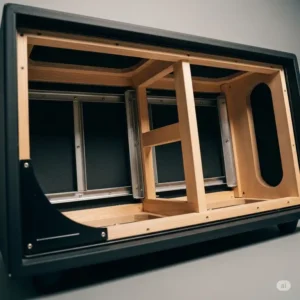
Internal bracing systems distribute stress loads and prevent cabinet resonance that could muddy the bass response. Similarly, port design and placement dramatically affect the cabinet’s frequency response and power handling capabilities. Properly designed ports extend low-frequency response while preventing air turbulence that creates unwanted noise and distortion.
Driver Technology and Performance Characteristics
Contemporary bass drivers incorporate advanced materials including neodymium magnets, carbon fiber cones, and high-temperature voice coils. These innovations enable higher power handling, improved transient response, and reduced weight compared to traditional ceramic magnet drivers. Additionally, computer modeling and finite element analysis allow manufacturers to optimize driver parameters for specific applications and cabinet designs.
Speaker cone materials significantly impact tone character and durability. Paper cones provide warm, vintage tones with natural compression characteristics, while aluminum and carbon fiber cones deliver enhanced clarity and transient response. Moreover, cone treatments and coatings can fine-tune frequency response and improve moisture resistance for outdoor applications.
Essential Features and Specifications Analysis 🔧
Understanding bass guitar cabinet specifications empowers informed purchasing decisions and helps match cabinets to specific playing situations and amplifier characteristics. However, manufacturer specifications don’t always tell the complete story, requiring deeper analysis of real-world performance characteristics.
Power Handling and RMS Ratings
Power handling specifications indicate the maximum continuous power a cabinet can handle without damage, but these numbers require careful interpretation. RMS (Root Mean Square) ratings provide more meaningful information than peak power ratings, which can be misleading marketing metrics. Furthermore, matching amplifier power to cabinet handling requires understanding that underpowering cabinets can cause more damage than slight overpowering due to clipping distortion.
Professional bassists typically recommend amplifier power ratings between 75% and 150% of the cabinet’s RMS handling capability. This range provides adequate headroom for dynamic playing while preventing damage from excessive power delivery. Additionally, modern amplifier protection circuits and limiting systems provide additional safety margins for aggressive playing styles.
Frequency Response and Sonic Character
Frequency response measurements reveal how evenly a cabinet reproduces different frequencies, but these specifications must be interpreted within context. Bass guitar fundamentals typically range from 41 Hz (low E) to approximately 400 Hz for the fundamental frequencies, with harmonics extending well into the midrange and treble regions. Consequently, bass cabinets must balance extended low-frequency response with clear midrange reproduction for optimal note definition.
Response curves that show significant peaks or valleys indicate potential tonal coloration that may enhance or detract from specific playing styles. Smooth, extended response typically provides the most versatile platform for different bass guitars and playing techniques. Moreover, phase response characteristics affect transient reproduction and overall clarity, particularly important for complex harmonic content and percussive playing styles.
Modern Bass Guitar Cabinet Configurations 📊
| Configuration | Drivers | Frequency Response | Typical Use | Weight Range |
|---|---|---|---|---|
| 1×15″ | One 15″ | Deep, warm | Studio/small venues | 45-70 lbs |
| 2×10″ | Two 10″ | Punchy, clear | Versatile/medium venues | 35-55 lbs |
| 4×10″ | Four 10″ | Aggressive, cutting | Rock/large venues | 65-95 lbs |
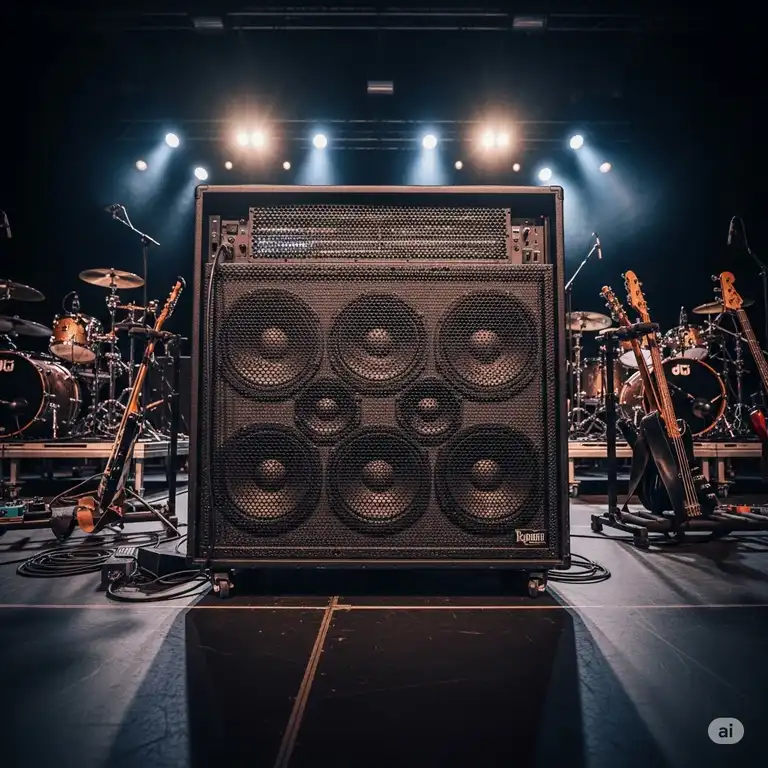
| 8×10″ | Eight 10″ | Massive, iconic | Stadium/recording | 130-165 lbs |
| 2×12″ | Two 12″ | Balanced, modern | All-around | 55-75 lbs |
| 1×18″ | One 18″ | Ultra-low, sub | Electronic/hip-hop | 60-85 lbs |
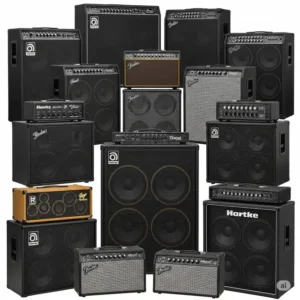
The choice between different configurations depends on musical style, venue requirements, and personal tonal preferences. Traditional wisdom suggested that 15-inch drivers provided superior low-frequency response while 10-inch drivers offered better midrange clarity, but modern driver technology has blurred these distinctions significantly.
Contemporary 10-inch drivers can achieve impressive low-frequency extension while maintaining excellent transient response and clarity. Conversely, modern 15-inch drivers incorporate design improvements that enhance midrange definition without sacrificing low-end authority. Therefore, configuration choice increasingly depends on specific driver quality and cabinet design rather than simple driver size assumptions.
Modular System Advantages
Modular bass cabinet systems provide unprecedented flexibility for different playing situations and venue requirements. Starting with a single cabinet and adding matching units allows incremental investment and customizable sound reinforcement. Furthermore, modular systems enable asymmetric configurations that can adapt to specific stage layouts and acoustic environments.
Transport considerations favor modular systems for working bassists who frequently load equipment. Two smaller cabinets typically offer easier handling than one large cabinet of equivalent total volume and power handling. Additionally, modular systems provide redundancy benefits – if one cabinet experiences problems, the show can continue with reduced but functional sound reinforcement.
Professional Bass Guitar Cabinet Recommendations
Premium Professional Grade Cabinets
The Ampeg SVT-810E represents the gold standard for professional bass cabinets, delivering the iconic sound that defined rock and metal bass tones for decades. This massive cabinet features eight 10-inch drivers in a sealed enclosure, producing unparalleled volume and presence capabilities. Moreover, the SVT-810E’s construction quality and reliability make it a touring favorite despite its considerable 165-pound weight.
Customer reviews consistently praise the SVT-810E for its ability to maintain clarity at extreme volume levels and its distinctive midrange character that cuts through dense mixes. Professional users report exceptional durability even under demanding touring conditions. However, the cabinet’s size and weight require careful consideration for transportation and stage setup logistics.
The Mesa Boogie Powerhouse 4×10 offers boutique-quality construction with innovative driver technology and meticulous attention to detail. This cabinet features custom-designed 10-inch drivers with neodymium magnets, significantly reducing weight while maintaining exceptional power handling capabilities. Furthermore, the cabinet’s frequency response provides exceptional balance across the entire bass spectrum.
Mesa Boogie Powerhouse cabinets incorporate proprietary port design and internal bracing systems that eliminate unwanted resonances while extending low-frequency response. Professional bassists appreciate the cabinet’s ability to reproduce the natural character of different bass guitars without excessive coloration. Additionally, the cabinet’s compact footprint makes it suitable for stages with limited space constraints.
Mid-Range Versatile Options
The Markbass Standard 104HF delivers professional performance in a surprisingly lightweight package, weighing only 52 pounds while handling 800 watts RMS power. This cabinet features four custom 10-inch drivers plus a horn tweeter for extended high-frequency response. Moreover, the cabinet’s construction quality rivals much more expensive alternatives while remaining accessible to serious amateur and semi-professional bassists.
Markbass Standard cabinets utilize advanced driver technology and cabinet tuning to achieve remarkable clarity and definition across all playing styles. Customer feedback consistently highlights the cabinet’s ability to reproduce both fingerstyle and slap techniques with equal facility. Additionally, the cabinet’s distinctive yellow cone drivers provide visual appeal that complements its sonic capabilities.
The Hartke HyDrive 410 combines aluminum cone drivers with paper cone centers, creating a unique hybrid design that balances modern clarity with vintage warmth. This innovative approach delivers extended frequency response while maintaining the natural compression characteristics that many bassists prefer. Furthermore, the cabinet’s 600-watt power handling provides adequate headroom for most applications.
Hartke HyDrive technology represents a significant advancement in driver design, offering benefits of both aluminum and paper cone materials simultaneously. Professional reviews praise the cabinet’s ability to deliver both aggressive rock tones and smooth jazz sounds with equal effectiveness. Additionally, the cabinet’s reasonable pricing makes high-quality sound accessible to budget-conscious players.
Budget-Conscious Quality Options
The Fender Rumble 210 provides exceptional value for entry-level and intermediate bassists, offering professional features at an accessible price point. This cabinet features two 10-inch drivers in a ported enclosure, delivering 350 watts of power handling capability. Moreover, the cabinet’s 36-pound weight makes it practical for musicians who frequently transport their equipment.
Fender Rumble cabinets incorporate design elements from much more expensive professional cabinets while maintaining affordability through efficient manufacturing and component selection. Customer reviews consistently praise the cabinet’s punch and clarity relative to its modest price point. Additionally, the cabinet’s reliability and warranty support provide peace of mind for budget-conscious purchases.
The Peavey TVX 410 offers time-tested reliability and performance that has served countless bassists across multiple decades. This cabinet features four 10-inch drivers in a rugged enclosure designed to withstand the rigors of regular use and transportation. Furthermore, the cabinet’s 600-watt power handling provides substantial headroom for most playing situations.
Peavey TVX cabinets represent proven technology and construction techniques that prioritize durability and functionality over cutting-edge features. Professional users appreciate the cabinet’s consistent performance and readily available replacement parts. Additionally, the cabinet’s widespread availability in the used market makes it an attractive option for budget-conscious musicians.
Detailed Feature Comparison Analysis
| Model | Drivers | Power (RMS) | Weight | Frequency Response | Street Price |
|---|---|---|---|---|---|
| Ampeg SVT-810E | 8×10″ | 800W | 165 lbs | 40Hz-5kHz | $1,400-$1,800 |
| Mesa Powerhouse 4×10 | 4×10″ + Horn | 600W | 78 lbs | 35Hz-18kHz | $1,200-$1,500 |
| Markbass 104HF | 4×10″ + Horn | 800W | 52 lbs | 40Hz-18kHz | $800-$1,100 |
| Hartke HyDrive 410 | 4×10″ Hybrid | 600W | 68 lbs | 30Hz-15kHz | $600-$800 |
| Fender Rumble 210 | 2×10″ | 350W | 36 lbs | 45Hz-16kHz | $300-$450 |
| Peavey TVX 410 | 4×10″ | 600W | 75 lbs | 38Hz-12kHz | $400-$600 |
💬 Just one click – help others make better buying decisions too!😊
🛒 Shop Smart for Your Perfect Bass Cabinet Setup!
✨ Ready to upgrade your bass sound? These top-rated bass guitar cabinets are available now with competitive pricing and fast shipping. Click on any highlighted product to check current deals and customer reviews! 🎸🔥
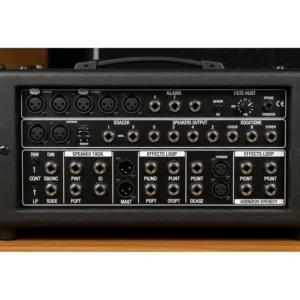
The comparison reveals significant differences in approach and target market positioning among these cabinets. Premium options like the Ampeg SVT-810E prioritize maximum output and iconic tone character, while mid-range options balance performance with practical considerations like weight and cost. Budget options focus on essential performance while maintaining reliability and value propositions.
Weight considerations play increasingly important roles in cabinet selection as musicians prioritize convenience and transportation efficiency. Modern lightweight cabinets achieve impressive performance levels while reducing physical strain during load-in and setup procedures. However, traditional heavy cabinets often provide superior low-frequency extension and overall authority that some players find irreplaceable.
Advanced Technical Performance Analysis 🔬
Understanding the engineering principles behind bass guitar cabinet design enables informed evaluation of different options and helps predict real-world performance characteristics. Modern cabinet design involves complex interactions between driver parameters, enclosure design, and acoustic principles that affect both sound quality and practical usability.
Thiele-Small Parameters and Cabinet Tuning
Thiele-Small parameters provide scientific framework for understanding how drivers interact with different enclosure types and sizes. These measurements include resonant frequency (Fs), Q factors, and compliance characteristics that determine optimal cabinet volumes and tuning frequencies. Furthermore, proper parameter matching ensures maximum efficiency and frequency response optimization.
Cabinet tuning frequency affects low-frequency extension and power handling characteristics significantly. Properly tuned cabinets extend frequency response below the driver’s free-air resonance while maintaining controlled behavior at high power levels. Conversely, mismatched tuning can result in poor low-frequency response or premature driver failure due to excessive excursion at specific frequencies.
Modern computer modeling software enables precise cabinet optimization during the design phase, resulting in more consistent and predictable performance characteristics. Manufacturers increasingly utilize finite element analysis and acoustic simulation to optimize internal volumes, port placement, and bracing configurations. Additionally, advanced measurement techniques verify theoretical predictions and fine-tune final designs.
Impedance Considerations and Amplifier Matching
Cabinet impedance directly affects amplifier power output and overall system performance characteristics. Most bass cabinets feature either 4-ohm or 8-ohm impedance ratings, with some specialized applications utilizing 16-ohm configurations. Furthermore, understanding impedance interactions helps optimize amplifier performance and prevents potential damage from impedance mismatches.
Multiple cabinet configurations require careful impedance calculations to ensure safe operation and optimal power distribution. Parallel connections halve the total impedance while series connections double it, affecting amplifier power output accordingly. Moreover, mixed impedance systems can create uneven power distribution between cabinets, potentially causing performance issues or equipment damage.
Professional installation often involves impedance switching systems that enable different cabinet combinations for various applications. These systems provide flexibility for different venue requirements while maintaining safe operating parameters. Additionally, impedance meters and testing equipment help verify system configurations and troubleshoot potential problems.
Acoustic Measurement and Performance Verification
Professional bass cabinet evaluation requires sophisticated measurement techniques that analyze frequency response, distortion characteristics, and dynamic behavior under realistic operating conditions. Anechoic chamber measurements provide baseline performance data, while ground plane and near-field measurements simulate real-world usage scenarios more accurately.
Distortion analysis reveals how cleanly cabinets reproduce signals at various power levels and frequencies. Total harmonic distortion (THD) measurements indicate overall signal purity, while intermodulation distortion analysis shows how the cabinet handles complex musical signals with multiple frequency components. Furthermore, compression measurements demonstrate how cabinet output changes with increasing input power.
Dynamic measurements assess cabinet behavior during realistic playing situations, including transient response and maximum output capabilities. These measurements provide more meaningful performance indicators than steady-state specifications alone. Additionally, listening tests with experienced bassists validate measurement data and ensure musical relevance of technical specifications.
Comprehensive Setup and Installation Guide 🔧
Proper bass guitar cabinet setup significantly affects performance, reliability, and user safety. Unlike simple plug-and-play devices, bass cabinets require careful attention to connections, positioning, and operating parameters to achieve optimal results. Furthermore, professional installation practices prevent equipment damage and ensure consistent performance across different venues and applications.
Physical Placement and Acoustic Optimization
Cabinet placement dramatically affects bass response and overall sound quality due to acoustic coupling with room surfaces and standing wave patterns. Floor coupling typically enhances low-frequency output but may introduce unwanted resonances depending on stage construction and materials. Moreover, corner placement can boost low-frequency output significantly but may result in boomy or uncontrolled bass response.
Distance from walls and other reflective surfaces affects frequency response through acoustic interference patterns. Generally, placing cabinets at least three feet from walls minimizes comb filtering effects while maintaining reasonable low-frequency coupling. Additionally, angling cabinets slightly upward can improve monitoring capabilities for the bassist while reducing excessive low-frequency buildup on stage.
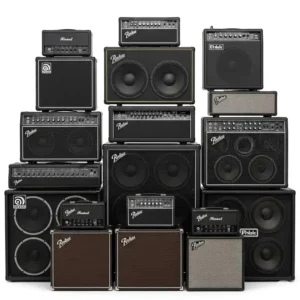
Multiple cabinet configurations require careful attention to phase relationships and time alignment. Stacking cabinets vertically typically provides better acoustic coupling and projection compared to horizontal arrangements. However, horizontal arrangements may offer advantages in specific venues or stage configurations. Furthermore, cabinet spacing affects acoustic coupling and overall coverage patterns.
Electrical Connections and Safety Procedures
Proper electrical connections ensure safe operation and optimal power transfer between amplifiers and cabinets. Speaker cables must provide adequate current carrying capacity and minimal resistance to prevent power loss and potential overheating. Additionally, connection quality affects signal integrity and system reliability, particularly important for professional applications.
Cable gauge requirements depend on cabinet impedance, amplifier power, and cable length. Professional installations typically utilize 12 AWG or larger cables for high-power applications, while shorter runs with moderate power may accommodate 14 AWG cables safely. Moreover, oxygen-free copper conductors provide superior performance and longevity compared to standard copper alternatives.
Connection types include 1/4-inch phone jacks, Speakon connectors, and binding posts, each offering specific advantages and limitations. Speakon connectors provide superior current handling and connection security, making them preferred for professional touring applications. Additionally, proper connector maintenance and inspection prevent intermittent connections and potential equipment damage.
Environmental Considerations and Protection
Bass guitar cabinets face numerous environmental challenges including temperature variations, humidity fluctuations, and physical abuse during transportation and setup. Protective measures extend equipment life and maintain consistent performance across different operating conditions. Furthermore, environmental protection often determines the difference between reliable professional equipment and frequent repair situations.
Temperature extremes affect driver parameters and cabinet materials differently. Cold temperatures can temporarily reduce driver compliance and affect frequency response, while excessive heat may cause permanent damage to voice coils and adhesives. Additionally, rapid temperature changes can cause condensation formation that damages electrical components and corrodes metal parts.
Humidity control prevents moisture-related damage while maintaining optimal acoustic properties. Excessive humidity can cause cone deterioration and corrosion of metal components, while extremely dry conditions may cause wood movement and joint failure. Moreover, protective coverings and cases provide physical protection during transportation and storage periods.
Maintenance and Longevity Optimization 🛠️
Professional bass guitar cabinets represent significant investments that require proactive maintenance to ensure optimal performance and maximum service life. Regular maintenance procedures prevent minor issues from developing into expensive repairs while maintaining consistent sound quality. Furthermore, proper maintenance practices often determine whether equipment provides decades of reliable service or requires frequent costly repairs.

Daily and Weekly Maintenance Protocols
Daily maintenance involves visual inspection and basic cleaning procedures that prevent accumulation of dirt, dust, and debris that can affect performance and cause premature wear. Checking cable connections for tightness and signs of wear prevents intermittent problems that can disrupt performances. Additionally, monitoring cabinet exterior condition helps identify potential issues before they affect internal components.
Weekly maintenance includes more thorough cleaning and inspection procedures that address areas not covered in daily routines. Removing dust from driver cones using soft brushes prevents buildup that can affect moving parts and reduce efficiency. Moreover, inspecting internal components for loose connections or physical damage enables early detection of potential problems.
Environmental monitoring helps identify conditions that may require additional protective measures or modified operating procedures. Temperature and humidity logging provides data for optimizing storage and transportation procedures. Furthermore, documenting environmental conditions helps correlate performance changes with specific environmental factors.
Monthly and Quarterly Inspection Schedules
Monthly inspections involve detailed examination of all cabinet components including drivers, crossovers, and structural elements. Checking driver mounting screws for tightness prevents rattles and ensures proper acoustic coupling. Additionally, inspecting cabinet joints and hardware prevents structural failures that could damage expensive components.
Quarterly maintenance includes performance verification and more extensive component testing procedures. Frequency response measurements can detect gradual changes that indicate developing problems with drivers or crossover components. Moreover, impedance measurements verify electrical integrity and help identify potential component failures before they cause system-wide problems.
Documentation procedures track maintenance activities and component condition over time. Maintenance logs provide valuable data for predicting component replacement schedules and optimizing maintenance intervals. Additionally, detailed records support warranty claims and help technicians diagnose intermittent problems more effectively.
Component Replacement and Upgrade Procedures
Driver replacement requires careful attention to specifications and compatibility to maintain original performance characteristics. Replacement drivers should match original Thiele-Small parameters closely to prevent acoustic performance changes. Furthermore, improved drivers may offer performance advantages while maintaining compatibility with existing cabinet designs.
Crossover component replacement often provides opportunities for performance improvements using modern components and design techniques. Upgraded capacitors and inductors can reduce distortion and improve frequency response while maintaining compatibility with existing drivers. Additionally, modern protection circuits can provide enhanced reliability and safety features.
Professional reconing services can restore vintage or rare drivers to original specifications while incorporating modern improvements in materials and construction techniques. Reconing often costs significantly less than replacement while maintaining authentic sound characteristics. Moreover, professional reconing services typically provide warranties that ensure quality and reliability.
Comparative Analysis with Alternative Solutions 📈
Bass guitar cabinets face competition from various alternative solutions including combo amplifiers, direct recording systems, and in-ear monitoring setups. Each approach offers specific advantages and limitations that affect suitability for different applications and playing situations. Furthermore, hybrid systems that combine multiple approaches often provide optimal flexibility for diverse musical requirements.
Traditional vs. Modern Amplification Approaches
Traditional amplification systems featuring separate amplifier heads and speaker cabinets provide maximum flexibility and upgradability but require more complex setup procedures and transportation logistics. Modern integrated systems offer convenience and optimized component matching but may limit upgrade options and customization possibilities. Moreover, traditional systems often provide superior power handling and professional features that justify their additional complexity.
Digital amplification and cabinet simulation technology enables direct recording and monitoring without traditional speaker cabinets. These systems offer convenience, consistency, and recording flexibility while eliminating many traditional amplification challenges. However, digital systems may lack the physical feedback and acoustic coupling that many bassists consider essential for optimal playing feel.
Hybrid approaches that combine traditional amplification with digital technology provide compromise solutions that address limitations of purely analog or digital systems. These systems typically include traditional amplifier and cabinet systems supplemented with digital recording interfaces and monitoring capabilities. Additionally, hybrid systems enable seamless integration between live performance and recording applications.
Cost-Benefit Analysis Across Different Approaches
| Approach | Initial Cost | Maintenance | Flexibility | Professional Use |
|---|---|---|---|---|
| Separate Head/Cabinet | $800-$4000+ | Moderate | Excellent | Preferred |
| Combo Amplifier | $300-$2500+ | Low | Limited | Acceptable |
| Digital/Direct | $200-$1500+ | Minimal | High | Growing |
| Hybrid System | $1000-$6000+ | Moderate | Excellent | Increasing |
The analysis reveals that separate amplifier heads and cabinets provide the best long-term value for serious bassists despite higher initial costs. The ability to upgrade components independently and adapt to changing requirements justifies the additional complexity and expense. Furthermore, professional applications often require the power handling and reliability characteristics that only traditional systems provide consistently.
Budget-conscious musicians may find combo amplifiers provide adequate performance for practice and small venue applications while minimizing initial investment and setup complexity. However, expansion limitations and reduced upgrade options may necessitate complete system replacement as requirements grow. Additionally, combo amplifiers often provide limited power handling that restricts their suitability for larger venues.
Integration with Existing Systems and Workflows
Modern bass guitar cabinets must integrate seamlessly with existing amplification systems, recording equipment, and performance workflows. Compatibility considerations include impedance matching, power handling, and connectivity options that ensure reliable operation across different applications. Furthermore, integration flexibility often determines system longevity as requirements evolve over time.
Recording studio integration requires cabinets that perform consistently under different acoustic conditions and microphone configurations. Studio-optimized cabinets often feature enhanced isolation characteristics and reduced unwanted resonances that could interfere with recording quality. Additionally, near-field monitoring capabilities help bassists maintain consistent playing dynamics during recording sessions.
Live performance integration involves coordination with sound reinforcement systems, stage monitoring, and other band members’ equipment. Professional cabinets typically include features like multiple input connections, signal routing options, and compatibility with standard touring equipment. Moreover, reliability characteristics become critical factors when equipment failure could disrupt professional performances.
Case Studies and Real-World Applications 🎯
Professional bassists across different musical genres have developed specific bass guitar cabinet preferences based on practical experience and performance requirements. These real-world examples provide valuable insights into how theoretical specifications translate into musical applications and help guide cabinet selection decisions for similar situations.
Case Study 1: Stadium Rock Touring
Professional rock bassist Marcus Thompson tours internationally with major arena and stadium acts, requiring bass guitar cabinets that deliver massive volume levels while maintaining clarity and reliability under demanding conditions. His current setup features dual Ampeg SVT-810E cabinets powered by 1200-watt amplifier heads, providing over 140 decibels of clean output capability.
Thompson’s experience demonstrates that traditional large-format cabinets remain irreplaceable for certain applications despite their weight and transportation challenges. The SVT-810E’s sealed design provides consistent performance across different venues while its massive driver array ensures adequate volume for outdoor festival applications. Moreover, the cabinet’s reliability record over five years of international touring includes zero component failures despite extremely demanding usage.
Cost analysis reveals that Thompson’s initial $3,600 investment in dual cabinets has provided exceptional value through reduced maintenance costs and consistent performance. Comparable volume levels from smaller cabinets would require multiple units and more complex amplification systems. Additionally, the cabinets’ resale value remains strong due to their professional reputation and proven durability.
Case Study 2: Jazz Club and Recording Studio
Professional jazz bassist Sarah Mitchell requires bass guitar cabinets that provide exceptional clarity and natural tone reproduction for intimate venue performances and studio recording applications. Her setup features a single Mesa Boogie Powerhouse 1×15 cabinet that delivers rich, warm tones without overwhelming small acoustic spaces.
Mitchell’s approach prioritizes tone quality and musical sensitivity over maximum volume capability. The Mesa cabinet’s sophisticated crossover design and premium components provide transparent reproduction that complements her vintage bass guitars and fingerstyle playing technique. Furthermore, the cabinet’s compact size enables easy transportation between multiple venue types without requiring assistance.
Recording engineers consistently praise Mitchell’s cabinet for its ability to capture detailed bass performances without requiring extensive equalization or processing. The cabinet’s frequency response characteristics complement both close microphone placement and room ambient recording techniques. Additionally, the cabinet’s low-noise operation enables sensitive recording applications without interference from mechanical or electrical noise sources.
Case Study 3: Multi-Genre Working Musician
Working bassist David Rodriguez performs regularly across multiple musical genres including rock, country, funk, and wedding reception entertainment, requiring bass guitar cabinets that adapt effectively to diverse musical requirements. His modular system features two Markbass Standard 102HF cabinets that can be used individually or combined depending on venue requirements.
Rodriguez’s modular approach provides optimal flexibility for different applications while maintaining manageable weight and transportation requirements. Single cabinet operation suffices for acoustic duos and small club performances, while dual cabinet configuration handles outdoor festivals and rock band applications effectively. Moreover, the system’s scalability eliminates the need for multiple complete amplification systems.
Economic benefits include reduced equipment investment and simplified maintenance requirements compared to multiple specialized systems. The modular approach enables incremental expansion as work requirements grow while maintaining compatibility between system components. Additionally, backup redundancy prevents complete system failure from affecting professional commitments.
Future Trends and Market Evolution 🚀
The bass guitar cabinet market continues evolving rapidly through technological advancement, changing musical styles, and shifting performance requirements. Understanding emerging trends helps predict future product developments and guides purchasing decisions that remain relevant as the industry advances. Furthermore, technological convergence between traditional and digital domains creates new possibilities for bass amplification systems.
Emerging Driver and Cabinet Technologies
Neodymium magnet technology continues advancing toward higher power density and improved thermal characteristics while reducing overall system weight. Next-generation neodymium formulations promise even greater efficiency improvements and cost reductions that will make lightweight cabinets more accessible. Additionally, rare earth magnet alternatives under development could eliminate supply chain concerns that affect neodymium availability.
Carbon fiber and composite cone materials offer superior strength-to-weight ratios compared to traditional paper or aluminum alternatives. These advanced materials enable larger driver excursions with reduced distortion while maintaining excellent transient response characteristics. Moreover, manufacturing cost reductions make exotic materials increasingly viable for mid-range cabinet applications.
Digital signal processing integration within cabinet systems enables real-time optimization of frequency response, dynamics, and protection functions. Smart cabinets could automatically adjust their characteristics based on input signals, room acoustics, and user preferences. Furthermore, wireless connectivity could enable remote control and monitoring capabilities that enhance system flexibility and diagnostic capabilities.
Sustainability and Environmental Considerations
Environmental consciousness increasingly influences cabinet design and manufacturing processes as musicians prioritize sustainable equipment choices. Sustainable materials including responsibly sourced wood, recycled metals, and biodegradable finishes reduce environmental impact without compromising performance. Additionally, modular designs that enable component replacement and upgrade extend product life cycles and reduce waste generation.
Energy efficiency improvements through advanced driver technology and amplifier integration reduce power consumption while maintaining performance levels. Improved efficiency benefits include reduced heat generation, extended component life, and lower operating costs for professional applications. Moreover, renewable energy compatibility becomes increasingly important for environmentally conscious touring operations.
Recycling programs and component recovery initiatives help manage end-of-life cabinet disposal while recovering valuable materials for new product manufacturing. Professional equipment often maintains useful life far beyond consumer electronics, but eventual disposal requires responsible approaches. Furthermore, refurbishment and restoration services extend product life cycles while maintaining authentic vintage characteristics.
Market Trends and Consumer Preferences
Lightweight cabinet designs continue gaining market share as musicians prioritize convenience and transportation efficiency over traditional performance trade-offs. Advanced materials and construction techniques enable significant weight reductions without compromising sound quality or reliability. Additionally, aging musician demographics increase demand for equipment that reduces physical strain during transportation and setup procedures.
Modular system popularity reflects changing venue requirements and economic pressures that favor flexible equipment investments. Professional musicians increasingly require systems that adapt to diverse applications while minimizing total equipment costs. Moreover, modular approaches enable incremental expansion that matches business growth patterns more effectively than large initial investments.
Vintage recreation and boutique manufacturing address market segments seeking authentic historical sounds and premium construction quality. These specialized products often command premium pricing while serving niche applications that mass-market products cannot address effectively. Furthermore, custom cabinet builders provide personalized solutions for professional musicians with specific requirements.
🛒 Don’t Miss These Exclusive Bass Cabinet Deals!
✨ Take your bass sound to the next level with these carefully selected bass guitar cabinets. Click on any highlighted product to check current pricing and customer reviews. These professional-grade cabinets will help you achieve the perfect bass tone for any venue! 🎵🔥
Conclusion: Achieving Bass Excellence Through Smart Cabinet Selection
Selecting the perfect bass guitar cabinets requires balancing multiple factors including sound quality, power handling, portability, and budget considerations. The cabinet market offers exceptional options across all price ranges, from budget-friendly practice solutions to professional touring equipment that delivers stadium-filling volume and clarity. Moreover, understanding your specific requirements and growth plans enables investment decisions that provide long-term satisfaction and value.
Modern bass guitar cabinets represent the culmination of decades of acoustic engineering advancement, incorporating cutting-edge materials and design techniques that surpass vintage equipment in most measurable parameters while maintaining the musical character that makes bass guitar such a compelling instrument. Whether you prioritize earth-shaking low-end authority, crystalline clarity, or lightweight portability, today’s market provides solutions that would have been impossible just a few years ago.
The journey toward bass excellence begins with honest assessment of your current needs while planning for future growth and changing requirements. Professional musicians consistently emphasize that quality equipment purchases pay dividends through improved performance, enhanced reliability, and greater musical satisfaction that justifies initial investment costs many times over.
Frequently Asked Questions
❓ What size bass guitar cabinet is best for small venues?
✅ A 2x10 inch or single 15 inch bass guitar cabinet works perfectly for small venues like coffee shops, clubs, and practice spaces. These configurations provide adequate volume levels (typically 95-105 dB) while maintaining portability and preventing room overload. Most quality 2x10 cabinets weigh 35-55 pounds and handle 300-500 watts, offering excellent balance between performance and convenience...
❓ How much should I spend on my first bass guitar cabinet?
✅ Entry-level bass guitar cabinets range from $300-$800 depending on configuration and brand. Quality options like the Fender Rumble series start around $300-$450 for 2x10 configurations, while mid-range cabinets from Markbass or Hartke cost $600-$900. Investing $500-$700 typically provides professional features and reliability that will serve most bassists for years...
❓ Can I mix different bass guitar cabinet brands together?
✅ Yes, you can mix different bass guitar cabinet brands, but matching impedance and power handling is crucial for safe operation. Different cabinets may have varying efficiency levels and frequency responses that affect overall sound balance. Professional bassists often combine cabinets strategically - like pairing a punchy 4x10 with a deep 1x15 - to achieve comprehensive frequency coverage and enhanced versatility...
❓ What's the difference between ported and sealed bass guitar cabinets?
✅ Ported bass guitar cabinets extend low-frequency response and increase efficiency through tuned port systems, while sealed cabinets provide tighter, more controlled bass response with better transient accuracy. Ported designs typically sound louder at low frequencies but may sacrifice some midrange clarity. Sealed cabinets offer more predictable frequency response and better integration with different amplifier types...
❓ How do I know if my amplifier matches my bass guitar cabinet?
✅ Match your amplifier's impedance output to your bass guitar cabinet's impedance rating (typically 4, 8, or 16 ohms) and ensure the amplifier's power output doesn't exceed the cabinet's RMS handling by more than 50%. For example, a 500-watt amplifier works well with cabinets rated for 350-800 watts RMS. Mismatched impedance can damage equipment, while excessive power can destroy drivers...
Recommended for You:
- Best Bass Guitar Amps: 7 Ultimate Powerhouses That Will Transform Your Sound in 2025
- 7 Best Battery Powered Bass Amp Options For Ultimate Portability in 2025
- 7 Best Tube Bass Amp Options For Ultimate Warmth and Power in 2025
Disclaimer: This article contains affiliate links. If you purchase products through these links, we may earn a small commission at no additional cost to you.
✨ Found this helpful? Share it with your friends! 💬🤗