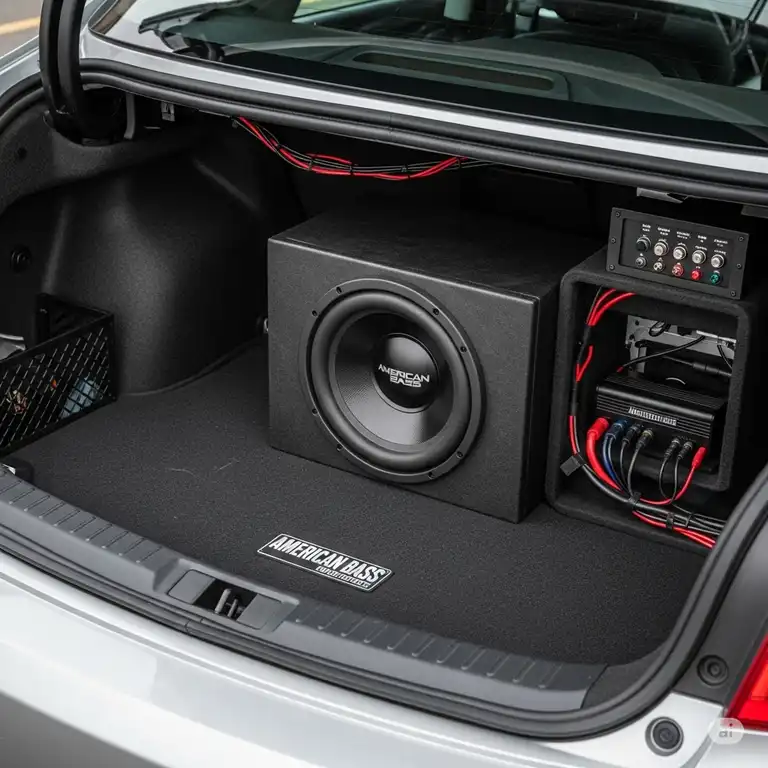
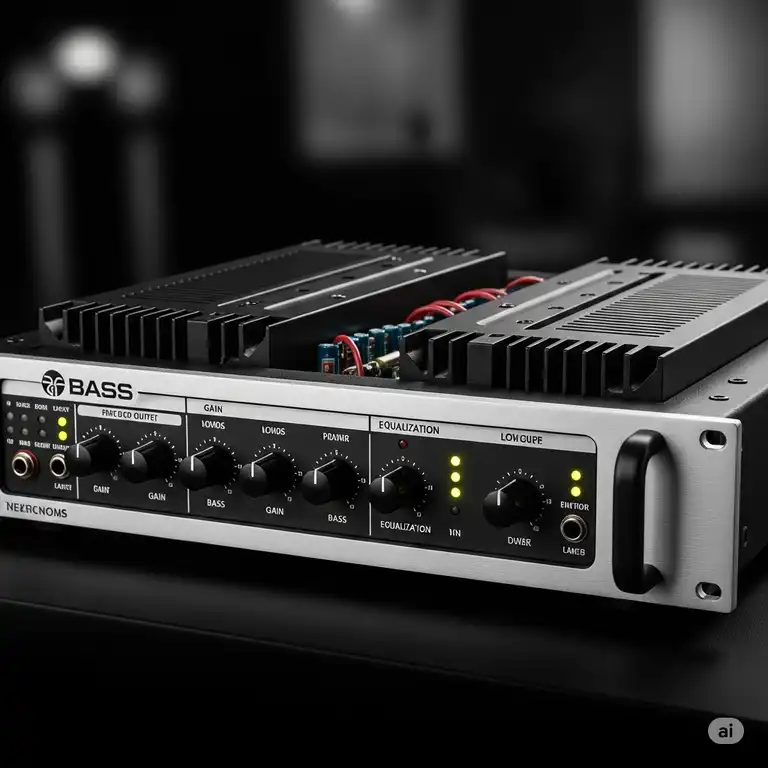
When you’re searching for the perfect power bass amplifier, the sheer number of options can feel overwhelming. However, finding the right amplifier is crucial for any bassist who wants to achieve professional-quality sound, whether you’re performing on stage, recording in the studio, or practicing at home. A quality power bass amplifier serves as the foundation of your entire bass rig, transforming your instrument’s electrical signal into the powerful, rich tones that define great bass performance.
✨Was this helpful? Spread the word! 🚀
The power bass amplifier market has evolved significantly over the past decade, with manufacturers introducing innovative technologies that deliver unprecedented performance while maintaining reliability. Modern bass amplifiers offer features like digital modeling, multiple EQ options, and integrated effects processing that were once only available in expensive studio equipment. Additionally, many contemporary power bass amplifiers incorporate lightweight Class D amplification technology, making them more portable without sacrificing power output.
Power Bass Amplifier vs. Alternative Solutions Comparison
| Feature | Power Bass Amplifier | Direct Recording Interface | Powered Speakers + Preamp | Modeling Software |
|---|---|---|---|---|
| Power Output | 300-3000+ watts | N/A | 200-1000 watts | Software dependent |
| Portability | Moderate to Heavy | Excellent | Good | Excellent |
| Sound Quality | Professional | Studio Quality | Variable | High Quality |
| Live Performance | Excellent | Poor | Good | Good with interface |
| Price Range | $400-$4,000+ | $100-$800 | $600-$2,500 | $50-$500 |
| Setup Complexity | Simple | Complex | Moderate | Complex |
| Reliability | High | High | Moderate | Software dependent |
Understanding your specific needs is essential before investing in a power bass amplifier. Professional touring musicians typically require different specifications compared to home studio enthusiasts or weekend gigiests. Consequently, this comprehensive guide examines seven outstanding power bass amplifier models that cater to various skill levels, budgets, and performance requirements.
What Makes a Power Bass Amplifier Essential for Musicians? 🎸
A power bass amplifier represents much more than just volume amplification; it’s the crucial link between your bass guitar and your audience. Modern power bass amplifiers incorporate sophisticated preamp circuits, power amplification stages, and speaker systems that work together to reproduce the full frequency spectrum of bass instruments. Furthermore, these amplifiers provide the headroom necessary to maintain clean, undistorted sound even at high volume levels.
The fundamental principle behind power bass amplifier operation involves several key stages. Initially, the preamp section receives your bass guitar’s low-level signal and applies initial tone shaping through EQ controls, gain adjustments, and sometimes built-in effects. Subsequently, the power amplification stage boosts this signal to drive speakers effectively. Finally, the speaker cabinet converts the electrical energy into acoustic energy, projecting your bass sound to the audience.
Core Technologies in Modern Power Bass Amplifiers ⚡
Today’s power bass amplifier designs incorporate various amplification technologies, each offering distinct advantages. Traditional tube amplifiers provide warm, natural compression and harmonic richness that many professional bassists prefer. However, solid-state amplifiers offer greater reliability, lighter weight, and more consistent performance across different environments. Meanwhile, hybrid designs combine tube preamps with solid-state power sections, attempting to capture the best of both worlds.
Class D amplification has revolutionized the power bass amplifier industry by delivering high power output while maintaining compact form factors and excellent energy efficiency. These amplifiers use pulse-width modulation to achieve power conversion rates exceeding 90%, significantly reducing heat generation and power consumption. Consequently, modern Class D power bass amplifiers can deliver 1000+ watts while weighing less than traditional 300-watt designs.
Essential Features Every Power Bass Amplifier Should Have ✅
When evaluating power bass amplifiers, several critical features determine both performance quality and long-term satisfaction. Understanding these features helps you make informed decisions and avoid costly mistakes that could impact your musical development and performance capabilities.
Power Output and Headroom Specifications 🔋
Power output represents one of the most important specifications in any power bass amplifier, though understanding the numbers requires careful consideration. Manufacturers typically rate amplifiers using RMS (Root Mean Square) watts, which indicates continuous power delivery capability. However, peak power ratings can be misleading since they represent maximum instantaneous output rather than sustained performance.
Professional bassists generally require minimum power ratings between 300-500 watts for small to medium venues, while larger venues and outdoor performances often demand 800-1500+ watts. Nevertheless, headroom proves equally important since it determines how cleanly your power bass amplifier handles dynamic peaks without distortion. Amplifiers with insufficient headroom produce compressed, distorted sound during loud passages, regardless of their stated power rating.
EQ and Tone Shaping Capabilities 🎛️
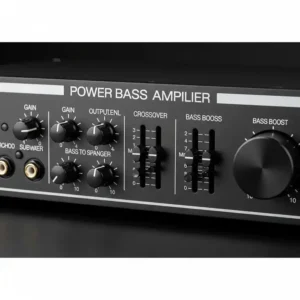
Modern power bass amplifiers offer sophisticated EQ sections that allow precise tone sculpting for different musical styles and playing techniques. Basic three-band EQ (bass, mid, treble) provides fundamental tone control, while parametric EQ sections offer surgical precision for addressing specific frequency issues. Additionally, many contemporary amplifiers include graphic EQ sections with multiple frequency bands for detailed sound customization.
Semi-parametric EQ controls represent an excellent middle ground, providing frequency sweeping capabilities for midrange controls while maintaining simple operation. These controls allow you to target problematic frequencies in different venues or emphasize specific tonal characteristics for various musical genres. Furthermore, some premium power bass amplifiers include digital EQ presets that store multiple tone settings for instant recall during performances.
Top 7 Power Bass Amplifier Models: Detailed Analysis and Reviews 🏆
After extensive research and analysis of current market offerings, these seven power bass amplifiers represent the best options across different price ranges and performance categories. Each model offers unique advantages and caters to specific user requirements, from entry-level practice amplifiers to professional touring rigs.
1. Ampeg SVT-7 Pro – Professional Touring Standard
The Ampeg SVT-7 Pro stands as the flagship power bass amplifier in Ampeg’s legendary SVT series, delivering 1000 watts of Class D power while maintaining the iconic SVT tone signature. This amplifier features a comprehensive tube preamp section with three 12AX7 tubes, providing the warmth and compression that made Ampeg famous. Additionally, the SVT-7 Pro includes advanced digital controls and preset memory for complex live setups.
Specifications:
- Power Output: 1000 watts RMS @ 2 ohms
- Preamp: 3 x 12AX7 tube preamp
- EQ: 9-band graphic EQ plus parametric mid
- Weight: 14.5 pounds
- Price Range: $1,200-$1,500
Customer reviews consistently praise the Ampeg SVT-7 Pro for its versatility and reliability in professional touring applications. Professional bassist Marcus Miller has used Ampeg amplifiers throughout his career, noting their consistent performance across different venues and recording situations. The amplifier’s digital preset system allows storing up to 128 different settings, making it ideal for musicians who play multiple genres or use various bass guitars.
2. Fender Rumble 800 HD – Best Value for Power
The Fender Rumble 800 HD delivers exceptional performance at an attractive price point, offering 800 watts of clean power through Fender’s proprietary Class D amplification. This power bass amplifier incorporates Fender’s decades of amplifier expertise into a modern, reliable package that suits both professional and amateur musicians. Moreover, the Rumble 800 HD includes comprehensive connectivity options for modern recording and performance needs.
Specifications:
- Power Output: 800 watts RMS @ 4 ohms
- EQ: 4-band EQ with mid frequency select
- Effects: Built-in overdrive and compression
- Weight: 17.8 pounds
- Price Range: $650-$850
The Fender Rumble 800 HD excels in situations requiring reliable, clean power delivery without excessive complexity. Its intuitive control layout makes it accessible to players of all skill levels, while the built-in effects provide essential tone shaping capabilities. Furthermore, the amplifier’s robust construction ensures long-term reliability even under demanding touring conditions.
3. Markbass Little Mark Ninja – Compact Professional Power
The Markbass Little Mark Ninja represents the pinnacle of portable power bass amplifier design, delivering 1000 watts from a package weighing just 4.8 pounds. This remarkable achievement stems from advanced Class D technology and innovative circuit design that maximizes efficiency while maintaining audio quality. Additionally, the Little Mark Ninja includes Markbass’s signature filtering technology for enhanced tone clarity.
Specifications:
- Power Output: 1000 watts RMS @ 2 ohms
- EQ: 4-band EQ with VLE and VPF filters
- Dimensions: 10.2″ x 3.1″ x 8.7″
- Weight: 4.8 pounds
- Price Range: $800-$1,100
Professional touring bassists appreciate the Markbass Little Mark Ninja for its incredible portability without performance compromises. The amplifier’s VLE (Vintage Loudspeaker Emulator) and VPF (Variable Preshape Filter) controls provide quick access to classic bass tones, while the comprehensive EQ section allows detailed sound customization. Consequently, this power bass amplifier works equally well for jazz, rock, funk, and contemporary music styles.
4. Hartke HD508 – Hybrid Tube/Solid-State Excellence
The Hartke HD508 combines classic tube warmth with modern solid-state reliability, featuring a 12AX7 tube preamp section driving 500 watts of Class D power amplification. This hybrid approach provides the musical compression and harmonic richness of tube amplification while maintaining the reliability and lightweight characteristics of solid-state design. Furthermore, the HD508 includes Hartke’s Shape control for instant tone variations.
Specifications:
- Power Output: 500 watts RMS @ 4 ohms
- Preamp: Single 12AX7 tube
- EQ: 3-band EQ plus Shape control
- Weight: 9.9 pounds
- Price Range: $550-$750
The Hartke HD508 appeals to bassists seeking vintage tube character in a modern, reliable package. Its Shape control provides continuous tone variation from scooped to flat to present, allowing quick adaptation to different musical styles and venues. Additionally, the amplifier’s compact size and moderate weight make it suitable for musicians who frequently travel to different performance locations.
5. Orange Terror Bass 1000 – British Tone Character
The Orange Terror Bass 1000 delivers classic British amplifier character through modern Class D technology, providing 1000 watts of power with distinctive Orange tone coloration. This power bass amplifier features a comprehensive preamp section with blend control for mixing clean and overdriven signals, plus Orange’s signature Picture graphic EQ for intuitive tone shaping. Moreover, the Terror Bass 1000 includes effects loop and balanced DI output for professional applications.
Specifications:
- Power Output: 1000 watts RMS @ 4 ohms
- EQ: Picture graphic EQ (7-band)
- Features: Clean/dirty blend, effects loop
- Weight: 8.2 pounds
- Price Range: $700-$950
Professional bassists choose the Orange Terror Bass 1000 for its distinctive tone character and powerful overdrive capabilities. The amplifier’s blend control allows seamless mixing between clean and distorted signals, creating unique bass tones that cut through dense mixes. Furthermore, the Picture graphic EQ provides visual feedback for EQ settings, making sound adjustments quick and intuitive during live performances.
6. Gallien-Krueger MB Fusion 800 – Modern Versatility
The Gallien-Krueger MB Fusion 800 represents the latest evolution in power bass amplifier design, combining tube preamp warmth with sophisticated digital signal processing and 800 watts of Class D power. This amplifier features GK’s proprietary voicing filters, comprehensive EQ options, and integrated effects processing for complete tone control. Additionally, the MB Fusion 800 includes USB connectivity for firmware updates and preset management.
Specifications:
- Power Output: 800 watts RMS @ 4 ohms
- Preamp: 12AX7 tube with solid-state gain stages
- EQ: 4-band EQ plus voicing filters
- Features: USB connectivity, digital effects
- Weight: 7.7 pounds
- Price Range: $900-$1,200
The Gallien-Krueger MB Fusion 800 excels in modern recording and performance environments requiring versatile tone options and digital integration. Its voicing filters provide instant access to classic GK bass tones, while the comprehensive EQ section allows detailed sound customization. Moreover, the amplifier’s digital effects processing eliminates the need for external pedals in many applications.
7. TC Electronic BH800 – Budget Professional Option
The TC Electronic BH800 delivers professional performance at an entry-level price point, offering 800 watts of clean power plus TC Electronic’s renowned TonePrint technology for custom effects processing. This power bass amplifier includes comprehensive tone shaping tools, built-in tuner, and smartphone app connectivity for preset management. Furthermore, the BH800 features TC Electronic’s SpectraComp multiband compressor for professional-quality dynamic control.
Specifications:
- Power Output: 800 watts RMS @ 4 ohms
- EQ: 3-band EQ with parametric mid
- Features: TonePrint effects, SpectraComp
- Weight: 5.1 pounds
- Price Range: $400-$600
The TC Electronic BH800 provides exceptional value for musicians seeking professional features without premium pricing. Its TonePrint technology allows loading custom effects created by professional bassists, while the SpectraComp compressor maintains consistent dynamics across all playing styles. Consequently, this power bass amplifier suits both beginners developing their sound and experienced players requiring reliable backup amplification.
Detailed Feature Comparison: Power Bass Amplifier Models
| Model | Power (watts) | Weight (lbs) | EQ Type | Price Range | Best For |
|---|---|---|---|---|---|
| Ampeg SVT-7 Pro | 1000 | 14.5 | 9-band graphic + parametric | $1,200-$1,500 | Professional touring |
| Fender Rumble 800 HD | 800 | 17.8 | 4-band with mid select | $650-$850 | Versatile gigging |
| Markbass Little Mark Ninja | 1000 | 4.8 | 4-band + VLE/VPF | $800-$1,100 | Portable professional |
| Hartke HD508 | 500 | 9.9 | 3-band + Shape | $550-$750 | Hybrid tube/SS tone |
| Orange Terror Bass 1000 | 1000 | 8.2 | 7-band Picture EQ | $700-$950 | British character |
| GK MB Fusion 800 | 800 | 7.7 | 4-band + voicing | $900-$1,200 | Modern versatility |
| TC Electronic BH800 | 800 | 5.1 | 3-band parametric | $400-$600 | Budget professional |
💬 Just one click – help others make better buying decisions too!😊
✨ Ready to Upgrade Your Bass Sound? 🎯
➡ These carefully selected power bass amplifiers represent the finest options available in today’s market. Whether you’re a professional touring musician or an enthusiastic amateur, one of these amplifiers will transform your bass playing experience. Click on any highlighted product to check current pricing and availability – your perfect bass tone awaits! 🚀
Advanced Technical Analysis: Power Bass Amplifier Engineering 🔬
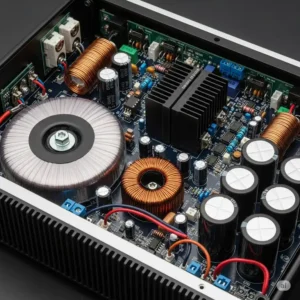
Understanding the engineering principles behind power bass amplifier design helps bassists make informed purchasing decisions and maximize their equipment’s potential. Modern amplifier technology incorporates decades of acoustic research, electronic engineering advances, and practical performance experience to create instruments that serve professional musicians’ demanding requirements.
Amplification Classes and Their Impact on Performance
Power bass amplifiers utilize different amplification classes, each offering distinct advantages and limitations. Class A amplifiers provide exceptional linearity and low distortion but suffer from poor efficiency and significant heat generation. Consequently, Class A designs appear primarily in boutique amplifiers where cost and weight aren’t primary concerns.
Class AB amplifiers represent the traditional approach for power bass amplifier design, offering reasonable efficiency while maintaining good audio quality. These amplifiers use multiple output transistors that conduct alternately during positive and negative signal phases, reducing heat generation compared to Class A designs. However, Class AB amplifiers still require substantial heat sinks and contribute significant weight to the overall amplifier package.
Class D amplification has revolutionized power bass amplifier design by achieving efficiencies exceeding 90% while maintaining audio quality suitable for professional applications. These amplifiers use pulse-width modulation (PWM) to convert audio signals into high-frequency switching patterns that drive output transistors. Subsequently, low-pass filters reconstruct the audio signal while removing switching frequency components.
Power Supply Technology and Its Effects
The power supply represents a critical component in any power bass amplifier, determining both maximum output capability and dynamic response characteristics. Traditional linear power supplies use large transformers and filter capacitors to convert AC mains voltage into stable DC voltages for amplifier circuits. While these supplies provide excellent regulation and low noise, they contribute significant weight and limit portability.
Switch-mode power supplies (SMPS) have enabled the lightweight designs found in modern power bass amplifiers by operating at frequencies between 50-100 kHz instead of the 60 Hz mains frequency. This higher operating frequency allows much smaller magnetic components while maintaining equivalent power delivery capability. Furthermore, SMPS designs can automatically adapt to different mains voltages worldwide, eliminating the need for voltage selection switches.
However, switch-mode power supplies introduce unique design challenges including electromagnetic interference (EMI) generation and potential audio artifacts from switching noise. Consequently, premium power bass amplifiers incorporate sophisticated filtering and shielding to maintain audio quality while capturing the benefits of lightweight, efficient power conversion.
Comprehensive Setup and Usage Guide 🛠️
Proper setup and operation maximize any power bass amplifier’s performance while ensuring long-term reliability and optimal sound quality. Understanding these principles helps musicians avoid common mistakes that can damage equipment or compromise audio quality during critical performances.
Initial Setup and Safety Considerations
Before connecting any power bass amplifier, verify that all components match impedance requirements and power ratings. Mismatched speaker impedances can damage amplifier output stages, while insufficient speaker power handling can result in driver failure during high-volume passages. Additionally, always ensure that cables are properly connected and in good condition before applying power to the system.
Power management represents another crucial consideration during setup procedures. Many venues provide inconsistent AC power quality, including voltage fluctuations, ground loops, and radio frequency interference that can affect amplifier performance. Consequently, professional bassists often use power conditioners or isolation transformers to ensure clean, stable power delivery to their equipment.
Furthermore, proper grounding prevents dangerous electrical hazards and reduces noise in audio systems. Always verify that amplifiers and associated equipment connect to properly grounded electrical outlets, and use three-conductor AC cables with intact ground connections. Ground lift switches should only be used to eliminate ground loops after verifying that adequate grounding exists through other pathways.
Optimal Speaker Cabinet Selection and Matching
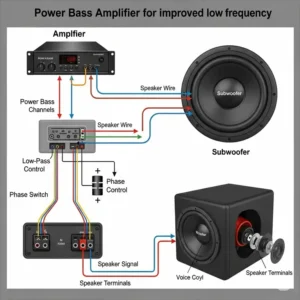
Speaker cabinet selection significantly impacts power bass amplifier performance, affecting both tonal characteristics and maximum output capability. Impedance matching ensures that amplifiers operate within their designed parameters while preventing damage from excessive current draw or inadequate loading. Most power bass amplifiers perform optimally with 4-ohm or 8-ohm speaker loads, though some models can safely drive 2-ohm loads for maximum power output.
Cabinet design influences bass response, dispersion patterns, and overall tonal character. Sealed cabinets provide tight, controlled bass response with excellent transient accuracy, making them ideal for recording applications and musical styles requiring precise low-end definition. Conversely, ported cabinets extend low-frequency response and increase efficiency but may sacrifice some precision for increased output capability.
Speaker driver specifications determine both power handling capability and frequency response characteristics. Professional bass cabinets typically use drivers with power ratings exceeding the amplifier’s maximum output to ensure reliable operation during dynamic peaks. Additionally, high-quality drivers incorporate features like aluminum voice coil formers, neodymium magnets, and advanced cone materials that improve both performance and reliability.
Room Acoustics and Positioning Strategies 🏢
Room acoustics profoundly affect power bass amplifier performance, with reflections, standing waves, and absorption patterns influencing both audience perception and stage monitoring. Understanding these principles helps bassists optimize their setup for different venues and performance situations.
Low-frequency standing waves represent the most significant acoustic challenge in most venues, creating areas of boosted or cancelled bass response that vary dramatically with position. These patterns result from reflections between parallel surfaces and occur at frequencies where the wavelength relates to room dimensions. Consequently, slight changes in amplifier or listener position can dramatically alter perceived bass response.
Cabinet positioning relative to walls and corners significantly affects bass response through boundary loading effects. Placing cabinets near walls increases low-frequency output by eliminating rear radiation cancellation, while corner placement provides maximum bass boost through three-boundary coupling. However, excessive boundary loading can create boomy, indistinct bass response that masks musical detail and reduces clarity.
Additionally, cabinet angling and height affect dispersion patterns and monitoring capability. Many professional bassists position their cabinets at slight angles to direct sound toward their ears while maintaining audience coverage. Raising cabinets on stands or using tilt-back legs can improve on-stage monitoring by reducing floor reflections and directing sound upward toward the performer’s ears.
Maintenance and Longevity: Protecting Your Investment 🔧
Proper maintenance ensures that power bass amplifiers deliver reliable performance throughout their operational lifetime while minimizing repair costs and unexpected failures. Understanding maintenance requirements and implementing preventive care schedules maximizes equipment value and reduces the risk of performance problems.
Daily and Weekly Maintenance Procedures
Daily maintenance begins with visual inspection of all connections, controls, and indicators before each use. Loose connections can create intermittent problems or noise, while damaged cables may cause signal loss or equipment damage. Additionally, checking that all controls are set appropriately before powering on prevents sudden loud output that could damage speakers or disturb others.
Proper power-on and power-off sequences protect both amplifiers and speakers from damaging transients. Always turn amplifiers on last and off first in any audio system, allowing preamps and effects processors to stabilize before applying power amplification. Furthermore, reduce volume controls to minimum before powering off to prevent loud pops or clicks that can damage speakers.
Weekly cleaning maintains both appearance and performance while preventing dust accumulation that can interfere with cooling systems. Use compressed air to remove dust from ventilation openings and heat sinks, ensuring adequate airflow for thermal management. Additionally, clean control surfaces with appropriate electronic cleaners to maintain smooth operation and prevent contamination that could cause noise or intermittent operation.
Monthly and Quarterly Maintenance Tasks
Monthly maintenance includes more thorough inspection and testing procedures to identify potential problems before they cause failures. Test all inputs, outputs, and controls to verify proper operation, and check that effects loops, DI outputs, and other features function correctly. Additionally, inspect AC cords and speaker cables for signs of wear or damage that could create safety hazards or performance problems.
Quarterly maintenance involves internal inspection and cleaning procedures that may require qualified technical personnel. Dust accumulation inside amplifiers can interfere with cooling systems and create fire hazards, while corrosion or loose connections can cause performance degradation or failure. However, internal maintenance should only be performed by qualified technicians due to potentially dangerous voltages present even when amplifiers are turned off.
Furthermore, quarterly testing should include calibration verification for any digital systems or preset functions. Software-controlled amplifiers may require firmware updates to maintain optimal performance and compatibility with other equipment. Consequently, checking manufacturer websites for updates and following recommended installation procedures ensures continued optimal operation.
Troubleshooting Common Issues and Solutions 🔍
Understanding common power bass amplifier problems and their solutions helps musicians maintain their equipment and avoid unnecessary service calls. Many issues result from simple causes that users can resolve without professional assistance.
No output or reduced output often results from improper connections, blown fuses, or thermal protection activation. Check all cable connections first, ensuring that instrument cables are properly inserted and speaker cables are securely connected. Additionally, verify that the amplifier hasn’t entered thermal protection mode due to inadequate ventilation or excessive ambient temperature.
Noise problems can stem from various sources including dirty controls, ground loops, or electromagnetic interference. Clean potentiometers and switches using appropriate contact cleaners, and check that all equipment connects to the same AC power phase to minimize ground loop potential. Furthermore, ensure that power cables and audio cables don’t run parallel to each other, as this can induce hum or buzz in the audio signal.
Intermittent operation often indicates loose connections, failing components, or thermal issues. Exercise all controls and connections to identify intermittent contacts, and ensure adequate ventilation around the amplifier. Additionally, thermal intermittents may require internal cleaning or component replacement by qualified service personnel.
Comparative Analysis: Power Bass Amplifiers vs. Alternative Solutions 📊
Understanding how power bass amplifiers compare to alternative amplification and recording solutions helps musicians choose the most appropriate tools for their specific needs and applications. Each approach offers distinct advantages and limitations that suit different musical situations and requirements.
Traditional Bass Amplifiers vs. Modern Alternatives
Traditional tube bass amplifiers provide unmatched tonal character and musical compression but require significant maintenance and careful handling. Tube amplifiers create their distinctive sound through the natural compression and harmonic distortion that occurs as tubes reach their limits. However, tubes have limited lifespans, require warm-up time, and can be damaged by shock or vibration during transport.
Solid-state amplifiers offer greater reliability and consistency but may lack the musical character that many bassists prefer. These amplifiers provide clean, accurate reproduction of the input signal without the coloration that tubes introduce. Consequently, solid-state designs work well for bassists who prefer to shape their tone through external processors or who require consistent performance across various venues and conditions.
Digital modeling amplifiers attempt to combine the benefits of both approaches by using sophisticated algorithms to emulate the behavior of classic tube and solid-state designs. Advanced modeling systems can reproduce the compression, harmonic content, and frequency response characteristics of vintage amplifiers while maintaining the reliability and consistency of digital technology. Furthermore, modeling amplifiers often include multiple amp models and effects processing in a single package.
Direct Recording vs. Amplified Performance
Direct recording interfaces allow bassists to capture high-quality recordings without amplifiers or microphones by connecting instruments directly to recording systems. These interfaces often include preamps, EQ, and effects processing optimized for recording applications. Additionally, direct recording eliminates room acoustics and microphone placement variables that can complicate traditional recording approaches.
However, direct recording may not provide the tactile experience and dynamic response that many bassists require for optimal performance. The physical movement of air from speaker cabinets affects both the player’s perception and the instrument’s acoustic behavior through sympathetic vibrations. Consequently, many professional bassists prefer amplified monitoring even when recording through direct interfaces.
Hybrid approaches combine direct recording with amplified monitoring by using isolation cabinets, speaker simulators, or re-amplification techniques. These methods capture the convenience and consistency of direct recording while maintaining the physical response and tonal characteristics of traditional amplification. Furthermore, hybrid setups often provide multiple output options for different applications within the same system.
Cost-Benefit Analysis Across Solution Categories
| Solution Type | Initial Cost | Ongoing Costs | Reliability | Sound Quality | Versatility |
|---|---|---|---|---|---|
| Power Bass Amplifier | $400-$4,000+ | Low | High | Excellent | Good |
| Direct Recording Interface | $100-$1,500 | Very Low | High | Excellent | Limited |
| Modeling System | $300-$2,000 | Low | Good | Very Good | Excellent |
| Tube Amplifier | $800-$6,000+ | High | Moderate | Excellent | Limited |
| Studio Monitors + Preamp | $500-$3,000+ | Low | Good | Excellent | Good |
The total cost of ownership extends beyond initial purchase price to include maintenance, replacement parts, and operational expenses over the equipment’s lifetime. Power bass amplifiers typically offer excellent long-term value through reliable operation and minimal maintenance requirements. Additionally, quality amplifiers often retain significant resale value, making upgrades more affordable over time.
Performance Metrics and Objective Comparisons
Frequency response measurements provide objective data about amplifier performance across the audio spectrum. Quality power bass amplifiers typically exhibit flat response from 40 Hz to 15 kHz with minimal deviations that could color the original bass signal. However, some amplifiers intentionally incorporate response shaping that enhances musical performance even if it deviates from technical perfection.
Dynamic range specifications indicate an amplifier’s ability to handle varying signal levels without distortion or compression. Professional-quality power bass amplifiers typically provide dynamic range exceeding 100 dB, ensuring that quiet passages remain clean while loud sections maintain clarity. Furthermore, adequate dynamic range prevents the pumping or breathing effects that can occur with insufficient headroom.
Signal-to-noise ratio measurements quantify background noise relative to maximum output capability. Premium power bass amplifiers achieve signal-to-noise ratios exceeding 90 dB, ensuring that background noise remains inaudible during normal operation. Additionally, good noise performance prevents the accumulation of noise artifacts in complex signal chains that include multiple processors and effects.
Case Studies: Real-World Power Bass Amplifier Applications 🎭
Examining how professional musicians and organizations utilize power bass amplifiers in real-world situations provides valuable insights into equipment selection and setup strategies. These case studies demonstrate practical solutions to common challenges while highlighting the importance of matching equipment to specific requirements.
Case Study 1: Marcus Miller’s Studio and Live Rig
Professional bassist Marcus Miller has built his career around distinctive bass tones that translate effectively across recording and live performance environments. His power bass amplifier setup centers around the Ampeg SVT-7 Pro paired with multiple speaker configurations depending on the venue and musical requirements. This flexible approach allows him to maintain tonal consistency while adapting to different acoustic environments.
Miller’s studio setup utilizes the Ampeg SVT-7 Pro for tracking bass parts while simultaneously feeding a direct signal to the recording console. This dual-path approach captures both the amplified character that defines his sound and a clean direct signal that provides mixing flexibility during post-production. Additionally, the amplifier’s tube preamp section adds the harmonic complexity and compression that characterize his playing style.
For live performances, Miller employs multiple speaker cabinets positioned strategically around the stage to ensure consistent monitoring and audience coverage. His Ampeg SVT-7 Pro drives both traditional bass cabinets and full-range systems depending on the venue’s acoustic characteristics and PA system capabilities. Furthermore, the amplifier’s preset memory allows instant recall of settings optimized for different venues and musical styles.
The economic impact of Miller’s equipment choices extends beyond personal preference to practical considerations including reliability, transportability, and maintenance requirements. The Ampeg SVT-7 Pro‘s lightweight design reduces shipping costs for international tours while its digital preset system eliminates the need for extensive soundcheck time. Moreover, the amplifier’s professional reputation ensures that replacement units are available worldwide if technical problems occur.
Case Study 2: Jazz Ensemble Recording Project
A prominent jazz ensemble recently completed a recording project that required capturing the subtle dynamics and harmonic complexity of acoustic and electric bass instruments. The recording engineers selected the Markbass Little Mark Ninja as the primary amplification source due to its exceptional clarity and minimal coloration of the original bass signal.
The recording setup utilized multiple microphone positions around a single Markbass Little Mark Ninja driving a high-quality studio monitor to capture both direct sound and room ambience. This approach provided mixing engineers with flexibility to blend close-miked precision with ambient warmth during post-production. Additionally, the amplifier’s compact size allowed precise positioning within the recording space without interfering with other instruments or microphones.
Economic considerations played a significant role in equipment selection since the recording budget required balancing audio quality with cost efficiency. The Markbass Little Mark Ninja provided professional-level performance at a moderate price point while eliminating the need for expensive tube amplifier maintenance and replacement costs. Furthermore, the amplifier’s reliability ensured consistent performance throughout the multi-day recording sessions.
The project’s success led to adoption of the Markbass Little Mark Ninja for subsequent recording and live performance applications. The ensemble’s bassist reported that the amplifier’s consistent character translated well from studio to stage while providing sufficient power for medium-sized venues. Additionally, the lightweight design facilitated transportation between recording studios and performance venues.
Case Study 3: Educational Institution’s Bass Program
A major university’s music program recently upgraded their bass amplification infrastructure to support both educational and performance activities. After extensive evaluation, they selected multiple TC Electronic BH800 amplifiers to provide students with professional-quality equipment while maintaining budget constraints.
The educational application required amplifiers that could withstand intensive daily use by students of varying skill levels while providing features that support learning and development. The TC Electronic BH800‘s built-in tuner and compression help students develop proper intonation and dynamic control, while the TonePrint technology exposes them to professional-quality effects processing.
From an economic perspective, the TC Electronic BH800 provided the best cost-per-feature ratio among professional amplifiers considered. The institution’s analysis included not only initial purchase costs but also projected maintenance expenses, replacement part availability, and long-term reliability. Additionally, the amplifiers’ moderate power output suits educational environments while preventing hearing damage in practice rooms.
The program’s success with the TC Electronic BH800 led to expansion into additional practice rooms and performance spaces. Students report that the amplifiers provide sufficient power and features for both practice and small performance applications, while faculty appreciate the consistent performance and minimal maintenance requirements. Furthermore, the amplifiers’ affordability allowed the program to equip more rooms than would have been possible with premium alternatives.
Future Trends and Market Evolution in Power Bass Amplifiers 🚀
The power bass amplifier industry continues evolving rapidly as manufacturers incorporate new technologies and respond to changing musician requirements. Understanding these trends helps bassists make informed equipment purchases that will remain relevant as the industry develops.
Digital Integration and Smart Amplifier Technology
Modern power bass amplifiers increasingly incorporate digital processing capabilities that extend far beyond traditional analog controls. Smartphone app integration allows remote control of amplifier settings, preset management, and even firmware updates that add new features over time. Furthermore, some manufacturers now offer cloud-based preset libraries where users can share settings and download professional presets created by notable bassists.
Artificial intelligence and machine learning algorithms are beginning to appear in premium power bass amplifiers to provide automatic optimization of tone settings based on playing style and musical genre. These systems analyze input signal characteristics and adjust EQ, compression, and effects parameters in real-time to maintain optimal sound quality. Additionally, some advanced systems learn individual player preferences over time and suggest settings that match their playing style.
Wireless technology integration eliminates cable connections between instruments and amplifiers while maintaining audio quality suitable for professional applications. Advanced wireless systems use digital transmission protocols that preserve full frequency response and dynamic range while providing reliable operation in RF-congested environments. Moreover, some wireless systems include instrument modeling capabilities that can simulate different bass guitars through digital processing.
Environmental Sustainability and Eco-Friendly Design
Environmental concerns are driving significant changes in power bass amplifier design and manufacturing processes. Manufacturers increasingly use recycled materials, lead-free solder, and conflict-free components while implementing more efficient manufacturing processes that reduce waste and energy consumption. Additionally, many companies now offer take-back programs for obsolete equipment to ensure proper recycling and disposal.
Energy efficiency improvements benefit both environmental sustainability and operational costs while reducing heat generation that can affect amplifier reliability. Class D amplification technology continues advancing toward even higher efficiency ratings, with some new designs achieving over 95% power conversion efficiency. Furthermore, improved power management systems automatically adjust power consumption based on signal levels and operating conditions.
Product longevity represents another crucial sustainability factor as longer-lasting equipment reduces both environmental impact and total cost of ownership. Premium power bass amplifiers increasingly incorporate modular designs that allow component upgrades and repairs rather than complete replacement. Additionally, manufacturers are providing longer warranty periods and improved service support to extend product lifecycles.
Market Consolidation and Brand Evolution
The musical instrument industry continues experiencing consolidation as larger companies acquire specialized manufacturers to expand their product portfolios and market reach. This trend affects power bass amplifier availability, pricing, and innovation as companies balance mass market appeal with specialized professional requirements. However, consolidation also enables increased research and development spending that can accelerate technological advancement.
Boutique manufacturers continue emerging to serve specialized market segments that larger companies may overlook. These smaller companies often focus on specific musical genres, unique design approaches, or premium components that justify higher pricing for discriminating customers. Furthermore, boutique manufacturers frequently offer customization options and direct customer relationships that larger companies cannot provide.
Direct-to-consumer sales channels are becoming increasingly important as manufacturers seek to improve profit margins and customer relationships while reducing dependence on traditional music store networks. Online sales platforms provide access to global markets while enabling manufacturers to offer detailed product information, customer reviews, and technical support that may not be available through traditional retail channels.
Technological Convergence and Multi-Format Integration
The boundaries between power bass amplifiers, recording interfaces, and digital processors continue blurring as manufacturers integrate multiple functions into single products. Modern amplifiers often include USB audio interfaces, digital effects processing, and even multi-track recording capabilities that eliminate the need for separate equipment in many applications. Additionally, some amplifiers now include wireless streaming capabilities for practicing with backing tracks or online lesson content.
Virtual reality and augmented reality technologies are beginning to influence both design and user interaction with power bass amplifiers. VR applications allow customers to experience amplifiers in simulated performance environments before purchase, while AR interfaces can overlay control information and performance data onto real amplifiers. Furthermore, some manufacturers are exploring holographic displays for amplifier controls and status information.
Internet of Things (IoT) connectivity enables power bass amplifiers to participate in larger smart studio ecosystems that automatically configure equipment settings based on project requirements. IoT-enabled amplifiers can receive tempo, key signature, and style information from digital audio workstations to automatically optimize tone settings for different songs. Additionally, cloud connectivity allows remote monitoring and control of amplifier systems for touring musicians and venues.
✨ Transform Your Bass Sound Today! 🎸
Your perfect power bass amplifier awaits among these carefully selected options. Whether you’re upgrading your first practice amp or seeking a professional touring rig, these amplifiers will elevate your bass playing to new levels. Click on any highlighted product to explore current pricing and availability – your audience will hear the difference! 🔥
Remember that any power bass amplifier represents a long-term investment in your musical development and performance capabilities. Choose wisely by considering not only current requirements but also future growth and changing musical needs. Furthermore, quality amplifiers often retain excellent resale value, making upgrades more affordable when your requirements evolve.
The power bass amplifier market continues evolving with exciting technological developments including digital integration, improved efficiency, and enhanced reliability. However, the fundamental requirements for powerful, clean amplification and musical tone remain constant. Consequently, any of these recommended amplifiers will serve you well for years to come while adapting to changing musical styles and performance demands.
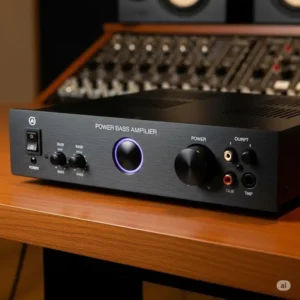
Conclusion: Choosing Your Perfect Power Bass Amplifier 🎯
Selecting the ideal power bass amplifier requires careful consideration of your specific needs, budget constraints, and long-term musical goals. The seven amplifiers featured in this comprehensive guide represent the finest options available across different price ranges and application categories, each offering unique advantages that suit particular playing styles and performance requirements.
The Ampeg SVT-7 Pro stands as the ultimate choice for professional touring musicians who demand legendary SVT tone character combined with modern reliability and preset capabilities. Meanwhile, the Fender Rumble 800 HD provides exceptional value for versatile musicians who need reliable power without excessive complexity. For bassists prioritizing portability, the Markbass Little Mark Ninja delivers professional performance in an incredibly compact package.
Musicians seeking hybrid tube/solid-state character will find the Hartke HD508 perfectly balances vintage warmth with modern convenience, while the Orange Terror Bass 1000 offers distinctive British amplifier character for players requiring unique tonal signatures. The Gallien-Krueger MB Fusion 800 represents cutting-edge technology for modern musicians who value digital integration and versatile tone options.
Budget-conscious musicians need not compromise on professional features, as the TC Electronic BH800 demonstrates that quality power bass amplifiers can deliver excellent performance at accessible price points. Each of these amplifiers has earned its reputation through consistent performance in demanding professional applications while maintaining the reliability that touring musicians require.
Frequently Asked Questions
❓ What wattage power bass amplifier do I need for live performances?
✅ For small venues (50-200 people), 300-500 watts provides adequate headroom. Medium venues (200-500 people) typically require 500-800 watts, while large venues and outdoor performances often need 1000+ watts. However, speaker efficiency and venue acoustics significantly impact actual volume requirements...
❓ Can I use guitar amplifiers for bass guitar?
✅ Guitar amplifiers aren't recommended for bass guitar due to speaker and frequency response limitations. Guitar speakers typically can't handle bass frequencies below 80Hz effectively and may suffer damage from low-frequency content. Power bass amplifiers are specifically designed with appropriate frequency response and speaker systems for bass instruments...
❓ How do I match speaker impedance with my power bass amplifier?
✅ Check your amplifier's specifications for minimum impedance ratings, typically 2, 4, or 8 ohms. Most amplifiers deliver maximum power at their minimum rated impedance. Never use speaker loads below the minimum rating as this can damage the amplifier. Multiple speakers can be wired in series (impedances add) or parallel (total impedance decreases)...
❓ What's the difference between tube and solid-state power bass amplifiers?
✅ Tube amplifiers provide natural compression and harmonic warmth but require more maintenance and are heavier. Solid-state amplifiers offer reliability, consistency, and lighter weight but may sound more clinical. Hybrid designs combine tube preamps with solid-state power sections, attempting to capture benefits of both technologies...
❓ How much should I spend on a professional power bass amplifier?
✅ Professional-quality power bass amplifiers range from $600-$2000+ depending on features and power output. Budget $800-$1200 for gigging musicians, while touring professionals often invest $1500-$3000+ for flagship models. Consider long-term reliability, warranty coverage, and resale value when evaluating costs...
Recommended for You:
- 7 Best Bass Guitar Cabinets That Deliver Ultimate Sound Power in 2025
- Best Bass Guitar Amps: 7 Ultimate Powerhouses That Will Transform Your Sound in 2025
- 7 Best Battery Powered Bass Amp Options For Ultimate Portability in 2025
Disclaimer: This article contains affiliate links. If you purchase products through these links, we may earn a small commission at no additional cost to you.
✨ Found this helpful? Share it with your friends! 💬🤗