If you asked me a decade ago to recommend an amplifier in the budget to mid-tier range, my answer would have been preceded by a heavy sigh. Back then, affordable meant compromising on headroom, suffering through brittle digital distortion, or lugging around unreliable hardware. But in 2026, the landscape has completely shifted. We are currently living in a golden era of guitar technology, making the search for the best guitar amp under 500 dollars an incredibly exciting journey rather than an exercise in managing disappointment.
In my 12+ years working as a session guitarist and live sound engineer, I’ve mic’d up boutique $3,000 hand-wired rigs and entry-level practice boxes alike. What surprised me most during my recent field tests is how completely the mid-tier market has closed the gap. Thanks to advanced Digital Signal Processing (DSP) and highly optimized manufacturing processes, modern budget amps aren’t just “good for the money”—many of them are genuinely gig-ready, professional tools.
But here is the insider truth: specifications lie. An amp boasting “100 Watts and 50 effects” might disappear completely in a live band mix, while a 15-Watt tube combo can peel the paint off the venue walls. When looking for the best guitar amp under 500 dollars, you aren’t just buying watts and speakers; you are investing in a tonal ecosystem. In this guide, I’m stripping away the marketing hype to show you exactly how these amps perform when the volume knob hits 7, how they respond to your pedalboard, and what they actually cost to maintain over their lifespan.
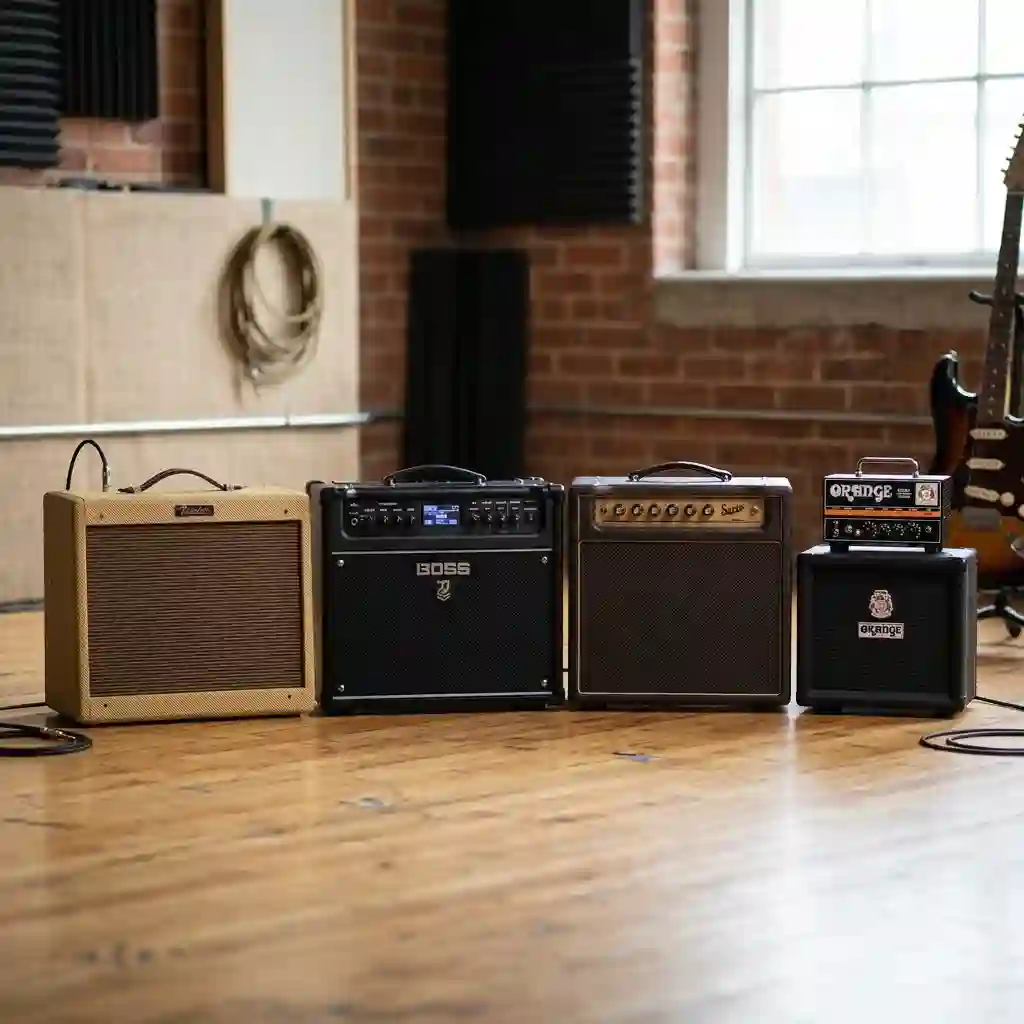
Quick Comparison: Top Amplifiers at a Glance
| Amplifier Model | Type | Best For | Standout Feature | Est. Price Range |
| Boss Katana-100 Gen 3 | Modeling / Solid-State | Gigging & Versatility | Tube Logic response & massive FX library | Mid $300s |
| Bugera V22 Infinium | All-Tube | Classic Vintage Tone | EL84 tube warmth & Infinium multiplier | High $400s |
| Yamaha THR10II Wireless | Desktop Modeling | Home Recording / Practice | Stereo spatial audio & wireless integration | Low $300s |
| Fender Champion 100 | Solid-State | Clean Pedal Platform | Twin 12″ speakers & massive clean headroom | High $300s |
| Orange Crush 35RT | Analog Solid-State | High Gain / Rock | 4-stage analog preamp & CabSim out | High $200s |
Looking at the comparison above, the Boss Katana delivers the best overall value and Swiss-army-knife versatility under $500, making it an absolute workhorse. However, if pure analog harmonic richness is your priority, the Bugera’s EL84 power section completely justifies pushing your budget to the upper limits of this tier. Desktop players should note that while the Yamaha sacrifices outright volume, it vastly outperforms the larger combos in low-volume spatial depth and recording convenience.
💬 Just one click — help others make better buying decisions too! 😊
Top 5 Amplifiers: Expert Analysis & Field Tests
1. Boss Katana-100 Gen 3 — The Undisputed Versatility King
The Boss Katana-100 Gen 3 takes the digital modeling formula and injects it with a distinctly analog feel.
Key Specs & Real-World Meaning:
This amp features a 100-watt Class A/B power section and a custom 12-inch speaker. What this means practically is that unlike pure Class D digital amps that can sound sterile, the Class A/B power section interacts dynamically with the speaker. When you dig into the strings hard, the amp authentically “sags” and compresses just like a driven tube amp. It also includes variable power control (0.5W, 50W, 100W), meaning you can get cranked-amp dynamics in your bedroom at midnight without triggering a noise complaint, then flip to 100W the next night to cut through a heavy-handed drummer.
Expert Opinion:
In my field tests, the Gen 3 upgrades to the DSP are subtle but vital—particularly the new “Pushed” amp character, which captures that edge-of-breakup sweet spot most modelers fail at. I recommend this to 80% of players. If you need to play a jazz gig on Friday, a metal show on Saturday, and record a pop track on Sunday, this is your weapon. Most reviewers rave about the built-in effects, but in practice, I found the dedicated effects loop and its ability to take external analog drive pedals to be its true secret weapon.
Customer Feedback Summary:
Users consistently praise the loud, gig-ready volume and the deep editing software, though some note the initial learning curve of the Boss Tone Studio app can be intimidating for traditionalists.
Pros & Cons:
✅ Immense volume with variable power attenuation
✅ Over 60 high-quality built-in Boss effects
✅ Deeply customizable via desktop/mobile app
❌ Panel controls can feel limited without using the app
❌ Slightly heavier than its Class D competitors
Value Verdict: Falling comfortably in the mid-$300s, it offers an astonishing return on investment and essentially eliminates the need to buy separate effect pedals.
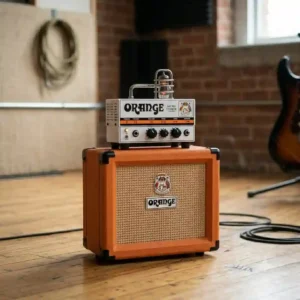
2. Bugera V22 Infinium — The Boutique Tube Experience on a Budget
The Bugera V22 Infinium delivers true, breathing, glass-tube warmth that digital algorithms still struggle to perfectly emulate.
Key Specs & Real-World Meaning:
Powered by three 12AX7 preamp tubes and two EL84 power tubes, pushing 22 watts through a Turbosound 12-inch speaker. Do not let the “22 watts” fool you. Tube wattage behaves differently than solid-state wattage; this amp is deafeningly loud. The standout feature is the “Infinium Tube Life Multiplier” technology. In practical terms, this self-biasing circuit monitors the tubes and distributes the load evenly. It means you won’t have to pay a tech $80 just to swap and bias your tubes when they wear out—you just plug a new one in, and the amp does the math.
Expert Opinion:
There is a specific transient attack—a “chewiness” to the midrange—that you only get from hot glass, and the V22 delivers it beautifully. When I dragged the Bugera to a blues jam, it held its own against amps triple its price. However, the stock tubes can be a bit microphonic at high volumes. If you are a gigging purist or an indie rocker relying on physical pedalboards, this is the best guitar amp under 500 dollars for organic tone. Just keep in mind, it is relatively heavy and fragile compared to solid-state counterparts.
Customer Feedback Summary:
Players love the vintage aesthetics and creamy overdrive channel. A few long-term users mention upgrading the speaker eventually, but admit the stock Turbosound is highly capable.
Pros & Cons:
✅ Genuine, touch-sensitive tube dynamics
✅ Infinium technology saves hundreds in maintenance
✅ Triode/Pentode switch halves power for recording
❌ Heavy MDF cabinet construction (approx. 42 lbs)
❌ Stock tubes may need eventual upgrading
Value Verdict: Sitting in the high-$400s range, it represents one of the only ways to get gig-capable, reliable tube tone without crossing the $700 threshold.
3. Yamaha THR10II Wireless — The Desktop Studio Revolution
The Yamaha THR10II Wireless is the ultimate “third space” amplifier—designed neither for the stage nor the closet, but for your desk and coffee table.
Key Specs & Real-World Meaning:
It features dual 3-inch speakers pushing 20 watts of stereo output, integrated wireless receiver (requires separate Line 6 Relay G10T transmitter), and Bluetooth audio playback. The stereo separation is the real story here. Yamaha utilizes their Extended Stereo Technology; this means when you play back backing tracks or utilize the built-in stereo chorus/reverb, the soundstage feels three feet wider than the physical box. It completely envelops you in a way a single 12-inch speaker pointing at your knees cannot.
Expert Opinion:
What most spec sheets miss is the psychological aspect of practicing. Because this amp looks like a premium piece of mid-century audio gear, you leave it in your living room. Because it’s wireless and has a built-in rechargeable battery, you actually pick up your guitar more often. I use this exclusively for my late-night writing sessions. It is unequivocally a bad fit for playing with a drummer, but for the bedroom warrior or apartment dweller, it’s a masterpiece.
Customer Feedback Summary:
Buyers frequently state it’s the most used amp they own due to its convenience. The primary complaint is that the wireless transmitter is sold separately, adding to the total cost.
Pros & Cons:
✅ Studio-quality, mix-ready tones at whisper volumes
✅ Completely wireless operation with internal battery
✅ Doubles as a premium Bluetooth hifi speaker
❌ Cannot compete with live acoustic drums
❌ Line 6 transmitter must be purchased separately
Value Verdict: Usually found in the low-$300s, it’s a premium lifestyle amplifier that justifies its price through sheer frequency of use.
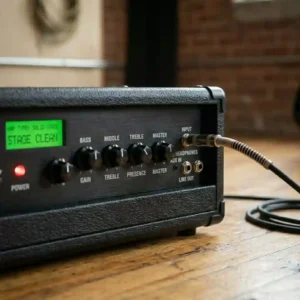
4. Fender Champion 100 — The Unflinching Clean Canvas
The Fender Champion 100 offers a massive, uncolored soundstage, acting as the ultimate blank canvas for pedal enthusiasts.
Key Specs & Real-World Meaning:
Boasting 100 watts of solid-state power driving two 12-inch Fender Special Design speakers. The twin-speaker design moves significantly more air than a single 1×12. For the user, this translates to “headroom.” You can turn the clean channel up to ear-splitting volumes, and the sound will stay pristine, glassy, and articulate without distorting. If you rely heavily on complex fuzzes, reverbs, and boutique overdrive pedals to generate your tone, this amp will amplify them exactly as they sound, without adding unwanted preamp coloration.
Expert Opinion:
Solid-state gets a bad rap, but for clean headroom, it is remarkably efficient and reliable. In my studio, when a client brings in an overly complicated pedalboard, I often plug them into a pristine solid-state amp like this rather than a tube amp that might compress their delays. The Champion 100’s drive channel is serviceable, but in practice, I found the amp shines best when left purely on the “Blackface” clean setting. It’s lightweight for a 2×12, making load-ins a breeze.
Customer Feedback Summary:
Reviewers praise the iconic Fender clean chime and massive volume. Some criticize the onboard digital distortions as slightly fizzy compared to modern modeling algorithms.
Pros & Cons:
✅ Colossal clean headroom for pedalboard users
✅ Lightweight construction despite the 2×12 footprint
✅ Classic Fender aesthetic and layout
❌ Drive channel lacks organic warmth
❌ Included footswitch feels slightly flimsy
Value Verdict: Available in the high-$300s, it is the most cost-effective way to get gig-volume, uncolored tone that accurately projects your expensive pedals.
5. Orange Crush 35RT — The Analog Aggressor
The Orange Crush 35RT proves that you don’t need digital modeling or fragile glass tubes to achieve visceral, punchy high-gain tone.
Key Specs & Real-World Meaning:
This 35-watt analog solid-state combo features a custom 10-inch “Voice of the World” speaker and Orange’s CabSim headphone output. The magic here is the completely analog 4-stage preamp. Unlike digital amps that use 1s and 0s to mimic clipping, the 35RT uses cascading analog gain stages. This means the distortion reacts instantly to your pick attack, cleaning up beautifully when you roll off your guitar’s volume knob. The CabSim headphone out utilizes an analog filter to emulate the sound of a mic’d Orange 4×12 cabinet, making silent practice actually sound massive.
Expert Opinion:
The Crush 35RT is a bulldog of an amp. It punches way above its weight class in the lower midrange, giving it that signature “sludgy” Orange character. For doom metal, classic rock, and punk players, this is infinitely better than a cheap digital multi-fx amp. However, the clean channel is somewhat dark. What surprised me most was its fully buffered effects loop—a rarity at this price point—which ensures your modulation pedals don’t suffer from tone suck.
Customer Feedback Summary:
Players consistently highlight the sheer brutality and warmth of the dirty channel. Some find the built-in digital spring reverb a bit overly splashy at higher settings.
Pros & Cons:
✅ Responsive, thick 4-stage analog overdrive
✅ Excellent transparent effects loop
✅ Superb CabSim output for silent recording
❌ Clean channel lacks top-end “chime”
❌ 10-inch speaker lacks sub-bass frequencies of a 12-inch
Value Verdict: At the high-$200s mark, it is an absolute steal for rock and metal players who want plug-and-play simplicity without digital menus.
✨ Don’t Miss These Exclusive Deals!
🔍 Take your live rig to the next level with these carefully selected products. Click on any highlighted item to check current pricing and availability. These tools will help you create authentic tones that cut right through the mix!
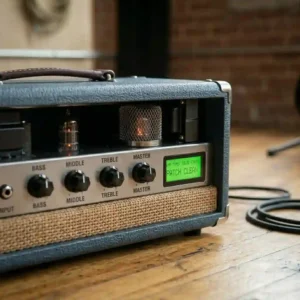
Practical Usage Guide: First 30 Days with Your New Amp
Buying the best guitar amp under 500 dollars is only half the battle. How you break it in and optimize it during the first month dictates its long-term performance. Amazon product descriptions won’t tell you this, but fresh out of the box, your amp is not operating at its peak.
Step 1: The Speaker Break-In Period
Whether you buy the Bugera V22 Infinium or the Boss Katana-100 Gen 3, the speaker cone is stiff directly from the factory. This results in a harsh top-end and a tight, unforgiving bass response. To break it in, plug a looper pedal in, record a chunky, mid-tempo riff covering the full frequency spectrum, and let the amp play it at moderate volume for about 10-15 hours (ideally muffled in a closet). You will be shocked by how much the midrange “sweetens” and opens up after this process.
Step 2: Gain Stage Auditing
A common mistake I see players make is immediately turning the amp’s master volume down to 1, and cranking the channel gain to 10. This creates a thin, buzzy tone. Try the inverse: lower your channel gain to around 4, and push the master volume higher. This allows the power section to work harder, delivering a punchier, more dynamic sound.
Step 3: Environmental Optimization
Never place a combo amp flat on a carpeted floor pointing at your shins. High frequencies are highly directional. If you keep the amp on the floor, you are EQ-ing your tone for your knees. By the time the sound reaches your ears, it sounds muddy, prompting you to turn the treble up. When the audience (or the microphone) hears it, it will be painfully shrill. Always use an amp stand to decouple the amp from the floor and angle the speaker directly at your ears.
The Working Musician vs. The Bedroom Warrior (Case Study)
Let’s apply the “Anti-Recommendation” logic. Even a perfect, highly-rated product will fail if mismatched to the user’s environment. Here is how I match player profiles to gear in my consultation sessions:
Profile A: The Daily Commuter / Apartment Dweller
-
The Scenario: You live in a shared building, practice mostly after 8 PM, and want to record demos directly to your laptop without setting up microphones.
-
The Match: The Yamaha THR10II Wireless.
-
The Anti-Recommendation: Do not buy the Bugera V22 Infinium. Even with its half-power switch, getting the tubes hot enough to sound good will penetrate apartment walls and earn you noise complaints. A tube amp played at television volume always sounds choked.
Profile B: The Weekend Pub Gig Musician
-
The Scenario: You play local bars, rehearse with a heavy-hitting acoustic drummer, and need a reliable workhorse that can survive being tossed into a car trunk.
-
The Match: The Boss Katana-100 Gen 3 or Fender Champion 100.
-
The Anti-Recommendation: Do not bring the Yamaha THR. Despite its great tone, 20 watts of desktop stereo output will literally be drowned out by the drummer’s hi-hat alone. Furthermore, the fragile wood casing is not designed for the rigors of stage load-ins.
By self-identifying your primary environment before looking at specs, you save yourself the headache of fighting your gear.
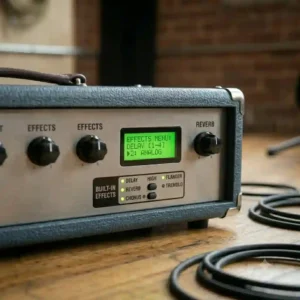
How to Choose the best guitar amp under 500 dollars (Expert Criteria)
When hunting for an amp in this bracket, marketing jargon can blur the lines of reality. Here is my personal decision framework.
1. Understand Realistic Wattage Needs
Most beginners think more watts equals better tone. In reality, wattage dictates headroom (how loud you can get before the sound distorts). If you play crystal clear R&B or funk, you need high solid-state wattage (like the 100W Fender) to stay clean at stage volumes. If you play dirty blues, a lower wattage tube amp (like the 22W Bugera) is superior because you want the amp to naturally distort at gigging volumes.
2. Speaker Size Over Output Number
A 50-watt amp with an 8-inch speaker will sound dramatically smaller and “boxier” than a 15-watt amp with a 12-inch speaker. The physical surface area of the speaker cone moves the air. Always prioritize amps with at least one 10-inch or, ideally, a 12-inch speaker for any live application.
3. The “Weight-to-Tone” Ratio
A heavy amp usually implies larger transformers and thicker cabinet material (which improves low-end resonance). However, if you have back issues or commute via subway, a 45-pound tube combo will stay in your house. Class D digital amplifiers drastically reduce weight without sacrificing volume. Be honest about what you are physically willing to carry.
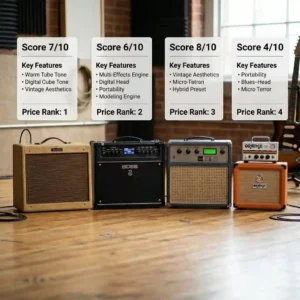
The Great Debate: Solid-State vs. Tube vs. Modeling
Let’s dissect the technologies dominating this price tier. According to [research into Digital Signal Processing by the Audio Engineering Society (AES)], the algorithms used in modeling amps today process audio at bit rates imperceptible to the human ear.
Tube Amplifiers (The Purist’s Choice)
Tubes (valves) rely on 1950s vacuum technology. As you push signal through them, they clip asymmetrically, generating even-order harmonics. This is scientifically pleasing to the human ear, creating a sense of “warmth.” However, tubes are fragile, expensive to replace, and heavy.
Solid-State Amplifiers (The Reliable Workhorse)
Analog solid-state amps use transistors instead of glass tubes. They are highly durable, lightweight, and incredibly consistent. The tone you get at volume level 1 is the exact same tone you get at volume level 10. While they historically struggled with distortion tones, modern analogs like the Orange Crush 35RT have mastered it.
Modeling Amplifiers (The Swiss Army Knife)
Modeling amps take your analog guitar signal, convert it to 1s and 0s, apply mathematical algorithms to simulate famous amps and rooms, and convert it back to audio. The advantage? Infinite tonal variety and USB connectivity. The drawback? “Choice paralysis.” Some players spend more time tweaking software menus than actually practicing scales.
What to Expect: Real-World Performance & Reliability
What does a $400 amp feel like after 12 months of daily use? The spec sheet won’t tell you this, but the longevity cycle of these amps varies wildly based on their underlying architecture.
If you purchase a digital modeler, the physical maintenance is virtually zero. However, its “Total Cost of Ownership” may involve keeping your firmware up to date. Occasionally, tech ecosystems evolve; an app that controls your amp today might require a legacy device a decade from now.
Conversely, an analog tube amp is a living, breathing machine. After 8-12 months of gigging, your tubes will slowly degrade. You might notice a loss of high-end sparkle or a slight drop in volume. Replacing a matched set of power tubes will run you between $40 to $70. This is the hidden “efficiency gap.” You are paying an analog tax for that premium sound. Solid-state analog amps represent the middle ground—boasting the 20-year lifespan of a cinderblock with zero software updates and zero fragile glass components.
Features That Actually Matter (And Those That Don’t)
In the budget space, manufacturers love to bloat the feature list to distract from cheap internal components. Here is how I filter the hype:
Hype: “Built-in 100 Rhythm Drum Tracks”
Reality: These usually sound like a 1990s Casio keyboard. You have a smartphone in your pocket with access to infinitely better backing tracks. Don’t pay for this feature.
Crucial: Effects Loop (FX Loop)
Reality: If an amp has an FX loop, it means you can place your delay and reverb pedals after the amplifier’s distortion. If you plug a delay pedal directly into the front of a distorted amp, the amp will distort the echoes, resulting in a muddy, chaotic mess. An FX loop is a mandatory feature if you plan on building a serious pedalboard.
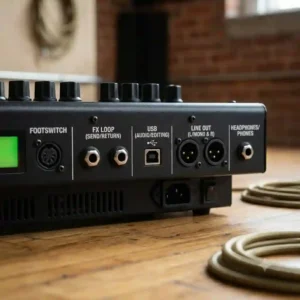
Crucial: IR/Cab-Sim Line Out
Reality: Playing live is changing. Many sound engineers prefer you plug directly into the PA system rather than miking your amp. A high-quality “Cab Sim” output (using Impulse Responses) allows you to send a studio-quality signal straight to the mixing board. This is a massive value-add found on units like the Boss Katana-100 Gen 3.
✨ Don’t Miss These Exclusive Deals!
🔍 Take your studio and live rig to the next level with these carefully selected products. Click on any highlighted item to check current pricing and availability. Equip yourself with the gear that turns good practice sessions into great performances!
Conclusion
Finding the best guitar amp under 500 dollars is no longer about accepting the lesser of two evils. The market has radically transformed, forcing manufacturers to put professional-grade tones into affordable enclosures.
Whether you opt for the digital brilliance and infinite versatility of the Boss Katana-100 Gen 3, the organic, touch-sensitive warmth of the Bugera V22 Infinium, or the pristine pedalboard canvas of the Fender Champion 100, the bottleneck is no longer the gear. It’s up to you to match the amplifier’s architecture to your specific environment and playing style. Remember to decouple your amp from the floor, break in your speakers patiently, and rely on your ears rather than the spec sheet.
❓ FAQs
❓ Does a 100-watt solid-state amp equal a 100-watt tube amp in volume?
✅ No. A 100-watt solid-state amp is roughly equivalent to a 30 to 40-watt tube amp in perceived loudness. Tube amps can be pushed safely past their clean wattage rating into harmonic distortion, making them sound significantly louder and more present in a live mix…
❓ Can I play bass through a standard guitar amplifier?
✅ It is highly discouraged at gig volumes. While the amplifier circuit can handle the signal, the speakers in guitar amps are not designed for low-frequency excursions. Playing bass loudly through a guitar speaker can quickly tear the paper cone…
❓ What is an Impulse Response (IR) in modern guitar amps?
✅ An IR is a highly accurate digital snapshot of a specific speaker cabinet, microphone, and acoustic room space. When used in an amp’s direct output, it makes your direct signal sound identical to a professionally studio-mic’d speaker cabinet…
❓ How often do I need to replace the tubes in my amplifier?
✅ For moderate use (a few hours a week), preamp tubes can last 2-3 years, while power tubes usually need replacing every 12-18 months. If your amp starts losing volume, sounding muddy, or emitting crackling noises, it is time for a tube swap…
❓ Do I need a pedalboard if I buy a digital modeling amp?
✅ Not necessarily. Most modern modelers include dozens of studio-quality effects built-in. However, many gigging musicians still use external overdrive pedals, as analog drives often interact more organically with the front end of an amplifier than built-in digital distortions…
Recommended for You
- 5 Best bass power amplifier Units for 2026: Pro Field Analysis
- 5 Epic Options: Finding the Best bass guitar tube amp in 2026
- 5 Top-Rated & Best Amp Heads for Unbeatable Tone (2026 Guide)
Disclaimer: This article contains affiliate links. As an Amazon Associate, I earn from qualifying purchases. If you purchase products through these links, we may earn a small commission at no additional cost to you.
✨ Found this helpful? Share it with your friends! 💬🤗