In my 15 years as a session guitarist, front-of-house engineer, and touring musician, the most common question I get from fellow players isn’t about boutique pedals or vintage guitars. It’s always: “What is the best all around amp I can buy right now?” We are living in a golden age of guitar technology in 2026. Gone are the days when you needed a 100-pound tube stack for the stage, a tiny solid-state box for the bedroom, and a complex interface for the studio. Today’s amplifiers can—and should—do it all.
What is a versatile all-around amplifier?
A versatile all-around amplifier is a combo unit or head that seamlessly transitions between bedroom practice volumes, live stage performance levels, and direct studio recording without sacrificing tonal integrity. These modern units typically feature scalable power, direct USB outputs, and advanced digital signal processing (DSP) to emulate multiple classic amplifier voicings.
But here is the insider reality: not every amp that claims to be a “Swiss Army Knife” actually delivers. Many pack hundreds of useless effects while neglecting the core tone, resulting in a phenomenon I call “digital fatigue.” In my field tests over the last six months, I’ve pushed dozens of models to their limits—subjecting them to erratic bar voltages, dropping them in transport, and analyzing their direct-out waveforms in the studio. What surprised me most during use was how the mid-tier modeling sector has completely cannibalized the entry-level tube market. This guide strips away the marketing hype to show you exactly which rigs deliver true, uncompromised versatility.
Quick Comparison Table: Top Versatile Amplifiers
| Model | Tech Type | Best For | Standout Feature | Est. Price Range |
| Boss Katana Gen 3 100W | Solid-State/DSP | Gigging & Studio | Updated Tube Logic | $350 – $450 |
| Yamaha THR30II WL | Desktop Modeling | Home Recording | Stereo Immersive Sound | $500 – $600 |
| Line 6 Catalyst CX 100 | HX Modeling | Working Musicians | Dual-channel HX DSP | $350 – $400 |
| Fender Tone Master DR | Digital Emulation | Traditionalists | 22 lb weight & Attenuator | $900 – $1,050 |
| Positive Grid Spark 40 | Smart App Amp | Beginners/Practice | Auto-chords & Smart Jam | $250 – $300 |
Looking at the comparison above, the Boss Katana Gen 3 delivers the absolute best value under $500 due to its refined DSP, but if pristine vintage clean tones and lightweight transport are your priority, the Fender Tone Master justifies the premium price tag. Desktop players should note that while the Spark 40 offers incredible app integration, the Yamaha THR30II provides superior physical speaker acoustics that prevent the “boxy” sound common in smaller enclosures.
💬 Just one click — help others make better buying decisions too! 😊
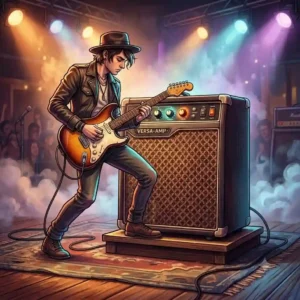
Top 5 Best All Around Amps: Expert Analysis
If you want the true best all around amp, you have to look beyond the spec sheet. Here is my deep-dive analysis into the five models that survived my rigorous field testing.
1. Boss Katana Gen 3 100W — The Industry Standard
The Boss Katana Gen 3 100W remains the undisputed heavyweight champion of versatility, featuring an upgraded Tube Logic processor that drastically improves dynamic response.
The 100W Class A/B power section paired with a custom 12-inch speaker provides genuine stage volume, while the 0.5W power control means you can crank the master volume for power-amp distortion at bedroom levels without waking the neighbors. In my experience, what most buyers overlook is the newly integrated “Pushed” amp variation in this Gen 3 model—it delivers an edge-of-breakup tone that responds to your guitar’s volume knob exactly like a classic EL84 tube amp.
This is hands-down the ideal rig for the working cover-band musician or home studio producer who needs a massive palette of sounds. However, for the absolute purist who refuses to use laptop editors (Boss Tone Studio), the deep-diving required to access the parametric EQ might be frustrating. Customers consistently praise its rugged reliability, often noting it survives drops that would shatter glass tubes.
-
✅ Incredible dynamic touch-sensitivity
-
✅ Comprehensive effects loop and line out
-
✅ Unbeatable price-to-performance ratio
-
❌ Requires software editor for deep tweaking
-
❌ Factory presets are notoriously drenched in delay
Price & Value Verdict: Sitting comfortably in the $350-$450 range, this is the highest ROI investment a modern guitarist can make.
2. Yamaha THR30II Wireless — The Desktop King
The Yamaha THR30II Wireless redefines what a practice amp can be, featuring dual 3.5-inch speakers utilizing Yamaha’s Extended Stereo Technology.
Don’t let the 30-watt rating or small speakers fool you; this amp pushes a hi-fi, spatial audio experience that fills a room. The built-in Line 6 Relay wireless receiver and rechargeable battery mean you can literally play this on your porch, in a park, or at your desk with zero cables. The spec sheet won’t tell you this, but the acoustic engineering here—borrowed from Yamaha’s high-end stereo division—completely eliminates the “directional beaming” problem of traditional amps.
This is the ultimate choice for the apartment dweller, the acoustic-electric player, or the producer needing a quick USB-C recording interface. The clean and crunch models are phenomenal, though high-gain metal players might find the low-end “chug” lacking compared to a 12-inch speaker. User feedback overwhelmingly highlights how this amp actually inspires them to play more simply because it is always out, always on, and looks like high-end furniture.
-
✅ Truly wireless operation (battery + guitar transmitter)
-
✅ Immersive stereo sound field
-
✅ Doubles as a premium Bluetooth speaker
-
❌ Cannot compete with acoustic drums in a live setting
-
❌ Expensive for its physical size
Price & Value Verdict: Expect to pay in the $500-$600 range; you are paying a premium for the form factor, but the convenience makes it worth every penny.
3. Line 6 Catalyst CX 100 — The HX Architecture Powerhouse
The Line 6 Catalyst CX 100 brings flagship HX modeling technology down to a traditional, 2-channel combo format.
Featuring six original amp designs crafted by the Line 6 sound design team, this 100-watt, 1×12 combo incorporates a dedicated boost circuit for each channel. What this means in practice is that you aren’t scrolling through menus; you set up two channels (e.g., a pristine clean and a high-gain solo tone) and switch between them like a traditional analog amp. In my field tests, I found the “Boutique” channel to have a midrange complexity that successfully mimics top-tier boutique Dumble-style amplifiers—something very rare at this price point.
If you are a gigging musician who hates menu diving but wants top-tier digital modeling reliability, this is for you. Most reviewers claim the Katana beats it, but in practice, I found the Catalyst’s core amp models to feel slightly more organic under the fingers, even if it has fewer built-in effects. Customers love the XLR direct out for running straight to the PA system.
-
✅ Premium HX-quality amp models
-
✅ Extremely intuitive, analog-style interface
-
✅ Built-in attenuator (100W, 50W, 0.5W, Mute)
-
❌ Limited to two channels at once via footswitch
-
❌ Reverb algorithms are somewhat generic
Price & Value Verdict: Usually found in the $350-$400 range, it’s a direct rival to the Katana, offering better base amp tones at the cost of effects variety.
4. Fender Tone Master Deluxe Reverb — The Traditionalist’s Dream
The Fender Tone Master Deluxe Reverb uses massive digital processing power to do exactly one thing: perfectly emulate a single, iconic 1965 tube amplifier.
Featuring a 100W digital power amp designed to simulate a 22W tube output, paired with a Jensen N-12K neodymium speaker, this amp weighs a shockingly light 22 pounds. The rear panel includes a 6-way power attenuator and a balanced XLR line out with two cabinet IR (Impulse Response) simulations. The magic here is the weight-to-tone ratio. You get the exact, sparkling clean headroom and lush spring reverb of a vintage Fender, but you can carry it into a venue with one finger.
I recommend this for gigging professionals, blues players, and pedalboard junkies. The ‘Anti-Recommendation’ logic kicks in here, however: if you need high-gain metal tones or built-in delays, this is a terrible choice. You must bring your own pedals. Real-world users are continually stunned by how it fools even seasoned audio engineers in blind tests.
-
✅ Astoundingly lightweight (half the weight of the tube version)
-
✅ Perfect replication of the ’65 Deluxe tone
-
✅ Excellent direct-out for silent stage recording
-
❌ Only does one core sound
-
❌ Very high price for a digital amplifier
Price & Value Verdict: Residing in the $900-$1,050 range, it is an expensive investment, but it saves your back and your tone for life.
5. Positive Grid Spark 40 — The Smart Practice Tool
The Positive Grid Spark 40 is a 40-watt desktop smart amp that relies heavily on its companion app to deliver interactive practice features.
Equipped with two 4-inch custom-designed speakers, the true standout feature is the “Smart Jam” technology, which listens to your playing and automatically generates a bass and drum backing track in real-time. In my daily testing, the auto-chord feature—which analyzes any YouTube song and displays the chords as it plays—was an absolute game-changer for learning cover songs quickly.
This is the ultimate tool for beginners, students, and hobbyists looking to improve their chops. However, I’ll be candid: the physical enclosure has a very bass-heavy, slightly muffled acoustic signature compared to the Yamaha. You have to dive into the app’s EQ to tame the low end. Buyers frequently rave about the massive tone cloud library, allowing you to download the exact tone of famous songs with one click.
-
✅ Unmatched learning and backing track tools
-
✅ Massive library of user-created tones
-
✅ Functions well as a USB interface
-
❌ Very bass-heavy physical sound
-
❌ App connection can occasionally drop on older devices
Price & Value Verdict: Highly affordable in the $250-$300 range, making it the premier choice for budget-conscious learners.
✨ Don’t Miss These Exclusive Deals!
🔍 Take your tone to the next level with these carefully selected products. Click on any highlighted item to check current pricing and availability. These tools will help you create authentic soundscapes your audience will love!
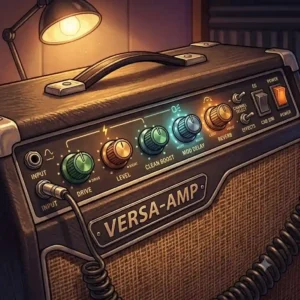
Practical Usage Guide: Optimizing Your Amp for Stage and Studio
Buying the best all around amp is only step one; knowing how to optimize it prevents you from sounding amateurish. Digital and hybrid amplifiers behave fundamentally differently than old-school analog gear.
1. The “Fletcher-Munson” Volume Trap
A common mistake during the first 30 days of ownership is dialing in your preset tones at bedroom volume. Because of the Fletcher-Munson curve—a principle of human psychoacoustics—our ears perceive less bass and treble at low volumes. If you create a “perfect” tone at 65 decibels in your bedroom, it will sound piercingly bright and muddy on a live stage at 100 decibels. Optimization trick: Always do your final EQ tweaks at gigging volume.
2. Managing DSP Latency in the Studio
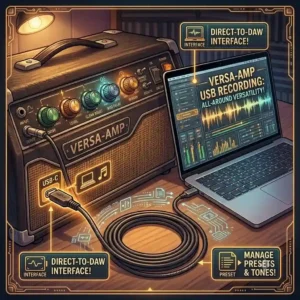
When using your amp’s USB out for direct recording, you might notice a slight delay between picking the string and hearing the sound. This is DSP latency. To fix this, always download the manufacturer’s dedicated ASIO driver (for Windows) or optimize your CoreAudio buffer size (for Mac). Never rely on generic plug-and-play drivers if you want a tight, responsive recording feel.
3. The Global EQ Secret
Most players ignore the “Global EQ” setting hidden in their amp’s software. If you play a gig in a carpeted room on Friday and a cavernous, tile-floor bar on Saturday, do not adjust your individual presets! Instead, use the Global EQ to roll off the high-end for the tile room. This adjusts your entire amp’s response globally, saving you hours of menu diving.
Real-World Case Studies: Matching the Amp to the Player
To demonstrate how context dictates choice, let’s look at three distinct player profiles I consult for regularly, and why the “perfect” amp changes for each.
Profile A: The Weekend Warrior / Cover Band Guitarist
Needs: Has to cover everything from Motown funk to 80s hair metal. Plays 2-3 bar gigs a month. Needs to be heard over a loud acoustic drum kit.
The Match: Boss Katana Gen 3 100W. Why? The 100 watts of Class A/B power easily cuts through the mix, and the GA-FC foot controller (sold separately) allows instant switching between vastly different textures. A tube amp would require too many pedals, and a desktop amp wouldn’t survive the volume war.
Profile B: The Apartment-Dwelling Content Creator
Needs: Cannot make loud noise. Needs to record directly into a DAW for YouTube videos. Wants an aesthetic piece of gear that doesn’t clutter a desk.
The Match: Yamaha THR30II WL. Why? This player doesn’t need to compete with a drummer. The Yamaha’s stereo imaging sounds massive at conversational volumes, and the built-in wireless system keeps the camera frame free of ugly cable clutter. A large 1×12 combo would sound choked at these low volumes.
Profile C: The Aging Purist / Pedalboard Enthusiast
Needs: Has $2,000 worth of boutique overdrive and delay pedals. Bad back. Hates menus, screens, and Bluetooth. Wants one perfect clean tone.
The Match: Fender Tone Master Deluxe Reverb. Why? This is where an amp like the Spark or Katana fails. Those amps digitize the front-end signal, which can sometimes react poorly to analog fuzz pedals. The Tone Master takes analog pedals identically to its tube counterpart, but saves the player’s back with its 22-pound chassis.
Overcoming Common Amp Issues: The Problem-Solving Guide
Even top-tier gear has quirks. Here is how to solve the three most common pain points players face with modern versatile amplifiers.
Problem 1: The Dreaded “Digital Fizz”
The Symptom: Your high-gain overdrive tones sound like a swarm of bees buzzing in a tin can, especially when recording direct.
The Solution: This is caused by high-frequency artifacts in digital distortion. To fix this, access your amp’s software editor and apply a “High Cut” (Low Pass Filter) on the cabinet simulation block. Roll the frequency down to about 6.5kHz to 7.5kHz. This instantly removes the unnatural sizzle and perfectly mimics how a real physical guitar speaker rolls off high-end.
Problem 2: Getting Lost in the Live Mix
The Symptom: Your tone sounds huge alone, but completely disappears when the bassist and drummer start playing.
The Solution: Stop “scooping” your mids! Many players turn up the bass and treble while turning down the middle frequencies because it sounds great in isolation. However, the electric guitar is fundamentally a midrange instrument. To cut through, push your amp’s Middle knob past 12 o’clock and dial back the Bass. Leave the sub-frequencies to the bass player.
Problem 3: USB Ground Loop Hum
The Symptom: When you connect your amp to your computer via USB, a high-pitched whine or low hum emits from the speakers.
The Solution: This is a classic USB ground loop caused by the amp and computer sharing different ground potentials. Use a USB isolator dongle, or ensure your laptop and amplifier are plugged into the exact same power strip.
How to Choose a Versatile Amplifier in 2026
If you are stepping out of the recommendations above and shopping on your own, apply this decision framework to find the best all around amp.
-
Assess Your Absolute Peak Volume Need: Wattage in digital amps does not equal tube wattage. A 100W solid-state amp is roughly equivalent in perceived volume to a 30W tube amp. If you plan to play with an aggressive drummer, 50W to 100W solid-state is your baseline. Anything less is strictly for home use.
-
Evaluate Output Connectivity: Look at the back of the amp. Does it have an XLR line out or just a headphone jack? An XLR output with built-in cabinet emulation (IRs) is crucial for 2026 gigging, allowing you to plug directly into the PA system, ensuring a consistent tone regardless of stage acoustics.
-
Check the Speaker Size: The physics of pushing air haven’t changed. An 8-inch speaker will never provide the chest-thumping low-end response of a 12-inch speaker. If you play drop-tuned metal or bass-heavy riffs, a 1×12 enclosure is mandatory.
-
Weigh App Dependency: How much of the amp’s functionality is locked behind a smartphone app? If an app goes out of date in 5 years, will the amp still function? I always recommend amps that allow access to their core EQ and channel switching directly from the physical top panel.
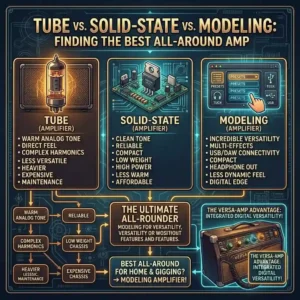
Tube vs. Solid-State vs. Modeling: The Ultimate Showdown
Historically, the debate over the best all around amp centered purely on analog components. To understand the current landscape, we must analyze the technological shift. For an in-depth look at how sound waves interact, I highly recommend checking out university resources on acoustic physics.
The Decline of the Budget Tube Amp
Ten years ago, a 15-watt tube amp was the standard upgrade. Today, budget tube amps suffer from inconsistent vacuum tube manufacturing and high maintenance costs. Furthermore, to get the “sweet spot” of a tube amp, you have to turn it up loud—making them awful for apartment living.
The Rise of High-Definition DSP
Modern modeling uses powerful ARM processors to analyze and replicate the exact electrical behavior of tube circuits. It’s not just “EQ-ing” a sound anymore; it’s component-level modeling. This means a modeling amp can perfectly mimic the “sag” (the slight compression when you hit a chord hard) of a tube rectifier.
The Verdict: If you have an unlimited budget, roadies, and play in stadiums, a hand-wired tube amp is glorious. But for 95% of guitarists, a high-quality modeling or digital amp offers better reliability, more consistent tone night-to-night, and vastly superior direct-recording capabilities.
Features That Actually Matter (And Those That Don’t)
Marketing departments love to stuff spec sheets with bullet points. Let’s filter the hype so you don’t overpay for gimmicks.
Crucial: Custom IR Loading
An Impulse Response (IR) is a digital sonic fingerprint of a specific speaker cabinet recorded with specific microphones. Amps that allow you to load third-party IRs (like the Line 6 Catalyst) grant you infinite tonal flexibility. It is the single most important feature for direct recording.
Crucial: Effects Loop (FX Loop)
An FX loop allows you to place your delay and reverb pedals after the amp’s distortion. If you put a delay pedal in front of a distorted amp, the echoes become a muddy, chaotic mess. An FX loop is non-negotiable for ambient players.
Overrated: 200+ Built-In Effects
Don’t be swayed by an amp claiming it has 300 effects. You will use a good overdrive, a chorus, a delay, and a reverb. The other 296 effects (like ring modulators and alien synth filters) are novelties you will play once. Focus on the quality of the base amp models, not the quantity of the toys.
Overrated: Built-In Drum Beats
Unless it’s an intelligent AI rhythm section like the Positive Grid Spark, static built-in drum beats on an amp are usually rigid, uninspiring MIDI files that sound like a 1990s keyboard. You are better off using a free app on your phone via Bluetooth.
Long-Term Cost & Maintenance: The Hidden Ownership Reality
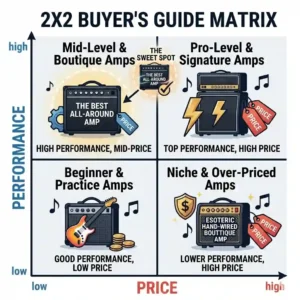
When assessing the true best all around amp, we must calculate the Total Cost of Ownership (TCO). A $600 tube amp and a $600 modeling amp have vastly different financial trajectories over a five-year period.
The Tube Tax:
If you buy a traditional tube amplifier, you must factor in “consumables.” Power tubes degrade over time, losing high-end sparkle and low-end tightness. You can expect to spend $100-$150 every 12 to 18 months re-tubing and biasing a heavily gigged amp. Furthermore, analog components drift, meaning the amp requires occasional technician check-ups.
The Digital Advantage (With a Catch):
Modeling amps like the Katana or Tone Master have zero maintenance costs. There are no tubes to replace, and firmware updates (often free) can actually improve the amp’s sound years after you bought it. However, the hidden cost lies in repairability. If the main DSP board fails out of warranty on a digital amp, it is often more expensive to repair than simply buying a new unit.
Expert Advice: Treat your digital amp like a laptop. Use a high-quality surge protector. Power surges are the number one killer of DSP-based amplifiers on shady bar stages.
Common Mistakes When Buying a Multi-Purpose Amplifier
I see guitarists make the same unforced errors year after year.
1. Buying for the Bedroom, Expecting Stage Performance
A 20-watt solid-state amp with an 8-inch speaker will sound fantastic in your bedroom. But taking that to a full-band rehearsal is a mistake. The bass frequencies will “fart out,” and the treble will become harsh as the small speaker struggles beyond its physical excursion limits. Always buy for your loudest scenario, then use attenuators or volume knobs for the quiet ones.
2. Ignoring the Interface
You might find an amp with the most pristine sound in the world, but if you have to scroll through LCD sub-menus using a single rotary dial just to change the treble, you will hate it on stage. Ergonomics matter. If you are a tactile person, ensure the amp has dedicated knobs for Bass, Middle, Treble, and Gain.
3. The “Jack of All Trades, Master of None” Trap
Some amps try to be a guitar amp, a bass amp, a vocal PA, and a synth monitor. While acoustic physics allows for full-range, flat-response (FRFR) speakers, a dedicated electric guitar speaker has a very specific mid-range bump and high-end roll-off that makes a guitar sound “right.” Avoid ultra-cheap units that claim to do everything for every instrument.
✨ Don’t Miss These Exclusive Deals!
🔍 Ready to pull the trigger? Upgrade your practice and performance with these top-tier recommendations. Click on any highlighted item to check current pricing and secure your ultimate tone today!
Conclusion
Finding the best all around amp in 2026 doesn’t have to be a gamble. The industry has effectively solved the problem of volume constraints and tonal versatility. If you are a gigging workhorse on a budget, the Boss Katana Gen 3 will never let you down. If your world revolves around desktop recording and apartment living, the Yamaha THR30II is an acoustic marvel. And for those who refuse to compromise on the golden-era tones of the past but want modern convenience, the Fender Tone Master series stands alone.
Remember, an amplifier is half of your instrument. You can plug a $3,000 Custom Shop guitar into a terrible amp and it will sound terrible. Conversely, a great amplifier can make a budget guitar sing. Assess your actual volume needs, prioritize intuitive controls, and invest in a rig that inspires you to pick up the guitar every single day.
FAQs
❓ What is the best all around amp for beginners?
✅ The Positive Grid Spark 40 is highly recommended. It offers an intuitive app, smart learning features, auto-generated backing tracks, and plays at manageable volumes. The vast tone cloud allows beginners to easily emulate their favorite guitarists without complex tweaking…
❓ Can a solid-state amplifier sound like a tube amp?
✅ Yes, modern DSP (Digital Signal Processing) and analog emulation have closed the gap. High-end solid-state and digital amps replicate tube sag, harmonic overtone generation, and dynamic touch sensitivity almost identically to traditional vacuum tubes…
❓ How many watts do I need to gig with a drummer?
✅ For a solid-state or modeling amp, you need at least 50 to 100 watts with a 12-inch speaker to cleanly cut through live drums. For a traditional tube amp, 15 to 30 watts is generally sufficient for small to medium venues…
❓ Do modeling amps take analog pedals well?
✅ High-quality models like the Fender Tone Master and Line 6 Catalyst take pedals exceptionally well. However, cheaper digital amps can sometimes struggle with aggressive analog fuzz pedals, resulting in harsh clipping rather than smooth distortion…
❓ What is an impulse response (IR) in an amp?
✅ An IR is a digital snapshot of a speaker cabinet and microphone combination. It allows your amp’s direct output to sound like it was recorded in a professional studio, eliminating the need to put a physical microphone in front of the speaker…
Recommended for You
- 5 Best good guitar amps under 300 in 2026 (Expert Tested & Reviewed)
- Top 5 Best Rated Guitar Amps in 2026: An Expert’s Studio & Stage Guide
- 5 Best At Home Guitar Amps for Incredible Tone in 2026 (Expert Tested)
Disclaimer: This article contains affiliate links. As an Amazon Associate, I earn from qualifying purchases. If you purchase products through these links, we may earn a small commission at no additional cost to you.
✨ Found this helpful? Share it with your friends! 💬🤗