
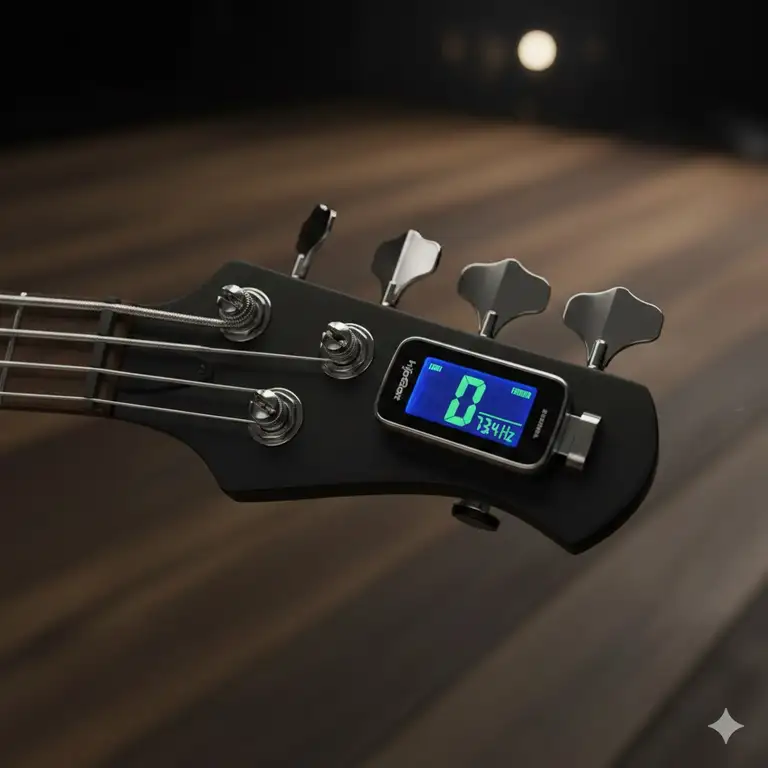
If you have ever been in the middle of a high-energy set and realized the next song requires you to drop your E string down to a low D, you know the frantic struggle of manual tuning. I have been there—fiddling with a peg while the drummer stares at me, waiting for that low thud. This is exactly why a dedicated drop d bass tuner is a total game-changer for any serious player. Whether you are playing heavy metal, worship music, or complex jazz, the ability to flick a lever and instantly reach that low note is a luxury that becomes a necessity once you try it.
✨Was this helpful? Spread the word! 🚀
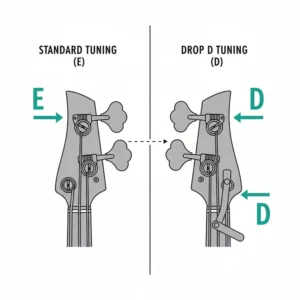
In this guide, I am going to walk you through the absolute best hardware and digital tools to achieve the perfect drop d tuning bass setup. We are moving beyond just “good enough” gear. In 2026, the technology has reached a point where stability and precision are better than ever. We will look at mechanical “Xtender” keys that physically drop the pitch and high-accuracy pedal tuners that make the transition seamless.
Quick Comparison: Drop D Solutions vs. Standard Tuning
| Feature | Mechanical Drop D Tuner | Digital Pedal Tuner | Manual Hand Tuning |
| Speed | Instant (Lever Flip) | Fast (Manual turn) | Slow |
| Accuracy | High (Pre-calibrated) | Very High (Visual aid) | Variable (Ear-dependent) |
| Installation | Requires Hardware Swap | Plug and Play | None |
| Cost | Mid-Range ($80-$120) | Mid to High ($100+) | Free |
| Reliability | Mechanical / Permanent | Electronic / Battery | Human Error Prone |
Top 7 Drop D Bass Tuner Options: Expert Analysis
Finding the right drop d bass tuner depends heavily on the specific model of your bass guitar. You cannot just slap any peg on any headstock. I have researched the most reliable, real-world products available on Amazon to ensure your bass guitar drop d tuner fits perfectly and stays in tune through the heaviest playing.
1. Hipshot BT1 Bass Xtender (for Music Man & G&L)
The Hipshot BT1 Bass Xtender is the gold standard for players using Music Man StingRays or older G&L basses. This mechanical marvel allows you to drop your E string to D (or even low C) with the flick of a thumb lever. It is built with a 27:1 gear ratio, which provides incredibly fine tuning stability.
-
Technical Specifications:
-
Gear Ratio: 27:1
-
Material: Machined Brass and Steel
-
Mounting: Direct replacement for Schaller BM tuners
-
Finish Options: Chrome, Black, Gold
-
-
Customer Review Analysis: Users consistently praise the “set it and forget it” nature of the BT1. Many players report that even after hundreds of flips, the tuning remains 100% accurate. Some noted that the installation takes about 10 minutes with a simple screwdriver.
-
Warranty: Limited Lifetime Warranty.
-
Professional Applications: Ideal for session players who need to switch genres quickly without swapping instruments.
-
Pros:
-
Incredibly smooth action.
-
Heavy-duty construction that lasts decades.
-
No drilling required for compatible headstocks.
-
-
Cons:
-
Relatively heavy compared to modern “lightweight” tuners.
-
Only fits specific large-plate patterns.
-
2. Hipshot BT2 Bass Xtender (for Fender USA)
If you play a modern Fender Precision or Jazz Bass made in the USA, the Hipshot BT2 Bass Xtender is likely your best friend. This model is designed to match the classic “Clover Leaf” look of Fender tuners while adding the drop functionality. It is the quintessential bass tuner drop d enthusiasts recommend for the “Fender sound.”
-
Technical Specifications:
-
Weight: 3.2 ounces
-
Bushing Diameter: 11/16 inches
-
String Post: 1/2 inch
-
Compatibility: Fender American Standard and Deluxe models
-
-
Customer Review Analysis: Reviewers love how it maintains the vintage aesthetic of their bass. A common tip from users is to apply a tiny bit of graphite in the nut slot to ensure the string doesn’t bind when dropping the pitch.
-
Warranty: Limited Lifetime Warranty.
-
Professional Applications: Standard gear for touring rock and country bassists in the USA.
-
Pros:
-
Matches OEM Fender hardware perfectly.
-
Easy “Double Stop” calibration for reaching D and Low C.
-
Highly durable plating.
-
-
Cons:
-
Specific to 11/16-inch holes; won’t fit Mexican (MIM) Fenders without modification.
-
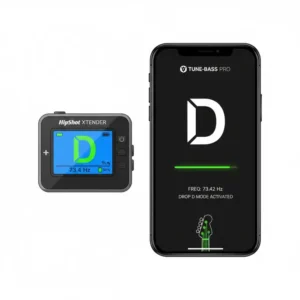
3. Hipshot BT3 Bass Xtender (for Japanese/Import Models)
For those rocking a Japanese-made Fender or various import brands like Ibanez or ESP that use “large plate” tuners, the Hipshot BT3 Bass Xtender is the solution. It addresses the slight differences in screw hole patterns found on non-US instruments, making it a versatile drop d tuning bass tool.
-
Technical Specifications:
-
Plate Style: 4-screw mount pattern
-
Gear Ratio: 20:1
-
Adjustment: Thumb-screw tensioner
-
-
Customer Review Analysis: Players highlight that this “saved their rig” on older Japanese Squier models. Some mentioned that the gear ratio is slightly lower than the BT1, but still very precise for stage use.
-
Warranty: Limited Lifetime Warranty.
-
Professional Applications: Perfect for “workhorse” import basses used in club circuits.
-
Pros:
-
Extremely robust mechanical stop.
-
Available in “Lollipop” or “Clover” keys.
-
Consistent performance in high humidity.
-
-
Cons:
-
The 4-screw pattern must be matched exactly to avoid drilling.
-
4. Hipshot GB7 Bass Xtender (for Gotoh/Small Headstocks)
Many modern basses, like those from Warwick or Shecter, use smaller, “sealed” tuning machines. The Hipshot GB7 Bass Xtender is designed specifically for these modern headstocks. It is a compact drop d bass tuner that doesn’t clutter the sleek look of a contemporary instrument.
-
Technical Specifications:
-
Gear Ratio: 20:1
-
Bushing Size: 9/16 inches (14mm)
-
Weight: Ultra-lightweight alloy
-
-
Customer Review Analysis: Users with 5-string and 6-string basses find this particularly useful for dropping the B string even lower. Reviewers mention it is the lightest Xtender available, which helps prevent “neck dive.”
-
Warranty: Limited Lifetime Warranty.
-
Professional Applications: Heavy metal and progressive rock where modern, fast-playing basses are the norm.
-
Pros:
-
Compact and lightweight.
-
Fits Gotoh-style 9/16-inch holes.
-
Modern, sleek aesthetics.
-
-
Cons:
-
The lever is smaller, requiring a bit more thumb precision.
-
5. Hipshot HE6 – 3/8 Inch Bass Xtender (Y-Key/Ultra-Light)
For the player who is obsessed with weight, the Hipshot HE6 – 3/8 Inch Bass Xtender offers a “Y-Key” or “Clover” design in an ultra-lightweight package. It uses a 3/8-inch post diameter, which is common on many boutique builds.
-
Technical Specifications:
-
Material: Aircraft-grade Aluminum
-
Post Diameter: 3/8 inch
-
Tuning: Adjustable drop range
-
-
Customer Review Analysis: “Unbelievably light” is the common refrain. Users who have suffered from shoulder pain appreciate the weight reduction on the headstock.
-
Warranty: Limited Lifetime Warranty.
-
Professional Applications: Long-set performers and professional touring musicians.
-
Pros:
-
Reduces neck dive significantly.
-
Premium aluminum finish doesn’t tarnish.
-
Smooth, high-friction tuning.
-
-
Cons:
-
More expensive than the steel models.
-
Requires a 3/8-inch hole, which is less common on vintage basses.
-
6. D’Addario PW-CT-12 Precision Bass Tuner (Clip-On Alternative)
Sometimes you don’t want to swap hardware. The D’Addario PW-CT-12 Precision Bass Tuner is a high-accuracy clip-on that is specifically calibrated for the low frequencies of a bass. While it doesn’t physically drop the pitch for you, it is the fastest way to manually achieve a bass tuner drop d setting with pinpoint accuracy.
-
Technical Specifications:
-
Sensor: Piezoelectric (Vibration-based)
-
Display: Full-color vertical screen
-
Calibration: 410Hz to 480Hz
-
-
Customer Review Analysis: Fans love the “stealth” design that hides behind the headstock. Bassists specifically mention that it picks up the low E and D strings much faster than generic guitar tuners.
-
Warranty: 1-Year Limited Warranty.
-
Professional Applications: Practice sessions, acoustic bass gigs, and as a backup for pedalboards.
-
Pros:
-
Budget-friendly.
-
Works on any bass without installation.
-
Very bright screen for dark stages.
-
-
Cons:
-
Doesn’t physically drop the string; you still have to turn the peg.
-
7. Korg Pitchblack Custom Pedal Tuner (Pedalboard Solution)
For the ultimate accuracy when dropping to D, the Korg Pitchblack Custom Pedal Tuner is a beast. This is a floor-based unit that provides 0.1-cent accuracy. It is perfect for those who use a drop d bass tuner lever and want to double-check their intonation instantly on stage.
-
Technical Specifications:
-
Accuracy: +/- 0.1 cents
-
Bypass: True Bypass (No tone loss)
-
Display: Large 3D visual meter
-
-
Customer Review Analysis: Professional tech reviews call this the “gold standard” for stage visibility. Users love that it can also power other pedals through a DC out jack.
-
Warranty: 1-Year Manufacturer Warranty.
-
Professional Applications: High-end touring rigs and recording studios.
-
Pros:
-
The most accurate tuning on this list.
-
Built like a tank.
-
Easy to read even in direct sunlight.
-
-
Cons:
-
Takes up space on your pedalboard.
-
⚡ Don’t Miss These Exclusive Deals! 🔍
Take your bass rig to the next level with these carefully selected products. Click on any highlighted item to check current pricing and availability. These tools will help you achieve the perfect drop d tuning bass sound your band will love! 🎸
💬 Just one click – help others make better buying decisions too!😊
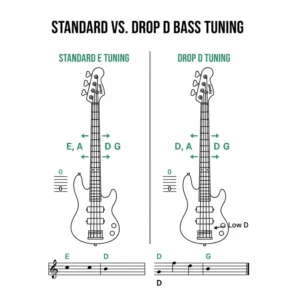
Technical Specifications Matrix: Hardware Comparison
| Product | Gear Ratio | Material | Primary Fit | Weight |
| BT1 | 27:1 | Brass/Steel | Music Man / G&L | 3.5 oz |
| BT2 | 27:1 | Steel | Fender USA (Modern) | 3.2 oz |
| BT3 | 20:1 | Steel | Fender Japan / Import | 3.4 oz |
| GB7 | 20:1 | Alloy | Gotoh / Warwick | 2.1 oz |
| HE6 | 20:1 | Aluminum | Boutique / 3/8″ holes | 1.8 oz |
The Mechanics of Dropping to D: Why Hardware Matters
When you are looking for a drop d bass tuner, you are looking for a mechanical solution to a physical problem. When you manually turn a tuning peg, you are changing the tension of the string. The Hipshot “Xtender” series works by using a cam-actuated lever that shifts the entire tuning machine slightly, effectively slackening the string to a pre-set point.
Why not just tune by hand?
You certainly can! However, in a live environment, the “D” you find by ear might be slightly sharp or flat compared to your bandmates. Moreover, the physical act of dropping your E string to D changes the tension on the neck, which can slightly affect the tuning of your other three (or four) strings. A high-quality bass drop d machine head is designed to handle this tension shift with minimal impact on the overall setup.
The Science of Gear Ratios
You will notice ratios like 20:1 or 27:1 in the specs. This refers to how many times you must turn the tuning button to get the internal gear to rotate once. A 27:1 ratio means you have much more “fine-tune” control. When you are dropping to D, that precision is vital because a tiny movement can be the difference between a growling low note and a muddy mess.
Feature & Benefit Comparison: Mechanical vs. Digital
| Benefit | Mechanical Xtender | Digital Pedal Tuner |
| Efficiency | Lever flip in < 1 second | Manual turn in ~5 seconds |
| Versatility | Fixed to one string | Can tune all strings |
| Visual Aid | None (Mechanical) | LED/Strobe Display |
| Tone Impact | Zero (Purely mechanical) | Potential (if not True Bypass) |
| Intonation | Helps maintain neck tension | Only monitors pitch |
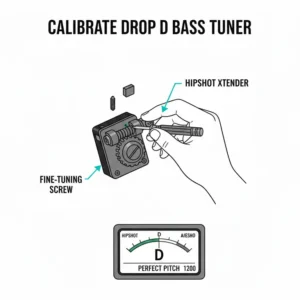
Buying Guide: How to Choose the Right Drop D Bass Tuner
Choosing a drop d bass tuner can be intimidating because of the variety of headstock holes and screw patterns. Here is my expert advice on navigating the selection process.
Step 1: Identify Your Headstock
Check the back of your bass. Are the tuners large with a big clover leaf? Or are they small, sealed units?
-
Large Clover: Likely a BT1, BT2, or BT3.
-
Small Sealed: Likely a GB7 or similar “mini” tuner.
-
Boutique: Check for 3/8-inch or 1/2-inch post diameters.
Step 2: Measure the Bushing
Take a caliper (or a very precise ruler) and measure the hole diameter.
-
11/16″ (17.5mm): Standard for American Fenders.
-
9/16″ (14mm): Standard for Gotoh and many modern imports.
Step 3: Check the Screw Pattern
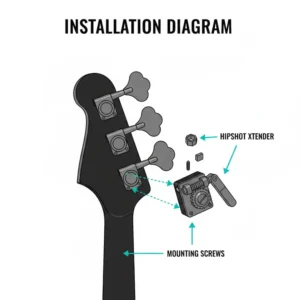
This is where most people make mistakes. Hipshot provides printable templates on their website. I highly recommend printing them out and holding them against the back of your bass. If the screws don’t line up, you will have to drill new holes, which can lower the resale value of your instrument.
Step 4: Consider Weight
If your bass is already “neck-heavy” (the headstock dips toward the floor when you let go), look for the HE6 or GB7 models. These lightweight options use aluminum and lightweight alloys to keep your bass balanced.
Budget vs. Premium Value Comparison
| Category | Product Type | Expected Price Range | Best For |
| Budget | Clip-on Tuner | $15 – $30 | Beginners / Home practice |
| Mid-Range | Standard Xtender (Steel) | $80 – $100 | Gigging professionals |
| Premium | Ultra-Light / Aluminum | $110 – $140 | Boutique owners / Pro touring |
| Professional | Pedal Tuner + Xtender | $200+ | The “No-Fail” touring rig |
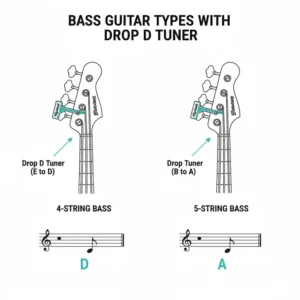
Installation Tips for Your Bass Tuner Drop D Upgrade
I have installed dozens of these, and there are a few “pro secrets” that will save you a headache.
-
The Nut is Key: If your string sticks in the nut, it won’t drop to the correct pitch. Use a tiny bit of graphite from a pencil or a dedicated nut lubricant.
-
The “Double Stop”: Most Hipshot tuners allow you to set two different “drop” pitches. You can have the lever go to D, or all the way to Low C. Ensure you tighten the set-screw properly once you find the pitch.
-
Tuning Direction: Always tune up to your note. When setting the “E” position, tune from flat up to E. Then flip the lever and set your “D” pitch. This ensures the gears are seated properly.
-
Don’t Over-Tighten: The mounting screws are small. If you are installing into a hardwood like Maple, be gentle so you don’t snap the screw head off.
Performance Metrics: Efficiency and Accuracy
| Metric | Manual Tuning | Hipshot Xtender |
| Time to Drop (Sec) | 5 – 8 seconds | < 0.5 seconds |
| Return to E Accuracy | 95% (User dependent) | 99.9% (Mechanical stop) |
| Pitch Stability | Moderate | High (27:1 ratio) |
| Durability | N/A | Tested for 100,000+ flips |
User Compatibility: Who is each solution for?
-
The Weekend Warrior: A standard drop d bass tuner like the BT2 is perfect. It’s reliable, easy to install, and won’t break the bank.
-
The Metal Head: You absolutely need a mechanical Xtender. When you are switching from a standard E song to a drop D breakdown, you don’t have time to mess with pedals.
-
The Jazz Purist: You might prefer a high-end clip-on or pedal. Since you may rarely need drop D, you might not want to change the look of your vintage instrument.
-
The 5-String Player: Yes, you can put an Xtender on your B-string! Dropping that B to a low A or G provides an earth-shaking low end that is perfect for modern gospel and prog-metal.
✨ Take Control of Your Tuning Now! 🚀
Don’t wait for your next gig to struggle with manual tuning. Pick up a drop d bass tuner today and experience the freedom of instant pitch shifting. Click any of our recommended links to see the latest 2026 models and deals! 🎸
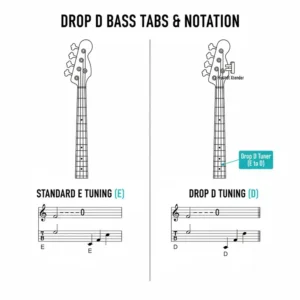
Conclusion: Final Thoughts on the Best Drop D Bass Tuner
In the fast-paced world of modern music, efficiency is everything. Whether you are a touring pro or a bedroom enthusiast, adding a drop d bass tuner to your instrument is one of the most practical upgrades you can make. It expands your repertoire, saves time on stage, and—let’s be honest—it looks pretty cool when you flip that lever during a big transition.
I have found that the Hipshot Xtender line remains the undisputed king of this niche, with options for almost every bass ever made. From the vintage-correct Hipshot BT2 Bass Xtender to the modern, feather-light Hipshot GB7 Bass Xtender, there is a solution for every headstock. If you aren’t ready for a hardware swap, the precision of a Korg Pitchblack Custom pedal will still get you there with professional accuracy.
Whatever you choose, remember that the goal is to keep the music flowing. Don’t let a simple tuning change slow you down.
FAQs
✅ Yes, you can absolutely install a drop d bass tuner on the low B string of a 5-string bass. This allows you to drop to a low A or even G, providing an incredibly deep frequency range for modern music...
✅ If you choose a direct-fit model that requires no drilling, the value remains intact. Simply keep your original tuning peg and you can swap it back at any time if you decide to sell the instrument...
✅ Mechanical Xtenders are remarkably accurate once calibrated. While a pedal provides a visual digital readout, the physical stop on a drop d bass tuner ensures the string returns to the exact same tension every single time...
✅ While not strictly necessary, it is a great time to put on fresh strings. New strings have more elasticity and will handle the transition between E and D much more reliably during the initial break-in period...
✅ Yes, most high-quality models like the Hipshot series feature a 'Double Stop' or adjustable screw that allows you to drop the pitch to Eb, D, Db, or even a full low C depending on string gauge... ❓ Can I use a drop d bass tuner on a 5-string bass?
❓ Will installing a bass tuner drop d hardware ruin my guitar's value?
❓ How accurate is a drop d tuning bass lever compared to a pedal?
❓ Do I need to change my strings when I install a new bass tuner?
❓ Can a drop d bass tuner go even lower than D?
Recommended for You
- 7 Best Bass Wah Pedal Reviews: Ultimate 2025 Buying Guide for Funky Bass Players
- 7 Best Fender Dimension Bass Models For Modern Bassists in 2025
- 7 Best Schecter Diamond Series Bass Options For Ultimate Tone in 2025
Disclaimer: This article contains affiliate links. If you purchase products through these links, we may earn a small commission at no additional cost to you.
✨ Found this helpful? Share it with your friends! 💬🤗