Portable bass amps fall into three working types, and choosing the type matters more than comparing wattage: a battery combo for playing outdoors, a small rechargeable amp that doubles as a Bluetooth speaker, or a headphone amp that plugs into the bass and weighs about 40 grams. For 2027, four real models cover those jobs: the Roland Cube Street EX, the Boss Dual Cube Bass LX, the Positive Grid Spark Mini and the VOX amPlug 3 Bass. Some roundups of the best portable bass amps stretch the word “portable” a long way; Sweetwater’s own list runs from a battery amp under 2 pounds to a 48-pound combo, and only the 3-watt Blackstar Fly 3 Bass in it is described as battery-powered.
Specs below come from maker pages, Sound On Sound’s Roland review and dealer listings, and every opinion about sound is credited to the reviewer who gave it, since no unit was played for this guide. A five-check method comes first, then the four amps matched to jobs.
How to shortlist the best portable bass amps without playing them all
Five checks, in this order, remove most of the wrong choices before a price enters the picture.
Name the job before the wattage
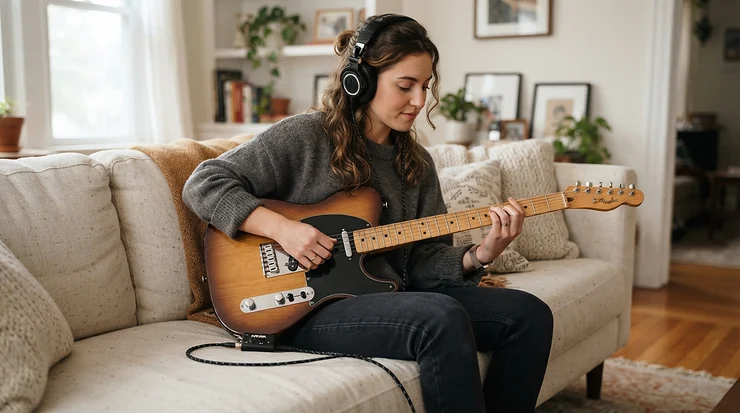
A bassist who busks, a bassist who jams at a campsite and a bassist who practices in a hotel room need three different machines. Busking and park jams call for a battery combo with real volume. Home or travel practice rewards a small rechargeable amp with a headphone jack, and late-night practice needs no speaker at all.
Older reviews show why the distinction matters. The Roland Micro Cube Bass RX, which Roland now lists as discontinued, won praise from one zZounds reviewer for taking a bass to the park without a wall outlet. A second zZounds reviewer found it too quiet to compete with an electric guitar outdoors.
Count watts against the loudest thing in the room
Output ratings only mean something next to the other players. The Roland Cube Street EX offers 50, 25 and 10 watt modes, and Sound On Sound’s reviewer found it surprisingly loud for a battery unit even in the lower ones. On Sweetwater, one busker reports that 10 watts carries at a busy market, while another plays at full power and says people hear him from blocks away.
Read which wattage is quoted, too. A Long & McQuade listing for the Traynor BassMaster 12 Mobile gives 350 watts on AC but 80 watts on battery, so the battery figure is the one that counts outdoors. At the opposite end, the 3-watt Blackstar Fly 3 Bass is a backpack practice amp, and Sweetwater’s writer calls it “the ultimate practice amp.”
Read the power-source line twice
Eight AA cells, a built-in lithium pack and two AAAs behave very differently. Roland’s page rates the Roland Cube Street EX at about 5 hours at full power on Ni-MH cells, 10 in normal mode and 20 in eco mode, with alkaline cells landing lower. Sound On Sound’s reviewer put full-power life at four or five hours and found rechargeable Ni-MH cells outperform alkalines.
The Positive Grid Spark Mini carries a 3,000 mAh lithium-ion battery and charges over USB-C, which removes the AA habit entirely. The Boss Dual Cube Bass LX has no built-in rechargeable pack, a gap that both a Sweetwater reviewer and Yosh’s long-form review point out.
Match the ports to your habits
Sweetwater’s roundup keeps returning to practical connections such as aux inputs, headphone outs and direct outs. For a bassist that translates to an aux input for playing along with a phone, a headphone jack for the late shift, and a line or XLR output if the amp might ever feed a small PA. The comparison below shows which of the four has what; Bluetooth varies the most.
Leave a way out for low-note rattle
Small speakers and a bass guitar’s lowest strings are where complaints cluster. Two Sweetwater reviewers sent the Boss Dual Cube Bass LX back, one for muddy sound at low volume and one for speakers that rattled at any real volume, while two other reviewers there were happy with it. Before keeping any of these amps, play the lowest open string at the volume you actually need and listen for buzz. Buy from a seller with a clear return window.
Portable bass amps compared: watts, runtime and weight
Model
Output
Power source
Runtime
Weight
Wireless
Headphone out
Roland Cube Street EX
50 W stereo, with 25 W and 10 W modes
8 AA, AC adaptor, optional rechargeable pack
About 5, 10 or 20 hours on Ni-MH, by mode (Roland)
7.4 kg (about 16 lb)
Not listed
Yes, 1/4 in.
Boss Dual Cube Bass LX
10 W (5 + 5)
8 AA or AC adaptor
About 8 hours on rechargeable AAs (one Sweetwater reviewer)
4.4 kg (Yosh’s review)
Optional adapter
Headphone and recording out
Positive Grid Spark Mini
10 W
Built-in 3,000 mAh lithium-ion, USB-C
Up to 8 hours at mid volume or lower
1.5 kg (3.3 lb)
Bluetooth 5.0
1/8 in. headphone and line out
VOX amPlug 3 Bass
Headphones only
2 AAA
10 to 16 hours on alkaline
About 40 g without batteries
None, wired aux in
3.5 mm stereo
Weight splits the group in two. The Roland Cube Street EX is the only one near 16 pounds, while the Boss Dual Cube Bass LX works out to about 9.7 pounds (my arithmetic) and the other two are far lighter. Only the Positive Grid Spark Mini has a built-in battery, and Bluetooth on the Boss costs extra, a point GAK’s product page and a Sweetwater owner both make.
A runtime example shows why the power-source column matters. A three-hour street session at full power would use roughly 60 percent of the Roland Cube Street EX‘s rated five hours on Ni-MH cells (my arithmetic from Roland’s figure), and the Sweetwater owners who report 3.5 to 4 hours per set suggest leaving a wider margin than that. The same three hours at mid volume fits inside the Positive Grid Spark Mini‘s rated eight, and a 10-watt AA-powered cube needs a spare set of cells to match it.
None of the Roland or Positive Grid spec pages print a frequency range, so claims about low notes rest on reviewers rather than on measurements.
Where portable bass amps disappoint, and the cheap fixes
Confirm the amp was meant for bass at all. Roland’s page for the Roland Cube Street EX lists four channels with EQ but no dedicated bass input or bass support. Positive Grid’s page says the Positive Grid Spark Mini handles bass without counting its bass models, and a Japanese reviewer counts four among 33. One Thomann reviewer runs a guitar and a double bass through two linked Roland Cube Street EX units and calls them solid, which is encouraging but a single report. The fix is simple: ask, or test within the return window.
Budget for battery drain. Sweetwater reviewers who busk with the Roland report about 3.5 to 4 hours of battery per session, and several wish for a rechargeable pack; Roland sells one as an option. Ni-MH cells, an eco mode and a spare set of AAs are the cheap answers.
Weigh power against carrying distance. The Traynor BassMaster 12 Mobile lists 80 watts on battery at 32 pounds per Long & McQuade, roughly double the weight of the Roland Cube Street EX (my arithmetic), so a long walk to a corner favors the lighter amp.
Count the accessories. A Bluetooth adapter for the Boss, rechargeable cells and a charger can add real money to the shelf price, and a discontinued amp such as the Roland Micro Cube Bass RX should be treated as a quiet park amp if one turns up used. Prices move, so look up the live listing on Amazon.com before settling on a model.
Busking without an outlet is the job this amp was built around, and the numbers explain why it suits a portable bass amp for busking. It makes 50 watts in stereo from two 8-inch woofers and two 2-inch tweeters, and three power modes trade loudness for runtime. Roland’s page lists power from eight AAs, an included AC adaptor or an optional rechargeable pack, plus a headphone jack and a stereo link input for pairing two units.
Sound On Sound’s 2015 review found the 8-inch woofers keep the sound from turning thin, but it also noted that small speakers lack bass focus and that pushing the volume adds a boxy, plastic coloration. At 7.4 kg the reviewer called it light and easy to carry, and Roland’s page gives about 16 pounds. One Sweetwater owner reports a power-cord jack that loosened during a gig, several note the missing master volume control, and others ask for a built-in rechargeable pack.
It is the costliest of the four on every page checked, so check the current price on Amazon.com.
Roland Cube Street EXSee current price, sizes and reviews on Amazon.
Owner reviews of the Boss Dual Cube Bass LX split more sharply than for any other amp here. Sweetwater shows a 4.0 average from 10 reviews, and two owners there returned it for muddy or rattling lows, while two others used it happily for bass practice, songwriting and studio recordings. Thomann’s page averages 4.4 from 26 ratings, and its English reviews include one owner who plays bass, baritone and acoustic guitar through it and finds it works for all three.
The hardware is a 10-watt stereo design with two 5-inch speakers, powered by an AC adaptor or eight AAs, in a desktop-size cabinet that Yosh’s review gives as 341 x 205 x 261 mm. NoTreble lists a headphone and recording output, USB, aux-in, a footswitch jack and stereo XLR outs, and an optional adapter adds Bluetooth. Dealer pages show around $285 to $300, before that adapter and a set of rechargeable cells.
Pros:
Bass-voiced amp types, a looper and rhythm patterns, per Yosh’s review
Headphone, USB and XLR outputs suit a small home or streaming setup
Runs on AA cells, so it can leave the house
Cons:
No built-in rechargeable battery
Bluetooth needs a separate adapter
Two Sweetwater owners returned it over lows that went muddy or rattled
Boss Dual Cube Bass LXSee current price, sizes and reviews on Amazon.
Built-in Bluetooth 5.0 makes the Positive Grid Spark Mini the one portable bass amp with Bluetooth in this group, and it doubles as a speaker for backing tracks. Positive Grid lists 10 watts, a battery rated up to 8 hours at mid volume or lower, USB-C charging in about 3 hours, a 1/8-inch headphone and line output and a weight of 3.3 pounds. Techaeris reports more than 8 hours at roughly 50 to 60 percent volume, which matches the claim.
Bass is where the fine print sits. The maker’s page says the amp handles bass, and Yosh’s review counts four bass amp models among 33 while describing the Bluetooth sound as moderate in bass, with a passive radiator credited for punch. The same reviewer says it can get loud enough to bother apartment neighbors without the cabinet resonating. A 10-watt, 3.3-pound cabinet reads more as a living-room and park-bench amp than a street rig, a judgment from the output rating rather than from any street test.
Check the current price on Amazon.com. American Songwriter notes that most of the tone control lives in the phone app because the cabinet’s own panel is sparse.
Positive Grid Spark MiniSee current price, sizes and reviews on Amazon.
At around $50 to $60 on dealer pages, with Adorama’s listing showing a discount from a higher official price, the VOX amPlug 3 Bass is the cheapest way to practice without waking anyone. It has no speaker at all: it plugs into the bass and drives your headphones, which makes it the portable bass amp for headphones in this group. Guitar Center’s page gives about 40 grams without batteries, two AAA cells and 10 to 16 hours of life on alkalines.
Two channels cover a wide-range tone and a punchy overdrive, with stereo chorus, delay, reverb and nine rhythm patterns, and a TRRS aux jack lets you play along with a phone. VOX also makes a Modern Bass version with more mid-range, according to a Guitar Center answer, so choose the Bass or Modern Bass variant on purpose.
Guitar Center’s page averages 4.57 from 7 reviews. One reviewer there reports that the batteries lasted only about one and a half to two weeks of regular practice and should come out between sessions, and Equipboard’s page relays a report that the headphone jack feels flimsy under light pressure.
VOX amPlug 3 BassSee current price, sizes and reviews on Amazon.
How to read portable bass amps reviews without being fooled
Star ratings on these amps blend very different owners. The Roland Cube Street EX earns 4.4 from 109 reviews on Sweetwater and 4.6 from 159 ratings on Thomann, but in the part of the Sweetwater page that could be read, no reviewer mentioned playing bass through it. The Boss Dual Cube Bass LX has far fewer ratings, 10 on Sweetwater and 26 on Thomann, so a single returned unit moves its average noticeably. The VOX amPlug 3 Bass rests on seven Guitar Center reviews.
Three habits help. Filter for reviewers who say they play bass, search the reviews for the words rattle, muddy and distort, and weigh a return story above a five-star line that never mentions volume. A clean average built on guitar players says little about how a 5-inch speaker handles a low B string.
Batteries, Bluetooth, watts and headphones: straight answers
How many watts does a portable bass amp need for busking?
Busking reviewers on Sweetwater use one 50-watt battery combo at both ends: ten watts is enough for one at a busy market, while another plays at full power and is heard from blocks away. Starting near 25 watts leaves room in either direction.
Can a portable bass amp run a full gig on batteries?
It depends on the amp and the volume. Roland rates its 50-watt combo at about 5 hours at full power on rechargeable cells and 20 hours in eco mode, while a lithium-powered Bluetooth amp is rated up to 8 hours at mid volume. Carry a spare set either way.
Does a portable bass amp come with Bluetooth?
Some do. A 10-watt amp with a built-in lithium battery has Bluetooth 5.0, a similar AA-powered cube needs an optional adapter sold separately, and a headphone plug-in has no wireless at all, only a wired aux input for backing tracks.
Can a guitar battery amp be used for bass?
Sometimes. Some makers state bass support and some pages do not, and reviewers report muddy or rattling lows from small speakers at volume. Confirm the listing, play the lowest open string at gig volume, and buy where returns are simple.
What is the lightest portable bass amp for headphones?
A plug-in headphone amp. One model weighs about 40 grams without batteries, runs 10 to 16 hours on two AAA cells and adds chorus, delay and reverb. Small combos with a headphone jack work too, but they weigh far more because they carry a speaker.
The pick for each job
Pick the job first and the amp follows. The Roland Cube Street EX suits the sidewalk and the campsite, the Boss Dual Cube Bass LX suits a bass-voiced practice rig with a few outdoor outings, the Positive Grid Spark Mini suits Bluetooth backing tracks with a built-in battery, and the VOX amPlug 3 Bass suits silent practice on a budget.
If one purchase has to cover a home player who jams outdoors now and then, the Positive Grid Spark Mini is where I would start, because its battery is built in and the maker states bass support. A player who plays the street should start with the Roland and test it for low-note rattle within the return window. Whichever way you lean, portable bass amps reward the buyer who checks the power source and ports before the watts. Check current availability on Amazon.com for the model that matches your job.
Disclaimer: This post contains affiliate links. As an Amazon Associate, I earn from qualifying purchases made through these links, at no additional cost to you.
Ready to shop? Compare the current listings for the amp that fits your job, and keep the return window in mind.