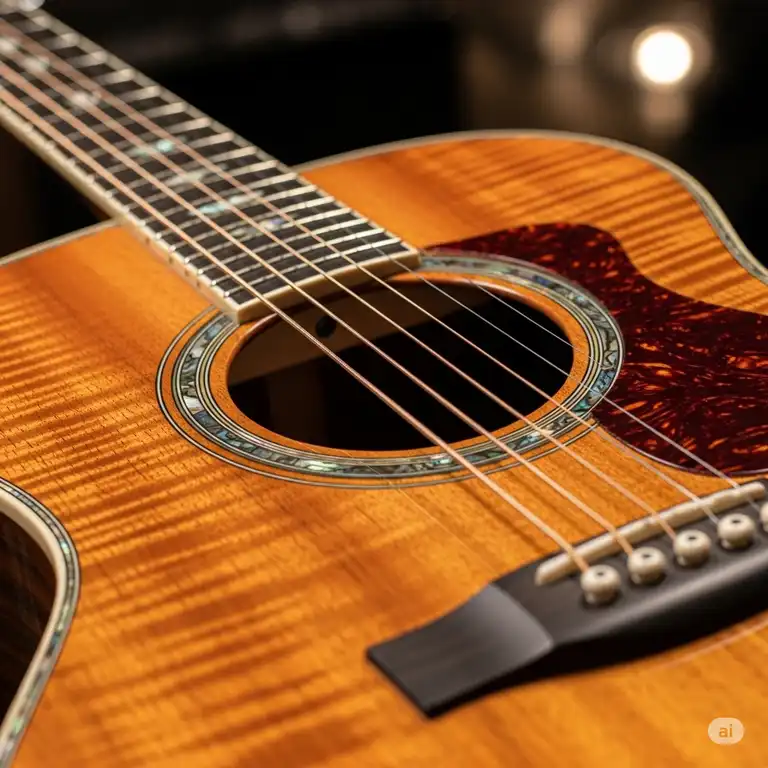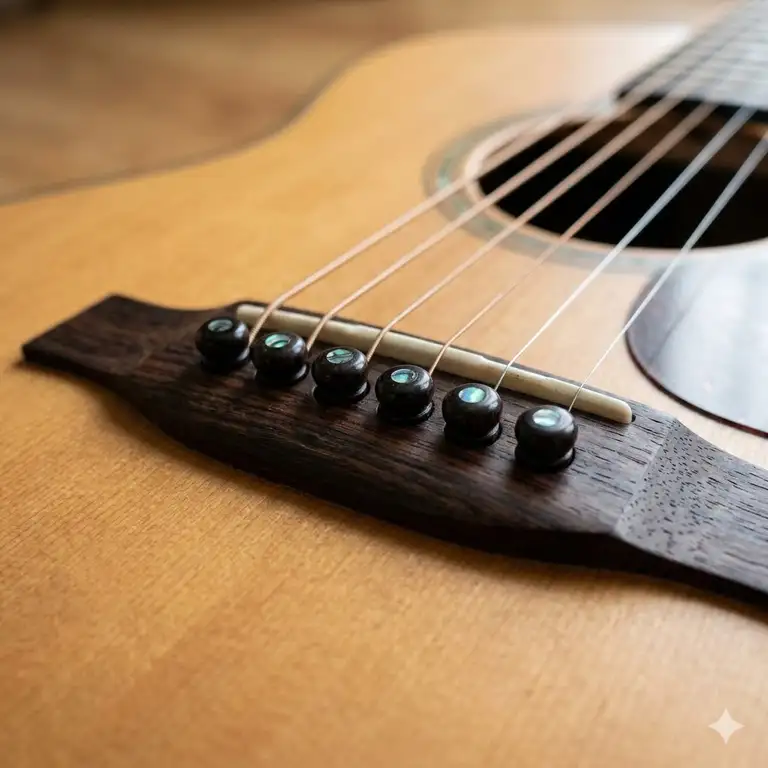
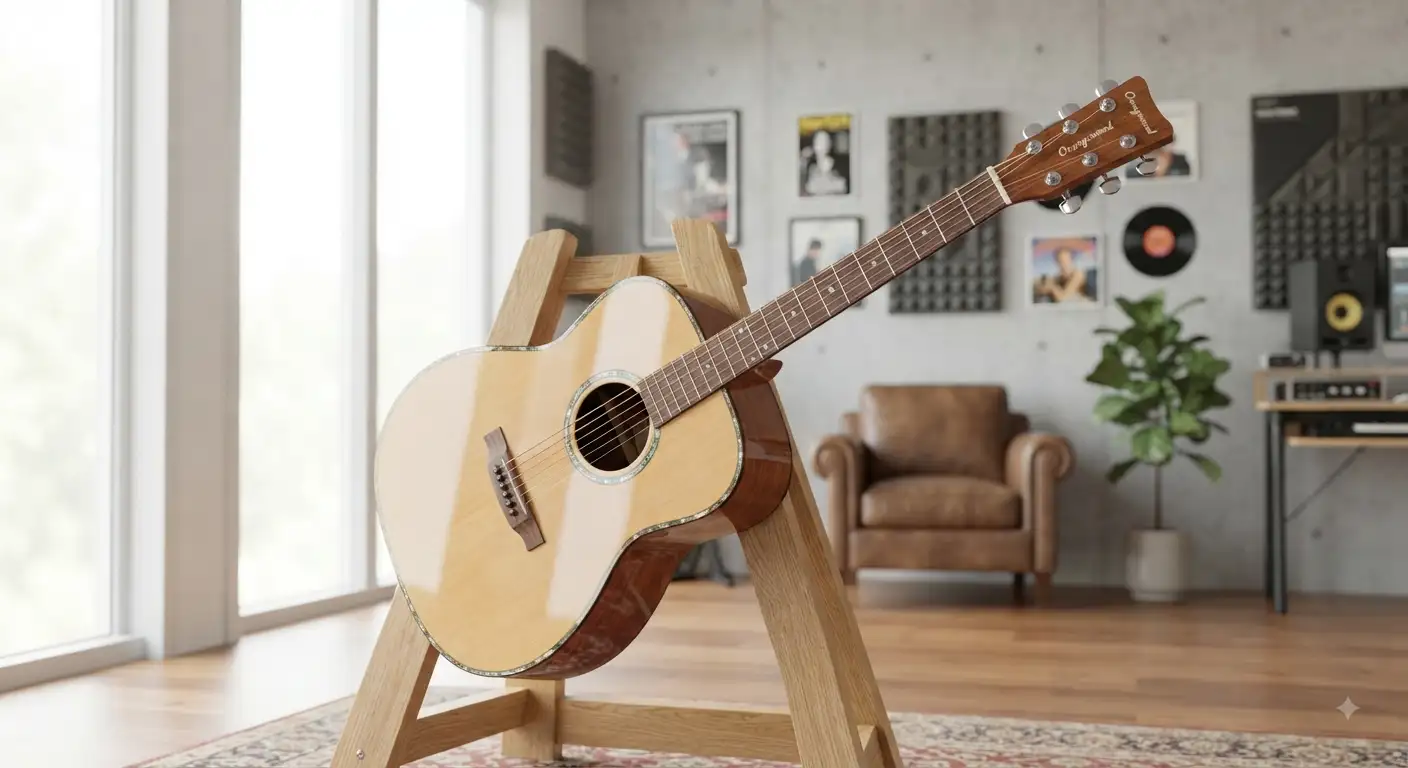
Orangewood guitars have become one of the most talked-about names in the direct-to-consumer acoustic guitar space, and if you’ve spent any time scrolling guitar forums or TikTok’s “guitartok” corner, you’ve probably seen one in someone’s hands. In short, orangewood guitars are a Los Angeles-based line of acoustic, acoustic-electric, and nylon-string guitars built by musicians, set up in-house before shipping, and sold exclusively online at a lower price point than most shop-floor competitors. That’s the 60-second version — the rest of this guide digs into whether that reputation actually holds up.
We’re not going to just repeat the spec sheets you’d find on a product page. Instead, we’ve pulled together real model details, aggregated customer feedback, and side-by-side comparisons so you can figure out which orangewood acoustic guitar (or acoustic-electric, or nylon-string) actually fits your budget and playing style. Whether you’re buying your first six-string, upgrading to something stage-ready, or just comparing an orangewood guitars review against a big-box brand, you’ll find a genuinely useful breakdown below — entry-level to premium, steel-string to nylon, dreadnought to parlor.
One quick note before we dive in: this article contains affiliate links, and as an Amazon Associate we may earn a commission from qualifying purchases, at no extra cost to you. Now, let’s get into the seven models actually worth your attention.
Quick Comparison: Orangewood Guitars at a Glance
If you’re short on time, here’s the condensed version. Every one of these models ships with a gig bag or hard case, and all are professionally set up before they leave Orangewood’s Los Angeles facility.
| Model | Body Type | Best For | Price Range |
|---|---|---|---|
| Rey Mahogany | Grand Auditorium Cutaway | Absolute beginners on a tight budget | Under $175 |
| Juniper Live Rubber Bridge | Parlor | Songwriters chasing a lo-fi, muted tone | $395–$445 |
| Nash Retro Live | Parlor | Vintage-style tone with modern electronics | Around $545 |
| Mason Live Nylon Cedar | Grand Auditorium Cutaway | Classical/fingerstyle crossover players | $600–$650 |
| Dylan Retro | Slope-Shoulder Dreadnought | Strummers who want a warm, full voice | Around $695 |
| Sage Mahogany Live | Grand Auditorium Cutaway | Gigging intermediate to advanced players | $1,150–$1,250 |
| Berkeley Torrefied Spruce Live | Dreadnought | Professional-level tone and projection | Around $1,425 |
Looking at the spread above, the price gap between the Rey Mahogany and the Berkeley Torrefied Spruce Live is nearly ten times, and that’s intentional — Orangewood built its five collections (Playa, Overland, Melrose, Highland, and Topanga) around a tiered wood-and-electronics ladder rather than one-size-fits-all pricing. Notice, too, that four of the seven models come “Live,” meaning they include onboard pickups and preamps for plugging into an amp or PA; the rest are acoustic-only, which keeps the price down if you don’t need amplification yet.
💬 One click helps other shoppers make an informed choice too! 😊
Top 7 Orangewood Guitars: Expert Analysis
We picked these seven specifically to cover entry-level, mid-range, and premium territory, plus the different body shapes and tonewoods that actually change how a guitar feels and sounds in your hands. Each entry below goes beyond the spec sheet to explain what the numbers mean for you as a player.
1. Rey Mahogany — best entry point under $175
The Rey Mahogany is Orangewood’s most accessible model, and it’s built to answer one question: can a sub-$175 acoustic actually feel like a “real” guitar? Its layered mahogany top, back, and sides sound less bright and more midrange-forward than the typical spruce-top beginner guitar, which tends to mask string-buzz and beginner technique flaws more forgivingly. The grand auditorium body with a cutaway keeps the guitar comfortably sized for smaller players while still opening up the fretboard for solos and barre chords further up the neck.
What sets the Rey apart from other budget acoustics isn’t the tonewood — plenty of $150 guitars use laminate mahogany — it’s the setup. Orangewood inspects and adjusts every guitar’s action, intonation, and neck relief in-house before it ships, which matters enormously at this price tier, where most competitors ship guitars straight from the factory with high, uncomfortable string action that discourages new players within weeks. Based on comparing specs across the entry-level segment, that pre-shipping setup is arguably worth more to a beginner than any wood upgrade.
Reviews consistently report that the Rey punches above its price class in resonance and sustain, with several independent reviewers noting it “sounds almost like a mid-range guitar” despite the laminate construction. A recurring critique is that the bundled pickguard is easy to misapply and, once installed, effectively voids returns — so first-time buyers should take care during unboxing.
Pros:
- ✅ Comfortable, smaller grand auditorium body suits most ages
- ✅ Pre-shipped setup means it’s playable out of the box
- ✅ Warm mahogany tone forgives beginner technique
Cons:
- ❌ Laminate construction limits long-term tonal growth
- ❌ No onboard electronics, so amplifying it later needs an add-on pickup
The Rey Mahogany typically runs under $175, and for a first guitar with this level of factory setup, it’s one of the strongest value plays in the entire orangewood guitars lineup — check the current price before buying, since Orangewood periodically runs “Almost Perfect” outlet sales on this model.
2. Juniper Live Rubber Bridge — best for that muted, lo-fi indie tone
The Juniper Live isn’t trying to be your only guitar — it’s a specialty instrument built around the rubber-bridge trend popularized by artists like Phoebe Bridgers and session guitarist-turned-luthier Reuben Cox. Instead of a standard bone or plastic saddle, the strings rest against a rubber-lined bridge that deadens sustain and produces a compressed, almost piano-like “thump” rather than a typical ringing acoustic tone.
Feature-wise, the parlor-sized body with a 24.75-inch scale length and 3⅝-inch body depth keeps the guitar compact and comfortable for close-mic’d recording or intimate songwriting sessions, while the built-in rail humbucker (Alnico 5 on the original Live, Seymour Duncan Hot Rails on the newer Juniper II) means you can plug straight into an interface without a separate acoustic pickup. In practice, that combination makes it less useful for full-band strumming or bluegrass flatpicking, and much more useful for anyone recording lo-fi bedroom-pop, R&B, or folk textures where a “normal” acoustic sound would feel too bright. Guitar-industry press covering the rubber-bridge trend has noted how unusual it is to find this kind of specialty build available as a factory option rather than a custom shop job.
What most buyers overlook with this model is that it’s genuinely a second (or third) guitar for most players, not a starter instrument — several reviewers explicitly warn against buying it as your only guitar since the muted tone isn’t versatile for every style. That said, aggregated feedback is unusually positive on build quality for the price, with reviewers repeatedly calling the fit and finish “shockingly good” for a sub-$450 instrument, and praising Orangewood for making a niche, previously custom-only guitar mod available as a factory option.
Pros:
- ✅ Genuinely unique muted tone unavailable on standard acoustics
- ✅ Compact parlor body is easy to travel and record with
- ✅ Onboard humbucker plugs straight into an interface or amp
Cons:
- ❌ Not a versatile all-purpose first or only guitar
- ❌ Muted tone won’t suit strummers who want a bright, ringing sound
Pricing for the Juniper Live typically falls in the $395 to $445 range depending on finish, and given how expensive custom rubber-bridge conversions used to be, that’s a genuinely fair price of entry into the trend.
3. Nash Retro Live — best vintage-inspired parlor with modern electronics
The Nash Retro Live is part of Orangewood’s newer Melrose Retro Collection, which reimagines three classic body shapes — dreadnought, grand concert, and this parlor — with a straighter, retro-profile headstock and a classic-inspired bridge. On paper, it looks like a nostalgia piece, but Orangewood’s stated design goal was refining what made those vintage shapes work rather than just copying the look, and the spec sheet backs that up.
The solid spruce top is the standout feature here: unlike the layered tops on Orangewood’s entry-level guitars, a solid top continues to open up and resonate more richly the longer the guitar is played, which is a meaningful long-term upgrade over laminate construction. It’s paired with an LR Baggs pickup system — a brand respected enough among gigging acoustic players that finding it on a sub-$600 parlor guitar is a genuine value story, not just marketing copy. Open-gear Grover tuners round out the package, offering more precise, stable tuning than the sealed die-cast tuners found on most budget guitars.
Because this collection only launched in 2026, independent long-term reviews are still limited, but early trade coverage from guitar publications has been positive on the fit, finish, and tonal balance across all three Melrose Retro models. What the spec sheet doesn’t say, but the parlor body shape implies, is that this guitar trades some low-end boom for focused midrange projection — ideal for fingerpicking and small-room performance, less ideal if you’re chasing dreadnought-level bass thump.
Pros:
- ✅ Solid spruce top offers real long-term tonal development
- ✅ LR Baggs pickup is a professional-grade inclusion at this price
- ✅ Compact parlor shape is comfortable for extended practice sessions
Cons:
- ❌ Smaller body means less low-end punch than a dreadnought
- ❌ Being a newer release, fewer long-term durability reviews exist yet
Expect to pay around $545 for the Nash Retro Live, which puts it squarely in the mid-range tier of the orangewood guitars catalog — a reasonable jump up from the Juniper if you want a more traditional, versatile voice.
4. Mason Live Nylon Cedar — best for classical and fingerstyle crossover players
If you’ve been searching for orangewood acoustic guitar options and specifically want a nylon-string instrument, the Mason Live Nylon Cedar is the collection’s flagship crossover model. It pairs a solid cedar top — a lighter, more responsive tonewood than spruce that rewards a gentle touch — with a comfortable cutaway body that’s noticeably slimmer and easier to hold than a traditional classical guitar, which typically uses a wider, flat-backed body.
That’s the key selling point in practice: classical purists often find full-size nylon guitars awkward if they came up playing steel-string acoustics, and the Mason’s slimmer profile plus cutaway access solves that without abandoning the nylon-string warmth that fingerstyle players want. Onboard, the Fishman Flex EQ Plus-T system includes a built-in tuner and phase switch, which is a thoughtful touch for players moving between acoustic practice and amplified performance — you won’t need a separate clip-on tuner or DI box with a phase-flip switch for feedback control.
Based on comparing this to typical classical guitars in the same price bracket, the Mason’s real advantage is approachability: it’s marketed and built for guitarists transitioning from steel strings who want that nylon warmth for fingerpicking, bossa nova, or singer-songwriter work, rather than for classical conservatory students who need a full 650mm scale and traditional fan bracing. Reviewers and player forums generally categorize it as “a modern take on the classical guitar” rather than a true classical instrument, which is accurate framing for setting expectations.
Pros:
- ✅ Slimmer, cutaway body is easier to hold than traditional classical guitars
- ✅ Solid cedar top delivers a warm, lush fingerstyle tone
- ✅ Built-in tuner and phase switch simplify live and studio use
Cons:
- ❌ Not a substitute for a traditional classical guitar in formal training contexts
- ❌ Nylon strings require a different technique if you’re coming from steel
The Mason Live Nylon Cedar typically lands in the $600 to $650 range, making it a reasonably priced way to add a genuinely different tonal color to your collection without committing to a specialty classical-guitar budget.
5. Dylan Retro — best mid-range dreadnought for strummers
The Dylan Retro is the slope-shoulder dreadnought entry in the Melrose Retro Collection, and dreadnought shape matters here more than almost any other spec: it’s the body style associated with the loudest, boomiest low end and the strongest projection of any common acoustic shape, which is exactly why so many strumming-focused singer-songwriters and campfire players gravitate toward it.
Like its Nash Retro sibling, the Dylan features a solid spruce top, an LR Baggs pickup system, and open-gear tuners, but the larger dreadnought body changes the tonal balance considerably — expect more low-end presence and overall volume, with a slightly less articulate midrange than the smaller-bodied Nash or Mason. That trade-off is worth understanding before you buy: if your playing style leans toward big, full strumming patterns for singing along, the Dylan’s low-end authority will serve you better than a parlor guitar ever could.
What most buyers overlook with retro-inspired reissues in general is that “vintage-style” bracing and body shapes often sacrifice some structural rigidity for tone — but Orangewood’s press materials specifically note simplified truss rod access and streamlined electronics as priorities in this collection, suggesting the brand was conscious of keeping maintenance straightforward despite the vintage-inspired build. Early coverage of the Melrose Retro Collection from guitar-industry press has been favorable on playability and tone across the lineup.
Pros:
- ✅ Dreadnought shape delivers strong volume and low-end projection
- ✅ Solid spruce top and LR Baggs electronics punch above the price point
- ✅ Straightforward maintenance access, per manufacturer design priorities
Cons:
- ❌ Larger body may feel bulky for smaller players or seated fingerstyle work
- ❌ Less midrange articulation than the smaller-bodied models in this collection
Pricing for the Dylan Retro runs around $695, positioning it as a strong mid-range pick if a big, strummable dreadnought tone is what you’re after.
6. Sage Mahogany Live — best for gigging intermediate and advanced players
The Sage Mahogany Live is where the orangewood guitars lineup starts to compete directly with established mid-tier acoustic brands, and it’s the model most frequently singled out by independent guitar publications for review. It’s built with all-solid mahogany construction throughout — top, back, and sides — which is a meaningful step up from the layered woods used in Orangewood’s entry-level guitars, since all-solid guitars continue to open up tonally with age in a way laminate guitars simply can’t.
The headline feature is the LR Baggs Anthem pickup system, a dual-source setup combining an under-saddle pickup with an internal microphone for a more natural, three-dimensional amplified tone than a single-source pickup delivers. A detailed review from Acoustic Guitar magazine specifically praised the electronics package as unusually deluxe for a guitar under $1,000, and noted that at gig volume, blending down the microphone channel in favor of the under-saddle pickup helped control feedback, which is standard practice with any mic-equipped acoustic system, not a flaw unique to this guitar.
Reviews consistently highlight the ebony fretboard and bridge, herringbone rosette detailing, and Grover open-gear tuners as evidence that Orangewood is using genuinely mid-tier hardware rather than just marketing language. The most common critique across aggregated feedback isn’t about the guitar itself but about the direct-to-consumer buying model — since you can’t try before you buy in a physical store, some buyers recommend budgeting time for the 30-day return window as a real “test drive” period rather than assuming instant satisfaction.
Pros:
- ✅ All-solid mahogany body offers genuine long-term tonal improvement
- ✅ LR Baggs Anthem dual-source pickup rivals systems on guitars twice the price
- ✅ Ebony fretboard, bridge, and Grover tuners reflect real hardware upgrades
Cons:
- ❌ Online-only purchase model means no in-store test before buying
- ❌ Meaningfully pricier than Orangewood’s entry-level and mid-range models
The Sage Mahogany Live typically falls in the $1,150 to $1,250 range (with a torrefied spruce-top version running slightly higher), making this the guitar we’d point most intermediate-to-advanced players toward if gigging reliability and tone are the priority.
7. Berkeley Torrefied Spruce Live — best premium dreadnought for full-room projection
The Berkeley sits at the top of Orangewood’s Topanga Collection, the brand’s premium tier built specifically for professional playability. This is an all-solid dreadnought with a torrefied spruce top — meaning the spruce is roasted in a low-oxygen process that removes excess moisture, mimicking the tonal characteristics of a decades-old, well-played guitar right out of the box, rather than requiring years of playing to “open up” naturally.
Combined with the dreadnought’s inherently large soundbox, that torrefied top translates into a guitar built for filling a room: strong low-end fullness, sustained resonance, and a broken-in warmth that newer, untreated spruce simply can’t replicate immediately. The natural gloss finish and Live electronics package (versus the non-Live acoustic-only Berkeley) make it viable for both studio recording and stage use without needing an outboard pickup added later.
Here’s what the spec sheet doesn’t say plainly: torrefaction is genuinely a premium manufacturing process, not a cosmetic finish choice, and guitars using it typically cost noticeably more than comparable non-torrefied models from the same brand — which is reflected in the Berkeley sitting at the top of Orangewood’s price ladder. For working musicians or serious hobbyists who’ve outgrown a beginner or mid-range instrument, that premium buys a genuinely different tonal starting point rather than just nicer cosmetic details.
Pros:
- ✅ Torrefied spruce top delivers a broken-in tone without years of playing
- ✅ Dreadnought body offers the strongest projection in the lineup
- ✅ All-solid construction supports long-term tonal maturation
Cons:
- ❌ Highest price point in the entire Orangewood catalog
- ❌ Large dreadnought body may not suit smaller-framed players
Pricing for the Berkeley Torrefied Spruce Live runs around $1,425, making it a serious investment — but for players who need professional-level projection and tone, it’s priced competitively against comparable solid-wood dreadnoughts from more established acoustic brands.
Orangewood Guitars vs. Traditional Guitar Shops: Is Buying Online Actually Smart?
One of the biggest hesitations buyers have with any orangewood guitar is the online-only sales model — no walking into a store, no playing five guitars back-to-back before deciding. It’s a fair concern, but it’s worth weighing against what that model actually buys you.
| Factor | Traditional Guitar Shop | Orangewood (Direct-to-Consumer) |
|---|---|---|
| Try-before-you-buy | Yes, in person | No — relies on return window instead |
| Pricing | Includes retail markup and overhead | Lower markup, passed to buyer |
| Setup quality | Varies by store/staff | Standardized in-house setup on every unit |
| Return process | Store return policy varies | 30-day return window, per company policy |
| Model availability | Limited to in-stock inventory | Full catalog available online |
The trade-off here is straightforward: you give up the ability to physically test a guitar before purchase, but in exchange you get a lower price and a factory setup process that’s more consistent than what you’ll find at many general-purpose music retailers, where new stock sometimes sits on the wall for months without a proper setup. If a guitar arrives with action or intonation issues, that’s a genuine risk of buying online — but Orangewood’s stated return policy exists specifically to offset that risk, and it’s worth reading the fine print on your specific order before you buy.
For a deeper look at how acoustic guitar tonewood choices affect that in-store versus online tone-testing question, understanding the basics of tonewood selection can help you predict how a guitar will sound even before you’ve played it in person.
✨ Ready to compare these models side by side? Check current pricing and availability before you decide!
How to Choose an Orangewood Guitar: 6 Things to Check First
Before you commit to any orangewood guitars review or spec sheet, run through this checklist — it applies whether you’re buying your first guitar or your fifth.
- Decide your primary use case first. A guitar for solo bedroom songwriting has different priorities than one for church worship team gigging or campfire strumming — body size and electronics should follow that decision, not the other way around.
- Match body shape to your playing style. Dreadnoughts (Dylan, Berkeley) favor strummers who want volume; parlor and grand auditorium shapes (Rey, Juniper, Nash, Sage) favor fingerstyle players and smaller frames.
- Decide if you need onboard electronics now. If you’re not gigging or recording yet, an acoustic-only model like the Rey saves money you can put toward lessons or accessories instead.
- Factor in tonewood, not just price. Solid-wood tops (Nash, Dylan, Sage, Berkeley) genuinely improve with age; laminate tops (Rey) are more durable against humidity swings but won’t develop the same way over years of play.
- Read the return policy before buying, not after. Since you can’t test the guitar in-store, understanding the exact return window and condition requirements up front removes most of the online-buying risk.
- Budget for a setup check after arrival, even with pre-shipped setup. Climate shifts during shipping can subtly affect action and intonation, so a quick local tech check within the first month is smart, even on a guitar that arrived playing well.
Following that order — use case, body shape, electronics, tonewood, return policy, post-arrival check — prevents the single most common buying mistake: choosing a guitar based purely on price or looks, then discovering it doesn’t suit how you actually play.
Real-World Scenarios: Which Orangewood Guitar Fits Your Life?
Specs only tell part of the story. Here’s how three realistic buyer profiles map onto this lineup.
The complete beginner on a tight budget. Say you’re a high schooler who just started lessons and isn’t sure guitar will stick. You need something under $200, forgiving to play, and low-risk if you set it aside in six months. The Rey Mahogany is built exactly for this — a pre-shipped setup means you’re not fighting high action in your first week, which is the single biggest reason beginners quit early.
The apartment-bound songwriter recording at home. You’re writing and recording vocals-and-guitar demos in a small space, want a distinctive tone that stands out from generic acoustic sounds online, and don’t need a guitar loud enough for an unplugged living-room show. The Juniper Live Rubber Bridge is a near-perfect match — its muted, compressed tone is genuinely difficult to replicate with plugins, and the compact parlor body suits close-quarters recording.
The weekend gigging musician stepping up from a starter guitar. You’ve been playing three-plus years, you’re booking small coffee-shop or open-mic gigs, and your current beginner guitar sounds thin through a PA. The Sage Mahogany Live solves both problems at once — the LR Baggs Anthem system gives you a natural amplified tone, and the all-solid mahogany body means the guitar will keep improving tonally as you keep playing it.
Common Mistakes to Avoid When Buying an Orangewood Guitar
Even with a well-reviewed lineup, buyers make predictable mistakes shopping this category — and most of them are avoidable.
Skipping the return-policy fine print is the most common one. Because you can’t test-play before purchase, not reading exactly how many days you have and what condition the guitar must be in to qualify for a return leaves buyers stuck if a guitar simply doesn’t suit their hands. Another frequent misstep is buying based on looks or finish color alone — Orangewood’s satin and gloss finishes photograph beautifully, but a stunning finish on a laminate-top guitar won’t out-perform a plainer solid-top model tonally.
Overbuying electronics is a subtler mistake. If you have no near-term plans to gig or record, paying the premium for a “Live” pickup-equipped model (versus the acoustic-only version of the same guitar, where available) ties up budget that might be better spent on a case, tuner, or lessons. Conversely, underbuying body size for your actual playing style — picking a parlor guitar because it looks cute, when you actually want big strumming volume — leads to a guitar you’ll want to upgrade within a year.
Finally, ignoring humidity and climate control is a mistake that applies to every acoustic guitar, not just Orangewood’s, but it’s worth repeating: solid-wood tops especially are sensitive to dry conditions, and skipping a basic in-case humidifier during winter heating season is one of the fastest ways to develop cracks or fret-end issues on an otherwise excellent instrument.
What to Expect: Everyday Performance and Sound
Translating spec sheets into lived experience matters more than the numbers themselves. Across this lineup, here’s the general pattern you can expect day to day. Entry-level laminate models like the Rey deliver a clean, present tone immediately, but you won’t notice much tonal evolution over years of ownership the way you would with a solid-top guitar — laminate wood simply doesn’t vibrate and “open up” the same way. Solid-top mid-range models (Nash, Dylan) offer a genuinely audible break-in period: many players report the tone becoming fuller and more resonant after the first several months of regular playing, as the wood fibers loosen slightly with vibration.
At the premium end, the torrefied spruce on the Berkeley essentially skips that break-in period by simulating it in manufacturing, so what you hear on day one is close to what you’ll hear years later — a meaningful practical benefit if you’re buying a guitar specifically for recording or gigging soon after purchase. Plugged-in performance also varies meaningfully: single-source under-saddle pickups (common on the Melrose Retro Collection) tend to sound slightly more “quacky” or thin at high gain than the dual-source LR Baggs Anthem system on the Sage, which blends in a body microphone for a rounder, more natural amplified tone.
Long-Term Cost and Maintenance: What Owning an Orangewood Guitar Really Costs
The sticker price is only part of total ownership cost. Budget for restring costs every 2 to 4 months of regular play (more often if you play daily), typically a low double-digit expense in strings plus either your own time or a local shop’s setup fee if you’re not comfortable restringing yourself. A basic in-case humidifier is a smart, inexpensive add-on for any solid-top model in this lineup — dry winter air is genuinely the leading cause of cracked tops and shrinking bridges on acoustic guitars generally.
Annual professional setups (adjusting truss rod relief, action height, and intonation) run a modest cost at most local shops and are worth budgeting for even on a guitar that arrived perfectly set up, since wood naturally shifts with the seasons. Electronics-equipped “Live” models add battery costs for the onboard preamp — usually a standard 9V battery that should be removed during long storage periods to prevent corrosion damage.
Compared to buying a similarly specced solid-wood, LR Baggs-equipped acoustic-electric from many boutique or established mid-tier brands, the Sage Mahogany Live and Berkeley Torrefied Spruce Live represent genuine value — you’re getting comparable core specs (all-solid construction, professional pickup systems, quality hardware) without paying the premium that comes from a large in-store retail network and marketing budget baked into the price.
Features That Actually Matter (and Ones That Don’t)
Cutting through the marketing language: solid wood construction matters enormously for long-term tone, and it’s the single feature worth prioritizing if your budget allows it. Dual-source pickup systems like the LR Baggs Anthem genuinely outperform single-source under-saddle-only pickups for natural amplified tone, especially at lower stage volumes.
What matters less than marketing suggests: exotic tonewood species and elaborate inlay work. A well-built mahogany or spruce guitar from a reputable maker will out-perform a poorly built guitar made from rarer, more expensive wood — tonewood species is a smaller factor in overall sound than construction quality, bracing pattern, and setup. Similarly, cosmetic details like herringbone binding or mother-of-pearl inlays are genuinely nice to look at but contribute essentially nothing to how a guitar sounds or plays, so don’t let cosmetics push your budget away from tone-relevant upgrades like a solid top or better electronics.
Safety, Regulations, and Sustainable Tonewood: What US Buyers Should Know
This might be the most overlooked section of any acoustic guitar buying guide, but it matters if you ever plan to travel internationally with your instrument or care about sourcing. Guitars built with certain tropical hardwoods — rosewood species in particular — fall under CITES (an international wildlife trade treaty) and the US Lacey Act, a federal law regulating the import, export, and trade of protected plant and wildlife products. Orangewood’s builds in this lineup lean heavily on mahogany, spruce, cedar, and ebony rather than CITES-restricted rosewood species, which simplifies both domestic ownership and any future cross-border travel with the instrument.
If you do eventually own a guitar containing regulated tonewood and plan to travel internationally with it, it’s worth understanding how the Lacey Act governs wildlife and plant product trade before you fly, since undeclared regulated wood can create real customs complications even for a personally owned, non-commercial instrument. For most buyers sticking to domestic use, this is a low-stakes concern — but it’s the kind of detail worth knowing rather than discovering at an airport.
Price and Value Analysis
| Tier | Models | Price Range | What You’re Paying For |
|---|---|---|---|
| Entry | Rey Mahogany | Under $175 | Playability and setup, not tonewood longevity |
| Mid | Juniper Live, Nash Retro Live, Mason Live Nylon | $395–$650 | Specialty tone or solid-top construction |
| Upper-Mid | Dylan Retro | Around $695 | Solid-top dreadnought volume and projection |
| Premium | Sage Mahogany Live, Berkeley Torrefied Spruce Live | $1,150–$1,425 | All-solid construction, premium electronics, pro-level tone |
Looking at this breakdown, the biggest value jump in the lineup happens between the entry tier and the mid tier — moving from laminate to solid-top construction is where you start paying for genuine long-term tonal improvement rather than just cosmetic or convenience upgrades. The jump from upper-mid to premium is real but more incremental, mostly buying you dual-source electronics and slightly higher-grade appointments rather than a fundamentally different playing experience.
📣 Don’t miss these picks — check current availability before prices shift!
FAQ
❓ Are orangewood guitars actually good quality for the price?
✅ Independent reviews consistently describe the fit, finish, and factory setup as strong for the price tier, particularly the pre-shipping setup process that many competing budget brands skip…
❓ Where can I buy an orangewood guitar?
✅ Orangewood sells directly through its own website, and select models are also available through retailers like Amazon, Guitar Center, and Reverb, with pricing that may vary by seller…
❓ Do orangewood guitars come with a case?
✅ Yes, every model ships with either a complimentary gig bag or a hard case, depending on the specific guitar and collection tier…
❓ What's the difference between Orangewood's acoustic and Live models?
✅ 'Live' models include onboard pickup and preamp electronics for plugging into an amp or PA, while standard acoustic models are unplugged-only and typically cost less…
❓ Are orangewood guitars good for beginners?
✅ Yes — entry models like the Rey Mahogany are specifically built and priced for new players, with a forgiving setup that reduces the common beginner frustration of high string action…
Conclusion
Across all seven models, the throughline is consistent: Orangewood built a tiered lineup where the setup quality and playability stay high even at the entry level, and the tonal upgrades at the premium end (all-solid construction, torrefied tops, dual-source pickups) are genuine, not just marketing. If you’re new to guitar, the Rey Mahogany removes the single biggest early obstacle — uncomfortable action — for well under $175. If you’re chasing a specific creative sound, the Juniper’s rubber bridge delivers something you can’t easily get elsewhere. And if you’re a gigging or recording musician ready to invest, the Sage Mahogany Live and Berkeley Torrefied Spruce Live both hold up against considerably pricier competitors.
No single model here is the “best” in isolation — the right pick depends entirely on your budget, your playing style, and whether you need onboard electronics today or down the road. Use the comparison tables above, match your use case to the buying checklist, and you’ll land on the right orangewood guitar without overpaying for features you won’t use.
🎸 Found the right model? Check current pricing and availability before you decide, and start playing sooner rather than later!
Recommended for You
- 7 Best Vintage Guitar Straps of 2026: The Ultimate Retro Guide
- 7 Good Guitar Accessories for 2026: Elevate Your Playing Today!
- 5 Best learn to play guitar kit Picks for 2026 (Expert Review)
Disclaimer: This post contains affiliate links. As an Amazon Associate, I earn from qualifying purchases made through these links, at no additional cost to you.
✨ Found this article helpful? Share it with someone who needs it! 💬🤗