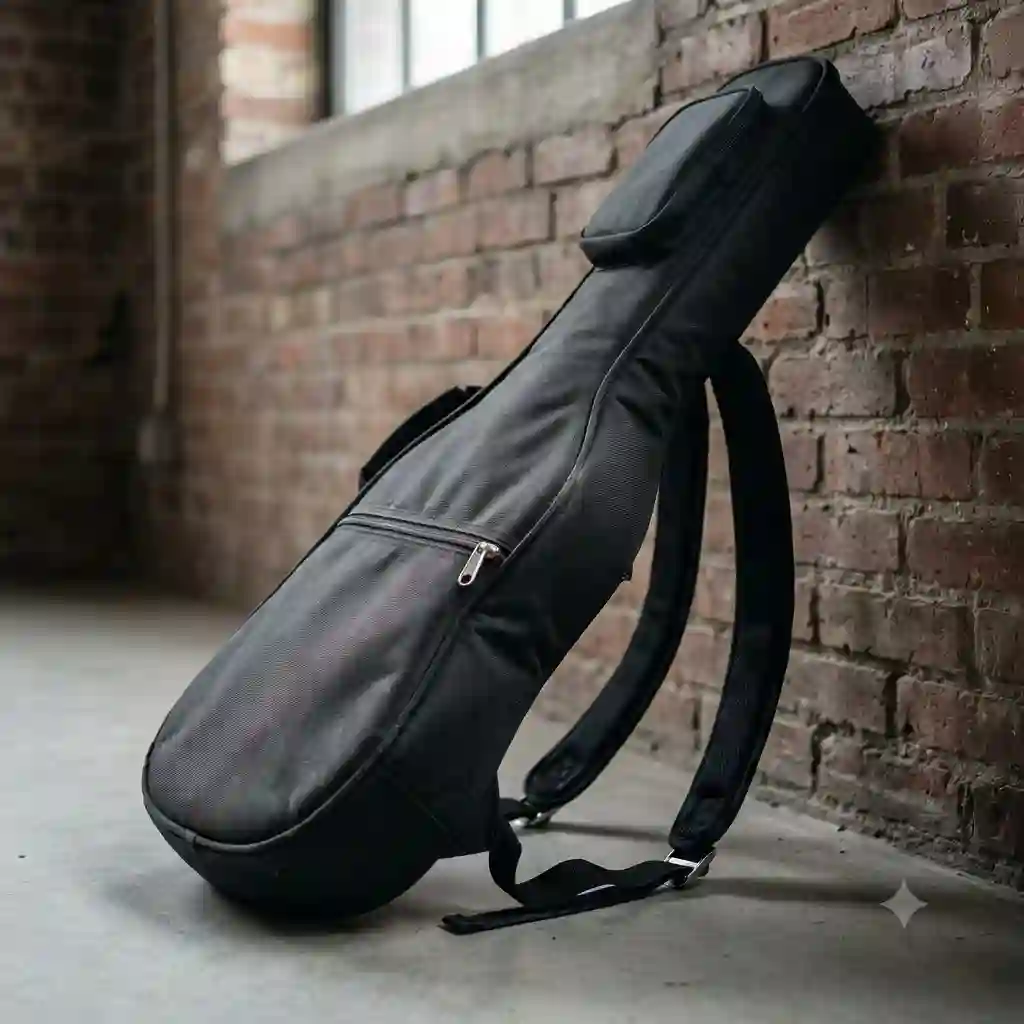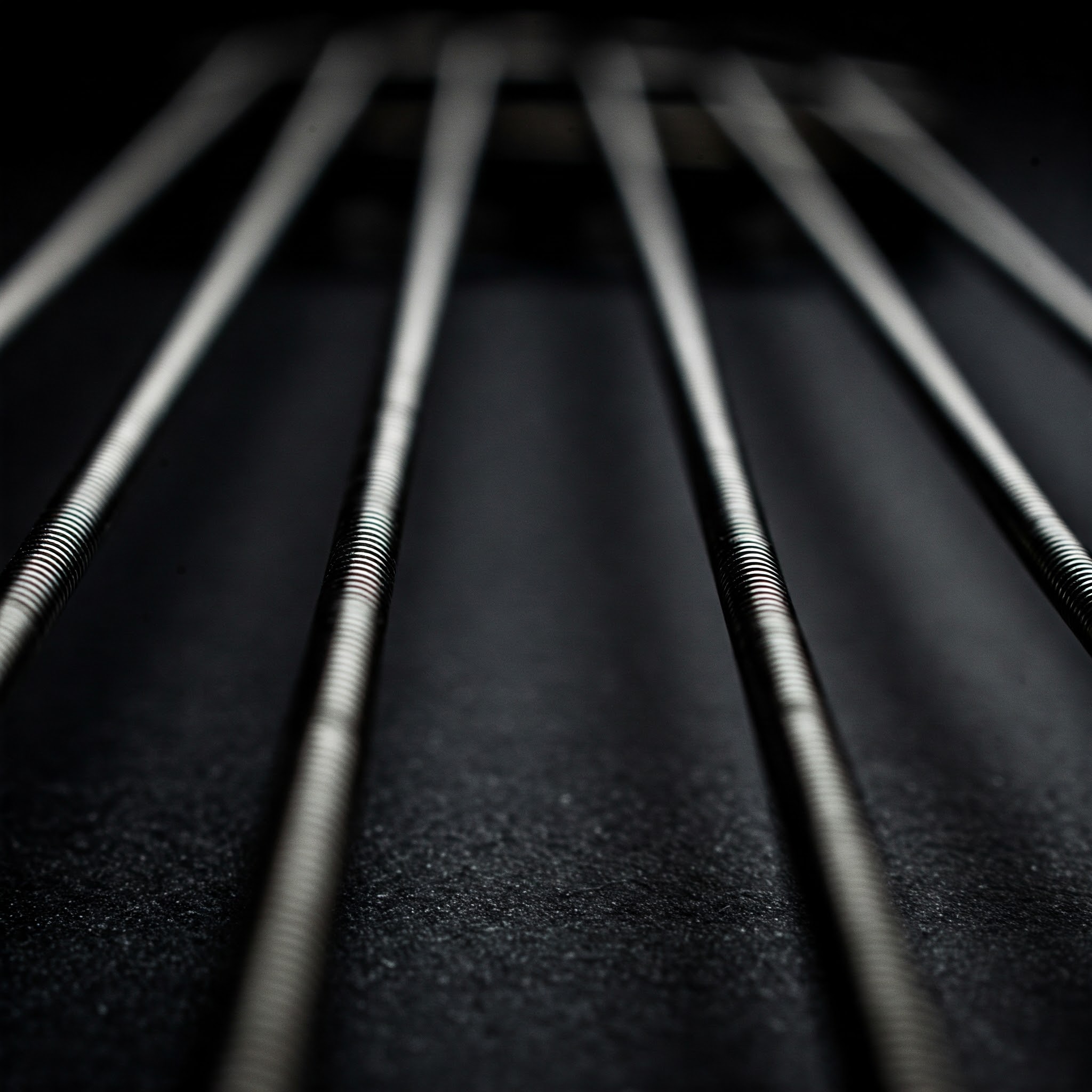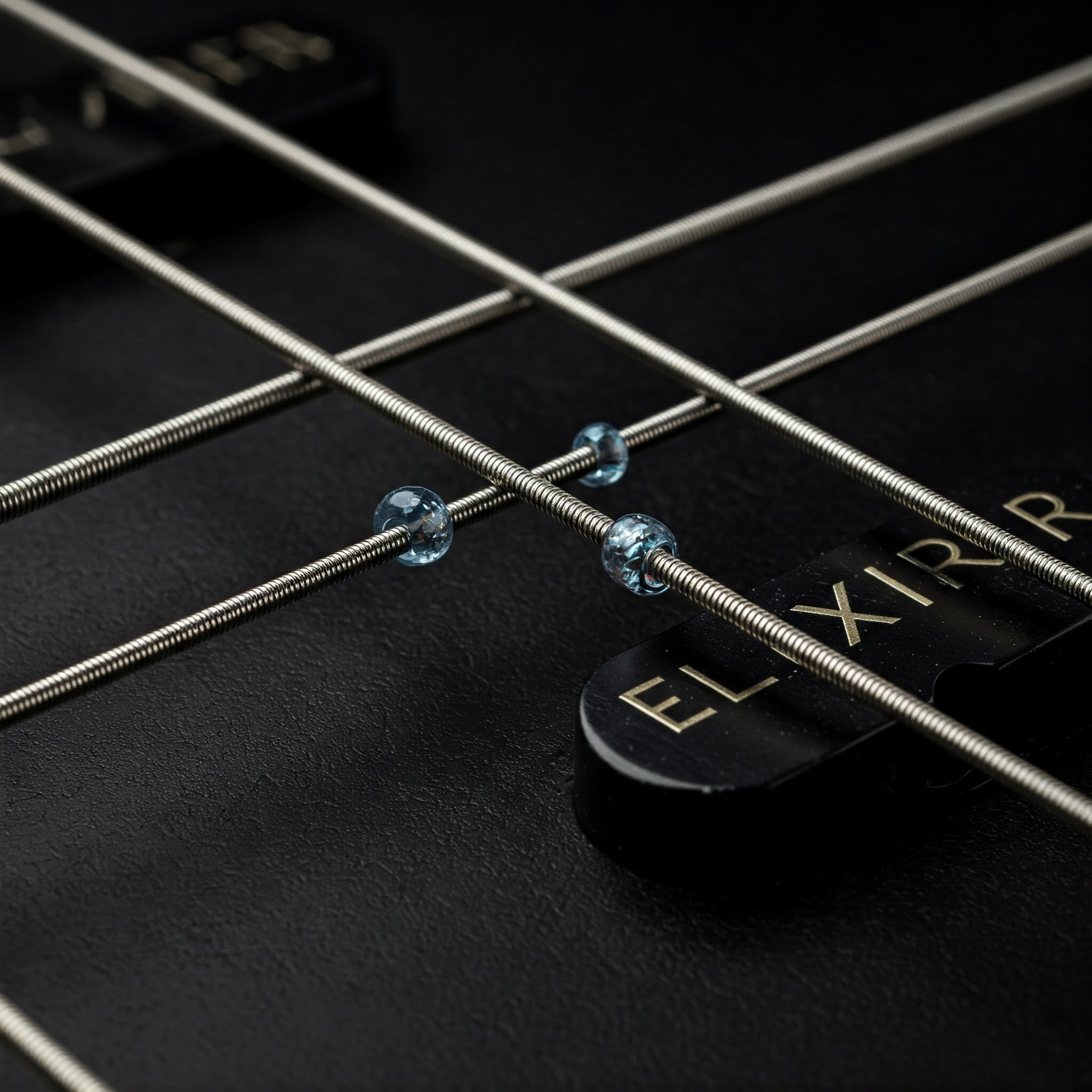
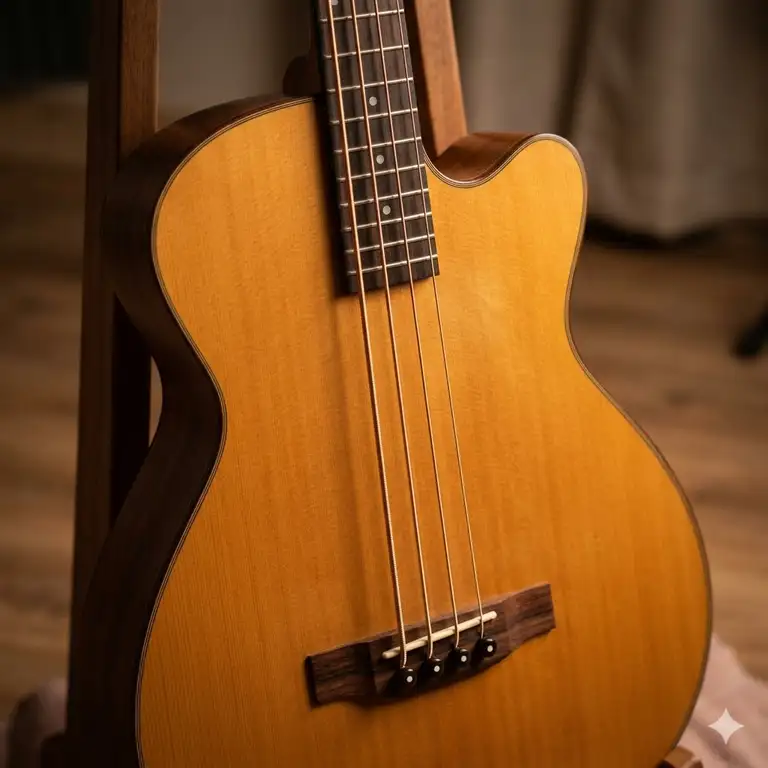
Finding the best acoustic bass strings is a unique challenge because the acoustic bass guitar itself is a bit of a sonic contradiction. It needs to produce enough low-end energy to be heard without an amp, yet maintain the clarity required for intricate bass lines. To clarify for beginners, what are acoustic bass strings? They are heavy-gauge strings specifically engineered for the larger scale and body of an acoustic bass guitar, typically featuring a core of steel wound with copper-based alloys like phosphor bronze or 80/20 bronze to maximize natural resonance and volume…
Choosing the right set isn’t just about grabbing the first pack you see on the shelf. In 2026, the market has evolved with new coating technologies and core materials that can completely transform how your instrument feels and sounds. Whether you are a campfire jammer needing maximum volume or a studio professional looking for a smooth, noise-free recording experience, the tension and material of your strings will be the deciding factor.
In my experience, many bassists mistakenly use electric bass strings on their acoustic instruments. While they “fit,” they lack the bronze winding necessary to interact with the acoustic top of the guitar, resulting in a thin, metallic sound that disappears in a room. To get that woody, upright-adjacent thump, you need purpose-built strings. This guide breaks down the top performers based on real-world durability, tonal profile, and overall value.
Quick Comparison: Top Acoustic Bass String Sets
| Product Name | Material | Coating | Primary Benefit | Best For |
| D’Addario EPBB170 | Phosphor Bronze | None | Rich, balanced warmth | All-around playability |
| Elixir Nanoweb | 80/20 Bronze | Nanoweb | Extreme longevity | Gigging professionals |
| Ernie Ball Earthwood | 80/20 Bronze | None | Brightness and projection | Unplugged jam sessions |
| GHS Pressurewound | Bronze | None | Reduced finger noise | Studio recording |
| Fender 8060 | Phosphor Bronze | None | Deep, earthy lows | Budget-conscious players |
Data Analysis and Insights
Looking at the data above, it is clear that material choice dictates the vibe of your instrument. The Elixir Nanoweb stands out for players who hate changing strings, though the initial investment is higher. If you find yourself playing unplugged most of the time, the Ernie Ball Earthwood‘s 80/20 bronze alloy provides the high-frequency “zing” needed to cut through the mix of acoustic guitars. For those focused on a traditional, warm bass tone, the D’Addario EPBB170 remains the safest benchmark for quality.
💬 Just one click — help others make better buying decisions too!😊
Best Acoustic Bass Strings: Expert Analysis
1. D’Addario Phosphor Bronze EPBB170 — The Industry Standard
The D’Addario Phosphor Bronze EPBB170 set is widely considered the baseline for what a high-quality acoustic bass should sound like. These strings use a high-carbon steel core wrapped in phosphor bronze, which provides a beautiful balance between bright overtones and a solid, fundamental low end.
Key Specifications & Interpretation:
-
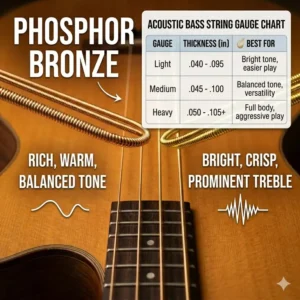
Gauge: .045, .065, .080, .100. This is a “medium” light gauge that provides enough tension to drive the soundboard without being so stiff that it causes hand fatigue during long sets.
-
Material: 92% Copper, 8% Tin Phosphor Bronze. This specific alloy is chosen for its corrosion resistance and “woody” tonal characteristics.
Expert Commentary:
In my time playing various acoustic setups, I’ve found that these strings are the most “forgiving.” If your bass is naturally a bit too bright, the phosphor bronze helps mellow out the harshness. What most buyers overlook is the break-in period; these strings sound quite metallic for the first 48 hours but settle into a gorgeous, warm thud that lasts for weeks. They are ideal for the hobbyist who wants a reliable, professional sound without a specialized niche.
Customer Feedback Summary:
Users consistently praise the consistent tension across all four strings and the “earthy” tone. A common minor complaint is that they can feel a bit rough on the fingers compared to coated alternatives…
-
Pros:
-
Excellent tonal balance across all registers
-
Reliable tuning stability once stretched
-
Very accessible price point
-
-
Cons:
-
No coating means they will oxidize faster in humid climates
-
Initial brightness may be too sharp for some
-
Price Range: Around $20 – $28
Value Verdict: The best all-around choice for durability and classic tone.
2. Elixir Nanoweb Acoustic Bass Strings — The Longevity King
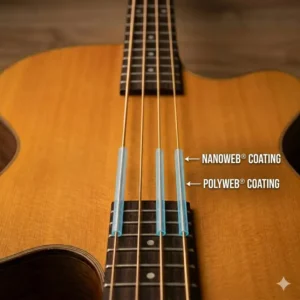
If you despise the ritual of changing bass strings every month, the Elixir Nanoweb Acoustic Bass Strings are effectively the only serious choice. Using a proprietary 80/20 bronze winding, Elixir applies a microscopic “Nanoweb” coating that prevents skin oils and debris from getting into the windings.
Key Specifications & Interpretation:
-
Coating: Nanoweb Ultra-Thin Coating. This isn’t just for protection; it also smooths out the physical feel of the string, reducing “finger squeak.”
-
Tone: 80/20 Bronze. This material is naturally brighter than phosphor bronze, which helps compensate for the slight dampening effect that any coating inherently has.
Expert Commentary:
The spec sheet won’t tell you this, but these strings actually save you money in the long run. While the upfront cost is nearly double that of a standard set, they often last three to five times longer. For a touring bassist or someone who leaves their bass on a stand in a humid living room, this is vital. I’ve noticed that the coating also makes sliding up and down the neck much faster—great for those who play more melodic, lead-style bass lines.
Customer Feedback Summary:
Reviewers rave about the “fresh string” sound that lasts for months. Some traditionalists feel the coating makes the strings feel slightly “plastic-like,” but most agree the trade-off is worth it for the convenience…
-
Pros:
-
Unrivaled lifespan and corrosion resistance
-
Significantly reduced finger noise
-
Maintains “new string” brightness for a long time
-
-
Cons:
-
Higher initial cost
-
Slightly slicker feel might not suit everyone
-
Price Range: Around $45 – $55
Value Verdict: The premier choice for gigging pros and those who value low maintenance.
3. Ernie Ball Earthwood Phosphor Bronze — Maximum Projection
The Ernie Ball Earthwood Phosphor Bronze strings are designed for one thing: being heard. Known for their vibrant, high-output sound, these are a staple in the acoustic bass community for players who frequently perform in unplugged environments.
Key Specifications & Interpretation:
-
Core: Hexagonal steel core. The “hex” shape allows the outer wrap wire to grip the core more tightly, which improves tuning stability and adds a bit of “punch” to the attack.
-
Winding: Phosphor Bronze. Offers a rich, deep copper color and a resonant, ringing quality.
Expert Commentary:
What I love about the Earthwood series is the sheer volume they produce. If you are playing with two loud acoustic guitarists, these strings give you the best chance of actually being heard. However, be aware that they are quite high-tension. If you have a bass with a high action, these will give your fretting hand a serious workout. I recommend these for players who have a heavy right-hand attack and want that aggressive “clack” and thump found in folk and bluegrass music.
Customer Feedback Summary:
Many buyers note that these are the loudest strings they’ve tried. Some mention that they tend to lose their “zing” a bit faster than D’Addario, but they still sound great even when “dead”…
-
Pros:
-
Exceptional volume and projection
-
Deep, rich low-frequency response
-
Very affordable
-
-
Cons:
-
High tension can be tough on beginners
-
Oxidize relatively quickly
-
Price Range: Around $18 – $24
Value Verdict: The top pick for pure acoustic volume and bluegrass jams.
4. GHS Pressurewound Bronze — The Recording Secret
The GHS Pressurewound Bronze strings offer a unique middle ground. During the manufacturing process, the outer wrap wire is slightly flattened. This results in a string that feels smoother than a roundwound but retains more brightness than a flatwound.
Key Specifications & Interpretation:
-
Processing: “Pressurewound” (roller flattened). This reduces the profile of the outer winding, creating a smoother surface.
-
Material: Phosphor Bronze alloy. Ensures the tone remains musical and doesn’t get too “thumpy” or dull.
Expert Commentary:
In my experience, these are the best acoustic bass strings for recording. Why? Because the biggest enemy of a clean acoustic bass track is the “zip” noise when you move your hand. These strings drastically reduce that friction. They also feel much softer on the fingertips, making them a fantastic “transitional” string for electric bassists who find traditional acoustic strings too abrasive. They offer a refined, sophisticated tone that sits beautifully in a mix.
Customer Feedback Summary:
Players often comment on the “silky” feel and the elimination of harsh high-end overtones. They are highly recommended for fretless acoustic basses as well…
-
Pros:
-
Best-in-class reduction of finger noise
-
Comfortable, smooth playing surface
-
Warm, controlled tonal profile
-
-
Cons:
-
Slightly less volume than standard roundwounds
-
Harder to find in local music stores
-
Price Range: Around $30 – $40
Value Verdict: The ultimate choice for studio work and sensitive ears.
5. Fender 8060 Phosphor Bronze — Deep, Earthy Value
Fender isn’t just about electrics; their Fender 8060 Phosphor Bronze acoustic bass strings are a hidden gem for those who want a classic, no-frills performance. They are designed specifically to pair with Fender’s popular Kingman and CB series acoustic basses.
Key Specifications & Interpretation:
-
Gauge: .045-.100. Standard gauge that fits almost any nut slot without modification.
-
Ball Ends: Standard size. Compatible with all bridge pin and top-load bridge systems.
Expert Commentary:
The 8060s are what I call “workhorse” strings. They don’t have the fancy coatings of Elixir or the specialized winding of GHS, but they deliver a solid, fundamental bass tone that feels very “traditional.” What most buyers overlook is how well these strings handle “percussive” playing. If you like slapping the strings against the frets for a rhythmic effect, these have a satisfying “knock” to them. They are a great, budget-friendly way to keep your bass sounding fresh without breaking the bank.
Customer Feedback Summary:
Users appreciate the reliable Fender quality and the deep, dark tone. Some users report that the low E string can feel a bit “boomy” on smaller-bodied basses, requiring some EQ adjustment…
-
Pros:
-
Very consistent quality control
-
Deep, fundamental-focused sound
-
Highly affordable
-
-
Cons:
-
Shortest lifespan of the list
-
Fairly basic tonal character
-
Price Range: Around $15 – $22
Value Verdict: A solid, budget-friendly option for the casual player.
✨ Don’t Miss These Exclusive Deals!
🔍 Take your bass playing to the next level with these carefully selected products. Click on any highlighted item to check current pricing and availability. These tools will help you create authentic tones your family will love!
Buyer’s Decision Framework: Which Strings Should You Choose?
Selecting the best acoustic bass strings depends entirely on your environment and physical comfort. Use the following logic to narrow down your choice:
-
If you play exclusively at home or in humid areas: Choose Elixir Nanoweb. The coating is the only thing standing between your strings and rust. It keeps the “new string” sparkle alive even if the bass sits for weeks.
-
If you are recording a solo album or a quiet folk track: Choose GHS Pressurewound. You will save yourself hours of editing out “squeaks” and “zips” from your finger movements.
-
If you are a beginner with soft calluses: Choose D’Addario EPBB170. They offer a standard tension that isn’t too punishing, providing a good middle ground for developing hand strength.
-
If you need to compete with other acoustic instruments: Choose Ernie Ball Earthwood. Their 80/20 bronze formulation and high tension provide the “cut” and volume necessary for unamplified performances.
-
If you are on a tight budget: Choose Fender 8060. They provide a professional sound for the price of a couple of pizzas.
In my experience, it’s worth trying at least two different brands over the course of a year. You might find that your specific bass—depending on its wood (Spruce vs. Mahogany)—reacts differently to Phosphor Bronze versus 80/20 Bronze.
Practical Usage Guide: Installing and Maintaining Your Strings
Changing strings on an acoustic bass is slightly different than on an electric, primarily due to the bridge pins used on many models. Follow these tips to ensure longevity and tuning stability.
The Bridge Pin “Seat”
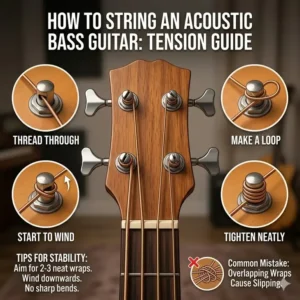
One of the most common mistakes is not “seating” the ball end correctly. When you insert the string into the bridge hole and push the pin down, you must pull up on the string until you feel the ball end lock against the bridge plate inside the body. If you don’t do this, the string will slowly pull the pin out as you tune up, which can lead to a snapped bridge or a flying pin!
The “Stretching” Phase
Acoustic bass strings have a lot of mass. Once you’ve tuned them to pitch, they will go flat almost immediately. Gently tug on each string (about 2-3 inches away from the fretboard) and then retune. Repeat this 3-4 times. This “settles” the windings around the tuning post and prevents that annoying “going out of tune” every five minutes during your first hour of playing.
Maintenance Schedule
-
After every session: Wipe down the strings with a lint-free microfiber cloth. This removes the acidic sweat that eats away at bronze windings.
-
Monthly: Check for “fret divots” on the underside of the strings. If the strings look flattened where they hit the frets, it’s time for a change.
-
Every 6 months: Even if you don’t play often, bronze loses its elasticity over time. A fresh set will always make the bass easier to play.
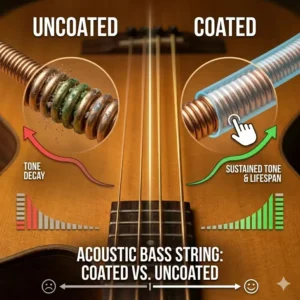
Phosphor Bronze vs. 80/20 Bronze: The Deep Dive
When searching for the best acoustic bass strings, you will inevitably run into these two alloy types. Understanding the difference is crucial for your “sonic signature.”
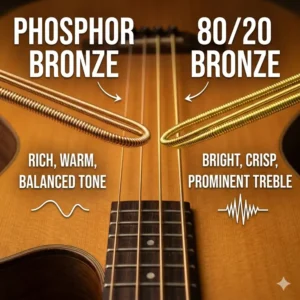
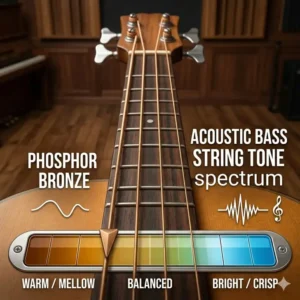
Phosphor Bronze (90-92% copper) is the “warm” option. The addition of phosphorus acts as a deoxidizer, which actually makes the alloy a bit more durable than 80/20. Tonally, it provides a “full-range” sound with lots of complex overtones. If you want your bass to sound “expensive” and lush, this is the way to go. It’s the choice for those who want that “chocolatey” low end.
80/20 Bronze (80% copper, 20% zinc) is essentially brass. These strings are incredibly bright and “jangly” when you first put them on. While they lose that initial “zing” faster than phosphor bronze, they provide much better clarity for dark-sounding basses (like those with all-mahogany bodies). If your bass sounds “muddy” or “muffled,” switching to 80/20 strings can act like a “Presence” knob, bringing the instrument back to life.
In my professional opinion, most acoustic basses benefit more from Phosphor Bronze because the goal of a bass is usually to provide a solid low-end foundation rather than high-end sparkle. However, for slap-style playing or soloing, 80/20 is a powerful tool.
Why You Should Never Use Electric Bass Strings on an Acoustic
I see this question often: “Can I just put my favorite Slinkys on my acoustic bass?” The short answer is yes, they will fit, but the long answer is that you’ll hate the result.
Electric strings are usually Nickel-Plated Steel or Stainless Steel. These materials are designed to interact with the magnetic field of a pickup. On an acoustic-electric bass, the “acoustic” sound comes from the vibration of the top. Bronze windings are significantly denser and “springier” than nickel. When you use electric strings, the top of the acoustic bass doesn’t vibrate as much, leading to a massive loss in volume.
Furthermore, electric strings usually have lower tension. While this sounds like it would make the bass “easier” to play, it actually causes the strings to flop around on an acoustic bass, leading to excessive fret buzz. The best acoustic bass strings are engineered with the specific tension required to drive that wooden top into motion. Stick to the bronze!
Common Mistakes When Buying Acoustic Bass Strings
Even experienced players can fall into these traps. Here is how to avoid them:
1. Ignoring Scale Length
Most acoustic basses are “Long Scale” (34 inches), but many modern ones are “Short Scale” (30 inches) or even “Junior” scale. If you buy long-scale strings for a short-scale bass, the thick part of the string will wrap around the tuning post, which can cause the string to snap or the tuner to break. Always verify your bass’s scale length before hitting “Buy.”
2. Going Too Heavy
While heavier strings (like .050-.105) provide more volume, they put immense stress on the neck and bridge of an acoustic instrument. Unlike electric basses, which are solid blocks of wood, acoustic basses are fragile. Unless you know your instrument can handle high tension, stick to “Light” or “Medium-Light” sets (.045-.100).
3. Not Adjusting the Truss Rod
A new set of strings—even of the same gauge—can have slightly different tension than your old ones. If you notice your strings are suddenly harder to press down or are buzzing more, you likely need a minor truss rod adjustment. Don’t assume the strings are “bad”; the instrument just needs to adapt to the new tension.
Features That Actually Matter (And Those That Don’t)
Marketing departments love to throw jargon at you. Here is the expert filter:
-
Matters: Core Shape. A hexagonal core (Hex Core) is generally superior for acoustic bass because it prevents the winding from slipping, which is vital for these heavy gauges.
-
Matters: Winding Material. As discussed, the difference between Phosphor and 80/20 is the most significant tonal choice you will make.
-
Doesn’t Matter: “Silk Wraps” at the ends. While they look cool and protect the tuners slightly, they have zero impact on the actual tone or playability of the vibrating part of the string.
-
Doesn’t Matter: “Space-Age” alloys. Stick to the time-tested bronze variants. Many “exotic” alloys are just marketing spins on standard materials that don’t justify the 30% price hike.
Long-Term Cost & Maintenance: ROI Analysis
When evaluating the best acoustic bass strings, you have to look at the Cost Per Month of Playtime.
A standard set of $20 strings might last 4 weeks of heavy playing before they sound “dead” and become hard to tune. That’s a cost of $5.00 per week.
A coated set like Elixir costs $50 but can easily last 16 weeks or more. That brings the cost down to $3.12 per week.
Beyond the money, you also have to consider the “value of time.” Changing bass strings is a 20-30 minute chore. Over a year, the coated strings save you hours of maintenance. If you are a busy person who just wants to pick up the bass and play, the “ROI” on coated strings is incredibly high, even if the “sticker shock” is real at first.
✨ Don’t Miss These Exclusive Deals!
🔍 Take your bass playing to the next level with these carefully selected products. Click on any highlighted item to check current pricing and availability. These tools will help you create authentic tones your family will love!
Conclusion
Choosing the best acoustic bass strings is ultimately a journey of balancing tone, feel, and budget. For the majority of players, the D’Addario Phosphor Bronze EPBB170 provides the most consistent, professional results. However, if you find yourself constantly battling rust or simply hate the chore of changing strings, the investment in Elixir Nanoweb is a life-changer.
Remember that your strings are the only part of your instrument you actually touch; they are the interface between your soul and the wood of the bass. Don’t settle for “dead” or cheap strings that sap your inspiration. Whether you want the bright “snap” of 80/20 bronze or the smooth, studio-ready feel of a pressurewound set, the right choice is out there.
Now that you know what to look for, take a look at your current set. If they are looking a little dull or feeling a little stiff, treat yourself to a new pack. Your fingers—and your ears—will thank you.
FAQs
❓ How often should I change my acoustic bass strings?
✅ For most players, every 3 to 4 months is ideal. If you notice the tone becoming “thuddy” and the strings looking dark or discolored, they have oxidized. Gigging professionals might change them every 2 to 4 weeks to maintain maximum brightness…
❓ Can I use flatwound strings on an acoustic bass?
✅ Yes, you can, but they will be very quiet. Flatwounds (like D’Addario Chromes) provide a “thump” similar to a Motown sound or an upright bass. They are great for reducing finger noise but lack the acoustic projection of bronze…
❓ Why are acoustic bass strings more expensive than electric ones?
✅ The materials used (Phosphor Bronze) and the sheer amount of wire required for these heavy gauges increase production costs. Additionally, the market for acoustic bass strings is smaller than for electrics, leading to lower economies of scale…
❓ Do I need to change my bridge pins when I change strings?
✅ Not unless they are cracked or no longer holding the string securely. However, it’s a good idea to have a spare set of bridge pins in your gig bag, as they can occasionally fly out and get lost during string changes…
❓ Will acoustic bass strings work on a fretless bass?
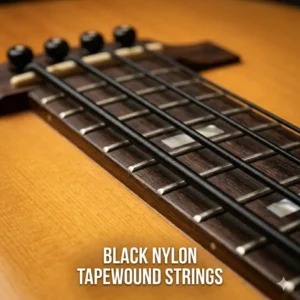
✅ Roundwound bronze strings will eventually “eat” into a wooden fretless fingerboard. If you have a fretless acoustic, I highly recommend using Tapewound or Pressurewound strings to protect the wood while still getting a decent acoustic tone…
Recommended for You
- 7 Best Acoustic Bass Strings 2026: Expert Guide and Review!
- 7 Best Acoustic Guitar Preamp Picks for 2026: Pro Sound Guide!
- Bass Guitar Onboard Preamp: 7 Best Power Upgrades for Epic Tone (2026)
Disclaimer: This article contains affiliate links. As an Amazon Associate, I earn from qualifying purchases. If you purchase products through these links, we may earn a small commission at no additional cost to you.
✨ Found this helpful? Share it with your friends! 💬🤗