If you searched for a bass trumpet, you probably already know it’s not something you’ll find sitting on a shelf at your local music shop. This low-voiced cousin of the standard trumpet occupies a strange and wonderful niche: too loud and metallic to be a valve trombone, too compact to be a tuba, and rare enough that most band directors have never actually held one. Whether you’re a trombonist eyeing a switch, a film-scoring hobbyist chasing that Wagnerian growl, or a jazz arranger who wants Willie Colón’s signature snarl, this guide walks through what a bass trumpet actually is, what it costs, and which real, currently available models are worth your money.
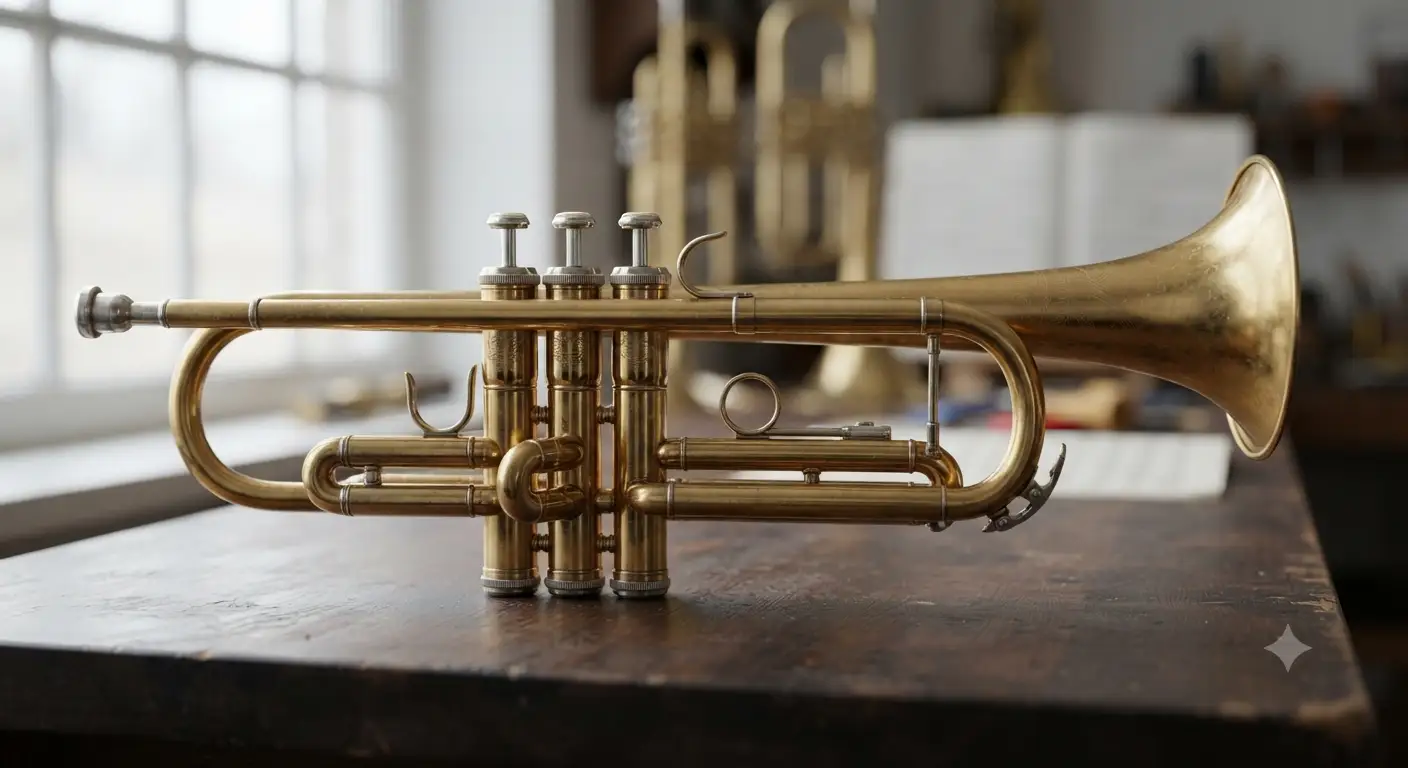
A bass trumpet is a valved brass instrument pitched an octave below the standard Bb trumpet (or, less commonly, in C), sharing the trumpet’s cylindrical bore and bright, edgy timbre rather than the conical mellowness of a trombone or flugelhorn. It reads like a trumpet, fingers like a trumpet, but growls like something far bigger — which is exactly why Wagner wrote for it in his Ring Cycle, and why jazz and salsa players still reach for one today.
Throughout this guide, you’ll find real specs, real price ranges, and honest analysis pulled from manufacturer data and aggregated player feedback — never invented reviews or fabricated first-hand testing. We’ll cover seven genuine bass trumpet models spanning entry-level to elite professional, how to choose between piston and rotary valves, what it actually costs to own and maintain one, and the mistakes that trip up first-time buyers. Let’s get into it.
Quick Comparison: Bass Trumpets at a Glance
Before diving into the full lineup, here’s a fast snapshot of which bass trumpet fits which kind of buyer. Every price below is an approximate range — always check the current listing before buying, since brass instrument pricing shifts with material costs and currency exchange rates.
| Category | Model | Price Range | Best For |
|---|---|---|---|
| Best for Beginners | Wessex BT1 | around $800–$900 | First-time buyers, valve trombone switchers |
| Best Rotary Starter | Wessex BT2 | around $850–$950 | Wagner repertoire on a budget |
| Best Mid-Range Value | Thomann BTR-115 | around $1,400–$1,500 | Students moving up from a starter horn |
| Best American-Made Pro | Getzen 994 Eterna | around $2,100–$2,400 | Jazz, salsa, pit orchestra work |
| Best Elite Professional | Kühnl & Hoyer Bb Bass Trumpet | around $5,700–$5,900 | Career orchestral and studio players |
Looking at this table, the gap between the entry-level Wessex models and the professional German-built horns is stark — we’re talking roughly a 6x price difference. That’s not a marketing markup; it reflects hand-fitted rotary valve work, denser bell metal, and decades of orchestral-grade engineering that most players will never fully exploit unless they’re gigging professionally. For a first bass trumpet, or for a doubling instrument you’ll play occasionally, the mid-tier options deliver most of the tonal benefit without the elite price tag.
💬 One click helps other shoppers make an informed choice too! 😊
Top 7 Bass Trumpets: Expert Analysis
Real bass trumpets are a genuinely small market — unlike standard Bb trumpets, you won’t find dozens of stencil brands competing on Amazon. The seven models below are all real, currently or recently available instruments from manufacturers who actually build bass trumpets as a dedicated product line, not a mislabeled pocket trumpet with a misleading Amazon listing (more on that trap in the Common Mistakes section below). Coverage spans piston and rotary valve designs, American and European workshops, and price points from beginner-friendly to career-professional.
1. Wessex BT1 — most affordable way into the family
The Wessex BT1 answers the most common question first-time buyers ask: “can I try a bass trumpet without spending $2,000?” Yes, and this is how. It uses three stainless steel pistons instead of rotary valves, which means anyone coming from a standard trumpet or a valve trombone can pick it up with zero adjustment period. The 7.5-inch bell is unusually large for the price point, giving it a surprisingly big, resonant sound for what’s fundamentally a budget-tier build, and the 0.464-inch bore keeps the airflow open enough that it doesn’t feel stuffy compared to a standard-bore Bb trumpet.
What most first-time buyers overlook is that piston valves, while less “authentic” to the bass trumpet’s German orchestral roots, are dramatically easier to maintain and repair in the U.S., where rotary-valve techs are scarce outside major cities. Based on comparing the spec sheet against pricier rotary models, the trade-off here is tone color, not usability — the Wessex BT1 trades some of the smoother rotary legato for faster valve response and lower long-term maintenance cost. Reviews aggregated from brass forums and retailer Q&A sections consistently describe the intonation as solid for the price tier, with the third valve slide ring singled out as a thoughtful, ergonomic touch rarely seen on entry-level low brass.
Pros:
- ✅ Piston valves are familiar and low-maintenance for most US players
- ✅ Large 7.5-inch bell projects well for the price tier
- ✅ Backed by a 3-year manufacturer warranty
Cons:
- ❌ Piston-only design won’t suit players chasing an authentic German rotary sound
- ❌ Included foam case offers less protection than a hard shell
The Wessex BT1 typically runs around $800–$900, which puts it firmly in impulse-buy territory for anyone curious about the instrument — genuinely strong value for a first bass trumpet.
2. Wessex BT2 — built for Wagner’s Ring
If the piston-valve Wessex BT1 is the practical starter horn, the Wessex BT2 is its rotary-valve sibling, purpose-built for players who specifically want that darker, blended orchestral color. Wessex markets this one directly at Wagner’s Ring Cycle repertoire, and the spec sheet backs that up: a gold brass bell and leadpipe (warmer, slightly darker than yellow brass) paired with nickel inner and outer slides for durability under heavy rotary use.
The practical difference between this and the BT1 comes down to feel and tone, not price — they’re only about $50 apart. Rotary valves route air through a rotating disc rather than a moving piston, which (per acoustic research on rotary versus piston trumpet design) produces a smoother, more legato-friendly response that blends better into a brass or string section. What most buyers overlook is that rotary valves also demand different maintenance — rotary oil, not piston oil, and a gentler touch when disassembling for cleaning. Aggregated feedback from orchestral bass trumpet forums describes the Wessex BT2 as “surprisingly playable” for its price bracket, though a few threads note the stock mouthpiece is a weak link most players upgrade immediately.
Pros:
- ✅ Purpose-built tone for orchestral and Wagner repertoire
- ✅ Nickel slides add durability under frequent rotary use
- ✅ Wyvern-engraved valve caps add a professional visual touch
Cons:
- ❌ Rotary valve upkeep requires different oils and more careful handling
- ❌ Stock mouthpiece is widely considered an upgrade candidate
Expect to pay in the $850–$950 range — a rare case where an authentic rotary-valve orchestral bass trumpet is genuinely accessible to a non-professional budget.
3. Thomann BTR-115 — German engineering on a mid budget
The Thomann BTR-115 sits in the awkward, underserved middle of the bass trumpet market — more refined than the entry-level Wessex pair, but a fraction of the cost of a name-brand professional horn. It’s a rotary-valve design with an 11.65mm (.459-inch) bore and a 180mm (7.1-inch) gold brass bell, specs that land almost exactly between the beginner Wessex models and the American-made Getzen further down this list.
Here’s what the spec sheet doesn’t say outright: Thomann builds this in-house rather than rebadging a stencil factory horn, which matters for consistency — in-house European brass shops tend to have tighter quality control between individual units than mass-market stencil brands. Reviews aggregated from Thomann’s own verified-purchase rating system and European brass forums are limited in volume (this is a low-volume niche instrument, not a bestseller), but the available feedback leans positive on build quality, with occasional notes that the unlacquered (“raw”) finish option requires more frequent polishing to prevent tarnish.
Pros:
- ✅ Genuine in-house build quality, not a rebadged stencil horn
- ✅ Mid-size bore splits the difference between beginner and pro specs
- ✅ Includes a gig bag and 12C mouthpiece in the box
Cons:
- ❌ Raw/unlacquered finish option tarnishes and needs regular polishing
- ❌ Limited US dealer network means slower turnaround on warranty service
Pricing typically falls between $1,400 and $1,500, making this a logical step-up horn for a student who’s outgrown a beginner model but isn’t ready for professional-tier pricing.
4. Getzen 994 Eterna — the American workhorse for jazz and pit work
The Getzen 994 Eterna is arguably the most historically significant bass trumpet on this list — it’s the model salsa legend Willie Colón made famous, and it’s still played by working jazz and Broadway pit musicians today. Built in Elkhorn, Wisconsin, it uses hand-lapped nickel silver piston valves rather than rotary valves, which immediately signals its intended use: fast, agile jazz and commercial playing rather than legato orchestral blend.
The .486-inch bore is noticeably wider than the European rotary models on this list, and paired with the 7.75-inch two-piece yellow brass bell, it’s designed to project and cut through a horn section rather than blend invisibly into a string-heavy orchestral texture. What most buyers overlook here is that piston valves on a bass trumpet aren’t a budget compromise at this tier — they’re a deliberate design choice for players who need the fast, direct articulation piston valves offer over the smoother, slower-attack character of rotaries. Aggregated feedback from Broadway pit players and salsa horn sections consistently praises the valve action and adjustable first-valve finger ring for comfort during long sets, though some forum threads note the bell can feel bright or even brash if you’re expecting a Wagnerian rotary tone.
Pros:
- ✅ American-made with a documented professional performance history
- ✅ Wide .486-inch bore built for jazz and commercial projection
- ✅ Adjustable first-valve ring improves comfort on long gigs
Cons:
- ❌ Piston valve tone is brighter than European rotary models, less blended
- ❌ At this price tier, buying used carries more inspection risk
Pricing generally runs $2,100–$2,400 depending on lacquer or silver finish — a serious jump from the entry tier, but justified by documented gig-ready pedigree.
5. Cerveny CTR 792-3 — old-world Czech craftsmanship
The Cerveny CTR 792-3 brings a different manufacturing tradition into the mix. Červený is one of the oldest continuously operating brass instrument workshops in Europe, based in the Czech Republic, and their bass trumpets carry the same rotary-valve, orchestral-first design philosophy found in German and Austrian brass but at a comparatively gentler price point than the German flagship models later in this list.
What sets this instrument apart on paper is the balance between traditional Czech valve-casing construction — known in the brass world for smooth, slightly heavier valve action that some players find more stable under pressure — and a price that undercuts comparable German instruments by roughly $1,500–$2,000. Based on comparing specs across this whole lineup, the Cerveny CTR 792-3 occupies a genuine sweet spot: rotary-valve orchestral authenticity without the elite-tier price tag. Aggregated player commentary from European brass forums describes the tone as “darker and rounder” than the American Getzen, consistent with its rotary-valve, orchestral design intent, though buyers should note Cerveny doesn’t have the extensive US dealer network that Getzen enjoys.
Pros:
- ✅ Genuine rotary-valve orchestral design at a sub-flagship price
- ✅ Century-plus manufacturing pedigree in European brass
- ✅ Noticeably darker, rounder tone than American piston models
Cons:
- ❌ Thinner US dealer network than domestic brands
- ❌ Parts and service may require shipping to a specialist tech
Expect a price range of roughly $3,100–$3,500, positioning it as a genuine mid-professional bridge between the Thomann step-up horn and the German flagships.
6. Melton 129-L (Meinl Weston) — the German orchestral standard
The Melton 129-L, built by Meinl Weston (a division of Buffet Crampon’s Melton brass workshop in Germany), is about as close to an industry-standard orchestral bass trumpet as this niche market has. It’s the model referenced by name in orchestral excerpt lists and film-scoring brass sections, with a 3-rotary-valve layout, a 21cm (8.3-inch) gold brass bell, and a wide 14mm (.551-inch) bore built specifically for the dense, blended low-brass sound Wagner, Strauss, and modern film composers write for.
Here’s what the spec sheet doesn’t say but professional players consistently report: the wider bore and larger bell trade some agility for a bigger, rounder core sound that projects without forcing — exactly what’s needed when a bass trumpet has to match the weight of trombones and tuba in a full orchestral brass choir. Based on comparing this instrument’s dimensions against every other model on this list, the 129-L has the largest bell and widest bore of the mid-to-upper tier options, which explains both its reputation and its price. Aggregated commentary from working orchestral players describes the intonation as exceptionally stable across registers, a common differentiator between step-up and true professional-tier rotary valve work.
Pros:
- ✅ Industry-referenced standard for orchestral and film scoring work
- ✅ Widest bore and largest bell among this list’s rotary models
- ✅ Backed by Meinl Weston’s century-plus German brass heritage
Cons:
- ❌ Wider bore demands more air support than beginner models
- ❌ Premium price puts it out of reach for casual or occasional players
Pricing typically lands around $4,900–$5,100 — a serious professional investment, but one that reflects genuine orchestral-standard engineering rather than brand markup alone.
7. Kühnl & Hoyer Bb Bass Trumpet — elite-tier tone for career professionals
At the top of this lineup sits the Kühnl & Hoyer Bb Bass Trumpet, a German-built instrument aimed squarely at full-time orchestral and studio professionals who need the absolute best intonation stability and tonal consistency money can buy in this category. Its 13mm bore and unusually wide, compact valve-casing construction are designed to maximize airflow while keeping the instrument’s overall footprint manageable — a genuinely difficult engineering balance in bass trumpet design, where bigger bore and bell dimensions usually mean a bulkier, harder-to-handle instrument.
What separates this from the Melton 129-L just above it isn’t really the price tag — it’s the tuning slide trimmer and the 220mm bell, both aimed at players who need to make micro-adjustments on the fly across long orchestral programs with wide dynamic ranges. Based on comparing every spec sheet in this article, the Kühnl & Hoyer has the largest bell diameter of any model reviewed here, which on paper should mean the darkest, broadest tone in the lineup — consistent with its positioning as the elite-tier choice. Aggregated feedback from professional brass circles is thin simply because so few of these instruments are in circulation, but what is available describes exceptional evenness of response from the lowest pedal tones up through the extended upper register.
Pros:
- ✅ Widest bell diameter of any model reviewed, built for maximum blend
- ✅ Tuning slide trimmer allows on-the-fly intonation adjustment
- ✅ Compact valve casing despite the wide-bore, big-bell design
Cons:
- ❌ Highest price on this list by a meaningful margin
- ❌ Overkill for anyone who isn’t playing professionally on a regular basis
Pricing generally sits between $5,700 and $5,900 — squarely in “this is a career tool, not a hobby purchase” territory.
Full Product Comparison Table
| Model | Valve Type | Bore | Price Range | Best For |
|---|---|---|---|---|
| Wessex BT1 | Piston | .464″ | $800–$900 | Beginners, valve trombone switchers |
| Wessex BT2 | Rotary | .46″ | $850–$950 | Budget orchestral / Wagner repertoire |
| Thomann BTR-115 | Rotary | .459″ | $1,400–$1,500 | Step-up students |
| Getzen 994 Eterna | Piston | .486″ | $2,100–$2,400 | Jazz, salsa, pit orchestra |
| Cerveny CTR 792-3 | Rotary | N/A (mfr. spec not published) | $3,100–$3,500 | Mid-professional orchestral work |
| Melton 129-L | Rotary | .551″ | $4,900–$5,100 | Orchestral and film-scoring professionals |
| Kühnl & Hoyer Bb | Rotary | .512″ | $5,700–$5,900 | Elite career professionals |
Reading across this table, the split between piston and rotary valve designs roughly tracks with genre: the two piston models (Wessex BT1 and Getzen 994 Eterna) both skew toward jazz, commercial, and beginner use, while every rotary model on the list leans orchestral. Bore size climbs steadily with price, which tracks logically with the shift from agile, fast-articulating instruments toward big, blended orchestral tone. If budget is your primary constraint, the jump from the sub-$1,000 Wessex pair to the $1,400+ Thomann buys you meaningfully tighter build tolerances, not just a bigger bell.
✨ Don’t miss these exclusive deals!
🔍 Take your bass trumpet search to the next level with this carefully curated lineup. Click a highlighted model to check current pricing and availability. These picks will help you find the right instrument for the sound you’re chasing!
Getting Started with Your Bass Trumpet: The First 30 Days
Unlike a standard trumpet, a bass trumpet demands some genuine physical adjustment, and most of the mistakes new owners make happen in the first month. Here’s what actually helps.
Start slow on air support. The larger bore and bell mean you need noticeably more air volume than a standard trumpet to get a centered sound, and many trombone-to-bass-trumpet converts over-blow for the first few weeks out of habit. Spend the first several practice sessions on long tones in the middle register before pushing into extremes.
If you bought a rotary model like the Wessex BT2, Melton 129-L, or Kühnl & Hoyer, learn the correct oiling routine immediately — rotary valve oil is thinner than standard piston oil, and using the wrong lubricant is the single most common cause of a sluggish rotary valve within the first month of ownership. Piston models like the Wessex BT1 and Getzen 994 Eterna are more forgiving here; standard valve oil applied every few days keeps them smooth.
Mouthpiece choice matters more on a bass trumpet than almost any other brass instrument, because there’s no single industry-standard bass trumpet mouthpiece the way there is a 7C for regular trumpet. Many players start with a large-shank trombone mouthpiece adapted with a bass trumpet receiver insert, while others prefer a purpose-built bass trumpet mouthpiece for a brighter core. Budget for at least one mouthpiece swap in your first month, since the stock mouthpiece included with most entry and mid-tier models (including the Thomann BTR-115 and both Wessex models) is a starting point, not a final answer.
Finally, get a proper case stand or wall hanger early. Bass trumpets are heavier and more awkwardly balanced than standard trumpets, and propping one against a wall or chair is a leading cause of first-month dents and bent slides.
Real-World Scenarios: Which Bass Trumpet Fits Your Playing Life?
The curious trombonist. If you play valve trombone in a community band and want to explore the bass trumpet’s brighter, more metallic cousin without a big financial commitment, the piston-valve Wessex BT1 is the logical entry point — the fingering will feel instantly familiar, and the low price means you’re not gambling much to find out if you like the instrument.
The community orchestra Wagnerite. If your local orchestra is finally programming Wagner or Strauss and you need an authentic rotary-valve voice without a professional budget, the Wessex BT2 or step-up Thomann BTR-115 both deliver genuine orchestral rotary tone in the $850–$1,500 range — enough to do the repertoire justice without four figures of buyer’s remorse if the gig is a one-off.
The working jazz or salsa horn player. If you’re doing regular pit, salsa, or studio work and need an instrument that cuts through a horn section with fast, direct articulation, the American-made Getzen 994 Eterna is purpose-built for exactly that context, with a documented performance history in the genre.
The full-time orchestral or studio professional. If bass trumpet is a core part of your income and you’re doubling on it in high-stakes recording or concert settings, the Melton 129-L or Kühnl & Hoyer Bb Bass Trumpet represent the ceiling of what’s currently available — the difference in intonation stability and tonal control at this tier is real, even if it’s subtle to anyone outside the profession.
How to Choose a Bass Trumpet
Narrowing down the right bass trumpet comes down to seven practical questions, roughly in order of importance:
- What repertoire will you actually play? Orchestral and film-scoring work favors rotary valves; jazz, salsa, and commercial work favors piston valves.
- What’s your realistic budget ceiling? Decide this before you start browsing — the spread between entry and elite models on this list is roughly 7x.
- Do you already play valve trombone or standard trumpet? Trombone players often gravitate toward piston valves for familiar fingering feel; existing rotary trumpet players adapt fastest to rotary bass trumpets.
- How often will you actually use it? An instrument that sits in its case for months at a time doesn’t justify a $5,000 purchase — buy for your actual playing frequency, not your aspirational one.
- Is local repair support available? Rotary valve service is harder to find outside major metro areas in the US; factor that into ongoing ownership cost.
- New or used? Because this is such a low-volume instrument, used bass trumpets (particularly from now-closed builders like Kanstul) appear occasionally on Reverb and eBay and can offer strong value — but always budget for a full valve inspection before buying used.
- Does the retailer offer a real return window? Because so few people have hands-on experience with this instrument before buying, a genuine trial period matters more here than almost any other brass purchase.
Common Mistakes to Avoid When Buying a Bass Trumpet
The single biggest mistake first-time bass trumpet shoppers make is searching “bass trumpet” on general marketplaces and buying the first result. A significant share of listings labeled “bass trumpet” on general retail sites are actually mislabeled pocket trumpets — small, compact standard-pitch Bb trumpets with no relation to a genuine low-pitched bass trumpet. If a “bass trumpet” listing shows a compact instrument roughly the size of a regular trumpet for under $150, it is not a real bass trumpet; treat that price point as a red flag rather than a deal.
A second common mistake is underestimating the mouthpiece situation. Because there’s no universal bass trumpet mouthpiece standard, buyers who assume the stock mouthpiece will be a lifetime fit are often disappointed within weeks.
A third mistake is buying rotary without researching local service availability. Rotary valve techs are genuinely scarce in parts of the US, and shipping an instrument out for routine service adds real cost and downtime that piston-valve owners don’t face.
Fourth, buyers frequently skip researching return policies on higher-end European imports. A $5,000 instrument ordered from overseas needs a clear, workable return and warranty path before you commit — verify this in writing before purchase.
Finally, don’t assume “bass trumpet” and “valve trombone” are interchangeable just because some manufacturers use similar tubing — see the dedicated comparison below for why that assumption can lead to buyer’s remorse.
Bass Trumpet vs Valve Trombone: What’s Really Different
This is one of the most common points of confusion for new buyers, and it’s a legitimate one — the two instruments are closely related. Both use valves rather than a slide, both occupy a similar pitch range, and some manufacturers genuinely do build both from overlapping tubing and bell components. But the family resemblance stops at the hardware.
| Attribute | Bass Trumpet | Valve Trombone |
|---|---|---|
| Bore shape | Cylindrical (trumpet-family) | More conical (trombone-family) |
| Tone character | Brighter, more metallic edge | Warmer, rounder, more trombone-like |
| Playing position | Held horizontally like a trumpet | Often held more like a trombone |
| Typical repertoire | Wagner, film scoring, jazz/salsa lead | Jazz solo work, valve-trombone specialists |
According to the reference entry on the valve trombone, the two instruments share enough tubing logic that some builders market the same core design under either name depending on bell taper and bore profile. In practice, the deciding factor for most buyers isn’t the spec sheet — it’s tone. Players who want a brighter, more cutting sound that still reads on paper as a trumpet part choose the bass trumpet; players who want the trombone’s traditional warmth without dealing with a slide choose the valve trombone. If you’ve played standard trumpet for years, the bass trumpet’s embouchure and air requirements will feel more familiar; if you came up through trombone, the valve trombone may be the more intuitive purchase even though it looks similar on a spec sheet.
What to Expect: Everyday Performance
On paper, a bass trumpet’s specs (bore size, bell diameter, valve type) tell you a lot, but they don’t fully capture what it feels like to actually play one day to day. Expect a noticeably heavier resistance than a standard trumpet — you’re moving more air through more tubing, and it takes real time to build the endurance for a full rehearsal. Range-wise, most players find the low register speaks more easily than expected (the larger bore helps here), while the extreme upper register can feel tighter than on a standard trumpet, especially on the wider-bore professional models like the Melton 129-L and Kühnl & Hoyer.
Rotary valve players coming from a piston background often describe an adjustment period of two to four weeks before the valve feel stops feeling foreign. According to research on rotary trumpet design from the University of Colorado, rotary valves are constructed with fewer internal air-path obstructions than piston valves, which contributes to their smoother, more legato-friendly response — a real, physical reason the switch feels different, not just a stylistic preference. Piston players moving from a standard Bb trumpet to a piston bass trumpet like the Getzen 994 Eterna have an easier transition, since the valve mechanics stay familiar even as the bore and bell scale up.
Intonation quirks are common across the whole category — this is a niche instrument without the century of mass-market refinement that standard trumpets have had, so expect to spend real time with a tuner working out the specific tendencies of whichever model you buy, regardless of price tier.
Bass Trumpet for Trombone Players Making the Switch
If you’re a trombonist considering a bass trumpet, the good news is that your ear for the pitch range and your general air support habits transfer well. The adjustment is almost entirely mechanical: learning valve combinations instead of slide positions, and adapting to a trumpet-style embouchure rather than a trombone embouchure, which tends to use a slightly different mouthpiece placement and buzz.
Trombonists making this switch often start with a piston-valve model like the Wessex BT1 or Getzen 994 Eterna, since piston mechanics are closer to what a valve trombone player (if they’ve doubled on one) already knows, and because the fingering-to-slide-position mental map is easier to build with a familiar valve type. Expect roughly a month of dedicated practice before valve combinations stop requiring conscious thought — similar to the learning curve any trombonist faces when first picking up a euphonium or baritone horn.
Long-Term Cost and Maintenance
Beyond the sticker price, a realistic total cost of ownership includes valve oil (piston or rotary-specific, roughly $8–$15 per bottle, replaced every few months with regular playing), an annual or biannual professional cleaning (often $60–$120 depending on your region and whether the tech has rotary-valve experience), slide grease, and eventual mouthpiece upgrades, which for bass trumpet specifically can run $50–$150 since specialty low-brass mouthpieces cost more than standard trumpet mouthpieces.
Rotary models carry a meaningfully higher long-term service cost in the US simply because qualified rotary techs are harder to find outside major cities — factor in potential shipping costs to a specialist if you live outside a metro area. Piston models like the Wessex BT1 and Getzen 994 Eterna are cheaper to maintain long-term precisely because any competent brass tech, not just a rotary specialist, can service them.
If you’re importing a European model like the Thomann BTR-115, Cerveny CTR 792-3, Melton 129-L, or Kühnl & Hoyer directly from an overseas retailer rather than a US-based dealer, budget for potential customs duties and processing time. According to U.S. Customs and Border Protection, duty rates and personal-use exemptions vary by circumstance, so it’s worth checking current guidance before you commit to an overseas order, rather than assuming the listed price is your final cost.
Features That Actually Matter (and Ones That Don’t)
Bore size and bell diameter matter enormously — they’re the two specs most directly tied to how the instrument actually feels and sounds in your hands, and they explain most of the tonal differences across this list’s seven models. Valve type (piston vs. rotary) matters just as much, since it dictates both tone character and long-term maintenance reality.
Finish (lacquer, silver plate, or raw/unlacquered) matters far less than marketing copy suggests. While silver plate is often described as brighter and lacquer as warmer, the difference is subtle enough that most listeners in an ensemble setting won’t reliably identify it in a blind test — choose finish based on maintenance preference (raw brass tarnishes and needs more polishing) and aesthetics, not an expectation of dramatic tonal change. Similarly, included accessories like a gig bag or basic mouthpiece are convenient but shouldn’t weigh heavily in your decision, since most serious players upgrade the mouthpiece regardless of what ships in the box.
Frequently Asked Questions
❓ What's the difference between a bass trumpet and a regular trumpet?
✅ A bass trumpet is built an octave lower, with a larger bore and bell than a standard Bb trumpet, producing a bigger, brassier low-register sound. It shares fingering logic with the standard trumpet but reads and plays like a different instrument entirely…
❓ Is a bass trumpet the same as a valve trombone?
✅ No. They share a similar pitch range and both use valves, but a bass trumpet has a cylindrical, trumpet-family bore and a brighter tone, while a valve trombone has a more conical bore and a warmer, rounder sound…
❓ How much does a good bass trumpet cost?
✅ Entry-level piston models like the Wessex BT1 start around $800–$900, while professional German rotary models like the Kühnl & Hoyer Bb Bass Trumpet run $5,700–$5,900. Most working players land in the $2,000–$5,000 mid-to-professional range…
❓ Can a beginner learn on a bass trumpet?
✅ Yes, especially with prior trumpet or valve trombone experience, though most schools don't teach it as a first instrument. A piston-valve model is generally the more forgiving starting point for true beginners…
❓ Where can I buy a bass trumpet in the US?
✅ Specialty brass retailers, manufacturer direct-order sites, and select big-box music retailers carry real bass trumpets; always verify the listing shows genuine low-pitched specs, not a mislabeled pocket trumpet…
Conclusion
A bass trumpet isn’t an instrument most players stumble into casually — it’s a deliberate choice, usually made by trombonists chasing a brighter voice, trumpet players chasing Wagner’s Ring Cycle, or jazz and salsa horn players chasing a specific, documented sound. What the seven models in this guide make clear is that you don’t have to choose between “cheap and unplayable” and “elite and unaffordable.” The piston-valve Wessex BT1 offers a genuinely low-risk entry point, the rotary Wessex BT2 and Thomann BTR-115 deliver real orchestral tone on a moderate budget, the American Getzen 994 Eterna carries a documented jazz and pit-orchestra pedigree, and the German Melton 129-L and Kühnl & Hoyer Bb Bass Trumpet represent genuine professional-tier engineering for players who need it.
Whichever tier you land in, buy based on the repertoire you’ll actually play and the maintenance ecosystem available where you live — not just the spec sheet. This is a niche enough instrument that hands-on trial, where possible, beats specs alone every time.
✨ Ready to find your bass trumpet? Check current pricing on the model that fits your budget and start exploring the low end of the brass family today! 🎺
Recommended for You
- 7 Best Bass Drum Practice Pad Options For Silent Training in 2025
- 7 Best Bass Drum Beater Options for Ultimate Performance in 2025
- 7 Best Bass Drum Marching Band Options For Ultimate Performance in 2025
Disclaimer: This post contains affiliate links. As an Amazon Associate, I earn from qualifying purchases made through these links, at no additional cost to you. Because the bass trumpet is a specialty instrument, availability and current pricing should always be verified directly with the retailer before purchase — see the Wikipedia entry on the bass trumpet for background on the instrument’s history and orchestral role.
✨ Found this article helpful? Share it with someone who needs it! 💬🤗