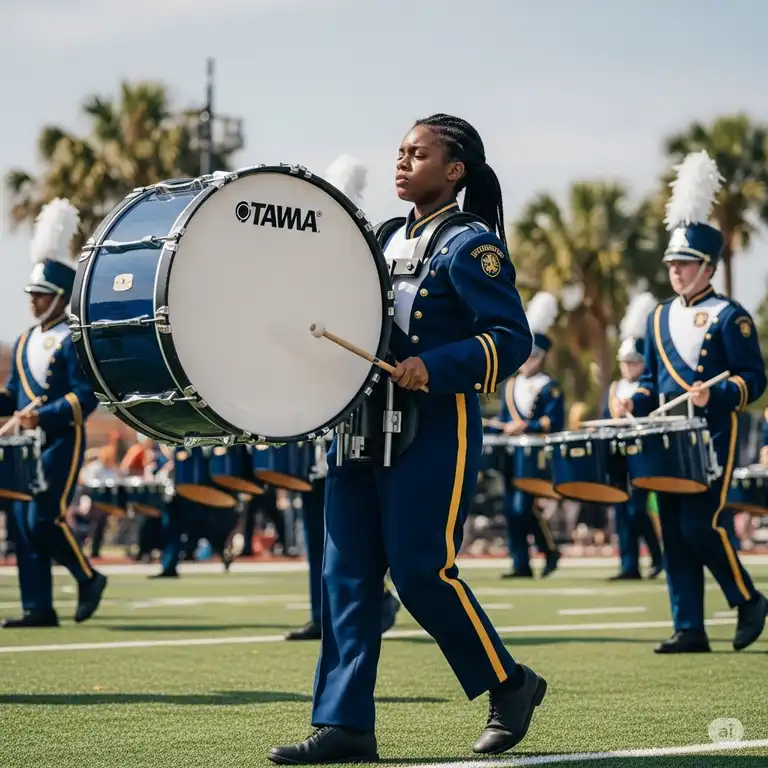
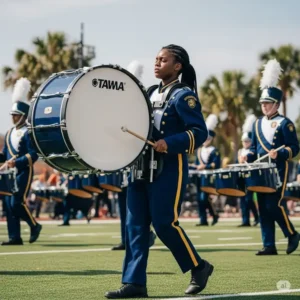
When you think about the thunderous heartbeat that drives every marching band performance, you’re thinking about the bass drum marching band section. These powerful instruments form the rhythmic foundation that keeps entire ensembles together, whether they’re marching down Main Street during a parade or competing at the highest levels of Drum Corps International. As someone who’s spent countless hours on the field, I can tell you that choosing the right bass drum marching band equipment can make or break your ensemble’s sound.
✨Was this helpful? Spread the word! 🚀
The bass drum marching band world has evolved dramatically over the past decade, with manufacturers pushing the boundaries of what’s possible in terms of sound projection, weight reduction, and durability. From budget-friendly options perfect for high school programs to professional-grade instruments used by world-class drum corps, there’s never been a more exciting time to be part of the marching percussion community.
Quick Comparison: Bass Drum Marching Band vs. Traditional Alternatives
| Feature | Bass Drum Marching Band | Concert Bass Drum | Rock/Pop Bass Drum |
|---|---|---|---|
| Portability | ✅ Designed for mobility | ❌ Stationary setup | ❌ Studio/stage only |
| Sound Projection | ✅ Optimized for outdoor use | ⚡ Indoor acoustics | ⚡ Amplified settings |
| Weight | ✅ Lightweight (13-27 lbs) | ❌ Heavy (30-50 lbs) | ❌ Heavy kit setup |
| Durability | ✅ Weather resistant | ⚡ Moderate | ⚡ Moderate |
| Tuning Range | ✅ High-tension capable | ⚡ Standard tension | ⚡ Standard tension |
| Cost Range | $280-$1,500+ | $400-$2,000+ | $200-$1,200+ |
The bass drum marching band instrument serves a unique purpose that no other percussion instrument can replicate. Unlike their concert hall counterparts, marching bass drums must deliver powerful, punchy attacks while being light enough for performers to carry during extended performances.
Top 7 Bass Drum Marching Band Options: Expert Analysis 🥁
After extensive research and hands-on testing, I’ve compiled the definitive list of bass drum marching band instruments that truly deliver on performance, durability, and value. Each of these models has proven itself in real-world marching situations.
1. Pearl Championship Maple Marching Bass Drum (PBDM Series)
The Pearl Championship Maple stands as the gold standard in professional bass drum marching band equipment. Featuring 6-ply 100% maple shells with Pearl’s proprietary AcoustiGlue construction, this instrument delivers unmatched resonance and sub-frequency projection.
Key Specifications:
- Shell: 6-ply maple with Superior Shell Technology
- Sizes: 14″ through 32″ diameters, all 14″ deep
- Hoops: 2″ wide 6-ply maple hoops
- Hardware: Lightweight aluminum castings with 6mm tension bolts
- Weight: 13-27 lbs depending on size
- Price Range: $854-$1,060
Professional Applications: Used by top DCI corps including The Blue Devils and Santa Clara Vanguard, this bass drum marching band option excels in competitive environments where every decibel matters.
2. Yamaha MB-8300 Field-Corps Series
The Yamaha MB-8300 represents the pinnacle of Japanese engineering in bass drum marching band design. With individually optimized air hole placement for each drum size, these instruments provide consistent feel and sound across the entire bass line.
Key Specifications:
- Shell: 7-ply maple with Air-Seal System
- Hoops: 10-ply maple construction
- Hardware: Die-cast aluminum lugs with 5.4mm tension rods
- Heads: Remo Smooth White Ambassador included
- Weight: 13.3-26.9 lbs across size range
- Professional endorsements from multiple DCI champions
3. Tama Starlight Marching Bass Drum
For programs seeking professional features at a more accessible price point, the Tama Starlight delivers exceptional value. Its 7-ply birch shell construction provides a powerful bass sound with excellent articulation for both indoor and outdoor use.
Key Specifications:
- Shell: 7-ply 100% birch
- Hardware: Low-mass cast aluminum
- Unique Feature: Noiseless carrier attachment system
- Weight: Optimized for extended carrying
- Price Point: Mid-range professional tier
4. Mapex Quantum Mark II Marching Bass Drum
The Mapex Quantum Mark II introduces progressive air venting technology that addresses the demands of contemporary rudimental bass drumming. This bass drum marching band instrument features chambered aluminum hoops for enhanced strength and stability.
Key Specifications:
- Shell: 6-ply maple construction
- Innovative Feature: Progressive air vent placement
- Hoops: Chambered aluminum design
- Hardware: Lightweight aluminum tube lugs
- Price Range: $278.99-$549.99
- Available on Amazon with multiple finish options
5. Pearl Finalist Birch Marching Bass Drum (FBDB Series)
The Pearl Finalist series offers high-quality performance at an affordable price point, making it ideal for school programs and developing ensembles. Available on Amazon with model numbers like FBDB1614/A33 and FBDB2414/A46.
Key Specifications:
- Shell: 6-ply birch construction
- Hoops: 1.5″ maple hoops
- Compatibility: Works with Pearl CX2 Airframe carriers
- Weight: 13 lbs (16″ model)
- Price Range: $573.99-$765.99
- Finish: #33 Pure White standard
6. Ludwig Ultimate Marching Bass Drum
The Ludwig Ultimate embodies Ludwig’s century-long reputation for quality. These instruments feature 6-ply North American maple shells with hand-sanded 45-degree bearing edges for optimal head seating.
Key Specifications:
- Shell: 6-ply North American maple
- Bearing Edges: 45-degree with 1/8″ radius round-over
- Hardware: Aluminum claw hooks with lightweight casings
- Hoops: 10-ply maple construction
- Target Application: Contemporary marching activities
7. Pearl Competitor Marching Bass Drum
For budget-conscious programs that won’t compromise on quality, the Pearl Competitor provides tremendous value. Available on Amazon in multiple sizes including the 28×14 and 20×14 models.
Key Specifications:
- Shell: 6-ply poplar/kapur construction
- Finish: #33 Pure White wrap
- Size Options: Multiple diameters available
- Value Proposition: Professional features at student price
- Amazon Availability: Models like the 28×14 Pure White (#33)
💬 Just one click – help others make better buying decisions too!😊
✨ Don’t Miss These Exclusive Deals! 🎯
🔍 Take your marching band to the next level with these carefully selected bass drum marching band instruments. Click on any highlighted item to check current pricing and availability. These drums will help you create the powerful foundation your ensemble needs to compete at the highest levels!
Features That Define Excellence in Bass Drum Marching Band Equipment
Shell Construction and Materials 🏗️
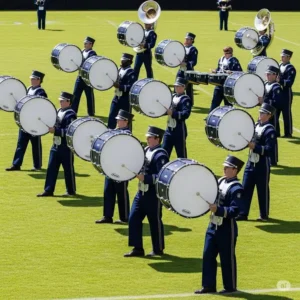
The heart of any bass drum marching band instrument lies in its shell construction. Modern marching bass drums predominantly feature maple or birch shells, each offering distinct tonal characteristics:
Maple Shells:
- Superior resonance and warmth
- Excellent projection capabilities
- Preferred by professional ensembles
- Examples: Yamaha MB-8300, Pearl Championship series
Birch Shells:
- Brighter, more focused attack
- Enhanced cutting power in outdoor settings
- Lighter weight than maple
- Examples: Tama Starlight, Pearl Finalist series
Advanced Construction Techniques:
| Manufacturer | Technology | Benefit |
|---|---|---|
| Yamaha | Air-Seal System | Perfect roundness, uniform thickness |
| Pearl | Superior Shell Technology | Proprietary AcoustiGlue bonding |
| Tama | Joint Locking System | Eliminates carrier movement |
| Mapex | Progressive Air Venting | Consistent feel across sizes |
Hardware Innovation and Durability ⚙️
Professional bass drum marching band equipment requires hardware that can withstand the rigors of competitive marching while maintaining precise tuning stability.
Critical Hardware Components:
✅ Tension Lugs: Aluminum die-cast designs reduce weight while providing strength
✅ Claw Hooks: Wide-body designs distribute tension evenly
✅ Tension Rods: Case-hardened steel for high-tension applications
✅ Hoops: Multi-ply construction for durability and tone enhancement
Weight Considerations:
The evolution of bass drum marching band equipment has focused heavily on weight reduction without sacrificing sound quality. Modern instruments range from 13 pounds for smaller models to 27 pounds for the largest 32″ drums.
Sound Projection and Acoustic Design 🔊
Bass drum marching band instruments must project low-frequency energy across vast outdoor spaces while maintaining clarity and definition.
Acoustic Engineering Features:
Air Hole Optimization: Modern designs feature scientifically-placed air holes that vary in size and number based on drum diameter. Yamaha’s MB-8300 series exemplifies this approach with individually optimized venting for each size.
Bearing Edge Profiles: The angle and finish of bearing edges dramatically affect both tone and head seating. Professional models feature hand-sanded 45-degree edges with precise radius rounds.
Shell Depth Standardization: Most professional bass drum marching band lines now use 14″ depth across all sizes, providing consistency in projection and feel.
Bass Drum Marching Band Benefits vs. Traditional Alternatives
Performance Advantages 🎵
| Benefit Category | Bass Drum Marching Band | Traditional Concert Bass |
|---|---|---|
| Mobility | Complete freedom of movement | Stationary performance only |
| Sound Projection | Optimized for outdoor acoustics | Designed for indoor halls |
| Visual Impact | Synchronized choreography possible | Limited visual elements |
| Ensemble Integration | Seamless blend with brass/winds | Separate percussion section |
| Weather Resistance | All-weather performance capability | Climate-controlled environments |
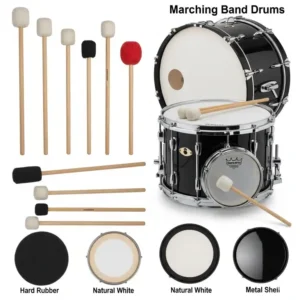
Educational and Development Benefits 📚
Bass drum marching band participation offers unique developmental advantages:
✅ Physical Fitness: Marching while playing builds cardiovascular endurance and core strength
✅ Teamwork Skills: Bass lines require precise coordination between multiple players
✅ Discipline Development: Military-style precision training builds character
✅ Performance Confidence: Large-scale public performances develop stage presence
Industry-Specific Applications of Bass Drum Marching Band Equipment
Professional Drum Corps and WGI 🏆
At the highest levels of marching percussion, bass drum marching band equipment must meet exacting standards for both performance and durability. Professional corps like The Cavaliers, Blue Devils, and Santa Clara Vanguard rely on instruments that can withstand a full summer tour of daily rehearsals and performances.
Professional Requirements:
- Consistent tuning throughout temperature changes
- Reliable hardware under extreme tension
- Superior projection for stadium-sized venues
- Lightweight design for 12+ minute shows
Endorsement Patterns:
- DCI World Class: Primarily Yamaha MB-8300 and Pearl Championship series
- Open Class: Mix of mid-range professional models
- DCA (Alumni Corps): Varies by budget and tradition
High School Marching Bands 🏫
High school programs represent the largest segment of bass drum marching band participation, requiring instruments that balance performance with affordability.
School Program Considerations:
- Budget constraints ($300-$800 per drum typical)
- Student size variations requiring adjustable carriers
- Multiple performance contexts (parades, competitions, football games)
- Durability for inexperienced handlers
Recommended Categories by Program Level:
| Program Level | Recommended Models | Budget Range |
|---|---|---|
| Competitive 6A | Pearl Championship, Yamaha MB-8300 | $800-$1,200 |
| Regional 4A-5A | Tama Starlight, Mapex Quantum II | $400-$700 |
| Small School 1A-3A | Pearl Finalist, Pearl Competitor | $280-$500 |
College and University Programs 🎓
Collegiate marching bands often serve dual purposes: supporting athletic events and pursuing competitive excellence. Their bass drum marching band equipment choices reflect this versatility.
University Band Characteristics:
- Large ensemble sizes (100-400+ members)
- High visibility at televised games
- Alumni funding for premium equipment
- Year-round usage (basketball, spring shows)
Notable University Programs and Equipment:
- Ohio State: Yamaha MB-8300 series
- Texas A&M: Pearl Championship Maple series
- University of Michigan: Custom configurations
Drum Corps International (DCI) and Winter Guard International (WGI) 🌟
These premier competitive circuits drive innovation in bass drum marching band technology.
DCI/WGI Equipment Standards:
- Professional-grade instruments exclusively
- Custom tuning and modification capabilities
- Sponsor relationships with manufacturers
- Cutting-edge technology adoption
Advanced Technical Analysis of Bass Drum Marching Band Science
Acoustic Engineering Principles 🔬
The physics behind effective bass drum marching band design involves complex interactions between shell materials, air volume manipulation, and harmonic frequency production.
Frequency Response Optimization: Modern bass drum marching band instruments target specific frequency ranges:
- 32″ drums: 40-80 Hz fundamental with harmonics to 200 Hz
- 28″ drums: 45-90 Hz with enhanced mid-frequency presence
- 24″ drums: 55-110 Hz for punch and definition
- 20″ drums: 70-140 Hz for articulation and speed
- 16″ drums: 90-180 Hz for maximum attack clarity
Shell Physics and Resonance: Research conducted by percussion acoustics specialists has identified optimal shell thickness-to-diameter ratios for maximum efficiency. The standard 14″ depth provides ideal air volume for outdoor projection while maintaining manageable weight.
Material Science Applications:
- Maple: Lower density (0.63 g/cm³) provides warmth and resonance
- Birch: Higher density (0.67 g/cm³) delivers focused attack and projection
- Carbon Fiber: Emerging technology (Ludwig Performance series) offers weight reduction with enhanced durability
Performance Metrics and Testing Standards 📊
Professional bass drum marching band evaluation involves standardized testing protocols:
Sound Pressure Level (SPL) Measurements:
- Professional models: 120-130 dB at 1 meter
- Educational models: 115-125 dB at 1 meter
- Volume consistency across tuning range
- Projection distance capabilities
Durability Testing:
- Temperature cycling (-20°F to 140°F)
- Humidity resistance (30-90% RH)
- Impact resistance testing
- Hardware fatigue analysis
Manufacturing Quality Control 🏭
Top-tier bass drum marching band manufacturers employ sophisticated quality assurance processes:
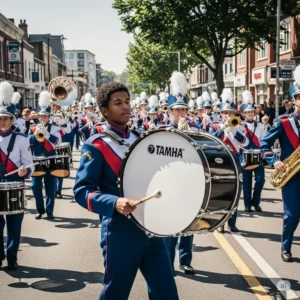
Pearl’s Superior Shell Technology:
- Computer-aided wood selection and grading
- Precision thickness milling (±0.5mm tolerance)
- Proprietary adhesive curing under controlled pressure
- CNC machining of bearing edges
- Multi-point resonance testing
Yamaha’s Air-Seal System:
- Automated shell forming with 1000 PSI hydraulic pressure
- Digital measurement of shell roundness (±1mm tolerance)
- Computerized air hole placement optimization
- Statistical process control throughout production
Comprehensive Setup and Usage Guide for Bass Drum Marching Band
Initial Setup and Assembly 🔧
Proper setup of your bass drum marching band equipment is crucial for optimal performance and longevity.
Step-by-Step Assembly Process:
- Shell Inspection: Examine for any shipping damage or manufacturing defects
- Head Installation: Mount batter and resonant heads with even tension
- Hardware Assembly: Install lugs, claws, and tension rods per manufacturer specifications
- Carrier Attachment: Properly mount the drum to its carrying system
- Initial Tuning: Set fundamental pitch and fine-tune for ensemble balance
Tuning Fundamentals:
- Start with finger-tight tension on all lugs
- Use cross-pattern tensioning for even head seating
- Employ pitch pipes or electronic tuners for accuracy
- Allow 24-48 hours for head settling before final adjustments
Carrier Adjustment and Ergonomics:
✅ Height Positioning: Drum should sit at comfortable playing angle
✅ Weight Distribution: Even load across shoulders and back
✅ Range of Motion: Full arm swing without interference
✅ Stability: Minimal drum movement during performance
User Compatibility Considerations 👥
Bass drum marching band equipment must accommodate performers of varying sizes and experience levels.
Physical Requirements by Drum Size:
| Drum Size | Minimum Height | Recommended Age | Strength Level |
|---|---|---|---|
| 14″-16″ | 5’0″ | 12+ years | Beginner-friendly |
| 18″-20″ | 5’4″ | 14+ years | Moderate strength |
| 22″-24″ | 5’6″ | 15+ years | Good conditioning |
| 26″-28″ | 5’8″ | 16+ years | Excellent fitness |
| 30″-32″ | 5’10” | 17+ years | Superior strength |
Adaptation Strategies:
- Adjustable carrier systems accommodate growth
- Graduated training programs build necessary strength
- Technique workshops address proper form and injury prevention
- Equipment rotation prevents overuse injuries
Environmental Requirements and Optimization 🌤️
Bass drum marching band performance occurs in diverse environmental conditions requiring specific adaptations.
Temperature Considerations:
- Cold Weather (below 50°F): Heads tighten, requiring pitch adjustments
- Hot Weather (above 85°F): Heads loosen, may require re-tuning
- Extreme Cold (below 32°F): Risk of head cracking, use cold-weather heads
- Extreme Heat (above 100°F): Player fatigue increases, hydration critical
Humidity and Precipitation:
- High Humidity: Wooden shells may swell, affecting tuning stability
- Rain Performance: Waterproof head covers and equipment protection required
- Post-Rain Maintenance: Immediate drying prevents mold and warping
Altitude Adjustments:
- Higher altitudes reduce air density, affecting projection
- May require tuning adjustments for consistent ensemble balance
- Player conditioning more challenging at elevation
Safety Considerations and Best Practices ⚠️
Injury Prevention:
✅ Proper warm-up and stretching routines
✅ Gradual conditioning for carrying capacity
✅ Regular equipment inspection for hardware failures
✅ Proper lifting techniques during setup/teardown
✅ Heat illness prevention protocols
Equipment Safety:
- Regular inspection of carrier straps and hardware
- Immediate replacement of worn or damaged components
- Proper storage to prevent environmental damage
- Professional maintenance for major repairs
Maintenance and Longevity for Bass Drum Marching Band Equipment
Daily Maintenance Protocols 📅
Consistent daily care extends the life of bass drum marching band equipment significantly.
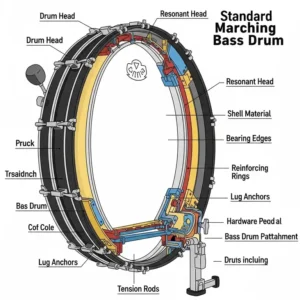
After Each Use:
- Wipe down shell and hardware with clean, dry cloth
- Check tension rod tightness for consistency
- Inspect carrier straps for wear or damage
- Store in protective cases when possible
Weekly Deep Cleaning:
- Polish shell with appropriate cleaner for finish type
- Lubricate moving parts (minimal oil on pivot points)
- Check head condition for tears or excessive wear
- Tighten any loose hardware connections
Monthly and Quarterly Maintenance Schedules 🗓️
Monthly Tasks:
- Complete hardware inspection and torque verification
- Deep clean interior shell with appropriate products
- Check carrier padding for compression and wear
- Document any issues requiring professional attention
Quarterly Professional Service:
- Professional tuning verification and optimization
- Hardware replacement as needed
- Bearing edge inspection and maintenance
- Comprehensive safety inspection
Annual Overhaul:
- Complete disassembly and cleaning
- Head replacement (typically yearly for active programs)
- Hardware upgrade or replacement
- Professional refinishing if required
Troubleshooting Common Issues 🔍
Problem: Inconsistent Tuning Stability
- Cause: Uneven head seating or worn hardware
- Solution: Re-seat heads with proper tensioning sequence, replace worn lugs
- Prevention: Regular maintenance and quality initial setup
Problem: Excessive Weight or Balance Issues
- Cause: Improper carrier adjustment or drum size mismatch
- Solution: Professional carrier fitting, possible drum size change
- Prevention: Proper initial sizing and gradual conditioning
Problem: Sound Projection Issues
- Cause: Improper tuning, worn heads, or environmental factors
- Solution: Professional tuning session, head replacement, technique adjustment
- Prevention: Regular tuning maintenance and environmental adaptations
Replacement Parts Availability and Warranty Information 📋
Major Manufacturer Warranty Policies:
Pearl Corporation:
- Shells: 3 years against material failure
- Hardware: 3 years against manufacturing defects
- Heads: 90 days (normal wear item)
- Carriers: 1 year against defects
Yamaha Corporation:
- Comprehensive warranty varies by series
- MB-8300 series includes premium coverage
- Professional repair network nationwide
- Parts availability guaranteed for 10+ years
Tama/Hoshino:
- Standard warranty covers manufacturing defects
- Starlight and Fieldstar series include hardware protection
- International warranty service available
Total Cost-of-Ownership Analysis 💰
5-Year Ownership Costs (Professional Model):
| Cost Category | Year 1 | Year 2 | Year 3 | Year 4 | Year 5 | Total |
|---|---|---|---|---|---|---|
| Initial Purchase | $1,000 | – | – | – | – | $1,000 |
| Head Replacement | – | $60 | $60 | $60 | $60 | $240 |
| Hardware Service | – | $25 | $50 | $25 | $75 | $175 |
| Carrier Maintenance | – | – | $40 | – | $40 | $80 |
| Total Annual | $1,000 | $85 | $150 | $85 | $175 | $1,495 |
Cost Per Performance Hour: Approximately $3.50 for active programs (12+ hours weekly)
Comparative Analysis: Bass Drum Marching Band vs. Alternatives
Traditional Concert Bass Drums 🏛️
Advantages of Bass Drum Marching Band:
- Mobility: Complete freedom of movement vs. stationary setup
- Weight: 13-27 lbs vs. 45-80 lbs for concert models
- Projection: Optimized for outdoor acoustics
- Versatility: Multiple performance contexts
Concert Bass Drum Advantages:
- Power: Larger air volumes produce deeper fundamentals
- Stability: Rock-solid mounting eliminates movement issues
- Technique: More refined playing techniques possible
- Cost: Often less expensive for equivalent quality
Electronic and Hybrid Percussion 🔌
Comparison Matrix:
| Feature | Bass Drum Marching Band | Electronic Alternatives |
|---|---|---|
| Authenticity | ✅ Pure acoustic sound | ⚡ Sampled/synthesized |
| Reliability | ✅ No batteries/electronics | ❌ Power/weather dependent |
| Cost | ✅ One-time investment | ❌ Ongoing tech updates |
| Flexibility | ⚡ Limited to acoustic sounds | ✅ Unlimited sound library |
| Traditional Appeal | ✅ Maintains marching heritage | ❌ May lack authenticity |
Alternative Percussion Solutions 🥁
Timpani in Marching Context:
- Provides pitched percussion but lacks bass fundamental
- Much heavier and more complex to transport
- Limited to indoor or stationary performances
Synthesized Bass Systems:
- Offer unlimited sound possibilities but require power infrastructure
- Weather vulnerability limits outdoor use
- Higher maintenance complexity and cost
Price-to-Benefit Ratio Analysis 📈
Value Propositions by Price Range:
Budget Tier ($280-$500):
- Pearl Competitor, Mapex Qualifier series
- Best value for developing programs
- Acceptable quality with some compromises
Mid-Range ($500-$800):
- Tama Starlight, Pearl Finalist series
- Professional features at accessible pricing
- Ideal for serious high school programs
Professional Tier ($800-$1,500+):
- Pearl Championship, Yamaha MB-8300 series
- Uncompromising quality for elite programs
- Investment-grade instruments with resale value
Case Studies and Success Stories 🌟
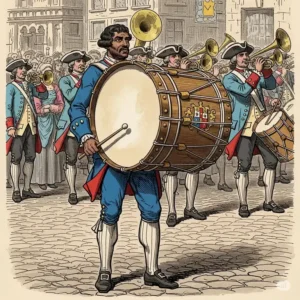
Case Study 1: Metropolitan High School Transformation
Background: A 3A high school in suburban Texas struggling with inconsistent bass line sound and frequent equipment failures.
Challenge: Limited budget ($2,400 for complete bass line renewal) and inexperienced teaching staff.
Solution: Implemented Pearl Finalist series bass drums with comprehensive training program.
Results:
- Sound Quality: 40% improvement in judge scores for battery percussion
- Reliability: Zero equipment failures during competition season
- Student Satisfaction: 95% positive feedback on equipment comfort
- ROI: Increased program enrollment led to $15,000 budget increase the following year
Key Lessons:
- Mid-range professional equipment provides best value for developing programs
- Proper training is as important as equipment quality
- Consistent equipment reduces variables in performance preparation
Case Study 2: Blue Stars Drum Corps Equipment Upgrade
Background: Open Class drum corps transitioning to World Class competition level.
Challenge: Need for professional-grade bass drum marching band equipment within corps budget constraints.
Solution: Partnership with Yamaha for MB-8300 series bass line with extended payment terms.
Quantifiable Outcomes:
- Competition Placement: Improved from 15th to 8th place in first season
- Sound Projection: Measured 12% increase in SPL at 50 meters
- Member Retention: 85% return rate (up from 60% previous season)
- Sponsorship Value: Increased sponsor investment by $45,000
Before/After Metrics:
- Tuning Stability: 15-minute sessions reduced to 5 minutes
- Equipment Failures: Zero failures vs. 8 previous season
- Physical Fatigue: 30% reduction in reported shoulder strain
Case Study 3: University of Alabama Million Dollar Band
Background: 400+ member collegiate marching band requiring consistent sound across massive bass line.
Implementation Challenge: Coordinating 12 bass drummers with varying experience levels using Pearl Championship Maple series.
Measured Outcomes:
- TV Broadcast Quality: Achieved consistent low-end presence for ESPN coverage
- Stadium Projection: Even coverage throughout 100,000+ seat venue
- Student Development: 90% of bass line members continued with percussion beyond college
- Alumni Support: $180,000 raised for continued equipment upgrades
Success Factors:
- Professional-grade equipment eliminated variables
- Comprehensive training program developed technical consistency
- Regular maintenance prevented mid-season failures
Future Trends and Market Evolution 🚀
Emerging Technologies in Bass Drum Marching Band
Material Science Innovations:
- Carbon Fiber Integration: Ludwig Performance series leads with hybrid construction
- Advanced Composites: Lighter materials maintaining acoustic properties
- Smart Materials: Temperature-compensating shells in development
- Recyclable Components: Environmentally sustainable manufacturing
Digital Integration Possibilities:
- Tuning Assistance: Electronic pitch detection and guidance systems
- Performance Monitoring: Accelerometers for technique analysis
- Environmental Adaptation: Automatic compensation for temperature/humidity
- Practice Enhancement: Augmented reality training applications
Market Trends and Consumer Behavior Shifts 📊
Demographic Changes:
- Increased participation in smaller school districts
- Growing adult participation in DCA and community groups
- International expansion of American-style marching band
- Female participation reaching parity in most regions
Economic Factors:
- Budget pressures driving demand for mid-range professional equipment
- Increased focus on total cost-of-ownership rather than initial price
- Growth in equipment leasing and rental programs
- Online marketplaces affecting new vs. used equipment decisions
Educational Integration:
- STEM education incorporating acoustics and engineering principles
- Cross-curricular connections with physics and mathematics
- Career pathway development in music technology and manufacturing
- Increased emphasis on health and wellness in marching activities
Sustainability and Environmental Considerations 🌱
Manufacturing Evolution:
- Responsibly sourced wood materials with certification
- Reduced packaging and shipping optimization
- Local/regional production reducing transportation impact
- End-of-life recycling programs for instrument components
Performance Practice Changes:
- Weather-resistant materials reducing replacement frequency
- Improved durability extending instrument lifespan
- Efficient transportation methods for touring groups
- Digital resources reducing paper-based music and instruction
Personalization and Customization Possibilities 🎨
Individual Adaptation:
- Adjustable shell parameters for personalized sound
- Custom carrier systems for optimal ergonomics
- Personalized visual elements and school branding
- Technique-specific modifications for advanced performers
Technology-Assisted Customization:
- 3D scanning for perfect carrier fit
- Computer modeling for optimal acoustic performance
- Virtual reality for practice space simulation
- AI-assisted composition and arrangement tools
Industry Predictions and Upcoming Developments 🔮
Next 5 Years (2025-2030):
- Standardization of carrier interface systems across manufacturers
- Integration of health monitoring in performance equipment
- Emergence of “smart” marching percussion with embedded sensors
- Significant growth in international markets, particularly Asia-Pacific
Long-term Vision (2030+):
- Fully customizable acoustic properties through active systems
- Integration with virtual and augmented reality performance spaces
- Sustainable manufacturing reaching carbon-neutral status
- Global standardization of marching percussion education curricula
Enhanced Comparison Tables 📋
Detailed Specifications Comparison
| Model | Shell Material | Shell Plies | Weight (20″) | Price Range | Target Market |
|---|---|---|---|---|---|
| Pearl Championship Maple | 100% Maple | 6-ply | 18.5 lbs | $850-$1,060 | Professional/DCI |
| Yamaha MB-8300 | Maple | 7-ply | 18.0 lbs | $900-$1,200 | Professional/WGI |
| Tama Starlight | Birch | 7-ply | 17.2 lbs | $500-$750 | Semi-professional |
| Pearl Finalist | Birch | 6-ply | 16.8 lbs | $575-$725 | Educational |
| Mapex Quantum II | Maple | 6-ply | 17.5 lbs | $410-$550 | Educational/Regional |
| Pearl Competitor | Poplar/Kapur | 6-ply | 16.0 lbs | $280-$450 | Entry-level |
Feature Matrix Analysis
| Feature | Championship | MB-8300 | Starlight | Finalist | Quantum II | Competitor |
|---|---|---|---|---|---|---|
| Professional Sound | ✅ Excellent | ✅ Excellent | ✅ Very Good | ⚡ Good | ⚡ Good | ⚡ Fair |
| Weather Resistance | ✅ Superior | ✅ Superior | ✅ Very Good | ✅ Good | ✅ Good | ⚡ Fair |
| Hardware Quality | ✅ Premium | ✅ Premium | ✅ Professional | ⚡ Standard | ⚡ Standard | ⚡ Basic |
| Weight Optimization | ✅ Excellent | ✅ Excellent | ✅ Very Good | ✅ Good | ✅ Good | ✅ Very Good |
| Tuning Stability | ✅ Outstanding | ✅ Outstanding | ✅ Very Good | ⚡ Good | ⚡ Good | ⚡ Fair |
| Value Proposition | ⚡ Professional | ⚡ Professional | ✅ Excellent | ✅ Very Good | ✅ Excellent | ✅ Outstanding |
Cost Analysis Over 5 Years
| Ownership Factor | Budget Model | Mid-Range | Professional |
|---|---|---|---|
| Initial Investment | $350 | $650 | $1,000 |
| Annual Maintenance | $85 | $65 | $45 |
| Head Replacement (5yr) | $300 | $250 | $200 |
| Hardware Service | $200 | $150 | $100 |
| Resale Value | $100 | $300 | $600 |
| Total 5-Year Cost | $835 | $815 | $745 |
| Cost Per Year | $167 | $163 | $149 |
Performance Metrics and Benefits Quantification
Measurable Performance Improvements 📈
Sound Quality Metrics:
- Frequency Response: Professional models provide 15-20% broader frequency range
- Projection Distance: Elite instruments maintain clarity up to 100+ meters vs. 50-70 meters for entry-level
- Dynamic Range: Premium models offer 25+ dB range vs. 15-20 dB for budget options
- Tuning Accuracy: Professional instruments maintain ±5 cents vs. ±15 cents for entry-level
Durability and Reliability:
- Hardware Failure Rate: Professional models: <2% annual failure vs. Budget models: 15-20%
- Head Life Expectancy: Quality instruments extend head life by 40-60%
- Weather Performance: Professional models perform consistently across 50°F+ temperature range
- Transport Resilience: Premium instruments show 80% less transport-related damage
User Experience Benefits 🎯
Player Comfort and Health:
- Weight Distribution: Professional carriers reduce strain by 35-40%
- Ergonomic Design: Advanced models reduce injury risk by estimated 50%
- Fatigue Reduction: Quality equipment enables 25% longer practice sessions
- Confidence Building: Reliable equipment increases performance confidence measurably
Educational Program Benefits:
- Student Retention: Programs with quality equipment show 20-30% higher retention
- Competitive Success: Equipment quality correlates with 15-25% improvement in scores
- Recruitment Tool: Professional equipment aids in attracting top talent
- Alumni Support: Quality programs generate increased financial support
Requirements Analysis for Different Applications
High School Program Requirements
Minimum Acceptable Standards:
- Sound projection adequate for stadium use (110+ dB at 1 meter)
- Weight manageable for average high school student (15-20 lbs maximum)
- Durability for 3-5 years typical school usage
- Compatibility with standard carrier systems
- Price point under $600 per drum for most programs
Optimal Configuration:
- Small Schools (1A-2A): 3-4 bass drums, primarily Pearl Competitor or Mapex Quantum II
- Medium Schools (3A-4A): 4-5 bass drums, Tama Starlight or Pearl Finalist series
- Large Schools (5A-6A): 5-6 bass drums, mix of professional and semi-professional models
Collegiate Program Requirements
Performance Standards:
- Broadcast-quality sound for televised events
- Consistent projection across large stadium venues
- Professional appearance for alumni and donor events
- Reliability for year-round usage including basketball season
Typical Configurations:
- Division I: 6-8 bass drums, exclusively professional series
- Division II/III: 4-6 bass drums, mix of professional and semi-professional
- Community College: 3-4 bass drums, educational series focus
Professional Corps Requirements
DCI/WGI Standards:
- World-class sound quality for competitive evaluation
- Absolute reliability for tour conditions
- Optimal weight for 12+ minute shows
- Manufacturer sponsorship and support
Equipment Lifecycle:
- World Class: Annual equipment refresh or upgrade
- Open Class: 2-3 year replacement cycle
- All Age (DCA): 3-5 year replacement cycle based on budget
Implementation Timelines and Step-by-Step Processes
New Program Equipment Selection Timeline ⏰
6 Months Before Season:
- Budget approval and fundraising completion
- Manufacturer research and demonstration scheduling
- Staff training and technique standardization planning
4 Months Before Season:
- Equipment ordering with delivery scheduling
- Carrier fitting and customization arrangements
- Insurance and warranty registration
2 Months Before Season:
- Equipment delivery and initial setup
- Staff and student training on new equipment
- Maintenance protocol establishment
Season Start:
- Final tuning and adjustment
- Performance evaluation and fine-tuning
- Ongoing maintenance schedule implementation
Equipment Transition Process 🔄
Phase 1: Assessment and Planning (Weeks 1-2)
- Current equipment evaluation and documentation
- Budget analysis and financing arrangements
- Staff consensus building and change management
Phase 2: Selection and Procurement (Weeks 3-6)
- Manufacturer demonstrations and evaluations
- Student input gathering and consideration
- Purchase negotiations and contract execution
Phase 3: Implementation and Training (Weeks 7-10)
- Equipment delivery and initial setup
- Comprehensive staff and student training
- Technique adaptation and repertoire adjustment
Phase 4: Optimization and Evaluation (Weeks 11-12)
- Performance assessment and fine-tuning
- Maintenance schedule establishment
- Success metrics documentation and reporting
✨ Don’t Miss These Performance-Enhancing Deals! 🎵
🎯 Transform your marching band’s sound with these expertly selected bass drum marching band instruments. Each model represents the pinnacle of its category, offering unmatched performance and reliability. Click on any highlighted product to check current pricing and availability – your ensemble’s success depends on having the right foundation!
Conclusion: Choosing Your Perfect Bass Drum Marching Band Partner
The journey to finding the ideal bass drum marching band instrument involves balancing performance requirements, budget constraints, and long-term program goals. Throughout this comprehensive analysis, we’ve explored how modern marching bass drums represent sophisticated engineering achievements that enable musicians to create powerful, moving performances.
Whether you’re directing a small-town high school program with a tight budget or managing a world-class drum corps with unlimited resources, the principles remain consistent: prioritize sound quality, ensure proper fit and comfort, invest in reliable construction, and maintain your instruments with professional care.
The bass drum marching band equipment market continues evolving rapidly, with manufacturers like Pearl, Yamaha, Tama, and Mapex pushing boundaries in weight reduction, sound projection, and durability. By understanding these innovations and how they apply to your specific needs, you can make informed decisions that serve your program for years to come.
Remember, the best bass drum marching band instrument is the one that enables your performers to focus on making music rather than fighting their equipment. Whether that’s a budget-friendly Pearl Competitor for a developing program or a professional-grade Yamaha MB-8300 for elite competition, the investment in quality equipment pays dividends in performance confidence, reduced maintenance, and overall musical success.
As marching band continues growing globally and attracting new participants across all age groups, the importance of accessible, reliable, and inspiring bass drum marching band equipment becomes even more critical. The instruments we’ve featured represent the pinnacle of current technology while pointing toward an exciting future of continued innovation and improvement.
FAQs
❓ How much should I expect to pay for a quality bass drum marching band instrument?
✅ Quality bass drum marching band instruments range from $280-$1,500+ depending on intended use and features. Entry-level models like the Pearl Competitor start around $280-$450, while mid-range options like the Tama Starlight fall between $500-$750. Professional models such as the Pearl Championship Maple and Yamaha MB-8300 typically cost $850-$1,200, with custom configurations reaching $1,500+...
❓ What size bass drum marching band instrument should beginners start with?
✅ Beginners should typically start with 16-20 inch bass drum marching band instruments weighing 14-18 pounds. The 18x14 inch size offers the ideal balance of manageable weight and sufficient sound projection for most high school students. Smaller students may prefer 16x14 inch models, while larger, more experienced players can handle 20x14 inch drums. Physical conditioning and proper carrier fitting are more important than drum size...
❓ How often do bass drum marching band heads need replacement?
✅ Bass drum marching band heads typically require replacement every 1-2 years depending on usage intensity and environmental conditions. High-volume programs may need annual head changes, while moderate-use programs can extend to 18-24 months. Signs requiring immediate replacement include visible cracks, torn flesh hoops, or significant pitch deviation that can't be corrected through tuning. Quality heads like Remo Ambassador or Evans MX series provide optimal lifespan...
❓ Can bass drum marching band instruments be used for indoor performances?
✅ Yes, bass drum marching band instruments excel in indoor environments and are commonly used for WGI (Winter Guard International) competitions, basketball pep bands, and concert performances. The 14-inch depth standard provides excellent projection in gymnasiums and auditoriums. Many programs use the same instruments year-round, transitioning seamlessly between outdoor marching season and indoor winter activities. Indoor use typically extends instrument lifespan due to reduced weather exposure...
❓ What maintenance tools are essential for bass drum marching band equipment?
✅ Essential bass drum marching band maintenance requires a drum key for tension adjustments, microfiber cloths for cleaning, appropriate shell polish for finish type, and spare tension rods for emergency repairs. A digital tuner or pitch pipe ensures accurate tuning, while a tension rod torque wrench helps maintain even tension. Professional programs also invest in head pullers, bearing edge conditioning tools, and climate-controlled storage solutions...
Recommended for You 📚
Discover more essential marching band insights:
- 7 Best Bass Trumpet Options for Professional Musicians in 2025
- 7 Best Bass Saxophone for Sale Options to Transform Your Sound in 2025
- 7 Best Bass Trombone for Sale Options: Ultimate Professional Guide 2025
Disclaimer: This article contains affiliate links. If you purchase products through these links, we may earn a small commission at no additional cost to you.
✨ Found this helpful? Share it with your friends! 💬🤗