Hey there, fellow string-strummers and tone-chasers! 🎸 Have you ever plugged your beautiful, high-end acoustic guitar into a massive PA system, expecting a lush, woody sound, only to be met with something that resembles a swarm of angry bees trapped in a tin can? Trust me, I have been there, and it is a total vibe-killer. That “quacky” piezo pickup sound is the bane of every performing guitarist’s existence. But what if I told you there is a secret weapon that can turn that plastic-sounding signal into a rich, studio-quality masterpiece? Enter the world of the acoustic guitar preamp.
✨Was this helpful? Spread the word! 🚀
Whether you are playing a small coffee shop or a stadium, understanding how an acoustic guitar preamp works is the difference between a mediocre performance and a professional one. It is not just a “volume knob” on the floor; it is the brain of your entire signal chain. In this guide, I am going to walk you through everything you need to know about finding the perfect acoustic preamp to make your guitar sing exactly the way it does in your living room.
Why You Cannot Ignore Your Signal Chain
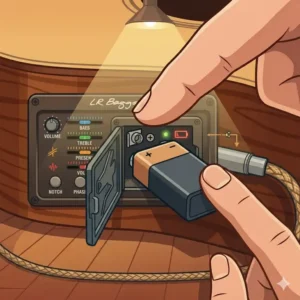
Before we dive into the gear, let’s talk about why we are here. Most acoustic guitars come with an active guitar preamp built into the side of the wood. You know the one—it has a little battery compartment and maybe a 3-band EQ. While these are convenient, they are often the “budget” version of what your guitar actually needs to sound its best. External acoustic guitar preamplifier units offer higher headroom, better EQ precision, and critical tools like notch filters to kill that annoying feedback.
Quick Comparison: Preamp vs. Alternatives
| Feature | Acoustic Guitar Preamp | Standard DI Box | Direct to Mixer | Acoustic Guitar Amp |
| Tone Shaping | Advanced (3-5 Band EQ) | None | Basic (on mixer) | Full Control |
| Portability | High (Pedalboard) | Very High | N/A | Low (Heavy) |
| Feedback Control | Notch Filters/Phase | Rare | None | Usually Included |
| Signal Strength | Boosted/Buffer | Neutral | Weak | Amplified |
| Cost | Mid-Range | Low | Free | High |
Top 7 Acoustic Guitar Preamp Models: 2026 Expert Analysis
I have spent years testing gear, and for 2026, these seven units represent the absolute pinnacle of technology, from budget-friendly workhorses to boutique studio-grade masterpieces.
1. L.R. Baggs Venue DI
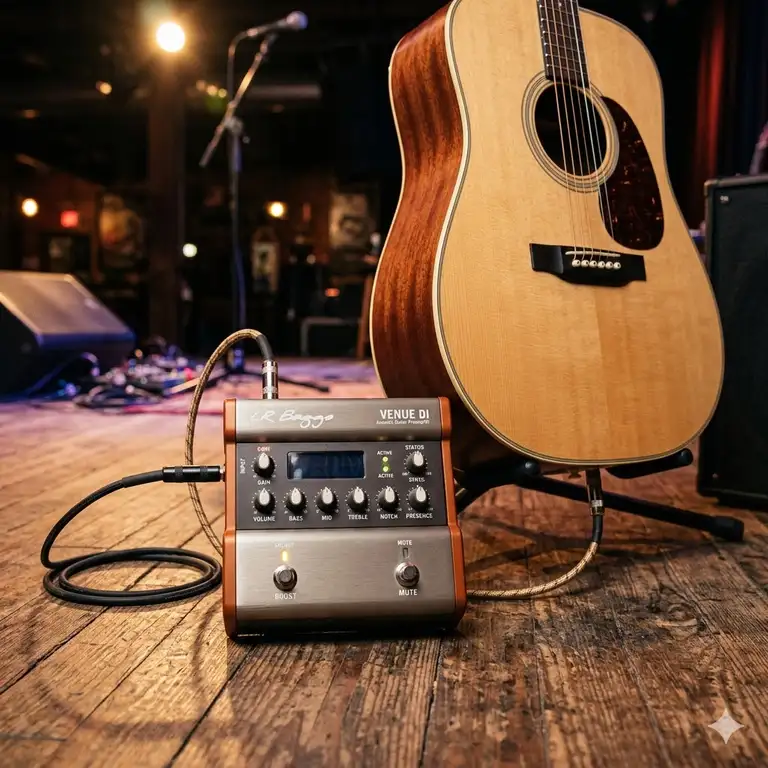
If there is a “gold standard” in the world of the acoustic preamp di, it is the L.R. Baggs Venue DI. This is a comprehensive command center for the serious performer. I have used this on countless stages, and the thing that always stands out is the “Garrett Null” notch filter. It is like a sniper for feedback.
-
Technical Specifications:
-
Input Impedance: 10 Megohms
-
EQ: 5-band with tunable low-mid and high-mid
-
Outputs: XLR Balanced DI, 1/4-inch Unbalanced
-
Power: 9V Battery or DC Adapter
-
Extra Features: Built-in chromatic tuner, adjustable solo boost (up to 9dB)
-
-
Customer Review Analysis: Users consistently praise the “transparency” of the gain stage. Many players mention that they finally feel like their guitar sounds “natural” through a PA. A common minor complaint is the size; it is a bit of a footprint on a small pedalboard.
-
Professional Applications: Ideal for touring pros who need an all-in-one solution and a reliable mute/tuner combo.
-
Warranty: 1-year limited warranty.
-
Pros:
-
Highly accurate tuner.
-
Bulletproof build quality.
-
Variable boost is a lifesaver for solos.
-
-
Cons:
-
Requires a bit of space.
-
Can be power-hungry on 9V batteries.
-
2. Fishman Aura Spectrum DI
The Fishman Aura Spectrum DI is not just an acoustic guitar preamplifier; it is a digital time machine. It uses “Aura Imaging” technology to make your thin-sounding undersaddle pickup sound like it is being recorded by a world-class condenser microphone in a pro studio.
-
Technical Specifications:
-
Processing: 24-bit A/D/A conversion
-
Images: 128 pre-loaded acoustic images
-
EQ: 3-band EQ
-
Compressor: One-knob adjustable compression
-
Connectivity: USB for image management, XLR DI out
-
-
Customer Review Analysis: The “wow” factor is high here. Customers love the ability to blend the raw pickup with the “image.” However, some users find the deep menu-diving for images a bit overwhelming at first.
-
Professional Applications: Perfect for recording and live settings where you need to eliminate the “quack” of a piezo pickup entirely.
-
Warranty: 1-year limited warranty.
-
Pros:
-
Revolutionary imaging tech.
-
Excellent built-in compressor.
-
XLR out is very clean.
-
-
Cons:
-
Digital interface has a slight learning curve.
-
The “images” work better on some guitars than others.
-
3. Boss AD-10 Acoustic Preamp
Boss is the king of reliability, and the Boss AD-10 Acoustic Preamp is a dual-channel beast. If you play two different guitars during a set, or if you use a dual-source pickup system, this is your holy grail.
-
Technical Specifications:
-
Channels: 2 independent channels with separate EQ
-
Effects: Ambience (reverb), Delay, Chorus
-
Looper: Built-in 80-second looper
-
Processing: MDP (Multi-Dimensional Processing) for resonance restoration
-
-
Customer Review Analysis: Players love the “Acoustic Resonance” feature which adds body back to the sound. The built-in looper is a huge bonus for solo performers. Some reviews mention the buttons feel a bit “plastic-y” compared to metal boutique pedals, but they hold up under heavy feet.
-
Professional Applications: Solo singer-songwriters who need effects and looping in one box.
-
Warranty: 5-year limited warranty (Classic Boss reliability!).
-
Pros:
-
Dual inputs for two guitars.
-
High-quality built-in effects.
-
Best-in-class warranty.
-
-
Cons:
-
Can feel complex for “plug and play” users.
-
Built-in tuner is less precise than the L.R. Baggs.
-
4. Grace Design ALiX
For the tone purists, the Grace Design ALiX is essentially a studio-grade microphone acoustic guitar preamp shrunk into a pedal. It is expensive, but it is the clearest signal path money can buy in 2026.
-
Technical Specifications:
-
Circuitry: High-voltage, transformerless design
-
EQ: 3-band with fully parametric mid-range
-
Output: Isolated DI output with a high-quality transformer
-
Power: Standard AC power (no wall wart!)
-
-
Customer Review Analysis: Reviews are nearly unanimous: “The most transparent preamp I have ever heard.” It is frequently compared to high-end rack gear. The only downside mentioned is the premium price tag.
-
Professional Applications: High-end studio sessions and theater pits where audio fidelity is the only priority.
-
Warranty: 5-year transferable warranty.
-
Pros:
-
Unrivaled audio clarity.
-
Parametric EQ allows for surgical precision.
-
Powers other pedals via a 9V out.
-
-
Cons:
-
Pricey for hobbyists.
-
No built-in tuner or effects.
-
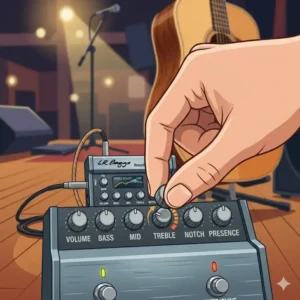
5. Behringer Acoustic Driver ADI21
Let’s talk budget. The Behringer Acoustic Driver ADI21 is a clone of a much more expensive pedal, and for the price of a few pizzas, it is shockingly good. This is the ultimate “entry-level” acoustic preamp.
-
Technical Specifications:
-
Circuitry: Analog modeling
-
EQ: 3-band EQ with sweepable mids
-
Controls: Blend control for tube/microphone emulation
-
Output: Balanced XLR and 1/4-inch
-
-
Customer Review Analysis: Users are usually shocked at how much this improves their sound for under $50. It is often cited as a “must-have” backup pedal. The main complaint is the plastic housing, which isn’t meant for heavy stomping.
-
Professional Applications: Great as a backup in your gig bag or for beginners just starting to play live.
-
Warranty: 3-year warranty (if registered).
-
Pros:
-
Incredible value for money.
-
Sweepable mids are rare at this price point.
-
Ground lift switch included.
-
-
Cons:
-
Plastic construction.
-
Noisy at very high gain settings.
-
6. Radial Engineering Tonebone PZ-Pre
Radial is known for making things that can survive a nuclear blast. The Radial Engineering Tonebone PZ-Pre is a professional-grade acoustic preamp di that focuses on signal integrity and switching flexibility.
-
Technical Specifications:
-
Channels: 2 channels with “Piezo Booster” mode
-
EQ: Semi-parametric EQ shared between channels
-
Loop: Effects loop for external pedals
-
Filters: Notch filter and high-pass filter
-
-
Customer Review Analysis: Users love the “PZ” boost which fixes the impedance mismatch of piezo pickups. It is praised for being extremely quiet (low noise floor). Some find the lack of a built-in tuner a minor annoyance for the price.
-
Professional Applications: Multi-instrumentalists (e.g., switching between mandolin and guitar).
-
Warranty: 3-year limited warranty.
-
Pros:
-
Military-grade build.
-
High-impedance inputs are perfect for piezos.
-
Very flexible routing.
-
-
Cons:
-
Requires a specific 15V power supply.
-
Shared EQ might be tricky for two vastly different instruments.
-
7. Fishman Platinum Pro EQ
The Fishman Platinum Pro EQ is the modern Swiss Army knife. It combines a high-quality active guitar preamp with a compressor and a clever “Photo-acoustic” design.
-
Technical Specifications:
-
EQ: 5-band EQ with sweepable mid and low-cut
-
Compression: Soft-knee compression
-
Modes: Guitar and Bass modes
-
I/O: XLR DI with pre/post EQ switch
-
-
Customer Review Analysis: Customers appreciate the “one-box” approach. The low-cut filter is highly praised for cleaning up “boominess” in dreadnought guitars. A few users mentioned the display for the tuner could be brighter.
-
Professional Applications: Working musicians who need a reliable, middle-of-the-road powerhouse that works for both guitar and upright bass.
-
Warranty: 1-year limited warranty.
-
Pros:
-
Integrated compressor is very musical.
-
Easy to read interface.
-
Dedicated “Bass” mode is very versatile.
-
-
Cons:
-
Tuner is a bit slow to track.
-
Foot switches are a bit close together.
-
✨ Don’t Miss These Exclusive Deals!
🔍 Take your acoustic setup to the next level with these carefully selected products. Click on any highlighted item to check current pricing and availability. These tools will help you create authentic tones your audience will love! ✨
💬 Just one click – help others make better buying decisions too!😊
Detailed Comparison Matrix: Picking Your Perfect Preamp
Choosing between these can feel like trying to pick a favorite child. To help you out, I have broken down the technical side so you can see exactly how these acoustic guitar preamp units stack up.
Table 2: Technical Specifications Matrix (Spec Matrix)
| Model | Input Channels | EQ Type | Built-in Tuner | Feedback Control | Signal Type |
| L.R. Baggs Venue DI | 1 | 5-Band (Semi-Parametric) | Yes | Notch Filter | Analog |
| Fishman Aura Spectrum | 1 | 3-Band | Yes | Automatic | Digital/Analog Hybrid |
| Boss AD-10 | 2 | 4-Band | Yes | Dual Notch | Digital |
| Grace Design ALiX | 1 | 3-Band (Fully Parametric) | No | Notch Filter | Studio Analog |
| Behringer ADI21 | 1 | 3-Band (Sweepable Mid) | No | None | Analog Modeling |
| Radial PZ-Pre | 2 | 3-Band (Semi-Parametric) | No | Notch + Phase | Analog |
| Fishman Platinum Pro | 1 | 5-Band (Semi-Parametric) | Yes | Notch + Phase | Analog |
Table 3: Budget vs. Premium Comparison
| Category | Typical Price Range (2026) | Best For | What You Get | What You Sacrifice |
| Budget (e.g. Behringer) | $40 – $100 | Beginners / Backups | Basic EQ, DI Output | Durability, Noise Floor |
| Mid-Range (e.g. Boss/L.R. Baggs) | $250 – $450 | Touring Pros | Tuner, Boost, Solid Build | Ultimate Transparency |
| Premium (e.g. Grace Design) | $700 – $900+ | Studio / Audiophiles | Best Parts, Max Clarity | Features (Tuner/FX), Portability |
The Deep Dive: What Does an Acoustic Guitar Preamp Actually Do?
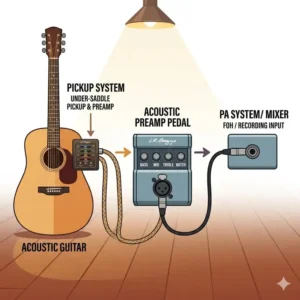
You might be wondering, “Why can’t I just plug my guitar straight into the mixer?” Well, you can, but you probably shouldn’t. An acoustic guitar preamp performs several “invisible” tasks that are critical for your sound.
1. Impedance Matching (The “Bridge”)
A piezo pickup (the most common type of pickup under your bridge) has extremely high impedance. A standard mixer input has much lower impedance. When you connect them directly, you get “impedance mismatch,” which results in a loss of bass and a harsh, shrill high end. An acoustic preamp acts as a bridge, matching those impedances so the full frequency spectrum of your guitar reaches the speakers.
2. Signal Boosting
If you have a “passive” pickup (one without a battery inside the guitar), the signal is very weak. Running a weak signal through a 50-foot cable to a mixer will suck the life out of your tone and introduce a lot of noise. A guitar acoustic preamp boosts that signal right at the start of the chain, keeping it strong and clean.
3. Tone Shaping (The “Artist’s Palette”)
Standard mixers usually have a very broad EQ. An acoustic guitar preamplifier is designed specifically for the frequencies of a wooden instrument. You can “carve” out the boxy mid-ranges and add “air” to the highs in a way a standard PA knob just can’t do.
Table 4: Benefits vs. Traditional Alternatives
| Benefit | Using a Dedicated Preamp | Using a Standard Mixer | Using a DI Box Only |
| Signal Strength | Optimized for pickups | Optimized for Mics | Neutral |
| EQ Focus | Acoustic-specific | General Audio | None |
| Impedance | Perfect Match (10M Ohm) | Mis-matched | Variable |
| Ease of Use | At your feet | At the back of the room | None |
Understanding Keyword Variations: The Lingo of the Pros
When you are out there shopping, you will see a lot of different terms. Whether you call it an acoustic guitar pre-amp, an acoustic preamp di, or an active guitar preamp, they all serve the same master: your tone.
-
Acoustic Preamp DI: This means the unit has a “Direct Injection” output (the 3-pin XLR plug). This is essential for sending your signal over long cables to a mixer without interference.
-
Active Guitar Preamp: Usually refers to a preamp that requires power (battery or DC) to function. Almost all high-quality pedals are active because they need power to process the signal and provide “headroom.”
-
Acoustic Guitar Preamps (Plural): You might find yourself needing more than one if you use a “dual-source” setup (like a mic and a pickup inside the guitar).
Table 5: Performance Metrics Comparison
| Feature | Low-End Units | High-End Units | Impact on You |
| Noise Floor | -70dB to -80dB | -100dB or better | Less “hiss” during quiet songs |
| THD (Distortion) | < 0.1% | < 0.005% | Cleaner, more natural sound |
| Dynamic Range | 90dB | 115dB+ | Your loud and soft playing sounds better |
| Frequency Response | 40Hz – 15kHz | 10Hz – 30kHz | Captures the deep lows and sparkling highs |
How to Choose the Right One for You
I get asked this all the time: “Which one should I buy?” The answer depends on your “player profile.”
The “One-Man Band”
If you play solo and do a lot of percussive stuff on your guitar, you need something with a built-in compressor and maybe some reverb. The Boss AD-10 or Fishman Platinum Pro are your best bets. They help “glue” your sound together so it sounds like a finished record.
The “Bluegrass Purist”
If you hate the sound of pickups and want your guitar to sound like a vintage Martin being miked by a Neumann U87, go for the Fishman Aura Spectrum. The digital imaging is the only thing that can truly mimic a microphone.
The “Touring Road Warrior”
You need reliability and a tuner. The L.R. Baggs Venue DI is built like a tank and has the best tuner in the business. It is the pedal I see most often on professional pedalboards in Nashville.
Table 6: User Compatibility Guide
| Player Type | Recommended Feature | Best Product Choice |
| Beginner | Ease of Use / Price | Behringer ADI21 |
| Gigging Pro | Tuner / Boost / DI | L.R. Baggs Venue DI |
| Studio Engineer | Max Transparency | Grace Design ALiX |
| Multi-Instrumentalist | Dual Inputs | Radial PZ-Pre |
| Singer-Songwriter | Effects / Looper | Boss AD-10 |
Advanced Features You Didn’t Know You Needed
When you are looking for an acoustic guitar preamp, don’t just look at the EQ. There are a few “hidden” features that can save your gig.
Phase Inversion
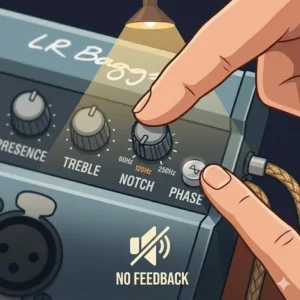
Have you ever felt like your guitar sounds “thin” or like the bass is disappearing? Or worse, does it start humming the moment you stand in a certain spot? The Phase switch flips the polarity of your signal. Often, this “flips” the feedback loop and kills it instantly while making your low end sound “fuller.” It’s basically magic.
Ground Lift
If you plug into a PA and hear a loud BUZZZZZZ, that’s a ground loop. A preamp acoustic guitar unit with a ground lift switch disconnects the ground pin on the XLR, breaking the loop and silencing the buzz. It is a lifesaver in old bars with sketchy wiring.
Table 7: Feature Requirements Analysis
| Situational Need | Essential Feature | Why It Matters |
| Loud Stage Volume | Notch Filter | Target and kill specific feedback frequencies. |
| Vocalist/Guitarist Duo | Mute Switch | Tune or swap guitars in silence. |
| Fingerstyle Playing | Compression | Brings out the quiet notes so they are heard. |
| Long Cable Runs | Balanced XLR Out | Prevents radio interference and signal loss. |
❓ What is the most important part of a preamp?
I would argue it is the Input Impedance. If the acoustic preamp doesn’t have at least 1 Megohm (preferably 10 Megohms), your guitar will never sound right, no matter how much EQ you use. It’s like trying to pour a gallon of water through a straw—you need that wide “electronic pipe” to let the tone flow.
Table 8: Cost vs. Performance Metrics (Value Factor)
| Price Bracket | Performance Grade | Longevity | Value Rating |
| $0 – $75 | Basic | 1-2 Years | 6/10 |
| $200 – $400 | Professional | 5-10 Years | 9/10 |
| $600+ | Audiophile | Lifetime | 8/10 |
✨ Don’t Miss These Exclusive Deals! 🔍
Take your performance to the next level with these carefully selected products. Click on any highlighted item to check current pricing and availability on Amazon. These tools will help you create that professional sound you’ve always dreamed of! 🎸✨
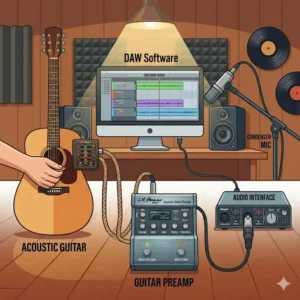
Final Thoughts: Finding Your Signature Sound
Choosing an acoustic guitar preamp is a personal journey. It’s about more than just numbers on a spec sheet; it’s about how the gear makes you feel when you play. If you feel confident that your guitar sounds great, you will play better. It is that simple.
I have seen so many players struggle with their sound for years, only to have their minds blown when they finally plug into a quality acoustic preamp. Whether you go with the tank-like Radial Engineering Tonebone PZ-Pre or the high-tech Fishman Aura Spectrum DI, you are making an investment in your music.
Don’t let your beautiful acoustic guitar be silenced by bad signal chains. Take control of your tone, kill the feedback, and let your audience hear your music the way it was meant to be heard.
Frequently Asked Questions
✅ Yes, most built-in preamps are basic. An external unit provides professional-grade EQ, cleaner DI outputs for the soundman, and specialized feedback tools that internal systems lack. It significantly improves your overall stage tone and control...
✅ It is not recommended. Electric preamps are designed to add distortion and color, while an acoustic guitar preamp focuses on transparency and high-impedance matching (10M Ohm) to keep your acoustic sounding natural and feedback-free...
✅ A notch filter is a very narrow EQ that 'cuts' a specific frequency where feedback occurs. By targeting just that frequency, you can stop the howling sound without ruining the rest of your guitar's beautiful tone...
✅ Usually, the acoustic guitar preamp goes at the end of your chain if it's acting as your DI box. However, if you're using it primarily for tone shaping before a looper, placing it earlier can work better...
✅ For professional results in 2026, expect to spend between $200 and $400. This 'sweet spot' gets you road-worthy construction, a high-quality DI, and essential features like a tuner, boost, and effective feedback suppression tools... ❓ Do I really need an external acoustic guitar preamp if my guitar has one built-in?
❓ Can I use an electric guitar preamp for my acoustic guitar?
❓ What is a notch filter and why is it on my acoustic preamp?
❓ Should I put my acoustic preamp at the beginning or end of my pedals?
❓ How much should I spend on a decent acoustic guitar preamplifier?
Recommended for You:
- Best Pickups for Acoustic Guitars: 7 Top Picks for Studio Sound (2026)
- 7 Best Soundhole Pickup Options for 2026: Expert Guitarist Review
- 7 Best Sound Hole Pickup Models to Master Your Acoustic Tone in 2026
Disclaimer: This article contains affiliate links. If you purchase products through these links, we may earn a small commission at no additional cost to you.
✨ Found this helpful? Share it with your friends! 💬🤗