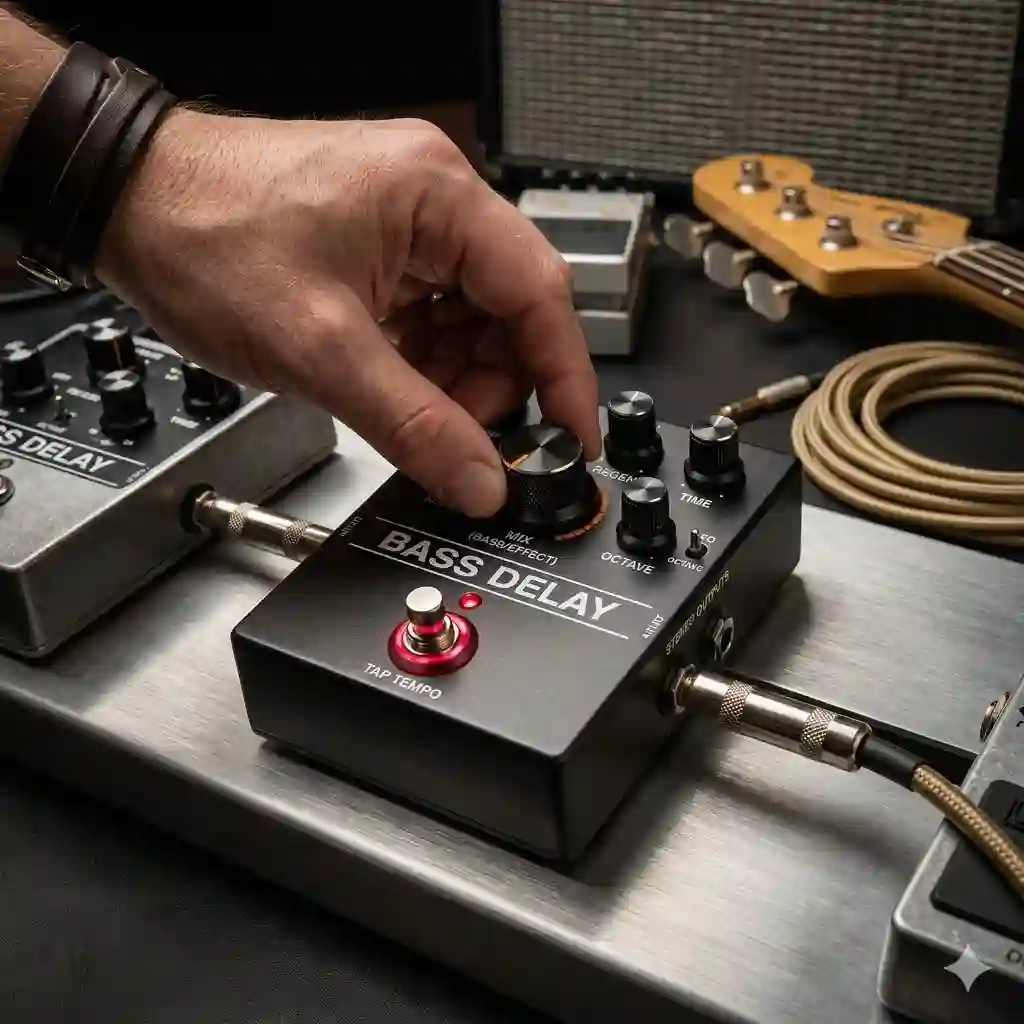
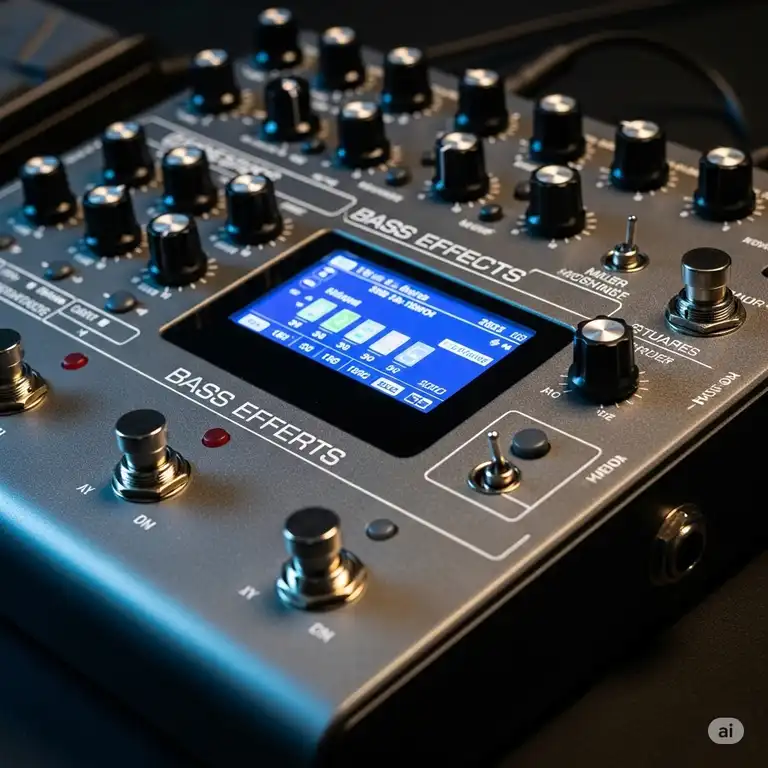
When I first started exploring bass multi effects pedals, I was blown away by how much these compact powerhouses could transform my sound. Whether you’re a bedroom bassist or touring professional, finding the right bass multi effects pedal can completely revolutionize your musical expression and performance capabilities.
✨Was this helpful? Spread the word! 🚀
The modern bass multi effects landscape offers incredible diversity, from budget-friendly options perfect for beginners to professional-grade systems that rival entire studio setups. These sophisticated units combine bass guitar multi effects processing with amp modeling, cabinet simulation, and comprehensive tone-shaping tools that would have been unimaginable just a decade ago.
Quick Comparison: Bass Multi Effects vs. Traditional Single Pedals
| Feature | Bass Multi Effects Pedal | Traditional Single Pedals |
|---|---|---|
| Cost Efficiency | $80-$1500 for 50+ effects | $100-$300 per individual pedal |
| Space Requirements | Single compact unit | Multiple pedals require large pedalboard |
| Power Consumption | One power supply | Multiple power supplies needed |
| Preset Capability | 50-1000+ saveable presets | Manual knob adjustments only |
| Portability | Highly portable | Heavy, bulky setup |
| Learning Curve | Moderate to steep | Individual pedal learning |
| Tone Flexibility | Unlimited combinations | Limited by individual pedals owned |
| Professional Integration | Built-in DI, USB, MIDI | Requires additional gear |
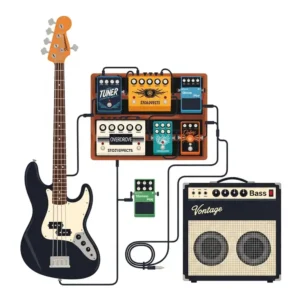
The versatility and convenience of modern bass multi effects pedals make them essential tools for today’s bassists. Rather than carrying around a massive pedalboard with individual stompboxes, you can achieve professional-quality sounds from a single unit that fits in your gig bag.
Understanding Bass Multi Effects Technology
Digital Signal Processing Evolution
Modern bass multi effects pedals utilize advanced DSP (Digital Signal Processing) chips that can simultaneously run multiple high-quality algorithms. These processors have become incredibly powerful, with some units featuring dual-core processors that rival computer capabilities. The latest generation of bass multi effects units can process 24-bit/96kHz audio with latency as low as 1-2 milliseconds, making them virtually indistinguishable from analog processing for most practical applications.
The algorithm development has reached remarkable sophistication levels. Component-level modeling analyzes every resistor, capacitor, and transistor in classic bass gear to recreate authentic vintage tones. This technology extends beyond simple amp simulation to include the subtle interactions between different circuit elements, power supply characteristics, and even the aging effects of vintage components.
Professional Integration Features
Contemporary bass guitar multi effects units serve as complete signal processing centers. USB connectivity enables direct recording to digital audio workstations, while many units function as audio interfaces with multiple input/output capabilities. MIDI implementation allows seamless integration with other studio gear, synchronized effects changes, and comprehensive automation possibilities.
Cabinet impulse response loading has become standard in premium units, allowing bassists to load custom speaker cabinet simulations created in professional studios. This technology provides authentic amp-like tone when going direct to PA systems or recording interfaces, eliminating the need for microphone placement and room acoustics considerations.
Top 7 Bass Multi Effects Pedals: Expert Reviews
1. BOSS GT-1B Bass Effects Processor – Best Overall Value 🏆
Price Range: $319-$350
Key Specifications:
- 90 effect types across all categories
- 99 factory presets + 99 user presets
- 32-second looper with overdub capability
- 7-hour battery life (4 AA batteries)
- Compact aluminum housing (13″ x 8.5″ x 2.5″)
- Weight: 2.2 lbs
The BOSS GT-1B represents the perfect balance of professional features and accessibility. This bass multi effects pedal delivers BOSS’s flagship sound engine in an incredibly compact package that fits comfortably in any gig bag’s accessory pocket.
Advanced Features Analysis:
- MDP (Multi-Dimensional Processing): Advanced effects that respond to playing dynamics
- Adaptive Focus Method: 24-bit conversion with enhanced signal-to-noise ratio
- USB Audio Interface: Direct recording capability with zero-latency monitoring
- BOSS Tone Central Integration: Cloud-based preset sharing and professional patches
The GT-1B excels particularly in live performance scenarios. Its three footswitches provide immediate access to patch changes, tuner activation, and looper control. The built-in expression pedal handles volume, wah, and pitch effects seamlessly. For bassists requiring external control, the EXP/CTL input accepts up to two additional footswitches or an expression pedal.
Customer Review Analysis: Professional bassists consistently praise the GT-1B’s reliability and sound quality. The SVT amp simulation receives particular acclaim for its authentic tube saturation and presence. Many users report the compression algorithms rival dedicated studio compressors, while the octave effects provide tracking accuracy superior to many specialized octave pedals.
Pros:
✅ Professional BOSS sound quality
✅ Exceptional battery life for mobile use
✅ Comprehensive effect selection
✅ Robust build quality for touring
✅ Intuitive interface design
Cons:
❌ Limited simultaneous effect slots
❌ Small display can be challenging in bright light
❌ No cabinet impulse response loading
2. Line 6 Helix LT – Premium Professional Choice 🎯
Price Range: $999-$1,299
Key Specifications:
- 104+ high-definition effects models
- 62 amplifier simulations + 37 speaker cabinets
- Dual-SHARC processing with 123dB dynamic range
- 1,024 preset locations across 8 setlists
- 6.2″ color LCD display with touch-sensitive controls
- Four stereo signal paths per preset
The Line 6 Helix LT stands as the premium choice for bassists demanding professional studio and stage capabilities. While primarily marketed to guitarists, its extensive bass-specific algorithms and cabinet models make it exceptionally suited for bass applications.
Technical Excellence: The Helix LT’s dual-DSP architecture provides computational power that exceeds most dedicated studio processors. HX modeling technology captures not just frequency response but dynamic playing characteristics, power supply sag, and component aging effects. The result is remarkably authentic amp behavior that responds naturally to playing technique variations.
Bass-Specific Features:
- Dedicated Bass Amp Models: Authentic recreations of SVT, B-15, and modern high-gain bass amps
- Low-Frequency Optimization: Specialized algorithms for bass frequency ranges
- Cabinet Modeling: 16 microphone types with adjustable positioning for bass applications
- Effects Routing: Complex signal path capabilities for parallel processing
Professional Applications: The Helix LT serves equally well in studio recording and live performance environments. Its comprehensive I/O section includes XLR outputs for direct PA connection, effects loops for analog pedal integration, and MIDI implementation for synchronized operation with other gear.
Pros:
✅ Unmatched sound quality and authenticity
✅ Extensive editing capabilities
✅ Regular firmware updates with new models
✅ Professional-grade build quality
✅ Comprehensive connectivity options
Cons:
❌ Steep learning curve for beginners
❌ Higher price point
❌ Large footprint compared to compact units
3. Zoom B1X Four – Best Budget Option 💰
Price Range: $80-$120
Key Specifications:
- 70+ effects including boutique emulations
- 9 classic bass amp models (Fender, Ampeg, Aguilar)
- Built-in expression pedal for real-time control
- 50 memory locations for custom patches
- 30-second looper with overdub capability
- 68 built-in drum patterns
The Zoom B1X Four proves that exceptional bass multi effects capability doesn’t require a premium price tag. This compact unit delivers professional-quality sounds that rival units costing several times more.
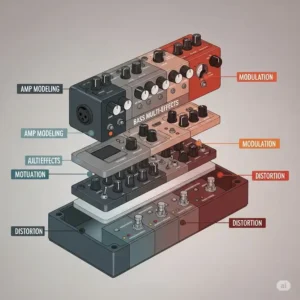
Exceptional Value Analysis: Despite its budget positioning, the B1X Four includes features typically found in premium units. The built-in expression pedal alone represents significant value, as quality expression pedals often cost $50-100 separately. The inclusion of amp modeling, effects processing, looping, and rhythm programming creates a complete practice and performance solution.
Effect Quality Assessment: Zoom’s effects algorithms have reached impressive sophistication levels. The octave effects track accurately across the bass frequency range, while the envelope filters provide classic synth-bass tones. Compression algorithms offer studio-quality dynamics processing, and the overdrive effects maintain low-end clarity while adding harmonic richness.
Practice and Performance Features:
- Auto-Save Function: Automatically backs up patches and settings during editing
- Pre-Select Mode: Silent patch changes for seamless live performance
- Stomp Mode: Individual effect on/off control
- Rhythm Integration: Drum patterns synchronize with looper for complete backing tracks
Pros:
✅ Incredible value for money
✅ Built-in expression pedal
✅ Easy-to-use interface
✅ Comprehensive effect selection
✅ Excellent for beginners
Cons:
❌ Plastic construction feels less premium
❌ Limited simultaneous effects
❌ Small display screen
4. Tech 21 Bass Fly Rig v2 – Analog Purist Choice 🎸
Price Range: $329-$379
Key Specifications:
- All-analog SansAmp tube emulation circuitry
- Dual-channel configuration with independent drive controls
- 4-band active EQ with ±12dB gain range
- FET-based compression with vintage character
- Effects loop for external pedal integration
- XLR output with speaker simulation
The Tech 21 Bass Fly Rig v2 represents the analog approach to bass guitar multi effects processing. Built around Tech 21’s legendary SansAmp technology, this unit delivers warm, organic tones that respond naturally to playing dynamics.
Analog Circuit Design: Unlike digital units, the Bass Fly Rig v2 processes your signal through carefully designed analog circuits. This approach provides zero latency, natural compression characteristics, and harmonic saturation that many bassists find more musical than digital processing. The tube emulation circuitry captures the complex interactions between preamp stages, tone stacks, and power amplifier sections.
SansAmp Technology Deep Dive: Tech 21’s SansAmp circuits analyze and recreate the entire signal path of classic bass amplifiers. Rather than simple EQ curves, the technology models impedance interactions, frequency-dependent gain structures, and harmonic generation patterns. The result is authentic amp behavior that responds to input level changes and playing technique variations.
Two-Channel Versatility:
- Channel A: Clean to moderate overdrive tones
- Channel B: Higher gain settings for aggressive rock/metal tones
- Independent Controls: Separate drive and level for each channel
- Seamless Switching: Silent channel changes via footswitch
Professional Features: The effects loop placement allows optimal integration of time-based effects after the preamp section. The XLR output includes speaker simulation for direct PA connection, while the 1/4″ output can feed traditional bass amplifiers.
Pros:
✅ Authentic analog tone quality
✅ Zero-latency processing
✅ Legendary SansAmp sound
✅ Professional build quality
✅ Effects loop integration
Cons:
❌ Limited effect variety compared to digital units
❌ No preset storage capability
❌ Higher price for limited effects
5. Darkglass Microtubes B7K Ultra V2 – Boutique Premium Choice 💎
Price Range: $449-$599
Key Specifications:
- Dual-section design: clean preamp + independently switchable overdrive
- 4-band EQ with switchable mid-frequency centers
- Cabinet simulation with user-loadable impulse responses
- USB connectivity for Darkglass Suite software integration
- Aux input for practice with backing tracks
- Dedicated headphone output with cabinet simulation
The Darkglass Microtubes B7K Ultra V2 represents the pinnacle of boutique bass multi effects pedal design. This Finnish-engineered unit combines pristine clean tones with crushing overdrive capabilities that have become synonymous with modern metal and progressive rock.
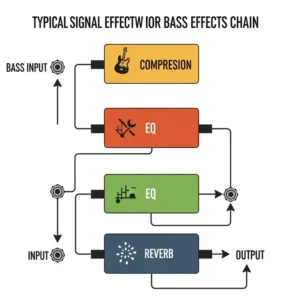
Boutique Engineering Excellence: Darkglass Electronics applies high-end audio engineering principles to bass pedal design. The B7K Ultra V2 features premium components throughout the signal path, including low-noise op-amps, high-quality capacitors, and precision resistors. The result is exceptional signal-to-noise ratio and transparent tone processing.
Microtubes Overdrive Character: The B7K’s overdrive circuit provides unique harmonic saturation that enhances note definition and presence without compromising low-end clarity. The Attack and Grunt switches offer precise control over harmonic content, allowing fine-tuning of overdrive character to match different playing styles and musical contexts.
Digital Integration Features:
- Cabinet Simulation: User-loadable impulse responses via USB
- Darkglass Suite: Comprehensive editing software for advanced parameters
- MIDI Compatibility: Program change and continuous controller support
- Preset Management: Cloud-based preset sharing and backup
Professional Applications: The B7K Ultra V2 serves equally well as a studio preamp, live performance tool, and practice amplifier replacement. Its balanced XLR output provides professional-grade direct injection capabilities, while the cabinet simulation ensures consistent tone regardless of monitoring systems.
Pros:
✅ Exceptional build quality and components
✅ Unique and highly sought-after overdrive tone
✅ Advanced digital integration
✅ Professional recording capabilities
✅ Regular software updates and support
Cons:
❌ Premium pricing
❌ Overdrive-focused design may not suit all styles
❌ Requires external power supply (no battery option)
6. Source Audio Aftershock Bass Distortion – Customization King 🔧
Price Range: $150-$220
Key Specifications:
- Three distinct overdrive engines: Tube, Heavy, and Fuzz
- Neuro app compatibility with 40+ downloadable algorithms
- Dual-engine operation for parallel or series processing
- Stereo inputs and outputs for complex routing
- MIDI compatibility with Neuro Hub integration
- Universal bypass selection (analog buffered or true bypass)
The Source Audio Aftershock represents the future of customizable bass multi effects processing. Through its innovative Neuro ecosystem, this pedal transforms from a simple three-mode overdrive into a comprehensive distortion laboratory with virtually unlimited sonic possibilities.
Neuro Ecosystem Innovation: Source Audio’s Neuro platform revolutionizes effects pedal customization. The free mobile app and desktop editor provide access to extensive parameter control, algorithmic downloads, and community preset sharing. Users can modify every aspect of effects processing, from EQ curves to compression characteristics.
Dual-Engine Architecture: The Aftershock’s dual-processing capability enables sophisticated effects layering. Users can run two different overdrive algorithms simultaneously, process them in parallel for blend effects, or route them in series for cascaded saturation. Stereo operation allows separate processing for each output channel.
Algorithm Library:
- Vintage Tube Overdrive: Classic warm saturation algorithms
- Modern High-Gain: Contemporary metal and rock distortion models
- Fuzz Collection: Germanium and silicon fuzz recreations
- Specialty Effects: Unique algorithms not available elsewhere
Community and Sharing: The Neuro platform includes a global community where users share custom presets and discoveries. Professional artists contribute signature settings, while community members experiment with novel parameter combinations. This collaborative approach continuously expands the pedal’s capabilities.
Pros:
✅ Incredible customization capabilities
✅ Continuously expanding algorithm library
✅ Professional dual-engine processing
✅ Active community support
✅ Excellent value for versatility provided
Cons:
❌ Requires smartphone/computer for full functionality
❌ Can be overwhelming for users preferring simple operation
❌ Distortion-focused (limited clean effects)
7. Electro-Harmonix Bass9 Bass Machine – Guitar-to-Bass Converter 🎯
Price Range: $180-$220
Key Specifications:
- Nine different bass emulation modes
- Polyphonic tracking with superior dynamics
- Independent Effect and Dry volume controls
- Two-parameter control system for each mode
- Separate Effect and Dry outputs for dual-amp setups
- Standard EHX 9.6DC-200mA power supply included
The Electro-Harmonix Bass9 occupies a unique niche in the bass multi effects world. Rather than processing bass guitar signals, it transforms electric guitar into convincing bass tones without requiring special pickups or instrument modifications.
Polyphonic Conversion Technology: The Bass9 utilizes advanced polyphonic tracking algorithms that analyze guitar input and synthesize corresponding bass tones. This technology maintains harmonic relationships between multiple notes, enabling chord playing and complex passages that traditional octave pedals cannot handle effectively.
Nine Bass Emulation Modes:
- Precision: Classic Fender Precision Bass character
- Longhorn: Danelectro 6-string bass emulation
- Fretless: Both electric and upright fretless bass tones
- Synth: Taurus synthesizer-style bass pedal sounds
- Virtual: Adjustable body density and neck length parameters
- Bowed: Classical bowed upright bass simulation
- Split Bass: Bass notes on lower strings, guitar on higher strings
- 3:03: Roland TB-303 bass synthesizer emulation
- Flip-Flop: EHX Octave Multiplexer-style sub-octave generation
Creative Applications: The Bass9 enables guitarists to provide bass parts during solo performances or recording sessions. The Split Bass mode proves particularly valuable, allowing simultaneous bass and chord playing from a single instrument. This capability opens new compositional and arrangement possibilities.
Pros:
✅ Unique guitar-to-bass conversion capability
✅ Polyphonic tracking handles complex passages
✅ Multiple authentic bass character emulations
✅ Dual output system for creative routing
✅ Immediate access to bass tones without instrument switching
Cons:
❌ Limited appeal for dedicated bass players
❌ Tracking artifacts with rapid playing styles
❌ Not a replacement for actual bass guitar in all contexts
Comprehensive Feature Comparison
| Model | Price Range | Effects Count | Amp Models | Looper | Battery Power | USB/MIDI |
|---|---|---|---|---|---|---|
| BOSS GT-1B | $319-$350 | 90 | Included | 32 sec | 7 hours | USB Audio |
| Line 6 Helix LT | $999-$1,299 | 104+ | 62 + 37 cabs | 60 sec | No | USB + MIDI |
| Zoom B1X Four | $80-$120 | 70+ | 9 | 30 sec | 18 hours | USB |
| Tech 21 Bass Fly Rig v2 | $329-$379 | 6 analog | 2 channels | No | No | No |
| Darkglass B7K Ultra V2 | $449-$599 | Clean + OD | Preamp only | No | No | USB |
| Source Audio Aftershock | $150-$220 | 40+ via app | No | No | No | USB + MIDI |
| EHX Bass9 | $180-$220 | 9 bass modes | Emulations | No | No | No |
💬 Just one click – help others make better buying decisions too!😊
✨ Ready to Transform Your Bass Sound? 🎸
🔥 These carefully selected bass multi effects pedal options represent the best available technologies and value propositions in 2025. Whether you’re seeking budget-friendly versatility or boutique-quality precision, each pedal offers unique advantages for different playing styles and applications. Click on any highlighted product name to check current pricing and availability – your perfect bass tone awaits!
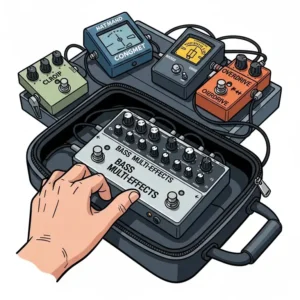
Industry-Specific Applications
Professional Recording Studios
Recording engineers increasingly rely on bass guitar multi effects units for their versatility and consistency. Studio environments benefit from the ability to quickly recall precise settings and experiment with different tonal approaches during sessions. Many producers prefer multi-effects units for their reduced setup time and eliminated need for microphone placement on bass amplifiers.
Professional studios often integrate multi-effects units as both tracking tools and mix processing devices. The direct injection capabilities eliminate acoustic room interactions, providing pristine source material for further processing. Many contemporary bass recordings utilize multi-effects units exclusively, with engineers appreciating the consistent results and expanded creative possibilities.
Live Sound Engineering
Front-of-house engineers appreciate bass multi-effects units for their predictable output characteristics and integrated DI capabilities. The consistent signal levels and frequency response eliminate many variables that complicate live sound reinforcement. Many touring acts rely exclusively on multi-effects units to maintain consistent sound across different venues and sound systems.
The integration of cabinet simulation technology has revolutionized live bass sound. Engineers can achieve full, amp-like bass tones without stage volume, microphone bleed, or acoustic coupling issues. This approach provides superior monitor clarity and reduces overall stage volume for better acoustic balance.
Home Recording and Streaming
The rise of home recording and live streaming has created new demands for bass processing tools. Multi-effects units excel in these applications by providing professional-quality sounds through headphones or direct recording interfaces. Content creators value the ability to achieve polished bass tones without acoustic treatment or professional monitoring systems.
USB audio interface functionality transforms multi-effects units into complete recording solutions. Musicians can track bass parts directly into digital audio workstations while monitoring through the unit’s headphone output. This capability eliminates the need for separate audio interfaces in many home studio configurations.
Educational and Practice Applications
Music educators find multi-effects units invaluable for demonstrating different bass tones and playing techniques. The ability to instantly switch between clean and effected sounds helps students understand the role of effects in different musical contexts. Built-in rhythm sections and looping capabilities support practice routines and ensemble playing exercises.
Practice room applications benefit from the convenience and versatility of multi-effects units. Students can explore different tonal approaches without requiring access to multiple amplifiers and effect pedals. The headphone outputs enable silent practice in shared living spaces or dormitory environments.
Advanced Technical Analysis
Digital Signal Processing Architecture
Modern bass multi-effects processors utilize sophisticated DSP architectures that rival professional studio equipment. Floating-point processing ensures mathematical precision throughout the signal chain, while oversampling techniques minimize aliasing artifacts. The latest generation of processors operate at 192kHz sample rates internally, even when receiving 44.1kHz input signals.
Algorithm development has progressed from simple filter implementations to comprehensive component-level modeling. Advanced units analyze the behavior of individual circuit elements within classic bass amplifiers and effects, recreating complex nonlinear interactions that define vintage sound characteristics. This approach produces remarkably authentic tonal behavior that responds naturally to playing dynamics and instrument characteristics.

Analog-to-Digital Conversion Quality
High-end multi-effects units incorporate premium ADC/DAC components typically found in professional studio converters. 24-bit resolution provides 144dB of theoretical dynamic range, exceeding the capabilities of most analog signal paths. Advanced conversion techniques, such as BOSS’s Adaptive Focus method, optimize signal-to-noise ratios specifically for musical instrument applications.
Converter design extends beyond simple bit depth and sample rate specifications. Anti-aliasing filter design significantly impacts sound quality, with premium units utilizing linear-phase filters that preserve transient response. Jitter reduction techniques ensure temporal accuracy in digital processing, maintaining the rhythmic precision essential for bass performance.
Power Supply Design and Performance
Professional-grade multi-effects units incorporate sophisticated power supply designs that minimize noise and ensure stable operation. Switch-mode power supplies provide efficient operation while maintaining strict regulation under varying load conditions. EMI filtering prevents radio frequency interference that can compromise audio quality in challenging electromagnetic environments.
Battery operation requires careful optimization of power consumption versus processing capabilities. Advanced units utilize dynamic processor scaling that reduces power consumption during periods of minimal processing load. Sleep modes and automatic shutdown features extend battery life while maintaining instant-on capabilities for performance applications.
Comprehensive Setup and Usage Guide
Initial Configuration and Optimization
Proper setup of a bass multi effects pedal requires systematic attention to signal levels, impedance matching, and output routing. Begin by setting input levels to avoid clipping while maintaining optimal signal-to-noise ratios. Most units provide input level indicators or metering to assist with proper gain staging.
Output configuration depends on your specific amplification and recording setup. When connecting to bass amplifiers, ensure proper impedance matching and signal level compatibility. For direct recording or PA connection, utilize balanced outputs when available to minimize noise and interference. Ground loop isolation switches help eliminate hum in complex audio systems.
Preset Management and Organization
Effective preset organization enhances live performance and studio workflow efficiency. Group similar sounds together within preset banks, organizing by song, playing style, or effect intensity. Many units allow custom naming of presets, enabling quick identification during high-pressure performance situations.
Backup strategies become critical as preset libraries expand. Most modern units support computer-based preset management software that enables backup, restoration, and sharing of custom sounds. Cloud-based services offered by some manufacturers provide automatic backup and cross-device synchronization capabilities.
Signal Chain Optimization
Understanding signal chain order within multi-effects units optimizes sound quality and prevents processing artifacts. Traditional effects order places dynamics processing (compression, limiting) first, followed by tonal shaping (EQ, filtering), modulation effects (chorus, phasing), and time-based effects (delay, reverb). However, creative applications may benefit from alternative ordering approaches.
Parallel processing capabilities in advanced units enable sophisticated signal routing strategies. Running clean and effected signals in parallel maintains fundamental bass frequencies while adding harmonic complexity. This approach provides the best of both worlds: solid low-end foundation with creative coloration and effects processing.
Performance Techniques and Best Practices
Live performance with multi-effects units requires practiced technique and strategic planning. Pre-program all required sounds during rehearsal, ensuring smooth transitions between presets. Practice preset changes during song breaks to maintain musical flow and avoid awkward gaps or mistakes.
Expression pedal techniques add dynamic control to performances. Practice smooth parameter changes that enhance musical phrases rather than distract from them. Common applications include volume swells, wah effects, pitch bending, and delay feedback control. Master these techniques to add professional polish to live performances.
Maintenance and Longevity
Daily Maintenance Routines
Proper daily care extends the operational life of multi-effects units and maintains optimal performance. Power down units properly rather than simply unplugging them, allowing internal components to shut down gracefully. Store units in protective cases or gig bags to prevent physical damage during transport.
Clean external surfaces regularly with appropriate cleaners that won’t damage plastic or metal finishes. Avoid harsh chemicals that can dissolve protective coatings or damage graphics. Pay particular attention to footswitch areas that accumulate dirt and debris from stage use.
Weekly and Monthly Maintenance
Connector maintenance prevents oxidation and ensures reliable signal transfer. Use contact cleaner on input/output jacks monthly, exercising plugs several times to distribute cleaning agents. This simple procedure prevents crackling, intermittent connections, and signal degradation that can develop over time.
Firmware updates from manufacturers often provide new features, bug fixes, and improved algorithms. Check manufacturer websites monthly for available updates, following installation procedures carefully to avoid corruption or damage. Backup presets before firmware updates to prevent data loss.
Quarterly and Annual Maintenance
Internal cleaning becomes necessary in dusty environments or heavy-use applications. Professional service centers can safely disassemble units for thorough internal cleaning without damaging sensitive components. This service typically costs $50-100 but can prevent expensive repairs and extend operational life significantly.
Battery maintenance applies to units with internal backup batteries for preset retention. These batteries typically require replacement every 2-3 years, with declining performance indicated by preset loss during power cycles. Professional replacement ensures proper handling of sensitive internal components.

Troubleshooting Common Issues
Audio dropouts often result from loose connections, interference, or power supply issues. Systematically check all cable connections, ensuring secure engagement and clean contacts. Test with different cables to isolate connection problems, and verify adequate power supply current capacity for the unit’s requirements.
Preset corruption can occur due to power interruptions during saves or memory component failure. Most units include factory reset procedures that restore original presets, though custom patches may be lost. Regular preset backups prevent permanent loss of custom sounds and settings.
Total Cost-of-Ownership Analysis
The initial purchase price represents only a portion of total ownership costs over a multi-effects unit’s lifespan. Factor in power supplies, replacement batteries, cables, cases, and periodic maintenance when evaluating different options. Premium units often provide better long-term value through superior build quality and manufacturer support.
Warranty coverage varies significantly between manufacturers and should influence purchasing decisions. Extended warranty options provide peace of mind for professional users who depend on their equipment for income. Consider the cost of warranty extensions against potential repair expenses and downtime losses.
Comparative Analysis
Traditional vs. Modern Approaches
Traditional bass rigs relied on individual effect pedals connected in series, providing ultimate flexibility at the cost of complexity and reliability concerns. Each pedal required separate power supplies, cables, and careful attention to signal chain order. Modern multi-effects units consolidate these functions while adding features impossible with analog-only designs.
The choice between traditional and modern approaches depends on individual priorities and playing styles. Traditional rigs excel for players who require specific analog characteristics or prefer hands-on control of every parameter. Multi-effects units suit players prioritizing convenience, consistency, and modern features like preset recall and USB connectivity.
Price-to-Benefit Ratio Analysis
Budget multi-effects units often provide exceptional value for beginning and intermediate players. The Zoom B1X Four, for example, delivers 70+ effects for under $120, representing incredible value compared to purchasing individual pedals. However, premium units like the Line 6 Helix LT justify their higher costs through superior sound quality, build quality, and professional features.
Professional applications may require premium units despite higher initial costs. The reliability, sound quality, and feature sets of high-end units often prove essential for touring and studio work. Calculate the cost of professional reliability and consistent performance when evaluating options for commercial applications.
Integration with Existing Systems
Modern multi-effects units excel at integrating with existing equipment through comprehensive connectivity options. MIDI capabilities enable synchronization with other electronic instruments, lighting systems, and backing tracks. USB connections provide computer integration for recording, editing, and preset management.
Analog integration remains important for players with existing pedal collections. Effects loops in units like the Tech 21 Bass Fly Rig v2 enable optimal placement of analog pedals within digital signal chains. This hybrid approach combines the best aspects of analog and digital processing technologies.
Case Studies and Success Stories
Professional Touring Applications
Numerous professional bassists have adopted multi-effects units for touring applications, citing reliability, consistency, and convenience as primary advantages. The elimination of multiple power supplies, cables, and individual pedals reduces setup time and potential failure points during demanding tour schedules.
One notable example involves a major touring act that replaced a 20-pedal bass rig with a single Line 6 Helix LT unit. The change reduced setup time from 45 minutes to 15 minutes while improving sound consistency across different venues. The ability to recall precise settings instantly eliminated the need for extensive soundcheck time previously required to dial in complex analog rigs.
Studio Recording Success Stories
Recording studios report significant workflow improvements when utilizing multi-effects units for bass tracking. The ability to quickly audition different tonal approaches during creative sessions enhances productivity and creative exploration. Many producers now prefer multi-effects units for their repeatable results and extensive tonal palettes.
A Grammy-winning producer recently credited the BOSS GT-1B with enabling a breakthrough bass sound on a platinum-selling album. The unit’s compression and EQ algorithms provided the perfect balance of punch and clarity that previous analog processors couldn’t achieve. The instant recall capability allowed the producer to compare subtle variations quickly during the mixing process.
Educational Institution Implementations
Music schools increasingly utilize multi-effects units in bass pedagogy, enabling students to explore different tonal approaches without expensive individual pedal purchases. The versatility and educational value of units like the Zoom B1X Four make them ideal for classroom environments where multiple students share equipment.
One major university recently equipped its bass lab with Darkglass B7K Ultra V2 units, citing their professional-quality sound and educational value. Students learn both traditional bass techniques and modern effects processing concepts using professional-grade equipment that prepares them for contemporary musical requirements.
Home Recording Revolution
The rise of home recording has created new opportunities for multi-effects units to serve as complete recording solutions. Many contemporary bass recordings utilize direct injection from multi-effects units exclusively, with engineers praising the consistent results and reduced complexity compared to traditional amplifier recording techniques.
Independent artists particularly benefit from the all-in-one nature of modern multi-effects units. The Source Audio Aftershock’s Neuro ecosystem enables endless tonal exploration without requiring expensive analog pedal collections. This accessibility democratizes high-quality bass sound production for artists working with limited budgets.
Future Trends and Market Evolution
Emerging Technologies
Artificial intelligence integration represents the next frontier in multi-effects development. Machine learning algorithms can analyze playing styles and automatically suggest optimal effect settings and combinations. Some manufacturers are experimenting with adaptive processing that adjusts parameters in real-time based on musical context and playing dynamics.
Cloud-based processing may revolutionize multi-effects capabilities by offloading computational requirements to remote servers. This approach could enable access to virtually unlimited processing power and algorithm libraries while maintaining affordable hardware costs. Network latency concerns currently limit practical implementation, but advances in internet infrastructure may enable future adoption.
Sustainability and Environmental Considerations
Environmental consciousness increasingly influences product development priorities. Manufacturers are adopting more sustainable packaging, reducing power consumption, and designing for longer operational lifespans. Some companies now offer trade-in programs that refurbish older units for educational or developing market applications.
The transition toward rechargeable battery options reduces environmental impact while improving user convenience. Lithium-ion batteries provide longer operational life and faster charging compared to traditional alkaline cells. Solar charging options may become viable for outdoor applications and environmentally conscious users.
Personalization and Customization Possibilities
Future multi-effects units may offer unprecedented customization capabilities through modular software architectures. Users could purchase specific algorithm packages tailored to their musical styles rather than paying for comprehensive suites they don’t utilize. This approach could reduce costs while providing more targeted functionality.
3D printing technology may enable custom control interfaces and housing modifications. Users could design and print custom footswitch layouts, knob configurations, or protective cases tailored to their specific requirements. This personalization potential could transform multi-effects units into truly individualized instruments.
Industry Predictions and Upcoming Developments
The consolidation trend will likely continue as multi-effects units incorporate more traditionally separate functions. Future units may include built-in wireless transmitters, smartphone integration, and advanced recording capabilities. The boundaries between effects processors, audio interfaces, and practice amplifiers will continue to blur.
Price points may become more stratified as technology advances enable both ultra-budget options and premium boutique offerings. Entry-level units under $50 may become viable through manufacturing efficiencies, while premium units could incorporate studio-quality processing previously requiring rack-mount equipment costing thousands of dollars.
FAQs
❓ How much does a quality bass multi effects pedal typically cost?
✅ Quality bass multi effects pedals range from $80-$1500+ depending on features and build quality. Entry-level models like the Zoom B1X Four start around $80-120, while mid-range options from BOSS and Tech 21 fall between $300-400. Premium units from Line 6, Darkglass, and boutique manufacturers can exceed $1000...
❓ Are bass multi effects pedals better than individual stompboxes?
✅ Multi effects pedals offer superior convenience, cost efficiency, and preset capability compared to individual stompboxes. However, individual pedals may provide specific analog characteristics and hands-on control that some players prefer. The best choice depends on your priorities: convenience versus ultimate customization...
❓ What's the best bass multi effects pedal for beginners?
✅ The Zoom B1X Four provides the best entry point for beginners with 70+ effects, built-in amp models, expression pedal, and looper for under $120. Its intuitive interface and comprehensive tutorials make learning effects processing accessible. The included rhythm patterns and practice features provide complete learning environment...
❓ Can I use a bass multi effects pedal for recording directly?
✅ Yes, modern bass multi effects pedals excel at direct recording through USB audio interfaces or built-in cabinet simulation. Units like the Line 6 Helix LT and Darkglass B7K Ultra V2 provide professional-quality DI outputs with speaker simulation that rival traditional amplifier recording methods...
❓ Do I need a bass amplifier with a multi effects pedal?
✅ Bass amplifiers aren't required with modern multi effects pedals featuring cabinet simulation and headphone outputs. Many units can connect directly to PA systems, recording interfaces, or powered speakers. However, traditional bass amps can enhance the playing experience and provide familiar monitoring environments...
Recommended for You:
Explore more bass gear guides and reviews:
- Best Bass Pedals: 7 Game-Changing Stompboxes That Will Transform Your Sound in 2025
- 7 Best Bass Fuzz Pedal Options That Transform Your Low-End in 2025
- Pedal Bass Overdrive: 7 Ultimate Pedals That Will Revolutionize Your Bass Tone in 2025
✨ Found this helpful? Share it with your friends! 💬🤗
Disclaimer: This article contains affiliate links. If you purchase products through these links, we may earn a small commission at no additional cost to you.