In the world of bass guitar playing, the humble pick is often overlooked, yet it represents one of the most crucial connections between the bassist and their instrument. Bass guitar picks come in various shapes, sizes, materials, and thicknesses, each offering unique tonal qualities and playing experiences. Whether you’re a beginner just starting your bass journey or a seasoned professional looking to refine your sound, choosing the right pick can dramatically transform your playing.
✨Was this helpful? Spread the word! 🚀
Many bassists debate whether fingers or picks deliver the superior bass tone. While traditional wisdom often leans toward fingerstyle playing for bass guitar, the reality is that countless legendary bassists have crafted iconic sounds using picks. From Chris Squire of Yes to Bobby Vega, from Carol Kaye to Justin Chancellor of Tool, the bass guitar pick has helped create some of the most recognizable bass lines in music history.
The beauty of bass guitar picks lies in their versatility. They offer consistent attack, brightness, and precision that complement certain musical genres perfectly. Metal, punk, rock, and even some pop styles benefit from the distinctive tone and articulation that only a pick can provide. Moreover, the proper bass guitar pick can make fast passages more manageable, deliver improved dynamic control, and help bassists cut through dense mixes.
| Playing Style | Fingerstyle Bass | Bass Guitar Picks |
|---|---|---|
| Tone | Warmer, rounder sound | Brighter, more defined attack |
| Speed Capability | Variable (technique-dependent) | Generally faster for complex passages |
| Dynamic Control | Excellent nuance | More consistent volume |
| Learning Curve | Steeper initial technique | Easier for beginners |
| Genre Suitability | Jazz, funk, R&B, fusion | Rock, metal, punk, alternative |
| Amplification Needs | Less aggressive EQ typically needed | May require EQ adjustments |
| Physical Impact | Potential fingertip calluses | Less direct finger strain |

In this comprehensive guide, we’ll explore everything you need to know about bass guitar picks – from materials and shapes to thickness considerations and playing techniques. We’ll examine how different picks affect your tone, discuss the pros and cons of various options, and highlight some of the best bass guitar picks available on the market today. By the end, you’ll have all the knowledge needed to select the perfect plectrum for your unique playing style and sonic preferences.
Whether you’re primarily a fingerstyle player looking to expand your tonal palette or a dedicated pick user seeking to optimize your sound, this guide will help you navigate the vast world of bass guitar picks with confidence and clarity. Let’s dive in and discover how this small piece of equipment can make a massive difference in your bass playing journey.
Understanding Bass Guitar Pick Materials
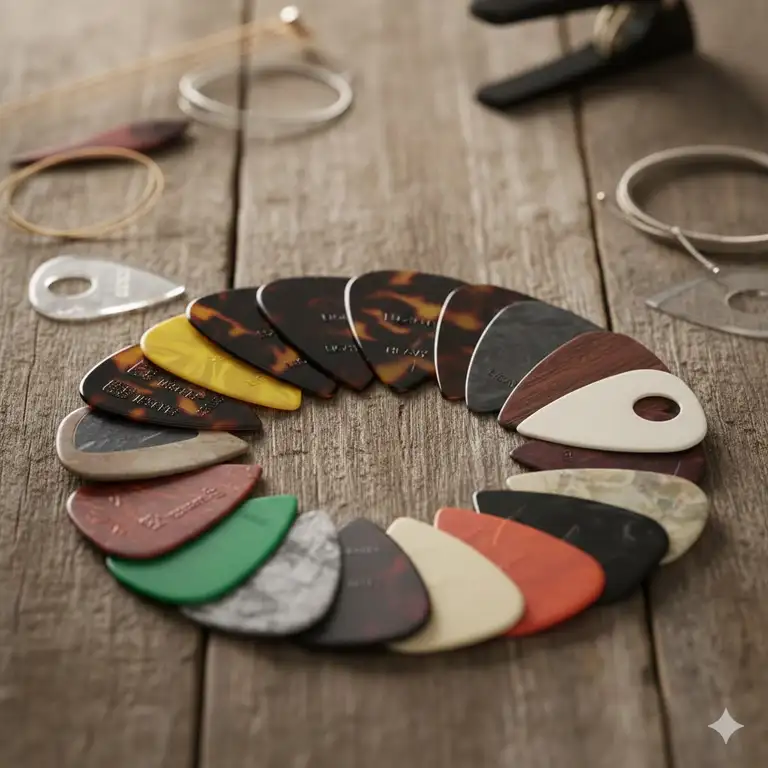
The material of your bass guitar pick significantly influences its durability, flexibility, and most importantly, the tonal characteristics it imparts to your playing. Unlike regular guitar picks, bass guitar picks often need to withstand greater string tension and produce a more robust attack. Let’s explore the most common materials used in bass guitar picks and what makes each unique.
Traditional Plastic and Synthetic Materials
Celluloid
One of the oldest and most traditional pick materials, celluloid provides a warm, vintage tone that many bassists appreciate. These bass guitar picks offer moderate flexibility and a smooth release from the strings. However, they wear down relatively quickly with heavy use and can be flammable (though this is rarely an issue in normal playing conditions).
Nylon
Nylon bass guitar picks deliver excellent flexibility and a softer attack compared to harder materials. They produce a warmer tone with less string noise, making them ideal for studio recording situations. Their flexibility makes them comfortable for extended playing sessions, though this same quality means they may not be ideal for very aggressive playing styles where more precision is required.
Delrin (Acetal)
Often marketed under brand names like Tortex, Delrin bass guitar picks offer an excellent balance of flexibility and durability. They produce a bright, clear tone with good articulation and last significantly longer than celluloid. These picks have a slightly textured surface that improves grip, making them popular choices for bass guitar picks used in live performance settings.
Ultem
Known for their stiffness and durability, Ultem bass guitar picks produce a bright, articulate tone with excellent projection. They’re particularly well-suited for technical playing styles that require precision and defined attack. While they’re more expensive than basic plastic options, their longevity often makes them cost-effective in the long run.
Premium Natural Materials
Tortoiseshell (and Imitations)
True tortoiseshell picks are now illegal due to conservation concerns, but synthetic alternatives aim to recreate their unique tonal properties. Original tortoiseshell bass guitar picks were prized for their warm tone, natural grip, and the way they glided smoothly off strings. Modern imitations offer similar benefits without environmental impact.
Horn and Bone
These natural material bass guitar picks deliver unique tonal characteristics with warm fundamentals and bright overtones. They wear down gradually to conform to the player’s technique, eventually creating a personalized playing experience. As with tortoiseshell, ethical considerations have led many manufacturers to use sustainably sourced alternatives.
Wood
Wooden bass guitar picks offer warm, organic tones with natural compression qualities. Different wood species produce varied tonal characteristics – maple tends to be brighter while rosewood delivers warmer bass response. These picks often feature protective coatings to enhance durability, though they typically don’t last as long as synthetic options.
Modern Innovative Materials
Carbon Fiber
Ultra-durable and lightweight, carbon fiber bass guitar picks provide exceptional stiffness without excess weight. They produce a bright, detailed tone with excellent projection and articulation. While they command premium prices, their near-indestructible nature means they rarely need replacement.
Metal (Stainless Steel, Brass, Copper)
Metal bass guitar picks create distinctive bright tones with powerful attack and sustain. They’re extremely durable but can potentially cause more string wear than other materials. Different metals offer varied tones – brass provides warmth with pronounced mids, while stainless steel delivers bright, cutting highs. These picks are often precision-machined and can include texture patterns for improved grip.
Graphite-Nylon Composites
These hybrid bass guitar picks combine graphite’s stiffness with nylon’s flexibility for a balanced playing experience. They typically offer excellent durability while producing clear, well-defined tones across all frequency ranges. The composite nature helps reduce pick noise while maintaining articulation.
Acrylic
Acrylic bass guitar picks deliver bright, transparent tones with excellent projection. They feature moderate stiffness and exceptional durability, making them popular among professional bassists. Premium acrylic picks often have polished edges to reduce string noise and improve playability.
| Material | Tone Characteristics | Durability | Flexibility | Best For |
|---|---|---|---|---|
| Celluloid | Warm, vintage | Low-Medium | Medium | Vintage tones, traditional players |
| Nylon | Warm, reduced pick noise | Medium | High | Studio recording, extended sessions |
| Delrin | Balanced, clear | High | Medium | All-purpose playing, live performance |
| Ultem | Bright, articulate | Very High | Low | Technical styles, precision playing |
| Tortoiseshell (imitation) | Warm, natural | Medium-High | Medium | Players seeking vintage tone |
| Horn/Bone | Warm fundamentals, bright overtones | Medium | Medium | Organic tone enthusiasts |
| Wood | Warm, organic | Low-Medium | Varies by species | Acoustic-leaning tones |
| Carbon Fiber | Bright, detailed | Extremely High | Very Low | Professional players, heavy use |
| Metal | Bright, aggressive | Extremely High | None | Rock, metal, precision playing |
| Graphite-Nylon | Clear, well-defined | High | Medium | Versatile playing, reduced noise |
| Acrylic | Bright, transparent | High | Low-Medium | Professional players, projection |
Understanding how these materials affect your tone is crucial when selecting bass guitar picks that complement your playing style. Many experienced bassists maintain a collection of picks made from different materials, switching between them based on the specific tonal requirements of different musical situations. This approach provides maximum versatility and allows you to fine-tune your sound for each performance or recording.
Bass Guitar Pick Thickness: Finding Your Sweet Spot
The thickness of your bass guitar pick significantly impacts your playing experience, affecting everything from tone and articulation to speed and comfort. Unlike standard guitar picks, bass guitar picks typically require greater thickness to handle the larger, heavier strings of a bass guitar. Let’s explore how different thicknesses influence your playing and help you determine which might be your ideal match.
Light Thickness (Under 0.7mm)
Thinner bass guitar picks (though still thicker than many standard guitar picks) offer greater flexibility, which can be beneficial for certain playing styles. These picks tend to:
- Produce warmer tones with less pronounced attack
- Create a more “giving” feel against the strings
- Excel at strumming and chord work on bass
- Allow for easier string skipping
- Provide less resistance when playing
However, thinner bass guitar picks may not be ideal for all situations. They often:
- Lack the precision needed for fast, technical playing
- Produce less volume and projection
- Wear down more quickly
- Can create more pick noise
- May flex too much against heavy bass strings
For bassists who primarily play chords, arpeggiated patterns, or prefer a softer attack, lighter bass guitar picks can be an excellent choice. They’re also useful for creating more dynamic variation in your playing.
Medium Thickness (0.7mm to 1.0mm)
Medium thickness bass guitar picks represent a versatile middle ground that works well for many players. These balanced options:
- Offer a good compromise between flexibility and control
- Produce well-rounded tones suitable for various musical styles
- Provide enough stiffness for reasonable precision
- Allow for both aggressive playing and more nuanced techniques
- Can handle standard playing techniques with minimal adaptation
Many bassists who switch between different playing styles find that medium bass guitar picks offer the most versatility. They’re substantial enough to handle bass strings while still providing some flexibility for dynamic expression.
Heavy Thickness (1.0mm to 1.5mm)
Heavy bass guitar picks provide greater control and precision, making them popular choices for many dedicated pick bassists. These thicker options:
- Deliver bright, well-defined tones with pronounced attack
- Offer excellent precision for technical playing
- Produce greater volume and projection
- Show improved durability and longevity
- Provide solid control for consistent articulation
The downsides of heavy bass guitar picks may include:
- Less tonal flexibility and dynamic range
- More resistance against the strings
- Potentially more difficult string skipping
- Less forgiving of technical errors
- May cause more string noise if technique isn’t refined
For bassists playing styles that demand precision, speed, and consistency (such as metal, prog, or technical rock), heavy bass guitar picks often become the preferred choice.
Extra Heavy Thickness (Over 1.5mm)
The thickest bass guitar picks, sometimes called extra heavy or bass-specific picks, are designed specifically with bass players in mind. These substantial picks:
- Create powerful, aggressive attack with maximum definition
- Virtually eliminate unwanted flexibility
- Provide ultimate control for precision playing
- Maximize volume and projection
- Offer exceptional durability even with aggressive playing
Extra heavy bass guitar picks excel in situations where maximum precision and attack are required. Many professional bassists in rock, metal, and technical genres favor these ultra-thick picks for their superior control and distinctive tonal qualities.
Finding Your Ideal Thickness
The “best” thickness for your bass guitar picks depends entirely on your personal preferences, playing style, and musical context. Consider these factors when making your selection:
- Musical Genre: Different genres often benefit from different pick thicknesses. Jazz fusion might benefit from medium to heavy bass guitar picks, while punk and metal often sound best with heavy or extra-heavy options.
- Playing Technique: If you use a lot of palm muting or need precise control for technical passages, thicker picks typically perform better. For strumming or chord-heavy playing, more flexible picks may be advantageous.
- String Gauge: Heavier strings generally pair well with thicker bass guitar picks, while lighter strings can work effectively with medium-thickness options.
- Amplification: Consider how your pickups and amplification respond to different attacks. Some setups may sound too aggressive with very thick picks, while others might lack definition with thinner options.
- Physical Comfort: Your hand size, grip strength, and playing posture all influence which thickness feels most comfortable during extended playing sessions.
Many professional bassists recommend experimenting with several thicknesses of bass guitar picks to discover your preference. Starting with a medium pick (around 0.8-1.0mm) gives you a neutral reference point from which you can explore thicker or thinner options based on how the medium pick feels in your hand and sounds with your bass.
Remember that your ideal thickness might change over time as your technique evolves or as you explore different musical styles. Maintaining a selection of bass guitar picks in various thicknesses allows you to adapt to different playing situations and continue refining your tonal palette.

Bass Guitar Pick Shapes and Designs
The shape of your bass guitar pick significantly influences your playing comfort, control, and tone. Unlike standard guitar picks, which often prioritize speed and maneuverability, bass guitar picks must balance precision with the power needed to drive heavier strings. Let’s explore the most common shapes and specialized designs available for bass guitar picks.
Standard Shapes
Traditional Teardrop (351)
The classic teardrop shape, sometimes called the 351, is the most recognizable and widely used design for all picks, including bass guitar picks. Its rounded playing tip provides a balance of precision and warmth, while the wider body offers a comfortable grip. These versatile picks work well for a wide range of bass playing styles and are excellent starting points for bassists new to using picks.
Jazz III Style
Though originally designed for jazz guitarists, the smaller Jazz III shape has found popularity among bass players who prioritize precision and control. These bass guitar picks feature a sharper tip for enhanced accuracy and a smaller overall profile that some players find easier to maneuver. The compact size allows for more subtle wrist movements and can reduce fatigue during technical passages.
Triangle
Triangular bass guitar picks offer multiple playing edges and corners, giving players three distinct playing surfaces without adjusting their grip. The larger surface area provides excellent grip stability, making these picks popular choices for bassists with larger hands. Many triangular bass guitar picks feature rounded corners for smoother playing or sharp points for precise articulation.
Equilateral Triangle
A variation on the standard triangle, equilateral triangle bass guitar picks provide perfect symmetry with three identical playing edges. This design allows players to quickly rotate to a fresh edge when one begins to wear down, effectively tripling the pick’s lifespan. These picks often appeal to methodical players who appreciate consistency across all playing edges.
Specialized Bass Guitar Pick Designs
Thumb Picks
Designed to attach directly to the thumb, these specialized bass guitar picks allow players to combine fingerstyle techniques with the articulation of a pick. They’re particularly valuable for players transitioning from fingers to picks or those who prefer hybrid picking techniques. Modern thumb picks often feature adjustable tension to accommodate different thumb sizes and playing preferences.
Finger Picks
Similar to thumb picks but designed for other fingers, finger picks allow bassists to maintain some fingerstyle technique while gaining the attack and consistency of picks. Some bassists use these in combination with their natural fingerstyle approach for tonal variation within a single performance.
Shark Fin Designs
These uniquely shaped bass guitar picks feature a curved edge resembling a shark’s fin, designed to glide smoothly across strings while providing excellent control. The design often includes a textured grip area and ergonomic contours that conform to the player’s hand position. These specialized bass guitar picks have gained popularity among professional players seeking maximum comfort during extended performances.
Multi-Thickness Designs
Some innovative bass guitar picks feature variable thickness across their surface, combining the flexibility of thinner picks with the rigidity of thicker ones. This design allows players to adjust their tone and attack by slightly altering their grip position, essentially providing multiple picks in one. These advanced picks often appeal to session bassists who need tonal versatility without changing equipment.
Grip Enhancements and Special Features
Textured Surfaces
Many premium bass guitar picks feature textured grip areas to prevent slippage during intense playing. These textures range from subtle raised patterns to pronounced grip-enhancing materials adhered to the pick’s surface. For bassists who perform in hot environments or struggle with pick slippage, these features can be invaluable.
Holes and Cutouts
Some bass guitar picks incorporate strategic holes or cutouts that serve multiple purposes: reducing weight, enhancing grip through improved airflow, and sometimes altering the pick’s tonal characteristics. These designs can help eliminate the “suction” effect that sometimes occurs between a pick and a player’s fingers during vigorous playing.
Beveled Edges
Premium bass guitar picks often feature carefully beveled edges that reduce pick noise and improve the pick’s release from the string. These bevels can be symmetrical (identical on both sides) or asymmetrical (different on each side), offering varied playing experiences. Beveled-edge picks typically produce cleaner articulation and smoother playing feel, particularly beneficial for recording situations.
Grip Holes and Indentations
Some specialized bass guitar picks include finger placement holes or ergonomic indentations designed to lock the pick into a specific position in the player’s hand. These features can dramatically improve playing consistency and reduce grip fatigue during long performances.
| Shape/Design | Control Level | Comfort | Versatility | Best For |
|---|---|---|---|---|
| Traditional Teardrop | Medium | High | Excellent | All-purpose playing, beginners |
| Jazz III Style | High | Medium (smaller hands) | Good | Precision playing, technical passages |
| Triangle | Medium-High | High (larger hands) | Excellent | Players needing multiple edges, value |
| Equilateral Triangle | Medium-High | High | Excellent | Methodical players, longevity |
| Thumb Picks | Medium | Varies | Limited | Hybrid playing styles |
| Finger Picks | Medium | Varies | Limited | Specialized techniques |
| Shark Fin | High | Very High | Good | Ergonomic-focused players |
| Multi-Thickness | Variable | High | Excellent | Versatile playing situations |
Choosing the Right Shape
When selecting the optimal shape for your bass guitar picks, consider these key factors:
- Hand Size and Physiology: Larger hands often benefit from bigger picks with more substantial gripping surfaces, while smaller hands may prefer compact designs like the Jazz III.
- Playing Style: Technical styles requiring precision may benefit from smaller, pointed bass guitar picks, while strumming and rhythm playing often work well with traditional shapes.
- Grip Technique: How you hold your pick impacts which shape will feel most natural. Edge grippers may prefer textured picks, while players who hold picks flat might benefit from designs with finger indentations.
- String Spacing: Basses with wider string spacing may be easier to navigate with smaller, more precise bass guitar picks, while standard spacing works well with traditional shapes.
- Personal Comfort: Ultimately, the shape that feels most comfortable and natural in your hand will likely yield the best results, regardless of conventional wisdom.
Many bassists find value in experimenting with several different shapes before committing to a particular design. Consider purchasing a variety pack of bass guitar picks to discover which shape best complements your playing style and physical characteristics. Remember that your preferences may evolve as your technique develops, so remain open to exploring new designs throughout your bass playing journey.

Playing Techniques with Bass Guitar Picks
Mastering various playing techniques with bass guitar picks can dramatically expand your tonal palette and technical capabilities. While fingerstyle playing has its unique advantages, pick techniques offer distinct benefits for certain musical contexts. Let’s explore essential techniques, advanced approaches, and practical tips for maximizing your effectiveness with bass guitar picks.
Basic Pick Technique Fundamentals
Proper Pick Grip
Holding your bass guitar pick correctly forms the foundation of good technique. Most professionals recommend gripping the pick between your thumb and index finger, with approximately 1/4 to 1/3 of the pick extending beyond your fingertips. The pick should be oriented so the pointed tip contacts the strings, with the flat sides facing your thumb and finger. Maintain firm but relaxed pressure – gripping too tightly creates tension that impedes fluid movement and causes fatigue.
Wrist vs. Arm Movement
Efficient bass guitar pick technique primarily utilizes wrist rotation rather than arm movement. Your forearm should remain relatively stable, with most of the picking motion generated by your wrist. This approach conserves energy, increases speed potential, and improves accuracy. However, some passages may benefit from incorporating subtle arm movements, particularly when crossing multiple strings or executing dramatic dynamic shifts.
Pick Angle and Attack
The angle at which your bass guitar pick strikes the strings significantly affects your tone and articulation. A perpendicular approach (90° to the string) creates the brightest, most aggressive attack, while angling the pick (around 45°) produces a smoother, warmer sound as it glides more easily across the string. Experiment with different angles to discover how they influence your tone and playing comfort.
Pick Depth
How deeply you strike into the string with your bass guitar pick impacts both tone and playability. Deeper picking produces fuller, more aggressive tones but requires more effort to release the pick from the string. Shallower picking offers faster release and greater speed potential but may deliver less powerful tones. Most professional bassists develop the ability to vary their pick depth dynamically based on the musical context.
Essential Bass Guitar Pick Techniques
Alternate Picking
The foundation of efficient pick playing, alternate picking involves consistently alternating between downstrokes and upstrokes. This technique maximizes economy of motion and enables greater speed than exclusively using downstrokes. When practicing alternate picking on bass, focus on maintaining consistent tone and volume between downstrokes and upstrokes, as the heavier bass strings can sometimes reveal discrepancies in your technique.
Economy Picking
This advanced technique minimizes movement by using the momentum of each stroke to move efficiently to the next string. For example, when moving from a lower string to a higher one after a downstroke, you would continue with another downstroke rather than alternating. Economy picking can increase speed and efficiency when navigating complex bass lines that frequently cross strings.
Sweep Picking
Though more commonly associated with guitar, sweep picking can be valuable for bass players executing arpeggios or chord tones. This technique involves “sweeping” the pick across multiple strings in a single motion, almost like strumming but with greater control. Sweep picking requires precise synchronization between your picking hand and fretting hand to produce clean, articulate notes.
Palm Muting
Resting the side of your picking hand lightly against the strings near the bridge creates a distinctive muted sound that’s essential for many rock and metal bass lines. The degree of pressure applied determines the amount of muting effect, from subtle dampening to aggressive “chunk” sounds. When using bass guitar picks, palm muting requires careful hand positioning to maintain picking mobility while achieving the desired muting effect.
Advanced Pick Techniques for Bass
Hybrid Picking
This versatile approach combines pick and finger techniques, typically using a bass guitar pick held between thumb and index finger while the middle, ring, and pinky fingers remain free for fingerstyle playing. Hybrid picking enables complex patterns that would be difficult with either picks or fingers alone, such as sustaining notes with fingers while executing rapid passages with the pick.
Pick Tapping
An extension of traditional two-handed tapping, pick tapping uses the edge of the bass guitar pick to tap notes on the fretboard. This technique can facilitate lightning-fast arpeggios and create unique textural elements. Some bassists even incorporate double-sided picks specifically designed for tapping on one edge and standard picking on the other.
Pick Harmonics
Also called pinch harmonics, this technique involves the picking hand’s thumb or fingers briefly touching the string immediately after striking it with the bass guitar pick. This contact point creates a high-pitched harmonic that can add distinctive character to bass lines. Mastering consistent harmonics requires precise coordination and practice to reliably produce the desired pitch.
String Skipping
While challenging with fingers, string skipping can be executed efficiently with bass guitar picks. This technique involves playing notes on non-adjacent strings, creating wide intervallic jumps. Developing accuracy with string skipping expands your melodic capabilities and enables more complex bass line construction.
Practical Tips for Improving Your Bass Guitar Pick Technique
Start Slow and Use a Metronome
Building proper technique requires patience and consistency. Begin practicing new pick techniques at slow tempos with a metronome, focusing on clean execution and even dynamics. Gradually increase speed only after achieving mastery at slower tempos.
Record and Analyze Your Playing
Recording practice sessions provides objective feedback on your technique. Listen critically for inconsistencies in timing, dynamics, and tone between your downstrokes and upstrokes. Video recording can also reveal inefficiencies in your physical approach that might not be apparent while playing.
Develop Pick Control Exercises
Create focused exercises that isolate specific aspects of pick technique. For example, practice alternate picking on a single string with various rhythmic patterns, or develop string-crossing exercises that gradually incorporate more complex movements. Even five minutes of concentrated practice on a specific technique can yield significant improvements.
Experiment with Pick Variations
Try different bass guitar picks with varied thicknesses, materials, and shapes to discover which options best complement your playing style and the sound you’re seeking. Some techniques may become easier or more effective with specific types of picks.
Study Professional Pick Bassists
Observe and study bassists known for their pick technique, such as Chris Squire (Yes), Carol Kaye (session legend), Bobby Vega, or Justin Chancellor (Tool). Pay attention to their hand positioning, movement patterns, and how they approach different musical contexts with bass guitar picks.
| Technique | Difficulty Level | Tonal Characteristics | Practical Applications |
|---|---|---|---|
| Alternate Picking | Beginner-Intermediate | Consistent, articulate | Foundation for most pick playing |
| Economy Picking | Intermediate | Fluid, efficient | Complex bass lines with string crossing |
| Sweep Picking | Advanced | Flowing, smooth arpeggios | Chord outlining, arpeggiated passages |
| Palm Muting | Beginner-Intermediate | Percussive, controlled | Rock, metal, funk, rhythm section work |
| Hybrid Picking | Intermediate-Advanced | Versatile, complex textures | Solo bass, jazz fusion, progressive styles |
| Pick Tapping | Advanced | Percussive, extended range | Solo technique, progressive music |
| Pick Harmonics | Intermediate-Advanced | Bright, singing overtones | Accent notes, rock/metal styles |
| String Skipping | Intermediate | Wide intervallic range | Melodic bass lines, solo passages |

How Bass Guitar Picks Affect Your Tone
The bass guitar pick you choose dramatically influences your instrument’s voice, affecting everything from frequency response and attack characteristics to dynamic range and harmonic content. Understanding these tonal implications helps you select the right pick for achieving your desired sound in different musical contexts. Let’s explore how various aspects of bass guitar picks shape your tonal palette.
Attack and Transient Response
Pick Material Impact on Attack
The material of your bass guitar pick significantly affects how notes begin – their “attack transient.” Harder materials like acrylic, Ultem, or metal produce pronounced, aggressive attacks with clearly defined starts to each note. Softer materials like nylon or flexible plastics create smoother, more rounded attacks. This initial transient shapes how your bass cuts through a mix and influences its perceived character.
Pick Thickness and Note Definition
Thicker bass guitar picks generally produce more defined attacks with greater note separation. This clarity can be advantageous when playing complex passages that require distinct articulation of each note. Conversely, thinner picks often create a more blended sound where notes flow more smoothly into one another – potentially beneficial for creating fluid, legato bass lines.
Edge Shape and Articulation
The profile of your pick’s playing edge directly affects articulation. Sharp-edged bass guitar picks create bright, immediate attacks with pronounced definition, while rounded edges produce warmer, less aggressive note beginnings. Some specialized picks feature asymmetrical edges, allowing players to access different articulation characteristics by simply rotating the pick.
Frequency Response and Tonal Characteristics
Bass Frequency Accentuation
Different bass guitar picks emphasize various frequency ranges. Harder materials like Ultem and metal tend to accentuate upper-midrange frequencies, creating more “presence” and “bite” in your tone. Softer materials like nylon often enhance lower-midrange frequencies, resulting in a warmer, fuller sound. This frequency emphasis can help your bass either blend into a mix or stand out prominently.
Harmonic Content
The pick material and thickness influence which harmonics are emphasized in your playing. Rigid bass guitar picks generally enhance upper harmonics, producing brighter, more complex tones rich in overtones. More flexible picks tend to somewhat dampen these upper harmonics, resulting in fundamentally stronger tones with less complex overtone structures.
Pick Noise Considerations
All bass guitar picks generate some degree of “pick noise” – the sound of the pick contacting the string. This noise component becomes part of your tonal signature. Materials like nylon typically produce less pick noise, while materials like Delrin or acrylic may generate more pronounced pick sounds. In some genres (like aggressive rock), this noise component can be desirable, while in others (like jazz or studio recording), minimizing it might be preferred.
Dynamic Response and Playing Feel
Dynamic Range Potential
The flexibility of your bass guitar pick directly affects your dynamic range capabilities. More flexible picks respond dramatically to changes in playing force, facilitating greater dynamic expression. Rigid picks provide more consistent volume regardless of attack strength, which can be advantageous for maintaining even levels in certain musical contexts but may limit dynamic expressiveness.
Compression Effects
Thinner, more flexible bass guitar picks introduce a natural compression effect to your playing. As you play harder, the pick flexes, partially absorbing some of the energy that would otherwise go into the string. This compression can be beneficial for creating smoother bass lines that sit well in a mix without dramatic level fluctuations.
Speed and Articulation Relationship
The tonal characteristics of your bass guitar pick directly influence optimal playing techniques. Thicker, harder picks that produce defined attacks often pair well with faster, more technical playing styles where note separation is crucial. Thinner, more flexible picks that create smoother tones may complement flowing, legato-style bass lines or chord-oriented playing.
Contextual Tonal Considerations
Genre-Appropriate Pick Selection
Different musical genres often benefit from specific tonal characteristics. Rock, metal, and punk frequently call for the aggressive attack and bright presence of thicker, harder bass guitar picks. Jazz and R&B might benefit from the warmer, more rounded tones of medium-thickness picks. Ambient or textural bass playing might utilize thin, flexible picks for their smooth, less defined qualities.
Recording vs. Live Performance
The performance context influences ideal pick selection. Studio recording often requires more controlled, precise tones with minimal pick noise, suggesting premium bass guitar picks designed specifically to reduce unwanted artifacts. Live performance might prioritize picks that help your bass cut through the mix, even if they produce slightly more pick noise or aggressive characteristics.
Band Mix Position
Consider how your bass needs to sit within your band’s overall sound. If playing with particularly bright-sounding guitars or in a dense mix, warmer bass guitar picks might help create separation between instruments. In sparse arrangements or with darker-sounding accompanying instruments, brighter picks can help your bass occupy its own sonic space more effectively.
| Tonal Factor | Thinner, Flexible Picks | Thicker, Rigid Picks |
|---|---|---|
| Attack | Smoother, rounder | Sharp, aggressive |
| Bass Response | Fuller low-end emphasis | More controlled bass |
| Midrange | Warmer, thicker | More pronounced, articulate |
| Treble | Somewhat rolled off | Enhanced clarity and definition |
| Dynamics | Greater range, natural compression | More consistent, less compressed |
| Harmonic Content | Fewer overtones, stronger fundamental | Rich in harmonics and overtones |
| Pick Noise | Generally less pronounced | More noticeable, especially with textured picks |
| Mix Position | Tends to sit further back | Tends to cut through more prominently |
Practical Tone Experiments
To better understand how different bass guitar picks affect your specific instrument and playing style, consider conducting these practical experiments:
- Record Comparison Tests: Record identical bass lines using different picks, then listen back without looking at which pick you’re hearing. This blind testing reveals tonal differences without visual bias.
- Frequency Analysis: Use spectrum analyzer software to visualize the frequency content of your playing with different picks. This objective measurement can reveal subtle tonal variations that might not be immediately apparent to the ear.
- Band Context Testing: If possible, try different bass guitar picks during rehearsals with your full band. Often, picks that sound ideal in isolation might not work as well in a full mix context, and vice versa.
- Amplification Interaction: Experiment with how different picks interact with various amplifier settings. Some picks may require EQ adjustments to achieve optimal tone, while others might naturally complement your current setup.
By developing a deeper understanding of how your bass guitar picks shape your tone, you can make more informed choices that enhance your musical expression. Many professional bassists maintain collections of different picks, selecting specific options based on the tonal requirements of each performance or recording situation.

Top 10 Bass Guitar Picks for Different Playing Styles
Finding the perfect bass guitar pick can be a game-changer for your tone and technique. Based on professional recommendations, player reviews, and technical specifications, we’ve compiled a list of the top bass guitar picks across various categories to help you discover your ideal match.
For All-Around Versatility
Dunlop Tortex Standard 1.0mm
These iconic green bass guitar picks strike an excellent balance between flexibility and control, making them ideal for players who need versatility across multiple genres. The Tortex material provides good durability and a slight texture that improves grip during intense playing sessions. With their traditional shape and medium-heavy thickness, these picks offer accessible playability for both beginners and experienced bassists.
Fender Heavy Celluloid Picks
Classic for a reason, Fender’s heavy celluloid bass guitar picks deliver warm, vintage tones with a smooth release from the strings. Their traditional shape and comfortable grip make them excellent all-purpose picks for bassists who appreciate classic feel and sound. While not as durable as some synthetic materials, they offer a playing experience that has remained popular for decades.
For Technical Precision
Dunlop Jazz III XL
These precision-focused bass guitar picks feature a sharp point for enhanced accuracy and articulation, with the XL size providing more gripping surface than standard Jazz IIIs. The stiff but not too thick design offers excellent control for complex passages and fast playing without sacrificing tone. The textured grip area prevents slippage during demanding performances, making these picks favorites among technical players.
Gravity Picks Stealth Standard 2mm
For bassists who demand the ultimate in precision, these premium acrylic bass guitar picks offer exceptional control with their rigid 2mm thickness. The polished edges glide smoothly off strings while minimizing pick noise, and the carefully designed tip shape provides impressive articulation. Though expensive compared to mass-produced picks, their hand-crafted quality and distinctive tone make them worth the investment for serious players.
For Heavy/Rock Styles
ChickenPicks Badazz III 2.6mm
Specifically designed for aggressive playing styles, these extra-thick bass guitar picks deliver powerful attack with exceptional durability. The specialized material combines rigidity with smooth release characteristics, preventing the “sticky” feeling sometimes experienced with very thick picks. Their slightly larger than standard size provides excellent grip stability during high-energy performances.
Dunlop Flow Standard 2.0mm
These bass guitar picks feature contoured edges that enhance speed and precision while reducing pick noise. The Ultex material provides exceptional durability and a bright, articulate tone perfect for cutting through dense mixes. The textured grip surface ensures stable control even during sweaty performances, making these picks excellent choices for rock, metal, and other high-energy genres.
For Enhanced Grip and Comfort
Dunlop Max-Grip Jazz III
These bass guitar picks combine the precision-focused Jazz III shape with Dunlop’s Max-Grip texture covering the entire surface. This comprehensive texturing virtually eliminates slippage issues, even during the most intense playing sessions. The rigid construction provides excellent control while the compact size enables precise articulation and efficient movement across strings.
Gravity Picks Classic Standard G1 (Unpolished)
With their naturally textured, unpolished surface, these premium acrylic bass guitar picks offer exceptional grip without requiring additional materials or patterns. Available in multiple thicknesses, they provide a direct connection to the strings with minimal pick noise. The carefully designed tip shape balances precision with smooth release, making these picks comfortable for extended playing sessions.
For Unique Tonal Characteristics
Dragon’s Heart Original 2.5mm
These innovative bass guitar picks feature three distinct playing edges in one unique design. The rounded edge provides warm tones with smooth articulation, the standard edge offers balanced response, and the sharp edge delivers enhanced precision for technical passages. Constructed from ultra-durable proprietary material, these picks can last for hundreds of playing hours without significant wear.
D’Addario Black Ice 1.5mm
These bass guitar picks are crafted from durable Duralin material with a distinctive dark appearance and smooth surface. They produce a bright, clear tone with excellent projection and minimal pick noise. The wide body provides excellent grip stability while the precision tip delivers accurate articulation, making these picks particularly well-suited to studio recording situations where tonal clarity is paramount.
Comparison of Top Bass Guitar Picks
| Pick Model | Material | Thickness | Best For | Tone Characteristics | Grip Level | Price Range |
|---|---|---|---|---|---|---|
| Dunlop Tortex Standard | Delrin | 1.0mm | Versatility | Balanced, clear | Medium | $ |
| Fender Heavy Celluloid | Celluloid | 0.8-1.0mm | Traditional feel | Warm, vintage | Low-Medium | $ |
| Dunlop Jazz III XL | Nylon | 1.38mm | Precision playing | Bright, articulate | Medium-High | $ |
| Gravity Stealth | Acrylic | 2.0mm | Professional use | Clear, defined | Medium | $$$ |
| ChickenPicks Badazz III | Composite | 2.6mm | Heavy styles | Aggressive, bright | Medium-High | $$$ |
| Dunlop Flow | Ultex | 2.0mm | Fast playing | Bright, smooth | High | $$ |
| Dunlop Max-Grip Jazz III | Nylon | 1.38mm | No-slip grip | Bright, articulate | Very High | $ |
| Gravity Classic (Unpolished) | Acrylic | 1.5mm | Extended sessions | Detailed, refined | High | $$$ |
| Dragon’s Heart Original | Proprietary | 2.5mm | Tonal variety | Versatile, bright | Medium | $$ |
| D’Addario Black Ice | Duralin | 1.5mm | Studio recording | Bright, clear | Medium | $ |
💬 Just one click – help others make better buying decisions too!😊
💬 Don’t Miss These Exclusive Bass Pick Deals! 🎸
➡ Looking to elevate your bass playing immediately? These top-rated picks are available with just one click. Check current pricing and take advantage of limited-time offers on these premium bass guitar picks. Your perfect tone is just a click away!

Transitioning from Fingers to Picks (and Vice Versa)
Many bassists find themselves wanting to expand their technical capabilities by learning to play with bass guitar picks after primarily using fingers, or by developing fingerstyle skills after relying on picks. Both transitions present unique challenges and benefits. Let’s explore effective strategies for successfully adding new playing techniques to your musical toolkit.
From Fingers to Bass Guitar Picks
Understanding the Fundamental Differences
Transitioning from fingerstyle to bass guitar picks involves significant adjustments in both technique and mindset. Fingerstyle playing typically utilizes the pad of the finger for a warmer tone, while picks create a more defined attack with brighter tonal characteristics. Recognize that initially, your picking technique will likely feel less natural than your well-developed fingerstyle approach – this is normal and temporary.
Start with Appropriate Pick Selection
Begin your transition with bass guitar picks that minimize the learning curve. Medium thickness picks (around 0.8-1.0mm) often provide a good balance between control and flexibility. Traditional teardrop shapes offer comfortable gripping surfaces and forgiving playing characteristics. As your technique develops, you can explore thicker or more specialized bass guitar picks based on your evolving preferences.
Developing Basic Pick Control
Focus initially on fundamental pick technique rather than complex musical passages:
- Static String Exercises: Practice striking individual strings repeatedly, focusing on consistent tone and volume. Pay attention to pick angle and depth.
- Alternate Picking Drills: Practice simple alternate picking patterns (down-up-down-up) on single strings, then progress to adjacent string pairs.
- Simple Bass Lines: Apply your developing pick technique to straightforward bass lines using quarter notes and eighth notes, prioritizing evenness and tone over speed.
- Metronome Work: Use a metronome at slow tempos (60-80 BPM) to develop rhythmic consistency with your bass guitar picks.
Addressing Common Challenges
Several specific challenges typically arise when transitioning to bass guitar picks:
- String Crossing: Moving efficiently between strings with a pick requires different mechanics than fingerstyle playing. Practice simple patterns that cross strings to develop this coordination.
- Muting Techniques: Without fingers available for individual string muting, you’ll need to develop palm muting techniques and left-hand muting approaches. Practice playing clean single notes while effectively muting unused strings.
- Dynamic Control: Achieving nuanced dynamics with bass guitar picks requires different techniques than with fingers. Experiment with pick angle, attack strength, and pick grip to develop dynamic sensitivity.
- Pick Grip Stability: Many new pick users struggle with maintaining consistent pick positioning. Consider picks with textured surfaces or grip-enhancing features while developing your technique.
From Picks to Fingerstyle
Embracing Finger Mechanics
Moving from bass guitar picks to fingers involves developing entirely new muscle memory. Understand that fingerstyle bass playing typically employs alternating index and middle fingers (though some players incorporate ring fingers or thumbs). This technique creates different tonal characteristics than picks, generally producing warmer sounds with less defined attacks.
Building Finger Strength and Calluses
Fingerstyle playing requires physical conditioning that pick playing doesn’t demand. Expect some initial discomfort as you develop the necessary calluses and finger strength. Start with short practice sessions focusing on proper technique rather than endurance, gradually increasing duration as your fingers adapt.
Developing Independent Finger Control
Focus on these foundational elements:
- Two-Finger Alternation: Practice alternating your index and middle fingers on single strings, maintaining consistent tone and volume between fingers.
- String Crossing Patterns: Develop coordination when moving between strings, paying attention to maintaining your alternating finger pattern across string transitions.
- Ghost Notes and Muting: Experiment with incorporating ghost notes and muting techniques that leverage the expanded control offered by individual fingers.
- Anchor Points: Explore different anchor points for your plucking hand, such as resting your thumb on the pickup or using floating techniques, to determine what provides the most stability for your playing style.
Addressing Fingerstyle-Specific Challenges
Several common obstacles arise when transitioning from bass guitar picks to fingers:
- Consistent Volume: Achieving even volume between different fingers requires focused practice. Record yourself to identify and address any imbalances.
- Speed Limitations: Initially, your fingerstyle speed may be significantly slower than your pick playing. Gradual metronome work helps develop the necessary coordination for faster passages.
- Tone Production: Experiment with different finger attack points (closer to or further from the bridge) and techniques (side of finger versus pad) to discover your preferred fingerstyle tone.
- Right-Hand Positioning: Finding the optimal hand position for fingerstyle playing may require experimentation. Most players position their hand roughly parallel to the strings, but individual physiology may suggest slight variations.
Developing Hybrid Approaches
Combining Techniques for Maximum Versatility
Many professional bassists develop the ability to seamlessly switch between bass guitar picks and fingers during performances. This versatility allows them to select the appropriate technique for each musical context. Consider developing a hybrid approach that leverages the strengths of both methods.
Switching Strategies During Performance
Practice these methods for efficiently transitioning between techniques during playing:
- Pick Holding Alternatives: Explore different methods for temporarily storing your pick while playing fingerstyle, such as gripping it between your ring finger and palm or using pick holders attached to your instrument.
- Strategic Transition Points: Identify natural breaks or less demanding passages in songs where technique transitions can occur smoothly without disrupting the musical flow.
- Hybrid Picking: Consider developing hybrid picking techniques that combine bass guitar picks (typically held between thumb and index finger) with simultaneous fingerstyle playing using your middle and ring fingers.
- Thumb Picks: Specialized thumb picks can provide a middle ground between traditional pick playing and fingerstyle approaches, allowing some of the attack characteristics of picks while maintaining finger freedom.
Practice Routines for Technique Transitions
| Skill Level | Recommended Daily Practice | Focus Areas | Exercises |
|---|---|---|---|
| Beginner | 10-15 minutes | Fundamental mechanics | Single string alternate picking/finger alternation |
| Intermediate | 15-30 minutes | Technical development | String crossing, simple bass lines, muting techniques |
| Advanced | 30+ minutes | Musical application | Repertoire-based practice, technique switching |
Beginner Transition Routine (15 minutes)
- Warm-up (3 min): Simple exercises using the new technique on open strings
- Technical fundamentals (7 min): Basic patterns focusing on proper mechanics
- Musical application (5 min): Very simple bass lines implementing the new technique
Intermediate Transition Routine (25 minutes)
- Warm-up (5 min): Alternating between techniques on simple patterns
- Technical development (10 min): More complex patterns with the developing technique
- Musical application (10 min): Familiar songs played with the new technique
Advanced Transition Routine (40 minutes)
- Warm-up (5 min): Technique-switching exercises
- Technical refinement (15 min): Challenging exercises targeting specific aspects of each technique
- Musical application (15 min): Repertoire practice incorporating both techniques
- Creative exploration (5 min): Improvisation using both techniques interchangeably
Remember that learning a new playing technique requires patience and consistent practice. Set realistic expectations and celebrate incremental improvements. Many bassists report that adding a complementary technique not only expands their technical capabilities but also enhances their understanding and execution of their primary approach.
Maintaining and Customizing Your Bass Guitar Picks
Bass guitar picks, though small, represent a significant investment in your sound and playing experience. Proper maintenance can extend their lifespan, while customization can enhance their performance to suit your specific needs. Let’s explore how to care for, modify, and personalize your bass guitar picks for optimal results.
Extending Pick Lifespan
Material-Specific Maintenance
Different pick materials require specific care approaches:
- Celluloid and Delrin: These common bass guitar pick materials benefit from occasional cleaning with mild soap and water to remove oils and debris that can affect grip. Thoroughly dry them after cleaning to prevent warping.
- Nylon and Ultem: These synthetic materials generally require minimal maintenance beyond basic cleaning. However, avoiding exposure to extreme temperatures helps prevent brittleness or unwanted flexibility changes.
- Metal Picks: Metal bass guitar picks should be periodically wiped with a cloth to remove tarnish or oxidation. Some players apply a very light oil to maintain smooth playing surfaces, though this can affect grip.
- Wood and Horn: Natural material picks benefit from occasional treatment with appropriate conditioning oils (like mineral oil for wood picks) to prevent drying and cracking. Apply sparingly and wipe off excess to maintain grip.
Storage Solutions
How you store your bass guitar picks significantly impacts their longevity and performance:
- Pick Cases: Dedicated pick cases protect bass guitar picks from damage, loss, and exposure to elements that could degrade their materials. Many options include individual slots to prevent picks from scratching each other.
- Environmental Considerations: Store picks away from direct sunlight, extreme temperatures, and high humidity, all of which can warp or degrade certain materials. This is particularly important for celluloid, which can deteriorate under adverse conditions.
- Organization Systems: For bassists with extensive pick collections, consider implementing organization systems that categorize bass guitar picks by thickness, material, or intended musical application for easy selection.
Rotation Practices
Strategic pick rotation extends overall lifespan and maintains consistent playing experiences:
- Multiple Pick Usage: Rather than using a single pick until it wears out, rotate among several bass guitar picks to distribute wear more evenly.
- Triangular Pick Rotation: When using triangular picks, systematically rotate to a fresh corner when one begins showing wear, effectively tripling the pick’s useful life.
- Performance vs. Practice Picks: Designate certain picks for performance use only, preserving their optimal condition for situations where tone matters most. Use more worn picks for practice sessions.
Customizing Pick Performance
Edge Modifications
Altering the playing edge of bass guitar picks can significantly change their feel and tonal characteristics:
- Edge Beveling: Using fine sandpaper (600-2000 grit), create smooth bevels on pick edges to reduce pick noise and improve string release. Start with light pressure and test frequently to avoid excessive material removal.
- Tip Reshaping: Carefully sand or file the tip of bass guitar picks to create more rounded or pointed profiles based on your tonal preferences. More pointed tips increase definition, while rounded tips produce warmer tones.
- Edge Polishing: After any edge modification, polish modified surfaces with progressively finer sandpaper or dedicated polishing compounds to eliminate rough spots that could catch on strings or create unwanted noise.
Grip Enhancements
Improving pick grip can significantly enhance playing comfort and control:
- DIY Texture Applications: Create customized grip surfaces by applying small amounts of textured materials like skateboard grip tape, rubber cement dots, or specialized pick grip products to the surface of smooth bass guitar picks.
- Grip Hole Drilling: Some players carefully drill small holes in their picks to improve airflow and reduce the “suction” effect that can occur between pick and fingers. Use appropriate drill bits and start with small pilot holes to prevent cracking.
- Heat Texturing: For certain synthetic materials, briefly applying controlled heat (using soldering irons with specialized tips) can create raised patterns that enhance grip. This advanced technique requires practice on expendable picks before attempting on premium bass guitar picks.
Weight and Balance Adjustments
Modifying a pick’s weight and balance can transform its playing characteristics:
- Material Removal: Strategically removing material from specific areas of bass guitar picks alters their balance and response. Common approaches include sanding down the body area while preserving the tip, creating a “shark fin” profile that many players find enhances speed.
- Weight Addition: For picks that feel too light, carefully adding small amounts of dense material (like small metal dots or specialized weighting compounds) can increase mass for improved control and tone.
- Layering Techniques: Some players experiment with laminating multiple thin picks together using specialized adhesives to create custom-thickness bass guitar picks with unique flexibility characteristics.
DIY Custom Bass Guitar Picks
Homemade Pick Creation
For the ultimate in customization, consider creating bass guitar picks from scratch:
- Template Creation: Design or download pick templates that match your preferred shape and size. Printable templates can be found online for most standard shapes and can be modified to your specifications.
- Material Selection: Beyond commercial pick materials, consider alternative materials like credit cards, plastic containers, or specialized sheet materials available from craft suppliers. Look for materials with appropriate flexibility, durability, and surface texture.
- Cutting Techniques: Use sharp scissors, craft knives, or specialized pick punches to cut your material to shape. For precision results, consider creating a stable jig to hold templates in place during cutting.
- Finishing Procedures: After cutting, carefully sand edges to remove burrs and achieve your desired profile. Progress through increasingly fine sandpaper grits (starting around 220 and finishing with 2000+) for professional-quality results.
Personalization Options
Make your bass guitar picks uniquely yours with these personalization approaches:
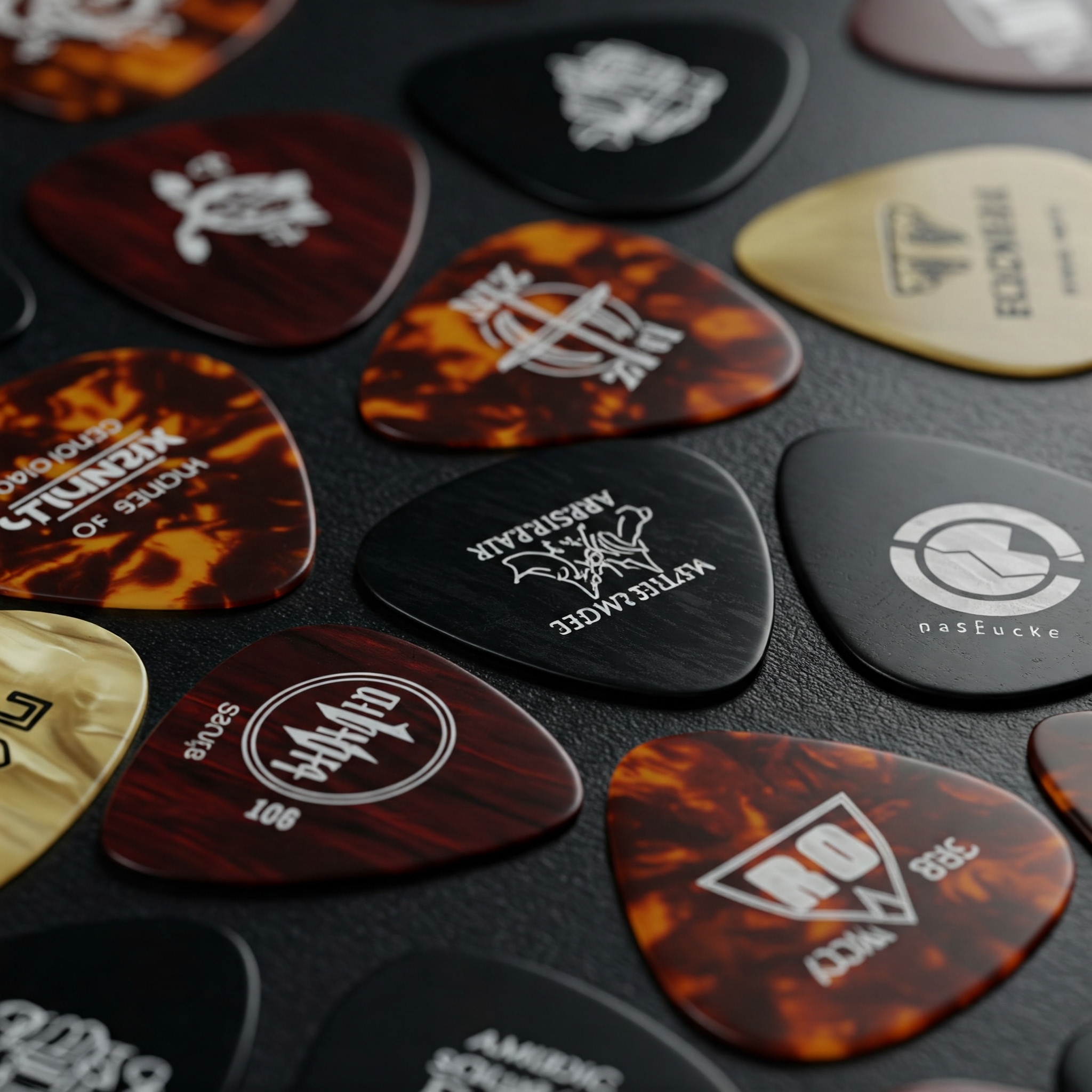
- Custom Printing: Several online services offer custom-printed bass guitar picks featuring your band logo, artwork, or personal designs. These make excellent promotional items for performing bassists.
- Engraving: For picks made from harder materials, consider laser engraving or hand-engraving your name, logo, or inspirational messages. This not only personalizes your picks but also makes them easily identifiable if misplaced.
- Color Customization: Some pick materials can be safely dyed using fabric dyes or specialized colorants. Research compatibility between your specific pick material and available dyes before attempting coloration.
Professional Customization Services
For those seeking professional-grade customization without DIY challenges, consider these services:
- Custom Pick Manufacturers: Several companies specialize in creating fully customized bass guitar picks to exact specifications. These services typically offer material options not readily available to individuals and can produce picks with precise dimensions and characteristics.
- Boutique Pick Makers: Independent artisans create handcrafted bass guitar picks with unique properties and aesthetics. These picks often feature exotic materials, intricate designs, and playing characteristics developed through years of experimentation.
- Pick Modification Services: Some guitar technicians and specialized businesses offer professional pick modification services, applying expert techniques to optimize your existing bass guitar picks for your specific playing style.
| Customization Approach | Difficulty Level | Tools Required | Benefits | Considerations |
|---|---|---|---|---|
| Edge Beveling | Beginner | Fine sandpaper, polishing cloth | Reduced pick noise, improved release | Start conservatively; difficult to add material back |
| Grip Texturing | Beginner | Grip materials, adhesive | Enhanced control, reduced slippage | May affect comfort for some playing styles |
| Hole Drilling | Intermediate | Small drill, appropriate bits | Improved airflow, weight reduction | Risk of cracking or weakening pick |
| Shape Modification | Intermediate | Sandpaper, files, templates | Customized feel and response | Requires careful planning to maintain balance |
| DIY Pick Creation | Intermediate-Advanced | Templates, cutting tools, materials | Complete customization control | Requires practice to achieve professional results |
| Heat Texturing | Advanced | Soldering iron, heat-resistant surface | Unique grip patterns, aesthetic appeal | Risk of material damage; requires practice |
💬 Elevate Your Bass Playing Today! 🎵
➡ Don’t miss out on these essential accessories that can transform your experience with bass guitar picks. Click any highlighted product to check current pricing and availability. The right tools make all the difference in developing your perfect bass tone and technique!

Recommended Products for Bass Guitar Pick Users
To maximize your experience with bass guitar picks, consider these complementary products that enhance convenience, performance, and versatility.
D’Addario Planet Waves Pick Holder
This adhesive-backed pick holder attaches to your bass headstock or pickguard, keeping multiple bass guitar picks within immediate reach during performances. The secure grip mechanism prevents picks from falling out during movement while allowing quick one-handed retrieval when needed. This simple accessory eliminates frantic searches for dropped picks during crucial performance moments.
Dunlop Microfiber Pick Cleaning Cloth
Maintain optimal performance from your bass guitar picks with this specialized microfiber cloth designed to remove oils, debris, and residue without scratching delicate pick surfaces. Regular cleaning improves grip consistency and preserves the original playing characteristics of premium picks. The compact size makes it perfect for including in your bass case or gig bag.
Toolwiz Ultimate Pick Punch
Create customized bass guitar picks from various materials with this precision pick punch. The heavy-duty construction ensures clean cuts through plastic cards, specialized pick materials, and other suitable substances. Includes multiple templates for different pick shapes and sizes, allowing endless experimentation with custom bass guitar picks tailored to your specific preferences.
Ernie Ball Bass Guitar Pick Variety Pack
Experiment with different thicknesses and materials through this comprehensive sampler pack containing multiple bass guitar picks in various specifications. The diverse selection facilitates side-by-side comparison to determine your ideal pick characteristics. Perfect for bassists developing their pick technique or established players looking to refine their tone through different pick options.
Monster Grips Pick Grip Enhancement Spray
This specialized formula temporarily improves pick grip without changing your bass guitar picks’ physical characteristics. A light application creates a subtle tackiness that prevents slippage even during intense playing or sweaty performances. The formula evaporates without residue when no longer needed, making it ideal for performance emergencies without permanently altering your picks.
Conclusion
The world of bass guitar picks represents a fascinating intersection of art, science, and personal preference. Throughout this comprehensive guide, we’ve explored how these small but mighty tools can dramatically impact your sound, technique, and musical expression. From materials and thickness considerations to specialized designs and playing techniques, bass guitar picks offer virtually limitless possibilities for refining your approach to the instrument.
Perhaps the most important takeaway is that there is no universally “best” bass guitar pick – only the pick that best complements your unique playing style, instrument characteristics, and musical context. The journey to discovering your ideal pick involves experimentation, careful listening, and a willingness to challenge conventional wisdom in pursuit of your perfect sound.
We encourage you to view bass guitar picks not as mere accessories but as extensions of your musical voice. Even if you primarily play fingerstyle, having pick technique in your arsenal expands your tonal palette and technical capabilities. Similarly, dedicated pick players can benefit from understanding how different pick specifications influence their sound and feel.
Whether you’re just beginning your exploration of bass guitar picks or refining preferences developed over years of playing, remember that small changes can yield significant results. The thickness, material, shape, and edge profile of your pick all contribute to your overall sound in ways that can elevate your playing from good to exceptional.
As you continue your bass journey, maintain an open mind about different approaches to the instrument. The debate between fingers and picks isn’t about determining a superior method but about understanding which tool best serves the music in any given moment. The most versatile bassists recognize that different techniques and equipment offer unique advantages, allowing them to select the perfect approach for each musical situation.
We hope this guide has provided valuable insights that enhance your understanding and enjoyment of bass guitar picks. May your exploration of these essential tools lead to new creative possibilities, improved technical capabilities, and most importantly, greater musical satisfaction.
FAQs About Bass Guitar Picks
❓ What thickness of pick is best for bass guitar?
✅ Bass guitar picks typically range from 0.8mm to 2.5mm thickness, with most bassists preferring 1.0-1.5mm for optimal control and tone. Thicker picks (1.2mm+) provide clearer articulation and brighter attack for rock, metal, and technical styles, while medium picks (0.8-1.0mm) offer more flexibility for general playing. Your ideal thickness depends on playing style, genre, and personal preference, with many professionals recommending starting at 1.0mm and experimenting from there...
❓ Are bass guitar picks different from regular guitar picks?
✅ Yes, bass guitar picks are typically thicker and stiffer than standard guitar picks to handle the heavier gauge strings and produce sufficient volume and attack. While regular guitar picks average 0.5-0.8mm thickness, bass-specific picks generally range from 1.0-2.5mm. Bass picks often feature more pronounced gripping surfaces and sometimes specialized shapes optimized for bass string spacing. Though some players use regular guitar picks for bass, purpose-designed bass picks provide better control and tone...
❓ What are the best pick materials for slap-style bass playing?
✅ For bassists who alternate between slap technique and pick playing, medium-hard materials that won't damage fingers work best. Delrin (Tortex) and nylon bass guitar picks in 0.8-1.0mm thickness provide sufficient rigidity while remaining comfortable when quickly switching to fingerstyle. Materials with slightly textured surfaces prevent slippage during fast technique transitions. Some players prefer rounded-edge picks that produce less string noise when integrating picked notes with slapped passages...
❓ How do I prevent my bass pick from slipping during performances?
✅ To prevent bass guitar picks from slipping during performances, choose picks with built-in texture or grip enhancements like Dunlop Max-Grip or Dava Control Picks. Alternatively, create temporary grip by poking small holes in smooth picks with a needle, applying skateboard grip tape to the surface, or using specialized pick grip products. Some bassists modify their technique by applying slightly more pressure or positioning the pick deeper between thumb and forefinger. Wiping hands with a towel between songs removes moisture that contributes to slippage...
❓ Can bass picks damage my instrument's finish or strings?
✅ Metal bass guitar picks can potentially scratch instrument finishes and accelerate string wear, particularly with aggressive playing techniques. However, most plastic, nylon, and composite picks pose minimal risk to modern instrument finishes. To protect valuable basses, consider picks with polished edges, avoid metal picks on delicate finishes, and be mindful of pick attack angle. Some players apply small clear protective films to areas where picks frequently contact the instrument. Regular string changes remain necessary regardless of pick material choice...
Recommended for You:
- Best Bass on Headphones: 7 Top Picks for Thunderous Sound in 2025
- Yamaha vs Ibanez Acoustic Guitars: The Ultimate Comparison Guide for 2025 – Honest, In-Depth & Expert-Picked Insights
- 10 Best Cheap Bass Guitar Options For Beginner Musicians in 2025
Disclaimer: This article contains affiliate links. If you purchase products through these links, we may earn a small commission at no additional cost to you.
✨ Found this helpful? Share it with your friends! 💬🤗