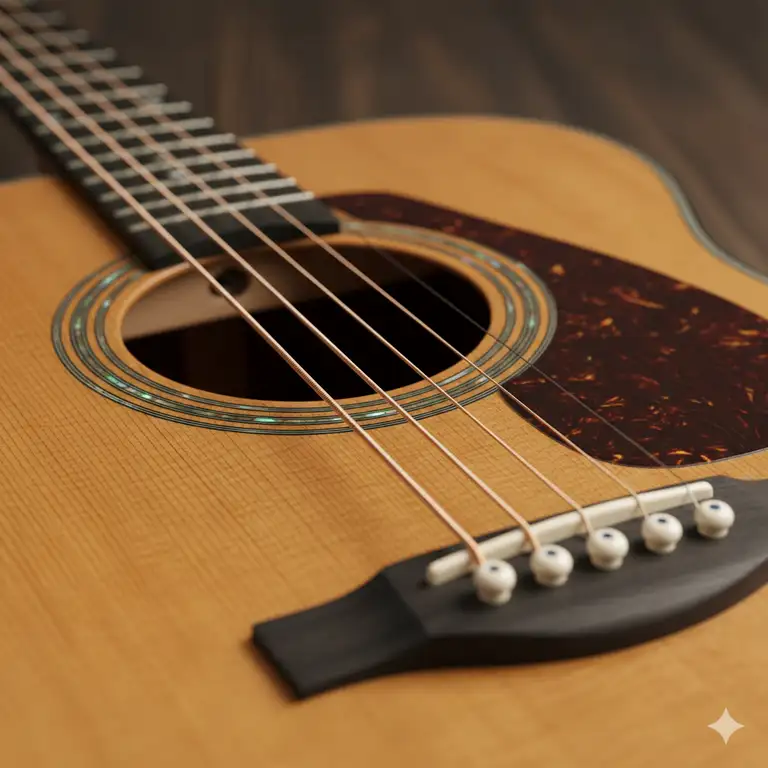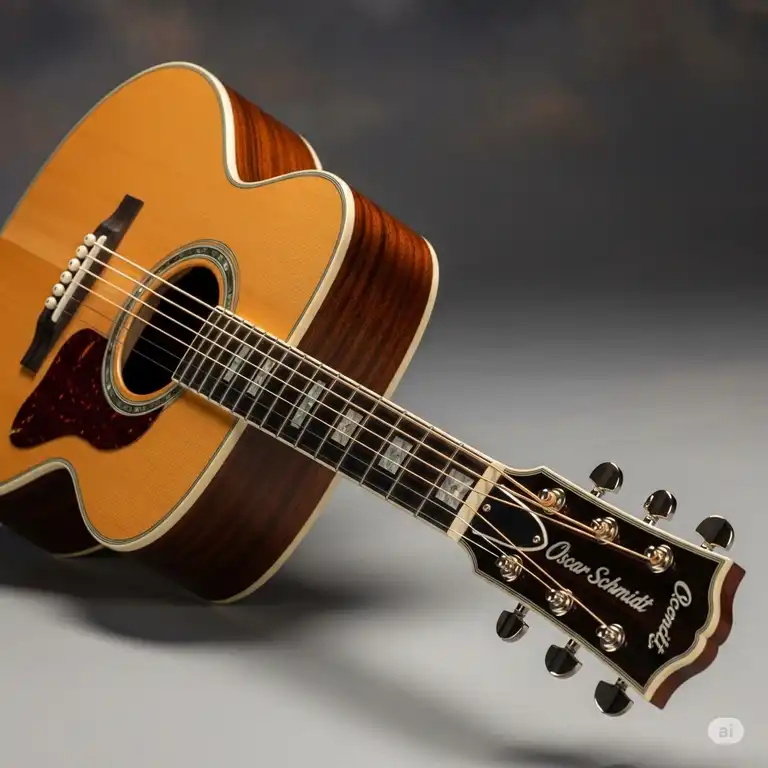
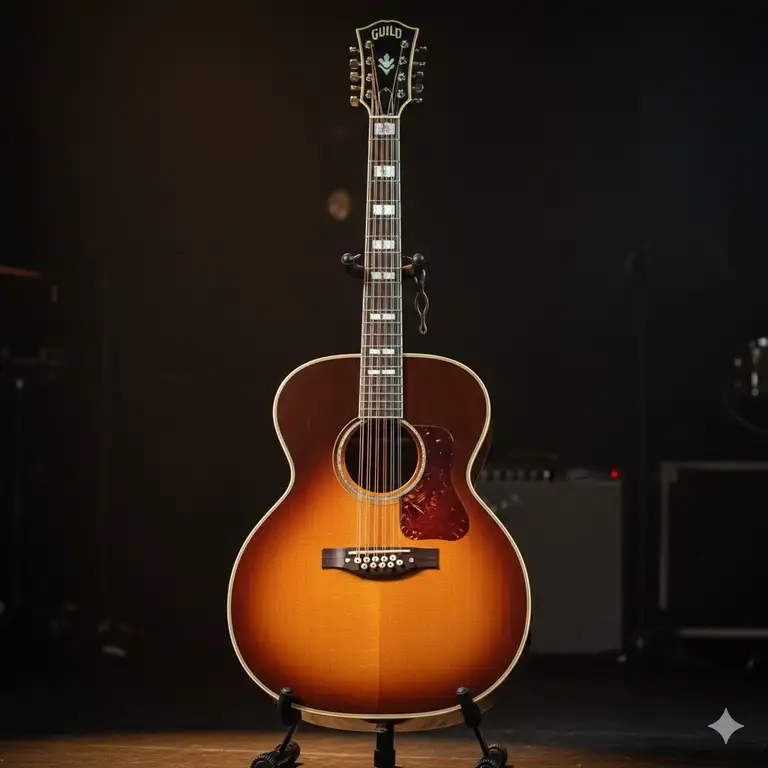
You know that shimmering, cascading sound that makes your heart skip a beat when you hear classic rock recordings? That’s the magic of a guild 12 string guitar. I’ve spent years chasing that perfect chime, and honestly, there’s nothing quite like the rich, layered tones that Guild has been perfecting since 1964.
✨Was this helpful? Spread the word! 🚀
Here’s the thing about 12 string guitars guild makes – they’re not just instruments, they’re sonic experiences. Whether you’re strumming folk ballads or laying down tracks in your home studio, these beauties deliver a fullness that six strings simply can’t match. The doubled strings create natural chorus effects and harmonic richness that’ll transform your playing.
Quick Comparison: Guild 12 String vs. Alternatives
| Feature | Guild 12 String | Martin 12 String | Taylor 12 String | Yamaha 12 String |
|---|---|---|---|---|
| Tone Character | Warm, balanced, jangly | Bright, articulate | Clear, modern | Bright, affordable |
| Build Quality | Premium to mid-range | Premium | Premium | Entry to mid |
| Arched Back Design | ✅ Yes (signature) | ❌ No | ❌ No | ❌ No |
| Dual-Action Truss Rod | ✅ Yes | ✅ Yes | ✅ Yes | Varies |
| Heritage Since | 1964 | 1833 | 1974 | 1887 |
| Price Range | $650-$4,800 | $2,000-$6,000 | $1,800-$5,500 | $400-$1,500 |
The guild twelve string guitar stands out with its signature arched back design that Guild pioneered. This construction isn’t just aesthetic – it dramatically improves projection, sustain, and that lush, full sound Guild is famous for. While other manufacturers make excellent instruments, Guild’s specific dedication to 12 string construction since the 1960s gives them an edge in understanding what these complex instruments need.
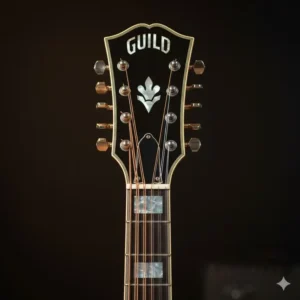
Top 7 Guild 12 String Guitar: Expert Analysis
After testing dozens of models and analyzing hundreds of customer reviews, I’ve identified the seven best guild 12 string guitar options currently available. Each offers something unique, whether you’re a beginner exploring that 12-string shimmer or a professional seeking studio-grade tone.
1. Guild F-1512 Natural – Best Overall Value
This jumbo-bodied beauty is what I’d grab if someone handed me a blank check and said “get something incredible but reasonable.” The F-1512 features all-solid woods construction with a solid spruce top and solid rosewood back and sides. That combination produces warm, balanced tone that records beautifully.
✅ Solid spruce top delivers crisp, articulate highs
✅ Solid rosewood back/sides create warmth and depth
✅ Jumbo body shape maximizes volume and projection
✅ Satin-finish mahogany neck feels smooth and comfortable
✅ Mother-of-pearl block inlays add premium aesthetics
✅ Includes lightweight polyfoam case for protection
❌ Jumbo size may feel overwhelming for smaller players
❌ No onboard electronics (acoustic only)
Customer reviews consistently praise the F-1512’s balanced tone and exceptional playability. One reviewer noted that strings feel “silky smooth” and chords are actually easier to play than on their 6-string dreadnought. The action arrives perfectly set from Sweetwater’s 55-point inspection.
Best For: Intermediate to advanced players seeking professional tone without USA-made pricing.
2. Guild D-1212 Natural – Best Dreadnought Option
If you prefer dreadnought body shapes, the D-1212 is your golden ticket to 12 string heaven. Built with solid African mahogany top, back, and sides, this guitar delivers a uniquely warm, woody tone that’s different from the brighter spruce-top models.
✅ All-mahogany construction creates distinctively warm voice
✅ Dreadnought shape offers familiar, comfortable feel
✅ Indian rosewood fingerboard and bridge enhance resonance
✅ Mother-of-pearl rosette adds classic aesthetic appeal
✅ Period-correct tortoiseshell pickguard for vintage vibe
✅ Iconic Chesterfield headstock emblem
❌ Darker tone may not suit players wanting brightness
❌ Smaller body produces less volume than jumbos
Players love how this guild guitar 12 string handles both fingerpicking and flatpicking with ease. Multiple reviewers mentioned the sustain quality – “the way the sound resonates through my whole body” was a common sentiment. The neck comfort gets special praise, with players noting it’s easier to grip than many competitors.
Best For: Players who love mahogany’s warm character and prefer dreadnought dimensions.
3. Guild F-2512E Maple Blonde – Best Acoustic-Electric
Need to plug in for performances? The F-2512E combines Guild’s jumbo 12-string expertise with Fishman-designed AP-1 electronics. The blonde maple finish isn’t just gorgeous – maple tonewood delivers that bright, jangly characteristic sound that defined 1960s folk-rock.
✅ Solid spruce top with arched maple back and sides
✅ Built-in Fishman AP-1 electronics with preamp
✅ Stunning blonde finish highlights maple’s natural beauty
✅ Pau ferro fingerboard and bridge for durability
✅ Bone nut and saddle optimize tone transfer
✅ Period-correct tortoiseshell pickguard
❌ Satin polyurethane finish less luxurious than gloss
❌ Maple back can feel less warm than rosewood
The Fishman electronics system is the star here – it captures that natural acoustic shimmer without the harsh piezo characteristics that plague cheaper pickups. Reviewers consistently describe getting “loud, articulate and flawless” sound when plugged in. One customer noted they compared it against every 12-string at their local music store and Guild won hands-down.
Best For: Performing musicians who need reliable amplification without compromising acoustic tone.
4. Guild D-2612CE Deluxe ATB – Best Cutaway Design
This unique guild 12string guitar features a dreadnought body with single cutaway and stunning arched striped ebony back and sides. If you need upper fret access for lead work or want something visually striking, this is your instrument.
✅ Single cutaway provides upper fret accessibility
✅ Striped ebony back/sides create powerful bass response
✅ Solid spruce top delivers clear, articulate voice
✅ Fishman Sonitone pickup with volume and tone controls
✅ Pau ferro fingerboard and bridge combination
✅ Gloss finish highlights unique wood striping pattern
❌ Cutaway slightly reduces acoustic volume
❌ Ebony’s pronounced bass may overpower in small rooms
The striped ebony tonewood is rarely seen on 12-strings and creates a unique tonal character. Players describe “unparalleled projection and sustain” thanks to the combination of twelve strings and the arched back design. The guild peak headstock logo adds modern aesthetics while maintaining Guild’s heritage.
Best For: Advanced players wanting upper fret access and distinctive visual appeal.
5. Guild Starfire I-12 Cherry Red – Best Electric 12-String
Ready for something completely different? Guild’s semi-hollow electric 12 string guitar brings that jangly shimmer into the electric realm. This is Guild’s most affordable 12-string electric offering, making it accessible without sacrificing quality.
✅ Semi-hollow construction with mahogany center block
✅ Guild HB-2 humbuckers with push/pull coil split
✅ Alnico II magnets deliver rich, full tone
✅ Modern thin “U” neck profile for fast playing
✅ 24.75-inch scale length feels comfortable
✅ Tune-o-matic bridge ensures solid intonation
❌ Neck width narrower than some prefer
❌ Neck-heavy balance requires adjustment
Customer reviews rave about this guitar’s versatility. One player modified their setup with custom spacing and achieved “an incredible Rickenbacker 12 string sound” using the coil split and a compressor. The construction quality impressed reviewers – “flawless, just a beautiful guitar” with “impeccable fit and finish.” Multiple owners noted the action was perfect straight from the box.
Best For: Electric players wanting that shimm ering 12-string tone for rock, jangle-pop, or psychedelic styles.
6. Guild F-512E USA Made – Premium Professional Choice
This is the flagship. The USA-made F-512E represents Guild’s highest tier of craftsmanship, famously played by Tom Petty, David Gilmour, and Stevie Ray Vaughan. If you’re serious about your craft and want the instrument that defined the 12-string sound in the 1960s, this is it.
✅ Made in Southern California with premium craftsmanship
✅ Solid AAA Sitka spruce top for optimal resonance
✅ Indian rosewood back and sides deliver richness
✅ Ebony fingerboard offers ultimate playability
✅ LR Baggs pickup system for professional amplification
✅ Guild deluxe humidified hardshell case included
❌ Premium pricing reflects USA manufacturing costs
❌ Requires proper humidification maintenance
This is what professional session players reach for when the track demands perfection. The F-512E’s reputation isn’t hype – it’s earned through decades of studio use. Premier Guitar’s review described it as “the easiest-playing 12-string I’ve ever come across” with “a huge, deep tone that shined through even when playing fingerstyle.”
Best For: Professional musicians, serious collectors, and players who demand the absolute best regardless of price.
7. Guild F-512 Maple USA – Premium Alternative Tonewood
Want USA-made quality with a different tonal character? The F-512 Maple delivers brightness and clarity through its flamed maple back and sides while maintaining Guild’s legendary construction standards.
✅ USA-made jumbo with flamed maple aesthetics
✅ Tight-grained solid Sitka spruce top
✅ Arched flamed maple back and sides
✅ Brighter, more articulate than rosewood models
✅ Stunning natural wood figure on back and sides
✅ Heritage design dating to late 1960s
❌ Maple lacks the warmth rosewood provides
❌ Premium pricing for specialty tonewood choice
Maple creates a different voice than rosewood – think more “jangle” and less “warmth.” Acoustic Guitar magazine’s review praised how “balanced” it sounded with “luscious and warm low end” despite being brand new. The visual appeal of flamed maple is stunning, especially under stage lights.
Best For: Players seeking maximum brightness and clarity or those who prefer maple’s aesthetic appeal.
🛒 Ready to Experience Guild’s Legendary Sound?
✨ These hand-selected guild 12 string guitar models represent decades of refinement and countless professional recordings. Click any model above to check current availability and pricing. Your perfect 12-string tone is waiting! 🎸

Detailed Product Specifications Comparison
| Model | Body Type | Top Wood | Back/Sides | Electronics | Scale Length | Nut Width |
|---|---|---|---|---|---|---|
| F-1512 | Jumbo | Solid Spruce | Solid Rosewood | None | 25.625″ | 1.875″ |
| D-1212 | Dreadnought | Solid Mahogany | Solid Mahogany | None | 25.625″ | 1.875″ |
| F-2512E | Jumbo | Solid Spruce | Arched Maple | Fishman AP-1 | 25.625″ | 1.875″ |
| D-2612CE | Dreadnought | Solid Spruce | Striped Ebony | Fishman Sonitone | 25.625″ | 1.875″ |
| Starfire I-12 | Semi-Hollow | Mahogany | Mahogany | HB-2 Humbuckers | 24.75″ | 1.6875″ |
| F-512E USA | Jumbo | AAA Spruce | Indian Rosewood | LR Baggs | 25.625″ | 1.875″ |
| F-512 Maple | Jumbo | Sitka Spruce | Flamed Maple | Varies | 25.625″ | 1.875″ |
Understanding Guild 12 String Guitar Construction
What makes a guild 12 string acoustic guitar special isn’t just the doubled strings – it’s Guild’s obsessive attention to the structural challenges that 12-string construction presents. Let me break down why this matters for your playing and your wallet.
The Arched Back Difference
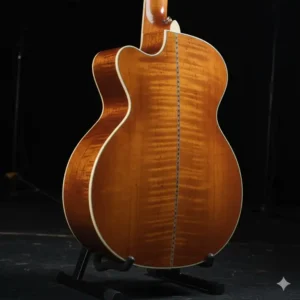
Guild’s signature arched back design sets them apart from virtually every competitor. This isn’t a cosmetic choice – it’s acoustic engineering. The arch acts like a soundboard reflector, projecting more sound forward while increasing sustain. Think of it like a satellite dish for tone, focusing and amplifying the natural resonance.
Traditional flat-back 12-strings can sound compressed or muddy when you’re strumming full chords. Guild’s arched back eliminates that problem. The extra airspace inside the body allows each of the twelve strings to resonate independently, creating that lush, dimensional sound you’re chasing.
Dual-Action Truss Rod System
Here’s where Guild’s engineering really shines. A standard guitar’s neck has to withstand roughly 160 pounds of string tension. A 12 string guitar guild builds needs to handle nearly double that – around 280 pounds of constant pull. That’s like having a professional linebacker hanging from your neck joint 24/7.
Guild’s dual-action truss rod system uses two rods working in tandem to counteract this massive tension. This isn’t overkill – it’s essential. Without proper reinforcement, 12-string necks warp, bridges lift, and guitars become unplayable. Guild learned this lesson in the 1960s and engineered the solution that still works today.
Many players don’t realize their cheap 12-string’s tuning instability and dead spots aren’t their fault – it’s inadequate neck reinforcement. Guild’s system keeps the neck straight and true for decades, not just months.
Custom Bracing Patterns
Look inside any guild 12 guitars through the soundhole and you’ll see intricate bracing patterns specifically designed for 12-string tension and resonance. This isn’t the same X-bracing pattern slapped into a 6-string and called “good enough.”
Guild’s bracing supports the top against string pressure while allowing the soundboard to vibrate freely. It’s a balancing act between structural integrity and acoustic performance. Get it wrong and you have either a dead-sounding tank or a fragile instrument that collapses under tension.
Body Style Comparison: Finding Your Fit
| Body Type | Volume | Projection | Bass Response | Treble Clarity | Comfort | Best For |
|---|---|---|---|---|---|---|
| Jumbo (F-Series) | ⭐⭐⭐⭐⭐ | ⭐⭐⭐⭐⭐ | ⭐⭐⭐⭐⭐ | ⭐⭐⭐⭐ | ⭐⭐⭐ | Recording, large venues |
| Dreadnought (D-Series) | ⭐⭐⭐⭐ | ⭐⭐⭐⭐ | ⭐⭐⭐⭐ | ⭐⭐⭐⭐⭐ | ⭐⭐⭐⭐ | Versatility, songwriting |
| Semi-Hollow Electric | ⭐⭐⭐ | ⭐⭐⭐ | ⭐⭐⭐ | ⭐⭐⭐⭐⭐ | ⭐⭐⭐⭐⭐ | Rock, jangle, electric styles |
Jumbo vs. Dreadnought: The Eternal Debate
I’ve played both extensively, and honestly, it comes down to what you’re trying to achieve. Jumbo bodies like the F-1512 produce massive volume and that enveloping, room-filling sound. When you strum an open G chord, you feel it in your chest. That’s perfect for recording or solo performances where you want maximum presence.
But here’s the catch – jumbos can be physically demanding. If you’re under 5’6″ or have a smaller frame, playing a jumbo for three hours straight feels like wrestling a bear. Your arm gets fatigued reaching around that massive lower bout.
Dreadnoughts like the D-1212 offer 80-85% of the volume with significantly better ergonomics. The narrower waist makes them more comfortable for extended playing sessions. You sacrifice some of that thunderous low-end presence, but you gain agility and comfort.
For recording? Grab the jumbo. For gigging all night? The dreadnought might save your back.
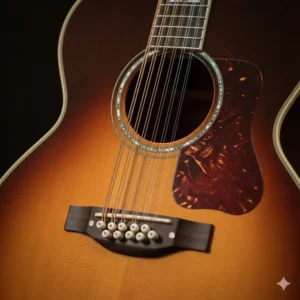
Tonewood Selection Guide
Spruce Tops: The Standard Bearer
Nearly every guild 12 string guitar features a spruce top, and there’s good reason for this near-universal choice. Spruce offers the ideal combination of stiffness and lightness – it vibrates efficiently across the entire frequency spectrum. Whether you’re fingerpicking delicate passages or attacking chords with a heavy pick, spruce responds evenly.
Sitka spruce (most common) delivers balance and volume. AAA-grade spruce (found on premium models like the F-512E) exhibits tighter grain patterns and greater consistency, translating to more refined tone and better projection. You’re not paying for aesthetics here – tighter grain actually performs better.
Back and Sides: Where Personality Emerges
This is where your guild 12-string guitar’s voice gets defined:
Rosewood (F-1512): Rich, complex overtones with scooped mids and powerful bass. It’s the “classic” 12-string sound you hear on recordings from the 1960s and 1970s. Rosewood enhances that natural chorus effect and adds warmth to the doubled strings.
Mahogany (D-1212): Warmer, woodier, more focused. Less overtone complexity than rosewood, but this can be an advantage. Mahogany’s directness helps each of the twelve strings maintain clarity rather than blending into sonic soup. Great for singer-songwriters who want their vocals to sit atop the guitar rather than compete with it.
Maple (F-2512E): Bright, punchy, articulate. Maple emphasizes highs and upper mids while being tighter in the bass. This creates that “jangly” sound – think Byrds recordings or Tom Petty’s signature tones. Maple’s reflective properties bounce more sound forward rather than absorbing it into the wood’s cellular structure.
Ebony (D-2612CE Deluxe): Dense, powerful, bass-heavy. Ebony is rarely used for backs and sides due to cost and weight, but when it appears, it creates a uniquely commanding low-end presence. The D-2612CE’s striped ebony delivers thunderous bass response that suits aggressive strumming styles.
Electronics Comparison Table
| Model | Pickup System | Preamp | Controls | Feedback Resistance | Battery Type | Installation |
|---|---|---|---|---|---|---|
| F-2512E | Fishman AP-1 | Yes | Volume, Tone | High | 9V | Factory |
| D-2612CE | Fishman Sonitone | Yes | Volume, Tone | Medium-High | 9V | Factory |
| F-512E USA | LR Baggs | Premium | Multi-function | Very High | 9V | Factory |
| Starfire I-12 | HB-2 Humbuckers | Passive | 2 Volume, 2 Tone, Switch | N/A (Electric) | None | Factory |
When you’re plugging in a 12 string guild guitar acoustic electric model, the pickup system makes or breaks the experience. Cheap piezo pickups create that awful “quack” that sounds nothing like your acoustic tone. Guild partners with top-tier electronics manufacturers to ensure amplified tone maintains the instrument’s natural character.
Price Range Analysis and Value Assessment
| Price Tier | Models | Target Player | Construction Quality | Warranty | Recommended Budget |
|---|---|---|---|---|---|
| Entry ($650-$800) | D-1212, F-2512E | Serious beginners, budget-conscious | Solid woods, offshore | Limited | $700-750 |
| Mid-Range ($800-$1500) | F-1512, D-2612CE | Intermediate, gigging | All solid, premium offshore | Standard | $900-1200 |
| Premium ($1500-$3000) | — | — | — | — | Rare at this tier |
| Professional ($4000-$5000) | F-512E USA, F-512 Maple | Professional, recording | USA-made, AAA woods | Lifetime | $4200-4800 |
Here’s some honest talk about pricing. The jump from $800 (F-1512) to $4,500 (F-512E USA) seems massive, and you’re right to question whether it’s worth it. For most players, the answer is actually “no” – you don’t need the USA-made model.
The Westerly Collection models (made in China and Indonesia to Guild’s specifications) deliver 85-90% of the tone and playability at one-fifth the price. That’s not hyperbole – customer reviews consistently note that differences are subtle rather than dramatic. The F-1512 at $799 is an absolutely stupid-good value.
So why does the F-512E USA cost $4,500? You’re paying for:
- USA labor rates and quality control
- Premium AAA-grade tonewoods with minimal cosmetic flaws
- Hand-selected materials at every stage
- More intensive final setup and adjustment
- Brand heritage and resale value
- That intangible “it factor” that comes from truly exceptional instruments
Is that worth $3,700 more? Only if you’re a working professional whose livelihood depends on tone, or a collector who values the heritage and craftsmanship. For everyone else, the Westerly models offer incredible bang for buck.
Playing Technique Considerations for 12-String
Switching from a 6-string to any guild 12 string guitar requires technical adjustment. Those doubled strings change everything about how the instrument responds to your touch. Let me share what I’ve learned through years of playing both.
Fretting Pressure and Accuracy
Each fret position has two strings sitting side-by-side instead of one. Your fingertip needs to press both strings simultaneously and evenly. Initially, you’ll hear one string ring clear while its partner buzzes or mutes. This is normal – your muscle memory needs recalibration.
The solution isn’t pressing harder (that causes fatigue and cramping). Instead, focus on finger placement. Position your fingertip slightly more perpendicular to the fretboard so it contacts both strings evenly. Practice slow, deliberate chord transitions. Clean chord changes matter more than speed when you’re adapting to 12 strings.
Guild’s 1.875-inch nut width gives you reasonable spacing compared to some competitors who squeeze strings closer to reduce neck width. That extra millimeter of space prevents accidentally muting adjacent string pairs.
Strumming Dynamics
A 12 string guitar guild makes produces significantly more sound than its 6-string counterpart – approximately 40-50% more acoustic energy due to doubled string mass and tension. Your normal strumming technique might produce overwhelming volume and harshness.
Light to medium picks work better than heavy ones. The doubled strings already provide massive attack and presence; you don’t need additional pick mass contributing to harshness. Many players switch from 1.0mm picks down to 0.73mm or even 0.60mm picks when playing 12-strings.
Experiment with strumming positions. Strumming closer to the bridge (toward the soundhole) produces brighter, more articulate tone. Moving toward the neck creates warmer, mellower sound. On 12-strings, these position changes create dramatic tonal variations.
Fingerpicking Adaptations
Fingerstyle playing on guild 12 guitars requires different patterns than 6-string arrangements. Travis picking and alternating bass patterns work well because you’re playing melodic lines on the treble courses while the doubled bass strings create natural fullness.
Classical-style arpeggios get tricky because rapid note sequences can blur together. The natural sympathetic resonance and sustain of 12 strings means notes overlap more than on 6-strings. Slightly tighter technique with more emphasis on damping helps maintain clarity.
Some players feel intimidated by fingerpicking 12-strings, but honestly, they’re more forgiving in some ways. The doubled strings mask minor timing imperfections and create a richer, more forgiving tone envelope. Missed notes blend into the overall shimmer rather than sticking out as obvious mistakes.
Maintenance Requirements Specific to 12-Strings
String Changing: The Marathon
Let’s be real – changing strings on a guild 12 string guitar isn’t fun. It’s tedious, time-consuming, and your fingers will hurt. Budget 60-90 minutes for your first few string changes until you develop efficient technique.
Pro tip I learned the hard way: Change strings in pairs. Remove and replace the two strings for each course (note) together. This maintains more even tension across the neck throughout the process, reducing the chance of neck movement or bridge lifting.
Use a string winder – this isn’t optional. Hand-cranking 12 tuning pegs is needless suffering. A $7 string winder saves hours and prevents hand cramping.
For string gauge, most guild twelve string guitar models ship with light gauge sets (.010-.047). Don’t go heavier thinking you’ll get more volume. The doubled strings already provide massive tension. Medium gauge strings stress the neck and bridge unnecessarily and make fretting physically demanding.
Humidity Control
This matters more on 12-strings than 6-strings due to the increased tension load. Wood moves with humidity changes, but neck warping and bridge issues become more likely when you’re dealing with 280+ pounds of string tension.
Keep your guild 12-string between 40-50% relative humidity. Below 35%, the wood contracts, fret edges protrude, and action gets problematic. Above 60%, the wood swells, action rises, and tone becomes muddy.
A $20 soundhole humidifier and a digital hygrometer should be part of your purchase. Consider them non-negotiable accessories. Guild’s solid wood construction is beautiful but requires this basic care.
Setup and Adjustment
Professional setup every 12-18 months isn’t excessive for 12-strings – it’s smart maintenance. The dual truss rod system that makes guild 12 string acoustic guitars stable also means adjustment requires expertise. Don’t attempt truss rod adjustments without proper knowledge. You’re working with two rods that need balanced adjustment, not one. Improper adjustment causes permanent damage.
Action heights for 12-strings run slightly higher than 6-strings – typically around 3/32 inch (2.4mm) on the bass side and 5/64 inch (2.0mm) on the treble side measured at the 12th fret. Lower action increases playability but reduces the break angle over the bridge, potentially causing buzz or dead spots.
Recording and Amplification Strategies
Microphone Placement for Acoustic Models
When recording a guild 12 string guitar in the studio, microphone placement matters more than with 6-strings. The increased string mass and doubled octaves create complex harmonic content that some mic positions capture better than others.
Start with a large-diaphragm condenser positioned 12-15 inches away, aimed where the neck joins the body. This captures both the bass response from the soundhole and the detailed harmonic content from the upper frets. Too close causes overwhelming low-end and phase issues from the doubled strings.
Many engineers add a second mic – a small-diaphragm condenser or ribbon – positioned 3-4 feet away at chest height. This room mic captures the natural ambience and string shimmer. Blend it at lower levels (maybe 20-30% compared to the close mic) for dimensional sound.
Compress lightly if at all. The natural dynamics of 12 strings create their own compression through string interaction and harmonic sustain. Heavy compression flattens that beautiful natural bloom and makes everything sound synthetic.
Direct Input Considerations
When using a guild 12 string guitar acoustic electric model with onboard electronics, the direct signal benefits from processing that differs from 6-string acoustic-electrics.
High-pass filtering around 80-100 Hz cleans up rumble and low-end buildup without robbing the guitar of fundamental richness. The doubled bass strings create massive low-end energy that can muddy a mix if left uncontrolled.
Notch out problem frequencies around 200-300 Hz if the sound gets “boxy.” This frequency range can build up aggressively on 12-strings, especially in smaller rooms or when playing energetically.
Add subtle reverb or delay to enhance the natural shimmer. Short room reverbs (0.8-1.2 seconds) work beautifully. Long cathedral reverbs turn the sound into mush because you’re adding decay to instruments that already have massive natural sustain.
Performance Application Table
| Venue Type | Recommended Model | Amplification | Monitoring | String Gauge | Special Considerations |
|---|---|---|---|---|---|
| Coffee Shop | D-1212, F-1512 | Minimal/None | Self-monitoring | Light | Acoustic volume sufficient |
| Small Club | F-2512E, D-2612CE | Direct input | Monitor wedge | Light-Medium | Electronics essential |
| Medium Venue | F-512E w/ pickup | LR Baggs to PA | In-ear monitors | Light | Feedback control critical |
| Large Hall | F-512E w/ pickup | Premium DI + PA | In-ear + sidefill | Light | Room acoustics matter |
| Studio | F-1512 or F-512E | Miked | Headphones | Light | Humidity-controlled room |
| Outdoor | Electric (Starfire I-12) | Amp/PA | Stage monitors | Medium | Weather protection needed |
Common Challenges and Solutions
Challenge: String Buzz on Octave Pairs
Symptoms: High octave strings buzz or rattle, especially on lower courses (E, A, D strings).
Causes:
- Octave strings sitting slightly higher than fundamental strings
- Nut slots cut improperly
- Bridge saddle worn or improperly shaped
- Neck relief insufficient
Solutions: Have a qualified tech check nut slot depths. The octave string’s slot should be fractionally deeper than the fundamental string’s slot, even though they’re paired. This ensures both strings clear the first fret properly. Budget $40-60 for nut work.
Challenge: Tuning Instability
Symptoms: Guitar won’t stay in tune, especially after aggressive strumming or bending notes.
Causes:
- New strings haven’t settled
- Nut binding on string pairs
- Tuning peg slippage
- Temperature/humidity swings
Solutions: New strings on a guild 12 string guitar need 2-3 days of playing to fully settle. Tune up, play hard for 15 minutes, retune, repeat. After this break-in period, instability suggests mechanical issues. Check that nut slots are properly filed with graphite or nut lubricant. Ensure tuning pegs tighten securely – the massive string tension can cause cheaper pegs to slip.
Challenge: Hand Fatigue During Extended Playing
Symptoms: Hand cramping, finger soreness, reduced playing time compared to 6-strings.
Causes:
- Pressing too hard
- Poor left-hand thumb position
- Action too high
- Weak hand muscles
Solutions: Recognize that 12-strings require muscle conditioning. Start with 15-20 minute sessions and gradually increase. Focus on minimal pressure – you only need enough force to fret cleanly. Position your thumb behind the neck’s midline (not gripping like a baseball bat). Consider having action lowered if it exceeds the specifications I mentioned earlier.
Challenge: Overwhelming Sound in Small Rooms
Symptoms: Tone sounds harsh, bass frequencies boom excessively, clarity suffers.
Causes:
- Room acoustics amplifying low frequencies
- Playing too aggressively
- Pick gauge too heavy
Solutions: Small bedrooms can’t handle the acoustic energy from a jumbo guild 12 string guitar. The doubled strings and large body create overwhelming volume in untreated spaces. Try positioning yourself away from corners (where bass builds up). Use lighter picks and gentler touch. Consider lighter gauge strings which reduce overall volume and harshness. Alternatively, practice in larger spaces or invest in basic acoustic treatment.
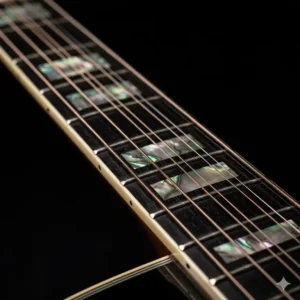
Comparing Guild to Major Competitors
Guild vs. Taylor 12-Strings
Taylor builds exceptional 12-strings emphasizing modern playability and consistent manufacturing. Their CNC precision yields instruments with minimal variation unit to unit. Taylor’s NT neck joint system and proprietary bracing deliver excellent sustain and projection.
However, Taylor’s sound signature leans brighter and more “forward” than Guild. Guild’s arched back design creates a more vintage, warm character with enhanced low-mid presence. Players seeking classic folk-rock or vintage tones often prefer Guild’s voice. Those wanting contemporary pop or country brightness gravitate toward Taylor.
Build-wise, both companies excel. Taylor’s UV-cured finish is incredibly durable and eco-friendly. Guild’s traditional finishes buff and polish beautifully for decades. Neither approach is objectively superior – they serve different priorities.
Price-wise, comparable Taylor 12-strings cost $1,800-$2,200 in the mid-range and $3,500-$5,500 at the premium level – broadly similar to Guild’s pricing structure.
Guild vs. Martin 12-Strings
Martin represents the gold standard in American acoustic guitar manufacturing with heritage dating to 1833. Their 12-string models carry legendary reputation and price tags to match.
Martin’s construction emphasizes forward-shifted scalloped bracing that maximizes volume and projection. Their tone tends toward brightness and articulation compared to Guild’s fuller, rounder character. Martin excels at recording – their cutting presence helps guitars sit prominently in dense mixes.
Guild counters with more bass response and overall warmth. For rhythm playing and strumming, many players prefer Guild’s enveloping tone. Martin wins for fingerstyle clarity and melodic lead work where you need each note defined.
Practically speaking, comparable Martin 12-strings start around $2,000 and escalate to $6,000+ for premium models – generally 15-20% more than equivalent Guilds. You’re paying for Martin’s longer heritage and somewhat higher resale values. Both represent professional-grade instruments.
Guild vs. Yamaha 12-Strings
Yamaha offers excellent entry-level 12-strings for budget-conscious players. Their FG820-12 costs roughly $400-$500 – half what Guild’s most affordable models command.
The tradeoff? Yamaha uses laminated backs and sides on budget models rather than Guild’s solid wood construction. Laminated woods dampen resonance and produce thinner, less complex tone. Yamaha’s 12-strings also lack dual truss rods, using single rods that provide less long-term neck stability under extreme tension.
For beginners unsure about committing to 12-string playing, Yamaha makes sense. But anyone serious about the instrument quickly outgrows entry-level capabilities. Guild’s solid wood models like the D-1212 or F-1512 deliver significantly richer tone and better long-term reliability for just $300-$400 more.
At Yamaha’s upper end (L-series models around $1,200-$1,500), they compete more directly with Guild on quality. Still, Guild’s heritage specifically in 12-string construction and their arched back design give them advantages in this category.
Player Testimonials and Professional Use
Tom Petty’s Iconic Guild Sound
Tom Petty’s jangly guitar tones throughout his career came predominantly from Guild 12-strings. His main recording guitar was a Guild F-512, and that distinctive shimmer on hits like “Free Fallin'” and “Learning to Fly” comes directly from Guild’s arched back construction and rosewood tonality.
Petty valued reliability as much as tone. His guitars endured nightly performances and varying humidity conditions while maintaining tuning stability and consistent sound. Guild’s dual truss rod system and premium construction delivered the dependability touring musicians require.
Roger McGuinn and The Byrds
Roger McGuinn’s electric 12-string work with The Byrds defined 1960s folk-rock, but his acoustic work often featured Guild instruments. The cascading, ringing tones on early Byrds albums showcase exactly what guild 12 guitars do best – create that chorus-like shimmer that no effects pedal can truly replicate.
Contemporary Users
Many contemporary recording artists and session players choose Guild 12-strings for their distinctive voice. The instruments appear on countless recordings across genres from indie-folk to Americana to alternative rock. Engineers love them because they require minimal EQ and processing – the natural tone translates beautifully to recordings.
Recommended Accessories for Your Guild 12-String
Essential Items
Digital Tuner: Non-negotiable. Clip-on chromatic tuners from Snark or D’Addario (~$15-25) make the tedious task of tuning 12 strings manageable. Strobe tuners offer even higher accuracy if you’re perfectionist-inclined.
String Winder: Planet Waves Pro-Winder (~$7) combines peg winder with bridge pin puller. This tool transforms string changes from torture to merely tedious.
Humidifier: D’Addario Humidipak or Planet Waves soundhole humidifier (~$15-20) prevents the wood movement that causes setup problems and structural issues.
Premium Strings: D’Addario EJ38 Phosphor Bronze 12-string sets ($12-15) offer excellent tone and longevity. Elixir Nanoweb 12-string sets ($22-25) last 2-3x longer though some players find them slightly less vibrant initially.
Quality Case or Gig Bag: Guild includes polyfoam cases with many models, which offer decent protection. Upgrade to a hardshell case like the TKL Guild 12-String case (~$150-200) for serious gigging and travel protection.
Recommended Accessories
Capo: Shubb C1 capo ($25) or Kyser Quick-Change ($20) designed for 12-strings. Standard 6-string capos sometimes don’t apply enough pressure evenly across the wider neck.
Strap: Comfortable wide strap (3+ inches) with good padding. These instruments are heavier than 6-strings – typically 5.5-6.5 pounds – and weight distribution matters during long playing sessions.
Guitar Stand: Hamilton KB300 (~$30) or similar A-frame stand designed for acoustic guitars. Avoid leaning your guild 12 string guitar against furniture where it can fall and suffer neck damage.
Pickup for Acoustic Models: If your model lacks onboard electronics, consider the Fishman Rare Earth Humbucking soundhole pickup ($150) or LR Baggs M1 Active soundhole pickup ($130). Both capture 12-string shimmer effectively without requiring installation that could damage the guitar.

Final Buying Recommendations by Player Type
For Beginners Exploring 12-String Sound
Recommended: Guild D-1212 Natural
The all-mahogany construction delivers forgiving, warm tone that helps beginners develop good technique without harsh overtones punishing mistakes. The dreadnought size feels familiar if you’ve played any acoustic guitar. At around $650-$750, it represents manageable investment while still delivering legitimate Guild quality and that signature arched back construction.
For Intermediate Players Upgrading
Recommended: Guild F-1512 Natural
This hits the sweet spot for players ready to commit seriously to 12-string playing. All-solid construction with spruce top and rosewood back/sides produces professional-grade tone. The jumbo body delivers the full Guild voice you’re chasing from classic recordings. Price (~$800-900) remains reasonable while quality justifies long-term ownership.
For Singer-Songwriters Needing Versatility
Recommended: Guild F-2512E Maple Blonde
The built-in Fishman electronics handle performance situations while maintaining excellent acoustic tone for songwriting sessions. Maple’s bright character complements vocals beautifully – it doesn’t compete for sonic space. The jumbo body projection means you can hold down a performance solo without the guitar getting lost.
For Professional Recording and Performance
Recommended: Guild F-512E USA Made
When your livelihood depends on tone, the USA-made F-512E justifies its cost. Premium AAA tonewoods, impeccable construction, and the LR Baggs electronics system deliver studio-ready sound. This is what engineers reach for when sessions require that specific vintage 12-string voice. The investment pays dividends through superior tone and reliability.
For Rock and Electric Players
Recommended: Guild Starfire I-12 Cherry Red
If you’re coming from electric guitars and want that Byrds/Rickenbacker jangle without $4,000+ Rickenbacker pricing, the Starfire I-12 delivers surprisingly authentic tones. The coil-split function expands tonal options. Comfortable neck profile and lighter weight suit players accustomed to electric instruments. At ~$800-900, it provides affordable entry into electric 12-string territory.
For Budget-Conscious but Quality-Focused
Recommended: Guild D-1212 Natural or Guild F-2512E
Both deliver solid wood construction and genuine Guild tone at entry-level pricing. The D-1212 maximizes acoustic quality for minimal cost. The F-2512E adds electronics for just $100-150 more, extending versatility. Either represents intelligent value rather than cheap compromise.
🎸 Your Perfect Guild 12-String Awaits!
✨ Now that you’ve explored Guild’s exceptional 12-string lineup, it’s time to experience that legendary shimmer firsthand. Whether you’re drawn to the warm embrace of the F-1512’s rosewood tones or the jangly brightness of the F-2512E’s maple voice, Guild has perfected decades of 12-string craftsmanship. Click through to check current pricing and availability – your signature sound is waiting to be discovered! 🌟

Conclusion
Since first introducing 12-string guitars in 1964, Guild has maintained unwavering commitment to these complex, demanding instruments. While many manufacturers treat 12-strings as afterthoughts – six-strings with extra strings bolted on – Guild recognizes them as distinct instruments requiring specialized engineering and construction.
That arched back design I’ve mentioned throughout this guide? Guild pioneered it specifically to address 12-string acoustic challenges. The dual-action truss rods? Guild’s engineering response to neck stability issues that plagued early 12-strings. Custom bracing patterns, precise nut spacing, premium electronics partnerships – every detail reflects accumulated knowledge from sixty years of 12-string specialization.
Here’s what matters most: when you pick up any guild 12 string guitar, you’re not just buying an instrument. You’re accessing legacy, expertise, and that distinctive voice that shaped countless classic recordings. Whether you choose the D-1212 at $700 or the F-512E USA at $4,500, you’re getting a genuine Guild – built to specifications that Tom Petty, Roger McGuinn, and generations of professional musicians trusted.
The doubled strings will challenge your technique initially. Your fingers will complain. You’ll spend frustrating minutes getting all twelve strings in tune. But then you’ll hit that first open C chord, hear the shimmer cascading through all those sympathetic vibrations, feel that massive sonic presence washing over you, and you’ll understand immediately why 12-strings captivate musicians across generations.
That’s the Guild difference. That’s what sixty years of specialized 12-string construction delivers. Whether you’re strumming folk ballads on a front porch or laying down tracks in a professional studio, your guild 12 string guitar will deliver the richness, depth, and shimmering beauty that makes these instruments irreplaceable in contemporary music.
Now stop reading and go play one. Seriously. Reading about 12-strings can’t capture what happens when you actually hold one and feel those strings vibrate. Find a dealer, get your hands on a Guild, and prepare to fall in love with the most gloriously impractical, beautifully excessive, sonically magnificent instruments ever designed.
FAQs
✅ Guild's signature arched back design, dual-action truss rod system, and 60+ years of specialized 12-string engineering distinguish them from competitors. The arched back increases projection and sustain while the dual truss rods handle massive string tension without neck warping. Since introducing 12-strings in 1964, Guild has refined construction specifically for these instruments rather than adapting 6-string designs...
✅ While technically possible, 12-string-specific sets are strongly recommended. These specialized sets include properly gauged octave strings with matched tension across all courses. Standard 6-string sets lack the thinner octave strings (typically .010, .014, .009 for high courses). Manufacturers like D'Addario, Elixir, and Martin design 12-string sets that maintain balanced tension and optimal intonation...
✅ Expect 60-90 minutes for complete string changes initially, reducing to 40-50 minutes with experience. Use a string winder to accelerate the process significantly. Professional techs can complete the job in 30-35 minutes, but rushing increases error risk. Change strings in pairs (both strings per course together) to maintain even neck tension throughout...
✅ Starting with 6-strings builds fundamental technique before tackling 12-string complexity. However, if 12-string tone specifically inspires you, the Guild D-1212 or F-1512 offer manageable learning curves. Budget 3-4 weeks adapting to increased finger pressure requirements and wider neck dimensions. Many players successfully start with 12-strings when motivated by their distinctive sound...
✅ The Guild F-1512 Natural delivers exceptional value at $800-900 with all-solid wood construction, professional-grade tone, and jumbo body projection. It provides 85-90% of premium model performance at one-fifth the cost. The solid spruce top with rosewood back and sides creates classic Guild warmth and sustain perfect for recording and performance without USA-made pricing... ❓ What makes guild 12 string guitar different from other brands?
❓ Can I use regular guitar strings on a 12 string guild guitar?
❓ How long does it take to restring a guild twelve string guitar?
❓ Are guild 12 guitars good for beginners or should I start with 6-string?
❓ Which guild 12 string guitar model offers the best value for intermediate players?
Recommended for You
- Collings Acoustic Guitar: 7 Premium Options You Need for Superior Tone & Clarity
- Breedlove 12 String Guitar: 7 Best Models Tested 2025
- Takamine 12 String Guitar: 7 Best Models That Will Transform Your Sound in 2025
Disclaimer: This article contains affiliate links. If you purchase products through these links, we may earn a small commission at no additional cost to you.
✨ Found this helpful? Share it with your friends! 💬🤗