The high E on your 6 string electric guitar has gone gritty, chords sound flat, and the listing page shows a dozen sets that all promise the same thing. Four choices separate one set of electric guitar strings from another: gauge, coating, core metal and the tuning you play in. This 2027 guide pairs five specific sets with five specific situations, and nobody here restrung a guitar for it; the picks rest on maker spec sheets, tester roundups and owner reports, each credited where it changes your decision.
If you want names before reasons: the Ernie Ball Super Slinky 2223 suits lighter fingers and lots of bending, the D’Addario EXL110 is the dependable default, the Elixir Optiweb 19052 cuts down on restringing, the D’Addario NYXL1046 holds pitch through violent bends, and the Ernie Ball Skinny Top Heavy Bottom 2215 keeps drop tunings from going slack.
Gauge, scale length and coating decide the feel before the brand does
Gauge is the number pair on the pack: thinnest string to thickest, in thousandths of an inch. Ernie Ball’s gauge guide says lighter sets bend and fret more easily, which suits beginners with uncalloused hands, while heavier ones take more finger pressure, give punchier output and are preferred for low tunings, at the cost of more tension on the neck. For standard tuning its chart uses 10-46 on both Fender-scale and Gibson-scale guitars, with 9-42 as the looser Fender option and 10-52 as the tighter Gibson one.
Scale length is the quiet variable. The same set feels firmer on a 25.5-inch Fender-scale neck than on a 24.75-inch Gibson-scale one. One member of The Fretboard forum, who has used 9-42 on Fenders and hybrid 9-46 on Gibsons for more than twenty years, says 9s suit the longer scale better because the Gibson scale can make them feel too easy to bend. That is one player’s habit, but it matches the logic of Ernie Ball’s chart.
Coating decides how often you restring. D’Addario’s Brian Vance told Guitar World that uncoated sets typically last one to three months and coated ones six to twelve months or longer, depending on how often and how hard you play. Stringjoy’s Scott Marquart put the usual change at three to six months for quality strings with care, starting with a wipe-down after every session. Those are makers describing their own category, so read the figures as ceilings; the owner reports further down run shorter.
Core and wrap metal shape tone and stability. The D’Addario NYXL1046 uses a high-carbon steel core, while pure-nickel sets such as Fender Original Bullets sound warmer and suit blues, country and jazz, according to MusicRadar’s testers, who add that they are not built for high-gain playing. One last boundary: everything here is a six-string set. Seven-string players need a different pack, such as the 7-string option MusicRadar lists for Dunlop Heavy Core.
Best electric guitar strings 2027: five sets, five situations
Situation
Set
Gauge
Surface
New to bending, or a 25.5-inch guitar
Ernie Ball Super Slinky 2223
.009-.042
Uncoated
One reliable set at a low price
D’Addario EXL110
.010-.046
Uncoated
Few restrings, lightly played guitars
Elixir Optiweb 19052
.010-.046
Coated
Heavy bends, tremolo, recording
D’Addario NYXL1046
.010-.046
Uncoated
Drop D and half-step-down tunings
Ernie Ball Skinny Top Heavy Bottom 2215
.010-.052
Uncoated
Only the Elixir Optiweb 19052 is coated; the other four accept shorter life in exchange for a rawer feel and a lower cost. The two 10-46 sets, the D’Addario EXL110 and the D’Addario NYXL1046, share gauges and differ in core and price, so choosing between them is a question of stability against a few dollars. The gauge column does most of the separating: pick the row that matches your tuning first, then the surface.
Pressing hard enough to ring a barre chord is the first wall on a new Stratocaster-style guitar, and a lighter set takes the edge off it. The Ernie Ball Super Slinky 2223 is a .009-.042 nickel-plated steel set (one European retailer lists a tin-plated hex core), and Ernie Ball’s own chart offers 9-42 as the looser option on a 25.5-inch Fender-scale guitar.
MusicRadar’s testers describe the Slinky family as bright with a solid midrange and easy to bend, and flag one drawback: it is uncoated. How much that matters depends on your hands. Audiofanzine puts a Slinky’s average life at about fifteen days, while the Fretboard member who has played 9s for roughly thirty years says he changes strings about once a year and rarely breaks one, which he puts down to non-corrosive sweat.
Owners on Sweetwater’s review page report that the 9-42 set keeps tuning as well as the heavier Regular Slinky, and one reviewer there says he moved down from 10s as he aged. Equipboard’s owner summary adds a caution: fast metal players may prefer a hybrid 9-46 for more weight in the low strings.
The trade-off is low-end weight. Thin bottom strings sound lighter and feel looser, particularly on a short Gibson-scale neck. At the retailers GuitarChalk tracks, the set is listed under $10, so keeping a spare in the gig bag costs little.
Price tier first: GuitarChalk puts this set between $6 and $12 depending on the pack, at the low end of the nickel-wound field. Gearank’s spec listing describes a .010-.046 steel-core set with a nickel-plated steel wrap, round wound and uncoated, and its gauges match the Ernie Ball Regular Slinky 2221, the 10-46 configuration Ernie Ball’s chart treats as the standard electric fit on both scale lengths.
Gearank lists the D’Addario EXL110 as the highest-rated light-gauge electric set in December 2022 and tied it earlier with the D’Addario NYXL1046, the Elixir Nanoweb, Elixir Optiweb and Elixir Polyweb sets, and the Regular Slinky. A tie across that many sets says the field is close, not that the EXL110 beats the rest.
A reviewer write-up carried on the Gearank page gives the practical picture: bright, clear highs that suit single-coil guitars, a light feel for slides and hammer-ons, tuning that settled after the first stretch, but a tendency to sound thin in a band mix, bends that feel stiffer than on 9s, and freshness lasting about two weeks. That is one reviewer, a data point and not a verdict.
Pros:
✅ Same 10-46 spec as the standard factory fit, so few setup changes
✅ Priced at the low end of the range GuitarChalk reports
✅ Ranked top light-gauge set by Gearank in December 2022
Cons:
❌ Uncoated; the reviewer found it fresh for roughly two weeks
❌ Bends feel stiffer than on 9s, per the same reviewer
❌ Can sound thin in a full band mix, per that reviewer
Uncoated sets get replaced within one to three months, coated sets last six to twelve or longer, says D’Addario’s Vance, and the Elixir Optiweb 19052 is the coated option two independent reviewers describe as hard to tell from bare nickel. It is the Light .010-.046 set in Elixir’s Optiweb range.
MusicRadar’s testers named the Elixir Optiweb the best coated set: it stayed bright, felt flexible instead of stiff, and the coating covers the whole string. Harmony Central’s Chris Loeffler said he would not have identified it as coated and that it held pitch through multiple whole-step bends within about an hour of light playing. The Legendary Tones reviewer, whose hands wear out regular strings quickly, got about twice the life of his usual nickel/steel set, found a low-use guitar still fresh after three months, and had stable tuning on a vintage-style tremolo.
Do not merge this with its older sibling. In Christopher Horton’s journal test of the Elixir Nanoweb, the set lasted about six weeks against three for his usual Ernie Balls, but he found it not bright enough from the start, with some gunk on the plain strings and slight sweat corrosion. Two different coatings, two different results, one tester each.
The Legendary Tones reviewer calls the price premium and considers the longer life a saving in time and money; GuitarChalk lists the Nanoweb at $10 to $20 a set, which is a fair guide to the coated tier. Harmony Central noted at publication that individual strings were not sold, so a snapped high E meant buying a full pack.
Dive bombs, multi-step bends and a floating tremolo are what this set was built around. D’Addario’s product text describes a high-carbon steel core with reformulated nickel-plated wrap and claims 131% greater tuning stability than traditional nickel-wound strings, a maker figure, not an independent measurement. MusicRadar’s testers named the D’Addario NYXL the best for durability: it held up to heavy bends and aggressive vibrato, with a bright, articulate tone and good crunch.
Horton’s journal test adds the costs. The set lasted about three weeks, the same as his usual strings, because sweat corroded it; it gave more mid and treble than his regular set in a recording comparison, needed less stretching, and he would buy it again for recording. The higher tension also forced him to readjust the bridge on a Floyd Rose guitar. Humidity cuts both ways in owner reports: a Thomann reviewer says the unwound strings oxidize relatively fast in a humid environment, and a Sweetwater reviewer in Panama says life is only a little longer than regular D’Addarios and well short of coated sets.
Pros:
✅ Maker-claimed steel core; MusicRadar’s testers found it held up to heavy bends
✅ Needed less stretching and gave more punch under high gain in Horton’s test
✅ Same 10-46 gauges as the D’Addario EXL110
Cons:
❌ Uncoated; about three weeks for one sweaty-handed tester
❌ Higher tension forced a Floyd Rose readjustment
❌ Costs a few dollars more per set at the listings GuitarChalk tracks
Drop the low E to D on a set of 10-46s and the bottom end can go slack; this .010-.052 set (10-13-17-30-42-52, per zZounds) was built around that problem. Ernie Ball’s chart assigns 10-52 to Drop D on both scale lengths and to Eb standard on a Fender-scale guitar, keeping the high strings bendy while the lower ones carry more tension.
Reviewers on retailer pages split by guitar. One Thomann owner keeps Les Paul and PRS guitars in Drop D and sometimes Drop C and says standard sets sounded thin there until he switched; another calls them right for Drop D on shorter-scale Les Pauls, or D standard and Drop C on longer-scale Strat-style guitars. Woodbrass reviewers say the set holds tuning in drop D without feeling floppy. At the listings GuitarChalk tracks, it sits under $10.
Going deeper than Drop C changes the answer. Ernie Ball’s chart moves to 11-54 for Drop C on a Fender scale, and MusicRadar’s testers like Dunlop Heavy Core (10-60, 11-50 and 12-54) for consistent tension at low tunings, though they call it too thick for some players and a poor match for a vintage Strat.
One Thomann reviewer with a tremolo Strat found the heavier gauge pulled the bridge harder, so he added a full set of springs, and he still did not get the tone he expects from that guitar. A gauge swap on a vintage or floating tremolo is a setup job, not only a string job.
Spotted one you like? Take a closer look at the current listings on Amazon.com and compare the gauges against your tuning.
Electric guitar strings reviews: where testers agree and where they split
Three findings repeat across tester roundups and owner threads. First, coating buys time: Guitar World’s brand quotes, the Legendary Tones doubling for Optiweb and Horton’s six weeks against three for Nanoweb all point the same direction. Second, uncoated life swings with the player: Horton’s NYXL lasted about three weeks, the Gearank reviewer’s EXL110 stayed fresh about two, and the Fretboard member changes his set yearly. Third, gauge changes the feel more than a brand change does, which is the logic behind Ernie Ball’s chart and the spring story in the 2215 reviews.
The splits are about tone. Horton found his Nanoweb dull from the start, while MusicRadar’s tester roundup says the Optiweb stayed bright. A poster on Ernie Ball’s own forum says coated sets stay more consistent over time and fresh uncoated ones lose brightness faster, while adding that some players dislike the coated feel.
Premium uncoated alternatives divide testers too. MusicRadar’s panel found the Ernie Ball Cobalt Slinky 2721 improved clarity and harmonic response but called the output difference small; a Thomann owner who came from the Regular Slinky says it sounds clearer, and a French-language reviewer there flags the higher price. Horton named the Ernie Ball Paradigm his favorite of three premium sets, still bright on two guitars at six weeks and free of corrosion, while MusicRadar notes its 90-day guarantee and a price that runs high.
Most long-life claims here rest on single-player write-ups, not controlled tests, so read each “weeks” figure as a range. Lists of the best electric guitar strings agree on a handful of names; what they cannot settle is your hands, your climate and your tuning.
Strings for an acoustic-electric or a lightweight bass
What is a good acoustic electric guitar with steel strings?
That question has two halves, and this guide covers the second. Which body to buy is a separate decision; what goes on it is clearer. A steel-string acoustic-electric is built for acoustic sets, which use bronze or phosphor bronze windings to drive the top, while electric sets use nickel or stainless steel because magnetic pickups respond to them, as guides from Music Street and Eddie’s Guitars lay out. Guitar Guitar notes that acoustics are typically sold strung with gauge 12 sets.
Can you put electric strings on one anyway? Sources disagree. Stringjoy’s demo says nickel-plated steel works well on an acoustic, with a warmer tone and longer life than bronze, but that light 9s and 10s lack fullness and a heavier set with a wound third is better. Another string guide says electric sets sound thin and quiet there. Treat it as a flavor experiment, not an upgrade, and keep a standard acoustic set for when you want projection.
Lightweight four-string basses and their strings
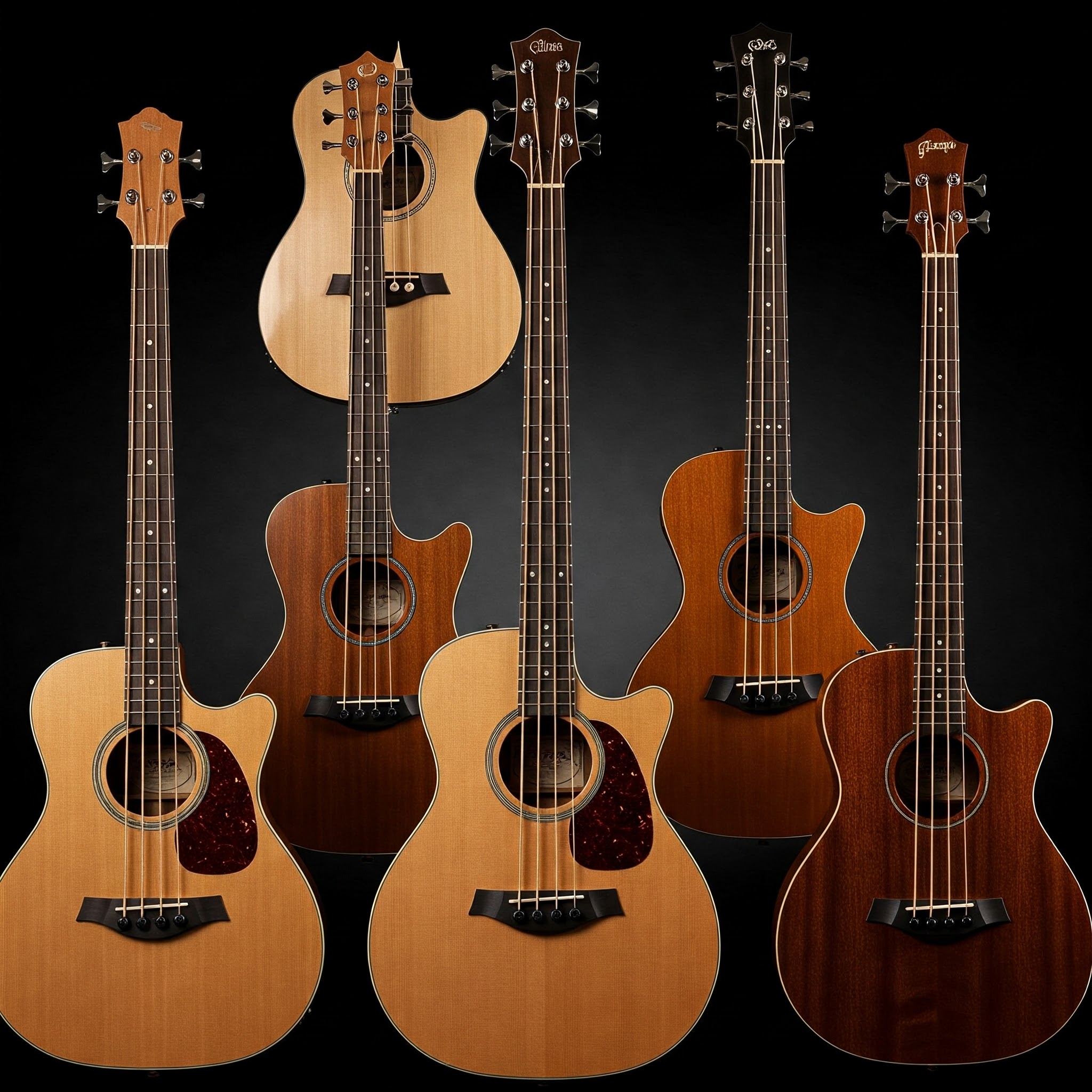
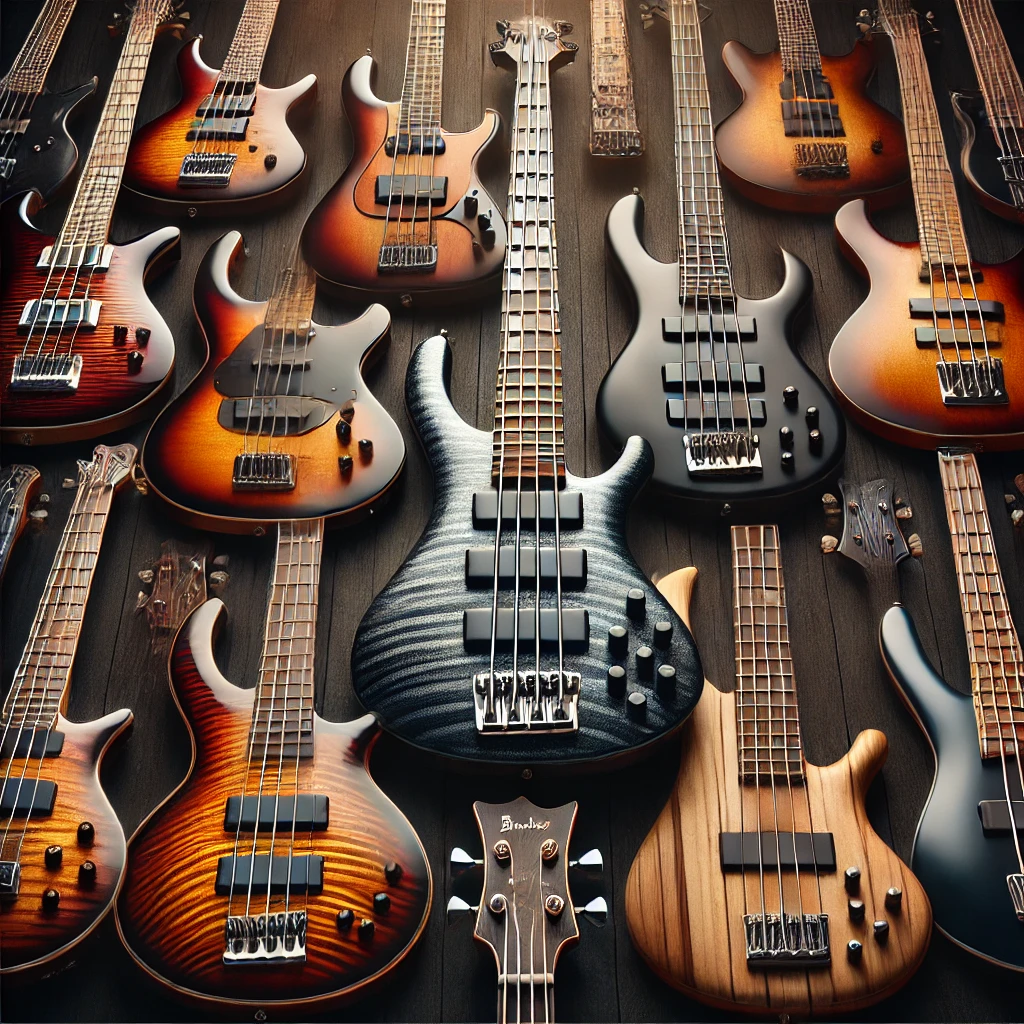
A search like “four string electric bases that are not heavy” mixes two questions, and strings answer only one of them. Weight comes from the body and the scale, not the strings. Short-scale basses are the usual route: Thomann describes its 30-inch Harley Benton PB-Shorty as an easier fit for kids and for guitarists who double on bass, and one owner on zZounds says the Sire Marcus Miller U5 is just under 8 pounds. A seller listing for the Form Factor Audio Wombat JB4 quotes 7.5 pounds. Treat those as individual claims, not a ranking.
Strings follow the scale. The D’Addario EXL170S is a nickel-plated, round-wound .045-.100 set that zZounds lists as fitting scale lengths up to 32 inches, and a B&H Q&A answer about the 28.6-inch Ibanez GSRM20 miKro names the same light short-scale set as the factory type. Standard 34-inch basses use sets like the 50-105 in Ernie Ball’s chart. Thomann adds that a shorter scale with the same gauge sounds bassier, with less definition and sustain. And an electric bass needs electric strings: a TalkBass member points out that acoustic strings lack the ferrous material a pickup needs.
Three ways people end up with the wrong set
Heavier strings put more tension on the neck, per Ernie Ball, and two sources show what a jump costs on a tremolo guitar: the Thomann reviewer who added springs after fitting 10-52s to a Strat, and Horton, whose Floyd Rose needed a bridge readjustment after he fitted higher-tension NYXLs. Plan a quick check of action and tuning after any gauge change.
Acoustic sets on an electric guitar are the second trap. The strings fit physically, but Eddie’s Guitars says acoustic-specific sets will not work properly with magnetic pickups, and the output loss is the reason to avoid them.
The third is counting. Everything above is a six-string set, so seven-string players and bassists need packs matched to their instrument. The Elixir Optiweb 19052 is sold as a full set, so one snapped string means a new pack. Audiofanzine’s roundup adds that Ernie Ball has been plagued by counterfeits for several years, so check the seller, and match the exact model number on the listing to the set you intended before you order.
Electric guitar string answers on lifespan, gauge and acoustic use
❓ How often should I change electric guitar strings?
✅ Brand reps quoted by Guitar World say every two to three months for D'Addario and Martin, three to six for Stringjoy with good care. Coated sets can last six to twelve months. Change sooner if tuning drifts, tone dulls or the strings feel sticky.
❓ Should a 6 string electric guitar use 9s or 10s?
✅ Ernie Ball's chart lists 10-46 as the standard for E tuning on both scale lengths, with 9-42 as a looser option on 25.5-inch Fender-scale guitars. Lighter sets bend more easily, which helps beginners; heavier ones add tension and suit lower tunings.
❓ What is a good acoustic electric guitar with steel strings?
✅ The guitar choice is separate from the strings, but any steel-string acoustic-electric should carry acoustic sets, typically gauge 12 per Guitar Guitar, with bronze or phosphor bronze windings. Electric nickel sets can go on one, though sources disagree on volume and fullness.
❓ Do coated electric guitar strings sound different?
✅ Reports split. MusicRadar's testers found one whole-string coated set stayed bright, and Harmony Central's reviewer could not tell it from uncoated. A separate journal test of a different coating found it too dull from the start. The coating type seems to matter.
❓ Do lightweight four-string basses need different strings?
✅ They can. Short-scale basses around 30 inches need short-scale sets, such as the .045-.100 gauges D'Addario lists for scales up to 32 inches, while Ernie Ball's chart uses 50-105 for 34-inch basses. Acoustic strings lack the magnetic material electric bass pickups need, a TalkBass thread notes.
Which set to put on first
Electric guitar strings come down to a rule you can apply in a minute. Keep the gauge your guitar is set up for, move to the Ernie Ball Super Slinky 2223 only if bending hurts, and spend extra only for a reason you can name: the Elixir Optiweb 19052 for fewer restrings, the D’Addario NYXL1046 for tuning under hard bends, the Ernie Ball Skinny Top Heavy Bottom 2215 for drop tunings. Otherwise the D’Addario EXL110 is the sensible default at the low end of the price range, and a spare set costs little. Whatever you buy, wipe the strings after playing, because Guitar World’s brand sources tie sweat, oils and humidity to shorter life. Spotted one you like? Take a closer look at the listings on Amazon.com and compare gauges before you order.
Disclaimer: This post contains affiliate links. As an Amazon Associate, I earn from qualifying purchases made through these links, at no additional cost to you.
Dull strings are a cheap problem to fix, so pick one set and restring tonight. 🎸
MozartTools Team is dedicated to helping musicians find the best instruments. Specializing in acoustic, electric, and bass guitars, we provide expert reviews, detailed buying guides, and practical tips for players of all levels. Our mission is to make choosing the right gear easier and more enjoyable.
Home » Electric guitar strings — Picked for the Way You Play The high E on your 6 string electric guitar has gone gritty, chords sound flat, and the listing
Home » Electric guitar strings — Picked for the Way You Play The high E on your 6 string electric guitar has gone gritty, chords sound flat, and the listing
Home » Electric guitar strings — Picked for the Way You Play The high E on your 6 string electric guitar has gone gritty, chords sound flat, and the listing