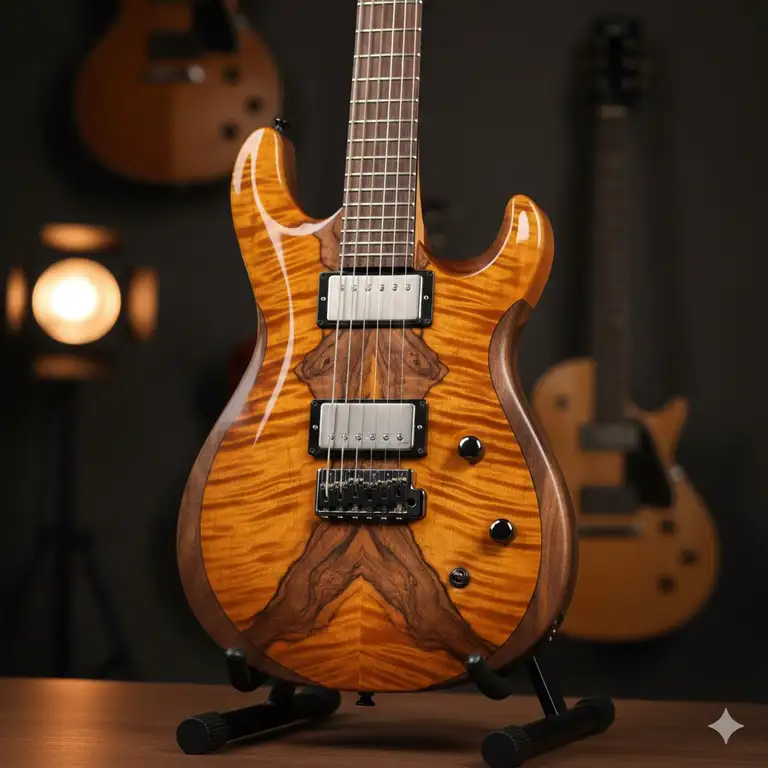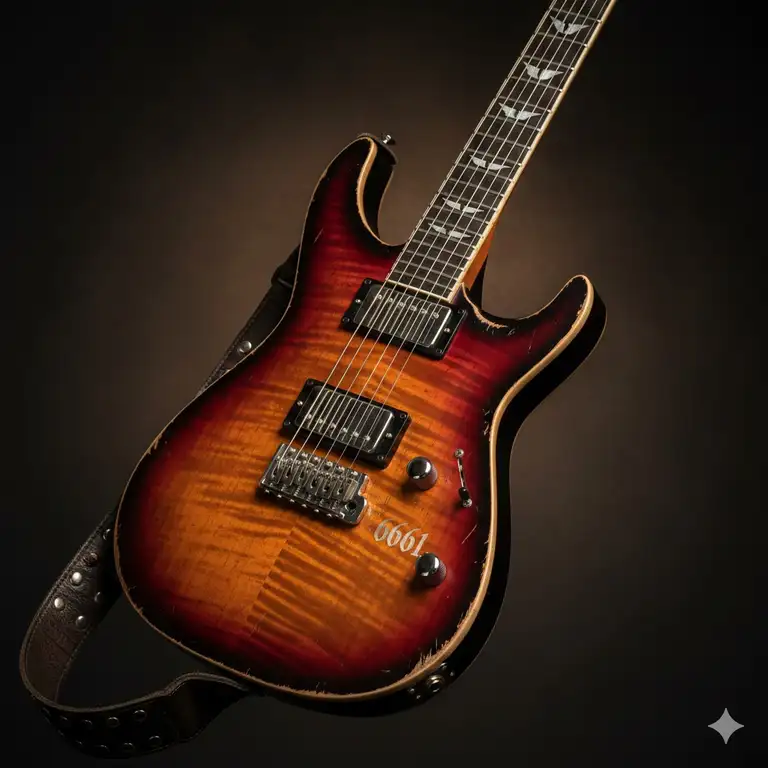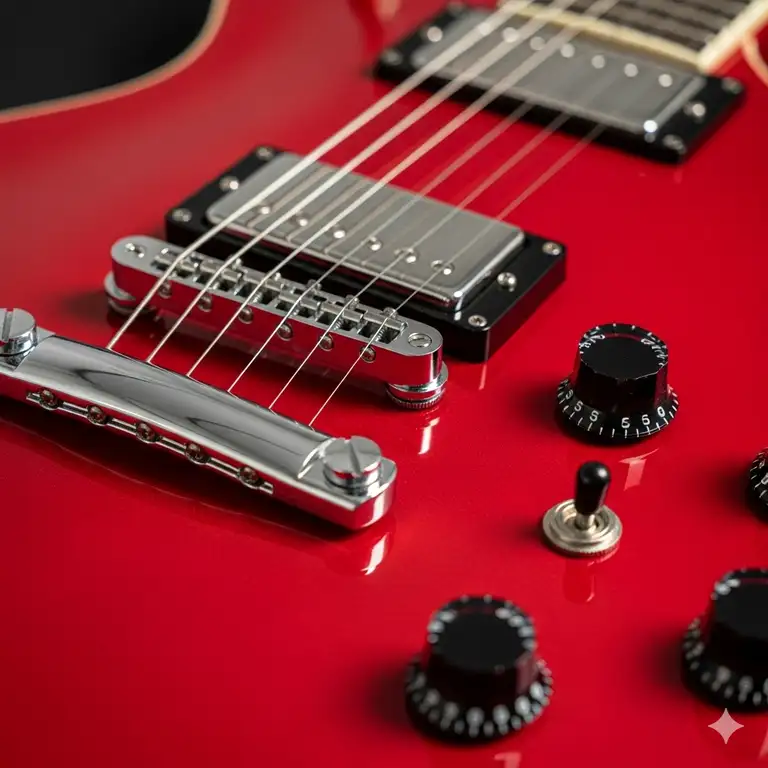
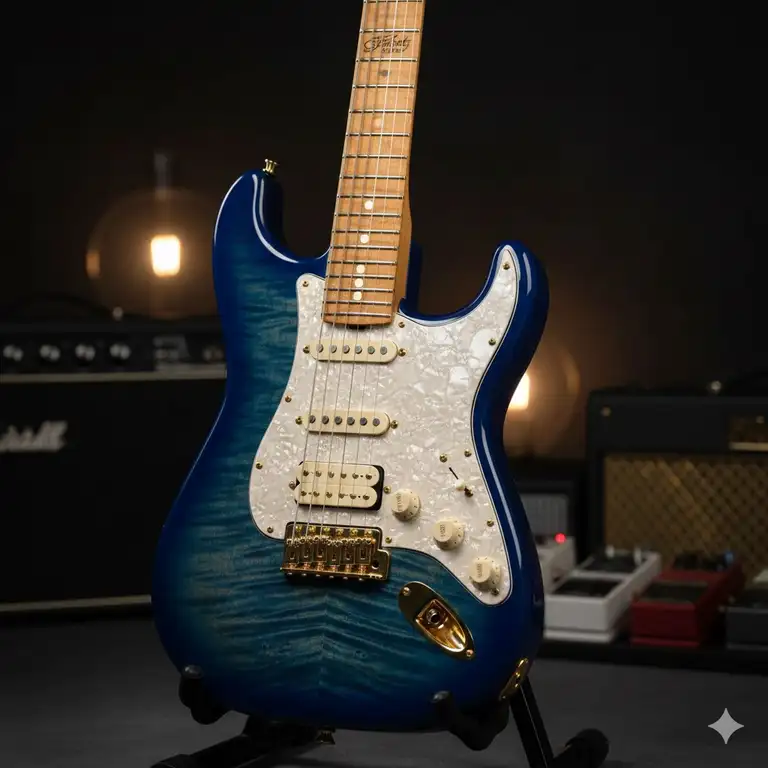
There’s an undeniable magic to the Fender Stratocaster. Since its debut in 1954, it has defined the sound of rock, blues, funk, and pop, becoming arguably the most iconic electric guitar ever designed. Its sleek, contoured body, three-pickup configuration, and synchronized tremolo system are instantly recognizable and universally loved. But what if the stock models, even the high-end ones, don’t quite meet your specific needs? This is where the journey into the world of the custom stratocaster begins—a journey toward sonic and aesthetic perfection tailored exclusively to you.
✨Was this helpful? Spread the word! 🚀
Going for a custom stratocaster isn’t just about owning a unique instrument; it’s about optimizing every single component—from the wood grain to the wiring—to fit your hands, your style, and your sound. It’s an immersion into a deeper level of guitar connoisseurship. I’ve spent years analyzing, building, and playing these magnificent instruments, and I can tell you that the difference between a production model and a truly custom-built one is night and day for the serious player.
Many players search for a “stratocaster custom build” or “personalized stratocaster” because they want control over key variables: the specific neck profile for comfortable playing, the ideal weight for marathon gigs, or the exact pickup combination to capture a unique tonal voice. Building a custom stratocaster allows you to bypass the compromises of mass production and create a tool that is an extension of your musical self. Whether you’re looking for a relic’d vintage feel or a thoroughly modern shred machine, the custom route provides the maximum freedom.
Quick Comparison: Custom Stratocaster vs. Production Models
To understand the value proposition of a custom stratocaster, it helps to see how it stacks up against its production-line cousins, which are often what players look at first. This isn’t about one being inherently ‘better,’ but rather about different approaches to instrument making.
| Feature | Custom Stratocaster (Custom Build/Shop) | Production Model (Standard/Pro Series) |
| Component Selection | Hand-selected, premium, often boutique parts (e.g., specific wind pickups, highly flamed maple). | High-quality, mass-produced parts from bulk suppliers (e.g., MIM or MIA standard pickups). |
| Ergonomics & Feel | Neck shape, fret size, radius, and finish are specified by the player or custom builder. Precision-fretting and setup. | Standardized neck shape and radius (e.g., Modern ‘C’ with 9.5-inch radius). Factory setup. |
| Tonewoods | Carefully aged, quarter-sawn, or lightweight pieces chosen for optimal resonance and grain. | Sustainably sourced, high-quality, but not typically selected for specific acoustic properties. |
| Finish | Thin Nitrocellulose Lacquer or Polyurethane, often with relic’ing. Specified color and sheen. | Thicker, durable Polyester or Polyurethane, limited to catalog colors. |
| Price & Timeline | Higher initial cost; can take months or years for high-end builders. | Lower to mid-range cost; immediately available. |
| Value Proposition | Ultimate personalization, unique tone, investment, and unparalleled playability. | Excellent ‘out of the box’ quality, proven design, and reliability. |
This table clearly illustrates the key differentiator: control. With a custom stratocaster, you are the designer, ensuring that every detail aligns with your needs.
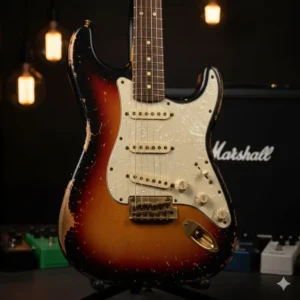
🔝 Top 7 Custom Stratocaster Components and Builds: Expert Analysis
A custom stratocaster is often a fusion of the best parts from various specialist manufacturers. The products below represent highly-regarded components and build-options frequently used in the creation of a high-end, personalized stratocaster. Remember, these are not just products; they are the building blocks of your sound.
1. Warmoth Super-Strat Guitar Body & Neck
-
Detailed Technical Specifications: Warmoth is a premier supplier for stratocaster parts and custom assemblies. They offer bodies in Alder, Ash, Mahogany, Korina, and more, with options like HSH (Humbucker-Single-Humbucker) routing or traditional SSS (Single-Single-Single). Necks are available in 25.5-inch or 24.75-inch (Gibson scale) with options for fretboard woods like Rosewood, Ebony, or Maple. They offer 10+ neck profiles (e.g., ’59 Roundback, Wizard), varying fret sizes (6100 Jumbo, 6150 Medium Jumbo), and radii (9.5-inch, 10-16-inch compound). You can specify the neck wood (quarter-sawn Maple is popular for stability) and the finish (e.g., clear satin nitro).
-
Customer Review Analysis: Reviews consistently praise the superior wood quality and the precision of the CNC machining, often citing the perfect pocket fit between the neck and body. Many players note that a Warmoth stratocaster build rivals or exceeds the quality of expensive factory models. The compound radius options receive particularly high praise for improving playability across the entire neck.
-
Warranty Information: Limited Lifetime Warranty against defects in materials and workmanship.
-
Professional Applications: Used by professional builders and hobbyists who want high-quality, USA-made wood parts without the Custom Shop price tag. Excellent for creating a “super-stratocaster” configuration.
-
Pros/Cons Analysis:
-
Pros: Vast array of customization options; high-quality, stable tonewoods; excellent fit and finish; compound radius options.
-
Cons: Requires assembly and finishing (for raw parts); can become expensive quickly; long lead times for highly customized orders.
-
2. Seymour Duncan Antiquity Texas Hot Pickups
-
Detailed Technical Specifications: These are a fantastic choice for those looking for a vintage-correct, hand-wound tone. The Seymour Duncan Antiquity Texas Hot set features Alnico II magnets and a custom-aged appearance with faded covers. The DC resistance is typically around 6.2kΩ (Neck), 6.5kΩ (Middle), and 9.7kΩ (Bridge), providing a hotter bridge pickup for added punch and grit—a characteristic of the highly sought-after ’60s Texas tone. They are wax-potted to prevent microphonic feedback.
-
Customer Review Analysis: Players often describe the tone as having a “bell-like chime” with excellent dynamic response. The hotter bridge pickup is a highlight, offering extra output without sacrificing the classic single-coil clarity. Reviewers frequently comment on their ability to clean up nicely when the volume is rolled back, making them incredibly versatile.
-
Warranty Information: Typically a one-year warranty on materials and workmanship from Seymour Duncan.
-
Professional Applications: Ideal for blues, classic rock, and players seeking that SRV-style bite and warmth. Often used in high-end stratocaster builds aiming for vintage authenticity.
-
Pros/Cons Analysis:
-
Pros: Authentic vintage tone; superb dynamic response; hotter bridge pickup for versatility; hand-aged appearance.
-
Cons: Higher price point than standard production pickups; the aged look is not for everyone; relatively low output compared to modern/high-gain pickups.
-
3. Callaham Vintage S-Model Tremolo Block & Bridge Assembly
-
Detailed Technical Specifications: The Callaham Vintage S-Model Tremolo Block & Bridge Assembly is a crucial upgrade for any stratocaster enthusiast focused on tone and tuning stability. This system features a solid 1018 cold-rolled steel tremolo block, significantly denser than the zinc blocks often found in import or standard guitars. This material choice vastly improves sustain and harmonic richness. It comes with high-quality, hardened steel screws and saddles, ensuring smooth operation and durability. The string spacing is the traditional 2-7/32 inches.
-
Customer Review Analysis: The single most common praise is the dramatic increase in sustain and overall sonic resonance. Users report a noticeable improvement in the “woodiness” and complexity of their guitar’s tone. Installation is usually straightforward, with the components praised for their high-precision manufacturing.
-
Warranty Information: Standard limited warranty against defects, though specific duration may vary by retailer. Callaham is known for excellent customer service and standing behind their products.
-
Professional Applications: Considered a gold standard upgrade for any production or custom stratocaster where vintage feel and tone are paramount. It’s an essential component for achieving a more vintage-accurate setup.
-
Pros/Cons Analysis:
-
Pros: Significant tonal improvement (sustain, clarity); high-quality materials (cold-rolled steel); vastly improved tuning stability and tremolo action.
-
Cons: Premium price; requires minor setup after installation; only available in vintage (narrower) string spacing options.
-
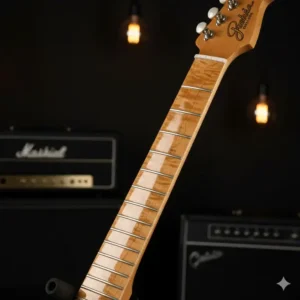
4. Fender American Ultra Stratocaster Neck
-
Detailed Technical Specifications: For those who prefer modern playability, the Fender American Ultra Stratocaster Neck offers exceptional features. It boasts a “Modern D” profile, which is slightly flatter and faster than a traditional “C.” The key feature is the 10-inch to 14-inch compound radius fretboard, which is rounder at the nut for easy chording and flatter at the heel for effortless bending and soloing. It comes equipped with 22 Medium Jumbo frets and a satin urethane finish on the back for a smooth feel. Available with Maple or Rosewood fretboards.
-
Customer Review Analysis: Players migrating from traditional vintage necks rave about the comfort and speed. The transition from the ‘D’ profile to the flatter radius at the higher frets is consistently highlighted as a major benefit for technical playing. Reviewers note the excellent fretwork and the overall “fast” feel of the satin finish.
-
Warranty Information: Standard Fender component warranty, typically 1 year.
-
Professional Applications: The go-to neck for modern players, session musicians, and shredders who need a reliable, high-performance neck for contemporary music styles. A great choice for a modern custom stratocaster.
-
Pros/Cons Analysis:
-
Pros: High-speed playability; 10-14-inch compound radius; smooth satin finish; superior fretwork; genuine Fender quality.
-
Cons: The “Modern D” profile may not suit traditionalists; higher cost than aftermarket non-Fender necks; less ‘vintage’ feel.
-
5. Suhr Custom Classic Strat-Style Guitar
-
Detailed Technical Specifications: While an assembled instrument, the Suhr Custom Classic Strat-Style Guitar is often what players are aiming for when they conceptualize a custom stratocaster. These guitars feature premium features such as a roasted maple neck (for stability), Suhr locking tuners, stainless steel frets (which never wear out), and the proprietary SSCII (Silent Single-Coil) noise reduction system. They often utilize Suhr’s V60LP or ML single-coil pickups. Body woods are typically Alder or Swamp Ash, with high-quality thin finishes.
-
Customer Review Analysis: Suhr’s reputation is built on consistency and flawless quality control. Reviews stress the perfect fretwork, impeccable finish, and the quiet operation of the single coils thanks to the SSCII system. Players frequently describe the instruments as “professional-grade” and “stage-ready out of the box.”
-
Warranty Information: Limited Lifetime Warranty on workmanship and materials to the original purchaser. This is a significant sign of quality.
-
Professional Applications: A preferred instrument for touring professionals and session guitarists who need reliability, incredible tone, and noiseless single-coil operation.
-
Pros/Cons Analysis:
-
Pros: Top-tier build quality; stainless steel frets; exceptional noise suppression system; high-end components throughout; lifetime warranty.
-
Cons: Very high price point; not a ‘true’ Fender-brand stratocaster; less customization freedom than a partscaster build.
-
6. DiMarzio DP420 Virtual Vintage ‘Solo’ Pickup
-
Detailed Technical Specifications: The DiMarzio DP420 Virtual Vintage ‘Solo’ Pickup is a hum-canceling single-coil replacement designed to maintain the classic stratocaster tone while eliminating 60-cycle hum. It uses Alnico 5 magnets and advanced virtual coil technology. Its output is moderate (around 5.8kΩ DC Resistance), sitting between a vintage and a hot-rodded pickup. It offers excellent note clarity and punch, without the harshness often associated with high-output single coils.
-
Customer Review Analysis: The primary positive is the hum-free operation without the “muffled” tone many non-true single coils exhibit. Reviewers note it retains the “air” and clarity of a true single coil, making it a great middle-of-the-road choice for players who gig regularly in noisy environments. It’s often praised for its versatility across various genres.
-
Warranty Information: Standard limited warranty from DiMarzio.
-
Professional Applications: Ideal for a custom stratocaster used in studio work or live venues where electrical interference is a concern, but a pure single-coil tone is still desired.
-
Pros/Cons Analysis:
-
Pros: No 60-cycle hum; retains single-coil clarity; moderate output for versatility; great for modern players.
-
Cons: Tonal purists may still prefer true single coils; requires careful wiring for optimal performance.
-
7. Hipshot Grip-Lock Staggered Tuners
-
Detailed Technical Specifications: The Hipshot Grip-Lock Staggered Tuners are a premium tuning machine solution. They feature a unique ‘Grip-Lock’ clamping mechanism that locks the string securely, drastically improving tuning stability, especially with heavy tremolo use. The staggered posts (shorter posts for the high strings, taller for the low strings) eliminate the need for a string tree, reducing friction points and further enhancing stability. The gear ratio is typically 18:1, offering precise tuning adjustments.
-
Customer Review Analysis: Universally praised for ease of string changes (the locking mechanism is simple and fast) and outstanding tuning stability. Users report an immediate and noticeable improvement in their stratocaster’s ability to stay in tune, even with aggressive vibrato. The lack of a string tree also gets high marks for improving the tone and reducing friction.
-
Warranty Information: Limited Lifetime Warranty from Hipshot.
-
Professional Applications: A must-have upgrade for any custom stratocaster with a tremolo system or for players who demand absolute tuning precision on stage.
-
Pros/Cons Analysis:
-
Pros: Exceptional tuning stability; fast, easy string changes; eliminates string trees; high-precision 18:1 gear ratio; lifetime warranty.
-
Cons: Higher initial cost than standard tuners; installation may require drilling if the headstock holes are not the correct size.
-
🛒 Transform Your Tone: Shop for Advanced Wiring Kits Now! 🎸
This level of detail—the choice of a specific component like a Callaham Tremolo or a wiring scheme like the blender mod—is what separates a production model from a truly personalized stratocaster. These choices directly impact the user experience by offering not just a better sound, but also a wider tonal palette.
💬 Just one click – help others make better buying decisions too!😊
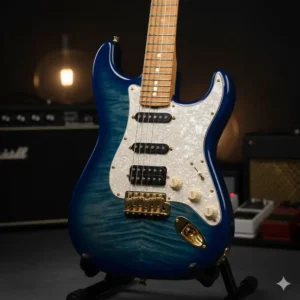
🛠️ The Anatomy of a Custom Stratocaster: Deconstructing the Build
The term custom stratocaster is broad; it can refer to a partscaster assembled in a home workshop, a specialized order from a small boutique builder, or a high-spec instrument from the Fender Custom Shop. However, all roads lead to the same destination: a guitar optimized for you. Understanding the key components is crucial before diving into your own “custom stratocaster build.”
The Neck: The Core of Playability
The neck is arguably the single most important part of a stratocaster. It’s what your hands interact with most, and its feel dictates comfort and speed. When building a custom stratocaster neck, several factors must be considered:
-
Neck Profile (Shape): This refers to the cross-sectional shape of the neck.
-
The “C” Shape: Found on most modern Strats, it’s comfortable and medium-sized.
-
The “V” Shape: Thicker, often found on ’50s models, with a defined peak for thumb-over playing.
-
The “D” Shape: Flatter, like the Fender American Ultra Stratocaster Neck, often preferred for modern, high-speed playing.
-
-
Fretboard Radius: This is the curvature of the fretboard. A smaller number (e.g., 7.25 inches) means a rounder, vintage feel, great for chords. A larger number (e.g., 12-16 inches compound radius) is flatter, making string bending much easier without fretting out. Boutique builders like Warmoth often offer 10-16 inch compound radius options for the best of both worlds.
-
Frets: Frets can be Nickel-Silver or Stainless Steel. Stainless steel frets (like those on the Suhr Custom Classic Strat-Style Guitar) last virtually forever and provide a smoother feel when bending, though some traditionalists find them too bright. Fret size—from thin Vintage to large Jumbo (6100)—massively impacts feel.
Tonewoods and Body Construction
While pickups capture the tone, the tonewoods provide the foundational resonance. The standard stratocaster body woods are:
-
Alder: The most common stratocaster wood since the mid-50s. It offers a balanced, full tone with excellent midrange and slightly scooped highs, making it sound warm and articulate.
-
Swamp Ash: Used in early Strats, it is prized for its lighter weight and its pronounced, scooped midrange, delivering a clear, ringing top-end and a tight low-end. Great for country and funk.
-
Mahogany: Less common for a classic stratocaster sound, it offers a darker, warmer, and more powerful tone, often favored for rock and super-strat designs.
When designing a custom stratocaster, you must choose between a solid body, or a chambered or hollow body. Chambering reduces weight (great for long gigs) but can slightly alter the acoustic response, often resulting in more air and resonance.
Electronics: The Heart of Your Sound
The electronics system is where the true character of your custom stratocaster is born.
-
Pickups: The range is enormous, from vintage-voiced Alnico II single coils like the Seymour Duncan Antiquity Texas Hot to powerful humbuckers for a “custom stratocaster HSH” configuration. You’ll need to decide between:
-
True Single Coils: Pure vintage tone, but prone to 60-cycle hum.
-
Noise-Canceling/Stacked: Designs like the DiMarzio DP420 Virtual Vintage ‘Solo’ eliminate hum but must be carefully selected to retain the single-coil “chime.”
-
-
Wiring and Controls: Customization here can include adding a “Blender” control (blending the neck pickup with the bridge in position 1 or 5), coil-splitting switches for humbuckers, or a “blower switch” for instant full-output bridge humbucker tone. The choice of capacitors (e.g., Orange Drop or Paper-in-Oil) subtly shapes the roll-off frequency of the tone controls.
Hardware and Finishing Touches
Details matter immensely in a custom stratocaster build.
-
Tremolo System: This is where the Callaham Vintage S-Model Tremolo Block & Bridge Assembly shines. A high-quality tremolo (often made of steel or brass) is critical for sustain and tuning stability. Many opt for a two-point modern tremolo for smoother action or the traditional six-screw vintage style for a classic feel.
-
Tuners: Locking tuners, such as the Hipshot Grip-Lock Staggered Tuners, eliminate string slippage at the post and make string changes lightning fast—an essential upgrade for any gigging musician.
-
Finish: The finish choice impacts both aesthetics and tone.
-
Nitrocellulose Lacquer: Thinner, vintage-correct, allows the wood to “breathe” (many believe this improves resonance), but it is less durable and sensitive to guitar stands.
-
Polyurethane/Polyester: More durable, thicker, but provides excellent protection. Modern custom builders often use thin Poly finishes that are nearly as resonant as nitro.
-

📊 Technical Deep Dive: Component Spec Matrix
Comparing high-end components illustrates the non-standard nature of a custom build. We are comparing top-tier choices across the main three component groups: Wood, Electronics, and Hardware.
| Component Category | Product Model | Key Material/Configuration | Unique Technical Feature | Primary Tonal/Feel Impact |
| Wood (Body/Neck) | Warmoth Strat Body/Neck | Alder, Swamp Ash/Roasted Maple; Compound Radius | Custom CNC routing, 10-16-inch compound fretboard radius. | Ultimate playability; enhanced resonance and neck stability. |
| Electronics (Pickup) | Seymour Duncan Antiquity Texas Hot | Alnico II Magnets, Aged Wire/Covers | Wax-potted, custom winding (Bridge 9.7kΩ) | Vintage-correct, warm Texas blues tone with high output bridge. |
| Hardware (Tremolo) | Callaham Vintage S-Model Tremolo Block & Bridge Assembly | Solid 1018 Cold-Rolled Steel Block | Non-Magnetic, high-mass steel construction. | Vastly increased sustain, harmonic complexity, and tuning stability. |
| Electronics (Tuner) | DiMarzio DP420 Virtual Vintage ‘Solo’ Pickup | Alnico V Magnets, Virtual Coil Technology | Hum-canceling while maintaining single-coil air and chime. | No 60-cycle hum, moderate output, excellent note clarity. |
| Hardware (Tuner) | Hipshot Grip-Lock Staggered Tuners | Plated Brass/Steel, 18:1 Gear Ratio | Staggered height posts, secure locking mechanism. | Eliminates string tree friction, outstanding tuning precision and stability. |
| Pre-Built Custom | Fender American Ultra Stratocaster Neck | Maple w/ Rosewood or Maple Fretboard | “Modern D” Neck Profile, 10-14-inch compound radius. | High-speed, modern playability for demanding technical work. |
💰 Budget vs. Premium: Custom Stratocaster Cost Analysis
A common misconception is that all custom stratocaster projects are astronomically expensive. While they can be, there are strategic ways to manage costs while maximizing quality. This table compares the two primary paths for a stratocaster custom build.
| Category | Budget/Value-Oriented Build (e.g., GFS/Mighty Mite/Wilkinson) | Premium/Boutique Build (e.g., Warmoth/Callaham/Suhr) |
| Wood Parts (Body/Neck) | $300 – $600 (Lower cost licensed parts, standard woods, poly finish). | $750 – $1,500+ (Warmoth Super-Strat, highly figured or roasted woods, Nitro finish options). |
| Pickups | $100 – $250 (Good quality import or lesser-known US brands, generic specs). | $300 – $600+ (Seymour Duncan Antiquity Texas Hot, boutique hand-wound sets, noiseless systems). |
| Hardware (Tremolo/Tuners) | $80 – $150 (Zinc tremolo block, standard die-cast tuners). | $250 – $500+ (Callaham Vintage S-Model Tremolo, Hipshot Grip-Lock Tuners, stainless steel saddles). |
| Finishing/Assembly | DIY or local tech (lower labor cost). | Professional Luthier/Custom Shop (higher labor cost, flawless finish/setup). |
| Total Estimated Cost (Excl. Labor) | $480 – $1,100 | $1,600 – $3,100+ |
| Value Proposition | Significant improvement over entry-level production models. Great for players learning to mod. | Professional-grade instrument; unparalleled feel, tone, and attention to detail. |
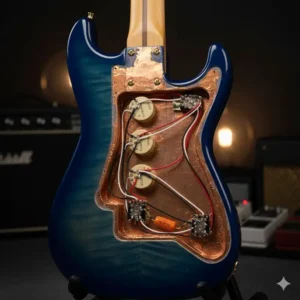
🔑 Key Features & Benefits Comparison: Vintage vs. Modern Custom Stratocaster
The custom stratocaster landscape is primarily divided into two philosophical camps: those seeking vintage authenticity and those pursuing modern performance. Both paths create incredible instruments, but the feature sets differ dramatically, targeting different player needs.
| Feature Area | Vintage-Style Custom Stratocaster | Modern-Style Custom Stratocaster | Benefit for the Player |
| Neck Profile/Radius | Deep ‘U’ or ‘V’ profile; Small radius (7.25-9.5 inches) | Thin ‘D’ or ‘Elliptical’; Compound radius (10-16 inches, e.g., Fender American Ultra Stratocaster Neck) | Rounder radius is better for chording; Flatter radius facilitates easier bending and shredding. |
| Frets | Vintage-thin (6230) or Medium-Jumbo (6150) Nickel-Silver | Jumbo (6100) or Stainless Steel (e.g., Suhr Custom Classic Strat-Style Guitar) | Smaller frets provide more direct finger-to-wood contact; Jumbo/SS frets offer speed and lifetime durability. |
| Pickups | Low-output, Alnico II or V (e.g., Seymour Duncan Antiquity Texas Hot) | High-output, Ceramic, or Active/Noiseless (e.g., DiMarzio DP420 Virtual Vintage ‘Solo’ Pickup) | Vintage pickups offer chime, dynamic response, and low compression; Modern pickups provide power, clarity, and hum cancellation. |
| Tremolo/Bridge | 6-screw vintage mount with cold-rolled steel block (e.g., Callaham Tremolo) | 2-point modern tremolo with steel or brass block | 6-screw provides classic feel and tone transfer; 2-point offers smoother, more flexible tremolo action. |
| Finish | Thin Nitrocellulose Lacquer | Thin Polyurethane or Satin Urethane (e.g., satin finish on Warmoth necks) | Nitro allows the wood to resonate freely (purist belief); Poly/Satin is extremely durable and provides a smooth, fast feel. |
The choice between a vintage-style custom stratocaster and a modern stratocaster custom build hinges entirely on your playing style. If you primarily play blues, classic rock, and enjoy a traditional feel, the vintage approach is best. If you require technical speed, high-gain performance, and absolute reliability, the modern spec will be your ally.
🤯 Enhancing Your Custom Stratocaster: Advanced Wiring and Switching
A significant advantage of building a custom stratocaster is the ability to move beyond the standard five-way switch. Advanced wiring schemes allow a single guitar to sound like three or four different instruments, drastically enhancing its versatility.
The Blender and the Half-Blender
The standard stratocaster has one Master Volume, and two Tone controls (Neck and Middle). A popular modification is to replace the second tone control (usually for the bridge pickup) with a Blender Pot.
-
Standard Blender: This pot, when rolled up, gradually blends in the neck pickup to the bridge pickup in position 1, or blends in the bridge pickup to the neck in position 5. This grants the two humbucking sounds of all three pickups on, or the neck and bridge on together—tones not typically possible on a stock Strat.
-
Half-Blender: This is a push/pull or push/push switch on a tone pot that, when engaged, turns the neck pickup on, regardless of the 5-way position. This immediately gives you the famous Telecaster-like neck/bridge parallel sound, or the massive “all three on” sound, accessible with a simple pull of the knob.
Series Wiring and Coil Tapping
If your custom stratocaster has humbuckers (making it a super-stratocaster), or even if you use specialized noiseless single coils, you can incorporate sophisticated switching:
-
Series Wiring (The Loud Switch): This option connects two pickups (usually the neck and middle) in series instead of parallel. Series wiring dramatically increases the output (volume), fattens the tone, and boosts the midrange, essentially turning two single coils into a massive-sounding humbucker. It is a fantastic option for a lead boost.
-
Coil Splitting/Tapping: For humbuckers, a push/pull switch can split the coil, turning the humbucker into a single coil. This gives you the best of both worlds: the fat, powerful humbucker tone for rock and the articulate, bright single-coil tone for funk and pop—all in one custom stratocaster.

🧑💻 The Expert’s Guide to Custom Stratocaster Maintenance and Upkeep
A high-quality custom stratocaster, built with premium components like stainless steel frets and a high-mass tremolo, requires different maintenance than a standard guitar. Due to the high investment, proper care is non-negotiable.
Setup Precision
The setup is critical for a custom build. Because components like the Warmoth necks or Fender American Ultra Stratocaster Necks often feature complex fretwork or compound radii, the setup must be precise.
-
Truss Rod: Compound radius necks can be particularly sensitive. Humidity and temperature changes require careful truss rod adjustments, often with smaller increments than a standard neck.
-
Intonation: A high-quality bridge assembly, such as the Callaham unit, allows for extremely precise intonation adjustments. It is crucial to use a high-quality electronic tuner (strobe tuners are ideal) and adjust the intonation until it’s perfect across the entire neck—especially important on a custom stratocaster with a low-action setup.
Protecting the Finish
If you choose a vintage-correct Nitrocellulose Lacquer finish for your custom stratocaster body, special care is needed:
-
No Vinyl or Rubber: Nitrocellulose reacts with many rubber and vinyl materials, leading to “melted” spots or permanent damage. Always ensure your guitar stands and wall hangers use Nitro-safe foam or cork padding.
-
Gentle Cleaning: Use only non-abrasive polishes and soft cotton cloths. Avoid common furniture polish, as the silicone can damage the finish over time.
Hardware Longevity
Upgraded hardware, especially with stainless steel components, is built to last, but needs occasional attention.
-
Locking Tuners: Locking tuners like the Hipshot Grip-Lock Staggered Tuners are maintenance-free, but ensuring the lock-wheel is always hand-tight (never tool-tightened) prevents damage.
-
Bridge Maintenance: Periodically clean the string slots on the saddles of your Callaham bridge to prevent corrosion and ensure smooth string movement, which is critical for tuning stability. A small drop of a quality string lubricant (like graphite) can work wonders at the nut and saddles.
⚡️ Click to Explore Premium Stratocaster Upgrade Components! ✨
When aiming for a personalized stratocaster, strategic investment is key. Investing in a high-quality neck (like the Fender American Ultra Stratocaster Neck for playability) and a premium tremolo system (like the Callaham unit for sustain) will yield the biggest returns, even if you save money on the body and electronics initially.

Conclusion: The Final Word on Your Custom Stratocaster Dream
Embarking on the journey to build a custom stratocaster is a commitment, but it is one that yields unparalleled rewards. You are not just buying a guitar; you are commissioning a precise tool crafted to amplify your specific musical voice. From the dynamic range provided by Seymour Duncan Antiquity Texas Hot pickups to the flawless stability of Hipshot Grip-Lock Staggered Tuners, every choice compounds to create an instrument that is truly a cut above.
My years of working with these instruments tell me that the ultimate satisfaction comes not just from the final product, but from the process of informed selection. Understanding the difference between a stainless steel fret and a nickel fret, or a cold-rolled steel block and a zinc one, is what transforms a simple assembly into a work of art—a truly personalized stratocaster.
Whether you opt for a full-throttle super-stratocaster with a Warmoth body, or a vintage-correct build with a Callaham tremolo, you are defining your musical legacy. Don’t settle for “good enough.” Take control of your tone and your feel. The dream is within reach.
❓Frequently Asked Questions
Understanding these common questions provides transactional and commercial clarity for anyone considering a custom stratocaster or personalized stratocaster project.
✅ A high-quality custom stratocaster, often referred to as a 'partscaster,' can take anywhere from a few weeks to several months to complete. The timeline depends heavily on the availability of major components like custom Warmoth necks, the body finishing process, and the builder's schedule for professional-level fret leveling and setup. Waiting for custom-wound pickups or specialized hardware can extend the build time significantly...
✅ Generally, a Fender Custom Shop model holds its resale value and is considered a safer financial investment due to the brand prestige and high collectibility. A custom stratocaster (partscaster) built from high-end components often offers superior playability and unique features tailored to the player's specific needs, representing a better functional investment, but its market resale value is typically lower than a genuine Custom Shop instrument...
✅ The most critical component to invest in for a custom stratocaster is the neck and its associated fretwork. A high-quality neck with a comfortable profile, appropriate radius (e.g., compound radius on the Fender American Ultra Neck), and perfect fret leveling (like stainless steel frets) dictates the playability and feel more than any other single factor. Premium pickups and hardware are important, but the neck directly impacts the user's connection with the instrument...
✅ Yes, you can mix and match different branded parts in a custom stratocaster build, but compatibility is essential. Licensed manufacturers like Warmoth adhere to vintage Fender specifications (e.g., neck pocket dimensions). However, discrepancies often occur, especially between vintage-spec and modern-spec parts (e.g., heel shape, string spacing). Always verify the compatibility of parts like the Callaham tremolo with your body's routing to ensure a precise, professional fit...
✅ The highest quality parts for a custom stratocaster are primarily sourced from boutique, US-based manufacturers and licensed builders. Companies like Warmoth and Musikraft specialize in CNC-machined, high-tolerance bodies and necks with an enormous array of custom options, including specific tonewoods and compound fretboard radii. Other key sources are Callaham Guitars for steel tremolo components and reputable custom pickup winders... ❓ How long does it take to build a high-quality custom stratocaster from parts?
❓ Is a custom stratocaster a better investment than a Fender Custom Shop model?
❓ What is the most critical component to spend money on in a custom stratocaster build?
❓ Can I use different branded parts (e.g., Warmoth neck with Fender body) on a custom stratocaster?
❓ Where can I buy the highest quality custom stratocaster body and neck parts?
Recommended for You
- Fender Stratocaster Guitar Neck: 7 Best Models 2025
- Mean Street Custom Unchained Guitar: 7 Best EVH Models 2025
- Red Fender Stratocaster: 7 Stunning Models That Rock 2025
Disclaimer: This article contains affiliate links. If you purchase products through these links, we may earn a small commission at no additional cost to you.
✨ Found this helpful? Share it with your friends! 💬🤗