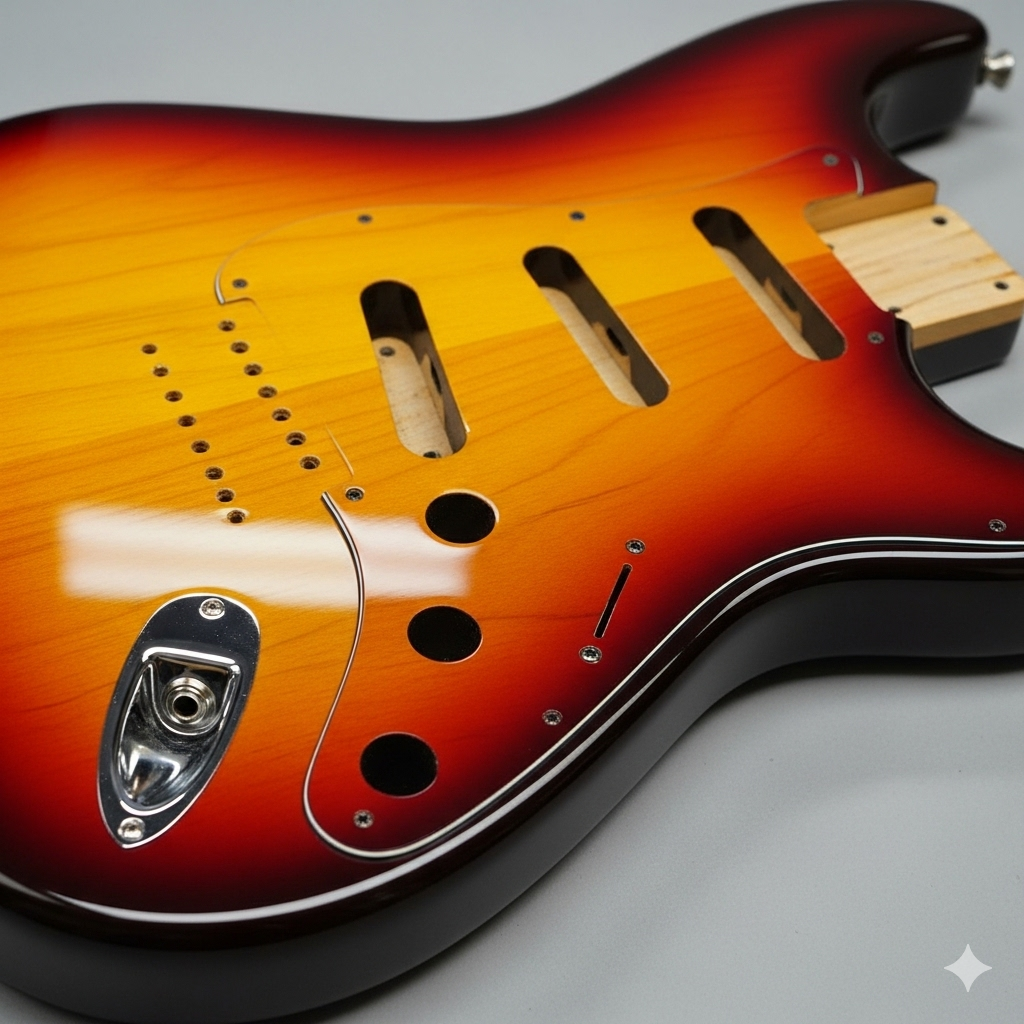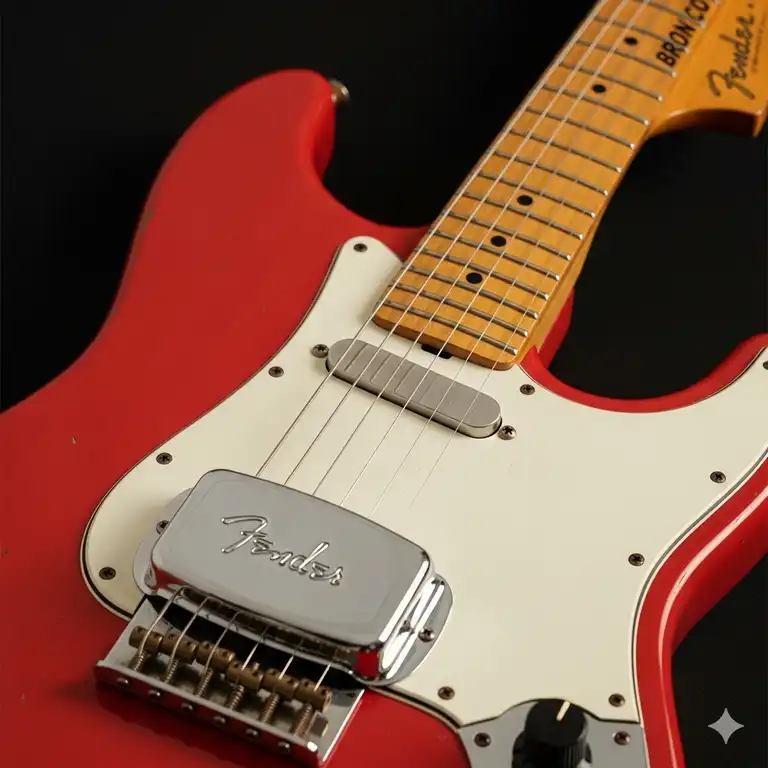
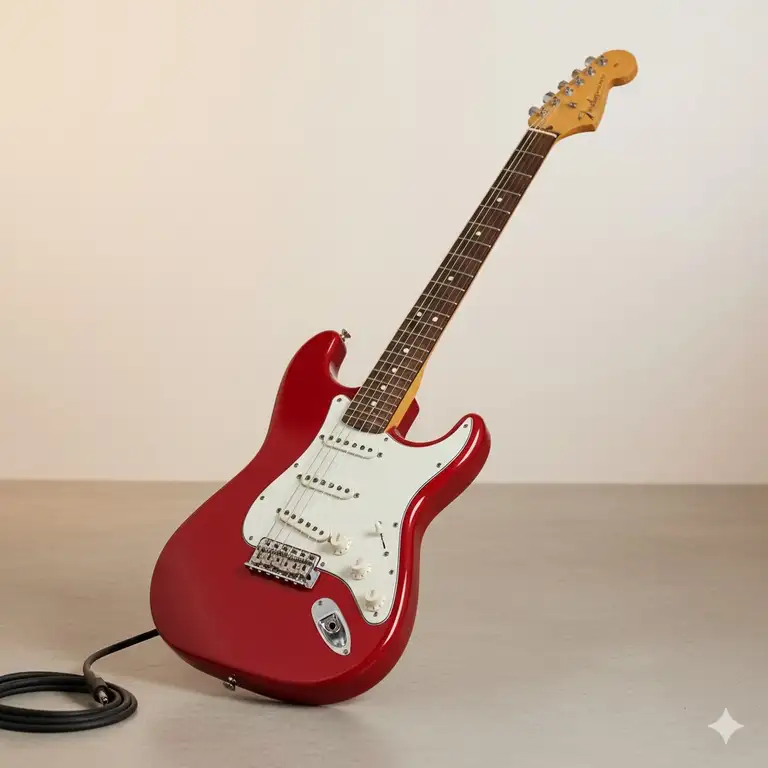
Picture this: you’re standing in a guitar shop, and across the room, a gleaming red fender stratocaster catches your eye. That iconic double-cutaway silhouette, those curves that have defined rock and roll for seven decades, all wrapped in a finish that screams passion and energy. I’ve been there countless times, and let me tell you – there’s something magical about a red Strat that just hits different.
✨Was this helpful? Spread the word! 🚀
The red fender stratocaster isn’t just another guitar. It’s a statement. From Hank Marvin’s fiery Fiesta Red to Mark Knopfler’s legendary tone machines, these instruments have shaped the soundtrack of our lives. Whether you’re chasing that crystalline clean tone or pushing into overdriven territory, a red fender stratocaster guitar delivers the goods with style.
Quick Comparison: Red Fender Stratocaster Models at a Glance 📊
| Model | Series | Body Wood | Pickups | Neck Profile | Best For | Skill Level |
|---|---|---|---|---|---|---|
| Squier Debut Dakota Red | Entry-Level | Poplar | 3x Single-Coil | C-Shape | Beginners | Beginner |
| Player Sonic Red | Mid-Range | Alder | Alnico V Singles | Modern C | All Genres | Intermediate |
| Player II Coral Red | Mid-Range | Alder/Ash | Alnico V Singles | Modern C | Versatile Players | Intermediate |
| American Vintage II Fiesta Red | High-End | Alder | Pure Vintage Singles | 1961 C | Vintage Tone Seekers | Advanced |
| Acoustasonic Dakota Red | Hybrid | Mahogany/Sitka | Acoustic Engine | Deep C | Recording/Versatility | Advanced |
| Standard Candy Apple Red | Budget-Friendly | Poplar | Ceramic Singles | Modern C | Value Seekers | Beginner |
| Ultra Luxe Plasma Red Burst | Premium | Alder | Ultra Noiseless | Augmented D | Professionals | Professional |
Top 7 Red Fender Stratocaster Models: Expert Analysis 🏆
1. Fender Squier Debut Series Stratocaster – Dakota Red
Let’s kick things off with an absolute gem for beginners. The Squier Debut Dakota Red is where dreams begin, and honestly, it punches way above its weight class. This red strat features a lightweight poplar body that won’t tire you out during marathon practice sessions, paired with Fender’s thoughtful ergonomic design.
✅ Specifications:
- Body: Lightweight poplar construction
- Neck: Slim C-shaped maple profile with laurel fingerboard
- Pickups: 3x single-coil with 5-way switching
- Bridge: Tremolo with removable arm
- Hardware: Chrome sealed-gear tuners
- Included: 2-year warranty + free Fender Play subscription
Pros:
✅ Incredibly beginner-friendly setup
✅ Authentic Fender DNA at an accessible price
✅ Matte Dakota Red finish resists fingerprints
✅ Complete starter packages available with amp and accessories
✅ Lightweight design perfect for younger players
Cons:
❌ Ceramic pickups lack some high-end sparkle
❌ Tuning stability could be better with frequent tremolo use
❌ Basic hardware components
This red stratocaster guitar is perfect if you’re just starting your journey. The Dakota Red finish has this understated elegance – not too flashy, but definitely eye-catching under stage lights.
2. Fender Player Stratocaster – Sonic Red
Now we’re talking serious business. The Player Series represents Fender’s sweet spot – Mexican craftsmanship meeting American design standards. I’ve played dozens of these, and the Sonic Red finish is absolutely stunning in person.
✅ Specifications:
- Body: Select alder for balanced resonance
- Neck: Modern C-shaped maple with 9.5″ radius
- Pickups: Player Series Alnico V single-coils
- Frets: 22 medium jumbo for comfortable bending
- Bridge: 2-point synchronized tremolo
- Weight: Approximately 7.5-8 lbs
Pros:
✅ Alnico V pickups deliver authentic Strat tone
✅ Flatter 9.5″ radius perfect for modern playing styles
✅ Improved 2-point tremolo for better tuning stability
✅ Smooth satin-finished neck back
✅ Professional-grade build quality
Cons:
❌ Some quality control inconsistencies reported
❌ Stock saddles may need upgrading for some players
❌ Tuners can feel slightly stiff initially
The Sonic Red finish on these is vibrant without being obnoxious. Under studio lights or on stage, it absolutely pops. The tone? Classic Strat all the way – bell-like highs, punchy mids, and surprisingly robust lows.
3. Fender Player II Stratocaster – Coral Red
Here’s where Fender took everything great about the Player Series and cranked it up to eleven. The Player II represents the most significant evolution in the line’s history, and the Coral Red finish is straight-up gorgeous.
✅ Specifications:
- Body: Alder, chambered ash, or chambered mahogany options
- Neck: Modern C with rolled fingerboard edges
- Pickups: Upgraded Player Series Alnico V single-coils
- Fretboard: 9.5″ radius with 22 medium jumbo frets
- Bridge: Refined 2-point synchronized tremolo
- Tuners: ClassicGear 18:1 ratio
Pros:
✅ Rolled fingerboard edges for supreme comfort
✅ Archive-inspired finishes never before seen
✅ Enhanced pickup clarity and output
✅ Multiple body wood options affect tone
✅ Improved tremolo action and stability
Cons:
❌ Higher price point than original Player
❌ Some players prefer traditional unrolled edges
❌ Limited finish options in certain configurations
This red strat guitar feels like home from the first chord. Fender nailed the playability upgrades without losing that essential Stratocaster character. The Coral Red has this vintage-modern vibe that works equally well for blues, rock, or pop.
4. Fender American Vintage II 1961 Stratocaster – Fiesta Red
Ah, the holy grail for vintage tone chasers. If you’ve ever wondered what Hank Marvin’s Strat sounded like in 1961, this is your time machine. The Fiesta Red finish is historically accurate and absolutely drool-worthy.
✅ Specifications:
- Body: Select alder with vintage routing
- Neck: 1961 “C” profile maple with 7.25″ radius
- Pickups: Pure Vintage ’61 single-coils with Alnico III magnets
- Frets: 21 vintage-style
- Bridge: Vintage-style synchronized tremolo
- Finish: Nitrocellulose lacquer in authentic Fiesta Red
Pros:
✅ Historically accurate reproduction
✅ Nitro finish ages beautifully
✅ Pure Vintage pickups nail early ’60s tone
✅ Authentic period-correct hardware
✅ Exceptional build quality and attention to detail
Cons:
❌ 7.25″ radius requires adjustment for modern players
❌ Nitro finish requires more careful maintenance
❌ Premium price point
❌ Vintage-style bridge less stable than modern alternatives
This red fender stratocaster is for the purists. Every component is period-accurate, from the pickup wiring to the tremolo spring tension. The Fiesta Red finish with its slight orange undertone captures that early ’60s surf rock aesthetic perfectly.
5. Fender American Acoustasonic Stratocaster – Dakota Red
Talk about thinking outside the box. The Acoustasonic in Dakota Red is Fender’s answer to “what if a Strat could do everything?” It’s wild, innovative, and genuinely useful.
✅ Specifications:
- Body: Mahogany with Sitka spruce top
- Neck: Deep C-shaped with ebony fingerboard
- System: Fender/Fishman Acoustic Engine
- Sounds: 10 distinct voice combinations
- Battery: Rechargeable lithium-ion
- Included: Deluxe gig bag
Pros:
✅ Incredible tonal versatility in one instrument
✅ No need for multiple guitars in studio
✅ Authentic acoustic and electric tones
✅ Innovative Acoustic Engine technology
✅ Lightweight despite acoustic capabilities
Cons:
❌ Significant investment required
❌ Learning curve for optimal sound selection
❌ Battery dependency
❌ Not for traditionalists
This red stratocaster reimagines what’s possible. From convincing acoustic tones to classic Strat quack, it’s a Swiss Army knife that actually sounds premium in every mode.
6. Fender Standard Series Stratocaster – Candy Cola Red
New for 2025, the Standard Series fills the gap between Squier and Player beautifully. The Candy Cola Red is a throwback finish that Fender resurrected from the archives, and it’s absolutely stunning.
✅ Specifications:
- Body: Lightweight poplar
- Neck: Modern C-shaped with laurel or maple fretboard
- Pickups: Fender Standard ceramic single-coils (SSS or HSS)
- Frets: 22 medium jumbo on 9.5″ radius
- Bridge: 2-point synchronized tremolo
- Construction: Made in Indonesia
Pros:
✅ Excellent value proposition
✅ Genuine Fender at accessible price
✅ Candy Cola Red finish is visually striking
✅ Decent ceramic pickups with good output
✅ Modern playability features
Cons:
❌ Poplar body less resonant than alder
❌ Ceramic pickups lack some warmth
❌ Hardware not as refined as higher-end models
❌ Made in Indonesia vs. Mexico/USA
The Candy Cola Red finish is the star here – it’s got this metallic sheen that catches light beautifully. For the price, you’re getting authentic Fender design and surprisingly good playability.
7. Fender American Ultra Luxe Stratocaster – Plasma Red Burst
We’re ending with the flagship, the kitchen-sink, take-no-prisoners red fender stratocaster. The Ultra Luxe in Plasma Red Burst is what happens when Fender’s master builders are told “make the ultimate Strat.”
✅ Specifications:
- Body: Select alder with contoured heel
- Neck: Augmented “D” profile with compound radius
- Pickups: Ultra Noiseless Vintage Strat singles
- Frets: 22 medium jumbo stainless steel
- Bridge: Advanced 2-point tremolo
- Features: S-1 switching, treble bleed circuit
Pros:
✅ Ultra Noiseless pickups eliminate hum completely
✅ Stainless steel frets last forever
✅ Augmented D neck feels incredible
✅ S-1 switch adds tonal options
✅ Premium American craftsmanship
Cons:
❌ Professional-level price tag
❌ May be overkill for casual players
❌ Some prefer traditional pickups over noiseless
❌ Plasma Red Burst might be too bold for some
This red strat guitar represents the absolute pinnacle. The Plasma Red Burst finish is dramatic and modern, perfect for players who want their axe to make a statement before they play a single note.
🎯 Don’t Miss These Exclusive Deals! ✨
Ready to grab your dream red fender stratocaster? These models represent the best the market offers in 2025. Whether you’re going budget-friendly or breaking the bank on a professional-grade instrument, there’s a red Strat calling your name. Click on any highlighted model above to check current pricing and availability – your perfect guitar is waiting! 🎸🔥
💬 Just one click – help others make better buying decisions too!😊
Red Strat Color Variations: Understanding the Spectrum 🎨
Not all reds are created equal, my friend. Let’s break down the colorology (yes, I just made that word up) of red fender stratocaster finishes.
Classic Red Finishes Comparison
| Finish Name | Undertones | Era | Vibe | Best Match |
|---|---|---|---|---|
| Fiesta Red | Orange hints | 1950s-1960s | Surf/Rock | Vintage builds |
| Dakota Red | Pure red | 1960s | Classic | All styles |
| Candy Apple Red | Metallic depth | 1960s-present | Flashy | Stage performers |
| Sonic Red | Bright pure | Modern | Contemporary | Modern players |
| Coral Red | Pink-red | 2020s | Unique | Standout looks |
| Candy Cola Red | Deep metallic | Archive | Retro-modern | Collectors |
| Plasma Red Burst | Red-to-black fade | Ultra-modern | Dramatic | Professionals |
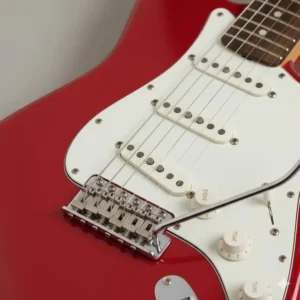
Fiesta Red was Leo Fender’s gift to guitarists who wanted to stand out. With its slight orange undertone, it catches light like a California sunset. Mark Knopfler made this finish legendary, and today it remains the most sought-after vintage red finish.
Dakota Red came along slightly later, offering a purer, more traditional red without the orange influence. It’s become the “default” red Strat finish for many players who want something bold but not too flashy.
Candy Apple Red involves a metallic base coat under translucent red, creating incredible depth. Under stage lights, it’s absolutely mesmerizing. The finish tends to look darker in low light and absolutely pops under direct illumination.
Body Woods and Their Impact on Tone 🌳
Here’s something they don’t always tell you at the guitar shop: the body wood significantly impacts your red fender stratocaster guitar’s voice.
Body Wood Tonal Characteristics
| Wood Type | Tonal Character | Weight | Resonance | Models Using It |
|---|---|---|---|---|
| Alder | Balanced, clear | Medium | Excellent | Player, Player II, American Vintage II |
| Poplar | Bright, lightweight | Light | Good | Squier Debut, Standard Series |
| Ash (Chambered) | Snappy, articulate | Medium-Light | Very Good | Player II (select finishes) |
| Mahogany | Warm, thick mids | Heavy | Excellent | Player II (select finishes), Acoustasonic |
Alder has been Fender’s go-to since the 1950s for good reason. It’s got balanced tonal characteristics – not too bright, not too dark. When you hear that quintessential Strat tone in your head, that’s likely alder talking.
Poplar gets unfairly criticized, but for budget-conscious builds, it’s fantastic. Yes, it’s lighter and slightly less resonant than alder, but it still sounds like a Strat. The weight savings can be significant, which matters during three-hour gigs.
Chambered ash is experiencing a renaissance. Fender routes out chambers in heavier ash bodies, reducing weight while maintaining that snappy, articulate tone ash is known for. It’s bright without being harsh.
Mahogany bodies (like on some Player II configs and the Acoustasonic) bring warmth and sustain. They’re heavier but offer thick midrange that cuts through a mix beautifully.
Pickup Configurations: Finding Your Voice 🎛️
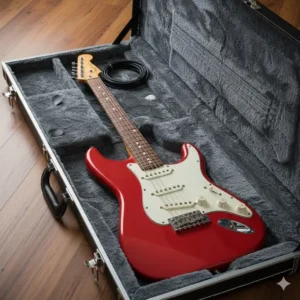
Your red strat’s pickups are where the magic really happens. Let’s decode the options.
Pickup Comparison: Ceramic vs. Alnico
| Pickup Type | Output | Clarity | Dynamics | Best Genre | Price Range |
|---|---|---|---|---|---|
| Ceramic (Standard) | High | Good | Moderate | Rock, Metal | Budget |
| Alnico V (Player) | Medium-High | Excellent | Very Good | Blues, Rock, All | Mid-Range |
| Alnico III (Vintage) | Medium | Outstanding | Exceptional | Vintage, Jazz, Blues | Premium |
| Ultra Noiseless | Medium-High | Excellent | Very Good | Studio, All | Premium |
Ceramic magnets in budget models get a bad rap, but modern designs have improved dramatically. They’re hotter (higher output) and work great for rock tones. The trade-off? Slightly less dynamic response and harmonic complexity compared to Alnico magnets.
Alnico V pickups (used in Player and Player II series) hit the sweet spot. They’re the “Goldilocks” pickup – not too hot, not too mellow. Bell-like highs, punchy mids, and surprisingly robust lows characterize these pickups. They clean up beautifully with your guitar’s volume knob.
Alnico III magnets (Pure Vintage series) are lower output but incredibly touch-sensitive. They capture every nuance of your playing technique. Roll back your pick attack slightly, and the tone responds immediately. These are for players who want maximum dynamic control.
Ultra Noiseless pickups achieve the impossible: classic single-coil tone without the hum. Fender’s 5th-generation noiseless design is scary good. You get that Strat sparkle and clarity while your red fender stratocaster stays silent in high-gain situations.
Neck Profiles: Comfort and Playability 🎸
The neck is your interface with the instrument. Getting this right matters tremendously.
Neck Profile Comparison
| Profile Type | Depth | Shape | Best For | Feel Description | Models |
|---|---|---|---|---|---|
| Slim C | 0.820″ | Rounded | Fast playing | Quick, modern | Debut Series |
| Modern C | 0.840″ | Balanced C | All styles | Comfortable, versatile | Player, Player II, Standard |
| 1961 C (Vintage) | 0.820″ | Soft V transition | Vintage tone | Period-correct | American Vintage II |
| Deep C | 0.880″ | Fuller | Rhythm, chunky chords | Substantial | Acoustasonic |
| Augmented D | 0.860″ | Flattened oval | Lead, fast runs | Modern, sculpted | Ultra Luxe |
The Modern C profile is Fender’s most universally comfortable shape. It’s neither too thick nor too thin, accommodating most hand sizes and playing styles. If you’re unsure what you prefer, this is the safe bet.
Slim C profiles cater to players with smaller hands or those who prefer speed. They’re easier to wrap your thumb around, facilitating faster position shifts and complex chord voicings.
The 1961 C profile feels more substantial in the hand, transitioning toward a soft V shape. It’s period-correct for vintage reproductions and offers that “grab a neck full of wood” feel that some players love.
Augmented D (Ultra Luxe series) is Fender’s modern innovation – flatter across the back, almost oval. It’s designed for technical players who need comfort across all positions without excess bulk.

Hardware and Bridge Systems Explained 🔧
Let’s talk tremolo systems – that iconic Stratocaster wiggle stick deserves attention.
Bridge Comparison Table
| Bridge Type | Posts | Stability | Flexibility | Return-to-Pitch | Models |
|---|---|---|---|---|---|
| 6-Screw Vintage | 6 | Good | Limited | Good | American Vintage II |
| 2-Point Modern | 2 | Excellent | Good | Excellent | Player, Player II, Standard |
| 2-Point Advanced | 2 | Outstanding | Excellent | Outstanding | Ultra Luxe |
The vintage 6-screw tremolo is historically accurate but slightly less stable than modern designs. Six screws attach it to the body, and while it delivers authentic vintage feel, aggressive whammy bar use can cause tuning issues.
Modern 2-point tremolos balance vintage vibe with modern stability. Two knife-edge pivot points reduce friction, improving return-to-pitch accuracy. This is the standard on most contemporary red fender stratocaster models, and it works beautifully for everything from subtle vibrato to dramatic dive bombs.
The Advanced 2-point system (Ultra Luxe) takes it further with upgraded saddles, spring tension optimization, and proprietary design elements. Professional players who abuse their tremolos appreciate the rock-solid tuning stability.
Understanding Tuning Machine Quality
| Tuner Type | Ratio | Stability | Smoothness | Cost | Installation |
|---|---|---|---|---|---|
| Standard Die-Cast | 14:1 | Good | Good | Low | Factory-installed |
| Sealed Gear | 15:1 | Very Good | Very Good | Medium | Factory-installed |
| ClassicGear | 18:1 | Excellent | Excellent | Medium-High | Factory (Player II) |
| Locking Tuners | 18:1 | Outstanding | Outstanding | High | Upgrade option |
Your red strat’s tuning stability depends heavily on the tuning machines. Higher gear ratios mean finer tuning control and better pitch accuracy.
Standard die-cast tuners work fine for most players but can feel slightly stiff and require occasional adjustments. They’re functional but not inspiring.
ClassicGear tuners (Player II series) represent a significant upgrade – 18:1 ratio means incredibly precise tuning control. They’re smooth, reliable, and look period-appropriate.
Locking tuners eliminate string slippage completely. They’re not standard on most models but make a fantastic upgrade, especially if you use your tremolo frequently.
Playing Styles and Genre Compatibility 🎵
Your red fender stratocaster guitar is incredibly versatile, but some configurations work better for specific genres.
Genre Compatibility Matrix
| Genre | Best Pickup Config | Ideal Model | Amp Pairing | Why It Works |
|---|---|---|---|---|
| Blues | SSS (Single-coils) | Player II, Vintage II | Fender tube amps | Classic Strat quack and touch sensitivity |
| Rock | SSS or HSS | Player, Player II | Marshall, Mesa | Punchy mids, great with overdrive |
| Country | SSS | Vintage II, Player | Fender tweed-style | Bright, articulate tones |
| Jazz | SSS (neck pickup) | American Vintage II | Roland Jazz Chorus | Smooth, warm neck tones |
| Metal | HSS | Ultra Luxe HSS | High-gain heads | Bridge humbucker for chunk |
| Pop | SSS | Player II | Modeling amps | Versatile clean to crunch |
| Funk | SSS (positions 2 & 4) | Player, Player II | Clean amps | Classic Strat quack |
Blues players need touch sensitivity and dynamic range. Single-coil pickups in a red stratocaster deliver the goods – every bend, every pick attack translates into tonal nuance. Position 4 (neck+middle) gives you that SRV quack, while the bridge pickup spanks with attitude.
Rock guitarists can go either way. An SSS configuration handles everything from Hendrix to The Edge, while HSS configs add a humbucker for heavier tones. The versatility is why Strats dominate rock stages worldwide.
Country pickers need clarity and articulation. The bridge pickup on any red fender stratocaster cuts through a mix like a hot knife through butter. Add some slapback delay, and you’re in twang heaven.
Setup and Maintenance Tips 🔧
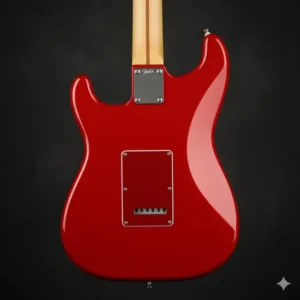
Owning a red fender stratocaster means maintaining it properly. Let’s keep that baby singing.
Essential Setup Parameters
| Component | Measurement | Tool Required | Frequency | Impact |
|---|---|---|---|---|
| String Height (Treble) | 4/64″ (1.6mm) | Allen wrench | Monthly | Playability |
| String Height (Bass) | 5/64″ (2mm) | Allen wrench | Monthly | Playability |
| Neck Relief | .010″ (0.25mm) | Truss rod wrench | Seasonal | Feel |
| Pickup Height (Bridge) | 3/32″ (2.4mm) | Screwdriver | As needed | Tone |
| Intonation | Open = 12th fret | Screwdriver | String changes | Tuning |
Action (string height) dramatically affects playability. Lower action feels faster but may cause fret buzz. Higher action eliminates buzz but requires more finger pressure. The measurements above represent Fender’s factory specs – a great starting point.
Neck relief refers to the slight bow in your neck. Too much relief makes the middle frets feel spongy. Too little causes buzzing. Check relief by fretting the 1st and last frets simultaneously and measuring the gap at the 8th fret.
Pickup height affects tone and output. Too close to the strings creates an overpowering magnetic pull that kills sustain. Too far reduces output and clarity. Start with Fender’s specs and adjust to taste.
Finish Care for Red Stratocasters
Nitrocellulose finishes (American Vintage II) require special care. They’re more delicate than polyurethane but age beautifully. Avoid guitar stands with foam or rubber, which can react with nitro. Use pure cotton cloths for cleaning.
Polyurethane and polyester finishes (most modern Strats) are more durable. They resist scratches and checking better than nitro but don’t age with the same character. Regular cleaning with guitar polish maintains shine.
Red finishes specifically can fade with UV exposure. Store your red fender stratocaster in a case when not playing, away from direct sunlight. The deeper metallic reds (Candy Apple, Plasma Red Burst) show less fading than flat reds.
Accessories That Complement Your Red Strat 🎒
The right accessories enhance both protection and playability.
Essential Accessories Comparison
| Accessory | Budget Option | Premium Option | Purpose | Priority |
|---|---|---|---|---|
| Case/Bag | Gig bag ($50-100) | Hardshell case ($150-300) | Protection | High |
| Strap | Cotton strap ($15-30) | Leather strap ($50-150) | Comfort | Medium |
| Strings | D’Addario XL ($5-7) | Elixir Coated ($12-15) | Tone/Longevity | High |
| Cable | Basic 1/4″ ($15) | Planet Waves/Monster ($30-50) | Signal integrity | Medium |
| Tuner | Clip-on tuner ($15-25) | TC Electronic ($50-100) | Accuracy | High |
| Amp | Practice amp ($100-200) | Boutique amp ($1000+) | Sound | Varies |
Cases matter more than people think. A quality hardshell case protects your investment during transport. If you’re gigging regularly, shell out for professional-grade protection. For bedroom players, a decent gig bag suffices.
Straps affect comfort during extended playing sessions. Width matters – wider distributes weight better. If your red stratocaster is heavier (looking at you, ash and mahogany bodies), invest in a padded leather strap.
Strings are personal preference territory. For red fender stratocaster guitar tones, I prefer .009-.042 or .010-.046 gauges. Lighter strings bend easier but have less mass for sustain. Heavier strings offer more body but require stronger fingers.
Amplifier Pairing Recommendations 🔊
Your red Strat deserves an amp that complements its voice.
Amplifier Compatibility Guide
| Amp Type | Wattage Range | Price Range | Best Strat Config | Tone Character |
|---|---|---|---|---|
| Fender Tube Combo | 15-65W | $600-2500 | SSS | Classic sparkle |
| Marshall Stack | 50-100W | $800-3000 | SSS/HSS | British crunch |
| Vox AC Series | 15-30W | $500-1800 | SSS | Chimey highs |
| Mesa Boogie | 50-100W | $1500-3500 | HSS | Versatile gain |
| Roland JC-120 | 120W | $800-1200 | SSS | Clean jazz tones |
| Modeling Amp | 20-100W | $300-1500 | Any | All styles |
Fender tube amps are the natural pairing. A Deluxe Reverb or Princeton Reverb brings out every nuance in your red fender stratocaster. That classic Strat-into-Fender combination has powered countless recordings and performances.
Marshall amps create magic when paired with Strats. The British midrange emphasis complements the Strat’s inherent brightness, creating that classic rock tone. Think early Clapton or Hendrix at Woodstock.
Modeling amps offer incredible versatility on a budget. Modern units from Line 6, Fender, or Boss provide convincing amp simulations. For players exploring different genres, modeling makes sense.
Maintenance Schedule and Costs 📅
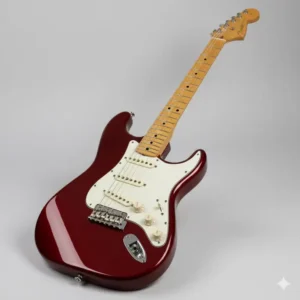
Budgeting for upkeep keeps your red strat guitar in prime condition.
Annual Maintenance Budget
| Service/Item | Frequency | Cost Range | DIY Possible? | Impact |
|---|---|---|---|---|
| String Changes | Monthly | $30-90/year | Yes | High |
| Professional Setup | Annually | $50-100 | Challenging | High |
| Fret Polish | Annually | $20-40 | Yes | Medium |
| Electronics Cleaning | Annually | $10-20 | Yes | Medium |
| Hardware Tightening | As needed | Free | Yes | Low |
| Refret (eventual) | 5-15 years | $200-500 | No | Very High |
Regular string changes maintain tone and playability. How often depends on playing frequency and body chemistry. Heavy players may need biweekly changes; casual players can go monthly.
Professional setups annually ensure optimal performance. A good tech adjusts action, intonation, and truss rod properly. It’s worth the investment, especially if you’re not confident DIY-ing.
Fret polishing removes gunk buildup and maintains smooth playability. Simple steel wool (0000 grade) does the job, but mask your fretboard first.
Investment Value and Resale Considerations 💰
Understanding depreciation helps make informed purchase decisions.
Depreciation and Value Retention
| Model Tier | Initial Cost | 5-Year Value | Retention Rate | Collectibility |
|---|---|---|---|---|
| Squier Debut | $250-350 | $150-250 | 60-70% | Low |
| Standard Series | $450-550 | $300-400 | 65-75% | Low-Medium |
| Player Series | $700-900 | $500-700 | 70-80% | Medium |
| Player II Series | $850-1100 | $650-850 | 75-85% | Medium |
| American Vintage II | $2200-2600 | $1800-2400 | 80-95% | High |
| American Ultra Luxe | $2400-3000 | $1900-2600 | 75-90% | High |
American-made models hold value better than import models. The American Vintage II in Fiesta Red particularly holds value due to collectibility. Limited editions and discontinued colors command premiums.
Popular finishes like Fiesta Red, Candy Apple Red, and Dakota Red retain value better than less common options. The market for red fender stratocaster models stays strong because they’re iconic.
Condition matters enormously. A well-maintained Player Series Strat sells for 80% of original value. The same guitar with fret wear, finish damage, and electronics issues might fetch 50%.
Common Issues and Solutions ⚠️
Even the best red stratocaster encounters occasional problems.
Troubleshooting Guide
| Problem | Likely Cause | Solution | Prevention | Cost |
|---|---|---|---|---|
| Tuning instability | Nut binding | Lubricate nut slots | Regular maintenance | $5-10 |
| Fret buzz | Action too low | Raise saddles | Proper setup | Free-$50 |
| Pickup hum | Grounding issue | Check wiring | Quality cables | $0-100 |
| Sticky tuners | Lack of lubricant | Apply tuner lubricant | Annual service | $5-15 |
| Tremolo won’t return | Spring tension | Adjust springs | Regular checks | Free |
| Output cutting out | Loose jack | Tighten output jack | Handle cables carefully | Free-$20 |
Nut binding causes most tuning problems. String slots can develop burrs or insufficient lubrication. A pencil lead graphite works in a pinch; proper nut lubricant works better.
Fret buzz frustrates beginners especially. Often it’s simply action set too low for their playing technique. Raising saddles incrementally usually solves it. Neck relief adjustment helps too.
Pickup hum in single-coil equipped red fender stratocaster guitars is somewhat normal, but excessive hum indicates grounding problems. Check that the bridge ground wire connects properly.
🎯 Ready to Own Your Dream Guitar? Take Action Now!
Don’t let your perfect red fender stratocaster slip away! Whether you’re just starting out or upgrading to professional gear, the models highlighted in this guide represent the absolute best available in 2025. Click through to check current prices, read detailed customer reviews, and snag those limited-time deals before they disappear. Your musical journey deserves the legendary tone and timeless style of a red Strat – make it happen today! 🚀✨

Conclusion
After dissecting everything from body woods to pickup magnets, one truth remains: a red fender stratocaster is more than a guitar. It’s a statement, a tool, a partner in your musical journey.
Whether you choose the budget-friendly Squier Debut in Dakota Red or splurge on an American Ultra Luxe in Plasma Red Burst, you’re joining a lineage of players who understood that sometimes, the best way to stand out is with a guitar that’s impossible to ignore.
The red fender stratocaster guitar isn’t just visually striking – it’s tonally versatile, ergonomically brilliant, and historically significant. From surf rock to modern metal, this instrument has proven its worth across every genre and generation.
Your choice depends on budget, skill level, and tonal preferences. Beginners thrive with the Squier Debut or Standard Series. Intermediate players find their sweet spot in the Player II series. Professionals and tone chasers reach for American Vintage II or Ultra Luxe models.
But here’s my real advice: play them. Visit a guitar shop, strap on that red Strat that catches your eye, plug into an amp, and listen. Your hands will tell you which one feels right. Your ears will confirm it sounds right. And your heart? Well, your heart probably made the decision the moment you saw it hanging on the wall.
Rock on, my friend. May your red fender stratocaster bring you countless hours of joy, inspiration, and killer tone. 🎸🔥
FAQs
❓ What's the difference between Fiesta Red and Dakota Red on a fender stratocaster?
✅ Fiesta Red features slight orange undertones creating a warmer, vintage-inspired appearance, while Dakota Red offers a purer, more traditional red without orange influence. Fiesta Red was introduced in 1956 and became iconic through players like Hank Marvin, whereas Dakota Red appeared in the early 1960s as a more conventional alternative. The choice depends on whether you prefer vintage surf-rock aesthetics or a cleaner, more traditional red look...
❓ Are ceramic pickups in budget red stratocasters worth it compared to Alnico?
✅ Ceramic pickups in models like the Standard Series deliver higher output and work great for rock genres, though they sacrifice some harmonic complexity. Alnico V pickups found in Player Series and above offer superior touch sensitivity and dynamic range with bell-like highs and balanced response across frequencies. For beginners or rock players, ceramics perform admirably, but intermediate players notice significant tonal improvements upgrading to Alnico-equipped models...
❓ How much should I budget for a quality red fender stratocaster in 2025?
✅ Entry-level Squier Debut models start around 250-350 dollars, mid-range Player Series cost 700-1100 dollars, and American-made models range from 2200-3000 dollars. For most players, the Player II Series at 850-1100 dollars offers the best value with modern features and authentic Fender tone. Budget an additional 200-300 dollars for a quality case, setup, and accessories. Used market options can save 20-30 percent if you find well-maintained instruments...
❓ Which red stratocaster model is best for blues guitarists?
✅ The American Vintage II 1961 Stratocaster in Fiesta Red excels for blues due to its Pure Vintage Alnico III pickups offering exceptional touch sensitivity and dynamic response. For budget-conscious blues players, the Player II Series with Alnico V pickups delivers authentic Strat blues tones at half the price. The 9.5 inch radius fingerboard on Player models facilitates string bending, while vintage 7.25 inch radius offers period-correct feel. Position 4 (neck plus middle pickup) provides classic blues quack...
❓ Do red finishes affect the tone of a stratocaster guitar?
✅ The paint finish type impacts tone more than color itself. Thin nitrocellulose finishes on American Vintage models allow more wood resonance compared to thicker polyurethane finishes on import models. However, body wood (alder versus poplar) and pickup quality affect tone dramatically more than finish. Red metallic finishes like Candy Apple Red involve extra paint layers that minimally dampen resonance, but most players won't notice differences. Focus on body wood and electronics rather than color for tonal considerations...
Recommended for You
- Offset Guitar: 7 Best Models Redefining Style and Sound in 2025
- Electric Guitar Red: 7 Best Models Expert Analysis & Buying Guide 2025
- Fender Stratocaster Guitar Neck: 7 Best Models 2025
Disclaimer: This article contains affiliate links. If you purchase products through these links, we may earn a small commission at no additional cost to you.
✨ Found this helpful? Share it with your friends! 💬🤗