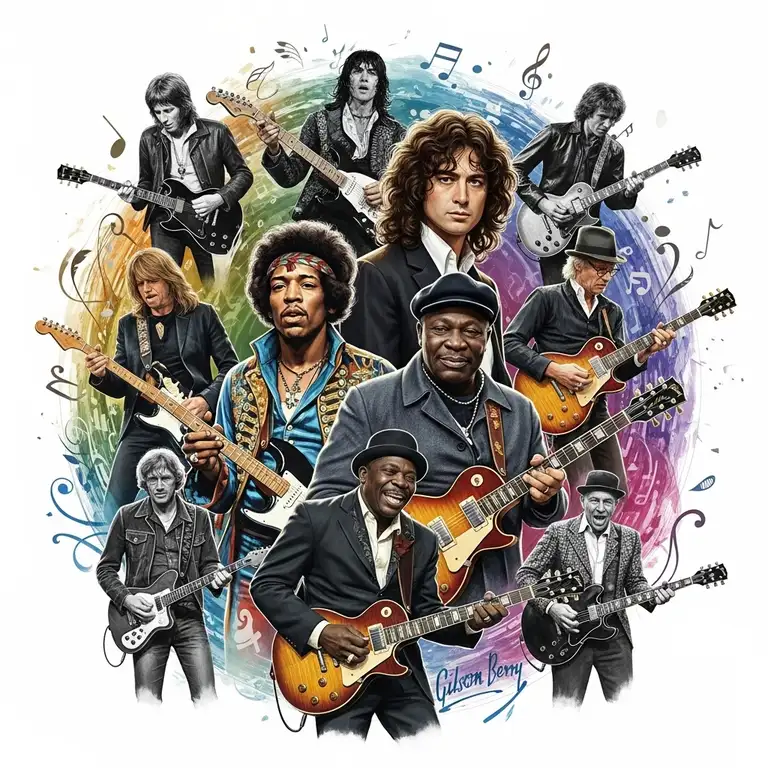
When discussing the best guitar players of all time, we enter a realm where technical mastery meets raw emotion, where innovation collides with tradition, and where legendary musicians have forever altered the course of music history. These extraordinary artists didn’t just play guitar—they redefined what the instrument could accomplish, inspiring countless generations of musicians and music lovers worldwide.
✨Was this helpful? Spread the word! 🚀
The conversation about the greatest guitar players ever encompasses multiple dimensions of musical excellence. It’s not merely about speed or technical ability, though many of these legends possessed both in abundance. Instead, it involves examining how these musicians revolutionized their genres, influenced other artists, and created sounds that remain instantly recognizable decades after their initial recordings.
Quick Comparison: Best Guitar Players vs. Other Legendary Musicians
| Category | Best Guitar Players of All Time | Traditional Instrumentalists | Modern Guitar Heroes |
|---|---|---|---|
| Innovation Level | Revolutionary techniques | Classical foundations | Contemporary fusion |
| Cultural Impact | Shaped multiple generations | Academic influence | Digital-age relevance |
| Technical Mastery | Emotional + Technical | Primarily technical | Technology-enhanced |
| Genre Influence | Cross-genre pioneers | Genre-specific | Niche specialization |
| Lasting Legacy | Timeless appeal | Historical significance | Emerging influence |
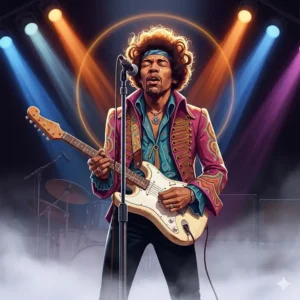
Top 7 Best Guitar Players of All Time: Expert Analysis 🎸
Understanding who deserves recognition among the best guitar players of all time requires examining their contributions across multiple criteria: technical innovation, cultural impact, influence on other musicians, and the lasting quality of their recorded work. Our expert analysis reveals seven guitarists whose contributions fundamentally transformed music.
1. Jimi Hendrix – The Revolutionary Pioneer
Jimi Hendrix consistently tops every “best guitar players of all time” list, and for compelling reasons that extend far beyond his legendary status. His approach to the electric guitar was nothing short of revolutionary, incorporating feedback, distortion, and effects in ways that had never been attempted before his emergence in the mid-1960s.
Born in Seattle in 1942, Hendrix’s technique combined blues traditions with psychedelic innovation. His left-handed approach to a right-handed guitar, flipped upside down, created unique string tensions that contributed to his distinctive sound. Songs like “Purple Haze,” “Hey Joe,” and his iconic rendition of “The Star-Spangled Banner” at Woodstock demonstrate his ability to blend technical mastery with emotional expression.
What sets Hendrix apart among the greatest guitar players ever is his intuitive understanding of how to make the guitar “speak.” His vibrato technique, his use of the whammy bar, and his pioneering use of effects pedals created a vocabulary that influenced everyone from Eddie Van Halen to Prince. Despite his career lasting only four years before his death at age 27, Hendrix’s impact on guitar playing remains unmatched.
2. Eric Clapton – “Slowhand’s” Blues Mastery
Eric Clapton earned his place among the best guitar players of all time through consistent excellence across multiple legendary bands and a prolific solo career spanning more than five decades. His nickname “Slowhand” doesn’t refer to speed limitations but rather to his methodical, emotionally-driven approach to guitar playing.
Clapton’s journey through The Yardbirds, John Mayall’s Bluesbreakers, Cream, Blind Faith, and Derek and the Dominos showcased his versatility while maintaining his distinctive blues-based foundation. His work on songs like “Layla,” “Crossroads,” and “White Room” demonstrates his ability to balance technical proficiency with emotional storytelling.
The Fender Eric Clapton Stratocaster represents one of the most successful signature guitar collaborations in history. This instrument features Clapton’s preferred V-shaped neck profile, Gold Lace Sensor pickups (later updated to Vintage Noiseless), and an active mid-boost circuit that delivers 25dB of gain. The guitar’s blocked tremolo system reflects Clapton’s preference for stable tuning while maintaining the tonal characteristics of a tremolo-equipped Stratocaster.
3. Jimmy Page – Led Zeppelin’s Sonic Architect
Jimmy Page’s position among the greatest guitar players ever stems from his dual role as Led Zeppelin’s guitarist and producer, where he crafted some of rock music’s most enduring compositions. His ability to seamlessly transition between acoustic fingerpicking and thunderous electric riffs established templates that countless rock and metal bands continue to follow.
Page’s arsenal included his famous “Number One” 1959 Les Paul Standard, purchased from Joe Walsh for $500, and his double-neck Gibson EDS-1275, immortalized in performances of “Stairway to Heaven.” His innovative studio techniques, including his use of backwards echo and close-microphone recording, influenced not just guitarists but entire approaches to music production.
Songs like “Kashmir,” “Black Dog,” and “Whole Lotta Love” showcase Page’s ability to create heavy, memorable riffs while incorporating Eastern musical influences and complex arrangements. His work established hard rock and heavy metal as distinct genres, influencing everyone from Eddie Van Halen to modern metal pioneers.
4. Eddie Van Halen – The Technical Revolutionary
Eddie Van Halen revolutionized guitar playing through his development of the tapping technique, which became his trademark after the release of “Eruption” in 1978. This approach to the fretboard allowed guitarists to play rapid-fire arpeggios and scales that were previously impossible with traditional picking techniques.
Beyond tapping, Van Halen’s innovations included his “brown sound” amp modifications, his creation of custom guitars (including his famous “Frankenstein” Stratocaster), and his integration of effects like phasers and flangers into hard rock contexts. His influence extends to virtually every hard rock and metal guitarist who emerged after the late 1970s.
The EVH Wolfgang USA Signature Guitar captures Eddie’s specifications, including his preferred neck profile, custom-designed pickups, and the unique body contours that facilitated his playing style. This instrument represents decades of refinement in pursuit of the perfect rock guitar, incorporating features like the compound radius fingerboard and the D-Tuna system for quick drop-D changes.
5. Jeff Beck – The Innovative Explorer
Jeff Beck’s inclusion among the best guitar players of all time reflects his willingness to continuously evolve his style across multiple decades. Unlike many guitarists who established a signature sound and maintained it, Beck consistently explored new territories, from blues-rock to fusion to electronic music.
His work with The Yardbirds, The Jeff Beck Group, and as a solo artist demonstrates remarkable versatility. Beck’s use of the whammy bar as a primary voice, his integration of harmonics and feedback, and his later adoption of electronic effects created a uniquely expressive approach to the instrument.
Beck’s influence appears in the work of guitarists ranging from David Gilmour to Joe Satriani, and his willingness to embrace new technologies while maintaining his core musicality establishes him as one of the most forward-thinking musicians in rock history.
6. B.B. King – The Blues Master
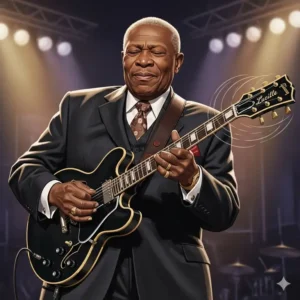
B.B. King earned his place among the greatest guitar players ever through his role in establishing the modern blues guitar vocabulary. His use of vibrato, his single-note soloing style, and his ability to make his guitar “Lucille” sing with human-like expressiveness influenced virtually every blues and rock guitarist who followed.
King’s approach emphasized emotional connection over technical complexity. His mastery of string bending, his sophisticated use of silence and space, and his integration of jazz harmonies into blues contexts created a template that remains relevant across all contemporary guitar styles.
Songs like “The Thrill Is Gone” and “Sweet Little Angel” demonstrate King’s ability to create memorable, hummable guitar parts that serve the song while showcasing his distinctive style. His influence extends from Eric Clapton and Stevie Ray Vaughan to modern blues-rock artists.
7. Steve Vai – The Virtuoso Innovator
Steve Vai represents the evolution of guitar technique into the modern era, combining classical training with rock sensibility and technological innovation. His work with Frank Zappa, David Lee Roth, and his solo career showcases technical abilities that push the boundaries of what’s possible on the instrument.
The Ibanez JEMJR Steve Vai Signature Guitar makes his innovative approach accessible to players at various skill levels. Available on Amazon, this instrument features Vai’s signature “monkey grip” handle, Tree of Life inlay, and the fast-playing Wizard III neck. The guitar includes Quantum pickups and a double-locking tremolo system, allowing players to explore Vai’s characteristic whammy bar techniques.
Vai’s contribution to guitar education through his transcription work, instructional materials, and workshops has influenced guitar pedagogy worldwide. His combination of technical mastery with musical creativity establishes him as a bridge between traditional rock guitar and contemporary approaches.
✨ Discover Your Next Dream Guitar Today! 🎸
🔍 Ready to channel your inner guitar hero? These legendary signature guitars bring professional quality and iconic tones within reach. From Clapton’s soulful Stratocaster to Vai’s innovative JEM series, each instrument captures decades of musical evolution. Click on any highlighted guitar to explore current pricing and availability!
💬 Just one click – help others make better buying decisions too!😊
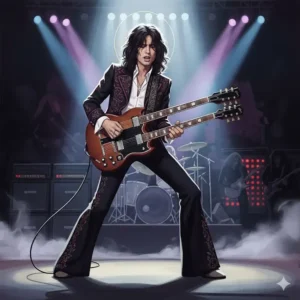
Comparative Analysis: Traditional vs. Modern Guitar Heroes
The landscape of guitar excellence has evolved significantly since the emergence of electric guitars in the 1950s. Understanding how traditional best guitar players of all time compare with contemporary artists reveals important trends in musical development and technological integration.
Traditional Guitar Masters (1950s-1980s)
The original guitar heroes emerged during an era when amplification was relatively simple, effects were limited, and recording technology required musicians to capture perfect performances in real-time. These constraints fostered development of fundamental techniques that remain essential today.
Players like Chuck Berry established the foundation of rock rhythm guitar, while blues masters like Muddy Waters and Howlin’ Wolf created the template for electric blues. The British Invasion brought technical sophistication through players like The Beatles’ George Harrison and The Rolling Stones’ Keith Richards, who adapted American blues and rock styles for international audiences.
The Innovation Explosion (1970s-1990s)
This period produced many of the names consistently listed among the best guitar players of all time. Technological advances in amplification, effects, and recording allowed guitarists to explore new sonic territories while building upon established foundations.
Progressive rock guitarists like David Gilmour of Pink Floyd and Steve Howe of Yes incorporated complex arrangements and atmospheric textures. Meanwhile, the development of heavy metal through pioneers like Tony Iommi of Black Sabbath and Ritchie Blackmore of Deep Purple established new standards for power and aggression.
Modern Guitar Evolution (2000s-Present)
Contemporary guitarists face different challenges and opportunities. Digital technology provides access to virtually unlimited sounds and effects, while online education democratizes advanced technique instruction. However, this accessibility also creates pressure to develop unique voices in an increasingly crowded field.
Players like John Mayer blend traditional blues vocabulary with contemporary production techniques, while metal pioneers like Tosin Abasi of Animals as Leaders explore extended-range instruments and complex polyrhythms. These modern approaches expand the definition of guitar excellence while honoring traditional foundations.
Industry-Specific Applications of Guitar Mastery
Understanding how the best guitar players of all time apply their skills across different professional contexts reveals the versatility required for sustained success in the music industry.
Studio Recording Applications
Professional recording environments demand different skills than live performance. The best guitar players historically excel at capturing definitive performances under studio conditions, often requiring multiple takes and complex overdubbing arrangements.
Jimmy Page’s production work with Led Zeppelin demonstrates mastery of studio techniques, including his use of backwards echo, close-microphone placement, and multi-layer arrangements. His approach to creating guitar sounds that translated effectively across different playback systems established templates still used in contemporary recording.
Live Performance Demands
Concert performance requires reliability, stamina, and the ability to connect with audiences across large venues. The greatest guitar players develop stage presence that complements their musical abilities, creating memorable experiences that extend beyond pure technical display.
Players like Jimi Hendrix and Eddie Van Halen became known for incorporating visual elements into their performances, including guitar tricks, effects manipulation, and interaction with stage equipment. These presentations enhanced their musical contributions while establishing them as complete entertainers.
Commercial Music Integration
Successful guitarists often work across multiple commercial contexts, from session recording to soundtrack composition. This versatility requires adapting playing styles to serve different musical goals while maintaining individual identity.
Eric Clapton’s career demonstrates this adaptability, encompassing blues-rock with Cream, pop sensibilities in his solo work, and even reggae influences in songs like “I Shot the Sheriff.” This flexibility helped establish him among the best guitar players of all time while maintaining commercial relevance across multiple decades.
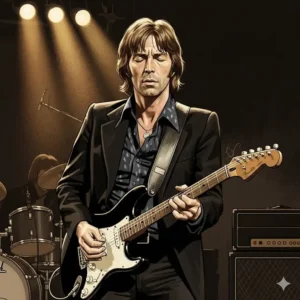
Advanced Technical Analysis: What Makes These Players Legendary
Examining the technical elements that distinguish the best guitar players of all time from competent musicians reveals specific approaches to the instrument that can be studied and adapted by contemporary players.
Harmonic Sophistication
The greatest guitarists typically demonstrate advanced understanding of harmony that extends beyond basic chord progressions. They incorporate jazz concepts, modal approaches, and complex voice-leading that creates sophisticated musical content while maintaining accessibility.
Jeff Beck’s use of extended harmonies and chromatic approaches demonstrates this sophistication, as does Steve Vai’s integration of classical harmonic concepts into rock contexts. These approaches create musical interest that sustains repeated listening while providing educational value for other musicians.
Rhythmic Innovation
Rhythm guitar forms the foundation of most popular music, and the best guitar players excel at creating memorable, groove-oriented parts that support songs while adding musical interest. This requires understanding of subdivision, syncopation, and the relationship between guitar parts and rhythm sections.
Keith Richards’ approach to rhythm guitar with The Rolling Stones exemplifies this mastery, using open tunings and specific chord voicings to create instantly recognizable sounds. His parts serve the songs while contributing distinctive musical character that defines the band’s identity.
Tonal Control and Sound Design
The most influential guitarists develop distinctive sounds that become part of their musical identity. This involves understanding of amplification, effects, and the relationship between playing technique and sonic results.
Eddie Van Halen’s “brown sound” represents a perfect example of this approach, combining specific amplifier modifications with playing techniques to create a signature tone. His integration of effects like phasers and flangers expanded the palette of available sounds while maintaining musical coherence.
Comprehensive Setup and Usage Guide for Aspiring Guitar Heroes
Learning from the best guitar players of all time requires understanding not just their techniques but also their approaches to equipment, practice, and musical development.
Essential Equipment Considerations
The greatest guitarists typically use relatively simple equipment setups, focusing on quality basics rather than excessive complexity. This approach emphasizes the importance of musical content over technological novelty.
Guitar Selection: The Fender Eric Clapton Stratocaster demonstrates this principle, providing professional-quality construction with thoughtful modifications that serve musical purposes. The guitar’s V-shaped neck accommodates Clapton’s playing style, while the active electronics expand tonal possibilities without overwhelming complexity.
For players interested in more modern approaches, the Ibanez JEM77P Steve Vai Signature offers advanced features including DiMarzio Evolution pickups and Edge tremolo systems. These components provide access to contemporary techniques while maintaining reliability for professional use.
Progressive Skill Development
The careers of legendary guitarists reveal common patterns in skill development that can guide contemporary players. Most began with basic techniques and gradually expanded their abilities through consistent practice and exposure to different musical styles.
Foundation Phase (Months 1-12): Focus on basic chord progressions, simple scales, and fundamental rhythm patterns. Study recordings by Chuck Berry, Keith Richards, and other rhythm-focused players to understand how simple techniques can create compelling music.
Expansion Phase (Years 1-3): Add lead guitar techniques including string bending, vibrato, and basic improvisation. Study players like B.B. King and Eric Clapton to understand how emotional expression can be achieved through technical control.
Specialization Phase (Years 3+): Develop individual voice through exploration of personal interests, whether blues, rock, metal, or fusion. Study advanced players like Steve Vai and Jeff Beck to understand how technical mastery serves musical expression.
Practice Methodologies from the Masters
The best guitar players of all time developed their abilities through specific practice approaches that can be adapted for contemporary learning.
Transcription Practice: Learning songs note-for-note develops ear training while providing insight into composition and arrangement techniques. Start with simpler songs and gradually increase complexity as skills develop.
Improvisation Development: Regular improvisation practice develops musical creativity while reinforcing technical concepts. Begin with simple backing tracks and gradually add harmonic complexity and tempo challenges.
Performance Integration: Regular performance, even in informal settings, develops confidence and musical communication skills. The greatest guitarists excel at connecting with audiences, skills that require practice beyond solitary technique development.
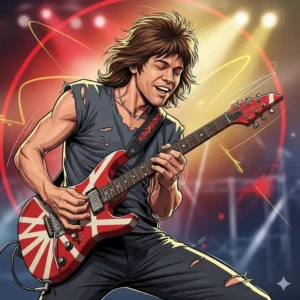
Maintenance and Longevity: Preserving Your Guitar Investment
Professional guitarists maintain their instruments with the same attention to detail they apply to their musical development. Understanding proper maintenance procedures ensures that quality guitars like signature models continue performing at professional levels throughout their useful lives.
Daily Maintenance Protocols
String Care: Professional players typically change strings frequently, often before each recording session or important performance. New strings provide better intonation, brighter tone, and improved reliability.
Cleaning Procedures: Regular cleaning of fretboards, hardware, and finish prevents buildup of oils, dirt, and other contaminants that can affect performance and appearance. Use appropriate cleaning products designed for musical instruments.
Hardware Inspection: Regular checking of tuning machines, bridges, and electronic components identifies potential problems before they affect performance. Loose connections, worn parts, or setup issues can usually be addressed through routine maintenance.
Long-term Preservation Strategies
Climate Control: Guitars require stable temperature and humidity conditions for optimal performance and longevity. Extreme changes can cause finish checking, neck warping, and electronic problems.
Professional Setup: Annual professional setup ensures that guitars maintain proper intonation, action, and neck relief. These adjustments optimize playability while preventing long-term damage from improper setup.
Component Upgrades: Strategic component upgrades can extend instrument life while improving performance. Replacing worn frets, upgrading electronics, or installing better tuning machines can significantly improve older instruments.
Case Studies: How Guitar Legends Shaped Musical Genres
Examining specific examples of how the best guitar players of all time influenced musical development provides insights into the relationship between individual artistry and broader cultural movements.
Case Study 1: Jimi Hendrix and Psychedelic Rock
Hendrix’s approach to guitar effects, feedback, and unconventional techniques helped define the psychedelic rock movement of the late 1960s. His use of fuzz boxes, wah pedals, and controlled feedback created new sonic possibilities that influenced not just guitarists but entire approaches to rock music production.
Before Hendrix, guitar effects were typically used subtly to enhance natural guitar tones. His willingness to use effects as primary musical elements, rather than just coloration, expanded the vocabulary available to all electric guitarists. This approach influenced subsequent developments in progressive rock, metal, and alternative music.
Case Study 2: Eddie Van Halen and Arena Rock
Van Halen’s technical innovations and showmanship helped define arena rock during the late 1970s and 1980s. His tapping technique, harmonics usage, and integration of classical music concepts into rock contexts created new standards for rock guitar virtuosity.
The **EVH Wolfgang USA Series guitars reflect decades of refinement in pursuit of the perfect rock instrument. These guitars incorporate features specifically designed for high-energy performance, including enhanced upper fret access, stable tremolo systems, and pickup configurations optimized for high-gain applications.
Case Study 3: Eric Clapton and Blues-Rock Fusion
Clapton’s work with Cream and Derek and the Dominos demonstrated how traditional blues vocabulary could be adapted for rock contexts without losing essential emotional content. His approach influenced the development of blues-rock as a distinct genre while maintaining connections to blues traditions.
The **Gibson Custom Eric Clapton 1958 Les Paul Custom represents a perfect convergence of historical significance and contemporary craftsmanship. This limited-edition instrument reproduces Clapton’s actual guitar with attention to details including aging, pickup specifications, and neck profile measurements taken from the original instrument.
Comparative Analysis Tables
Guitar Technique Comparison
| Player | Primary Style | Technical Innovation | Emotional Expression | Influence Score |
|---|---|---|---|---|
| Jimi Hendrix | Psychedelic Blues | Revolutionary | Exceptional | 10/10 |
| Eric Clapton | Blues-Rock | Moderate | Exceptional | 9/10 |
| Jimmy Page | Hard Rock | High | High | 9/10 |
| Eddie Van Halen | Arena Rock | Revolutionary | High | 8/10 |
| Jeff Beck | Fusion/Experimental | High | Exceptional | 8/10 |
| B.B. King | Traditional Blues | Foundational | Exceptional | 9/10 |
| Steve Vai | Progressive Rock | Revolutionary | High | 7/10 |
Guitar Model Specifications
| Guitar Model | Body Material | Neck Construction | Electronics | Price Range | Skill Level |
|---|---|---|---|---|---|
| Fender Eric Clapton Stratocaster | Alder | Bolt-on Maple | Active/Passive | $1,800-$2,200 | Intermediate+ |
| Ibanez JEMJR Steve Vai | Basswood | Bolt-on | HSS Configuration | $500-$700 | Beginner+ |
| EVH Wolfgang USA | Basswood | Neck-through | Custom Humbuckers | $2,500-$3,500 | Advanced |
| Gibson Custom Clapton Les Paul | Mahogany | Set Neck | Custombucker PUs | $4,500-$6,500 | Professional |
Future Trends and Market Evolution in Guitar Excellence
The definition of what constitutes the best guitar players of all time continues evolving as new technologies, musical styles, and cultural influences emerge. Understanding current trends provides insight into how guitar playing might develop in coming decades.
Technological Integration
Modern guitarists increasingly integrate digital technology into their creative processes. Modeling amplifiers, digital effects, and computer-based recording systems provide access to sounds that were previously impossible or prohibitively expensive.
However, the most successful contemporary players use technology to enhance musical expression rather than replace fundamental skills. Players like John Mayer combine traditional blues vocabulary with modern production techniques, while metal innovators like Tosin Abasi use extended-range instruments to explore new harmonic territories.
Educational Democratization
Online education platforms provide access to instruction from world-class players regardless of geographic location. This democratization allows aspiring guitarists to learn directly from their heroes while developing technical skills more efficiently than previous generations.
The challenge for contemporary players involves developing unique voices in an environment where advanced techniques are more accessible than ever before. The most successful modern guitarists combine technical proficiency with distinctive musical personalities that reflect their individual perspectives and experiences.
Genre Fusion and Cultural Exchange
Contemporary music increasingly blends elements from different cultural traditions and musical genres. This fusion creates opportunities for guitarists to incorporate diverse influences while expanding the vocabulary of rock, blues, and other traditional styles.
Players like Rodrigo y Gabriela blend flamenco techniques with rock energy, while artists like Toumani Diabaté demonstrate how traditional African music concepts can inform contemporary approaches to stringed instruments. These cross-cultural exchanges expand possibilities for future guitar development.
Final Expert Recommendations and Purchasing Guide
Selecting instruments and equipment inspired by the best guitar players of all time requires understanding both musical goals and practical considerations including budget, skill level, and intended applications.
For Beginning Players
Budget: $300-$800
The **Ibanez JEMJR Steve Vai Signature Guitar provides professional features at accessible prices. Available in multiple colors on Amazon, this instrument includes the fast-playing Wizard III neck, quality pickups, and Steve Vai’s signature appointments including the Tree of Life inlay and monkey grip handle.
This guitar’s versatility makes it suitable for various musical styles while providing room for growth as skills develop. The stable tremolo system and reliable electronics ensure consistent performance during the learning process.
For Intermediate Players
Budget: $800-$2,500
The **Fender Eric Clapton Stratocaster represents an ideal balance of professional features and musical flexibility. This instrument’s active electronics, soft V-shaped neck, and vintage appointments provide access to Clapton’s signature tones while maintaining compatibility with various musical styles.
The guitar’s blocked tremolo system offers stability for players who prefer fixed bridge characteristics, while the high-quality construction ensures long-term reliability and value retention.
For Advanced Players
Budget: $2,500+
The **Gibson Custom Eric Clapton 1958 Les Paul Custom and **EVH Wolfgang USA Series represent pinnacle instruments designed for professional applications. These guitars incorporate decades of refinement and feature specifications developed through extensive collaboration with their namesake artists.
While expensive, these instruments provide the quality and features necessary for professional recording and performance applications. Their construction quality and attention to detail ensure they remain valuable throughout their useful lives.
✨ Ready to Start Your Guitar Journey? 🚀
🎵 Whether you’re channeling Hendrix’s innovation, Clapton’s soul, or Vai’s virtuosity, the right instrument can unlock your musical potential. These signature guitars represent decades of evolution and refinement by the world’s greatest players. Explore our highlighted recommendations to find the perfect guitar for your musical journey!
Conclusion
The best guitar players of all time represent more than technical mastery—they embody the transformative power of musical expression. From Jimi Hendrix’s revolutionary approach to effects and feedback, to Eric Clapton’s emotionally-driven blues mastery, to Jimmy Page’s architectural approach to rock composition, these legends established foundations that continue supporting contemporary musical development.
Their influence extends beyond their specific techniques or equipment choices. These players demonstrated how individual creativity, combined with technical skill and musical understanding, can create lasting cultural impact. They proved that the guitar, in the right hands, becomes a vehicle for expressing the full range of human experience.
Understanding their contributions provides valuable lessons for contemporary musicians. While technology continues expanding available possibilities, the fundamental principles these players established—emotional authenticity, technical competence in service of musical goals, and the courage to explore new territories—remain as relevant today as they were during their initial emergence.
The Modern Guitar Hero’s Path
Today’s aspiring guitar heroes face different challenges and opportunities than their legendary predecessors. Access to information, instruction, and equipment has never been greater, yet this accessibility also creates pressure to develop unique voices in an increasingly crowded field.
The most successful contemporary players study the masters while developing their own approaches to the instrument. They understand that becoming one of the best guitar players requires more than copying existing techniques—it demands finding personal ways to use those techniques in service of individual musical vision.
Whether you’re just beginning your guitar journey or you’re an experienced player seeking inspiration, the legacy of these legendary musicians provides both guidance and motivation. Their examples demonstrate that excellence in guitar playing comes through dedication, creativity, and the willingness to push boundaries while respecting the foundations established by those who came before.
Frequently Asked Questions
✅ Jimi Hendrix consistently tops most expert rankings as the greatest guitarist ever. His revolutionary approach to effects, feedback, and technique fundamentally changed electric guitar playing. Rolling Stone, Guitar World, and most professional publications rank him #1, with his influence spanning from blues to rock to metal. His four-year career produced legendary performances like Woodstock's 'Star-Spangled Banner' that remain unmatched...
✅ Eric Clapton earned his legendary status through consistency across five decades and multiple iconic bands including The Yardbirds, Cream, and Derek and the Dominos. His nickname 'Slowhand' reflects his emotionally-driven approach rather than speed. Clapton's influence on blues-rock guitar playing is immeasurable, with songs like 'Layla' and 'Crossroads' showcasing his technical mastery combined with deep musical expression...
✅ Jimmy Page revolutionized rock guitar through his dual role as Led Zeppelin's guitarist and producer. His innovative studio techniques, including backwards echo and close-microphone recording, established new standards for guitar recording. Page seamlessly blended acoustic fingerpicking with powerful electric riffs, creating templates that influenced hard rock and heavy metal development. Songs like 'Stairway to Heaven' and 'Kashmir' showcase his compositional brilliance...
✅ Several signature guitars from legendary players are available on Amazon, including the Fender Eric Clapton Stratocaster with active mid-boost electronics, Ibanez JEMJR Steve Vai models featuring the signature monkey grip and Tree of Life inlay, and various tribute models. These instruments capture the specifications and features developed by their namesake artists, providing access to professional-quality guitars at different price points...
✅ Jimi Hendrix and Eric Clapton influenced the broadest range of musical genres. Hendrix's innovations impacted psychedelic rock, blues, funk, and metal, while his experimental approach influenced electronic music and hip-hop. Clapton's work spans blues, rock, pop, and reggae, with his playing style influencing everyone from country to modern rock musicians. Both players' techniques appear across virtually every contemporary guitar-based musical style... ❓ Who is universally considered the best guitar player of all time?
❓ What makes Eric Clapton one of the best guitar players of all time?
❓ How did Jimmy Page influence modern rock guitar playing?
❓ What signature guitars from the best guitar players are available on Amazon?
❓ Which best guitar players of all time influenced the most genres?
Recommended for You
- Electric Guitar Red: 7 Best Models Expert Analysis & Buying Guide 2025
- Mean Street Custom Unchained Guitar: 7 Best EVH Models 2025
- Jackson Guitars: Top 7 Metal Shred Machines for Professional Players
Disclaimer: This article contains affiliate links. If you purchase products through these links, we may earn a small commission at no additional cost to you.
✨ Found this helpful? Share it with your friends! 💬🤗