Finding the perfect acoustic bass amp can feel overwhelming with so many options available today. Whether you’re a seasoned professional or just starting your acoustic bass journey, the right amplification can make all the difference between a muddy, unclear sound and crystal-clear, room-filling bass tones that captivate your audience.
✨Was this helpful? Spread the word! 🚀
The acoustic bass amp market has exploded in recent years, with manufacturers recognizing that acoustic bass players have unique needs. Unlike traditional electric bass amps, an acoustic bass amp must handle the full frequency spectrum while maintaining clarity across both the fundamental bass frequencies and the higher harmonics that give acoustic instruments their distinctive character.
Quick Comparison: Acoustic Bass Amp vs. Traditional Options
| Feature | Acoustic Bass Amp | Electric Bass Amp | PA System |
|---|---|---|---|
| Frequency Response | Full-range (40Hz-20kHz) | Bass-focused (40Hz-5kHz) | Variable |
| Input Channels | 2-3 (instrument + mic) | 1-2 (instrument only) | 4+ |
| Built-in Effects | Reverb, Chorus, EQ | Overdrive, Compression | External required |
| Portability | High | Medium | Low |
| Price Range | $200-$1500 | $150-$2000+ | $300-$3000+ |
| Feedback Resistance | Excellent | Good | Variable |
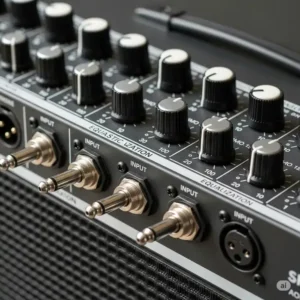
However, choosing the right acoustic bass amp isn’t just about power or price. You need to understand how acoustic instruments work, what features matter most for your playing style, and which brands consistently deliver quality results. Moreover, today’s acoustic bass guitar amp models offer sophisticated features that weren’t available just a few years ago.
Throughout this comprehensive guide, we’ll explore everything you need to know about acoustic bass amps, from understanding the fundamental differences between acoustic and electric amplification to reviewing the top-rated models currently available. We’ll also cover essential features, common misconceptions, and provide practical advice for getting the most out of your acoustic electric bass amp setup.
Understanding Acoustic Bass Amplification: The Science Behind The Sound 🔬
The physics of acoustic bass amplification differs significantly from electric bass amplification. When you pluck an acoustic bass string, the vibrations transfer through the bridge to the soundboard, which acts as a natural amplifier by moving air to create sound waves. According to research from the University of Alaska Fairbanks Physics Department, the guitar body serves as an impedance matcher between the string and surrounding air, making energy transfer more efficient than the string vibrating alone.
An acoustic bass amp must faithfully reproduce this complex acoustic signature while adding enough volume for performance situations. The challenge lies in maintaining the instrument’s natural resonance and tonal character while preventing feedback – a common issue when amplifying acoustic instruments.
The Pickup Challenge
Most acoustic bass guitars use piezo pickups, magnetic pickups, or a combination of both. Each pickup type presents unique challenges:
✅ Piezo pickups capture the vibrations from the bridge/saddle
- Pro: Very accurate reproduction of acoustic sound
- Con: Can sound harsh or “quacky” without proper EQ
✅ Magnetic pickups sense string movement electromagnetically
- Pro: Warm, familiar bass sound
- Con: Less acoustic character, more electric-like
✅ Dual pickup systems combine both technologies
- Pro: Best of both worlds with blending options
- Con: More complex, higher cost
The acoustic bass guitar amp must handle these different pickup types while providing the EQ tools needed to shape your sound. This is why specialized acoustic amps typically include multiple input channels with different preamp designs optimized for various pickup configurations.
Essential Features Every Acoustic Bass Amp Should Have 🎯
Multiple Input Channels with Dedicated Controls
A quality acoustic bass amp needs at least two channels: one optimized for your instrument and another for vocals or additional instruments. Each channel should have:
- Individual gain control to prevent clipping
- 3-band EQ minimum (bass, mid, treble)
- Effects sends for reverb and modulation
- Phantom power for condenser microphones (if applicable)
Feature Comparison: Entry vs. Professional Models
| Feature | Entry Level ($200-$400) | Mid-Range ($400-$800) | Professional ($800-$1500+) |
|---|---|---|---|
| Power Output | 40-60W | 80-120W | 150-300W+ |
| Speaker Configuration | 1×8″ or 1×10″ | 1×12″ or 2×8″ | 2×10″ or 1×15″ + tweeter |
| EQ Bands | 3-band | 4-band | 5+ band graphic/parametric |
| Effects | Basic reverb | Reverb + chorus | Multiple effects + loops |
| DI Output | Basic | Balanced XLR | Pre/post switchable |
| Build Quality | Good | Very good | Excellent |
Anti-Feedback Technology
Feedback is the arch-enemy of acoustic amplification. Look for amps with:
✅ Notch filters to eliminate specific feedback frequencies
✅ Phase switches to combat resonant issues
✅ Feedback suppression circuits for automatic control
✅ Proper speaker placement to minimize sound reflection
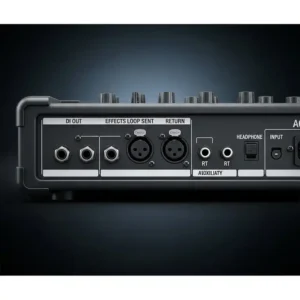
Professional acoustic bass amps often include sophisticated feedback suppression that can automatically detect and eliminate feedback frequencies in real-time.
🎸 Top 7 Acoustic Bass Amp Recommendations for 2025
1. Fishman Loudbox Mini BT – Best Overall Value
The Fishman Loudbox Mini BT consistently ranks as the top choice for acoustic bass players seeking professional sound quality in a portable package. This 60-watt powerhouse features Fishman’s legendary preamp design and has become the gold standard for small venue performances.
Key Features:
- 60 watts of clean power through 6.5″ woofer + tweeter
- Bluetooth connectivity for backing tracks
- Two channels with independent EQ and effects
- Balanced XLR DI output
- Digital reverb and chorus effects
- Current Amazon Price: $399-$449
The Fishman Loudbox Mini BT excels at reproducing the natural acoustic character of your bass while providing enough volume for coffee shop gigs, small venues, and practice sessions. Players consistently praise its warm, full sound that doesn’t sacrifice clarity in the low end.
2. Fishman Loudbox Artist BT – Professional Performance
For serious performers, the Fishman Loudbox Artist BT delivers 120 watts of bi-amplified power through a sophisticated speaker system. This acoustic bass guitar amp represents the pinnacle of portable acoustic amplification.
Specifications:
- Bi-amplified 120W system (separate woofer and tweeter amps)
- 8″ woofer + 1″ tweeter configuration
- Bluetooth streaming capability
- Three-band EQ with mid-frequency selection
- Effects loop for external processors
- Current Amazon Price: $649-$729
The Fishman Loudbox Artist BT handles both intimate acoustic settings and larger venues with equal aplomb. Its bi-amplified design ensures crystal-clear highs while maintaining punchy, defined bass response.
3. Fishman Loudbox Performer BT – Maximum Power
When you need serious volume, the Fishman Loudbox Performer BT delivers 180 watts of bi-amplified power. This acoustic electric bass amp can fill medium-sized venues without external PA support.
Features:
- 180W bi-amplified system
- 8″ woofer + 5″ midrange + 1″ tweeter (3-way design)
- Advanced feedback suppression
- Dual effects loops
- Current Amazon Price: $979-$1,099
4. Fender Acoustic Junior – Budget-Friendly Excellence
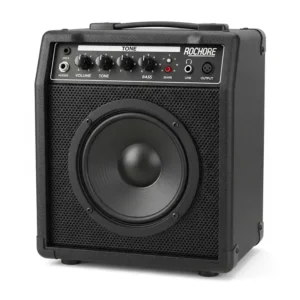
For players on a budget, the Fender Acoustic Junior offers impressive performance at an accessible price point. This 40-watt acoustic bass amp provides essential features without breaking the bank.
Key Features:
- 40 watts through 8″ speaker + tweeter
- Two channels with independent controls
- Built-in reverb and chorus
- Compact, lightweight design
- Current Amazon Price: $199-$249
5. AER Compact 60 – Premium German Engineering
The AER Compact 60 represents the pinnacle of acoustic amplification technology. This German-engineered acoustic bass guitar amp is favored by touring professionals worldwide.
Professional Features:
- 60 watts of pristine Class-A power
- Proprietary dual-cone speaker design
- Four-channel mixing capability
- Phantom power for condenser mics
- Current Amazon Price: $1,299-$1,449
6. Boss Acoustic Singer Live – Multi-Instrument Marvel
The Boss Acoustic Singer Live caters to multi-instrumentalists who need versatility. This acoustic electric bass amp includes advanced effects and multi-instrument optimization.
Versatile Features:
- 60 watts bi-amplified power
- Optimized settings for multiple instruments
- Professional effects processing
- Looper functionality
- Current Amazon Price: $549-$599
7. Marshall AS50D Acoustic Soloist – Classic Tone
Marshall’s entry into acoustic amplification brings their legendary build quality to acoustic instruments. The AS50D delivers 50 watts of authentic acoustic tone.
Marshall Quality:
- 50 watts through 8″ speaker + tweeter
- Two channels with independent reverb
- Classic Marshall build quality
- Chorus and reverb effects
- Current Amazon Price: $329-$379
🛒 Don’t Miss These Exclusive Deals! ✨
🔍 Ready to transform your acoustic bass sound? These carefully selected acoustic bass amps represent the best value and performance available today. Click on any highlighted product above to check current pricing and availability on Amazon. Whether you’re looking for practice-friendly options or professional-grade amplification, these acoustic bass guitar amp recommendations will help you find your perfect match! 🎵
💬 Just one click – help others make better buying decisions too!😊
Benefits of Acoustic Bass Amps vs. Traditional Alternatives
Acoustic Bass Amp Benefits Comparison
| Benefit | Acoustic Bass Amp | Traditional Electric Amp | PA System |
|---|---|---|---|
| Natural Sound | Excellent – preserves acoustic character | Poor – colors natural tone | Good – depends on EQ |
| Feedback Control | Excellent – built-in suppression | Poor – not designed for acoustics | Variable |
| Portability | Excellent – all-in-one design | Good – but limited frequency response | Poor – multiple components |
| Multi-Instrument Use | Excellent – designed for various acoustics | Poor – optimized for electric only | Excellent – but complex |
| Ease of Use | Excellent – plug-and-play | Good – simple but limited | Poor – requires expertise |
| Cost Effectiveness | Excellent – complete solution | Variable | Poor – multiple purchases needed |
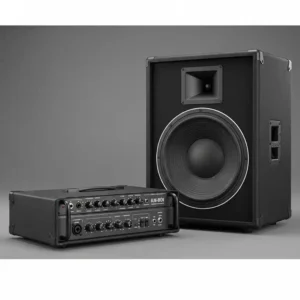
The primary advantage of a dedicated acoustic bass amp lies in its purpose-built design. Unlike electric bass amps that emphasize midrange punch and can muddy acoustic instruments, acoustic amps provide full-frequency response. Research from Georgia State University indicates that acoustic instruments require different frequency characteristics than electric instruments, with acoustic soundboards serving as natural amplifiers that need different electrical amplification approaches.
Real-World Performance Scenarios
Coffee Shop Performance: A 40-60 watt acoustic bass amp easily handles intimate venues while maintaining clarity and warmth. The built-in effects add polish without overwhelming the natural acoustic character.
Outdoor Festival: Higher-powered models (120W+) can serve as stage monitors while feeding the main PA system through their DI outputs. This dual-purpose capability makes them invaluable for working musicians.
Studio Recording: Many acoustic bass amps double as excellent recording interfaces, offering both miked speaker tones and clean DI signals for maximum flexibility during tracking sessions.
Rehearsal Spaces: Unlike electric bass amps that can sound harsh with acoustic instruments, acoustic amps allow bands to rehearse at reasonable volumes while maintaining musical dynamics.
Understanding Power Requirements and Speaker Configurations 🔊
Power Output Guidelines
The relationship between wattage and volume isn’t linear. Here’s what different power levels mean in practical terms:
40-60 Watts: Perfect for practice, small venues (20-50 people), recording studios
- Adequate headroom for clean performance
- Portable and lightweight
- Battery operation possible in some models
80-120 Watts: Ideal for medium venues (50-150 people), band rehearsals
- Sufficient volume to compete with acoustic drums
- Better bass response due to increased amplifier headroom
- Professional DI outputs for larger system integration
150+ Watts: Professional performance, large venues (150+ people)
- Can serve as main amplification for outdoor events
- Exceptional clean headroom prevents distortion
- Often features bi-amplified designs for better frequency distribution
Speaker Configuration Impact
The speaker configuration significantly affects your acoustic bass amp’s sound character:
Single 8″ + Tweeter: Compact, focused sound with good mid-range clarity
- Best for: Solo performance, small venues
- Limitations: Reduced low-end extension
Single 10″ + Tweeter: Balanced response with improved bass output
- Best for: Most acoustic bass applications
- Sweet spot for portability vs. performance
2×8″ + Tweeter: Enhanced volume and bass response
- Best for: Band situations, larger venues
- Trade-off: Increased size and weight
12″ + Tweeter: Maximum low-end extension and overall volume
- Best for: Professional applications, outdoor events
- Considerations: Larger, heavier designs
Bi-Amplified Systems: Separate amplifiers for woofer and tweeter
- Best for: Professional applications requiring maximum clarity
- Advantages: Optimized power distribution, reduced distortion
🎯 Transform Your Sound Today!
🚀 Ready to take your acoustic bass playing to the next level? The acoustic bass amps featured in this guide offer professional-quality amplification at every price point. From the versatile Fishman Loudbox Mini BT to the powerful Fishman Loudbox Performer BT, there’s a perfect match for your needs and budget. Don’t let subpar amplification hold back your musical expression – invest in quality amplification that showcases your acoustic bass’s true potential!
Advanced Features and Technologies in Modern Acoustic Bass Amps
Digital Effects Integration
Modern acoustic bass guitar amps have embraced digital technology to provide studio-quality effects in portable packages. However, these effects must be carefully designed to complement rather than mask the natural acoustic character.
Essential Effects for Acoustic Bass:
✅ Reverb: Adds natural ambiance and helps instruments sit in the mix
- Spring reverb: Vintage character, slight metallic coloration
- Hall reverb: Natural room simulation, most versatile
- Plate reverb: Dense, smooth character for recording applications
✅ Chorus: Adds width and shimmer to acoustic bass tones
- Subtle settings preserve natural character
- Deeper settings create ensemble-like effects
- Often combined with reverb for ambient textures
✅ Compression: Controls dynamics and enhances sustain
- Essential for fingerstyle players
- Prevents pickup overload during aggressive playing
- Should be transparent and musical
✅ EQ Enhancement: Beyond basic tone controls
- Parametric EQ for precise frequency shaping
- Graphic EQ for visual feedback and quick adjustments
- Preset curves optimized for different acoustic instruments
Connectivity and Integration Features
Professional acoustic electric bass amp models now include comprehensive connectivity options:
USB Audio Interface: Direct recording to computer without additional hardware
Bluetooth Audio: Stream backing tracks or practice with online lessons
XLR DI Output: Professional balanced connection to mixing boards
Effects Loop: Integration with external pedals and processors
Headphone Output: Silent practice capability
Auxiliary Input: Connect phones, tablets, or other audio sources
Battery Operation and Portability
The trend toward battery-powered acoustic bass amps reflects the mobile nature of acoustic performance:
Battery Life Considerations:
- 8-12 hours typical for practice-level volumes
- 4-6 hours for performance volumes
- Lithium-ion batteries provide best power-to-weight ratio
- Some models offer both battery and AC operation
Portability Features:
- Lightweight Class-D amplifier designs
- Ergonomic carrying handles
- Optional wheeled cases for larger models
- Compact form factors that fit in vehicles
Common Mistakes When Choosing an Acoustic Bass Amp ❌
Mistake #1: Focusing Only on Wattage
Many players assume more watts automatically means better sound. However, efficient speaker design and quality amplification often matter more than raw power. A well-designed 60-watt acoustic bass amp can easily outperform a poorly designed 100-watt model.
Mistake #2: Ignoring Frequency Response
Electric bass amps typically roll off high frequencies around 5kHz, but acoustic instruments need full-range response up to 20kHz to maintain their natural character. Research published in the American Journal of Physics demonstrates that acoustic instruments produce complex harmonic content across the entire audible spectrum, requiring different amplification approaches than electric instruments.
Mistake #3: Underestimating Feedback Issues
Acoustic amplification is inherently more prone to feedback than electric. Don’t assume any amp with enough power will work – feedback suppression technology is essential for live performance.
Mistake #4: Choosing Based on Electric Bass Experience
Players coming from electric bass often choose acoustic amps based on electric amp criteria. The requirements are completely different – acoustic amps need clarity and transparency, not the midrange punch and harmonic distortion that characterize great electric bass amps.
Mistake #5: Neglecting Multi-Instrument Compatibility
Many acoustic bass players also play guitar, mandolin, or other acoustic instruments. Consider amps with multiple input channels and instrument-specific presets for maximum versatility.
Professional Tips for Getting the Best Sound 🎵
EQ Settings for Common Acoustic Bass Types
Solid-Body Acoustic Bass:
- Boost: 80-100Hz (fundamental), 2-3kHz (presence)
- Cut: 250-400Hz (muddiness), 800Hz-1.2kHz (honk)
- Effects: Light compression, subtle reverb
Hollow-Body Acoustic Bass:
- Boost: 60-80Hz (depth), 5-8kHz (air)
- Cut: 150-250Hz (boom), 600-800Hz (boxy)
- Effects: More aggressive compression, longer reverb
Acoustic-Electric Bass:
- Boost: 50-70Hz (foundation), 3-5kHz (clarity)
- Cut: 200-300Hz (mud), 1-1.5kHz (harsh)
- Effects: Blend pickup types if available
Microphone Techniques for Acoustic Bass Amps
When miking your acoustic bass amp for recording or live sound reinforcement:
Close Miking (6-18 inches):
- Emphasizes direct sound
- Reduces room acoustics impact
- Position slightly off-center to avoid speaker distortion
Distance Miking (2-6 feet):
- Captures room ambiance
- More natural acoustic character
- Requires good room acoustics
Combination Approach:
- Close mic for definition
- Distance mic for ambiance
- Blend to taste in post-production
Stage Positioning and Feedback Prevention
Optimal Placement:
- Position amp behind you, angled slightly away
- Avoid placing amp directly in front of instrument
- Use amp as monitor while feeding DI to main PA
Feedback Troubleshooting:
- Check all connections are secure
- Lower channel gain before master volume
- Use notch filters to eliminate specific frequencies
- Consider acoustic treatment for problematic rooms
The Future of Acoustic Bass Amplification 🚀
Emerging Technologies
Digital Signal Processing (DSP): Advanced algorithms provide real-time acoustic modeling and feedback suppression
Smartphone Integration: Apps that control amp settings and provide practice tools
Modeling Technology: Digital recreation of classic acoustic amplifiers and speaker cabinets
Environmental Adaptation: Amps that automatically adjust EQ based on room acoustics
Sustainability Trends
Manufacturers increasingly focus on:
- Energy-efficient Class-D amplifier designs
- Sustainable materials in construction
- Longer-lasting battery technologies
- Modular designs for easier repair and upgrade
Market Predictions for 2025-2030
Industry analysts predict:
- Continued miniaturization without sacrificing power
- Enhanced wireless connectivity and streaming capabilities
- AI-powered sound optimization
- Increased integration with digital audio workstations
- More affordable professional-quality options
Conclusion: Finding Your Perfect Acoustic Bass Amp Match
Selecting the right acoustic bass amp transforms your musical expression and opens doors to new performance opportunities. Whether you choose the versatile Fishman Loudbox Mini BT for intimate venues or the powerful Fishman Loudbox Performer BT for professional applications, investing in quality acoustic amplification pays dividends in sound quality and musical satisfaction.
Remember that the best acoustic bass guitar amp for you depends on your specific needs: venue sizes, musical styles, budget constraints, and feature requirements. Don’t be swayed by marketing hype or price alone – focus on how the amp serves your musical goals.
The acoustic bass amp market continues evolving rapidly, with manufacturers pushing the boundaries of what’s possible in portable, high-quality amplification. By understanding the principles covered in this guide, you’ll make informed decisions that serve your music for years to come.
Most importantly, remember that great amplification should enhance your natural acoustic bass tone, not mask it. The perfect acoustic electric bass amp becomes an extension of your instrument, providing the clarity, power, and flexibility needed to share your music with the world.
Bottom Line: Choose an acoustic bass amp that preserves your instrument’s natural character while providing the features and power you need for your musical applications. Quality acoustic amplification is an investment in your musical journey that pays dividends in improved sound quality and expanded performance opportunities.
FAQs
❓ What makes an acoustic bass amp different from a regular bass amp?
✅ Acoustic bass amps feature full-frequency response (40Hz-20kHz) to preserve natural acoustic character, multiple input channels for instruments and vocals, built-in feedback suppression technology, and effects specifically designed for acoustic instruments. Regular bass amps focus on midrange punch and may muddy acoustic tones...
❓ How much power do I need for an acoustic bass amp?
✅ For practice and small venues, 40-60 watts provides adequate volume. Medium venues and band rehearsals require 80-120 watts. Professional applications and large venues need 150+ watts. Remember that efficient speaker design matters more than raw wattage for sound quality...
❓ Can I use an acoustic bass amp for other instruments?
✅ Yes, acoustic bass amps work excellently with acoustic guitars, mandolins, violins, and other acoustic instruments. Many models include multiple input channels with instrument-specific presets. This versatility makes them popular with multi-instrumentalists and recording studios...
❓ Why do acoustic bass amps cost more than electric bass amps?
✅ Acoustic bass amps require full-range speaker systems with tweeters, sophisticated feedback suppression circuits, multiple input channels with different preamp designs, and high-quality effects processors. This complexity increases manufacturing costs compared to simpler electric bass amps...
❓ Do I need special cables for acoustic bass amps?
✅ Standard 1/4 inch instrument cables work fine for acoustic bass amps. However, high-quality, low-capacitance cables can improve signal clarity and reduce noise. If using microphones, you'll need XLR cables. Balanced cables are recommended for DI outputs to mixing boards...
Related Articles:
- Bass Practice Amp: 10 Best Models That Will Transform Your Playing in 2025
- 10 Best Small Bass Amp Options For Unstoppable Sound in 2025
- 10 Best Bass Knob for Amp Solutions to Unleash Amazing Sound Quality in 2025
Disclaimer: This article contains affiliate links. If you purchase products through these links, we may earn a small commission at no additional cost to you.
✨ Found this helpful? Share it with your friends! 💬🤗