Introduction
Walk into any guitar shop and you’ll see a wall of black, white, and sunburst. Then one instrument catches your eye from across the room, and nine times out of ten, it’s a blue guitar. There’s a reason for that. Blue reads as cool, confident, and a little retro, and it photographs beautifully on stage, on Instagram, and in your living room.
But here’s the catch most buyers miss: the color is the easy part. A blue guitar is still a guitar, and the finish sits on top of decisions that matter far more, like body wood, pickups, neck shape, and scale length. Pick the wrong combination and you’ll own a gorgeous instrument you don’t enjoy playing.
What Is a blue guitar?
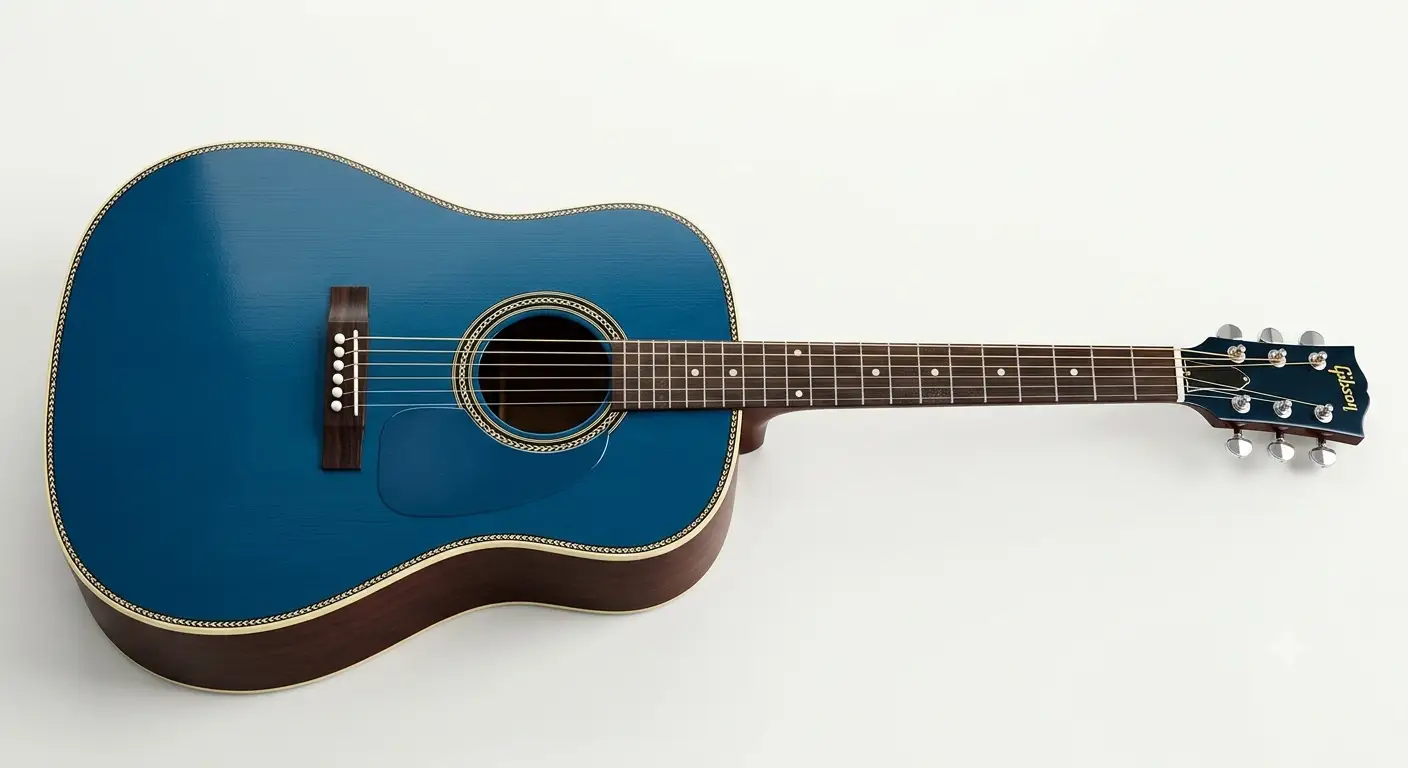
A blue guitar is any electric, acoustic, or acoustic-electric guitar finished in a blue color, from solid metallics like Lake Placid Blue to translucent “burst” finishes that let wood grain show through. The color itself doesn’t change the sound; construction, pickups, and setup do.
That’s why this guide goes beyond the paint. We compared seven real models you can find on amazon.com heading into 2027, spanning a kid-friendly 3/4 acoustic, three budget electrics, a stage-ready acoustic-electric, and two Fender-family Stratocasters for players who want to step up. Each pick is analyzed from published spec sheets and real aggregated buyer feedback, not invented test sessions. Whether you’re hunting for a blue electric guitar, a blue acoustic guitar, or a vintage-style Lake Placid Blue guitar, you’ll know exactly which one fits your hands, your music, and your budget. Curious why Fender’s classic blues trace back to 1950s car paint? The deep dive on Fender custom colors at Vintage Guitar magazine is a fun rabbit hole, and we’ll touch on it below.
Heads-up: this post contains affiliate links. If you buy through them, we may earn a commission at no extra cost to you.
Quick Comparison: 7 blue guitar Picks at a Glance
| Model | Type | Blue Finish | Price Range | Best for |
|---|---|---|---|---|
| Fender FA-15 3/4 Steel | 3/4 acoustic | Blue (satin) | $150–$200 | Fender FA-15 3/4 Steel: kids and travel |
| Yamaha Pacifica 012 | Electric (HSS) | Dark Blue Metallic | $200–$250 | Yamaha Pacifica 012: versatile first electric |
| Ibanez GRX70QA | Electric (HSH) | Transparent Blue Burst | $200–$250 | Ibanez GRX70QA: rock and heavier styles |
| Squier Affinity Stratocaster | Electric (SSS) | Lake Placid Blue | $230–$280 | Squier Affinity Stratocaster: classic Strat on a budget |
| Yamaha APX600 | Acoustic-electric | Oriental Blue Burst | $350–$450 | Yamaha APX600: plugged-in acoustic gigs |
| Squier Classic Vibe ’60s Stratocaster | Electric (SSS) | Lake Placid Blue | $450–$550 | Squier Classic Vibe ’60s Stratocaster: vintage vibe, upgraded feel |
| Fender Player II Stratocaster | Electric (SSS) | Aquatone Blue | Around $850 | Fender Player II Stratocaster: a “keeper” guitar |
Price ranges reflect what we saw at the time of writing; prices may vary, so check the current price.
Looking at the table, the budget electric tier is surprisingly crowded: the Yamaha Pacifica 012, Ibanez GRX70QA, and Squier Affinity Stratocaster all land within roughly $50 of each other, so pickup layout, not price, should decide between them. The real jumps come at the Yamaha APX600 (your first acoustic that plugs into a PA) and the Fender Player II Stratocaster, where you’re paying for alder, Alnico pickups, and Mexican Fender build quality rather than just a nicer coat of blue.
💬 One click helps other shoppers make an informed choice too! Share this comparison with a friend who’s eyeing a blue guitar. 😊
Top 7 blue guitar Picks for 2027: Expert Analysis
1. Fender FA-15 3/4 Steel — smallest, friendliest starter
The Fender FA-15 3/4 Steel (model 0971170187) is the gentlest on-ramp in this lineup, built for smaller hands and smaller budgets.
Its 23.3-inch scale is about two inches shorter than a full-size acoustic, which means frets sit closer together and chord stretches feel less punishing for kids and petite adults. The body pairs a laminated agathis top with laminated sapele back and sides under a satin finish, plus a nato neck and walnut fingerboard with 18 frets. In practice, all-laminate construction trades some resonance for durability: it shrugs off the humidity swings of a kid’s bedroom better than a solid-top guitar would.
This is the right blue guitar for a 6- to 11-year-old, or an adult who wants a couch and campsite guitar. It’s not the pick for someone who’ll be playing full-size dreadnoughts at lessons, since the shorter scale feels different. A gig bag comes in the box, which saves a separate purchase.
Buyer feedback on US retail sites leans toward parents who found it solved the “full-size is too big” problem, and the blue color is often mentioned as a deciding factor for kids. We couldn’t verify a large pool of reviews for this exact colorway, so treat sentiment as limited.
Pros:
- ✅ Short 23.3″ scale suits small hands
- ✅ Gig bag included for school and travel
- ✅ Laminate build handles humidity changes well
Cons:
- ❌ Smaller body means less bass and volume
- ❌ Factory .012 strings feel stiff for tiny fingers
Expect to pay between $150 and $200, which is fair value for a branded, kid-sized acoustic that won’t fight its player.
2. Yamaha Pacifica 012 — most versatile budget electric
The Yamaha Pacifica 012 in Dark Blue Metallic earns its spot through a pickup layout that covers more styles than most guitars at its price.
It runs an HSS configuration: a humbucker at the bridge plus two single-coils. What that means in practice is you get a thick, low-noise bridge tone for rock riffs and chunky rhythm, while the neck and middle positions give you the glassy, quacky sounds of classic pop and funk. The contoured double-cutaway body is agathis or nato depending on production run, with a 25.5-inch scale and a tremolo bridge, finished in gloss polyurethane.
Based on comparing the specs, this is the safest “I don’t know what genre I’ll play yet” pick. Beginners who drift from indie to classic rock to light metal won’t outgrow the pickup layout in year one. Experienced players often buy it as a backup or a mod platform.
Aggregated buyer sentiment, including international reviews from European retailers, frequently praises the factory setup and value for money. That consistency matters, because a well-set-up cheap guitar is more playable than a poorly set-up expensive one.
Pros:
- ✅ HSS pickups cover clean and driven tones
- ✅ Yamaha quality control is consistently praised
- ✅ Metallic blue finish looks pricier than it is
Cons:
- ❌ No gig bag included with the base model
- ❌ Tremolo needs care to stay in tune
At around $200–$250, the Yamaha Pacifica 012 is one of the strongest value plays in any color.
3. Ibanez GRX70QA — best looks for heavier styles
The Ibanez GRX70QA in Transparent Blue Burst is the flashiest finish here, and it backs up the looks with a rock-ready pickup setup.
It uses an HSH layout: two Infinity humbuckers with a single-coil in the middle, routed through a 5-way switch. Two humbuckers mean higher output and less hum under heavy distortion, which is exactly what hard rock and metal players want. The poplar body wears a quilted maple “Art Grain” top, a photo-style veneer that gives the deep 3D shimmer of a premium quilt without the premium price. The 25.5-inch scale, 22 medium frets, and slim GRX neck favor fast lead playing.
Here’s what most buyers overlook: fingerboard wood has changed across production years (listings show jatoba, rosewood, and treated New Zealand pine), so check the current listing if that matters to you. Tonally, it barely does at this level.
Reviews consistently describe it as a strong first guitar for rock-leaning players, and retailer review pages show high helpfulness ratings on positive write-ups.
Pros:
- ✅ HSH humbuckers handle distortion cleanly
- ✅ Thin, fast neck suits lead playing
- ✅ Blue burst finish shows striking depth
Cons:
- ❌ Art Grain top is a veneer, not real quilt
- ❌ Less suited to sparkling vintage clean tones
Priced around $200–$250, it’s the best-value blue guitar for anyone who plans to step on a distortion pedal.
4. Squier Affinity Stratocaster — classic Lake Placid Blue on a budget
The Squier Affinity Stratocaster (model 0378003502) delivers the most iconic blue in guitar history at an entry price.
Lake Placid Blue is a metallic finish lifted from 1950s automotive paint, and here it’s paired with a black pickguard for a modern contrast. Under the paint you get a poplar body, a bolt-on maple neck with a satin back (less sticky than gloss when your hands sweat), and three ceramic single-coil pickups on a 5-way switch. Ceramic magnets sound a bit brighter and more aggressive than the Alnico magnets in pricier Strats; in practice, that’s helpful for cutting through a small practice amp. A 2-point synchronized tremolo with block saddles adds subtle vibrato.
This is the pick if you want the real Stratocaster shape, controls, and sound family without spending Fender money. It’s the classic “learn on it, keep it as a backup forever” instrument.
Aggregated feedback across US retailers treats the Affinity line as a dependable starter, with the blue finish frequently cited as the reason buyers chose this particular colorway. Verifiable reviews specific to this color are limited.
Pros:
- ✅ Authentic Strat layout and 5-way switching
- ✅ Satin neck finish feels fast
- ✅ Iconic Lake Placid Blue at entry price
Cons:
- ❌ Ceramic pickups sound brighter than Alnico
- ❌ Single-coils hum near high-gain settings
At roughly $230–$280, the Squier Affinity Stratocaster is honest value for a first Strat.
5. Yamaha APX600 — stage-ready acoustic-electric
The Yamaha APX600 in Oriental Blue Burst is the only plug-in acoustic in our list, and it’s designed specifically for amplified playing.
It’s a thinline cutaway body with a spruce top and nato back and sides, plus a slightly shorter 24.96-inch scale and a 1.69-inch nut. The thin body and cutaway make it more comfortable than a deep dreadnought, especially standing with a strap, and the cutaway opens upper-fret access for solos. Electronics are Yamaha’s System65 preamp with an SRT undersaddle piezo and built-in tuner. In plain English: plug into a PA or acoustic amp and you get a usable sound with less feedback, plus a tuner you can’t lose.
The trade-off is unplugged volume. Thin bodies move less air, so for porch strumming a full dreadnought sounds bigger. For open mics, worship teams, and coffee-shop gigs, though, plugged-in tone matters more.
Aggregated reviews, mainly from European retailers (international sentiment), rate it highly, often around the high-4-star range, with buyers praising comfort and plugged-in sound.
Pros:
- ✅ Built-in preamp and tuner for gigging
- ✅ Thin, comfortable body with cutaway
- ✅ Blue burst with abalone rosette looks stage-ready
Cons:
- ❌ Quieter unplugged than a full dreadnought
- ❌ No gig bag included
Expect around $350–$450, strong value for a gig-ready blue acoustic guitar.
6. Squier Classic Vibe ’60s Stratocaster — vintage feel, serious upgrade
The Squier Classic Vibe ’60s Stratocaster (model 0374010502) is where Squier stops feeling “budget” and starts feeling vintage.
It wears Lake Placid Blue with a vintage-tint gloss neck and nickel hardware, mirroring early-’60s Fender style. Key upgrades over the Squier Affinity Stratocaster include Fender-designed Alnico single-coil pickups, which typically sound warmer and more dynamic than ceramic, a nato body, Indian laurel fingerboard, C-shaped neck, and medium jumbo frets. Medium jumbo frets make bends easier and notes cleaner, which you’ll feel immediately.
Here’s what to weigh: this guitar is often cited by reviewers as a model that punches near entry-level Fender territory. If you already know you love the Strat sound, skipping the Affinity and going straight here usually saves money long-term, because you won’t upgrade again in a year.
Buyer sentiment across retailers is generally enthusiastic about the vintage looks and feel, though we couldn’t verify a large dataset specific to this color on amazon.com, so use the listing’s current reviews as your final check.
Pros:
- ✅ Alnico pickups add warmth and dynamics
- ✅ Vintage-tint neck and nickel hardware
- ✅ Medium jumbo frets ease string bends
Cons:
- ❌ Gloss neck can feel sticky to some
- ❌ Vintage 7.25″-style feel isn’t for everyone*
*Check the current listing for exact fingerboard radius; Classic Vibe specs can vary by year.
Typically in the $450–$550 range at the time of writing, it’s the sweet-spot value of this guide.
7. Fender Player II Stratocaster — the “buy once” blue guitar
The Fender Player II Stratocaster in Aquatone Blue (model 0140512518) is the premium pick, made in Mexico with Fender’s latest player-focused updates.
The body is alder, the traditional Strat tonewood, with a modern C-profile maple neck, 9.5-inch radius, and 22 medium jumbo frets. The standout update is rolled fingerboard edges, which round off the sharp corners so the neck feels broken-in from day one. Player Series Alnico V single-coils, ClassicGear tuners with an 18:1 gear ratio, and a 2-point tremolo with bent steel saddles complete the package. In practice, that means stable tuning, glassy clean tones, and a neck you won’t want to put down. There’s also an HSS version with an Alnico humbucker if you want more gain.
Aquatone Blue is a newer finish that’s more aqua than Lake Placid’s deep metallic. It feels contemporary while still nodding to vintage.
Feedback from US retailers and players broadly highlights comfort and finish quality; because it launched relatively recently, long-term ownership data is still accumulating.
Pros:
- ✅ Alder body with Alnico V pickups
- ✅ Rolled fingerboard edges feel broken-in
- ✅ Real Fender headstock and resale value
Cons:
- ❌ No gig bag included at this price
- ❌ Overkill for players unsure they’ll continue
At around $850, the Fender Player II Stratocaster is a lifetime instrument that holds resale value well.
🎸 Found your favorite shade of blue?
🔍 Take your playing to the next level with this carefully curated lineup. Click any highlighted guitar name to check current pricing and availability. These picks will help you sound as good as you look on stage, at practice, or around the campfire!
Head-to-Head: Specs, Pickups, and Value
| Model | Body / Top | Pickups / Electronics | Scale | Best for |
|---|---|---|---|---|
| Fender FA-15 3/4 Steel | Laminated agathis / sapele | None (acoustic) | 23.3″ | Fender FA-15 3/4 Steel: ages 6–11 |
| Yamaha Pacifica 012 | Agathis or nato | HSS | 25.5″ | Yamaha Pacifica 012: genre explorers |
| Ibanez GRX70QA | Poplar, Art Grain top | HSH (Infinity) | 25.5″ | Ibanez GRX70QA: rock and metal |
| Squier Affinity Stratocaster | Poplar | SSS ceramic | 25.5″ | Squier Affinity Stratocaster: Strat beginners |
| Yamaha APX600 | Spruce top, nato | System65 + SRT piezo | 24.96″ | Yamaha APX600: live acoustic |
| Squier Classic Vibe ’60s Stratocaster | Nato | SSS Alnico | 25.5″ | Squier Classic Vibe ’60s Stratocaster: vintage fans |
| Fender Player II Stratocaster | Alder | SSS Alnico V | 25.5″ | Fender Player II Stratocaster: committed players |
This table explains the price jumps better than marketing ever will. Magnet material (ceramic versus Alnico) and body wood (poplar or nato versus alder) are the clearest dividing lines between the Squier Affinity Stratocaster, the Squier Classic Vibe ’60s Stratocaster, and the Fender Player II Stratocaster. Meanwhile, pickup layout (HSS, HSH, SSS) matters more than brand when choosing between the three budget electrics, so start there.
How to Choose a blue guitar
Use these steps in order. They’re ranked by how much each decision affects your day-to-day enjoyment.
- Decide acoustic or electric first. Acoustics need nothing else to play; electrics need an amp or headphone amp. If you’ll practice in an apartment late at night, an electric with headphones is actually quieter.
- Match the size to the player. Kids under roughly 12 and small-handed adults often do better on a 3/4 scale like the Fender FA-15 3/4 Steel. Full-size players should look at 25″–25.5″ scales.
- Choose a pickup layout by genre. SSS (three single-coils) for blues, funk, and classic rock; HSS for all-rounders; HSH for heavy rock and metal. This one choice shapes your sound more than the wood.
- Pick a finish type you can live with. Solid metallics hide minor scratches, transparent bursts show wood character, and satin finishes feel smooth but can polish shiny over time.
- Check the neck feel. Satin necks feel faster; gloss necks look vintage but may feel grippy with sweaty hands. Rolled edges, like on the Fender Player II Stratocaster, add comfort.
- Budget for the extras. Amp, tuner, strap, cable, and gig bag can add $80–$200. Some guitars include a gig bag; most electrics here don’t.
- Plan for a setup. Even great guitars benefit from a professional setup (action, intonation, truss rod). Budget roughly $50–$90 at a local shop.
Want deeper context on how Fender finishes are built and why they age the way they do? This explainer on what you need to know about Fender finishes from Guitar World is a useful companion to step 4.
Blue Electric Guitar vs Blue Acoustic Guitar
The biggest fork in the road isn’t Fender versus Yamaha; it’s whether you want a blue electric guitar or a blue acoustic guitar. Each one changes how, where, and how often you’ll actually play.
A blue acoustic guitar like the Fender FA-15 3/4 Steel or Yamaha APX600 is grab-and-go. No cables, no amp, no setup time between you and a song. That’s a real motivator for beginners, because practice friction is the number one reason new players quit. The downside is finger effort: acoustic strings are heavier gauge (.012s here), and pressing them hurts more in the first few weeks.
A blue electric guitar like the Yamaha Pacifica 012 or Squier Affinity Stratocaster uses lighter strings (.009s are common) and a lower action, so chords and bends come easier. Electrics also unlock effects, headphone practice, and genre flexibility. The cost is the amp: even a small practice amp or headphone amp adds to the budget, and you’ll spend a few minutes plugging in each session.
Based on comparing both paths, here’s a simple rule. If the player mostly wants to strum and sing, go acoustic. If they’re drawn to riffs, solos, or bands with electric sounds, go electric, because learning on the “wrong” instrument for your music is a quiet motivation killer.
The Yamaha APX600 splits the difference: it’s an acoustic you can plug into a PA, which is ideal if you’ll perform acoustic music in public.
Blue Finish vs Natural Finish: Does Color Change Anything?
| Factor | Blue (painted/metallic/burst) | Natural or Sunburst | Best for |
|---|---|---|---|
| Tone | No meaningful difference at this price | No meaningful difference | Either; choose by build |
| Scratch visibility | Metallics hide minor marks; bursts show some | Natural shows dings readily | Blue for clumsy beginners |
| Aging | Clear coats can yellow, shifting blue toward green | Natural ambers gracefully | Natural for “relic” fans |
| Stage presence | High; pops under lights and on camera | Classic but common | Blue for performers |
| Resale appeal | Strong for Lake Placid Blue and similar classics | Steady | Squier Classic Vibe ’60s Stratocaster and Fender Player II Stratocaster |
The short answer: paint doesn’t change tone in any way you’ll hear on budget and mid-range guitars, because these use thick polyurethane or polyester coats regardless of color. What color does change is aging and motivation. Several players note that loving how your guitar looks makes you pick it up more often, and that’s a legitimate reason to choose blue.
One quirk worth knowing: on vintage instruments, yellowing clear coats can turn Lake Placid Blue a greenish shade over decades. Modern poly finishes resist this better, but sun exposure still matters, so keep your guitar out of direct window light.
Which Shade? Lake Placid, Aquatone, Metallic, and Burst Explained
Not all blues are created equal, and knowing the vocabulary helps you shop smarter.
Lake Placid Blue is the heavyweight. It’s a deep metallic blue that Fender added to its first official custom color chart in 1960, sourced like most early Fender custom colors from DuPont automotive paint, originally a Cadillac shade. If you want a Lake Placid Blue guitar, both the Squier Affinity Stratocaster and the Squier Classic Vibe ’60s Stratocaster deliver it, with the latter adding vintage-tint neck and nickel hardware for a more period-correct look.
Aquatone Blue, found on the Fender Player II Stratocaster, is lighter and more turquoise. It’s part of Fender’s newer palette inspired by vintage automotive colors, so it feels retro without copying a specific 1960s shade.
Dark Blue Metallic, as on the Yamaha Pacifica 012, is a deeper, navy-leaning metallic that looks subtle indoors and sparkles under stage lights. It’s a good choice if bright blue feels too loud for your taste.
Transparent and burst finishes, like the Ibanez GRX70QA‘s Transparent Blue Burst and the Yamaha APX600‘s Oriental Blue Burst, use tinted lacquer so wood grain (or a printed grain top) shows through, fading darker at the edges. They read as “premium” and are great for players who like visible texture.
Satin solid blue, like the Fender FA-15 3/4 Steel, is low-gloss and fingerprint-resistant. It’s practical for kids and travel.
Here’s what to weigh: metallics forgive small scratches; transparent bursts reveal more; satins resist fingerprints but can develop shiny spots where your arm rests. Pick the one whose aging you’ll enjoy.
Your First 30 Days With a New blue guitar
The first month decides whether a guitar becomes a habit or a decoration. Here’s a practical plan.
Days 1–3: Unbox and check
Let the guitar acclimate to room temperature for a few hours before opening, especially if delivered in winter; sudden temperature shifts can stress the finish. Then check that tuners turn smoothly, frets don’t feel sharp at the edges, and no strings buzz on open chords. Most retailers allow returns, so flag issues early.
Days 4–7: Tune and set up basics
Use a clip-on tuner or the built-in tuner on the Yamaha APX600. New strings stretch, so expect to retune several times daily at first. If the action feels high (strings far from the frets), book a professional setup. This single step makes a $200 guitar feel dramatically better.
Weeks 2–3: Build calluses, not frustration
Practice 15–20 minutes daily rather than two hours on weekends. Short sessions build calluses without blisters. Learn four open chords (G, C, D, E minor) and you’ll unlock hundreds of songs.
Week 4: First maintenance
Wipe strings and the finish with a dry microfiber cloth after each session. Sweat and skin oils dull metallic finishes and corrode strings. Plan your first string change around now if strings feel dull or look discolored.
Common first-month mistakes
- Pressing too hard on the strings, which causes fatigue and sharp notes
- Leaving the guitar in its case so it’s out of sight and out of mind
- Cranking a tremolo arm on the Yamaha Pacifica 012 or Squier Affinity Stratocaster and knocking tuning out
- Skipping a strap, which leads to bad posture when standing
Real-World Buyer Scenarios
Specs only matter when they meet a real life. Here’s how three common buyer profiles map to our picks.
Scenario 1: The 8-year-old with a big birthday wish
Budget around $200, played 15 minutes a day, mostly at home and in lessons. The Fender FA-15 3/4 Steel is the clear match. The short scale reduces stretch, the gig bag handles trips to lessons, and the blue color gives the “this is MY guitar” feeling that keeps kids practicing. Add a clip-on tuner and ask the teacher about lighter strings to ease finger soreness.
Scenario 2: The adult returning to music
Budget around $300 plus an amp, practicing evenings with headphones, into classic rock and blues. The Squier Affinity Stratocaster gives the real Strat experience for the money. If the budget stretches to roughly $500, the Squier Classic Vibe ’60s Stratocaster is the smarter long-term buy, since Alnico pickups and nicer frets reduce the urge to upgrade.
Scenario 3: The singer-songwriter booking open mics
Budget around $400, playing weekly in cafés and at home daily. The Yamaha APX600 is built for this. Its preamp plugs straight into a venue PA, the thin body is comfortable standing for a full set, and the Oriental Blue Burst stands out under small-stage lighting.
Bonus: The rock kid who wants to play loud
The Ibanez GRX70QA suits this player best. Dual humbuckers stay quieter under distortion than single-coil guitars, and the fast neck encourages lead playing.
Each scenario shows the same principle: match the instrument to the playing context first, then enjoy picking your favorite blue.
Problem → Solution: Keeping a Blue Finish Looking New
Blue finishes are beautiful, but they show certain wear in specific ways. Here are the most common problems and how to fix or prevent them.
Problem 1: Fingerprints and smudges on metallic finishes. Solution: wipe down with a dry microfiber cloth after every session. For stubborn marks, use a guitar-specific polish made for polyurethane finishes. Avoid household cleaners, which can haze the clear coat.
Problem 2: “Buckle rash” scratches on the back. Solution: belt buckles, zippers, and studded jackets are the main culprits. Wear a soft layer or turn your buckle sideways. Light swirl marks on gloss poly can often be buffed with a fine polishing compound; deeper scratches need a pro.
Problem 3: Color shifting toward green or yellow. Solution: UV light yellows clear coats over time, which can tint blue toward green. Store your guitar out of direct sunlight, and never leave it near a sunny window or in a hot car.
Problem 4: Shiny patches on satin finishes. Solution: on satin guitars like the Fender FA-15 3/4 Steel or the satin neck of the Squier Affinity Stratocaster, constant contact polishes the surface. This is cosmetic and normal. A gentle pass with a very fine abrasive pad can restore satin feel on necks, though many players like the worn-in shine.
Problem 5: Finish cracks on acoustics. Solution: acoustics like the Yamaha APX600 respond to humidity swings. Aim for 40–50% relative humidity indoors, using a soundhole or case humidifier during dry winters. Laminate builds are more forgiving, but no guitar likes extremes.
Common Mistakes to Avoid When Buying a blue guitar
Buying by color is fun, but these pitfalls catch a lot of shoppers.
1. Choosing the shade before the guitar type. A stunning blue acoustic is the wrong buy for a kid obsessed with metal riffs. Decide acoustic, electric, or acoustic-electric first, then pick the blue.
2. Ignoring pickup layout. Three single-coils (SSS) on the Squier Affinity Stratocaster sound fantastic for blues and funk but can hum with heavy distortion. Rock players are often happier with the HSH Ibanez GRX70QA or HSS Yamaha Pacifica 012.
3. Trusting product photos for the exact shade. Screen color varies a lot, and metallics shift with lighting. Burst finishes like the Yamaha APX600‘s also vary instrument to instrument. Read the finish name, not just the photo.
4. Forgetting the amp budget. An electric without an amp is a silent ornament. Budget for at least a small practice amp or headphone amp.
5. Buying a full-size guitar for a small child. Oversized guitars cause discomfort and quitting. The Fender FA-15 3/4 Steel exists precisely to avoid this.
6. Assuming “blue” means “toy.” Toy-grade blue guitars flood search results. Stick to real instrument brands like Fender, Squier, Yamaha, and Ibanez, which publish full spec sheets and back their products with warranties (Fender lists a 2-year limited warranty on models like the Fender Player II Stratocaster).
7. Skipping a setup. Even well-reviewed guitars ship with action set for “average.” A $50–$90 setup is the best upgrade per dollar you can make.
Long-Term Cost and Maintenance
| Cost Item | Acoustic (Fender FA-15 3/4 Steel, Yamaha APX600) | Electric (Yamaha Pacifica 012, Squier Classic Vibe ’60s Stratocaster) | Best for |
|---|---|---|---|
| Strings (yearly, casual player) | $30–$60 | $25–$50 | Electric slightly cheaper |
| Pro setup (once or twice a year) | $50–$90 each | $50–$90 each | Equal |
| Amp / headphone amp | None (APX600 needs PA/amp to plug in) | $50–$200 one-time | Acoustic for zero extras |
| Gig bag | Included with Fender FA-15 3/4 Steel | Often extra, $25–$60 | Fender FA-15 3/4 Steel |
| Humidity care | Humidifier $15–$30 | Rarely needed | Electric for low upkeep |
Over a first year, total cost of ownership typically adds $100–$350 on top of the guitar itself. Acoustics save on amps but need more humidity attention; electrics need the amp up front but are cheaper to string and less sensitive to climate. That math is why the Squier Classic Vibe ’60s Stratocaster can be cheaper than buying an Affinity and upgrading a year later.
Resale value is the other long-term angle. Fender-family guitars in classic colors like Lake Placid Blue tend to resell more easily than obscure brands, so the Fender Player II Stratocaster‘s higher upfront price is partially recovered if you ever sell. Budget electrics resell for less, but their low entry cost limits your downside.
Maintenance-wise, plan strings every 2–3 months for regular players, a wipe-down after every session, and a setup at seasonal changes, when humidity shifts move necks.
blue guitar for Kids and Beginners
Blue is consistently one of the most requested colors for first guitars, especially for kids, and it’s a smart instinct. A guitar a child loves to look at is a guitar they pick up.
For young kids (roughly 6–11), the Fender FA-15 3/4 Steel is our clear pick. The 23.3-inch scale reduces stretch, and the included gig bag makes it lesson-ready. Ask a teacher or shop about installing lighter strings; it makes early weeks far less painful.
For teens and adult beginners, a full-size electric usually wins, because lighter strings and lower action make chords easier. The Yamaha Pacifica 012 is the most flexible starting point, the Squier Affinity Stratocaster gives the classic Strat experience, and the Ibanez GRX70QA suits beginners drawn to heavier music.
For beginners who want to sing and perform, the Yamaha APX600 combines comfort with a built-in tuner, which removes one more barrier for new players.
Two tips that matter more than any model choice: get a professional setup, and schedule short daily practice. A beginner on a well-adjusted budget guitar progresses faster than one on a poorly adjusted premium instrument.
Also, involve the player in choosing the shade. Lake Placid, Aquatone, dark metallic, or blue burst: letting a beginner pick their blue builds ownership, and ownership builds practice habits.
Safety, Regulations, and Standards
Guitars are low-risk products, but a few US rules and practical safety points are worth knowing.
Wood sourcing and the Lacey Act. The US Lacey Act, amended in 2008, makes it illegal to import or trade products made from illegally harvested wood. Fretted string instruments, including electrically amplified ones, are listed among the musical instrument categories covered by Lacey Act import declarations, as shown in this Federal Register notice on the APHIS Lacey Act implementation schedule. Major brands like Fender, Yamaha, and Ibanez handle this compliance; it’s one more reason to avoid unbranded imports. If you travel internationally with your guitar as personal baggage, the USDA has reported that a declaration generally isn’t required for that situation.
California Proposition 65 warnings. You may see a Prop 65 cancer and reproductive harm warning on listings for models like the Fender Player II Stratocaster and Ibanez GRX70QA. These warnings are common on products containing certain materials (for example, in electronics or finishes) and reflect California disclosure law rather than a specific danger from normal playing.
Electrical safety for electrics and acoustic-electrics. The guitar itself carries low-level signals, but your amp plugs into wall power. Choose amps and power supplies with recognized safety listings such as UL or ETL, avoid damaged cables, and never use an amp with a frayed power cord.
Kids’ safety. For young players, supervise string changes, since cut string ends are sharp, and store guitars on stable stands to avoid tip-overs.
We found no verified new US guitar-specific regulations scheduled to take effect in 2027 at the time of writing.
FAQ: blue guitar Buying Questions
❓ Does a blue guitar sound different from other colors?
✅ No. At these price points, finish color has no audible effect on tone. Sound comes from pickups, construction, strings, and setup. Choose a blue guitar for looks and motivation, and pick the model by pickup layout, size, and build…
❓ What is the best blue guitar for a beginner on a budget?
✅ For a full-size electric, the Yamaha Pacifica 012 offers the most versatility thanks to HSS pickups. For young kids, the Fender FA-15 3/4 Steel fits small hands and includes a gig bag. Both sit near the lower end of our price ranges…
❓ Is Lake Placid Blue worth paying more for?
✅ You don't pay more for the color itself; the Squier Affinity Stratocaster offers Lake Placid Blue at an entry price. You pay more for upgrades like Alnico pickups on the Squier Classic Vibe '60s Stratocaster. The finish does help resale appeal…
❓ Can I buy a blue acoustic-electric guitar for performing?
✅ Yes. The Yamaha APX600 in Oriental Blue Burst has a System65 preamp, undersaddle piezo pickup, and built-in tuner, so it plugs straight into a PA or acoustic amp. Its thin cutaway body is comfortable for standing sets…
❓ Do blue guitars come with a case or gig bag?
✅ It depends on the model. The Fender FA-15 3/4 Steel includes a gig bag, while most electrics here, including the Fender Player II Stratocaster, don't. Check the current listing and budget roughly $25–$60 for a padded bag…
Conclusion
A blue guitar should make you want to play, and the best one is the model whose build matches how you’ll actually use it. The color is the reward; the specs are the decision.
If you’re buying for a young child, the Fender FA-15 3/4 Steel is the friendliest fit. For a first full-size electric, the Yamaha Pacifica 012 covers the most ground, the Ibanez GRX70QA is the rock player’s choice, and the Squier Affinity Stratocaster delivers classic Lake Placid Blue Strat style for less. Gigging singer-songwriters should look hard at the Yamaha APX600. And if you’re ready to invest, the Squier Classic Vibe ’60s Stratocaster is the sweet-spot value, while the Fender Player II Stratocaster is a guitar you’ll likely keep for decades.
Whatever you choose, remember the three upgrades that matter more than any brand name: a professional setup, short daily practice, and protecting that finish from sun and buckles. Do those, and your blue guitar will look and play great well beyond 2027.
One last note on transparency: the FTC’s guidance on endorsement disclosures is why we tell you up front about affiliate links. Our picks are based on published specs and real aggregated buyer feedback, never on paid placement.
🎶 Ready to find your blue?
✨ Your perfect shade is one click away! Tap any highlighted guitar name above to check today’s price and availability, and start playing the guitar you’ll actually love picking up every day. 🎸💙
Recommended for You
- Blue Acoustic Guitar: 7 Best Models That Will Make You Stand Out (2025)
- 5 Best Bass Guitar Gig Bag Options in 2026: Pro Tour Secrets
- The Ultimate Guide to Blue Electric Guitars: Best Models, Tips & Expert Advice (2025)
Disclaimer: This post contains affiliate links. As an Amazon Associate, I earn from qualifying purchases made through these links, at no additional cost to you.
✨ Found this article helpful? Share it with someone who needs it! 💬🤗