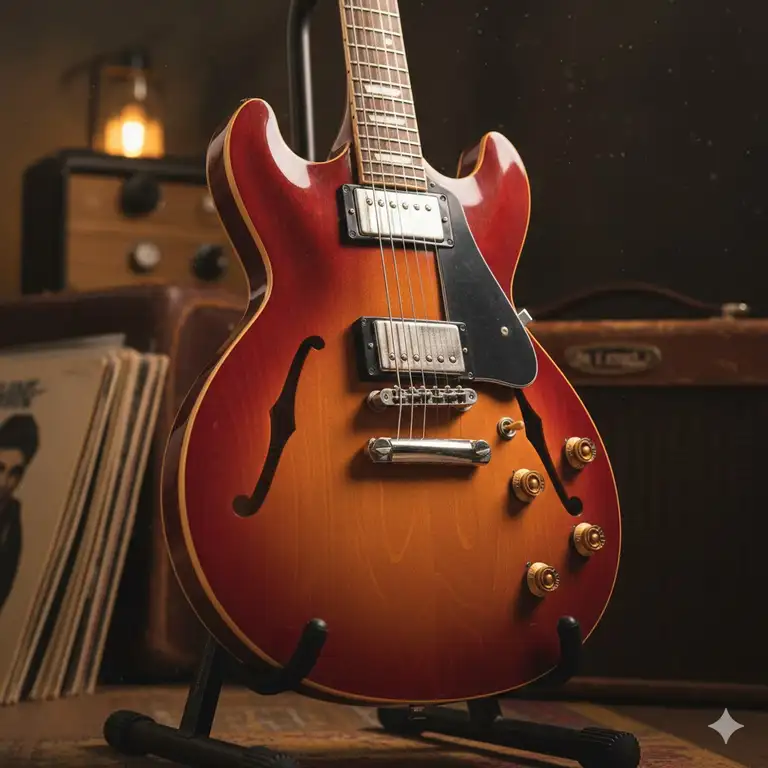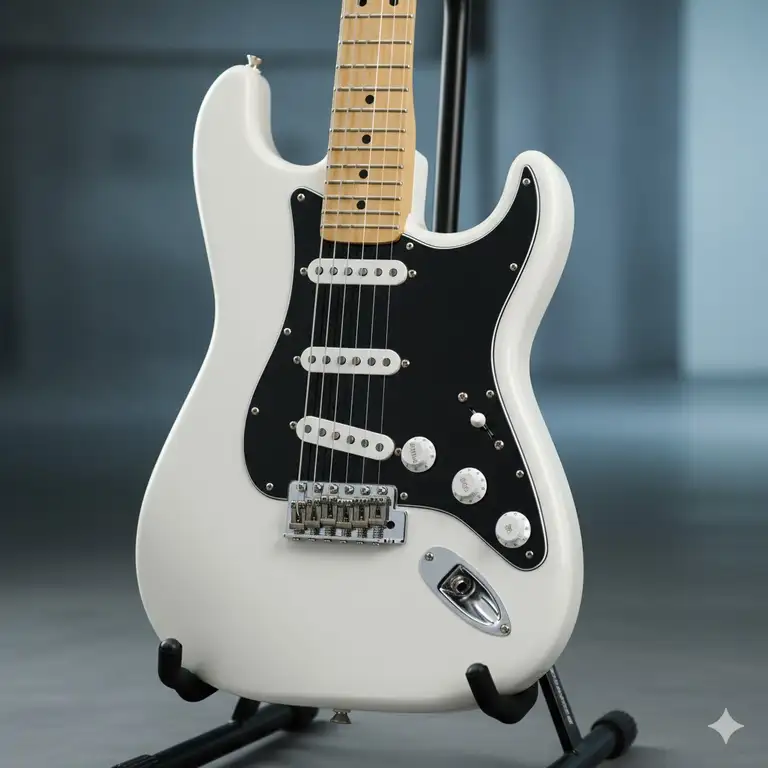

Welcome, fellow southpaw! If you’re here, you probably know the all-too-common struggle. You walk into a guitar store, your eyes wide with excitement, only to be greeted by a massive wall of… right-handed guitars. Tucked away in a lonely corner, if you’re lucky, are one or two dust-covered options for us lefties. It’s a tale as old as time, but I’ve got some amazing news: things have changed. Drastically. Finding a high-quality electric guitar left handed is no longer a mythical quest.
✨Was this helpful? Spread the word! 🚀
In fact, the market for a lefty electric guitar has never been better. Manufacturers have finally woken up and realized that the 10-12% of us who are left-handed also want to rock out. From iconic classics to modern metal machines, the choices are vast. But with great choice comes great confusion. What’s the real difference? Which one is for you?
That’s why I’ve put together this definitive guide. We’re going to dive deep into the world of the electric guitar left handed, explore the very best models available today, and give you all the info you need to make a confident choice.
Before we jump into the top picks, let’s get a 30,000-foot view. What are the real, practical differences between just “flipping” a righty guitar and investing in a true southpaw electric guitar?
Table 1: Left-Handed vs. “Flipped” Right-Handed Guitars
| Feature | True Electric Guitar Left Handed | “Flipped” Right-Handed Guitar |
| Controls | Knobs and switches are positioned for easy access with your right (strumming) hand. | Knobs and switches are “upside down,” often getting in the way of your strumming arm. |
| Nut | String slots are cut for a lefty setup (thickest string on top). | String slots are reversed. Restringing without a new nut causes major tuning and intonation issues. |
| Bridge | Angled and intonated for a lefty setup. | Saddles are reversed, leading to poor intonation (notes being out of tune as you go up the neck). |
| Cutaways | Body shape is carved to give your left (fretting) hand easy access to high frets. | Cutaways are on the wrong side, making high-fret access nearly impossible. |
| Strap Buttons | Placed for correct balance. | The guitar will hang awkwardly and feel unbalanced. |
| Ergonomics | Designed to fit your body comfortably. | Body contours (like the “belly cut”) are in the wrong place, feeling awkward. |
⚡ Quick Comparison: Top 7 Lefty Electric Guitars of 225
Here’s a quick look at the amazing models we’re about to explore. These are all real, available instruments I’ve researched for you.
Table 2: Top 7 Electric Guitar Left Handed Models at a Glance
| Product | Type | Best For | Pickup Configuration |
| Fender Player Stratocaster LH | Solid Body | Versatility (Blues, Rock, Pop) | S-S-S (Three Single-Coils) |
| Squier Classic Vibe ’70s Strat LH | Solid Body | Best Budget Vintage Vibe | S-S-S (Alnico Single-Coils) |
| Epiphone Les Paul Standard ’60s LH | Solid Body | Classic Rock & Blues Tone | H-H (Two Humbuckers) |
| Ibanez RG450DXL | Solid Body | Shred, Metal, Hard Rock | H-S-H (Humbucker/Single/Humbucker) |
| Schecter Hellraiser C-1 FR LH | Solid Body | Modern Metal & High-Gain | H-H (Active EMG Humbuckers) |
| Gretsch G2622LH Streamliner | Semi-Hollow | Indie, Rockabilly, Jazz | H-H (Broad’Tron Humbuckers) |
| Fender Kurt Cobain Jag-Stang LH | Solid Body | Alternative, Grunge, Punk | H-S (Humbucker/Single-Coil) |

🤘 Top 7 Best Electric Guitar Left Handed Models: Expert Analysis
We’ve done the research, sifted through countless reviews, and analyzed the specs. Here are the top 7 electric guitar left handed models you can buy right now.
1. Fender Player Stratocaster Left-Handed (The All-Around Classic)
You just can’t have a list of electric guitars without a Strat. The Fender Player Stratocaster Left-Handed is the modern-day workhorse. It takes decades of history and adds modern player-friendly features, making it one of the most versatile guitars on the planet.
-
Detailed Specifications:
-
Body: Alder
-
Neck: Maple, Modern “C” Shape
-
Fretboard: Pau Ferro or Maple, 9.5-inch radius
-
Pickups: 3 x Player Series Alnico 5 Strat Single-Coil
-
Bridge: 2-Point Synchronized Tremolo with Bent Steel Saddles
-
-
Customer Review Analysis: Owners consistently praise this guitar’s “glassy” and “chimey” tones. The 5-way pickup selector is a huge hit, offering everything from sharp bridge-pickup “quack” to warm, bluesy neck-pickup sounds. Many say it’s the “first ‘real’ Fender” that feels like a professional instrument without the American-made price tag. Some users note the tremolo may need a professional setup to stay perfectly in tune with heavy use.
-
Warranty: Fender offers a 2-year limited warranty, which is standard for their Player Series and covers manufacturing defects.
-
Pros & Cons:
-
✅ Pros: Incredibly versatile tones, modern playability, iconic looks, excellent build quality for the price.
-
❌ Cons: Stock tremolo can be finicky for heavy dive-bombs, some purists prefer maple fretboards (which are available on some models).
-
2. Squier Classic Vibe ’70s Stratocaster Left-Handed (Best Budget Vintage Vibe)
Want that classic Strat mojo without draining your bank account? The Squier Classic Vibe ’70s Stratocaster Left-Handed is, in my opinion, one of the best-value instruments on the market. It punches way above its weight, delivering vintage aesthetics and solid tones.
-
Detailed Specifications:
-
Body: Poplar
-
Neck: Maple, “C” Shape (Tinted Gloss Finish)
-
Fretboard: Indian Laurel, 9.5-inch radius
-
Pickups: 3 x Fender-Designed Alnico Single-Coil
-
Bridge: 6-Saddle Vintage-Style Synchronized Tremolo
-
-
Customer Review Analysis: The most common word you’ll see in reviews is “surprising.” Players are blown away by the quality of the finish and the authentic vintage tones from the alnico pickups. The large ’70s-style headstock is a love-it-or-hate-it aesthetic, but it’s period-correct. It’s a fantastic platform for modding, though many say it sounds great right out of the box.
-
Warranty: Squier (owned by Fender) also provides a 2-year limited warranty.
-
Pros & Cons:
-
✅ Pros: Unbeatable value, authentic vintage styling, great-sounding alnico pickups, excellent neck feel.
-
❌ Cons: Poplar body isn’t as “traditional” as alder (though tone is subjective), hardware is good but not on par with its Fender big brother.
-
3. Epiphone Les Paul Standard ’60s Left-Handed (The Rock & Blues Powerhouse)
If your heroes are Slash, Jimmy Page, or Zakk Wylde, you’re probably craving that thick, powerful, sustaining tone of a Les Paul. The Epiphone Les Paul Standard ’60s Left-Handed delivers that classic recipe in a beautifully crafted and accessible package.
-
Detailed Specifications:
-
Body: Mahogany with AA Flame Maple Top
-
Neck: Mahogany, SlimTaper ’60s “C” Profile
-
Fretboard: Indian Laurel, 12-inch radius
-
Pickups: 2 x ProBucker 2 (Neck) & ProBucker 3 (Bridge) Humbuckers
-
Bridge: LockTone ABR Tune-O-Matic with Stopbar Tailpiece
-
-
Customer Review Analysis: This guitar gets rave reviews for its sound and sustain. The ProBucker pickups are lauded for their warmth and clarity, closely mimicking the sound of vintage PAFs. Owners love the ’60s slim neck profile, which is faster and more comfortable for many players than the ’50s “baseball bat” style. The flame maple top also gets a lot of compliments for its looks.
-
Warranty: Epiphone (owned by Gibson) offers a limited lifetime warranty, which is a huge mark of confidence in their product.
-
Pros & Cons:
-
✅ Pros: Massive, sustaining tone, powerful humbuckers, beautiful flame-top finish, comfortable ’60s neck, excellent warranty.
-
❌ Cons: Can be heavy (it’s a Les Paul!), no coil-splitting for single-coil tones.
-
4. Ibanez RG450DXL Left-Handed (The Speed Demon’s Choice)
For the left handed electric guitar player into metal, shred, or hard rock, Ibanez is a name you need to know. The Ibanez RG450DXL Left-Handed is a high-performance machine built for one thing: speed.
-
Detailed Specifications:
-
Body: Meranti
-
Neck: Maple, Wizard III Profile (very thin)
-
Fretboard: Jatoba, 24 Frets, 15.7-inch radius (very flat)
-
Pickups: Quantum Humbucker (Neck), Quantum Single-Coil (Middle), Quantum Humbucker (Bridge)
-
Bridge: Double-Locking Tremolo System
-
-
Customer Review Analysis: Reviews for this Ibanez RG450DXL are all about playability. The Wizard III neck is legendary for its thin, fast feel, and the flat 15.7-inch fretboard radius is perfect for wide bends and fast soloing. The H-S-H pickup configuration is extremely versatile, giving you heavy bridge humbucker tones, Strat-like “in-between” sounds, and a warm neck pickup. The double-locking bridge is a must-have for players who use a lot of “dive-bomb” whammy bar effects.
-
Warranty: Ibanez offers a one-year limited warranty.
-
Pros & Cons:
-
✅ Pros: Insanely fast neck, 24 frets for a full two-octave range, highly versatile HSH pickups, stable double-locking tremolo.
-
❌ Cons: The tremolo system can be complicated to set up and restring for beginners, not the “classic” look some players want.
-
5. Schecter Hellraiser C-1 FR LH (Ultimate Modern Metal Machine)
If you find the Ibanez a little too tame, step right this way. The Schecter Hellraiser C-1 FR LH is an absolute beast of an electric guitar left handed. It’s built from the ground up for high-gain, modern metal, and aggressive playing styles.
-
Detailed Specifications:
-
Body: Mahogany with Quilted Maple Top
-
Neck: 3-Piece Mahogany, Set-Neck with Ultra Access
-
Fretboard: Rosewood, 24 Frets
-
Pickups: 2 x EMG Active 81/89 Humbuckers
-
Bridge: Floyd Rose 1000 Series Double-Locking Tremolo
-
-
Customer Review Analysis: This guitar is a high-gain dream. Players report that the Schecter Hellraiser has “endless sustain” and a “tight, articulate” sound even under the heaviest distortion, thanks to the active EMG pickups. The EMG 89 in the neck position also has a coil-split feature, giving you a surprisingly good single-coil sound. The “Ultra Access” set-neck joint is heavily praised for making it effortless to play all 24 frets.
-
Warranty: Schecter offers a limited lifetime warranty to the original owner.
-
Pros & Cons:
-
✅ Pros: Incredible high-gain tones, active EMGs with coil-splitting, set-neck construction, high-quality Floyd Rose bridge, premium “metal” aesthetic.
-
❌ Cons: Active pickups require a 9V battery, “sterile” clean tone for some, very “metal” focused.
-
6. Gretsch G2622LH Streamliner Center Block (The Semi-Hollow Hero)
Looking for a lefty electric guitar with a different flavor? The Gretsch G2622LH Streamliner Center Block offers that classic semi-hollow “air” and vibe at an incredible price point. It’s perfect for indie, blues, rockabilly, and even jazz.
-
Detailed Specifications:
-
Body: Laminated Maple, Chambered Spruce Center Block
-
Neck: Nato, Thin “U” Profile
-
Fretboard: Laurel, 12-inch radius
-
Pickups: 2 x Broad’Tron BT-2S Humbuckers
-
Bridge: Anchored Adjusto-Matic with “V” Stoptail
-
-
Customer Review Analysis: The biggest point of praise is the sound. The Broad’Tron pickups are described as being “between a classic Gretsch ‘twang’ and a warm PAF humbucker.” The spruce center block is the secret weapon, cutting down on the feedback that plagues fully hollow-body guitars while retaining that open, woody tone. It’s a big guitar, but surprisingly light and comfortable.
-
Warranty: Gretsch offers a 1-year limited warranty.
-
Pros & Cons:
-
✅ Pros: Unique semi-hollow tone, feedback-resistant center block, great-sounding versatile pickups, stunning vintage looks.
-
❌ Cons: Larger body size isn’t for everyone, not ideal for high-gain metal.
-
7. Fender Kurt Cobain Jag-Stang Left-Handed (The Alternative Icon)
For the ’90s kid in all of us. The Fender Kurt Cobain Jag-Stang Left-Handed is a reissue of the quirky, iconic guitar designed by the Nirvana frontman himself. It’s a mashup of a Jaguar and a Mustang, and it’s pure alternative rock attitude.
-
Detailed Specifications:
-
Body: Alder
-
Neck: Maple, “C” Shape
-
Fretboard: Rosewood, 7.25-inch radius (very vintage)
-
Pickups: Jag-Stang Humbucker (Bridge), Jag-Stang Single-Coil (Neck)
-
Bridge: Vintage-Style Mustang Tremolo
-
-
Customer Review Analysis: This is a guitar people buy for its vibe and history. Owners love its unique looks and punchy, raw tones. The short 24-inch scale length makes it incredibly easy to play and bend strings on. The 7.25-inch vintage radius is very curved, which some love for chords but others find difficult for solos. It’s a “punk rock machine” that’s not afraid to be a little rough around the edges.
-
Warranty: Fender offers a 2-year limited warranty.
-
Pros & Cons:
-
✅ Pros: Iconic grunge/alternative vibe, short scale is easy to play, powerful humbucker/single-coil combo.
-
❌ Cons: Vintage-style bridge and tremolo can be tricky, 7.25-inch radius is not for all players.
-
✨ Don’t Wait to Find Your Sound! 🎸
You’ve seen the best of the best, from all-around classics to high-gain shredders. The perfect electric guitar left handed for you is on this list. Click on any of the highlighted models to explore them further, read more reviews, and check current availability. Your rockstar journey starts now!
💬 Just one click – help others make better buying decisions too!😊
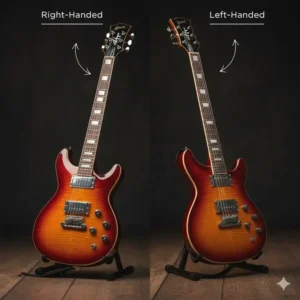
🤔 Why Finding the Right Left Handed Electric Guitar Matters
You might be thinking, “Couldn’t I just learn to play right-handed? Or flip a righty guitar like Hendrix?”
You could, but let’s break that down. While some lefties do learn right-handed, it’s often more intuitive to play with your dominant hand as your rhythm/strumming hand. As for flipping, as we saw in the first table, it’s a massive hassle. You’re fighting against the instrument’s design at every turn.
Investing in a proper electric guitar left handed means the instrument works with you, not against you. The controls are where you need them. The body fits you. The intonation is correct. This lets you focus on the most important thing: playing music.
The “Lefty Tax,” a term for left handed electric guitars costing more than their righty counterparts, is also less of a problem than it used to be. While some niche models still see a markup, the Squier and Epiphone options on our list prove you can get a phenomenal lefty electric guitar for the same price as a righty.
Table 3: Playing Upside Down vs. Buying a True Lefty Guitar
| Aspect | Playing a “Flipped” Righty (à la Hendrix) | Buying a True Electric Guitar Left Handed |
| Initial Cost | Potentially cheaper (more used options). | Can be slightly more, but budget options are plentiful. |
| Setup Cost | High. Requires a new nut, bridge adjustment, and intonation setup. | Low. Ready to play out of the box (a setup is always recommended, though). |
| Playability | Poor. Knobs are in the way, high-fret access is blocked. | Excellent. Ergonomically designed for you. |
| Resale Value | Low. It’s a heavily modified, niche item. | Good. There’s a strong market for used lefty guitars. |
| Conclusion | A “cool” idea that’s often a frustrating, expensive mess. | The smart, practical, and more enjoyable long-term choice. |
🗺️ A Southpaw’s Guide: What to Look for in Your Lefty Electric Guitar
Okay, you’re convinced. But how do you choose between a Strat and a Les Paul? A semi-hollow and a shredder? Let’s break down the key components of an electric guitar for left handed players.
🎸 Body Styles: Finding Your Shape
The shape of the guitar affects its feel, weight, and, to some degree, its tone.
-
Strat-style (Fender, Squier): The ultimate all-rounder. Ergonomic, comfortable, and balanced.
-
Les Paul-style (Epiphone): Heavier, single-cutaway design. Known for massive sustain.
-
RG/Super-Strat (Ibanez, Schecter): Often have deeper cutaways, thinner bodies, and are built for speed and high-fret access.
-
Semi-Hollow (Gretsch): Larger, lighter, with a “woody” or “airy” quality to the tone. Great for blues, jazz, and indie.
Table 4: Common Body Styles & Their Genres (Lefty Edition)
| Body Style | Primary Genres | Vibe | Key Models |
| Stratocaster | Blues, Rock, Pop, Funk | Versatile, Chimey, “Quacky” | Fender Player, Squier Classic Vibe |
| Les Paul | Classic Rock, Blues, Metal | Thick, Powerful, Sustaining | Epiphone Les Paul Standard |
| “Super-Strat” | Metal, Shred, Hard Rock | Aggressive, Fast, High-Output | Ibanez RG, Schecter Hellraiser |
| Semi-Hollow | Indie, Blues, Jazz, Rockabilly | Warm, Airy, “Woody” | Gretsch Streamliner |
| Offset | Alternative, Grunge, Indie | Quirky, Punchy, “Slinky” | Fender Jag-Stang |
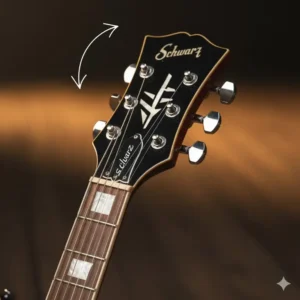
🔊 Pickups: The Voice of Your Guitar
Pickups are the “microphones” of your guitar. They are arguably the most important factor in your tone.
-
Single-Coils: Found on the Stratocaster. Known for bright, clear, “twangy” tones. They are fantastic for clean sounds and bluesy breakup but can be susceptible to 60-cycle hum (a slight buzzing).
-
Humbuckers (PAFs/ProBuckers): Found on the Les Paul and Gretsch. They use two coils to “buck the hum,” resulting in a silent, thicker, warmer, and more powerful sound. They are the sound of classic rock.
-
Active Humbuckers (EMGs): Found on the Schecter. These require a 9V battery to power a built-in preamp. This gives them a very high output, incredible clarity, and a tight low end, even with extreme distortion.
-
H-S-H (Humbucker-Single-Humbucker): Found on the Ibanez. This is the “best of both worlds,” giving you powerful humbucker tones in the bridge/neck and single-coil tones in the middle.
Table 5: Pickup Type Comparison (Single-Coil vs. Humbucker vs. Active)
| Pickup Type | Sound Profile | Best For | Pros | Cons |
| Single-Coil | Bright, Clear, Twangy | Blues, Funk, Pop, Country | Excellent clarity, “quack” sounds | Can have 60-cycle hum |
| Humbucker | Thick, Warm, Powerful | Rock, Blues, Jazz, Metal | No hum, high output, great sustain | Can sound “muddy” on some clean settings |
| Active Humbucker | High-Output, Clear, Tight | Modern Metal, Hard Rock | No hum, perfect for high gain, tight bass | Requires a battery, can sound “sterile” to some |
🌳 Tonewoods: Do They Really Matter?
Ah, the great tonewood debate. Yes, they matter—mostly for weight, feel, and aesthetics. The pickups and electronics will have a much bigger impact on your sound. Don’t get too hung up on it.
-
Alder (Fender): The classic Fender wood. Balanced, light, and resonant.
-
Mahogany (Epiphone, Schecter): Heavier wood. Known for a warm, sustained tone. Often paired with a…
-
Maple Top (Epiphone, Schecter): A bright, “snappy” wood added to a mahogany body to add clarity and high-end.
-
Maple Neck: The standard for most guitars. Bright, stable, and feels great.
-
Rosewood/Laurel/Pau Ferro Fretboards: These darker woods are slightly “warmer” or “softer” feeling and sounding than a maple fretboard.
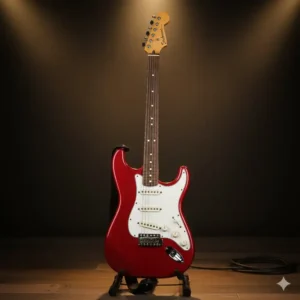
🌉 Bridge Types: To Tremolo or Not to Tremolo?
The bridge holds your strings and plays a huge role in tuning stability and feel.
-
Hardtail (Les Paul, Gretsch): A fixed bridge. Offers maximum tuning stability and sustain. Easiest for beginners.
-
Vintage Tremolo (Strat, Jag-Stang): The classic “whammy bar.” Great for subtle shimmers and pitch-bending. Can cause tuning issues if not set up properly.
-
Double-Locking Tremolo (Ibanez, Schecter): The “Floyd Rose” style. This system locks the strings at the nut and the bridge, allowing for extreme whammy bar use (dive bombs!) with perfect tuning stability. However, it is very complex to set up and change strings.
Table 6: Bridge System Pros & Cons for a Lefty Player
| Bridge Type | What It Is | Pros | Cons |
| Hardtail / Fixed | Strings anchor to the body/tailpiece. No whammy bar. | Rock-solid tuning, easy string changes, great sustain. | No whammy bar effects. |
| Vintage Tremolo | Whammy bar for pitch-bending. | Expressive, iconic sound. | Can go out of tune with heavy use, slightly harder to set up. |
| Double-Locking | Whammy bar + locking mechanisms. | Incredible tuning stability, allows for extreme effects. | Very complicated to change strings and set up. |
🎶 The “Other” Options: Alternatives to a Standard Electric Guitar Left Handed
While this guide focuses on the 6-string electric guitar left handed, don’t forget these other southpaw options:
-
Left-Handed Acoustic-Electric: Perfect for singer-songwriters or for playing without an amp.
-
Left-Handed Bass Guitar: Holding down the low end is a crucial job, and there are great lefty basses (like the Squier Classic Vibe P-Bass) available.
-
The “Hendrix” Approach: As discussed, restringing a righty is a bad idea for 99% of players. Hendrix had (and paid for) a team of expert techs to make his guitars playable. You’re better off buying a true lefty. For more on the physics of string tension and intonation, you can check out resources from musical acoustics programs (like this one from the University of New South Wales).
Table 7: Restringing a Righty vs. Buying a Lefty (Cost & Effort)
| Factor | Restringing a Righty Guitar | Buying a True Lefty Guitar |
| Upfront Cost | Varies, but you still have to buy a guitar. | Varies, but clear budget-to-premium path. |
| Modification Cost | $75 – $150+ (New nut, bridge saddle re-slotting, labor). | $0. |
| Effort | High. Find a luthier willing to do the work, wait for it. | None. Buy it and play. |
| Final Result | A compromised, awkward-playing instrument. | An instrument that feels and sounds correct. |
🦸 Famous Southpaw Players Who Shaped the Sound
When you pick up your electric guitar left handed, you’re in good company. Some of the most influential guitarists in history were lefties.
-
Jimi Hendrix: The most iconic of all. He famously played a right-handed Strat flipped over, but he was a true lefty.
-
Kurt Cobain (Nirvana): His preference for “pawn shop” guitars like Mustangs and Jaguars (like his famous Jag-Stang) influenced a generation of alternative rockers.
-
Tony Iommi (Black Sabbath): The “Godfather of Heavy Metal.” He’s a lefty who, after a factory accident, created a new, heavier sound.
-
Paul McCartney (The Beatles): While most famous for his lefty Höfner bass, his southpaw playing is legendary.
🛠️ Care and Maintenance for Your Left Handed Electric Guitar
Good news! Maintaining your electric guitar left handed is 99% the same as maintaining a righty one.
-
Cleaning: Wipe down the strings and body after playing.
-
String Changes: Learn to change your own strings. It’s a life skill for a guitarist. (Note: A double-locking bridge is a much more complex process).
-
Setups: A “setup” involves adjusting the neck (truss rod), string height (action), and intonation. You should have this done by a pro once a year, or learn to do it yourself.
-
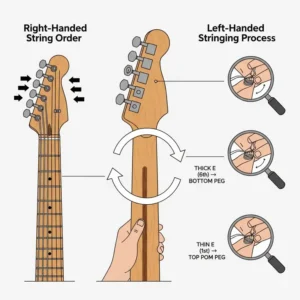
Finding Parts: This used to be the hardest part. Need a new lefty bridge or volume knob? Thankfully, the internet and sites like Amazon have made finding
left handed electric guitar partsmuch, much easier.
A great, reputable resource for learning these maintenance basics is a major gear retailer’s blog, like the Sweetwater “SweetCare” guides.
Table 8: Basic Lefty Guitar Maintenance Checklist
| Task | Frequency | Why It’s Important |
| Wipe Down | After every play session | Removes sweat and oil, preserves string life and finish. |
| Change Strings | Every 1-3 months (or when they sound dull) | New strings sound bright and clear and stay in tune. |
| Clean/Condition Fretboard | Every 1-2 string changes | Prevents dark-wood fretboards (Rosewood, Laurel) from drying out. |
| Check Intonation | Every 6 months | Ensures your guitar is in tune with itself all the way up the neck. |
| Professional Setup | Once per year (or with big weather changes) | Keeps the action low and comfortable and the neck straight. |
✨ Take the Next Step on Your Southpaw Journey! 🚀
You’ve done the research, now it’s time to play. Browse the amazing electric guitar left handed models we’ve reviewed, click the links to see more, and get ready to make some noise. The world is waiting to hear your music, played the right way—lefty.
🏁 Conclusion: Your Lefty Journey Starts Now
The days of feeling left out (pun intended) are over. The world of the electric guitar left handed is bigger, better, and more accessible than ever before. You no longer have to settle for a single, uninspiring model. You have choices.
You can get the glassy “quack” of a Strat, the thick, roaring sustain of a Les Paul, the high-octane shred of an Ibanez, or the woody thump of a Gretsch, all designed and built correctly for you.
We’ve covered the best of the best, from the budget-friendly Squier Classic Vibe to the metal-ready Schecter Hellraiser. We’ve broken down why a true left handed electric guitar is a must-have and what to look for in your search.
The rest is up to you. Your perfect guitar is out there.
❓ Frequently Asked Questions (FAQ)
✅ Sometimes, but not always. This 'Lefty Tax' is less common today, especially for popular models. While some high-end or niche electric guitar left handed models might have a small markup due to smaller production runs, budget-friendly brands like Squier and Epiphone now offer most of their key models at the exact same price...
✅ A great choice is the Squier Classic Vibe '70s Stratocaster Left-Handed. It offers fantastic quality and versatility for a low price. Its 'C' shape neck is comfortable, and the S-S-S pickup configuration lets a new player explore many different tones. A fixed-bridge option, if available, can also be easier for a beginner...
✅ No, this is not recommended. Simply restringing it backwards will cause major problems. The nut slots, bridge angle, and intonation are all set for a righty. To do it properly, you need a new nut and a full bridge setup, which can cost a lot. A true electric guitar left handed is built for you...
✅ No, the learning process is identical. You still need to build finger dexterity, learn chords, and practice rhythm. The only 'hard' part used to be finding a good lefty electric guitar or finding lefty-specific chord charts, but the internet and a better market have solved both of those problems entirely...
✅ Online retailers like Amazon have massively improved the shopping experience for lefties. They stock a wide variety of models from Fender, Squier, Ibanez, and more, often with better selection than a physical store. This allows you to browse all your options, read reviews, and find the perfect southpaw guitar... ❓ Do left handed guitars cost more than right handed?
❓ What is the best left handed electric guitar for a beginner?
❓ Can I just flip a right handed guitar and restring it?
❓ Is it harder to learn guitar left-handed?
❓ Where can I buy a good electric guitar left handed?
Recommended for You
- Left Handed Acoustic Electric Guitar: 7 Top Picks 2025 Every Musician Will Love
- Best Electric Guitars Left Handed Guitar: Ultimate Guide for Southpaw Players in 2025
- Top Left Handed Electric Guitars: The Ultimate Guide for Southpaw Players 2025
Disclaimer: This article contains affiliate links. If you purchase products through these links, we may earn a small commission at no additional cost to you.
✨ Found this helpful? Share it with your friends! 💬🤗