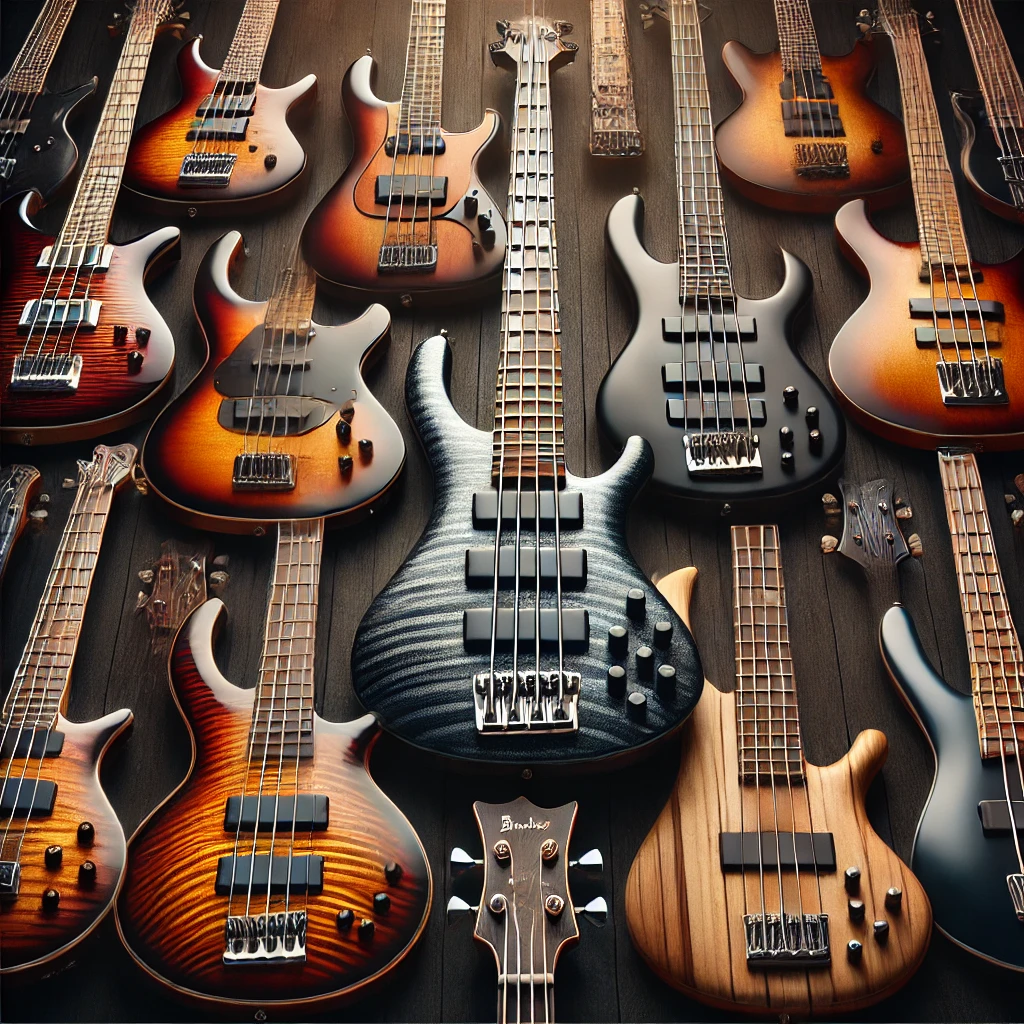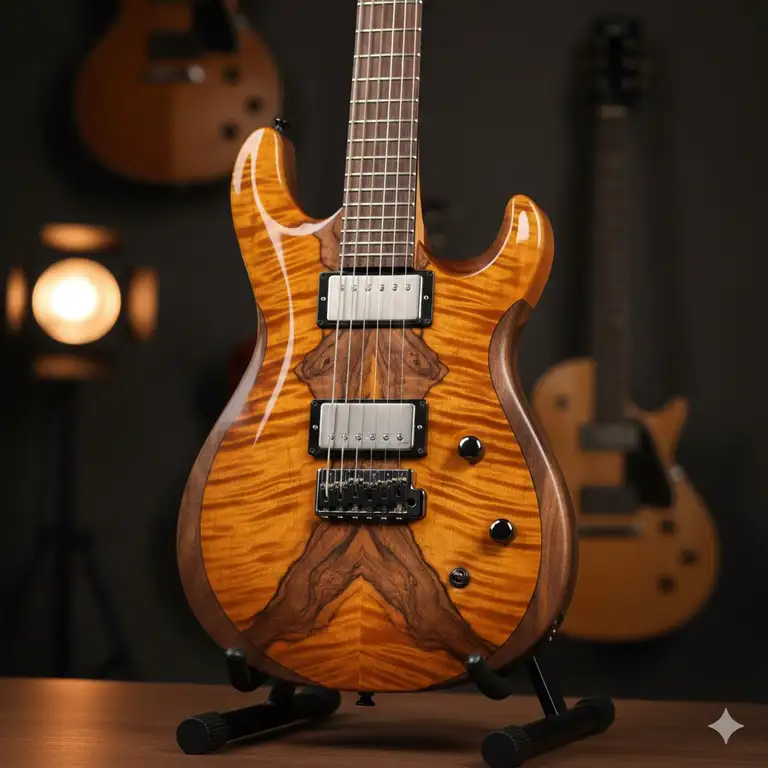
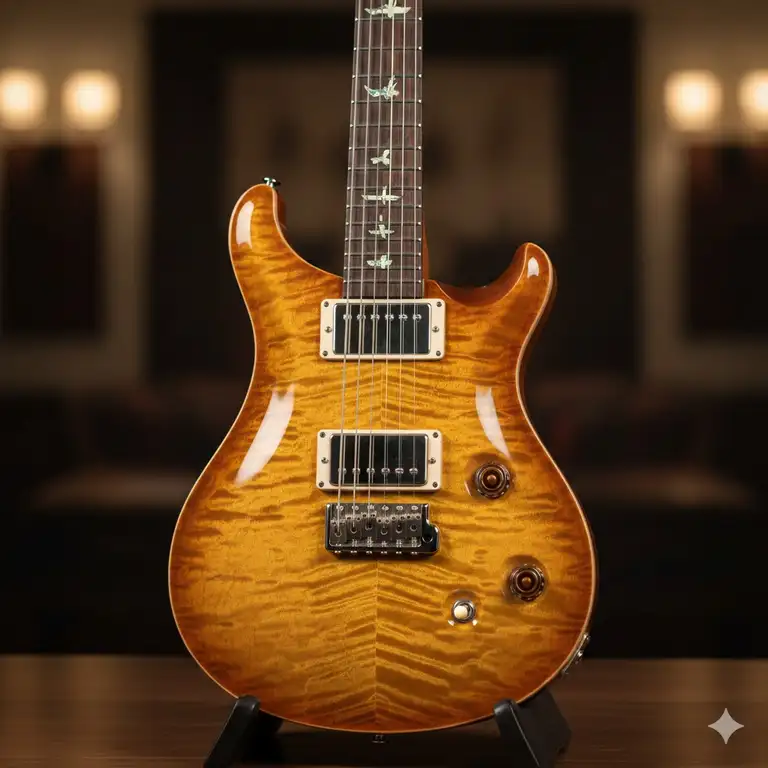
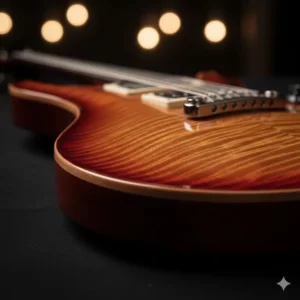
Every time I walk into a music shop, my eyes are immediately drawn to that one wall. You know the one—the wall where the light hits the flame maple tops just right, and the bird inlays seem to take flight off the fretboards. I’m talking about the prs guitar. For years, these instruments have occupied a unique space in the world of music. They aren’t quite the “old school” vibe of a vintage Gibson, and they aren’t the “utilitarian” workhorses like a standard Fender. Instead, they represent a “third way”—a blend of modern precision and classic soul that Paul Reed Smith himself perfected.
✨Was this helpful? Spread the word! 🚀
Whether you are a seasoned pro or someone looking for your first high-quality instrument, finding the right paul reed smith guitars can feel like a daunting task. There are so many tiers: the budget-friendly SE line, the mid-tier S2 series, the bolt-on CE models, and the legendary Core collection. I remember my first time playing a prs se custom 24. I was skeptical. Could a guitar made outside the USA really feel that good? The moment I hit a G-chord, the sustain and the comfort of the neck profile shut me down. It was a revelation. In this guide, I’m going to walk you through the absolute best options available in 2026 so you can find the instrument that speaks to your hands and your heart.
How PRS Compares to Traditional Alternatives
Before we dive into the specific models, let’s look at how the prs guitar stacks up against the two “Big Brands” that dominated the industry before Paul came along.
| Feature | PRS Guitars | Traditional Single-Cut (G-Style) | Traditional Double-Cut (F-Style) |
| Scale Length | Usually 25 inches (The Middle Ground) | 24.75 inches (Shorter/Warmer) | 25.5 inches (Longer/Snappier) |
| Common Woods | Mahogany body, Maple top | Mahogany body, Maple top | Alder or Ash body |
| Tuning Stability | High (Straight string pull) | Variable (Angled headstock) | High (Straight string pull) |
| Typical Pickups | Hum-canceling with Coil-splits | Heavy Humbuckers | Bright Single Coils |
| Aesthetic | Flame maple/Bird inlays | Classic/Vintage gold tops | Relic/Solid colors |
Quick Comparison of the Top 7 PRS Guitars
If you are in a hurry to get playing, here is a snapshot of my top picks for 2026.
| Model | Series | Best For | Pickup Config |
| SE Custom 24 | SE (Student Edition) | All-around Versatility | 85/15 “S” Humbuckers |
| SE Silver Sky | SE (Signature) | Blues & Vintage Strat tones | 635JM “S” Single Coils |
| SE McCarty 594 | SE (Vintage Tier) | Classic Rock / Vintage Vibe | 58/15 LT “S” |
| CE 24 | Bolt-On (USA) | Professional Gigging | 85/15 USA |
| S2 McCarty 594 | S2 (USA Mid-Tier) | Studio Professionals | 58/15 “S” |
| SE Hollowbody II | SE (Specialty) | Jazz / Clean Resonance | 58/15 “S” |
| SE Standard 24 | SE (Budget) | Beginners / Students | 85/15 “S” |
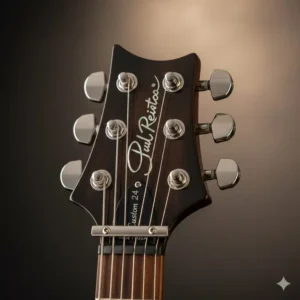
Top 7 PRS Guitar: Expert Analysis
Below is a detailed breakdown of the best models currently available. I have analyzed technical specs, customer feedback, and real-world performance to help you choose.
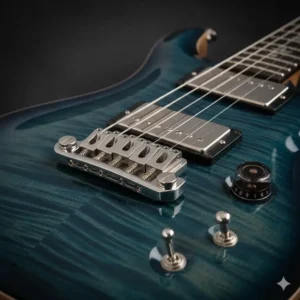
1. PRS SE Custom 24 (Faded Blue Burst)
The PRS SE Custom 24 is the definitive “workhorse” of the lineup. It brings the iconic design of the original 1985 PRS to a price point that most musicians can actually afford. This prs se custom 24 features a maple top with a beautiful shallow violin carve and a mahogany back.
-
Technical Specifications:
-
Body Wood: Mahogany with Flame Maple Veneer
-
Neck Wood: Maple (Wide Thin profile)
-
Scale Length: 25 inches
-
Pickups: 85/15 “S” Treble and Bass
-
Bridge: PRS Patented Tremolo, Molded
-
Controls: Volume and Push/Pull Tone (for coil tapping)
-
-
Customer Review Analysis: Users consistently praise the “Wide Thin” neck for being fast without feeling like a “shredder” neck. Many mention that the tuning stability is surprisingly good for a non-locking tremolo system. Some reviewers suggest upgrading the nut to a TUSQ nut for even better performance.
-
Warranty: Limited Lifetime Warranty against manufacturing defects.
-
Pros: Incredible versatility; covers both humbucker and single-coil tones; stunning aesthetics.
-
Cons: The “veneer” top isn’t as deep as a solid maple cap; gig bag included rather than a hard case.
2. PRS SE Silver Sky (Stone Blue)
Developed in collaboration with John Mayer, the PRS SE Silver Sky is a reimagining of the classic single-coil guitar. If you are looking for paul reed smith quality but want that vintage “spank” and “quack,” this is your instrument.
-
Technical Specifications:
-
Body Wood: Poplar
-
Neck Wood: Maple (635JM neck shape)
-
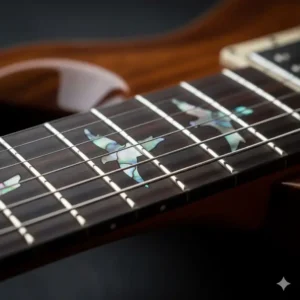
Fretboard: Rosewood with Small Bird inlays
-
Pickups: 635JM “S” Single Coils
-
Nut Width: 1.625 inches
-
-
Customer Review Analysis: Players rave about the 8.5-inch fretboard radius, which feels like a perfect middle ground between vintage and modern styles. The pickups are often cited as the best-sounding single coils in this price bracket.
-
Warranty: PRS Standard SE Warranty.
-
Pros: Authentic John Mayer tones; extremely comfortable neck; high-quality hardware.
-
Cons: Only 22 frets (if you need 24); non-traditional headstock shape can be polarizing.
3. PRS SE McCarty 594 (McCarty Sunburst)
For those who love the vintage feel of late-50s guitars, the PRS SE McCarty 594 is a masterpiece. It uses a slightly shorter 24.594-inch scale length, which reduces string tension and makes bends feel like butter.
-
Technical Specifications:
-
Body: Mahogany with Maple Top
-
Neck: Mahogany (Pattern Vintage profile)
-
Pickups: 58/15 LT “S”
-
Bridge: Two-Piece Stoptail
-
-
Customer Review Analysis: Owners love the “Pattern Vintage” neck, which is a bit thicker and fills the hand nicely. It’s frequently compared to high-end vintage replicas but at a fraction of the cost.
-
Warranty: Standard PRS SE Coverage.
-
Pros: Warm, vintage voice; effortless playability; separate volume and tone controls for each pickup.
-
Cons: Heavier than the Custom 24 models; not ideal for modern metal without a pedal.
4. PRS CE 24 (Semi-Hollow / Satin Finish)
The PRS CE 24 is where we enter the USA-made territory. “CE” stands for Classic Electric, and it features a bolt-on maple neck. This gives the guitar a “snappy” response that you won’t find on set-neck models.
-
Technical Specifications:
-
Body: Mahogany with Maple Top
-
Neck: Maple (Bolt-on)
-
Pickups: 85/15 USA-made
-
Finish: Nitrocellulose Lacquer (Satin)
-
-
Customer Review Analysis: Professional gigging musicians prefer this model because the bolt-on neck adds a level of clarity and “pop” that cuts through a live mix. The satin finish is also highly praised for not feeling “sticky” during sweaty performances.
-
Professional Applications: Recording studios and touring professionals.
-
Pros: USA-made electronics and craftsmanship; incredibly resonant; fast neck.
-
Cons: Significantly more expensive than the SE line; satin finish shows wear faster (relics naturally).
5. PRS S2 Custom 24-08 (Eriza Verde)
The S2 series is the “bridge” between SE and Core models. The PRS S2 Custom 24-08 is unique because it features mini-toggle switches that allow for 8 different pickup configurations.
-
Technical Specifications:
-
Body: Mahogany with Maple Top (Asymmetric Bevel)
-
Neck: Mahogany (Pattern Regular)
-
Pickups: TCI “S” Pickups
-
Electronics: 3-way toggle with two mini-toggle coil-split switches.
-
-
Customer Review Analysis: Users love the 24-08 switching system, noting that they can get true single-coil sounds without the volume drop-off usually associated with coil tapping.
-
Pros: Ultimate tonal flexibility; American-made neck and body; unique color options.
-
Cons: Pickups are still “S” (overseas) models rather than the full USA versions.
6. PRS SE Hollowbody II Piezo (Black Gold Burst)
If you need acoustic and electric tones in one instrument, the PRS SE Hollowbody II Piezo is a game-changer. It features a true hollow construction with a piezo system in the bridge.
-
Technical Specifications:
-
Construction: Fully Hollow
-
Top/Back Wood: Maple 5-ply laminate
-
Pickups: 58/15 “S” + LR Baggs/PRS Piezo System
-
Outputs: Two (Magnetic and Piezo/Mix)
-
-
Customer Review Analysis: Reviewers are shocked at how realistic the acoustic sounds are. It’s a favorite for “solo performers” who need to cover a lot of ground with one guitar.
-
Pros: Light as a feather; gorgeous acoustic resonance; dual output jacks.
-
Cons: Prone to feedback at very high gain; requires more care due to hollow body.
7. PRS SE Standard 24 (Tobacco Sunburst)
The PRS SE Standard 24 is the most affordable entry point into the world of paul reed smith. It ditches the maple top in favor of an all-mahogany body, resulting in a warm, mid-focused tone.
-
Technical Specifications:
-
Body: Solid Mahogany
-
Neck: Maple (Wide Thin)
-
Pickups: 85/15 “S”
-
Fretboard: Rosewood
-
-
Customer Review Analysis: Beginners and modders love this guitar. Many customers buy it as a “project guitar” to install boutique pickups, noting that the “bones” of the instrument are world-class.
-
Pros: Best value for money; very durable; classic PRS look.
-
Cons: Lacks the “flashy” maple top; basic hardware.
✨ Don’t Miss These Exclusive Deals!
🔍 Elevate your musical journey with these carefully selected instruments. Click on any highlighted item to check current pricing and availability. These prs guitar models will help you find the professional tone you’ve been dreaming of!
💬 Just one click – help others make better buying decisions too!😊
The Evolution of the Paul Reed Smith Vision
To truly understand why a prs guitar review is usually so positive, you have to look at the history. Paul Reed Smith started building guitars in his attic in the 1970s. He didn’t just want to copy what was already there; he wanted to fix the problems.
The Hierarchy of Models
When you search for paul reed smith guitars, you’ll see different series. Here is how they break down:
-
SE Series: Made in Indonesia/Korea. These are the “Student Edition” but are professional-grade.
-
S2 Series: Made in Maryland, USA. They use simplified body carves and some imported parts to keep the price down.
-
CE Series: Bolt-on neck USA models. Known for their “snap.”
-
Core Models: The flagship USA instruments. Think prs core models with deep violin carves and the highest-grade woods.
-
Private Stock: The “dream” tier. Completely custom and often costing over $10,000.
Benefit Comparison: PRS vs. Traditional Designs
Why choose a prs guitar over a standard single-cut or double-cut? Let’s look at the data.
| Benefit | PRS Design | Traditional Designs |
| Ergonomics | Deep double cutaways for high-fret access | Often restricted by neck joints |
| Scale Tension | 25 inches = Balanced tension | 25.5 inches (Tight) or 24.75 inches (Loose) |
| Stability | Straight string path through the nut | Angled paths can cause “pinging” or tuning slips |
| Weight | Often chambered or lightweight mahogany | Can be famously heavy (9+ lbs) |
Technical Deep Dive: What Makes the PRS Tone?
The 25-Inch Scale Length
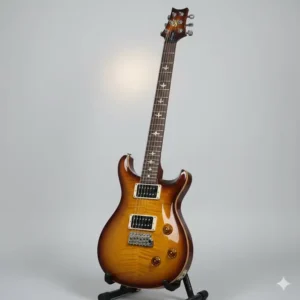
Most guitars are either 24.75 inches (Gibson) or 25.5 inches (Fender). Paul decided that 25 inches was the “magic” number. It provides enough tension for the strings to feel “snappy” and clear, but it’s short enough that bends are easy on the fingers. If you’ve struggled with your strings feeling too “stiff” on a Strat, a prs guitar might be the answer.
TCI-Tuned Pickups
In recent years, PRS introduced TCI (Tuned Capacitance and Inductance) tuning. This isn’t just a marketing buzzword. It means they measure the exact electrical properties of the pickup and “tune” it to ensure the bridge and neck pickups are perfectly balanced. This is why a prs guitar review often mentions how clear the pickups sound even under heavy distortion.
The Bird Inlays
While purely aesthetic, the bird inlays have become a symbol of quality. From the Peregrine Falcon at the 3rd fret to the Owl at the 24th, these inlays represent the brand’s attention to detail.
Performance Metrics: Which PRS is Right for You?
| User Type | Recommended Model | Primary Reason |
| The Beginner | SE Standard 24 | Affordable, easy to play, durable. |
| The Blues Player | SE Silver Sky | Incredible vintage single-coil clarity. |
| The Metalhead | SE Custom 24 | High-output pickups and fast neck. |
| The Jazz Cat | SE Hollowbody II | Natural acoustic resonance and warmth. |
| The Pro Gigging Musician | CE 24 | Reliability, snap, and USA-made quality. |
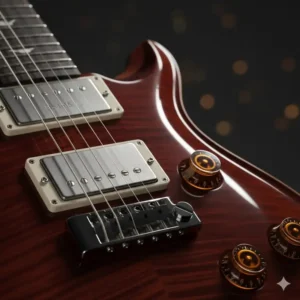
Choosing the Best PRS Guitar for Beginners
If you are just starting out, you might be tempted to buy the cheapest guitar you can find. I always advise against this. A poor-quality guitar is hard to play, won’t stay in tune, and will eventually make you want to quit. The best prs guitar for beginners is undoubtedly the SE Standard 24.
-
Reliability: It stays in tune. This is the #1 hurdle for new players.
-
Comfort: The “Wide Thin” neck profile is very forgiving for small or unpracticed hands.
-
Growth: This isn’t a “toy” guitar. You can play your first gig with this instrument and it will perform perfectly.
I remember helping a friend pick out his first instrument. He was looking at a “no-name” brand for $150. I convinced him to save up a bit more for a paul reed smith SE. Two years later, he’s still playing that same guitar every day. That’s the value of a quality build.
Maintenance and Care for Your PRS
Owning a high-end instrument like a prs guitar requires a bit of maintenance. Because many of these use mahogany and rosewood, they are sensitive to humidity.
-
Humidity Control: Try to keep your guitar in a room that is between 40-50% humidity. If it gets too dry, the wood can shrink, causing “fret sprout” (where the metal frets stick out from the side of the neck).
-
Cleaning: Use a microfiber cloth to wipe down the strings after every play. This prevents sweat from corroding the metal.
-
Setup: I recommend getting a professional setup once a year. A technician can adjust the “intonation” to ensure the guitar is perfectly in tune all the way up the neck.
Budget vs. Premium: What Are You Paying For?
Let’s compare an entry-level SE with a Core model to see where the money goes.
| Feature | SE Series ($) | Core Series ($$$$) |
| Country of Origin | Indonesia | USA (Maryland) |
| Top Wood | Maple Veneer | Solid Carved Figured Maple |
| Pickups | Overseas “S” Models | USA Hand-wound Models |
| Finish | Polyurethane (Thick/Durable) | Nitrocellulose (Thin/Resonant) |
| Case | Padded Gig Bag | Premium Hardshell Case |
✨ Take Your Performance to the Next Level!
🔍 Ready to find your “forever” guitar? Click on any of the products mentioned in this guide to see the latest colors and availability on Amazon. Whether it’s your first prs guitar or your tenth, there’s a perfect Paul Reed Smith waiting for you. 🎸🔥
Final Thoughts on the PRS Guitar
Choosing a guitar is a deeply personal journey. I’ve played hundreds of instruments over the years, from $100 pawn shop finds to $10,000 custom builds. What keeps me coming back to the prs guitar is the consistency. When you buy a paul reed smith, you know exactly what you are getting: a perfectly engineered tool designed to stay out of your way and let you make music.
If you want vintage soul, go for the SE McCarty 594. If you want modern versatility, the SE Custom 24 is your best friend. And if you want the absolute pinnacle of American craftsmanship, save up for those prs core models. No matter which one you choose, you are joining a community of players—from Carlos Santana to John Mayer—who value tone and beauty in equal measure.
Frequently Asked Questions
✅ The SE models are manufactured in Indonesia or Korea using overseas hardware, while S2 models are made in the USA. S2 guitars use American-made necks and bodies but often retain SE-level electronics to keep costs lower...
✅ The bird inlays were a request from Paul Reed Smith's mother, who was a bird watcher. They have since become the signature aesthetic mark of the brand, appearing on almost all models except for some vintage-style editions...
✅ Yes, the 25 inch scale length is a comfortable middle ground. It is shorter than a standard Fender (25.5inches), meaning the frets are slightly closer together, which can make stretching for chords much easier for players...
✅ Absolutely. The 85/15 'S' pickups are high-output humbuckers that handle distortion very well. Furthermore, the 24-fret neck allows for the full range of notes needed for modern metal soloing and complex riffing styles...
✅ Yes, PRS is one of the top brands for resale value. Core models and Private Stock versions hold value exceptionally well, while SE models are very liquid on the used market due to their high reputation... ❓ What is the main difference between PRS SE and S2 models?
❓ Why are PRS guitars known for having bird inlays?
❓ Is a 25 inch scale length better for small hands?
❓ Can a PRS SE Custom 24 handle heavy metal music?
❓ Do PRS guitars hold their resale value well?
Recommended for You
- Edwards guitar: Why 7 Models Will Absolutely Blow Your Mind! 🤯
- Gibson nighthawk guitar: 7 Ultimate Models for Unbelievable Tone & Value
- Giveon Guitar: 7 Best Soulful Gear Choices to Get That R&B Sound
Disclaimer: This article contains affiliate links. If you purchase products through these links, we may earn a small commission at no additional cost to you.
✨ Found this helpful? Share it with your friends! 💬🤗