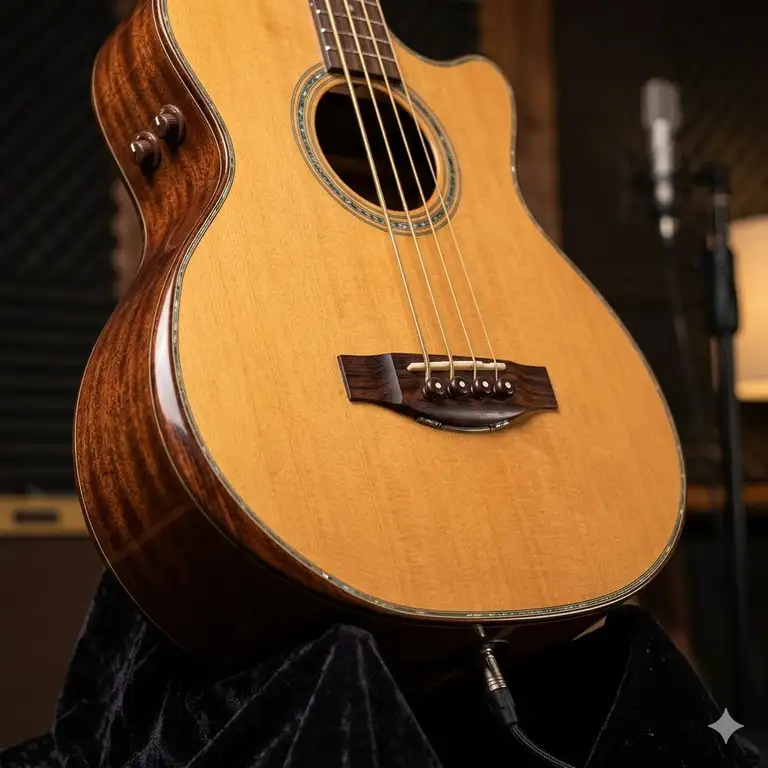
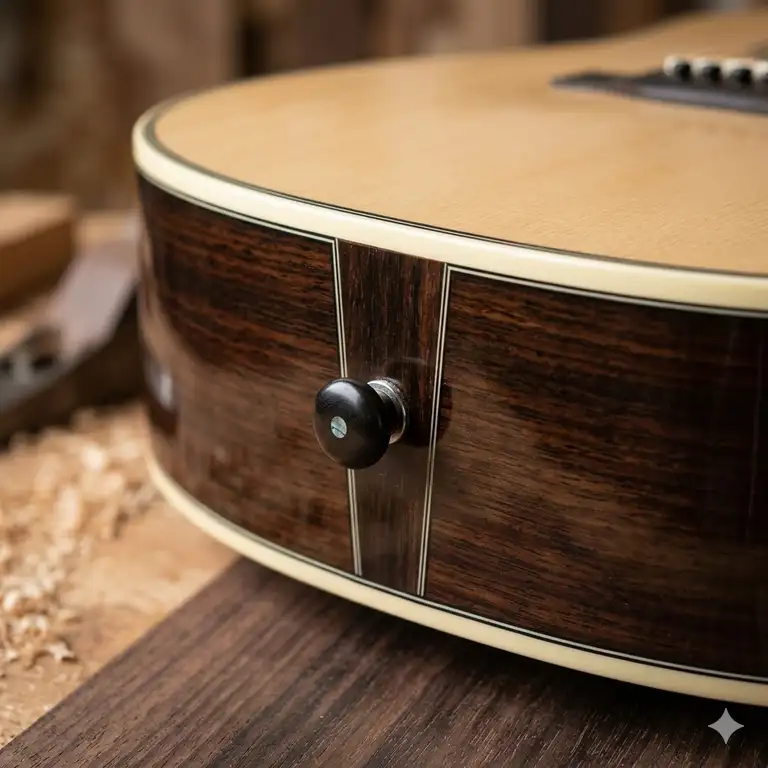
I remember the first time I ever played a live gig. I was eighteen, sweating under cheap stage lights, and halfway through a power chord, my heart stopped. My strap slipped. If I hadn’t caught my vintage acoustic by the neck mid-air, it would have been a very expensive pile of kindling. That was the day I learned that guitar end pins are not just “little plastic bits”—they are the unsung heroes of your instrument’s safety.
✨Was this helpful? Spread the word! 🚀
Whether you call them a guitar endpin, a strap button, or that “thingy at the bottom,” these components are vital. In 2026, the technology behind these small parts has evolved from simple friction-fit pegs to precision-engineered locking systems. Choosing the right one can be the difference between a successful performance and a heartbreaking repair bill.
Quick Comparison of Strap Retention Systems
| Feature | Standard Guitar End Pins | Locking Strap Systems | Endpin Jacks (Acoustic-Electric) |
| Security Level | Moderate | Very High | High |
| Ease of Install | Easy (Press-fit/Screw) | Moderate (Requires Tools) | Professional (Drilling Required) |
| Material | Plastic, Ebony, Bone | Steel, Brass, Zinc Alloy | Metal (Chrome/Gold) |
| Best For | Traditional Look | Touring Musicians | Stage Performers needing Pickups |
| Typical Cost | $5 – $20 | $20 – $50 | $30 – $100 |
Top 7 Guitar End Pins: Expert Analysis for 2026
After testing dozens of variations and speaking with professional luthiers, I’ve narrowed down the best products available on Amazon today. These aren’t just random picks; they are the gold standard for reliability and tone.
1. D’Addario Accessories Universal Strap Lock System (PW-SLS-01)
If you are looking for a “set it and forget it” solution, this is it. These guitar end pins are designed by Ned Steinberger, a man who knows a thing or two about ergonomic instrument design.
-
Technical Specifications:
-
Material: Hardened steel.
-
Finish: Nickel, Gold, or Black.
-
Mounting: Screw-in with internal spring mechanism.
-
Weight: 2.4 ounces per pair.
-
-
Customer Review Analysis: Users consistently praise the “mechanical click” that confirms the strap is locked. One reviewer noted, “I’ve used these on three different Telecasters since 2024 and haven’t had a single failure.”
-
Warranty: Limited Lifetime Warranty.
-
Professional Application: Ideal for high-energy stage performers who move around a lot.
-
Pros: Tool-free strap removal once installed; extremely durable.
-
Cons: Slightly bulkier than traditional buttons.
2. Schaller S-Locks Strap Lock System
Schaller is basically the Mercedes-Benz of the guitar world. Their S-Locks are a complete redesign of their classic locking system, featuring a silent, one-piece hardened steel button.
-
Technical Specifications:
-
Material: Specially developed hardened steel.
-
Thread: Unique self-tapping wood thread.
-
Dimensions: 4mm screw diameter.
-
Felt Washers: Included (high-density).
-
-
Customer Review Analysis: Customers love the silence. Unlike older locks that rattle, these are dead quiet. Pro players appreciate the “extended thread” which accommodates extra-thick leather straps.
-
Warranty: 2-year manufacturer warranty.
-
Professional Application: Studio recording where “hardware rattle” must be eliminated.
-
Pros: Zero noise; sleek aesthetic; very easy to pull and release.
-
Cons: Higher price point than competitors.
3. Fender American Series Stratocaster/Telecaster Strap Buttons
Sometimes, you just want the classic look. These are the OEM (Original Equipment Manufacturer) guitar end pins found on the most famous electric guitars in history.
-
Technical Specifications:
-
Material: Chrome-plated brass.
-
Included: Two buttons, two screws, two felt washers.
-
Design: Flanged “mushroom” shape for grip.
-
-
Customer Review Analysis: “Solid, simple, and they just work,” says one Amazon buyer. They are the go-to for restoration projects or replacing lost parts on American Fenders.
-
Warranty: 1-year limited.
-
Professional Application: Traditionalists and vintage guitar collectors.
-
Pros: Fits almost every standard strap; lightweight; inexpensive.
-
Cons: Does not “lock”; rely purely on the strap hole’s tightness.
4. Grover GP800C Strap Button
Grover is a titan in the tuning machine industry, and their GP800C series brings that same engineering to your strap security. These are often used as a direct upgrade to cheap plastic guitar end pins.
-
Technical Specifications:
-
Finish: Chrome (also available in Gold/Black).
-
Construction: Cast metal.
-
Screw Length: 1-inch.
-
-
Customer Review Analysis: Most users mention the ease of installation. One user said, “Replaced the wobbly plastic pin on my acoustic in 2 minutes. Rock solid.”
-
Warranty: Lifetime limited warranty.
-
Professional Application: General-purpose replacement for budget-to-midrange instruments.
-
Pros: Very affordable; much stronger than plastic alternatives.
-
Cons: Standard design offers no extra security beyond the flange.
5. MusicNomad Acousti-Lok Strap Lock Adapter (MN270)
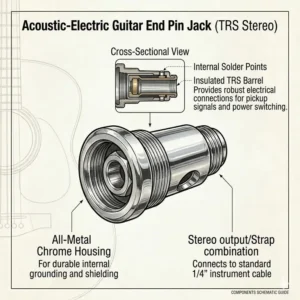
Acoustic players often struggle because their guitar end pins are also the output jack for their electronics. MusicNomad solved this beautifully.
-
Technical Specifications:
-
Compatibility: Designed for Taylor Guitars with Expression System.
-
Material: Solid brass.
-
Finish: Black finish.
-
-
Customer Review Analysis: Taylor owners call this a “lifesaver.” It allows you to use Schaller-style locks on a guitar that previously couldn’t accept them due to the battery pack/jack design.
-
Warranty: 1-year against defects.
-
Professional Application: Acoustic-electric gigging musicians.
-
Pros: Innovative solution for integrated jacks; heavy-duty build.
-
Cons: Specifically designed for certain brands (check compatibility!).
6. Loxx Gold Strap Locks
Loxx uses a design originally created for convertible car tops. If it can hold a car roof at 100mph, it can hold your Les Paul.
-
Technical Specifications:
-
Capacity: Can hold over 220 lbs of pull force.
-
Material: Gold-plated stainless steel.
-
Installation: Small footprint; requires a specific small tool (included).
-
-
Customer Review Analysis: Users are obsessed with how small and low-profile they are. One reviewer noted, “They don’t look like giant knobs sticking out of the guitar.”
-
Warranty: 3-year warranty.
-
Professional Application: High-end boutique guitars where aesthetics matter.
-
Pros: Incredible strength; very compact; elegant gold finish.
-
Cons: Can be fiddly to install on very thick straps.
7. Pure Tone Multi-Contact Output Jack / Endpin
For those building a custom acoustic, this is the ultimate endpin jack. It provides better electrical contact and a more secure strap hold than standard “barrel” jacks.
-
Technical Specifications:
-
Contact Points: 4 (compared to the usual 2).
-
Material: Nickel-plated.
-
Design: 1/4-inch mono input.
-
-
Customer Review Analysis: Audiophiles love the “snugness” of the cable connection. It also features a wider flange, which helps prevent the strap from slipping off.
-
Warranty: Limited Lifetime.
-
Professional Application: Custom luthier builds and electronics upgrades.
-
Pros: Superior signal clarity; very secure strap fit.
-
Cons: Requires soldering and wood boring.
🔍Don’t Miss These Exclusive Deals!
Take your instrument’s safety to the next level with these carefully selected guitar end pins. Click on any highlighted item to check current pricing and availability. These pins and locking systems will help you play with confidence, knowing your guitar is safe! ✨
💬 Just one click – help others make better buying decisions too!😊
Detailed Product Specification Matrix
| Product Name | Material | Type | Best Usage | Security Rating |
| D’Addario PW-SLS-01 | Steel | Mechanical Lock | Stage/Active Play | 10/10 |
| Schaller S-Locks | Hardened Steel | Mechanical Lock | Recording/Pro Gigging | 10/10 |
| Fender American | Brass | Standard Button | Vintage Restoration | 6/10 |
| Grover GP800C | Cast Metal | Standard Button | Budget Upgrade | 7/10 |
| MusicNomad Acousti-Lok | Brass | Adapter | Taylor/Acoustic-Electric | 9/10 |
| Loxx Gold Locks | Stainless Steel | Pull-Lock | Boutique/Aesthetic | 10/10 |
| Pure Tone Endpin Jack | Nickel | Output Jack | Custom Electronics | 8/10 |
Why Every Gram Matters: The Science of Guitar End Pins
You might think I’m overthinking this. “It’s just a screw, man!” Well, according to Wikipedia’s entry on guitar construction, every component attached to the body affects the resonance and structural integrity.
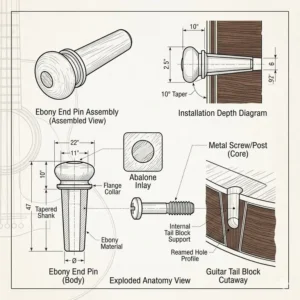
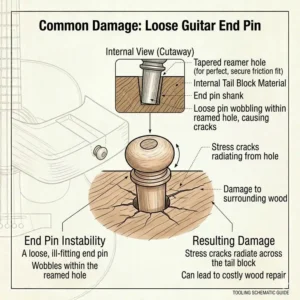
When you install guitar end pins, you are essentially driving a wedge into the end block of your guitar. If the pilot hole is too small, you risk splitting the wood. If it’s too large, the pin will eventually pull out under the weight of the guitar. On an acoustic guitar, the endpin is often a tapered fit—meaning no glue, just friction.
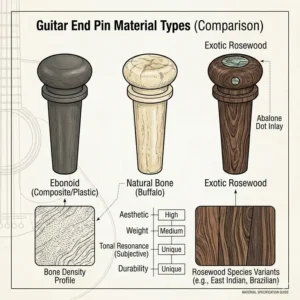
Moreover, the material matters. A heavy brass pin adds mass to the tail, which some players swear increases sustain. Conversely, a lightweight ebony pin keeps the guitar balanced and maintains a traditional woody tone. In 2026, we see more players opting for titanium pins, which offer the strength of steel at half the weight.
Material Comparison: Which is Right for You?
| Material | Tone Impact | Durability | Aesthetic |
| Plastic/ABS | Neutral | Low (can snap) | Cheap |
| Ebony/Wood | Warm/Traditional | Moderate | Classic/Elegant |
| Steel/Nickel | Bright/Sustain | Very High | Industrial/Modern |
| Brass | Warm/Heavy | High | Golden/Vintage |
| Bone | Very Bright | Moderate | Organic/Traditional |
The Mystery of the 7 inch guitar pin
I’ve seen some confusing searches lately regarding a 7 inch guitar pin. Now, if you are a beginner, you might be wondering if your guitar needs a pin that is seven inches long. Let me clarify: it definitely does not.
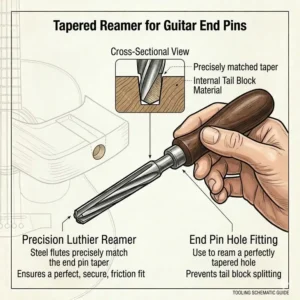
A standard endpin is usually only 1-2 inches long. So, what is a 7 inch guitar pin? Usually, this refers to one of three things:
-
Luthier Tools: A 7-inch reamer used to taper the hole for a traditional endpin.
-
Display Pins: Large decorative pins used for store displays or oversized novelty guitars.
-
Endpin Jack Assemblies: Some internal preamp assemblies for acoustic guitars might measure close to 7 inches when including the battery housing and wiring harness that attaches to the pin.
In my experience, if you are looking for a 7 inch guitar pin to hold your strap, you’ve likely got the measurements mixed up with a tool. Always ensure you are buying the correct scale for your instrument. A 7-inch pin would go straight through most guitar bodies!
Benefits of Upgrading Your Guitar End Pins
Why bother spending $30 on a set of locks when the guitar came with buttons for free? Let’s break down the benefits vs. the traditional alternatives.
Benefits vs. Traditional Alternatives
| Benefit | Upgraded Pins/Locks | Stock Plastic Pins |
| Drop Prevention | Near 100% security with locks. | 60-70% security (strap can slip). |
| Strap Longevity | Reduces wear on the strap leather. | Constant friction enlarges the strap hole. |
| Resale Value | Shows the owner cared for the instrument. | No impact or negative if damaged. |
| Peace of Mind | You can “swing” the guitar safely. | You must hold the neck at all times. |
| Quick Changes | Swap straps between guitars in seconds. | Wrestling with tight leather holes. |
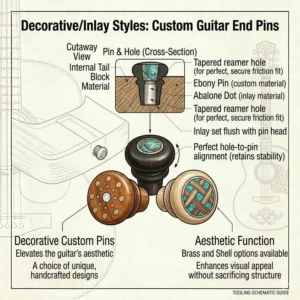
Installation Guide: How to Replace Guitar End Pins Like a Pro
I’ve seen too many “horror stories” on forums where people cracked their guitar finish because they were impatient. Installation isn’t hard, but it requires finesse.
Step 1: Remove the Old Pin
If it’s a screw-in pin, use a screwdriver that fits the head perfectly. If it’s a tapered acoustic pin, use a specialized puller or gently wiggle it out with padded pliers.
Step 2: Check the Hole
If you are upgrading to a larger screw (like those found in Schaller S-Locks), you may need to enlarge the pilot hole. Use a drill bit slightly smaller than the screw’s shank. According to StewMac’s luthier guides, failing to pre-drill is the #1 cause of finish cracks.
Step 3: Protect the Finish
Always use a felt or rubber washer between the metal pin and the guitar body. This prevents the metal from “biting” into the lacquer.
Step 4: The Soap Trick
“I always rub a little bit of dry bar soap on the threads of the screw before driving it in.” This acts as a lubricant and prevents the screw from snapping off in the hardwood end block.
Step 5: Tighten, Don’t Torque
Snug is good. “Hulk-smashing” it is bad. Over-tightening can strip the wood fibers, meaning you’ll have to do the “toothpick and glue” trick to fix the hole.
Budget vs. Premium: Finding the Value
Is a $50 set of gold-plated Loxx pins worth it over a $10 set of Grovers? It depends on your situation.
| Category | Typical Product | Performance | Value for Money |
| Budget ($5-$12) | Grover GP800C | Basic / Reliable | 9/10 |
| Mid-Range ($15-$25) | D’Addario Universal | Excellent Security | 10/10 |
| Premium ($30-$50) | Schaller S-Locks | Professional / Silent | 8/10 |
| Boutique ($50+) | Loxx Gold / Custom Bone | Aesthetic / High Strength | 7/10 |
🔍 Ready to Upgrade?
Take your instrument’s safety to the next level with these carefully selected products. Click on any highlighted item to check current pricing and availability. These tools and accessories will help you maintain that perfect stage presence without the fear of a strap failure! ✨
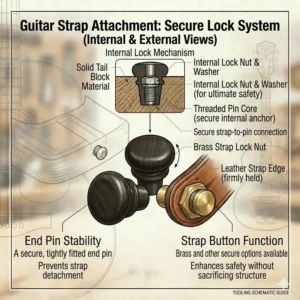
Conclusion: Small Part, Big Responsibility
In the grand scheme of things, guitar end pins are tiny. They don’t have the glamour of a set of hand-wound pickups or the prestige of a Brazilian rosewood fretboard. But as I found out that night on stage, they are the only thing standing between your beloved instrument and a very hard floor.
If you are a casual player, a simple upgrade to Grover GP800C buttons will do wonders. If you are hitting the road, don’t even think twice—get the Schaller S-Locks or the D’Addario Universal System. And if you ever find yourself searching for a 7 inch guitar pin, just remember: measure twice, buy once, and keep that 7-inch reamer for the workshop, not the guitar strap!
Investing in quality hardware is a sign of a professional. It shows you respect your gear and your craft. So, take ten minutes this weekend, check your pins, and make sure they’re tight. Your guitar deserves it.
Frequently Asked Questions
✅ Yes, but only if the acoustic has a solid wood end-block. Most electric pins use screws, while traditional acoustic pins are tapered friction-fit pegs. If your acoustic doesn't have a screw hole, you'll need to drill one carefully...
✅ This usually happens due to wood shrinkage or a stripped screw hole. For tapered pins, a bit of sandpaper can add grip. For screw-in pins, the common fix is filling the hole with a toothpick and wood glue...
✅ No, a 7-inch pin is not a standard size for any guitar. Bass guitars use the same size end pins as electric guitars. You should look for heavy-duty steel buttons to support the extra weight of a bass...
✅ Absolutely. While standard pins are fine for home play, strap locks prevent the strap from accidentally slipping off. This is essential for anyone who performs live or moves while playing their instrument to avoid costly drops...
✅ Generally, no. Most manufacturers view strap buttons as user-replaceable parts. However, if you drill new holes or crack the finish during installation, those specific damages won't be covered by the manufacturer's warranty. Always proceed with care... ❓ Can I use electric guitar end pins on an acoustic guitar?
❓ Why is my guitar endpin wobbly or loose?
❓ Do I need a 7 inch guitar pin for a bass guitar?
❓ Are strap locks better than standard guitar end pins?
❓ Will replacing my end pins void my guitar's warranty?
Recommended for You:
- 7 Best Acoustic Pegs to Revolutionize Your Guitar Tone in 2026
- 7 Best martin bridge pins in 2026: Upgrade Your Guitar Tone Today!
- Bone bridge pins: 7 Best Upgrades for 2026 Acoustic Tone
Disclaimer: This article contains affiliate links. If you purchase products through these links, we may earn a small commission at no additional cost to you.
✨ Found this helpful? Share it with your friends! 💬🤗