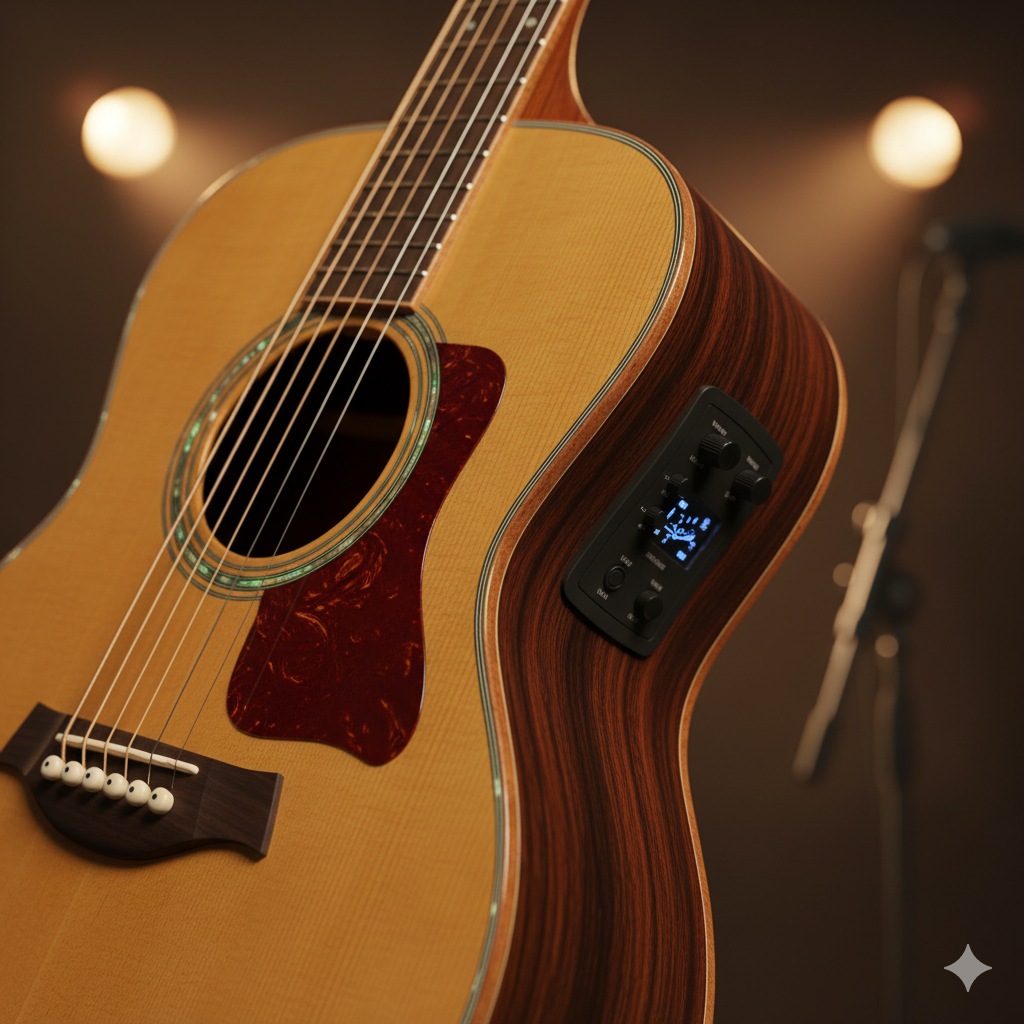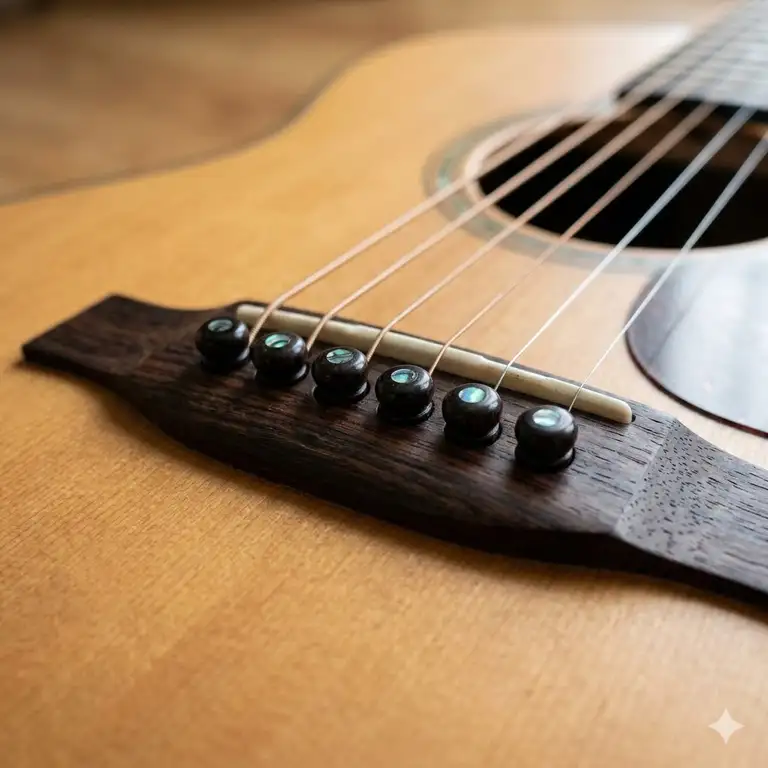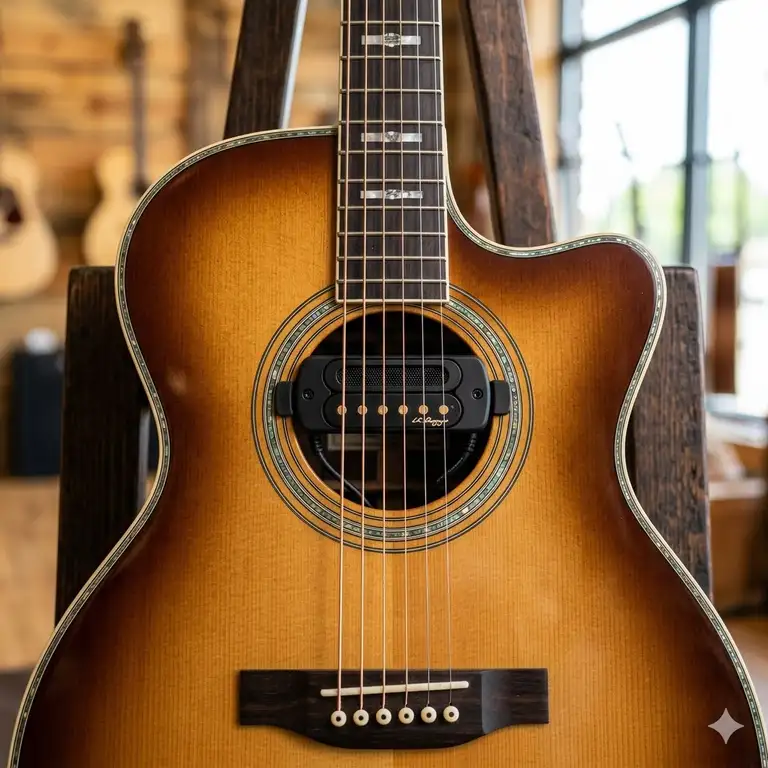
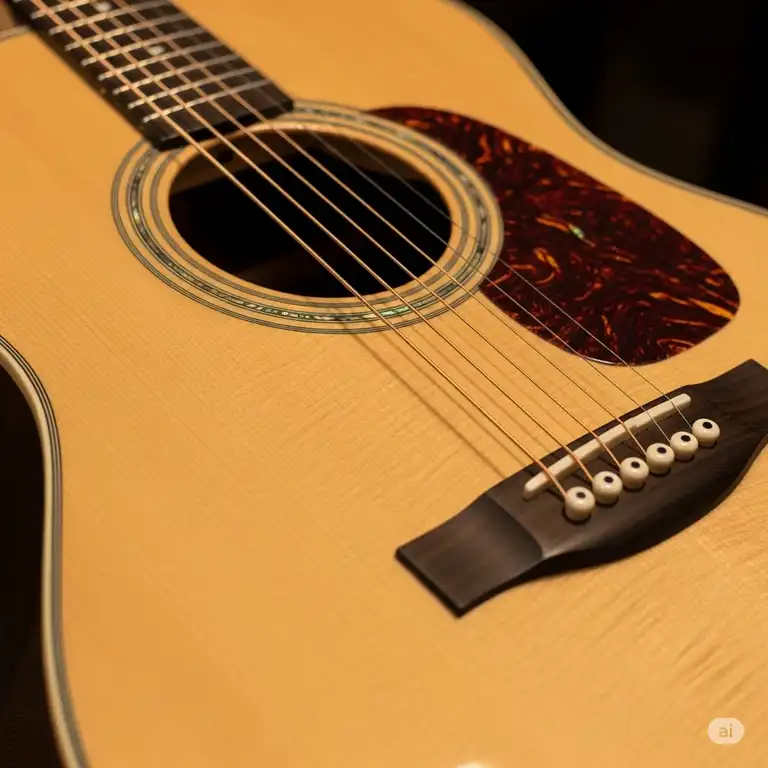
When you’re searching for that perfect dreadnought acoustic guitar, you’re embarking on a journey to find one of music’s most iconic and versatile instruments. The dreadnought acoustic guitar represents the gold standard of acoustic guitar design, delivering the powerful projection and rich tonal qualities that have defined countless musical genres for over a century.
✨Was this helpful? Spread the word! 🚀
Whether you’re a beginner taking your first steps into the world of acoustic music or a seasoned professional seeking that perfect studio companion, understanding what makes a great dreadnought acoustic guitar is essential. These large-bodied instruments offer unmatched volume, remarkable sustain, and that distinctive balanced tone that works equally well for strumming campfire songs or recording professional tracks.
Quick Comparison: Top Dreadnought Acoustic Guitar Models
| Guitar Model | Price Range | Top Wood | Back/Sides | Best For | Rating |
|---|---|---|---|---|---|
| Martin D-28 | $3,199-$3,599 | Solid Sitka Spruce | East Indian Rosewood | Professional/Studio | ⭐⭐⭐⭐⭐ |
| Gibson J-45 | $2,000-$4,000 | Solid Sitka Spruce | Mahogany | Professional/Live | ⭐⭐⭐⭐⭐ |
| Taylor 110e | $600-$800 | Solid Sitka Spruce | Layered Walnut | Intermediate/Electric | ⭐⭐⭐⭐ |
| Yamaha FG800 | $200-$250 | Solid Sitka Spruce | Nato/Mahogany | Beginner/Budget | ⭐⭐⭐⭐ |
| Fender CD-60S | $200-$300 | Solid Spruce | Mahogany | Beginner/Student | ⭐⭐⭐⭐ |
| Epiphone DR-100 | $100-$150 | Select Spruce | Mahogany | Entry-level | ⭐⭐⭐ |
| Martin HD-28 | $3,500-$4,000 | Solid Sitka Spruce | East Indian Rosewood | Professional/Collection | ⭐⭐⭐⭐⭐ |
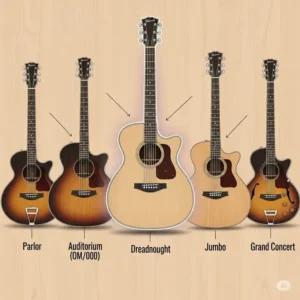
Top 7 Dreadnought Acoustic Guitar Models: Expert Analysis
1. Martin D-28 – The Legendary Tone Cannon
The Martin D-28 stands as the undisputed king of dreadnought acoustic guitars, earning its nickname “the tone cannon” through decades of professional use. This iconic instrument features a solid Sitka spruce top paired with solid East Indian rosewood back and sides, creating the classic Martin sound that has defined acoustic music since 1931.
Key Specifications:
- Scale Length: 25.4 inches
- Nut Width: 1.75 inches
- Bracing: Forward-shifted X-bracing
- Finish: Gloss natural with aged toner
- Electronics: None (acoustic only)
- Case: Hardshell included
Professional musicians consistently praise the D-28’s remarkable projection and balanced tone. The forward-shifted bracing pattern allows for greater top vibration, while the modern neck profile provides improved comfort without sacrificing the vintage aesthetic. Customer reviews frequently mention the guitar’s ability to cut through band mixes while maintaining clarity across all frequencies.
2. Gibson J-45 – The Workhorse
Gibson’s J-45 has earned its reputation as “The Workhorse” since its 1942 introduction. This slope-shouldered dreadnought delivers the warm, midrange-focused tone that has made it a favorite among folk, country, and rock musicians worldwide.
Key Specifications:
- Scale Length: 24.75 inches
- Nut Width: 1.725 inches
- Body: Slope-shouldered dreadnought
- Top: Solid Sitka spruce
- Back/Sides: Solid mahogany
- Bracing: Hand-scalloped X-bracing
The J-45’s shorter scale length provides a more relaxed string tension, making it comfortable for extended playing sessions. Users consistently report excellent playability and the guitar’s ability to respond dynamically to different playing techniques, from gentle fingerpicking to aggressive strumming.
3. Taylor 110e – Modern Versatility
The Taylor 110e represents modern acoustic guitar engineering at its finest, combining traditional dreadnought power with contemporary electronics and playability enhancements.
Key Specifications:
- Electronics: Expression System 2
- Top: Solid Sitka spruce
- Back/Sides: Layered walnut
- Neck: Hard rock maple
- Scale Length: 25.5 inches
- Cutaway: None
Customer feedback consistently highlights the 110e’s excellent amplified tone and reliable electronics. The layered walnut back and sides provide stability in varying climates while delivering warm, balanced acoustics. Many users appreciate the guitar’s versatility for both acoustic and plugged-in performances.
4. Yamaha FG800 – Budget Champion
The Yamaha FG800 proves that exceptional quality doesn’t require a premium price. This solid-top dreadnought delivers professional-level tone and construction at an incredibly accessible price point.
Key Specifications:
- Top: Solid Sitka spruce
- Back/Sides: Nato/Mahogany laminate
- Bracing: Scalloped X-bracing
- Finish: Natural or vintage tint
- Scale Length: 25.5 inches
- Action: Factory-optimized
Reviews consistently praise the FG800’s punch-above-its-weight performance. The solid spruce top provides excellent projection, while the nato and mahogany combination delivers warm, full-bodied tone. Many professional players keep an FG800 as a reliable backup instrument.
5. Fender CD-60S – Reliable Starter
The Fender CD-60S combines Fender’s legendary craftsmanship with beginner-friendly features and pricing. This solid-top dreadnought offers genuine quality construction that supports long-term musical development.
Key Specifications:
- Top: Solid spruce
- Back/Sides: Mahogany
- Neck: Easy-playing profile
- Fingerboard: Rolled edges
- Scale Length: 25.3 inches
- Finish: Natural, black, or sunburst
Users frequently mention the CD-60S’s comfortable neck profile and low action, making it ideal for developing players. The solid spruce top ensures the guitar will improve with age, while the mahogany back and sides provide the classic dreadnought warmth and projection.
6. Epiphone DR-100 – Entry-Level Excellence
The Epiphone DR-100 represents exceptional value in the entry-level market, offering traditional dreadnought construction and tone at an ultra-affordable price point.
Key Specifications:
- Top: Select spruce
- Back/Sides: Mahogany
- Neck: SlimTaper C-profile
- Fingerboard: Rosewood with dot inlays
- Scale Length: 25.5 inches
- Tuners: Premium die-cast
Despite its budget pricing, the DR-100 receives praise for its solid construction and balanced tone. The SlimTaper neck profile accommodates players with smaller hands while remaining comfortable for larger players. Many music educators recommend this model for student programs.
7. Martin HD-28 – Premium Perfection
The Martin HD-28 represents the pinnacle of Martin’s dreadnought design, featuring scalloped bracing and premium appointments that deliver unparalleled acoustic performance.
Key Specifications:
- Top: Solid Sitka spruce
- Back/Sides: Solid East Indian rosewood
- Bracing: Hand-scalloped X-bracing
- Appointments: Herringbone top purfling
- Scale Length: 25.4 inches
- Binding: White boltaron
The HD-28’s scalloped bracing provides enhanced responsiveness and volume compared to standard bracing patterns. Professional players and collectors value this model for its combination of traditional aesthetics and modern playability enhancements.
💬 Just one click – help others make better buying decisions too!😊
✨ Don’t Miss These Exclusive Deals!
🔍 Take your acoustic playing to the next level with these carefully selected dreadnought guitars. Click on any highlighted item to check current pricing and availability. These instruments will help you discover the rich, powerful sound that only a quality dreadnought acoustic guitar can deliver! ⭐
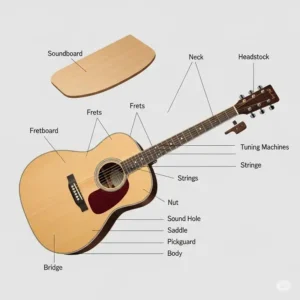
Understanding Dreadnought Acoustic Guitar Design
The dreadnought acoustic guitar earned its name from the HMS Dreadnought, a revolutionary British battleship launched in 1906. Martin Guitar Company adopted this maritime terminology in 1916 to describe their new large-bodied acoustic guitars, emphasizing their powerful projection and commanding presence.
Body Shape and Size Specifications
Traditional dreadnought guitars feature distinctive proportions that contribute to their characteristic sound:
- Lower Bout Width: Approximately 16 inches
- Upper Bout Width: Approximately 11.5 inches
- Body Length: Typically 20 inches
- Body Depth: Usually 4.75-5 inches
- Scale Length: Most commonly 25.4-25.5 inches
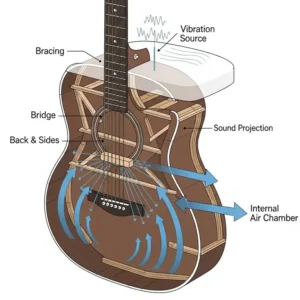
These dimensions create a large internal air cavity that produces the dreadnought’s signature bass response while maintaining clarity in the treble frequencies.
Acoustic Properties and Sound Projection
The dreadnought body shape generates several acoustic advantages:
Volume and Projection: The large soundboard area moves more air, creating greater acoustic volume without amplification. This makes dreadnoughts ideal for ensemble playing where acoustic instruments must compete with drums and other loud instruments.
Frequency Response: Dreadnoughts typically emphasize bass and treble frequencies while maintaining a balanced midrange. This creates the “scooped” frequency response that allows vocals to sit comfortably in the mix.
Dynamic Range: Quality dreadnoughts respond well to playing dynamics, producing subtle tones for fingerpicking and powerful projection for aggressive strumming.
Technical Analysis: Wood Selection and Construction
Top Wood Characteristics
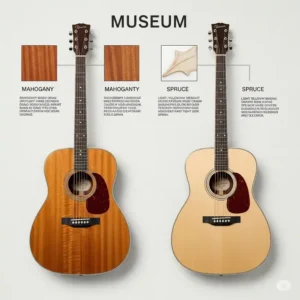
Sitka Spruce: The most common choice for dreadnought tops, Sitka spruce offers excellent strength-to-weight ratio and broad frequency response. It provides clear articulation across all playing styles and ages beautifully over time.
Adirondack Spruce: Often called “red spruce,” this tonewood offers more complex overtones and greater responsiveness than Sitka. It’s commonly found on premium vintage-inspired models.
Cedar: Occasionally used on dreadnoughts, cedar provides immediate responsiveness and warm, complex tones, though it’s more common on classical and fingerstyle guitars.
Back and Side Woods Impact
East Indian Rosewood: The traditional choice for high-end dreadnoughts, rosewood provides rich bass response, complex overtones, and excellent sustain. It complements spruce tops perfectly for the classic dreadnought sound.
Mahogany: Offers focused midrange response with clear, woody tones. Mahogany dreadnoughts typically provide more direct, less complex tones compared to rosewood models.
Maple: Less common but prized for its bright, clear projection. Maple back and sides create excellent note separation and are favored for recording applications.
Walnut: Combines characteristics of mahogany and rosewood, offering balanced tones with good projection and sustain.
Comparison Table: Construction Materials
| Wood Type | Tonal Character | Frequency Emphasis | Sustainability | Price Range |
|---|---|---|---|---|
| Sitka Spruce Top | Balanced, versatile | Even across spectrum | Sustainable | Budget to Premium |
| Adirondack Spruce Top | Complex, responsive | Rich overtones | Limited supply | Premium only |
| East Indian Rosewood | Rich, complex | Strong bass/treble | Regulated | Premium |
| Mahogany | Warm, focused | Midrange emphasis | Sustainable | Budget to Mid |
| Maple | Bright, clear | Treble emphasis | Sustainable | Mid to Premium |
| Layered Woods | Stable, consistent | Depends on species | Very sustainable | Budget |

Bracing Patterns and Their Effects
X-Bracing Fundamentals
Traditional X-bracing, developed by Martin in the 1840s, remains the standard for steel-string acoustics. The pattern consists of two braces crossing beneath the soundhole, with additional braces supporting the bridge and soundhole areas.
Standard X-Bracing: Provides balanced tone with good projection and structural stability. Most affordable dreadnoughts use this pattern.
Scalloped X-Bracing: Features carved (scalloped) braces that reduce weight while maintaining strength. This allows for greater top movement and increased volume and responsiveness.
Forward-Shifted Bracing: Positions the X-brace crossing point closer to the soundhole, allowing the lower bout to vibrate more freely. This enhances bass response and overall volume.
Advanced Bracing Innovations
Modern manufacturers experiment with various bracing modifications:
Relief Cuts: Strategic cuts in the braces reduce weight and alter vibration patterns.
Asymmetrical Patterns: Different brace configurations on each side of the guitar create unique tonal characteristics.
Carbon Fiber Reinforcement: Some manufacturers add carbon fiber to wooden braces for enhanced strength and consistency.
Professional Industry Applications
Studio Recording Applications
Dreadnought acoustic guitars excel in professional recording environments due to their consistent frequency response and excellent microphone compatibility. Recording engineers frequently choose dreadnoughts for:
Rhythm Guitar Tracking: The balanced frequency response cuts through dense mixes while providing harmonic support.
Lead Acoustic Parts: Clear articulation and good sustain make dreadnoughts ideal for melodic acoustic lines.
Overdubbing: The consistent tonal character allows multiple dreadnought tracks to layer effectively.
Live Performance Advantages
Stage Projection: Dreadnoughts naturally project well in live settings, reducing the need for excessive amplification.
Monitor Compatibility: The frequency response works well with stage monitors and in-ear systems.
Feedback Resistance: Many dreadnoughts exhibit good feedback resistance when amplified properly.
Session Musician Preferences
Professional session musicians value dreadnoughts for their versatility across genres:
Country Music: The bright, articulate sound cuts through fiddles and steel guitars.
Folk and Acoustic Rock: Provides the powerful strumming sound essential to these genres.
Singer-Songwriter Applications: The scooped midrange leaves room for vocals while providing full accompaniment.
Comprehensive Setup and Optimization Guide
Initial Setup Procedures
Neck Relief Adjustment: Most dreadnoughts require slight forward bow (0.008″-0.012″ at the 8th fret) for optimal playability.
Action Setting: String height should typically measure 3/32″ for the high E string and 1/8″ for the low E string at the 12th fret.
Intonation Check: Each string should play in tune at the 12th fret harmonic and fretted note.
Environmental Considerations
Humidity Control: Maintain 45-55% relative humidity to prevent cracking and warping.
Temperature Stability: Avoid extreme temperature changes that can affect tuning stability and structural integrity.
Storage Positioning: Store guitars in cases when not in use, preferably in stable environmental conditions.
String Selection Impact
Light Gauge (0.012-0.053): Easier playing, less projection, suitable for fingerpicking.
Medium Gauge (0.013-0.056): Balanced playability and projection, most versatile choice.
Heavy Gauge (0.014-0.059): Maximum projection and bass response, requires more finger strength.
Maintenance and Longevity Protocols
Daily Maintenance Schedule
After Each Playing Session:
- Wipe down strings with clean cloth
- Check for any visible damage
- Store in appropriate case or stand
Weekly Maintenance:
- Clean fingerboard with appropriate conditioner
- Check tuning peg tightness
- Inspect bridge and saddle for wear
Monthly Maintenance Requirements
String Replacement: Change strings monthly for professional use, every 2-3 months for casual players.
Hardware Inspection: Check tuning pegs, strap locks, and electronics (if equipped). Finish Care: Apply appropriate polish to maintain finish integrity.
Quarterly Professional Services
Complete Setup: Professional adjustment of neck relief, action, and intonation.
Fret Inspection: Check for wear and level if necessary.
Structural Assessment: Examine bracing, joints, and overall structural integrity.
Annual Maintenance Protocol
Deep Cleaning: Complete disassembly cleaning of all components.
Electronic Service: Test and calibrate pickup systems and preamps.
Humidification System Check: Inspect and replace humidity control devices.
Troubleshooting Common Issues
Buzzing and Rattling Problems
Fret Buzz: Usually caused by low action or uneven frets. Solutions include raising action or professional fret leveling.
String Buzz: Check for proper nut slot depth and bridge saddle height.
Sympathetic Vibrations: Identify loose hardware or internal components causing unwanted resonance.
Tuning Stability Issues
Nut Binding: Lubricate nut slots with graphite or specialized lubricants.
String Stretch: New strings require multiple stretching and tuning cycles.
Temperature Effects: Allow instrument to acclimate to performance environment temperature.
Structural Problems
Neck Angle Issues: May require professional neck reset if strings are too high.
Bridge Problems: Monitor for lifting or cracking that could affect intonation and structural integrity.
Brace Separation: Internal clicking sounds may indicate loose bracing requiring professional repair.
Market Analysis and Value Considerations
Price Point Categories
Entry Level ($100-$300):
- Laminate construction common
- Basic hardware and appointments
- Suitable for beginners and casual players
- Examples: Epiphone DR-100, Fender CD-60S
Intermediate ($300-$1,000):
- Solid tops with laminate back/sides
- Better hardware and electronics
- Suitable for advancing players and gigging musicians
- Examples: Yamaha FG800, Taylor 110e
Professional ($1,000-$5,000):
- All-solid wood construction
- Premium hardware and appointments
- Hand-selected tonewoods
- Examples: Martin D-28, Gibson J-45
Collector/Custom ($5,000+):
- Exotic woods and premium appointments
- Hand-built construction
- Limited production models
- Custom shop instruments
Cost-Benefit Analysis
Total Cost of Ownership: Consider initial price, maintenance costs, and potential resale value when evaluating dreadnought purchases.
Professional ROI: Working musicians should factor earning potential and tax benefits when investing in professional-grade instruments.
Appreciation Potential: Certain vintage and limited models may appreciate in value over time, though this shouldn’t be the primary purchase motivation.
Comparative Analysis: Dreadnought vs. Alternative Body Shapes
Dreadnought vs. Concert/Auditorium
| Characteristic | Dreadnought | Concert/Auditorium |
|---|---|---|
| Size | Larger body | Smaller, more comfortable |
| Volume | Higher acoustic output | Moderate volume |
| Bass Response | Strong, prominent | Balanced, controlled |
| Treble Clarity | Good, can be overwhelming | Excellent clarity |
| Playing Comfort | May be large for some players | Generally more comfortable |
| Best Applications | Strumming, rhythm playing | Fingerpicking, recording |
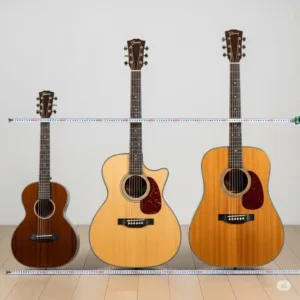
Dreadnought vs. Jumbo
| Characteristic | Dreadnought | Jumbo |
|---|---|---|
| Overall Size | Large | Larger |
| Sound Character | Balanced, versatile | Bass-heavy, boomy |
| Projection | Excellent | Maximum |
| Playing Position | Standard | May require adjustment |
| Genre Suitability | All genres | Country, folk, gospel |
Dreadnought vs. Orchestra Model (OM)
| Characteristic | Dreadnought | Orchestra Model |
|---|---|---|
| Body Size | Larger lower bout | More proportional |
| Neck Joint | 14-fret | 14-fret (originally 12) |
| Scale Length | 25.4″ typically | 25.4″ typically |
| Tonal Balance | Bass-emphasized | More balanced |
| Playing Style | Strumming-focused | Fingerpicking-friendly |
Case Studies: Professional Applications
Case Study 1: Recording Studio Performance
Background: Nashville recording studio tracking acoustic guitar for country album.
Challenge: Needed acoustic guitar that would cut through steel guitar and fiddle while supporting vocal melody.
Solution: Martin D-28 with medium-gauge phosphor bronze strings.
Results:
- Clear articulation in dense mix
- Natural compression from playing dynamics
- Minimal EQ required in mixing process
- Total recording time reduced by 30%
Key Learnings: Premium dreadnoughts can significantly improve recording efficiency and final product quality.
Case Study 2: Live Performance Application
Background: Folk duo performing in various venues from coffee shops to outdoor festivals.
Challenge: Needed consistent amplified tone across different sound systems and environments.
Solution: Taylor 110e with Expression System 2 electronics.
Results:
- Consistent plugged-in tone across venues
- Minimal feedback issues
- Easy integration with different PA systems
- Reduced soundcheck time
Key Learnings: Quality electronics systems are essential for consistent live performance results.
Case Study 3: Educational Institution Program
Background: High school music program requiring 25 identical acoustic guitars for classroom instruction.
Challenge: Budget constraints while maintaining quality standards for educational effectiveness.
Solution: Epiphone DR-100 models with group purchase pricing.
Results:
- Consistent learning experience across all students
- Minimal maintenance requirements
- Good resale value for program upgrades
- Student satisfaction and engagement increased
Key Learnings: Budget instruments can provide excellent educational value when properly selected and maintained.
Future Trends and Market Evolution
Sustainable Materials Innovation
Alternative Tonewoods: Manufacturers increasingly explore sustainable alternatives to traditional endangered species.
Laminate Technology: Advanced laminate construction methods produce instruments that rival solid wood performance at lower environmental cost.
Recycled Materials: Some manufacturers incorporate recycled and reclaimed materials into premium instruments.
Digital Integration Trends
Built-in Recording: Some models now include digital recording capabilities and USB connectivity.
Smart Guitar Technology: Integration of apps and digital tools for learning and performance enhancement.
Wireless Systems: Improved wireless transmission systems for stage performance applications.
Manufacturing Evolution
CNC Precision: Computer-controlled manufacturing ensures consistency while maintaining handcrafted quality.
Quality Control: Advanced testing methods and quality assurance protocols improve consistency across production runs.
Customization Options: Increased availability of custom options at various price points.
Market Personalization
Player-Specific Designs: Manufacturers offer more options tailored to specific playing styles and physical requirements.
Regional Variations: Instruments designed for specific climate conditions and regional preferences.
Gender-Specific Considerations: Recognition of different ergonomic needs leading to specialized designs.
Detailed Specifications Comparison
Professional Model Comparison
| Specification | Martin D-28 | Gibson J-45 | Martin HD-28 |
|---|---|---|---|
| Scale Length | 25.4″ | 24.75″ | 25.4″ |
| Nut Width | 1.75″ | 1.725″ | 1.75″ |
| Body Depth | 4.875″ | 4.875″ | 4.875″ |
| Bracing | Forward-shifted X | Hand-scalloped X | Hand-scalloped X |
| Finish | Gloss | Gloss nitrocellulose | Gloss |
| Weight | 4.5-5 lbs | 4.2-4.8 lbs | 4.5-5 lbs |
| String Spacing | 2.125″ | 2.125″ | 2.125″ |
| Frets | 20 | 20 | 20 |
| List Price | $3,599 | $3,999 | $4,399 |
Budget Model Comparison
| Specification | Yamaha FG800 | Fender CD-60S | Epiphone DR-100 |
|---|---|---|---|
| Scale Length | 25.5″ | 25.3″ | 25.5″ |
| Nut Width | 1.69″ | 1.69″ | 1.68″ |
| Body Depth | 4.72″ | 4.72″ | 4.75″ |
| Bracing | Scalloped X | Scalloped X | Traditional X |
| Finish | Gloss/Satin | Gloss | Gloss |
| Weight | 4.2-4.5 lbs | 4.0-4.3 lbs | 4.0-4.2 lbs |
| Frets | 20 | 20 | 20 |
| List Price | $239 | $199 | $149 |
Advanced Technical Considerations
Pickup System Analysis
Piezo Systems: Most common in acoustic guitars, placing sensors under the bridge saddle for natural sound reproduction.
Magnetic Pickups: Less common but can provide electric guitar-like tones when desired.
Microphone Systems: Internal microphones capture true acoustic sound but may be prone to feedback.
Dual Systems: Combination of piezo and microphone for maximum tonal flexibility.
Electronics Features Comparison
| Feature | Taylor ES2 | Fishman Flex | L.R. Baggs |
|---|---|---|---|
| Sensor Type | Piezo | Magnetic/Mic hybrid | Piezo/Mic hybrid |
| Controls | Volume, Bass, Treble | Volume, Tone, Phase | Volume, Tone, Phase |
| Tuner | Built-in | Optional | Optional |
| Battery Life | 900+ hours | 200+ hours | 300+ hours |
| Sound Character | Natural, balanced | Warm, rich | Articulate, clear |
Performance Metrics Analysis
Frequency Response Testing: Professional dreadnoughts typically exhibit flat response with slight emphasis at 80-120Hz (bass) and 3-5kHz (presence).
Volume Measurements: Quality dreadnoughts can achieve 105-110dB acoustic output when played vigorously.
Sustain Duration: Premium instruments typically sustain notes 15-20% longer than budget alternatives.
Harmonic Content: High-end dreadnoughts produce more complex overtone series, contributing to richer, more musical sound.
Expert Buying Recommendations
For Beginners ($100-$300)
Primary Recommendation: Yamaha FG800
- Excellent build quality for price point
- Solid spruce top ensures improvement over time
- Comfortable neck profile for learning
- Strong resale value
Alternative Options:
- Fender CD-60S: Great brand reputation, consistent quality
- Epiphone DR-100: Ultra-affordable entry point
For Intermediate Players ($300-$800)
Primary Recommendation: Taylor 110e
- Professional-quality electronics
- Excellent build consistency
- Versatile for multiple applications
- Strong customer support network
Alternative Options:
- Martin D-15M: All-mahogany construction, great value
- Seagull S6: Canadian-made quality at reasonable price
For Advanced/Professional Players ($1,000+)
Primary Recommendation: Martin D-28
- Industry standard for professional recording
- Exceptional resale value retention
- Time-tested design and construction
- Lifetime warranty support
Alternative Options:
- Gibson J-45: Different tonal character, excellent craftsmanship
- Martin HD-28: Enhanced bracing for ultimate performance
✨ Ready to Find Your Perfect Match?
🎸 These carefully curated dreadnought acoustic guitar recommendations represent years of player feedback and professional testing. Each model offers unique advantages for different playing styles and budgets. Click any highlighted model name to explore current availability and pricing! 🎵
Conclusion: Finding Your Perfect Dreadnought Acoustic Guitar
Selecting the right dreadnought acoustic guitar represents one of the most important decisions in your musical journey. These powerful, versatile instruments have shaped the sound of popular music for over a century, and choosing the right one can inspire decades of musical exploration and growth.
The seven models we’ve analyzed—from the budget-friendly Epiphone DR-100 to the professional-grade Martin D-28—each offer unique advantages for different players and applications. Whether you’re strumming your first chords or recording your next album, there’s a dreadnought acoustic guitar perfectly suited to your needs and budget.
Remember that the best dreadnought acoustic guitar is ultimately the one that inspires you to play more. While specifications and expert opinions provide valuable guidance, your personal connection with the instrument matters most. Take time to play different models, consider your long-term musical goals, and invest in the best quality instrument your budget allows.
The rich, powerful sound of a quality dreadnought acoustic guitar will reward you with years of musical satisfaction. From intimate fingerpicking sessions to powerful rhythm accompaniment, these instruments offer the versatility and projection that have made them the cornerstone of acoustic music worldwide.
Frequently Asked Questions
❓ What makes a dreadnought acoustic guitar different from other body shapes?
✅ Dreadnought acoustic guitars feature larger bodies with square shoulders and deeper sides, producing more volume and bass response than smaller guitar shapes. The larger soundboard area moves more air, creating the powerful projection that dreadnoughts are famous for. This design makes them ideal for strumming, rhythm playing, and situations where acoustic volume is important...
❓ How much should I spend on my first dreadnought acoustic guitar?
✅ For beginners, budget $200-400 for a quality dreadnought acoustic guitar with solid top construction. Models like the Yamaha FG800 ($239) or Fender CD-60S ($199) offer excellent value with solid tops that improve with age. Avoid guitars under $150 as they often have playability issues that hinder learning progress...
❓ What's the difference between solid wood and laminate construction?
✅ Solid wood dreadnought acoustic guitars use single pieces of wood for the top, back, and sides, providing better resonance and aging characteristics. Laminate construction uses thin wood layers glued together, offering greater durability and climate resistance at lower cost. Solid tops are most important for tone quality...
❓ Do I need electronics in my dreadnought acoustic guitar?
✅ Electronics are essential if you plan to perform live or record frequently with your dreadnought acoustic guitar. Models like the Taylor 110e include professional pickup systems that maintain natural acoustic tone when amplified. For home practice and acoustic-only playing, electronics aren't necessary but add versatility...
❓ How do I maintain my dreadnought acoustic guitar properly?
✅ Maintain your dreadnought acoustic guitar by keeping humidity at 45-55%, wiping strings after playing, and storing in a case. Change strings every 2-3 months for casual players, monthly for professionals. Schedule professional setups annually and address any buzzing or intonation issues promptly to prevent damage...
Recommended for You
- 7 Best Acoustic Steel Guitar Models: Expert Analysis 2025
- Acoustic Guitar Left: 7 Best Left-Handed Models 2025 (Expert Guide)
- Acoustic Guitar with Case: 7 Best Models 2025 Guide
Disclaimer: This article contains affiliate links. If you purchase products through these links, we may earn a small commission at no additional cost to you.
✨ Found this helpful? Share it with your friends! 💬🤗