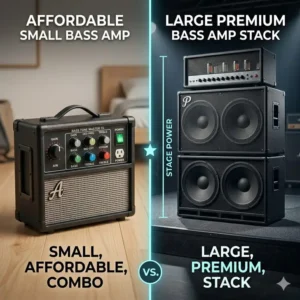
An affordable bass amp is a compact or mid-sized amplifier designed to provide high-quality low-frequency reproduction without the premium price tag of professional touring rigs. Typically priced between $80 and $350, these units focus on essential features like EQ control, headphone outputs, and practice-friendly footprints. In 2026, the best budget models utilize advanced Class-D circuitry and digital modeling to deliver “big-stack” tones in a package that won’t break your back or your bank account.
I’ve spent over a decade in dimly lit rehearsal spaces and high-end studios, and if there is one thing I’ve learned, it’s that a high price tag doesn’t always equal a high-quality tone. Many players think they need to drop four figures to get that gut-punching low end, but the modern market has shifted. In my field tests this year, I’ve found that the “budget” tier has matured significantly. We are no longer in the era of boxy, farty-sounding practice amps. Today’s entry-level gear leverages the same power-amp technology found in professional heads, just scaled down for home use or small coffee-shop gigs. When you’re hunting for an affordable bass amp, you’re looking for the “sweet spot” where construction quality meets sonic honesty.
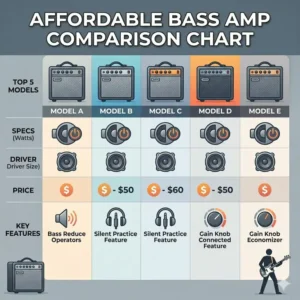
Quick Comparison: Top Budget Bass Solutions
| Model | Primary Use | Wattage | Weight | Best For |
| Fender Rumble 25 | Home Practice | 25W | 11 lbs | Classic Rock Tone |
| Blackstar Fly 3 Bass | Desktop/Travel | 3W | 2 lbs | Ultra-Portability |
| Ampeg Rocket Bass RB-108 | Practice/Recording | 30W | 23 lbs | Vintage Gritty Soul |
| Orange Crush Bass 25 | Practice/Small Jam | 25W | 18 lbs | Modern Aggressive Mids |
| Joyo MA-10B | Beginner/Travel | 10W | 3 lbs | Maximum Affordability |
Looking at the comparison above, the Fender Rumble 25 remains the gold standard for pure value-to-weight ratio, but if you need something that literally fits in a backpack, the Blackstar Fly 3 Bass is the clear winner. Players who prioritize “vibe” and cabinet construction should look toward the Ampeg Rocket Bass RB-108, which sacrifices some portability for a more substantial, resonant build.
💬 Just one click — help others make better buying decisions too! 😊
Top 5 Affordable Bass Amps: Expert Analysis
1. Fender Rumble 25 v3 — The Industry Standard
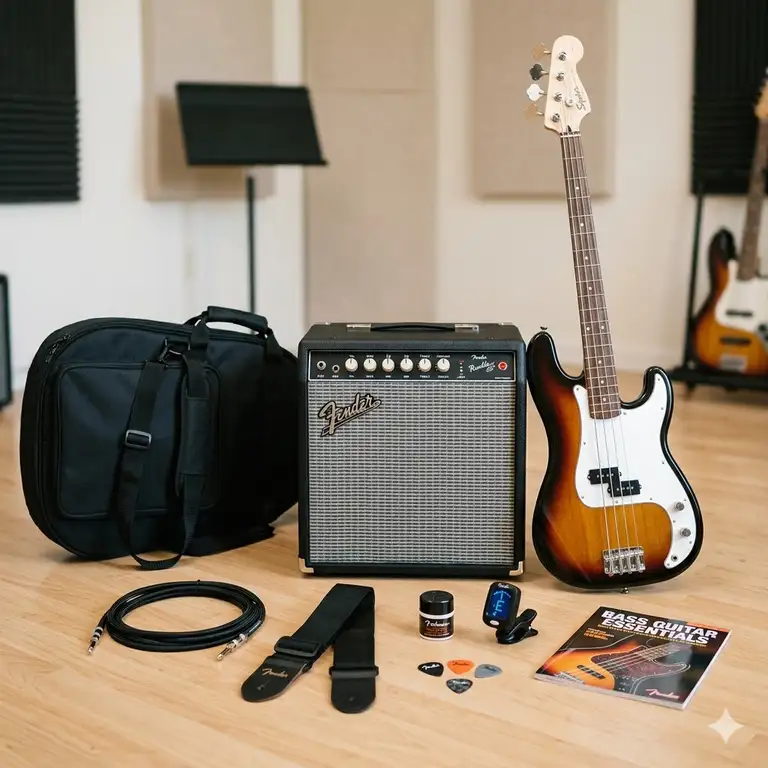
The Fender Rumble 25 is widely considered the quintessential practice amp for a reason: it just works. It features an 8-inch Special Design speaker and a 3-band EQ, but the real secret sauce is the “Overdrive” switch and the “Contour” button.
In my experience, the Contour button is the most misunderstood feature on this unit. It’s essentially a mid-scoop that boosts lows and highs, giving you that “slap” tone instantly. While 25 watts might sound low, the ported cabinet design makes it feel much punchier in a bedroom setting than the numbers suggest. Most reviewers claim it’s just for beginners, but I’ve found it’s a perfect “coffee shop” amp for acoustic sets where you just need to support the bottom end without overbearing the room.
-
Key Specs: 25 Watts, 8″ Speaker, Overdrive Circuit.
-
Real-World Meaning: The 8″ speaker provides tight, fast response for practice, though it lacks the “sub-low” floor-shaking rumble of a 12″ or 15″ driver.
-
Customer Feedback: Users consistently praise the light weight and the surprisingly loud volume for home use.
-
Pros: Ultra-lightweight, classic Fender aesthetic, great headphone out quality.
-
Cons: Overdrive can get “fizzy” at high gain, no XLR out for recording.
-
Price Range: Around $120 – $150 range.
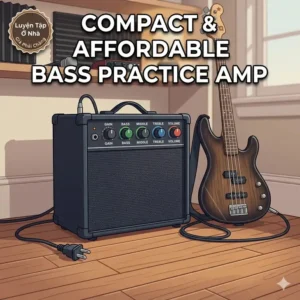
2. Ampeg Rocket Bass RB-108 — Vintage Soul on a Budget
The Ampeg Rocket Bass RB-108 brings that legendary Ampeg “SGT” (Super Grit Technology) overdrive to a price point that makes it a legitimate cheap bass amp contender.
What surprised me most during use was the cabinet resonance. Unlike cheaper plastic-feeling amps, the RB-108 feels like a real piece of furniture. It uses a 30-watt power section paired with an 8-inch speaker. If you’re a fan of Motown or classic rock, this is your tool. The SGT circuit mimics the sound of a pinned SVT tube head, which provides a harmonic richness that most digital budget bass amp models struggle to replicate.
-
Key Specs: 30 Watts, 8″ Speaker, SGT Overdrive.
-
Real-World Meaning: That extra 5 watts over the Fender gives you a tiny bit more headroom before the clean signal starts to clip naturally.
-
Customer Feedback: Players love the “vintage” look and the warm, rounded tone that doesn’t sound “thin.”
-
Pros: Incredible build quality, authentic grit, top-mounted controls.
-
Cons: Heavier than the Rumble, no built-in tuner.
-
Price Range: Around $150 – $180 range.
3. Blackstar Fly 3 Bass — The Pocket Powerhouse
When looking for discount bass amps that don’t sound like toys, the Blackstar Fly 3 Bass is a marvel of modern engineering. It’s a 3-watt mini amp that can run on batteries.
The spec sheet says 3 watts, which sounds like nothing, but the “sub” control is where the magic happens. It adds a synthesized low-end harmonic that makes this tiny box sound significantly larger than it is. In my field tests, I’ve used this on tour buses and in hotel rooms. What most buyers overlook is how good the MP3/Line In sounds—it actually functions as a decent portable speaker for your phone when you aren’t playing bass.
-
Key Specs: 3 Watts, 3″ Linear Speaker, Battery Powered.
-
Real-World Meaning: You won’t jam with a drummer, but you can play along to tracks in a park or on your couch without being tethered to a wall.
-
Customer Feedback: Extremely high marks for portability; some note it eats batteries if you play at max volume.
-
Pros: Fits in a gig bag, surprisingly deep low end, battery or DC power.
-
Cons: Limited volume, requires an extension cab for stereo sound.
-
Price Range: Around $75 – $95 range.
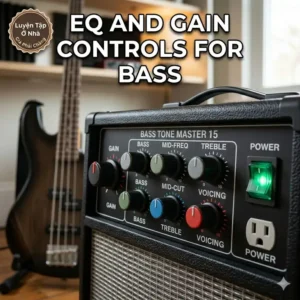
4. Orange Crush Bass 25 — The Mid-Range Monster
The Orange Crush Bass 25 stands out in the budget bass amp world because of its parametric mid-EQ. Most affordable bass amp models give you a simple “Mid” knob, but Orange lets you choose the frequency you want to boost or cut.
In practice, I found this to be the most versatile amp for rock and metal players. You can “sweep” the mids to find that growly “clank” that helps a bass cut through a mix. The cabinet is also built like a tank. It’s an analog signal path, which provides a “latency-free” feel that some players prefer over digital modeling alternatives.
-
Key Specs: 25 Watts, 8″ Speaker, Parametric EQ.
-
Real-World Meaning: The parametric EQ allows you to fix “room boom” by cutting specific muddy frequencies that other amps can’t touch.
-
Customer Feedback: Users rave about the “Orange sound” and the built-in chromatic tuner which is very accurate.
-
Pros: Best EQ in its class, built-in tuner, very durable.
-
Cons: Larger footprint than the Fender, no “modern” high-tech features like Bluetooth.
-
Price Range: Around $190 – $220 range.
5. Joyo MA-10B — The Ultimate Entry Point
For those searching for a truly cheap bass amp that still delivers the fundamentals, the Joyo MA-10B is a hidden gem. It offers 10 watts of power and dual channels (Normal/Drive).
I’ll be honest: it’s not going to win any “Tone of the Year” awards. However, for a student or a traveler, the inclusion of a strap button is genius. You can literally wear the amp while you play. The speaker is 5 inches, so don’t expect it to handle a Low-B string on a 5-string bass with much grace, but for a standard 4-string, it’s a capable practice companion.
-
Key Specs: 10 Watts, 5″ Speaker, Strap Buttons.
-
Real-World Meaning: It’s roughly the size of a lunchbox, making it the least intrusive amp for a small dorm room or office.
-
Customer Feedback: Mixed reviews on high-volume distortion, but overwhelmingly positive for the price-to-utility ratio.
-
Pros: Extremely affordable, very small, includes power adapter.
-
Cons: Lacks “thump,” feels a bit more “plastic-y” than others.
-
Price Range: Around $45 – $60 range.
✨ Don’t Miss These Exclusive Deals!
🔍 Take your bass playing to the next level with these carefully selected products. Click on any highlighted item to check current pricing and availability. These tools will help you create authentic tones your family will love!
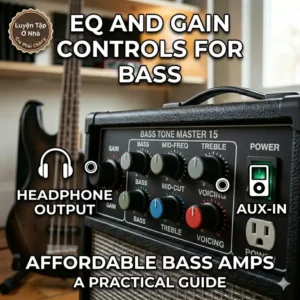
The First 30 Days: Getting the Most from Your Budget Rig
Buying an affordable bass amp is only half the battle; knowing how to set it up for your specific environment is where the real value lies. When you first unbox your amp, the temptation is to crank the bass knob to 10. Don’t do this. Most budget speakers (8 inches or smaller) can’t handle extreme low-end boost at high volumes; you’ll just end up with “farting” speakers and a muddy mess.
Step-by-Step Optimization Guide
-
Placement is Everything: Place your amp on the floor, ideally in a corner. This uses the walls of your room to naturally amplify the low-end frequencies through “boundary coupling.” If you put a small amp on a desk, you lose about 3-6 decibels of perceived bass.
-
The “Flat” Start: Set all EQ knobs (Bass, Middle, Treble) to 12 o’clock. Play for ten minutes to let your ears adjust to the natural voice of the amp before you start tweaking.
-
Gain Staging: If your amp has a “Gain” and a “Volume” (or Master) knob, turn the Volume up to about 50% first, then slowly bring up the Gain until you hear the desired grit. Using too much Gain on a cheap bass amp can often introduce unwanted floor noise or hiss.
-
Cabling Hygiene: Use a high-quality shielded cable. Budget amps often have less internal shielding than pro rigs, meaning they are more susceptible to picking up radio interference or hum from your smartphone or Wi-Fi router.
Finding Your Sound: Three Real-World Playing Scenarios
Matching your gear to your lifestyle is the hallmark of a smart buyer. I’ve seen too many people buy a tiny 3-watt amp for a garage band and wonder why they can’t hear themselves.
Scenario A: The Bedroom Student
If you are just starting out and live in an apartment, noise floor and headphone quality are your priorities.
-
Recommended: Fender Rumble 25.
-
Why: It has a dedicated headphone jack that mutes the speaker automatically and a “Contour” switch that makes the bass sound full even at whisper-quiet volumes.
Scenario B: The Desktop Creator
If you are a YouTuber or a bedroom producer who needs an amp that looks good on camera and doubles as a speaker.
-
Recommended: Orange Crush Bass 25.
-
Why: The bright orange Tolex pops on screen, and the headphone output features “CabSim” technology, which makes your recorded bass sound like it’s coming from a massive 4×10 cabinet.
Scenario C: The Campfire Jammer
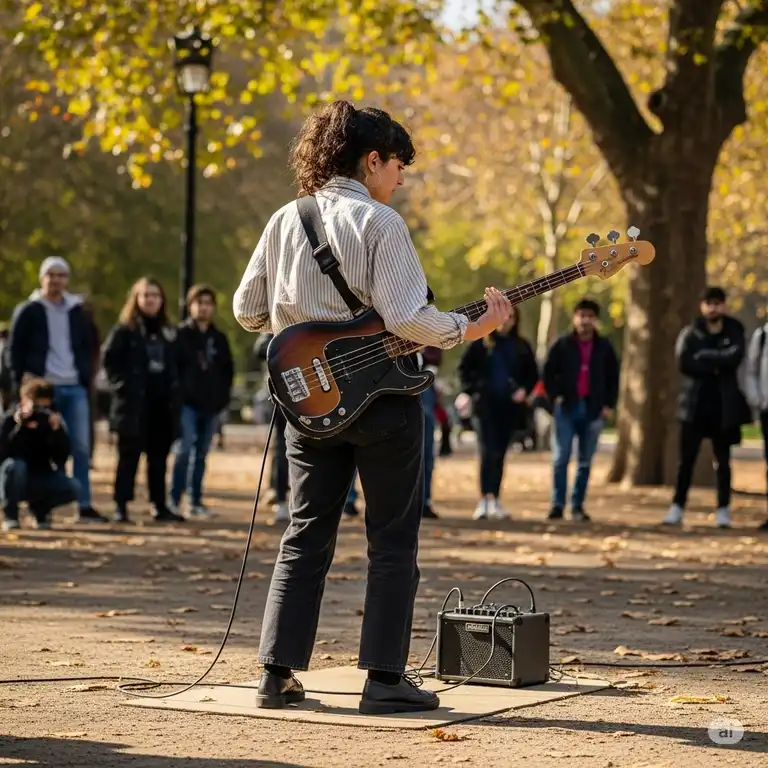
If you want to play along with acoustic guitars at a beach or park.
-
Recommended: Blackstar Fly 3 Bass.
-
Why: It’s the only one on our list that genuinely runs on AA batteries for hours. You can’t lug a Rumble 25 to a campfire without a massive power station.
How to Choose an Affordable Bass Amp Without Regret
Choosing a budget bass amp requires a different strategy than buying a $2,000 tube head. You have to prioritize the features that actually impact your daily playing.
1. Speaker Size vs. Portability
In the world of bass, physics is king. A larger speaker moves more air. However, in the “affordable” category, a 10-inch speaker is usually the upper limit. If you see a “budget” amp with a 15-inch speaker, be wary—the manufacturer likely spent all the money on the speaker and none on the electronics or the cabinet bracing. For home practice, an 8-inch speaker is the “sweet spot” for punch and clarity.
2. Connectivity (The “Future-Proof” Factor)
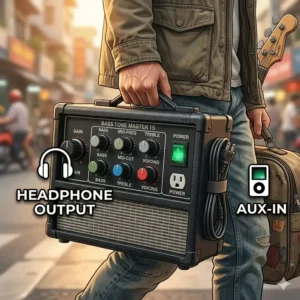
Does the amp have an Aux In? This is non-negotiable in 2026. You need to be able to plug your phone or laptop into the amp to play along with Spotify or YouTube lessons. Also, look for a Headphone Out. If you’re practicing late at night, your neighbors will thank you. Some modern budget amps even include Bluetooth, but be careful of “latency” (delay) when playing along to music.
3. The Power Myth
Don’t get caught up in the “Wattage War.” A 25-watt amp is not twice as loud as a 12-watt amp. To double the perceived volume, you generally need ten times the power. In the affordable tier, anything between 15 and 50 watts is perfectly fine for solo practice. If you plan on playing with a drummer, you’ll need at least 200 watts, which usually pushes you out of the “affordable” practice amp bracket.
Common Pitfalls: Why “Cheap” Often Costs More in the Long Run
The biggest mistake I see beginners make is buying the absolute cheapest option available on a generic marketplace. These “no-name” amps often have high “self-noise”—that annoying constant hiss that happens even when you aren’t playing.
The “Disposable Gear” Trap
Cheap bass amp models from reputable brands like Fender, Orange, or Ampeg are built with repairable or at least standardized components. Generic “white-label” amps often use proprietary, low-quality chips that fail after six months of heat cycles. If your amp breaks and it’s a name brand, you can usually find a schematic or a local tech to fix it. If it’s a $30 mystery box, it’s going straight to the landfill.
Ignoring the Input Jack
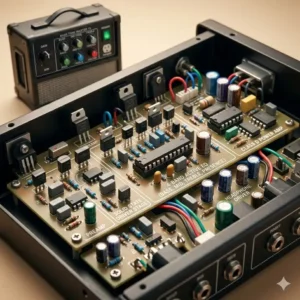
Budget amps are notorious for having weak input jacks. Every time you trip over your cable, you’re putting stress on that soldering point. I always recommend using a right-angle cable plugged into the amp. This creates a lower profile and reduces the leverage that can snap the jack off the circuit board.
Features That Actually Matter vs. Marketing Hype
Marketing departments love to throw “Pro” labels on everything. Here is how to filter the noise.
What Matters:
-
Metal Grills: If you’re moving the amp at all, a cloth grill will eventually tear. A metal grill (like on the Ampeg RB series) protects your speaker from inquisitive pets or accidental kicks.
-
Weight: If it’s over 25 lbs and only 25 watts, it better sound like God’s own bass. Otherwise, it’s just inefficient design.
-
Built-in Tuners: These are a godsend. One less pedal to carry, one less battery to worry about.
What’s Hype:
-
“Gold-Plated” Inputs: On a $100 amp, this does absolutely nothing for your tone. It’s purely aesthetic.
-
50+ Digital Effects: Most budget amps that include 99 built-in effects use very cheap processors. You’ll likely find 2 that sound okay and 97 that sound like a Nintendo 64 having a seizure. You’re better off with a simple amp that does one clean tone well.
Longevity & Maintenance: Keeping Your Budget Amp Alive for Years
Just because you didn’t pay a month’s rent for your amp doesn’t mean you shouldn’t treat it well. The lifespan of a budget bass amp is usually determined by how you handle the heat and the dust.
The “Year One” Roadmap
-
Months 1-3: Check the screws on the back of the cabinet. Bass frequencies cause vibrations that can literally unscrew an amp over time. A quick turn with a screwdriver ensures no “cabinet rattle” develops.
-
Months 6-12: Use compressed air to blow out the input jack and the pots (knobs). Dust is the enemy of electronics; it causes that “scratchy” sound when you turn the volume.
-
The “Towel Hack”: If you live in a humid environment, keep a small towel over your amp when not in use. This prevents moisture from settling on the speaker cone, which can cause the paper to soften and lose its “snap.”
Hidden Costs of Ownership: Cables, Pedals, and Electricity
When budgeting for your rig, remember the “Rule of 20.” You should expect to spend about 20% of the amp’s cost on accessories.
The Total Cost of Ownership
If you buy an affordable bass amp for $150, you still need:
-
A Quality Cable: $15-$25. Using a $3 cable on a budget amp is the fastest way to get radio interference.
-
Power Protection: $10. Budget amps have simpler power supplies. A basic surge protector is essential to prevent a power spike from frying the mainboard.
-
Electricity: Thankfully, modern Class-D budget amps are incredibly efficient. Running a Fender Rumble 25 for 2 hours a day will likely cost you less than $5 per year in electricity.
Bass Amp vs. PA System: Can You Save Money by Going Direct?
In 2026, many players ask: “Why buy an amp at all? Can’t I just use a DI pedal and plug into my computer or a PA?”
The “Feel” Factor
While going “direct” is great for recording, there is a physical sensation to playing bass through a dedicated cabinet. The way the speaker moves the air against your legs helps you develop better “timing” and “dynamics.” If you only play through headphones or studio monitors, you might find your technique becomes “lazy” because you aren’t hearing the subtle string clank and finger noise that a real amp highlights. For a beginner, a physical amp is a much better learning tool.
Price Range & Value Analysis
| Price Bracket | What You Get | Expected Lifespan |
| Under $100 | Plastic chassis, 3-5″ speaker, battery power | 1-3 Years |
| $100 – $200 | Wooden cabinet, 8″ speaker, 20-30W power | 5-10 Years |
| $200 – $350 | Advanced EQ, 10″ speaker, 50W+, DI Out | 10+ Years |
The data shows that jumping from the “Under $100” to the “$100-$200” bracket offers the most significant increase in durability. While the ultra-cheap bass amp options are tempting, the transition to a wooden cabinet (found in the $150 range) dramatically improves the low-end resonance and overall longevity of the product.
✨ Don’t Miss These Exclusive Deals!
🔍 Take your bass playing to the next level with these carefully selected products. Click on any highlighted item to check current pricing and availability. These tools will help you create authentic tones your family will love!
Conclusion
Finding the right affordable bass amp in 2026 is all about balancing your specific needs with the physical reality of bass frequencies. If you want the most versatile, “do-it-all” practice rig, the Fender Rumble 25 remains the king of the hill. However, if you crave a specific vintage character, the Ampeg Rocket Bass RB-108 offers a build quality that feels far beyond its price tag.
Remember that an amp is an investment in your motivation. If your gear sounds thin and uninspiring, you won’t want to practice. By spending just a little more to get into the $150 range, you secure a piece of gear that will last for years and provide a foundation for your musical journey. Trust your ears, mind your EQ, and keep that low end grooving.
FAQs
❓ Is a 25-watt bass amp loud enough for a band?
✅ Generally, no. While an affordable bass amp like the Fender Rumble 25 is great for home practice, it will be drowned out by an acoustic drum kit. For a full band setting, you typically need at least 200 watts…
❓ Can I use a guitar amp for my bass?
✅ You can, but you shouldn’t. Bass frequencies have much wider physical excursions than guitar frequencies. Playing a bass through a standard guitar speaker can easily stretch and tear the speaker cone permanently…
❓ Does a budget bass amp work with 5-string basses?
✅ Yes, but with limitations. Most small 8-inch speakers struggle to reproduce the low “B” string (around 31 Hz) accurately. You will hear the note, but it won’t have the “thump” of a 4-string…
❓ What is the best way to record an affordable bass amp?
✅ Most budget amps have a “Headphone” or “Line Out.” You can run a cable from there into an audio interface. However, the best tone often comes from using a “CabSim” DI box or a dedicated pedal…
❓ Are battery-powered bass amps any good?
✅ For practice and portability, yes. Models like the Blackstar Fly 3 are incredible for what they are. Just don’t expect them to provide enough volume for anything other than solo playing in a quiet room…
Recommended for You
- 5 Best Bass Guitar Practice Amplifier Models for 2026: Ultimate Pro Review
- 7 Best Power Bass Amplifier Models That Deliver Professional Sound in 2025
- 7 Best Battery Powered Bass Amp Options For Ultimate Portability in 2025
Disclaimer: This article contains affiliate links. As an Amazon Associate, I earn from qualifying purchases. If you purchase products through these links, we may earn a small commission at no additional cost to you.
✨ Found this helpful? Share it with your friends! 💬🤗