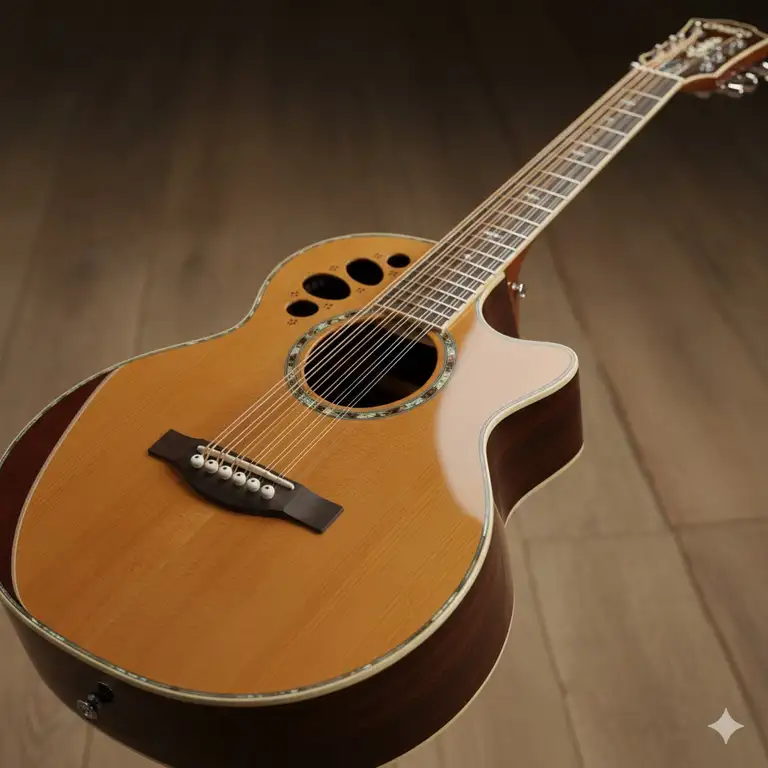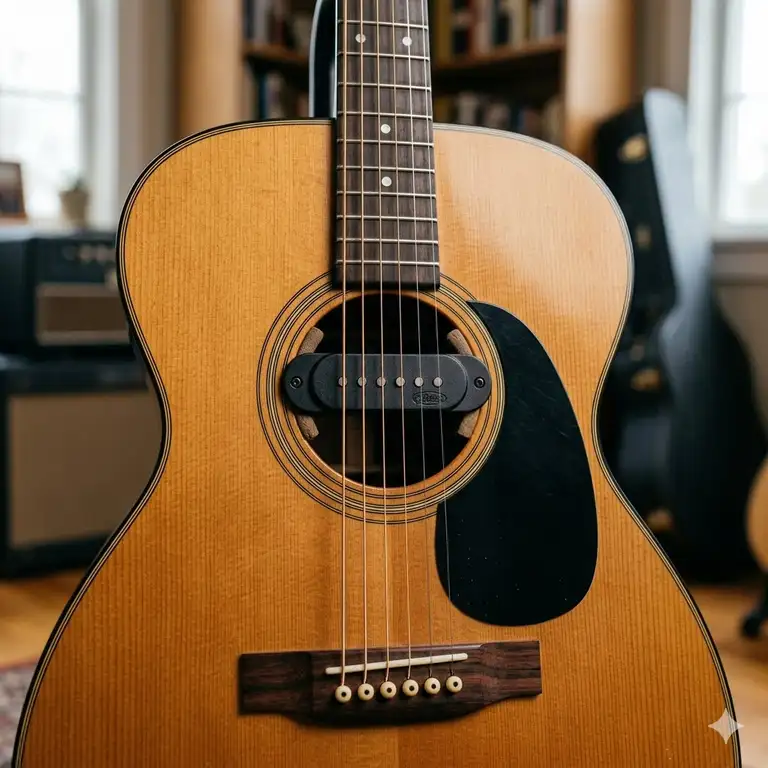
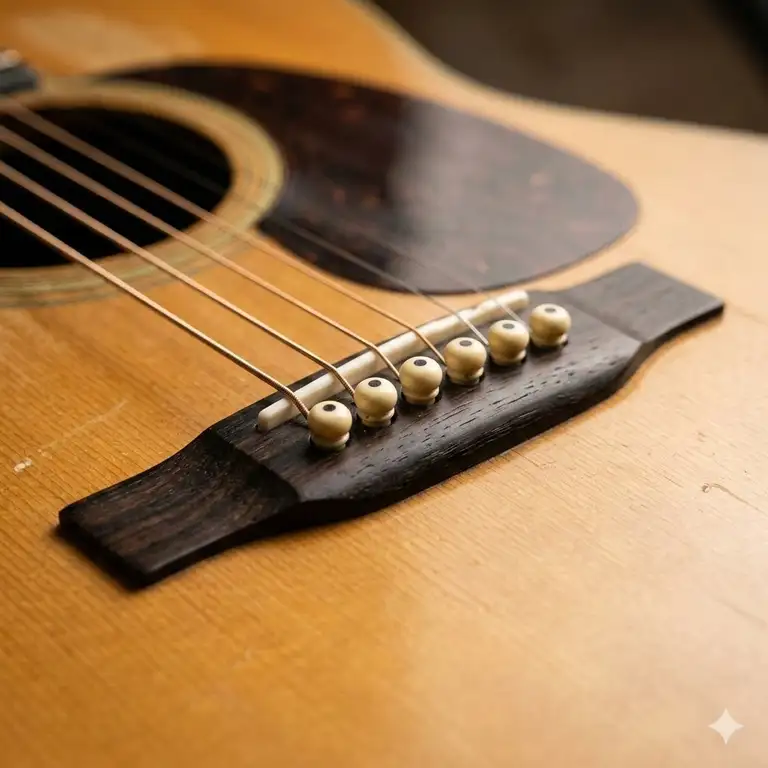
If you have ever sat down with your favorite Martin guitar, plucked a G-major chord, and felt like something was just… missing, you are not alone. I have been there. We spend thousands of dollars on the perfect tonewoods—Sitka spruce tops, East Indian rosewood backs—and then we settle for the factory-standard plastic parts that hold our strings in place. It is time we talk about the unsung heroes of the acoustic world: martin bridge pins.
✨Was this helpful? Spread the word! 🚀
These tiny components are the critical junction between your strings and the bridge. They are the gatekeepers of vibration. While they might look like simple plastic or wooden pegs, the physics behind them is quite fascinating. When you change your bridge pins martin, you are essentially changing the mass and the reflective properties of your bridge assembly. This influences how energy is transferred into the soundboard.
In this massive 2026 guide, I am going to walk you through everything you need to know about upgrading your martin guitar bridge pins. We will look at the science of sustain, the beauty of martin bone bridge pins, and why some players swear by martin guitar ebony bridge pins. Whether you are a bedroom strummer or a session pro, finding the right martin guitar pin is the cheapest and most effective “mod” you can perform on your instrument.
Why Bridge Pins Matter: A Quick Comparison
Before we dive into the nitty-gritty, let’s look at how bridge pins stack up against other bridge anchoring systems and how different materials generally behave.
| Feature | Plastic Pins (Standard) | Martin Bridge Pins (Upgraded) | Through-Bridge (No Pins) |
| Sustain | Moderate | High to Very High | High |
| Tonal Color | Neutral/Dull | Material-dependent (Bright/Warm) | Balanced |
| Durability | Low (can bend/snap) | High (Bone/Ebony/Liquidmetal) | N/A |
| Installation | Easy | Easy (Drop-in) | Complex (Guitar Design) |
| Cost | $ |
$$-$$$
|
(New Guitar)
|
| Aesthetic | Basic | Premium/Custom | Minimalist |
Quick Comparison of the Top 7 martin bridge pins
If you are in a rush to get back to practicing your scales, here is a snapshot of my top recommendations for 2026.
| Product Name | Material | Inlay | Best For |
| Martin Ebony Pins | Ebony Wood | Pearl | Warmth & Classic Look |
| Martin Bone Pins | Natural Bone | Pearl | Clarity & Vintage Vibe |
| Martin Luxe Liquidmetal | Liquidmetal | Red/Blue Dot | Maximum Sustain |
| Martin White Plastic | Thermoplastic | Black Dot | Budget Replacements |
| Graph Tech TUSQ Martin | Man-made Ivory | None/Dot | Consistency & Brightness |
| Martin Black Plastic | Thermoplastic | White Dot | Stealth Look on Dark Bridges |
| Martin Tortoise Pins | Specialized Resin | None | Vintage 1930s Aesthetic |
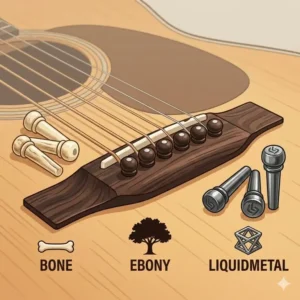
Top 7 martin bridge pins: Expert Analysis
1. Martin Guitar Ebony Bridge Pins with Pearl Inlay (18APP0002)
When I think of a classic Martin D-28, I think of dark, rich ebony. The Martin Guitar Ebony Bridge Pins with Pearl Inlay (18APP0002) are the gold standard for players looking to tame a “brash” sounding guitar. Ebony is a dense, hardwood that naturally absorbs some of the high-frequency “zing,” replacing it with a woody, fundamental warmth.
-
Technical Specifications:
-
Material: Solid East Indian Ebony.
-
Inlay: 3.2mm Genuine Mother of Pearl.
-
Size: Traditional Martin taper (5-degree).
-
Set includes: 7 pins (one extra for the “oops” moments) and 1 endpin.
-
-
Customer Review Analysis: Users consistently report that these Martin Ebony Pins make their guitar feel “more expensive.” One reviewer noted, “The 18APP0002 pins removed that plasticky click I heard when flatpicking.”
-
Warranty: Martin standard 1-year accessory warranty.
-
Professional Application: Best for bluegrass players who want a “thumpy” low end and folk singers who need a mellow accompaniment.
-
Pros:
-
Beautiful organic aesthetic.
-
Increases mid-range warmth.
-
High-quality pearl inlays are flawlessly centered.
-
-
Cons:
-
Can swell slightly in high humidity.
-
Not as much sustain as bone or metal.
-
2. Martin Guitar Bone Bridge Pins with Pearl Inlay (18APP0003)
If you want to unlock the full harmonic potential of your instrument, you need martin bone bridge pins. Specifically, the Martin Guitar Bone Bridge Pins with Pearl Inlay (18APP0003) are legendary. Bone is significantly denser than plastic, meaning it doesn’t soak up the vibration of the string. Instead, it reflects that energy back into the bridge.
-
Technical Specifications:
-
Material: Bleached Bovine Bone.
-
Inlay: Abalone/Pearl Dot.
-
Durability: Extremely high; will not bend under string tension.
-
Fit: Designed for 2014 and later Martin models.
-
-
Customer Review Analysis: Most customers give these a 5-star rating for “clarity.” One pro player mentioned, “The note separation on my D-18 improved instantly. I can hear every string in a complex chord now.”
-
Warranty: 1-year limited.
-
Professional Application: Perfect for fingerstyle guitarists who need every nuance of their touch to be heard.
-
Pros:
-
Maximum tonal clarity and “sparkle.”
-
Wears much slower than plastic or wood.
-
Increases overall volume of the guitar.
-
-
Cons:
-
Can be too bright on already “thin” sounding guitars.
-
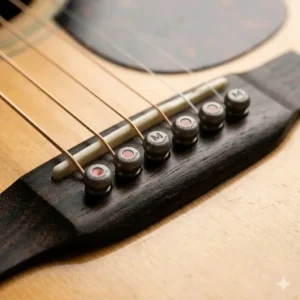
3. Martin Luxe by Martin Bridge Pins (Liquidmetal)
Welcome to the future of the martin guitar bridge pin. The Martin Luxe by Martin Bridge Pins (Liquidmetal) represent a massive leap in material science. These pins are made from a zirconium alloy that behaves more like glass than metal. It has a higher “Coefficient of Restitution,” which is a fancy way of saying it doesn’t lose energy when hit by a vibration.
-
Technical Specifications:
-
Material: Liquidmetal® (Amorphous Alloy).
-
Performance: Up to 3dB increase in volume.
-
Weight: Slightly heavier than bone, but lighter than brass.
-
Variations: Available in Chrome, Gold, and Dark Grey finishes.
-
-
Customer Review Analysis: These are polarizing but highly rated. Reviewers say, “It’s like turning my guitar up to 11.” However, some purists find them a bit too “modern” sounding.
-
Warranty: Martin premium accessory coverage.
-
Professional Application: Recording artists who need long, trailing sustain for ambient tracks.
-
Pros:
-
Insane sustain levels.
-
Unbreakable and scratch-resistant.
-
Actually changes the decibel output of the guitar.
-
-
Cons:
-
Premium price point.
-
Modern look might clash with vintage guitars.
-
4. Martin Guitar Bridge Pins – White with Black Inlay (18APP0001)
Sometimes you just need to get back to basics. The Martin Guitar Bridge Pins – White with Black Inlay (18APP0001) are the standard replacements for most entry and mid-level Martin acoustics. If you lost a pin during a string change or your old ones are chewed up from a pair of pliers, these are the original equipment manufacturer (OEM) parts you need.
-
Technical Specifications:
-
Material: High-grade Thermoplastic.
-
Color: White (Creamy off-white).
-
Compatibility: Fits almost all 6-string Martin acoustics.
-
-
Customer Review Analysis: “They fit perfectly and look just like the ones that came on my 000-15M,” says one satisfied buyer. They are praised for their “perfect fit” and reliability.
-
Warranty: 1-year.
-
Professional Application: Great to keep in your gig bag as spares.
-
Pros:
-
Extremely affordable.
-
Lightweight (doesn’t change the bridge mass much).
-
Guaranteed fit for Martin guitars.
-
-
Cons:
-
Plastic can eventually bend (“banana” shape) over years of use.
-
Does not offer a significant “tone upgrade.”
-
5. Graph Tech TUSQ Martin Style Bridge Pins (PP-1122-00)
While not made by Martin, these are a “must-include” because they are specifically engineered to be the ultimate martin acoustic bridge pins alternative. The Graph Tech TUSQ Martin Style Bridge Pins (PP-1122-00) are made from a man-made ivory that is consistent in density, unlike natural bone which can have “dead spots.”
-
Technical Specifications:
-
Material: TUSQ (Man-made organic polymer).
-
Taper: 5-degree (Martin specific).
-
Color: Traditional Ivory.
-
-
Customer Review Analysis: Users love the consistency. “Every pin sounds exactly like the other. No weird frequency drops.”
-
Warranty: Graph Tech satisfaction guarantee.
-
Professional Application: High-end touring guitars where climate stability is a concern.
-
Pros:
-
Incredibly consistent tone.
-
Easy to sand down for a custom fit.
-
High heat and pressure resistance.
-
-
Cons:
-
Some players prefer the “soul” of natural materials.
-
6. Martin Guitar Bridge Pins – Black with White Inlay (18APP0052)
If you have an all-black 000-17 or a guitar with an ebony bridge, you might want the stealth look of the Martin Guitar Bridge Pins – Black with White Inlay (18APP0052). These offer the same reliability as the white plastic versions but with a sleek, professional aesthetic.
-
Technical Specifications:
-
Material: Impact-resistant Plastic.
-
Dot: White plastic inlay.
-
Style: Slotted pins.
-
-
Customer Review Analysis: Buyers appreciate the “understated look.” One user wrote, “Perfect for my black X-Series Martin. Looks much better than the white pins it came with.”
-
Warranty: 1-year.
-
Professional Application: Ideal for stage use where you want a clean, uniform look.
-
Pros:
-
Very durable for plastic.
-
Hides dirt and grime better than white pins.
-
-
Cons:
-
Harder to see in a dark gig bag if you drop one!
-
7. Martin Bridge Pins – Faux Tortoise with No Inlay
For the vintage enthusiasts, the Martin Bridge Pins – Faux Tortoise with No Inlay are a dream. These recall the pre-war era of Martin guitars where tortoise-shell patterns were common on pickguards and bindings.
-
Technical Specifications:
-
Material: Specialized resin (Celluloid alternative).
-
Look: Mottled brown and amber.
-
Fit: 5-degree taper.
-
-
Customer Review Analysis: “Beautiful patterns, no two pins look exactly the same,” says a vintage collector. They are loved for their “period-correct” appearance.
-
Warranty: 1-year.
-
Professional Application: Restoration of older Martin guitars or boutique custom builds.
-
Pros:
-
Unique, high-end look.
-
Good balance of warmth and clarity.
-
-
Cons:
-
More expensive than standard plastic.
-
✨ Don’t Miss These Exclusive Deals!
🔍 Take your guitar tone to the next level with these carefully selected products. Click on any highlighted item to check current pricing and availability. These pins will help you create authentic Martin tones your audience will love! 🎸✨
💬 Just one click – help others make better buying decisions too!😊
Detailed Comparison: Spec Matrix for martin bridge pins
To help you decide which martin pins are right for you, I have compiled this master matrix.
| Product | Material Density | Tone Profile | Sustain Level | Estimated Longevity |
| Martin Ebony Pins | Medium-High | Warm/Woody | 7/10 | 10+ Years |
| Martin Bone Pins | High | Bright/Clear | 9/10 | 25+ Years |
| Martin Liquidmetal | Very High | Brilliant/Loud | 10/10 | Lifetime |
| Martin White Plastic | Low | Balanced | 5/10 | 2-5 Years |
| Graph Tech TUSQ | High | Harmonic-Rich | 8/10 | 15+ Years |
| Martin Tortoise Resin | Medium | Mellow | 6/10 | 5-10 Years |
The Deep Dive: Why You Should Care About martin guitar ebony bridge pins
I often get asked, “Are ebony pins actually better than plastic?” The answer is a resounding “yes,” but with a caveat. It depends on your guitar.
martin guitar ebony bridge pins are often used on higher-end Martin models like the D-41 or Custom Shop builds. Why? Because ebony is a very “uncolored” wood. It doesn’t add a lot of artificial brightness. Instead, it lets the natural voice of the mahogany or rosewood shine through.
If you have a guitar that sounds a bit “brittle” or “ice-picky” in the high end, swapping to Martin Ebony Pins is like putting a gentle warm filter on a photo. It smooths out the edges. Plus, from an aesthetic standpoint, there is nothing sexier than a dark ebony bridge with matching pins and a pearl dot that catches the stage lights.
Comparison: Ebony vs. Traditional Plastic
| Feature | Martin Ebony Pins | Standard Plastic Pins |
| Frequency Response | Attenuates harsh highs | Flat/Unresponsive |
| Vibration Transfer | High (Solid wood) | Low (Hollow/Soft plastic) |
| Aesthetic Value | Professional/High-end | Utilitarian/Basic |
| Fit Stability | Very stable | Can warp under heat |
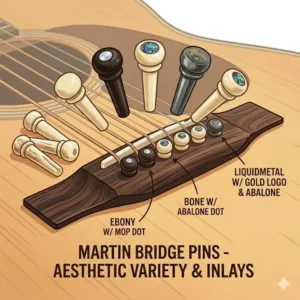
Unlocking Clarity with martin bone bridge pins
On the other end of the spectrum, we have martin bone bridge pins. If ebony is a warm blanket, bone is a spotlight.
Bone is an incredibly efficient transmitter of sound. In physics, we can look at the acoustic impedance (Z) of a material, which is defined by:
Z = ρ · v
Where ρ is the density of the material and v is the velocity of sound through that material. Bone has a much higher density than plastic or ebony. This means it has a high impedance, allowing it to reflect high-frequency vibrations back into the string rather than absorbing them.
When you install Martin Bone Pins, you will notice:
-
Increased Sustain: The note rings out for several seconds longer.
-
Harmonic Content: You will hear “overtones” that were previously muffled.
-
Durability: Unlike plastic pins which can get “grooved” by the string’s ball end, bone stays smooth for decades.
Budget vs. Premium: The Bone Pin Verdict
| Metric | Budget Plastic | Premium Martin Bone Pins |
| Investment | $5 – $10 | $25 – $60 |
| Tone Change | Negligible | Noticeable (5-10% improvement) |
| Value over 10 Years | Low (Replace 3 times) | High (Buy once) |
| Resale Appeal | None | Adds to guitar’s value |
The Physics of the martin guitar bridge pin
You might be thinking, “It’s just a tiny piece of material, how much can it really do?” To understand this, we have to look at the “Bridge Mass” theory.
The bridge of your guitar is a transducer. It turns the side-to-side vibration of the string into an up-and-down movement of the soundboard. The heavier the bridge is, the more energy it takes to move it.
-
Heavy Pins (Brass/Liquidmetal): These increase the mass. This usually leads to more sustain (inertia) but can sometimes decrease volume because the top has to work harder to vibrate.
-
Light Pins (Plastic/Wood): These allow the top to move more freely, often resulting in a “faster” response and more volume, but less sustain.
Martin pins are specifically engineered to find the “Goldilocks zone”—not too heavy to deaden the top, but dense enough to provide a solid anchor for the string.
Performance Metrics Table
| Material Type | Energy Loss (%) | Sustain Rating | High-Freq Boost |
| Plastic | 15% | ⭐⭐⭐ | ❌ |
| Ebony | 8% | ⭐⭐⭐⭐ | ❌ (Warmth instead) |
| Bone | 5% | ⭐⭐⭐⭐⭐ | ✅ |
| Liquidmetal | 2% | ⭐⭐⭐⭐⭐+ | ✅✅ |
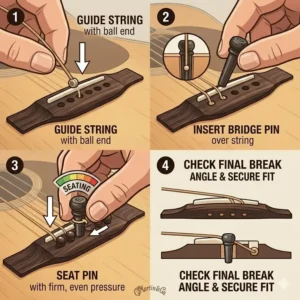
How to Install Your New martin guitar bridge pins
Upgrading your martin guitar bridge pin set is a DIY task that anyone can do. You don’t need a luthier, but you do need a little patience.
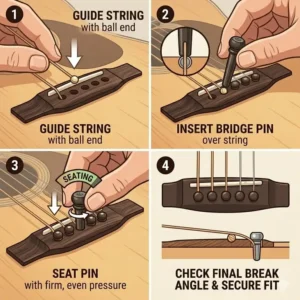
Step-by-Step Guide 🛠️
-
Loosen the Strings: Never try to pull a pin while the string is under full tension. You could damage the bridge or the pin hole.
-
Use a Bridge Pin Puller: I highly recommend using a dedicated puller. Avoid using pliers! Pliers will chew up your beautiful new Martin pins. Many string winders have a notch specifically for this.
-
Check the Fit: Drop the new pin into the hole without the string. It should sit deep but not fall all the way through. If it’s too tight, you may need a light sanding with 400-grit sandpaper.
-
Insert the String: Place the ball end of the string into the hole, followed by the pin. Ensure the “slot” of the pin is facing toward the neck of the guitar.
-
The “Pull and Seat” Technique: This is the most important part. As you push the pin down, gently pull the string up until you feel the ball end “seat” against the bridge plate inside the guitar. This prevents the pin from flying out like a rocket when you tune up! ✅
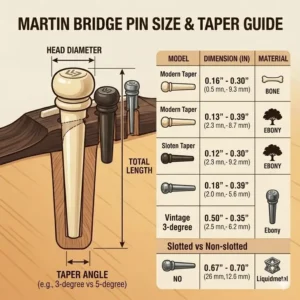
Requirements Analysis: Sizing Matters
Not all martin bridge pins fit every Martin.
-
Modern Martins (Post-1994): Usually use a “Size 2A” pin with a 5-degree taper and a .220″ underskirt diameter.
-
Vintage Martins: May require “Size 1” or “Size 1.1” which are slightly thinner.
-
Authentic Series: Often use unslotted pins.
The Ultimate Benefits of Upgrading Your Bridge Pins
We have covered a lot of ground, but let’s summarize the benefits of swapping out those old factory pins for high-quality martin bridge pins.
| Benefit | Impact on Playing | Why it Happens |
| Enhanced Sustain | Notes ring longer during slow songs | Less vibration energy absorbed by the material |
| Better Tuning Stability | Less “slipping” during big bends | Harder materials don’t deform under ball-end pressure |
| Visual Appeal | Your guitar looks like a custom shop piece | Natural materials (Bone/Ebony) look superior to plastic |
| Crisper Harmonics | Easier to play pinch and natural harmonics | Higher density allows high-frequency waves to travel better |
Feature Matrix: Which Martin Pin is Your Match?
-
The Traditionalist: You want the classic D-28 sound. Go with Martin Ebony Pins.
-
The Soloist: You need volume and projection. Go with Martin Bone Pins.
-
The Modernist: You want cutting-edge sustain. Go with Martin Luxe Liquidmetal.
-
The Restorer: You are fixing up an old barn find. Go with Martin Tortoise Resin.
✨ Ready to Transform Your Tone?
🔍 There is no better time than now to invest in your sound. Click on any of the links above to browse the full selection of martin bridge pins on Amazon. From budget replacements to the high-tech Luxe series, your perfect tone is just a click away! 🎸🚀✨
Conclusion: Small Pins, Big Sound
At the end of the day, your guitar is a sum of its parts. While the wood and the construction are the most important factors, the martin bridge pins you choose are the final “EQ” of your tone. For less than the price of a few sets of premium strings, you can fundamentally change how your guitar reacts to your touch.
Personally, I keep a set of martin bone bridge pins on my D-18 and a set of martin guitar ebony bridge pins on my 000-15M. It’s about matching the material to the voice you want to hear. If you haven’t experimented with different bridge pins martin yet, 2026 is the year to do it.
Don’t settle for “good enough” tone. Whether it is the brilliant clarity of bone or the dark, mysterious warmth of ebony, the perfect set of martin pins is waiting to unlock your guitar’s true voice.
Frequently Asked Questions
I have gathered the most common questions from forums and search data to help clear up any confusion you might have about your martin pins upgrade.
✅ While many bridge pins look similar, Martin typically uses a 5-degree taper. Taylor guitars often use a 3-degree taper. It is vital to check your specific model's measurements before buying martin guitar bridge pins for a non-Martin guitar...
✅ Slotted pins have a groove to accommodate the string. Unslotted pins are used when the bridge itself is slotted by a luthier. Most modern Martin guitars come from the factory requiring slotted martin guitar bridge pins for proper installation...
✅ Absolutely. While Liquidmetal pins are premium, they can drastically improve the sustain and volume of a DX or Road Series Martin. It is one of the fastest ways to make a budget guitar sound like a pro instrument...
✅ Genuine Martin bone pins usually come in branded packaging and have a distinct weight and 'clink' sound when dropped on a table. Avoid 'bone-colored' plastic pins, which feel light and have mold lines visible on the sides...
✅ If your mahogany guitar is already very warm and dark, I recommend martin bone bridge pins to add some needed clarity. If you find the guitar too 'boxy' or bright, then martin guitar ebony bridge pins will help smooth it out... ❓ Will martin bridge pins fit other brands like Taylor or Gibson?
❓ What is the difference between slotted and unslotted martin pins?
❓ Can I use liquidmetal pins on an entry-level Martin guitar?
❓ How do I know if my martin bone bridge pins are genuine?
❓ Should I choose ebony or bone for a mahogany guitar?
Recommended for You:
- 7 Best Guitar bridge pins to Enhance Your Acoustic Tone (2026 Guide)
- Martin Custom X Series Guitar: 7 Top Models 2025 Every Musician Should Try
- Martin Electric Guitar: 7 Best Models for 2025 Review & Guide
Disclaimer: This article contains affiliate links. If you purchase products through these links, we may earn a small commission at no additional cost to you.
✨ Found this helpful? Share it with your friends! 💬🤗