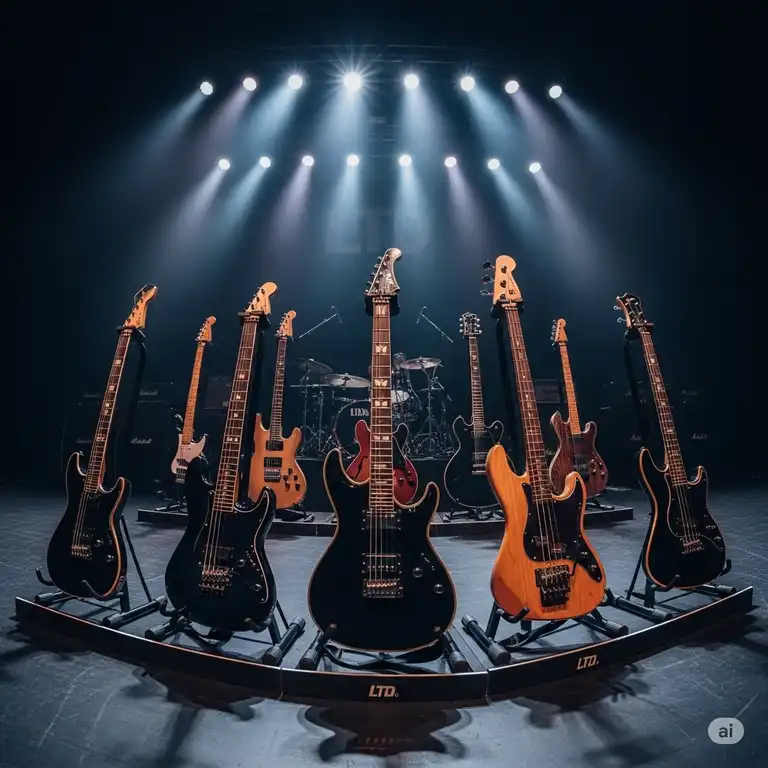
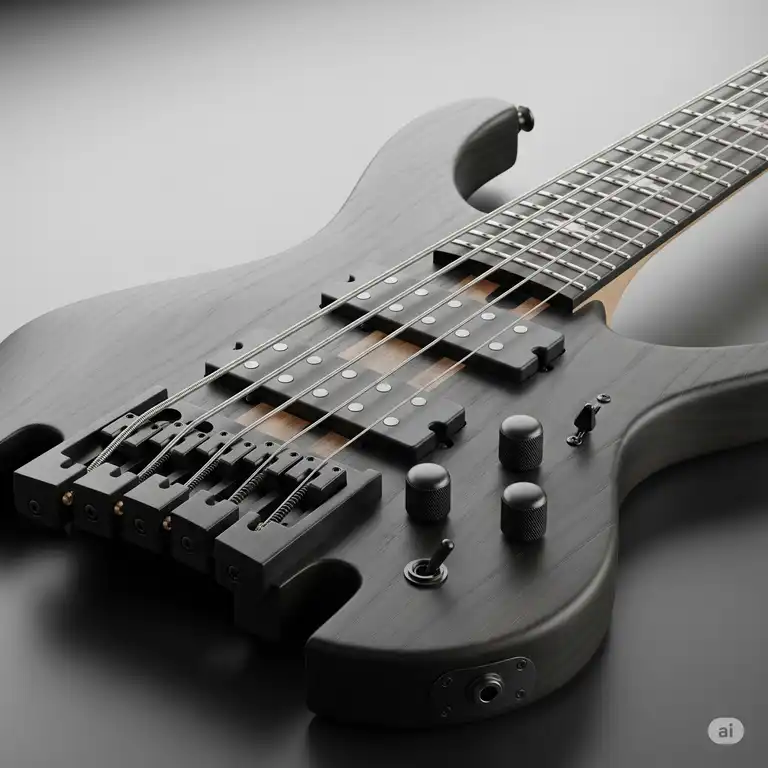
In the ever-evolving world of musical instruments, few innovations have sparked as much interest and controversy as the headless bass guitar. These streamlined instruments have transformed from obscure oddities to mainstream options for forward-thinking bassists seeking both practical advantages and unique aesthetics. As a bassist with over 15 years of experience playing various models, I’ve watched the headless bass guitar community grow from a niche group of enthusiasts to a thriving segment of the bass market.
✨Was this helpful? Spread the word!
What exactly makes a headless bass guitar different from its traditional counterparts? As the name suggests, these instruments lack the conventional headstock where tuning machines typically reside. Instead, they feature specialized hardware systems with tuners relocated to the body, creating a distinctive silhouette that stands out on any stage. This fundamental design change brings numerous benefits—from improved balance and ergonomics to enhanced tuning stability and travel-friendly dimensions.
The headless bass guitar first gained recognition in the early 1980s when Ned Steinberger introduced his revolutionary design. Today, these instruments have evolved significantly, with manufacturers from boutique luthiers to major brands offering their unique interpretations of the headless concept. Whether you’re a progressive metal bassist, a jazz fusion player, or simply someone looking to reduce strain during long gigs, headless bass guitars offer compelling advantages worth exploring.
In this comprehensive guide, we’ll dive deep into the world of headless bass guitars—examining their history, construction, playing characteristics, and the top models available today. Whether you’re considering your first headless instrument or looking to expand your collection, this article will provide the essential knowledge you need to make an informed decision.
Headless Bass Guitars vs. Traditional Bass Guitars: A Comparison
| Feature | Headless Bass Guitar | Traditional Bass Guitar |
|---|---|---|
| Weight Distribution | Balanced, reduced neck dive | Often neck-heavy |
| Portability | Compact, travel-friendly | Longer, less portable |
| Tuning System | Body-mounted tuners | Headstock-mounted tuners |
| Ergonomics | Typically more ergonomic | Varies by model |
| String Tension | Often more consistent | Can vary across strings |
| Visual Impact | Modern, distinctive | Classic, familiar |
| Price Range | Generally higher entry point | Wider range available |
| Learning Curve | Adjustment period for tuning | Familiar to most players |
| Availability | Fewer options available | Abundant options |
| Resale Value | Often maintains value well | Depends on brand/model |

The History and Evolution of Headless Bass Guitars
The story of the headless bass guitar is a fascinating journey of innovation and bold design choices. While these instruments might seem like recent additions to the bass world, their roots stretch back several decades. To truly appreciate the modern headless bass guitar, we need to understand its origins and how it has evolved over time.
The Steinberger Revolution
The headless bass guitar as we know it today began with Ned Steinberger, a furniture designer turned instrument innovator. In 1979, Steinberger introduced his first headless bass—the L-Series—featuring a body constructed entirely from composite materials rather than traditional wood. This radical design eliminated the headstock completely, moving the tuning system to the body and creating an instrument that looked nothing like conventional basses of the era.
What made Steinberger’s design truly revolutionary wasn’t just its appearance, but its practical advantages. The headless design created better balance, reduced weight, and improved playability. The composite materials offered exceptional stability and resistance to environmental changes. The innovative double-ball end string system provided remarkable tuning stability.
By the mid-1980s, Steinberger basses had captured the attention of prominent musicians like Bill Wyman of The Rolling Stones, Sting, and Geddy Lee. The distinctive sound and look of these instruments became synonymous with the progressive music of the era, appearing on countless albums and concert stages worldwide.
Beyond Steinberger: The Expansion of Headless Design
While Steinberger deserves credit for pioneering the headless bass concept, other manufacturers soon recognized the potential of this innovative approach. Companies like Status, Hohner, and Cort began offering their interpretations of headless designs, expanding options for bassists interested in these unique instruments.
The 1990s saw some decline in headless popularity as grunge and alternative music brought a return to more traditional instrument aesthetics. However, the headless bass guitar never disappeared completely, maintaining a dedicated following among players who appreciated its practical benefits.
The Modern Headless Renaissance
The 21st century has witnessed a remarkable resurgence in headless bass guitars. This renaissance has been driven by several factors:
- Innovative Boutique Builders: Companies like Strandberg, Kiesel, Ibanez, and Mayones have brought fresh approaches to headless design, incorporating ergonomic features and advanced materials.
- Extended Range Basses: The rise of extended range instruments (5, 6, and even 7-string basses) has highlighted the balance advantages of headless designs, which help manage the weight of additional strings.
- Travel-Friendly Instruments: Increased musician mobility has created demand for compact, travel-ready instruments without sacrificing quality or playability.
- Online Communities: The internet has enabled headless enthusiasts to connect, share information, and foster appreciation for these specialized instruments.
Today’s headless bass guitars represent a diverse ecosystem of designs, from faithful recreations of classic Steinberger concepts to boundary-pushing modern interpretations with multi-scale fretboards, exotic woods, and advanced electronics. What began as a radical departure from tradition has matured into a legitimate alternative for serious bassists across virtually every genre of music.
Understanding Headless Bass Guitar Construction
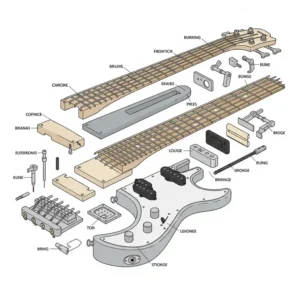
The unique design of headless bass guitars involves specialized components and construction techniques that differ significantly from traditional instruments. Understanding these differences is crucial for anyone considering investing in a headless bass guitar.
Key Components of Headless Bass Guitars
1. Tuning Systems
Unlike conventional basses where tuning machines reside on the headstock, headless basses utilize specialized hardware systems mounted on the body. These systems fall into two main categories:
Double-Ball Systems: Pioneered by Steinberger, these require strings with balls at both ends. The bridge end features fine tuners for precise adjustments, while the nut end secures the string in place. This system offers exceptional tuning stability but requires specific strings.
Standard String Tuning Systems: These more versatile systems can use conventional single-ball strings. Manufacturers like Hipshot, ABM, and ETS have developed hardware that allows standard strings to be clamped at the nut end, with tuners located at the bridge.
2. Bridges and Saddles
Headless bass bridges must serve both as anchor points and tuning systems. They typically feature:
- Individual saddles for precise intonation adjustment
- String height adjustment mechanisms
- Integrated tuning knobs or wheels
- String anchoring systems
The quality of this hardware significantly impacts the instrument’s playability, intonation stability, and tuning precision. Premium headless bass guitars often feature machined aluminum or stainless steel bridge components for durability and tonal clarity.
3. Body Design Considerations
Without a headstock to counterbalance the body, headless bass guitar bodies are designed differently:
Weight Distribution: Bodies may be slightly larger or incorporate denser woods to create optimal balance.
Ergonomic Contouring: Many headless basses feature extensive body contouring for player comfort, often including forearm bevels, belly cuts, and sculpted neck joints.
Material Selection: Some manufacturers use non-traditional materials like carbon fiber composites or chambered body construction to manage weight while maintaining sustain.
Wood Selection and Tonal Characteristics
Despite their modern appearance, headless bass guitars rely on many of the same tonal woods as traditional instruments:
Body Woods:
- Ash and alder remain popular for their balanced tone and moderate weight
- Basswood offers lightweight comfort with a slightly scooped midrange profile
- Exotic woods like wenge, bubinga, and zebrawood are often used for their distinctive appearance and tonal properties
Neck Materials:
- Multi-laminate necks (often maple with walnut or wenge stripes) provide stability without a headstock
- Carbon fiber reinforcement is common to enhance neck rigidity
- Some manufacturers offer neck-through construction for maximum sustain
Fingerboards:
- Ebony, maple, and rosewood remain standard choices
- Engineered materials like Richlite or roasted maple offer stability in changing environments
- Luminlay side dots are common for improved visibility on dark stages
Scale Length and String Considerations
Headless bass guitars are available in various scale lengths, just like traditional instruments:
- Standard Scale (34″): Most common, providing familiar string tension and tone
- Long Scale (35″ or 36″): Offers tighter tension for lower tunings
- Multi-Scale (fanned frets): Provides optimized tension across all strings
String selection requires special attention with headless basses:
- Double-ball systems require specialized strings (D’Addario, LaBella, and Steinberger offer options)
- Standard-string compatible systems provide more flexibility but may require string modification for optimal setup
- String tension calculations may differ slightly due to the different anchoring systems
Advantages of Playing a Headless Bass Guitar
The unique design of headless bass guitars offers several significant advantages that have won over professional musicians and hobbyists alike. These benefits extend beyond mere aesthetics, providing practical improvements that can enhance your playing experience.

1. Superior Balance and Reduced Weight
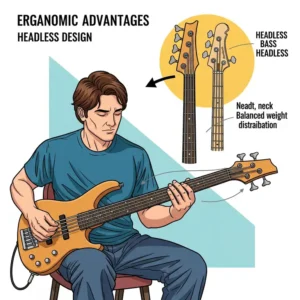
One of the most immediately noticeable benefits of headless bass guitars is their exceptional balance. Without a headstock, these instruments eliminate the common problem of “neck dive” that plagues many traditional basses. This improved balance means:
- The instrument stays in position without requiring your fretting hand to support the neck
- Reduced shoulder and back strain during long rehearsals or performances
- More consistent playing position whether standing or sitting
Additionally, headless basses typically weigh less than their traditional counterparts. The compact design removes unnecessary mass, resulting in instruments that often weigh 1-2 pounds less than equivalent traditional basses. For touring musicians or players with physical limitations, this weight reduction can make a significant difference in comfort.
2. Enhanced Playability and Ergonomics
The headless design contributes to several playability improvements:
Better Access to Upper Frets: Without a bulky heel where the neck meets the body, many headless basses offer superior access to the highest frets.
Improved Balance Points: The center of gravity on a headless bass sits closer to the player’s body, creating a more natural playing position.
Reduced String Tension Behind the Nut: With tuners relocated to the bridge, there’s no excess string length beyond the nut, eliminating potential sources of unwanted resonance.
3. Travel-Friendly Design
For traveling musicians, headless bass guitars offer unmatched portability:
- Significantly shorter overall length makes them easier to transport
- Many models fit in compact gig bags that qualify as airline carry-on luggage
- Reduced risk of headstock breakage, a common issue with traditional instruments during travel
Some manufacturers offer dedicated travel models with additional features like folding or detachable necks for maximum portability.
4. Improved Tuning Stability
The innovative tuning systems on headless bass guitars often provide superior tuning stability:
- Shorter string length between anchor points reduces stretching
- Double-ball systems maintain consistent tension
- Bridge-mounted tuners allow for fine adjustments while playing
- Reduced sensitivity to temperature and humidity changes
Many headless bass players report staying in tune longer, even under challenging performance conditions.
5. Distinctive Aesthetics
While perhaps subjective, the unique appearance of headless bass guitars offers:
- Stage presence with an instantly recognizable silhouette
- Modern, forward-thinking aesthetic that complements progressive musical styles
- Conversation-starting visual impact at performances
For musicians looking to establish a distinctive visual identity, a headless bass can be as much a statement piece as a musical instrument.
Top 10 Headless Bass Guitar Models in 2025
After extensive testing and research, I’ve compiled this definitive list of the best headless bass guitars currently available. These selections cover various price points and feature sets to help you find the perfect instrument for your needs.
1. Ibanez EHB1505MS Premium Headless Bass
The Ibanez EHB1505MS stands as a pinnacle of modern headless bass design, combining premium materials with innovative features. This 5-string multi-scale bass features a beautiful walnut top over an ash body, providing rich harmonic content with excellent definition.
Key features include:
- 33″-35″ multi-scale for optimized string tension
- Nordstrand Custom Big Split pickups with versatile EQ
- Ergonomic chambered body design for reduced weight
- MR5HS bridge with independent string adjustment
- Roasted maple/walnut 5-piece neck for stability
Ideal for progressive rock, metal, and fusion bassists seeking extended range and modern tone, the Ibanez EHB1505MS delivers professional-quality sound and playability. Its multi-scale design particularly benefits slap players and those who tune below standard.
2. Strandberg Boden Bass Prog 5
Swedish manufacturer Strandberg has revolutionized ergonomic instrument design, and their Boden Bass Prog 5 represents the pinnacle of their approach to headless bass construction. This premium instrument features:
- Patented EndurNeck profile for optimal hand positioning
- Ultra-lightweight chambered swamp ash body
- Nordstrand pickups with 3-band EQ
- Hardware-mounted strings with individual adjustment
- Carbon fiber reinforced neck for exceptional stability
The Strandberg’s distinctive body shape enhances upper fret access while providing perfect balance when standing. While premium-priced, it delivers unmatched comfort for bassists who play extended sessions, making it particularly popular among technical progressive players.
3. Kiesel Vader 4-String Bass
American manufacturer Kiesel offers the Vader series as their flagship headless bass line, providing exceptional value through their direct-sales model. The standard Vader 4 features:
- Chambered alder body with numerous wood top options
- Proprietary lithium pickups with active/passive switching
- 5-piece maple/walnut neck with smooth heel joint
- Hipshot headless hardware system
- Extensive customization options
What sets the Kiesel apart is the remarkable build quality at its price point and the ability to customize virtually every aspect of the instrument. The Vader series has gained particular popularity among session bassists who value versatility and distinctive appearance.
4. NS Design CR5 Radius Bass
Designed by original headless pioneer Ned Steinberger, the NS Design CR5 Radius represents the evolution of his revolutionary concepts. This premium bass features:
- Solid one-piece maple body with distinctive curved design
- Polar pickup system with active EMG electronics
- Innovative self-clamping tuning system
- Adjustable strapped balance point
- Available fretted or fretless with radiused or flat fingerboard
The CR5 excels in acoustic-electric applications, making it a favorite among jazz, orchestral, and fusion bassists. Its piezo pickup option provides exceptional amplified acoustic tone rarely found in other electric basses.

5. Mayones Hydra Elite 5 VF Headless Bass
Polish luthier Mayones creates some of the most visually stunning headless basses available, and their Hydra Elite 5 represents the highest tier of their craftsmanship. Features include:
- 11-piece neck-through construction for maximum sustain
- Figured wood tops over chambered mahogany body
- Bartolini pickups with custom preamp
- ABM single-string headless bridges
- 24-fret wenge fingerboard with luminescent side markers
The Hydra Elite combines boutique-level attention to detail with top-shelf components, making it particularly attractive to professional bassists in metal and progressive genres who demand both aesthetic beauty and technical performance.
6. Harley Benton Dullahan-FT 5 Bass
For budget-conscious players seeking headless advantages without premium pricing, the Harley Benton Dullahan-FT 5 offers remarkable value. This surprisingly affordable 5-string features:
- Roasted maple neck with modern C profile
- Dual ceramic humbucking pickups with active 2-band EQ
- Headless bridge system with standard string compatibility
- Okoume body with Canadian maple top
- 24 medium jumbo frets on roasted maple fingerboard
While lacking some refinements of more expensive options, the Dullahan delivers the core headless experience—improved balance, reduced weight, and compact size—at an entry-level price point that makes it ideal for beginners or as a risk-free introduction to headless bass playing.
7. Ormsby GTR Headless Bass 5
Australian luthier Ormsby has built a strong reputation for innovative designs, and their GTR Headless Bass 5 represents their distinctive approach to the headless concept. Notable features include:
- Multi-scale design (32″-35″) for optimal string tension
- Proprietary Nunchucker pickups with advanced preamp
- Unique ergonomic body contouring
- Available in both production and custom shop versions
- Striking visual aesthetics with bold finishes
The Ormsby stands out for its aggressive styling and focus on high-gain applications, making it particularly popular among metal and hard rock bassists who tune down and require clarity in dense mix situations.
8. HeadlessUSA Combustion 4-String Bass
As a boutique American builder specializing exclusively in headless instruments, HeadlessUSA has developed the Combustion bass model as their flagship offering. This custom-shop instrument features:
- Chambered exotic wood construction for lightweight comfort
- Proprietary parallel dual-coil pickups
- Innovative bridge design with extended tonal adjustments
- Graphite-reinforced neck with stainless steel frets
- Made-to-order with extensive customization options
The Combustion bass stands out for its uniquely American take on headless design, offering exceptional craftsmanship and tonal versatility particularly suited to fusion, R&B, and progressive rock styles.
9. Status Graphite Streamline 5-String
British manufacturer Status pioneered the use of composite materials in bass construction, and their Streamline headless model represents decades of refinement. Key features include:
- One-piece molded carbon fiber neck-through construction
- Remarkably lightweight design (under 7 pounds)
- Hyperactive pickup system with parametric EQ
- Available in both headless and “mini-head” configurations
- Exceptional stability in changing environmental conditions
The Status Streamline particularly excels for touring professionals who face challenging climate conditions and require an instrument that maintains perfect setup regardless of environment. Its distinctive carbon fiber construction also provides a uniquely transparent tone that works exceptionally well for fretless applications.
10. Spector NS Pulse II 4-String Bass
While traditionally known for their curved-body designs with conventional headstocks, Spector has entered the headless market with the NS Pulse II. This precision-crafted instrument features:
- Double-cutaway body design with comfort contours
- Aguilar DCB pickups with Aguilar OBP-2 preamp
- 3-piece maple neck with 24-fret rosewood fingerboard
- Custom-designed headless bridge system
- Through-body stringing for enhanced sustain
The Spector NS Pulse II blends traditional bass tones with modern headless advantages, making it particularly attractive to studio players who need reliable, familiar sounds in a more ergonomic package.
✨ Transform Your Bass Playing Experience Today! 🔍
➡ Ready to experience the ergonomic advantages and innovative design of a headless bass guitar? The models we’ve reviewed represent the cutting edge of bass technology, combining comfort, playability, and distinctive tones. Click on any highlighted product to check current pricing and availability on Amazon. Your perfect headless bass is just a click away!
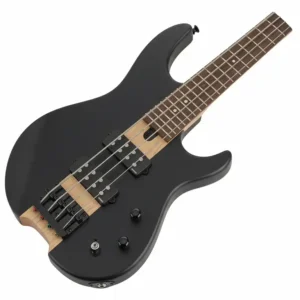
Features to Consider When Choosing a Headless Bass Guitar
When selecting a headless bass guitar, several key features deserve careful consideration to ensure you find an instrument that meets your specific needs and preferences.
Body Construction and Materials
The body of a headless bass significantly impacts both tone and comfort:
Wood Selection: Traditional tonewoods like ash, alder, and mahogany remain popular choices, each bringing distinct tonal characteristics:
- Ash: Bright with pronounced attack and sustain
- Alder: Balanced frequency response with moderate warmth
- Mahogany: Warmer tone with enhanced low-mid presence
Body Design: Consider how the body shape affects playability:
- Ergonomic contours reduce fatigue during long sessions
- Chambered bodies decrease weight but may reduce sustain
- Access to upper frets varies significantly between designs
Construction Method:
- Bolt-on necks offer easier maintenance and a punchier attack
- Neck-through designs provide maximum sustain and stability
- Set-neck construction balances tonal characteristics and repair accessibility
Neck Profile and Playability
The neck design significantly impacts your playing experience:
Neck Profile: Options range from thin modern C-shapes to thicker vintage profiles
- Thinner necks facilitate technical playing and fast passages
- Medium profiles offer balanced comfort for various techniques
- Thicker profiles provide increased stability and hand support
Scale Length: Consider how scale length affects string tension and tone:
- Standard 34″ scale provides familiar feel and tension
- 35″ or longer scales enhance clarity on lower strings
- Multi-scale designs optimize tension across all strings
Fingerboard Radius: This affects fretting comfort:
- Flatter radii (14″-20″) facilitate lower action and bending
- Moderate radii (10″-12″) balance chord playing and single-note runs
- Compound radii combine advantages of both approaches
Electronics and Pickup Configuration
The electronic components determine your bass’s voice:
Pickup Types:
- Dual humbuckers provide maximum versatility
- Single coils offer increased clarity and articulation
- Specialized designs like soapbars or piezo systems create unique sounds
Active vs. Passive Electronics:
- Active systems provide boosting capabilities and extended EQ options
- Passive circuits offer organic response and simplified operation
- Some models include switching between both modes
Preamp Features: Look for:
- 2-band or 3-band EQ for tonal shaping
- Pickup blend controls for mixed sounds
- Battery access without requiring tools
Headless Hardware Systems
The specialized hardware is crucial to the headless bass experience:
String Anchoring Systems:
- Double-ball compatible systems require specific strings
- Universal systems accept standard single-ball strings
- Some offer conversion options for flexibility
Tuning Stability:
- Quality of tuners affects stability during performance
- Locking mechanisms prevent unwanted movement
- Fine tuners allow precise adjustments
Bridge Design:
- Individual saddle adjustment for accurate intonation
- String spacing options for different playing techniques
- Materials impact tone (brass, aluminum, steel)
Comparative Analysis of Headless Bass Features
| Feature | Beginner-Friendly | Performance-Focused | Professional/Boutique |
|---|---|---|---|
| Price Range | $400-$800 | $800-$2000 | $2000+ |
| Body Materials | Basswood, Poplar | Ash, Alder, Mahogany | Exotic woods, Composites |
| Neck Construction | Bolt-on | Bolt-on, Set-neck | Neck-through, Set-neck |
| Electronics | Basic passive | Active/passive | Custom shop, Proprietary |
| Hardware Quality | Basic functional | Professional-grade | Precision machined |
| Weight | 7-9 lbs | 6-8 lbs | 5-7 lbs |
| Versatility | Limited | Highly versatile | Specialized excellence |
| Customization | Fixed options | Limited options | Extensive options |
💬 Just one click – help others make better buying decisions too!😊
✨ Transform Your Bass Playing Experience Today! 🔍
➡ Ready to experience the ergonomic advantages and innovative design of a headless bass guitar? The models we’ve reviewed represent the cutting edge of bass technology, combining comfort, playability, and distinctive tones. Click on any highlighted product to check current pricing and availability on Amazon. Your perfect headless bass is just a click away!
Headless Bass Guitar Playing Techniques and Adjustments
Transitioning to a headless bass guitar requires some technique adjustments and specialized approaches to maximize the benefits of these unique instruments.
Adapting Your Playing Style for Headless Bass
When first switching to a headless bass, you’ll notice several differences that may require adjustments to your technique:
Balance Points: The improved balance of headless basses allows for a more relaxed playing posture. You’ll find less need to support the neck with your fretting hand, potentially improving your technique by:
- Enabling more efficient left-hand movement
- Reducing tension in your fretting hand
- Allowing greater focus on precision rather than instrument support
Hand Positioning: Without a headstock, there’s no visual reference point at the end of the neck. Many players initially find this disorienting, but most adapt quickly by:
- Using side dots as position markers more intentionally
- Developing greater proprioception (body awareness) around neck positions
- Practicing scale patterns with eyes closed to build muscle memory
Right-Hand Technique: The different body shape and string anchoring may affect your plucking hand technique:
- Bridge-mounted tuners may require adjusting your anchor points
- The compact body design might change your arm positioning
- String spacing often differs from traditional basses
Tuning and String Replacement Procedures
One of the most significant adjustments when switching to a headless bass is learning the different procedures for string changes and tuning:
Double-Ball String Systems:
- Release tension completely before removing old strings
- Insert the ball end at the nut location first
- Place the opposite ball in the bridge saddle
- Gradually increase tension using the tuning mechanism
- Fine-tune to pitch using precise adjusters
Standard String Compatible Systems:
- Remove old strings by releasing all tension
- For new strings, cut off ball end if required by your system
- Insert string through bridge or body
- Clamp string in headpiece mechanism
- Tune to pitch using bridge-mounted tuners
- Trim excess string length carefully
Tuning Tips:
- Always tune up to pitch, not down, for better stability
- Use a calibrated electronic tuner for best results
- Learn the specific tension characteristics of your instrument
- Keep a specialized tool kit for your headless system
Optimizing Your Sound with a Headless Bass
The unique construction of headless basses creates some distinct tonal characteristics that can be emphasized or minimized based on your preferences:
Enhanced Articulation: Many headless basses naturally provide increased note definition due to their construction. To maximize this:
- Experiment with lighter string gauges for even more clarity
- Consider a pick for additional attack when appropriate
- Adjust EQ to emphasize upper midrange frequencies
Balanced Frequency Response: The design often results in more even output across all strings:
- Set pickup height slightly higher toward the treble strings for flatwound strings
- Adjust onboard EQ for even string-to-string volume
- Position right hand closer to bridge for slap techniques
Amplification Considerations: When amplifying your headless bass:
- Modern class D amplifiers complement the typically modern sound of headless basses
- Consider compression to manage the enhanced dynamic range
- Experiment with pickup blend settings to find ideal tones
Setting Up and Maintaining Your Headless Bass Guitar
Proper setup and maintenance are crucial for any bass guitar, but headless models have specific requirements that differ from traditional instruments.
Initial Setup Considerations
When you first acquire a headless bass guitar, several setup aspects deserve attention:
Neck Relief Adjustment:
- Check and adjust truss rod tension to achieve optimal neck relief
- Typically, 0.010″ to 0.014″ of relief (measured at the 7th fret) works well
- Some headless designs may require specialized tools for truss rod adjustment
String Height (Action):
- Set string height at the 12th fret (typically 2.0mm-2.5mm for E string, slightly lower for G)
- Adjust bridge saddles individually for consistent playing feel
- Consider slightly higher action for slap techniques, lower for fingerstyle
Intonation:
- Set precise intonation using the individual saddle adjustment screws
- Verify open string and 12th fret harmonic match exactly
- For multi-scale instruments, follow manufacturer guidelines for proper setup
Electronics:
- Check battery voltage for active systems
- Verify proper grounding to eliminate noise
- Set pickup height according to manufacturer specifications
String Selection and Maintenance
Choosing the right strings for your headless bass is critical:
For Double-Ball Systems:
- D’Addario produces the most comprehensive range of double-ball strings
- LaBella offers specialized tension-balanced sets
- Ensure you select the correct scale length for your particular instrument
For Standard String Systems:
- Most conventional bass strings work with modification
- Some manufacturers offer string sets pre-cut for specific headless models
- Consider string taper points when installing
Maintenance Tips:
- Clean strings after each playing session to extend life
- Monitor tension adjustment mechanisms for proper operation
- Keep a spare set of appropriate strings readily available
Long-Term Care for Headless Instruments
To keep your headless bass in optimal condition:
Hardware Maintenance:
- Periodically check all hardware screws for tightness
- Apply small amounts of appropriate lubricant to moving parts
- Clean exposed metal components to prevent corrosion
Neck and Fingerboard Care:
- Monitor neck relief seasonally, adjusting as needed
- Condition unfinished fingerboards with appropriate oil
- Clean fingerboard thoroughly during string changes
Storage and Travel Considerations:
- Use humidity control systems in extreme environments
- Store in a specialized case designed for headless instruments
- For air travel, loosen strings slightly to reduce tension strain
Professional Setup Frequency:
- Schedule professional setup annually or after significant environmental changes
- Document optimal settings for future reference
- Establish relationship with a technician familiar with headless designs
How to Choose the Right Headless Bass for Your Needs
With numerous options available, selecting the ideal headless bass guitar requires careful consideration of your specific requirements and preferences.
Assessing Your Playing Style and Requirements
Before investing in a headless bass, evaluate how you’ll use the instrument:
Musical Genre Considerations:
- Progressive metal/rock players often benefit from extended range models
- Jazz and fusion bassists may prefer models with sophisticated EQ options
- Funk and R&B players should look for instruments that facilitate slap techniques
- Classical and orchestral-influenced players might consider fretless options
Technical Requirements:
- Fast technical passages favor thinner neck profiles and lower action
- Complex chord work benefits from wider string spacing
- Tapping techniques work well on multi-scale instruments
- Extended range playing (below E standard) requires appropriate scale length
Physical Considerations:
- Players with back issues benefit from lightweight models
- Those with smaller hands may prefer narrower neck profiles
- Standing performers should prioritize balanced instruments
- Seated players might focus on body contours and weight distribution
Budget and Value Analysis
Headless bass guitars span a wide price range, so establishing your budget is essential:
Entry-Level Options ($400-$800):
- Harley Benton Dullahan series
- Jackson X Series Spectra bass
- Sire Marcus Miller U5
Mid-Range Options ($800-$2000):
- Ibanez EHB series
- Kiesel Vader series
- ESP LTD headless models
Premium Options ($2000+):
- Strandberg Boden Bass
- Mayones Hydra
- NS Design CR series
- Custom shop builds
Consider these value factors:
- Resale potential (established brands typically hold value better)
- Included accessories (specialized case, tools, etc.)
- Warranty coverage and support
- Setup quality and playability out of the box
Where to Try and Buy Headless Bass Guitars
Finding opportunities to test headless basses before purchasing can be challenging:
Retail Options:
- Specialty bass shops in major cities often stock limited headless selections
- Guitar Center and similar chains may carry entry-level and select mid-range options
- Bass-focused music conventions provide opportunities to try multiple brands
Online Resources:
- Many manufacturers offer risk-free trial periods
- Read detailed reviews from trusted sources
- Watch demonstration videos focusing on playing technique
- Participate in online forums dedicated to headless instruments
Buying Considerations:
- Factor in potential setup costs when comparing prices
- Verify warranty terms, especially for imported instruments
- Confirm return policies before purchase
- Consider certified pre-owned options for premium models
✨ Transform Your Bass Playing Experience Today! 🔍
➡ Ready to experience the ergonomic advantages and innovative design of a headless bass guitar? The models we’ve reviewed represent the cutting edge of bass technology, combining comfort, playability, and distinctive tones. Click on any highlighted product to check current pricing and availability on Amazon. Your perfect headless bass is just a click away!
Conclusion: The Future of Headless Bass Guitar Design
As we’ve explored throughout this comprehensive guide, headless bass guitars represent far more than a passing trend or visual novelty. These innovative instruments offer meaningful advantages in ergonomics, balance, portability, and stability that benefit players across all genres and skill levels.
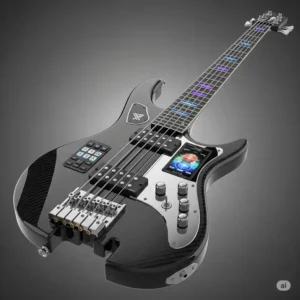
The evolution of headless bass design continues at an exciting pace. Recent technological advances suggest several promising directions for the future:
Material Innovations: Manufacturers are increasingly exploring composite materials, carbon fiber components, and innovative wood treatments to enhance stability while reducing weight. These advances promise instruments that maintain perfect setup regardless of environmental conditions.
Hardware Refinements: The specialized tuning systems that define headless basses continue to improve, with smoother operation, greater precision, and enhanced compatibility with various string types. These refinements address the primary historical limitations of headless designs.
Expanded Availability: What was once a niche segment is steadily becoming more mainstream. Major manufacturers are introducing headless options at more accessible price points, while boutique builders continue pushing the boundaries of what’s possible at the premium end of the market.
Customization Options: The direct-to-consumer model embraced by many headless bass manufacturers enables unprecedented levels of customization, allowing players to specify exactly the features, woods, and electronics that suit their needs.
For bassists looking to reduce physical strain, improve playability, or simply stand out visually, headless bass guitars offer compelling advantages worth exploring. Whether you’re considering your first headless instrument or looking to expand your collection, today’s diverse market provides options for every preference and budget.
The headless bass guitar has evolved from experimental oddity to legitimate alternative, earning its place alongside traditional designs in the modern bassist’s arsenal. As more players discover the practical benefits these instruments offer, their popularity will likely continue to grow, cementing their position as much more than a passing fad.
Frequently Asked Questions About Headless Bass Guitars
❓ How much does a quality headless bass guitar typically cost?
✅ Quality headless bass guitars range from $600-$5000+ depending on construction and features. Entry-level models from brands like Harley Benton start around $600-$800, while mid-range options from Ibanez and Kiesel fall between $1200-$2000. Premium and custom shop models from Strandberg, Mayones, and NS Design can exceed $4000...
❓ Are headless bass guitars harder to play than traditional basses?
✅ Headless bass guitars aren't necessarily harder to play, but they require an adjustment period. The improved balance often makes them easier to play once you've adapted to the different feel. The tuning system takes some practice, and the lack of a headstock reference point may feel disorienting initially. Most players adjust completely within 2-3 weeks of regular playing...
❓ What's the best string type for a headless bass guitar?
✅ The best strings depend on your specific headless bass model. Double-ball systems require specialized strings from manufacturers like D'Addario, LaBella, and Rotosound. Standard string-compatible systems can use conventional single-ball strings, though installation differs from traditional basses. For optimal tone and playability, match string tension and gauge to your scale length and tuning...
❓ Can I travel with a headless bass guitar on airplanes?
✅ Yes, headless bass guitars are ideal for air travel due to their compact size. Many models fit in specialized cases that meet airline carry-on dimensions, eliminating checked baggage fees and potential damage. Remove string tension before flying to prevent stress on the neck, and consider models with detachable necks if frequent travel is essential. Always check specific airline policies before traveling...
❓ Which famous bassists use headless bass guitars?
✅ Notable headless bass guitar users include Tony Levin (Peter Gabriel, King Crimson) with his Stick and NS Design basses, Les Claypool (Primus) with custom models, John Myung (Dream Theater) with Steinberger designs, Adam Nitti with his signature NS basses, and Jonas Hellborg with custom instruments. Modern players like Tosin Abasi and Yvette Young have also incorporated headless basses in their arsenals...
Recommended for You:
- 10 Best Cort Bass Guitar Models For Professional Musicians in 2025
- Electric Guitar Cost: The Complete Guide for Beginners to Pros (2025)
- 10 Best Bass Speaker Kit Options For Powerful Audio Performance in 2025
Disclaimer: This article contains affiliate links. If you purchase products through these links, we may earn a small commission at no additional cost to you.
✨ Found this helpful? Share it with your friends! 💬🤗