As an Amazon Associate I earn from qualifying purchases. Links in this article may be affiliate links. How we choose gear
Which saxophone should you buy in 2027, and how much of the price pays for the horn rather than the setup around it? For most first-time buyers the answer is an alto from a maker with a track record, or a cheaper import that a technician has gone over before you start playing. Tenor suits some adults, and a bass sax suits almost nobody who is still learning where the keys are.
Maker spec sheets, dealer listings and long owner threads on Cafe Saxophone and Sax on the Web supply the facts below; nobody at this site has played these instruments, so every pick is reasoning from those sources. The method comes first, in five decisions made in order. After that come the ways bargain horns go wrong, the low end of the family, and four real instruments tied back to the steps.
Five decisions that settle the purchase, in order
Each decision removes options, so by the fifth one the shortlist is down to two or three horns.
Pick the family: alto, tenor, or something rarer
An alto is pitched in E-flat and a tenor in B-flat, and the alto is the more compact and lighter of the two, according to the beginner guide at retailer Music Store. Yamaha’s matching student pair shows the gap: one dealer lists the YAS-280 alto at 2.4 kg and the YTS-280 tenor at about 3.2 kg, while another dealer gives 3.38 kg for the tenor with its neck. Mouthpieces and reeds are not shared between the two either, so switching later means rebuying them, as BetterSax points out.
The rarer horns follow different rules. Ted’s List notes that few student sopranos exist, which pushes buyers toward pricier models, and Musician’s Friend says baritone and bass saxes seldom appear at the student level. Sax School Online calls the baritone heavy and hungry for air.
My own default is alto unless something specific pulls you elsewhere. Adults who simply love the tenor sound can ignore that; Dynamic Music Room argues that anyone past middle school can pick whichever they want.
Set the budget around the extras, not the sticker
Members of the Cafe Saxophone forum who dug into cheap imports say a decent mouthpiece, good reeds and a technician’s setup can push the real total well beyond the horn’s own price. One of them calls good reeds an absolute and a better mouthpiece almost necessary.
The tiers on the pages checked are easy to state. Import kits such as the Eastar AS-II sit around $260 in BetterSax’s review, with other kits listed under $300. The Jean Paul AS-400 runs roughly $600 to $700 across the maker’s site and dealers. Name-brand student altos like the Yamaha YAS-280 land between about $950 and $1,150 at dealers. Check the current price on Amazon.com for each; those ranges come from other retailers.
Decide who checks the horn before you do
Forum member jonf recommends buying from a music shop rather than a marketplace unless you know what you are doing, and mizmar adds that big retailers can absorb the quality “lottery” with inventory and easy returns. A Canadian retailer’s buying guide from Twigg Music goes further and warns that cheap Yamaha-branded saxes sold on large platforms are likely counterfeit.
The practical version: confirm the seller is the maker’s own store or an authorized dealer, read the return window before paying, and plan a leak check with a technician. Jean Paul sits in the middle ground. Its listings say each horn is set up by NAPBIRT-certified technicians in Miami, even though a dealer notes the instruments themselves are sourced from East Asia.
Read saxophone reviews for what broke, not for the star average
Thomann’s pages show 4.7 out of 5 across 266 ratings for the YAS-280 and 4.8 across 66 ratings for the YTS-280. Those are one retailer’s customers, mostly happy ones, so the number says little about failure rates.
In saxophone reviews, specific complaints carry more weight. BetterSax’s tester found sticky pads and a thin case on the Eastar, and the Cafe Saxophone thread keeps returning to quality as a lottery. Search reviews for words like leak, sticky, neck cork and case, then see whether the same fault appears more than once.
Hold it, or at least know what it weighs
Weight matters more on a tenor than on an alto. An Australian shop, Joondalup Music, suggests a harness instead of a neck strap for players who find a tenor heavy, and Bash’s Music says to hold both sizes before choosing.
Adjustable thumb rests, listed on Yamaha’s student models, help with hand size. At the far end, one dealer lists the Levante bass sax at 8.6 kg, roughly two and a half times the Yamaha tenor’s weight and the reason it ships with a stand.
Three ways a bargain horn ends up at the repair bench
Most of the problems below are fixable, but each costs money the sticker price hid.
Skipping the technician check
Cafe Saxophone members describe cheap imports as arriving in widely different condition, with one member’s rough estimate being a third unplayable, a third decent and a third good for the price. That is an informal guess, not data, though the lottery framing shows up repeatedly. The recovery is to pay a technician to leak-test and adjust the horn before blaming your embouchure. MarkSax’s line on the thread, that a cheapie remains a cheapie, is a reminder that upgrades will not change the grade of the horn.
Trusting the logo instead of the seller
A famous name at an oddly low price is the pattern Twigg Music warns about. If the listing is not from the maker or an authorized dealer, ask for proof of the serial number or choose another seller.
Buying more horn than the player can carry
A baritone or tenor chosen for sound alone can outweigh the player, and Sax School Online’s description of the baritone as heavy is the warning sign. Dropping back to a name-brand alto, which JazzFuel says holds its resale value, costs less than giving up.
Bass saxophone for sale: what the low horn costs and who actually buys one
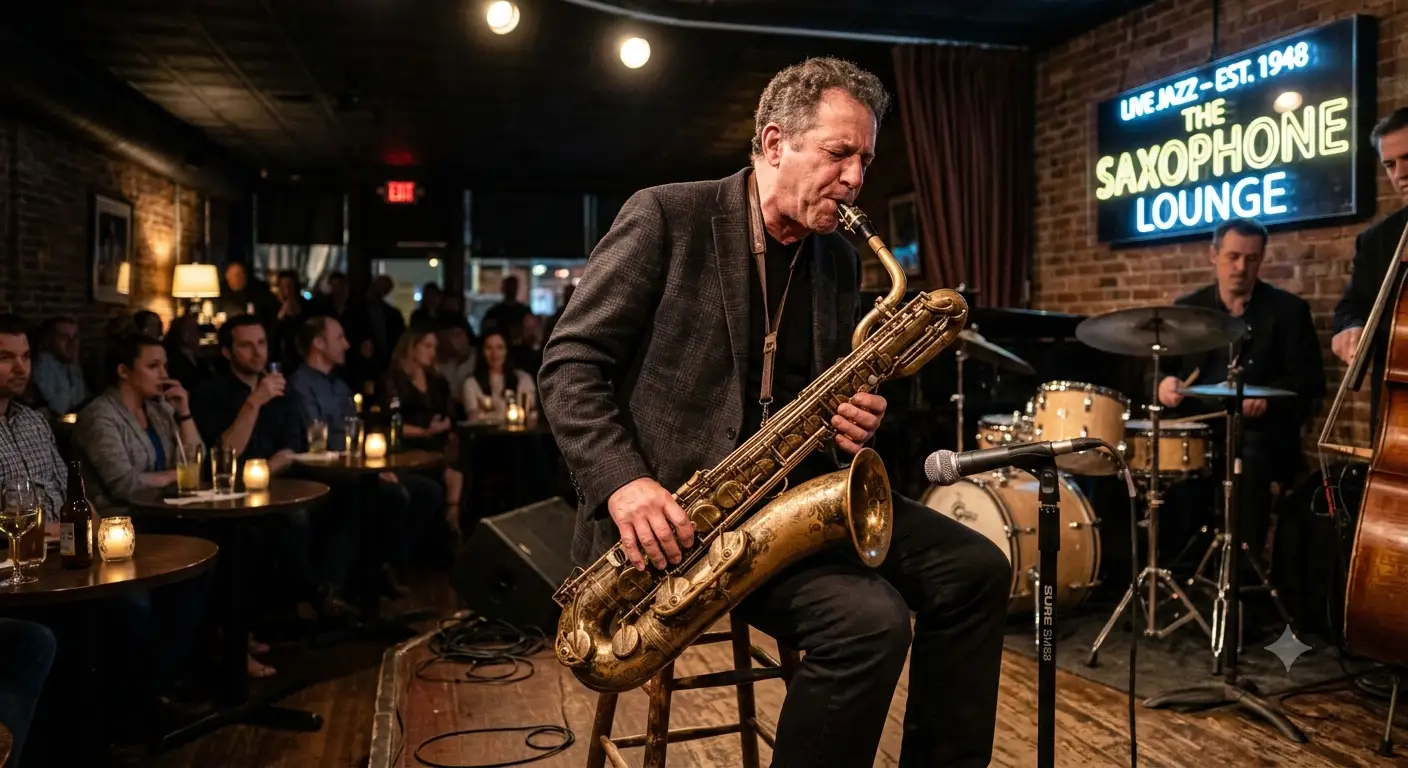
The bass saxophone is pitched in B-flat, an octave below the tenor and a perfect fourth below the baritone, and it sounds two octaves and a major second lower than written, according to Wikipedia’s bass saxophone entry. The same entry says it was used for bass lines in early jazz and dance bands, then virtually disappeared in the 1930s, with size, mechanical complexity and price among the suggested reasons. Today it turns up in saxophone choirs, free jazz and some rock, with Colin Stetson the best-known modern player. A saxophone bass part in a sax choir is the clearest reason to want one.
Dealer pages explain why bass saxes are rare in beginners’ hands. Musician’s Friend says baritone and bass models range from intermediate to professional designs and that student-level versions are less common. Its 24 listed baritone and bass models run from roughly $4,500 to over $21,000. At the top, Chuck Levin’s lists the P. Mauriat PM-350GL in the mid-$20,000s (sold out when checked) and pitches it at military bands and collegiate programs.
The cheaper road in is the Levante LV-SB5105, which Musician’s Friend describes as affordable as far as bass saxophones go. New and mint-used examples at US dealers on Reverb, eBay and Butler Music fall between roughly $7,000 and $9,000. A Sax on the Web owner who bought one years ago for far less than today’s prices says it played right out of the box with solid keywork, while a second Levante owner in the same thread reports intonation issues and a bass-facing mouthpiece that enriched the low end. That is two owners, so treat the mixed picture as a prompt to test the exact horn.
Most bass-sax stock sits with music dealers, so check current availability and the seller on Amazon.com rather than assuming the same horn is listed there.
Best saxophone picks: four horns, each tied to a decision above
The best saxophone is the one that survives the five decisions above, so these four cover a safe alto, a value alto, a tenor and a bass. The table lines them up before the entries.
| Model | Family | What the listings include | Weight in listings | Price range at dealers |
|---|---|---|---|---|
| Yamaha YAS-280 | Alto, E-flat | Case, 4C mouthpiece, strap, cork grease (Thomann bundle) | 2.4 kg | About $950 to $1,150 |
| Jean Paul AS-400 | Alto, E-flat | Case, mouthpiece, Rico reed, swabs, gloves | Not listed | Roughly $600 to $700 |
| Yamaha YTS-280 | Tenor, B-flat | Case, 4C mouthpiece, strap, cork grease | About 3.2 to 3.4 kg | Above $1,500 |
| Levante LV-SB5105 | Bass, B-flat | Wheeled case, mouthpiece with reed, stand | 8.6 kg | Roughly $7,000 to $9,000 |
The spread is the story: the cheapest of these costs about a tenth of the dearest, yet both are real instruments from different families. The two Yamahas cost the most in their class, and the brand’s resale value is part of what buyers pay for. The Jean Paul AS-400 is the cheaper way to get a horn that someone has already adjusted, which is the main reason it appears here ahead of the cheapest kits.
1. Yamaha YAS-280 — the low-risk alto to start on
JazzFuel calls this possibly the most-recommended beginner sax of all time, and Yamaha’s own page for the 280 series explains the appeal in design terms: a redesigned neck receiver for quicker response, regular key posts that reduce resistance, an improved low B to C-sharp connection, and a J-style key guard to protect pads from knocks. The maker’s product page lists the ASC-200EII semi-hard case with it.
At 2.4 kg on Thomann’s listing, it is light enough for a younger student. One Thomann reviewer says they now play a Yanagisawa tenor yet still go back to this alto, which is a single owner’s view rather than a consensus.
Pros:
- ✅ Bundles at dealers include a 4C mouthpiece, strap and cork grease
- ✅ JazzFuel says it holds resale value well
Cons:
- ❌ JazzFuel notes it costs more than double some budget brands
- ❌ Yamaha’s page does not list a mouthpiece, so bundles differ by seller
Check current availability and the exact bundle on Amazon.com before ordering.
2. Jean Paul AS-400 — a mid-price alto that arrives adjusted
Between the cheapest kits and the Yamaha sits this one, and the main argument for it is setup. Dealer listings say each horn is adjusted by NAPBIRT-certified technicians in Miami before shipping, and a one-year manufacturer’s warranty is listed. BetterSax’s Jay Metcalf recommends it over the budget Eastar when money allows, mostly because it ships with a much better case.
Readers on BetterSax’s review report good customer service, including one who ordered a replacement neck and mouthpiece from the UK. Those are comments under a review, so they show a pattern at one maker rather than a verified service record. The Cafe Saxophone member who had been pricing out cheap imports for kids says he has shifted interest to Jean Paul and BetterSax horns.
Below this tier sits the Eastar AS-II. BetterSax rated its setup the best he had seen at the price, with almost no mechanical play in the keys, then flagged sticky pads, a very cheap case and a plastic mouthpiece. In a blind comparison against his roughly $4,500 Yanagisawa the difference was hard to hear. That makes it a workable first horn if you budget for a technician, and not much more.
3. Yamaha YTS-280 — a tenor for adults who want the lower voice
Anyone who knows they want the deeper sound can start here; the horn is a B-flat tenor with a high F-sharp key, front F key and adjustable thumb rest, built in gold lacquer with a brass body. A Thomann listing puts its weight at about 3.2 kg, and a separate dealer gives 3.38 kg with the neck, so expect over seven pounds hanging from your neck.
Thomann’s page shows 4.8 out of 5 across 66 ratings, and one reviewer says it played well from top to bottom straight from the box. That is a retailer’s own customer pool. BetterSax adds that tenors cost more than altos, and the Yamaha is no exception, running well above $1,500 on the dealer page checked. A cheaper step-down is the Jean Paul TS-400 at around $900 in BetterSax’s review, though that price dates from the video.
4. Levante LV-SB5105 — the entry-priced bass for sax choirs
Choirs and bands that need a low part are the buyers this horn is for. It is a B-flat bass with an auxiliary low A key and high F key, a water key, pearl key buttons and leather pads, per dealer listings, and one listing gives its weight as 8.6 kg. It ships with a wheeled case and an adjustable stand.
Pros:
- ✅ Musician’s Friend calls it affordable by bass-sax standards, with US hand adjustment
- ✅ An owner reports it played out of the box with solid keywork
Cons:
- ❌ Another owner reports intonation issues and needed a better mouthpiece
- ❌ New and mint-used listings run roughly $7,000 to $9,000
Check current availability below and look closely at who the seller is.
Saxophone best songs: what to practice on each horn
Famous solos give a beginner a goal long before technique is ready, and most have published arrangements. Yamaha’s own list of top sax solos names Gerry Rafferty’s “Baker Street” (1978, Raphael Ravenscroft) and George Michael’s “Careless Whisper” (1984, Steve Gregory) beside John Coltrane’s “Giant Steps,” Pink Floyd’s “Money” (tenor, Dick Parry), David Bowie’s “Young Americans” (alto, David Sanborn, 1975) and Springsteen’s “Jungleland” (Clarence Clemons).
A UK sax teacher reports that “Baker Street” is the tune adult students request most. Tomplay offers arrangements of both “Baker Street” and “Careless Whisper” for soprano, alto or tenor, and Sheet Music Direct carries a full alto arrangement of “Baker Street.” Dave Brubeck’s “Take Five” (1959) adds a 5/4 groove with Paul Desmond’s sax melody for later. For a saxophone bass part, Colin Stetson’s solo work and sax choirs are where the bass horn shows up.
Used horns, first-year budgets and bass saxes: short answers
❓ Is an alto or tenor saxophone easier for a beginner?
❓ How much should I spend on a first saxophone?
❓ Are cheap Amazon saxophones worth buying?
❓ How much does a bass saxophone cost?
❓ What are the best saxophone songs to learn first?
Which saxophone to buy: a rule you can apply today
If you have never played, buy an alto and spend the money in this order: a horn that someone competent has adjusted, then good reeds and a decent mouthpiece, then a technician’s check within the first months. The Yamaha is the lowest-risk way to follow that rule, and the Jean Paul is the value route if the budget will not stretch. Move to tenor only if you have held one and the weight feels fine.
A bass sax is a different purchase altogether; it makes sense when a choir or band needs the part and the budget reaches into five figures. In every case, favor sellers who accept returns, because the sources agree on one thing: a quiet fault on a bargain horn is easy to miss and expensive to chase later. Check current availability on Amazon.com for the model you settle on.
Recommended for You
- Guitar vs Ukulele: 7 Surprising Differences & How to Choose Your Perfect Musical Companion
- Bass Saxophone Guide 2026: 7 Real Picks (Beginner to Pro)
- 7 Best Bass Saxophone for Sale Options to Transform Your Sound in 2026
Disclaimer: This post contains affiliate links. As an Amazon Associate, I earn from qualifying purchases made through these links, at no additional cost to you.
Pick one horn, one tune and one technician check, and the first month gets a lot easier. 🎷