As an Amazon Associate I earn from qualifying purchases. Links in this article may be affiliate links. How we choose gear
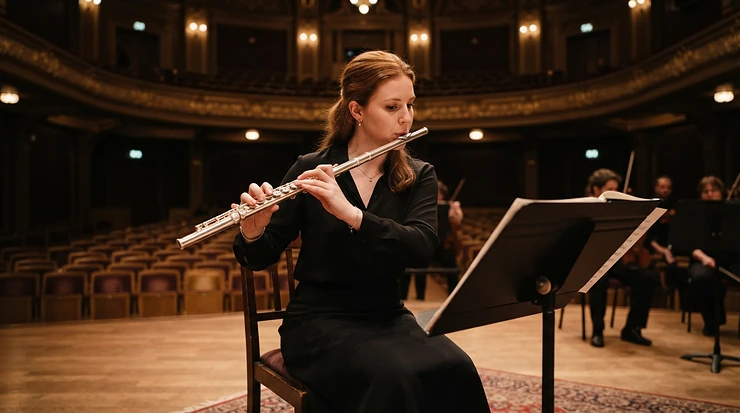
Two hypothetical shoppers show why alto flutes defy a single ranking: a pit doubler handed an alto part for a spring musical, and a composer who wants that dark, breathy color for a film cue and has never held the instrument. The doubler needs something that survives a crowded pit and suits a right arm that already works hard. The composer may not need a flute at all. This 2027 guide sorts out both cases, then ties five real models to five situations.
Maker spec pages from Pearl, Jupiter and Gemeinhardt, dealer listings, an essay by flutist Dr. Christine Potter and several forum threads supply the findings, and since nothing was played for this guide, every remark about tone or comfort belongs to the person who made it. Prices appear as ranges from US dealer pages, so confirm the current price on Amazon.com before ordering.
Arm reach, headjoint shape, foot joint and weight: what sorts alto flutes before the badge does
Wikipedia’s alto flute entry describes a transposing instrument in G that sounds a perfect fourth below the written note, runs about 34 inches long, and has a bore roughly a quarter inch wider than a concert flute’s. Length and bore explain most of what follows.
Weight comes first. Tetractys, a UK specialist retailer, warns that the alto asks for more physical strength than a C flute and tells buyers not to mistake muscle weakness for a reach problem. Erin, an alto player writing for Virtual Sheet Music, adds that heavier metals strain the right arm, especially behind a straight headjoint, and recommends nickel silver with silver plating as the affordable first choice. Yamaha’s own page says its gold-brass Yamaha YFL-A421 is considerably lighter to hold than traditional altos, yet dealers show it between about $7,600 and $9,900, well outside a first purchase.
Budget sets the floor. Brass N Wind’s buying guide puts a new beginner alto at no less than about $2,000 and an upgrade at $3,000 to $4,000, with the top handmade models near $15,000.
Alto flute with curved headjoint: who it helps and what it costs in tone
A curved headjoint folds the top of the instrument back toward the player. The Wikipedia entry says that suits smaller players because it cuts arm stretch and brings the balance point closer, while a straight head plays more easily in tune in the high register thanks to a true conical bore.
Dr. Christine Potter’s essay turns that trade into working detail. On the curved head, she reports, notes from the C above the staff run sharp and call for alternate fingerings, whereas the straight head tunes better in the third octave but makes short-armed players twist the right wrist. For one instrument she tells buyers to go with the curve, and she adds that practicing on the curved head while performing on the straight one does not work, because the straight head still needs its own hours.
Owners split. In an April 2024 r/Flute thread, one commenter called the curved head a compromise made for arm ergonomics, and another bought both heads and ended up playing only the straight one. A third likes having both because tight pit space sometimes favors the curved head, and a fourth, petite and living with arthritis, sold a straight-head alto for a curved Trevor James. That is a spread of opinion, not a consensus.
Price follows the same fault line. A Flute4u buying guide says straight-only versions usually cost less than curved-only ones and that buying both heads costs more up front, with the Pearl 201 as the exception where either single head costs the same.
Alto flute with B foot: a half step few parts ask for
Most altos end in a C foot, whose lowest written note sounds as G. Brass N Wind says some pricier models add a low B key that reaches a half step lower, to a sounding F sharp, and that much of the repertoire never calls for it. Pearl’s spec table shows the idea in miniature: across its 201, 206 and 207 series every model has a C foot except the Pearl PFA-207BES, which adds a B foot and split E.
A US dealer’s page for the 207 series says the B foot is a special order with a straight headjoint only, and dealer prices for the series run from about $4,300 to $4,750. One r/Flute commenter measured a B-foot alto at 95 cm with a straight head, against about 80 cm for a C-foot alto with a curved one, so the extra note also adds length.
Split E is a more common extra. Brass N Wind calls it helpful for the third-octave E but not essential, and three of the five picks below include it.
Alto flute vs clarinet: pitch, tone and what each one asks of you
Players weighing alto flute vs clarinet are usually choosing a second instrument or a section role. A standard flute reads C4 to C7, so by my arithmetic the alto’s sounding range lands near G3 to G6. Dynamic Music Room gives the B clarinet D3 to B 6, which means the two share most of their territory, with the clarinet reaching a fourth lower.
Tone separates them more than range does. That site hears the concert flute as light, airy and pure and the B clarinet as rich, mellow and soothing, though it compares those two instruments rather than the alto. Wikipedia credits the alto with a rich, mellow tone in its lower range and extra dynamic presence in the bottom octave and a half, which narrows the gap.
Starting out is easier on the clarinet, according to Dynamic Music Room, because flute tone depends on aiming the air precisely; over the long run it calls the two about equally difficult. Cost points the other way for a first purchase. The same page puts intermediate flutes near $2,000 and clarinets near $2,500, and a new beginner alto starts at roughly the flute figure, while a Thomann reviewer who bought one put altos at about double the price of a C flute.
The part decides it. Flute choirs, film cues and chamber works ask for the alto by name, and a flutist already owns the embouchure. A player with no flute background who just wants a low woodwind voice may find the clarinet the gentler start.
Best alto flutes for five different situations
Each pick starts from a situation rather than a ranking, which is why the right pick for a doubler and the right pick for a school choir are different instruments. The table lines up what maker and dealer pages list, and the entries explain what that means in use. Found a configuration that suits your reach? Take a closer look at its listing on Amazon.com.
| Model | Headjoints in the version named | Split E | Foot | Finish | Price clue |
|---|---|---|---|---|---|
| Pearl PFA-201ESU | Straight and curved | Yes | C | Silver-plated, sterling lip plate and riser | Entry 201 versions roughly $2,050 to $2,300 |
| Jupiter JAF1000XE | Straight and curved | Yes, per one dealer | C | Silver-plated nickel silver | Roughly $2,400 to $3,150 |
| Di Zhao DZA-100 | Straight and curved | Yes | C | Silver-plated | Around $2,300 on sale at one dealer |
| Trevor James Performer Alto Flute | Straight, curved or both | Not on the spec sheet | C | Silver-plated, sterling lip plate and riser | Check the current price on Amazon.com |
| Gemeinhardt 11ACD | Straight and curved | Not mentioned | C | Silver-plated | Check the current price on Amazon.com |
Every pick ends in a C foot, so the real splits are headjoint supply, split E and who stands behind the instrument. Three of the five bundle both heads with split E, which is the clearest way to hedge a reach decision you cannot test beforehand.
1. Pearl PFA-201ESU — a short reach, both headjoints included
Arm length and wrist comfort decide a first alto more often than a maker’s reputation, and the Pearl PFA-201ESU is built around that fact. Pearl’s spec table lists the 201 series with a sterling silver lip plate and riser on silver-plated head, body, footjoint and mechanism, and the ESU version supplies both headjoints plus split E on a C foot. A UK dealer’s listing adds an offset G, French pointed key arms and Pearl’s pinless, one-piece core-bar mechanism, and says the curved head reduces stretch and centralizes weight.
Reviews are thin but instructive. Thomann shows 3.5 out of 5 from four customer ratings for the Pearl PFA-201ESU: one buyer received an example with a bent trill key and was disappointed in its response, while another chose it for the price and Pearl’s reputation for lasting construction, which his repairer confirmed. Brass N Wind calls the 201 an affordable entry model with an ergonomic left hand but says its lowest notes can be out of tune. A forum member on Fluteland rated the Pearl 201 a little better than the cheaper Jupiter, which is one voice among several.
Dealer prices for the entry 201 versions run roughly $2,050 to $2,300, and the both-heads, split-E configuration costs more.
Pros:
- Both headjoints and split E in one configuration
- Curved-only and straight-only versions cost the same
- Pointed key arms and pinless mechanism, per the dealer listing
Cons:
- Brass N Wind reports weak tuning in the lowest notes
- The both-heads set costs more than either head alone
2. Jupiter JAF1000XE — pit-ready durability with split E
Mid-range money, roughly $2,400 to $3,150 depending on dealer and headjoint set, buys the Jupiter JAF1000XE. Gear4music’s US page lists silver-plated nickel silver headjoints and body, forged dapped keys with stainless steel springs, an offset G and split E, closed holes, a C foot and both a straight and a curved head with a hand-finished embouchure. That page contradicts itself on the case, describing a wood-frame hard case with a nylon cover in the text and a form-fitted zip case in the specs.
Flute Center sells the same line as the 1000X, formerly the 500 series, and lists pointed key arms, double skin pads, a leatherette-covered wooden case, a 12-month service guarantee and free in-home trials. Brass N Wind calls the JAF1000 durable if not the cheapest. An Equipboard digest of forum and Reddit threads says owners find it easy to play but less open than a Haynes Amadeus, and Flute4u warns that on some Jupiter and Altus altos the left-hand keys sit low on the tube, which makes them harder to reach.
Older forum opinion is mixed. A Fluteland member called the Jupiter the best value among the cheaper altos, while an earlier Chiff and Fipple poster found one at a flute fair unfocused and another praised its scale and mechanism. Jupiter models never come curved-only, per Flute4u, so this pick suits the player who wants both heads or a straight one. Flute Center says 1000X, Guitar Center sells the straight-only version as the 517S, and the listing’s headjoint line decides what arrives, so confirm the exact model number before ordering.
3. Di Zhao DZA-100 — Pisoni pads from a newer maker
A newer name on a $2,000-plus instrument invites doubt, and Erin of Virtual Sheet Music says she has not tried Di Zhao’s altos but has liked its other flutes and heard good things. Flutes and Flutists lists the Di Zhao DZA-100 with silver-plated headjoint, body and keys, both headjoints, an offset G, split E and Pisoni pads. Kirstein adds closed keys, a C foot, a cleaning rod, a wooden case and a cover, and a Di Zhao-made sterling straight head defines the DZA-100S sibling.
Shipping is the real-use detail. One Just Flutes reviewer reports the alto arrived out of adjustment after transit but otherwise unscathed, and was excellent once settled. A single report proves little, yet it points to a habit worth adopting with any alto flute: run a chromatic scale against a tuner on day one.
Flutistry in Boston showed the Di Zhao DZA-100 at around $2,300 on sale. Check the current price on Amazon.com for the going rate, since sale pricing at specialist dealers moves.
4. Trevor James Performer Alto Flute — a silver lip plate, no frills
Closed holes, a C foot and no split E keep the spec sheet of the Trevor James Performer Alto Flute short. Howarth’s listing gives a sterling silver lip plate and riser on a silver-plated headjoint, body, footjoint and mechanism, with Y arms, a hand-cut embouchure hole and a C-sharp roller option. All Flutes Plus sells it with a straight head, a curved head or both, and Just Flutes calls it a well-made entry alto that plays well across the range.
Real-use notes lean positive but small. A Fluteland member said a friend with a Trevor James alto is very happy with it, finding it easy to blow with a deep alto sound, and rated it roughly equal to the Pearl. The petite r/Flute commenter mentioned earlier loves a curved-head Trevor James. An Equipboard summary of owner threads describes the copper-alloy sibling as singing but lacking the depth of a Haynes Amadeus, and Brass N Wind prices that copper version above the Pearl.
Retailers disagree on item numbers: Forsyths sells 33223 as a straight-head outfit, while Ackerman describes 33223 with a curved head. No US dealer page opened for this guide showed a price, so check the current price on Amazon.com.
Pros:
- Straight-only, curved-only and both-head configurations exist
- Sterling silver lip plate and riser on the headjoint
Cons:
- No split E on the spec sheet
- Listings conflict on which headjoint an item number includes
5. Gemeinhardt 11ACD — built for school choirs, five-year warranty
Flute choirs in schools tend to buy one alto and share it, and Gemeinhardt aims the 11A series there, calling the silver-plated 11A an excellent choice for schools. The Gemeinhardt 11ACD is the version with both headjoints, and the maker’s page lists a J1 headjoint with standard 0.016-inch walls, silver-plated body, footjoint and keys, closed-hole Y-arm keywork, a C foot and a five-year warranty. It names no split E, and it contradicts itself on the case, listing a hard-shell plastic case without a cover in the spec table and a leather case with a cover in the description.
Guitar Center’s alto page recommends a Gemeinhardt alto for students, although its current listing shows none. Erin of Virtual Sheet Music says Gemeinhardt has improved but finds some older models uncomfortable to hold, which is one player’s view. For a sterling silver headjoint, the 11ASH step-up version sat at about $2,500 at Flute Specialists and was shown out of stock.
No dealer page opened for this guide showed a price for the Gemeinhardt 11ACD, so check the current price on Amazon.com.
Alto flute VST options: when a sample library is the smarter purchase
Anyone writing or producing alto parts, not performing them, can skip the $2,000 floor. An alto flute VST covers the sound for a few dozen dollars to a few hundred, though it cannot tell you whether a straight head suits your arm.
VSL’s Studio Alto Flute is a sample library of 8,255 samples, recorded dry in the Silent Stage studio with a straight-headed instrument, with articulations from legato and staccato to flutter tongue and trills. VSL’s page shows a euro price, and a reseller shows a dollar one, together roughly $70 to $80. It needs an AU, VST, VST3 or AAX host plus an iLok account, and VSL’s minimum specification calls for 16 GB of RAM and an SSD.
Physical modeling is the other route. Audio Modeling’s SWAM Flutes bundles a flute, alto flute, bass flute and piccolo for around $250, runs as VST, VST3, AAX or AU on Mac and Windows, and ties expression, vibrato and flutter tongue to breath dynamics from a MIDI or breath controller. Note changes work without keyswitches, a real convenience for a player who thinks in phrases.
Free options exist too: a HipHopMakers roundup of free flute plug-ins lists Iowa Alto Flute from Bigcat Instruments first. Treat any library as a way to hear the instrument before buying, not a verdict on how a real one will feel.
What alto flutes reviews agree on, and where owners split
Across alto flutes reviews, buying guides and owner threads, including those behind the best alto flutes lists, one point repeats: reach and headjoint are personal, so trial before commitment. Dr. Christine Potter, Flute4u and Brass N Wind all say to try both styles or at least two or three models, and several dealers back that with free in-home trials or a 30-day risk-free period.
Brands draw less agreement. Erin names Jupiter, Pearl, Trevor James and Haynes Amadeus as reliable standbys, but forum threads rank them differently from one year to the next: one Fluteland member favors the Pearl 201, another calls it equal to Trevor James, and a Chiff and Fipple poster once found the Jupiter unfocused. Sample sizes stay small, such as the four Thomann ratings, and nothing in them is a defect rate.
Ways to end up with an alto flute you rarely pick up
Guessing at reach. Tetractys warns that new alto players can mistake weak muscles for short arms, and that the instrument that feels easiest on day one is not always the one to buy. Ask for a trial with both heads.
Practicing on one head and performing on another. Potter and Flute4u both say the intonation gap is wide enough that switching mid-stream hurts tuning, so anyone choosing an alto flute with curved headjoint should spend the practice hours on it and perform on it.
Paying for a B foot you will not use. An alto flute with B foot costs far more, as the Pearl 207 series above shows, and Brass N Wind says much of the repertoire never needs the extra half step, which also adds length.
Skipping the arrival check. Brass N Wind suggests playing a chromatic scale from bottom to top against a tuner, and adjusting the headjoint if every note reads flat or sharp. The bent trill key and the out-of-adjustment reports above show why.
Difficulty, cost and foot joint: short answers about alto flutes
Is an alto flute harder to play than a concert flute?
How is an alto flute different from a bass flute?
How much does a new alto flute cost?
Do I need an alto flute with a B foot?
Should my first alto flute have a straight or curved headjoint?
Choosing among alto flutes: the short version
Reach decides first, headjoint second, and trial or warranty terms third. A short-armed first-timer gets the most flexibility from the Pearl PFA-201ESU, a pit doubler who wants a sturdy mid-range workhorse can start with the Jupiter JAF1000XE, and the Di Zhao DZA-100 suits a shopper comparing makers on Pisoni pads and split E. A silver lip plate without extras points to the Trevor James Performer Alto Flute, and a school choir that values a five-year warranty points to the Gemeinhardt 11ACD. Anyone who only needs the sound should audition an alto flute VST before spending $2,000. Whichever of these alto flutes you shortlist, buy from a seller that offers a trial or return window, and take a closer look at the listing before you decide.
Recommended for You
- Bass flutes: What Suits Your Budget and Role
- Mandolin: Picks Matched to Your Budget and Playing Style
- Delay pedals: Echoes Matched to Your Budget and Board
Disclaimer: This post contains affiliate links. As an Amazon Associate, I earn from qualifying purchases made through these links, at no additional cost to you.
Planning a flute choir’s first low voice this season? Bookmark this guide for the committee meeting.