As an Amazon Associate I earn from qualifying purchases. Links in this article may be affiliate links. How we choose gear
The American Recorder Society tells newcomers to begin on the alto, yet the recorder most children carry home from school is a soprano, which is a different size with a different job. For 2027, this guide sorts out that mismatch with six real models: four sopranos and two altos, all plastic, each aimed at a specific kind of player. A recorder is easy to start and fussy to choose, because three details (fingering system, windway shape and size) change how it feels in your hands more than the brand name does.
Maker pages from Yamaha, rating counts on Thomann’s US store, explainers from the American Recorder Society and forum threads supply the findings here; no instrument was played for this guide, so every opinion about feel is credited to a named reviewer, and prices are rough ranges that Amazon.com may not match. There is no single best recorder for everyone, so the picks are matched to situations rather than ranked: a classroom soprano, a lower-priced soprano with a curved windway, a German-fingered class set, a step-up soprano and two altos for solo practice.
One note on wording. This page is about the woodwind. Near the end, a short section covers capturing your own playing with a voice recorder, a screen recorder or a video recorder, which helps more than it sounds.
Alto first or soprano first? Fingering, windway and pitch decide it
Size comes first. The soprano (also called descant) plays in C and is the small, bright one used in classrooms; Yamaha’s own page calls its Yamaha YRS-23 and Yamaha YRS-24B easy to play, with a clear, soft tone, and says they suit school use. The alto plays in F, is roughly half again as long, and has a lower, rounder voice. The American Recorder Society’s FAQ points adult beginners to the alto, and one commenter in a Reddit thread on a second recorder noted that most solo repertoire is written for alto rather than soprano.
Fingering is the decision that cannot be undone cheaply. Yamaha’s explainer on Baroque versus German recorders says the German system appeared in the 1920s to ease a few awkward notes for beginners, but that some of those notes are harder to play in tune. It also says most schools teach Baroque and that serious players get better tuning from it in the long run. Telling them apart takes ten seconds: on a Baroque model the fourth hole from the top is smaller than the fifth, on a German one it is larger, and many makers stamp a G above the thumb hole on German instruments. Yamaha’s selection guide adds that fingering learned on a German soprano does not carry over to the mostly Baroque alto and larger sizes.
Windway shape is the third difference. Yamaha describes a straight windway as easy to play with a soft, pure tone, and an arched windway as adding slight resistance for better breath control, with more expression and projection. Straight suits a first week; arched rewards a first year.
Material matters less than people expect. The American Recorder Society says a well-made plastic instrument serves a beginner better than a poorly made wooden one, and its FAQ on choosing a recorder points to articles that compare plastic brands for exactly that reason. All six picks below are ABS resin, which keeps the cost low.
Fingering, windway and rough cost across the six models
| Model | Size | Fingering | Windway | Pitch printed by a retailer | Rough US cost |
|---|---|---|---|---|---|
| Yamaha YRS-24B | Soprano | Baroque | Straight | Not listed | Between $5 and $15 |
| Aulos 205A Robin | Soprano | Baroque | Arched | Not listed | Between $10 and $20 |
| Yamaha YRS-23 | Soprano | German | Straight | Not listed | Between $5 and $15 |
| Yamaha YRS-302BIII | Soprano | Baroque | Arched | Not listed | Check the current price on Amazon.com |
| Yamaha YRA-302BIII | Alto | Baroque | Arched | a’ = 442 Hz (Thomann) | Between $30 and $40 |
| Aulos 509B Symphony | Alto | Baroque | Arched | A = 442 Hz (Thomann) | Between $35 and $45 |
Ranges come from Thomann’s and Musician’s Friend’s dollar listings and will shift on Amazon.com. Five of the six use Baroque fingering and only the Yamaha YRS-23 is German, so the real split is the windway: two straight-windway Yamahas for a soft first sound, and four arched-windway models that ask for more breath control.
Cost adds up differently than the sticker suggests. A household with two children in a Baroque class and a parent taking up the alto would spend roughly $75 at the top of these ranges: two classroom sopranos at about $15 each plus an alto at about $45 (my arithmetic from the dollar listings above).
The pitch column deserves a second look. Thomann prints 442 Hz for both altos, while Yamaha’s own pages do not state a pitch. Against the A=440 reference, 442 works out to roughly eight cents sharp (my arithmetic), which matters when you play along with a piano or a tuner app.
Spotted a model that fits your hands and your teacher’s fingering? Take a closer look at its current listing below.
The six recorders, from classroom soprano to home-practice alto
Each entry starts from a situation and works back to the instrument.
1. Yamaha YRS-24B — the Baroque-fingered classroom default
Teachers hand this one out by the box for a reason. Teton Music’s review calls the Yamaha YRS-24B one of the most widely used classroom recorders in elementary music education, and Yamaha’s description pairs it with the Yamaha YRS-23 as an easy-to-play school model. Retailer listings describe three ABS resin sections, Baroque fingering, a straight windway and a cotton bag.
Thomann’s US store shows 4.5 out of 5 from 59 ratings, and the written comments reveal its character. Reviewers there describe the high notes as a little shrill and the tone as carrying a plastic edge next to wood, and one finds it harder to seal the holes, which lets air leak. Those are individual remarks, but they fit a straight windway: a gentle instrument that does not project much. On Reddit’s r/Recorder, a player who started on this model asked about a second soprano, and one reply said that anything clearly better costs many hundreds of dollars.
Dollar listings sit well under $15, so a class set or a spare for the car is an easy purchase. Check the current price on Amazon.com.
Pros:
- ✅ Baroque fingering, the system Yamaha says most schools teach
- ✅ Straight windway keeps the first notes soft and forgiving
- ✅ Priced low enough to replace when it goes missing
Cons:
- ❌ Thomann reviewers call the upper register a bit shrill
- ❌ One reviewer reports air leaking while sealing the holes
2. Aulos 205A Robin — an arched windway at a school price
Between $10 and $20 buys the Aulos 205A Robin, and that is where it gets interesting: Aulos describes a curved windway, a concave bell on the foot joint, three pieces, a cloth bag, an adjustable thumb rest and a cleaning rod, a feature list closer to Yamaha’s step-up 300 series than to its school models. Thomann lists Baroque fingering and double tone holes, with 4.6 out of 5 from 12 ratings.
The sample is small, so treat the praise as a pattern from a handful of buyers. One Thomann reviewer says the tone is clear and bright without the shrillness many people associate with school sopranos, and another reports a stable tone with room for a gentle vibrato. A retailer-page buyer says a music teacher recommended it as an entry-level instrument for their daughter. The one technical gripe on the page is that low C was harder to play without overblowing, which the reviewer compared with a wooden recorder rather than calling a tuning flaw.
Because the windway is arched, it takes a little more breath than the straight-windway Yamaha above, which is the whole trade.
3. Yamaha YRS-23 — the German-fingered option for German-fingered classes
Some schools still teach German fingering, and for those children the Yamaha YRS-23 is the matching model. Musician’s Friend describes a three-piece soprano in C with German fingering, a G above the rear thumb hole, and double holes for C and C-sharp and for D and D-sharp, at a dollar price under $10. Yamaha’s page puts it alongside the Yamaha YRS-24B as a straight-windway school instrument.
The caution is long-term. Yamaha’s explainer says German fingering suits a class that teaches it and says the same music can be played on either system. Early Music Shop’s buying guide goes further and advises most buyers to avoid German fingering because it can limit later playing opportunities, and Ted’s List says it is easier at first but restrictive once you progress. A child who moves from a German soprano to an alto will have to relearn F and a few other notes.
Pros:
- ✅ Simplified F fingering that matches German-system class books
- ✅ Same plastic build and cotton bag as the Baroque twin
Cons:
- ❌ Does not transfer to the mostly Baroque alto and tenor
- ❌ Poor fit for any teacher or method book that assumes Baroque
4. Yamaha YRS-302BIII — plastic that tries to sound like wood
Step-up shoppers usually want a better sound without paying for a wooden instrument, and the Yamaha YRS-302BIII is built for that. Yamaha’s soprano recorder page lists it in the 300 series with an arched windway and the Rottenburgh model shape, and says the series sounds surprisingly close to wood with impeccable intonation, which is a maker’s claim rather than a test result. A retailer listing adds three body sections, double holes, a cotton case, a fingering chart, recorder cream and a cleaning rod.
Yamaha also sells cosmetic variants: the Yamaha YRS-312BIII has a rosewood-style finish and the Yamaha YRS-314BIII a Makassar ebony look, both described as the same instrument in a different coating. A Dutch buyer of the rosewood version, translated on Bax Music’s page, called it plastic but with a tone as clear as wood. A buyer on a Desertcart listing for this model was blunter: a standard, inexpensive but high-quality Yamaha plastic descant, in C as it should be.
No US dollar listing was available for this model among the pages opened, so check the current price on Amazon.com. That same page mixes up captions between model numbers in the 300 series, so confirm the exact model number on the listing before ordering.
5. Yamaha YRA-302BIII — the first alto for solo practice
Alto players sit at a bigger instrument with a wider finger spread, and that is both the draw and the hurdle of the Yamaha YRA-302BIII. Thomann lists a three-piece ABS body with Baroque fingering, double holes, a’ = 442 Hz and a bag, between $30 and $40, with 4.6 out of 5 from 64 ratings (47 of them five-star).
A beginner alto player on Thomann says that after a month it is consistently in tune by electronic tuner, with a round, full sound, no squeak in the high register and reliable low notes. The same reviewer reports a teacher advising them to untwist the head joint about one millimeter because the pitch sounded sharp, which gives more room to tune with others. A returning player had the opposite reaction: after eight years on wood as a child, the plastic sound seemed miles away from wood and a bit like a toy, though the same reviewer put part of that down to rustiness.
Hand size matters before the sound does. In a Mumsnet thread, a parent says a nine-year-old still could not stretch to the F on the treble, which is the alto’s name in British English. Children’s hands are better served by a soprano first.
6. Aulos 509B Symphony — less breath resistance, a meatier alto sound
Where the Yamaha alto is narrow and refined, the Aulos 509B Symphony is open and robust, at least according to the one owner who has both. Thomann lists Baroque fingering, an arched windway, double tone holes, three pieces, A = 442 Hz, a bag and a removable thumb rest, at a dollar price between $35 and $45, with 4.7 out of 5 from 87 ratings.
The wider windway is the main difference reviewers keep returning to. One calls the airflow less resistant than the Yamaha’s, and another says it suits solo practice with an earthy sound after years on soprano. A third reviewer bought it for a home studio, purely for recording, and found the sound balanced though a little cold compared with wood. The caveat is that less resistance is not automatically better: players who want a bit of back-pressure to shape the tone may prefer the Yamaha.
Complaints on its Thomann page are few. The downsides that do appear are eventual clogging, which the same owner says affects both altos, and online grumbling about intonation that one reviewer dismisses as a matter of breath control.
What recorder reviews agree on, and where owners split
Four findings repeat across the pages that were opened, and each one changes what you should buy.
Plastic is not wood, and reviewers say so. On Thomann’s Yamaha alto page, the returning player calls plastic miles away from wood. A reviewer of the Yamaha YRS-24B describes an audible plastic edge. Yet a beginner on the alto page calls the same instrument excellent value, and the American Recorder Society still prefers good plastic over a poor wooden recorder. The consensus is that plastic loses on richness but wins on cost and durability.
Yamaha versus Aulos is a taste question. A r/Recorder thread asking whether Yamaha makes the better recorder drew replies that both brands make good instruments at several price points, that preference is personal, and that some players favor Aulos in the smaller sizes and Yamaha from tenor upward. A 2002 Usenet thread on rec.music.early reached nearly the same view, so this is a long-running consensus rather than a new one.
Narrow windways clog sooner. The Thomann owner who has both altos says the Yamaha’s narrower windway clogs faster and adds resistance, while the Aulos also clogs eventually. He adds that a quick suck on the mouthpiece clears the condensation. This is one owner’s account, though other buyers of Aulos recorders also mention clogging.
Pitch can run slightly high. Thomann prints 442 Hz for both altos, and the beginner who checked with an electronic tuner found theirs in tune while a teacher heard it as sharp. Check the pitch against your own tuner or piano before assuming a fault.
A recorder for kids: age, hand span and the fingering question
Age guidance varies by source, and the honest range is five to seven. Dutch retailer Bax Music says six is a very good age to start as long as the fingers can manage the instrument, Stretta Music says children can begin on a descant at five or six, and parents in a Mumsnet thread lean toward seven, tying readiness to finger span and to being able to read.
Two practical rules follow. First, buy a soprano, not an alto, for small hands; the homeschool site How We Learn starts children on B, A and G, three notes played with the left hand. Second, ask the teacher which fingering the class uses before buying anything, because Yamaha’s own guide says the wrong system makes some notes wrong. When the answer is Baroque, the Yamaha YRS-24B and the Aulos 205A Robin are the two entry points here, and the choice is between a soft straight windway and a slightly more demanding arched one. When the answer is German, the Yamaha YRS-23 is the matching model.
Found a soprano that matches the class list? Take a closer look at its listing before the school term starts.
Keeping a plastic recorder playing: clogs, warm-up and cleaning
Plastic needs less care than wood, yet three habits keep it playing. Warm the head joint before you start, since Ted’s List calls it the most vulnerable part of the instrument and advises warming it first. Clear condensation with a quick suck on the mouthpiece, as the Thomann owner does. And swab the bore now and then with the cleaning rod that the Aulos 205A Robin and the Yamaha YRS-302BIII both list among their accessories.
Yamaha says its soprano and alto models in the 2X series are assembled with press-fit parts, while other models use ultrasonic welding in places. One r/Recorder poster adds that the block of the Yamaha YRS-24B lifts out, which makes cleaning easier; that is a single owner’s report, so check the listing for the model you buy.
Recording your own playing: voice recorder, screen recorder or video recorder?
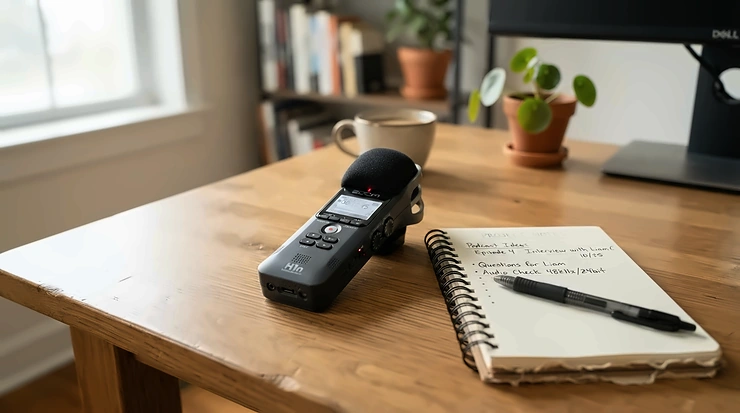
A phone’s built-in voice recorder app is the cheapest teacher you can own. Playing a recorded scale back is a quick way to hear sharp high notes and uneven breath, and one Thomann reviewer bought the Aulos 509B Symphony specifically for home-studio recording. Try holding the phone a few feet from the bell rather than at the mouthpiece, because the upper register can be piercing up close.
A screen recorder helps with online lessons. If your teacher shares sheet music on a call, recording the session lets you replay the exact fingering demonstration afterward. A video recorder, even your phone’s camera, is better when a teacher needs to see your thumb hole and finger placement, and a teacher resource on Pressbooks lists a thumb that does not fully cover the back hole among common beginner problems.
None of these replaces the instrument, but each one turns a practice session into feedback you can listen to later.
Fingering, size and price: short answers on the recorder
❓ Is Baroque or German fingering better for a beginner recorder?
❓ Should my first recorder be a soprano or an alto?
❓ Is a plastic recorder good enough, or should I buy wood?
❓ What age can a child start learning the recorder?
❓ Why does my recorder squeak or clog?
Which recorder to order first
For most households the decision follows one rule: confirm the fingering system with the teacher, then match size to the hands. A child in a Baroque class does well with the Yamaha YRS-24B or the Aulos 205A Robin; a German-fingering class needs the Yamaha YRS-23; a returning adult or a player ready for a step up should look at the Yamaha YRS-302BIII, the Yamaha YRA-302BIII or the Aulos 509B Symphony, choosing between the Yamaha’s narrower, more focused windway and the Aulos’s lower resistance. If you still can’t decide, a Baroque soprano is the safest recorder to start with and the easiest to resell or pass along.
Ready to compare? Take a closer look at the listings that match your fingering and size.
Recommended for You
- Overdrive pedals: 6 Models and What Sets Each Apart
- Bass eq pedal for Different Budgets and Habits
- Semi hollow guitars: 6 Models and How They Differ
Disclaimer: This post contains affiliate links. As an Amazon Associate, I earn from qualifying purchases made through these links, at no additional cost to you.
Once the right recorder arrives, record your first scale on your phone and play it back a week later to hear how far you have come. 🎶