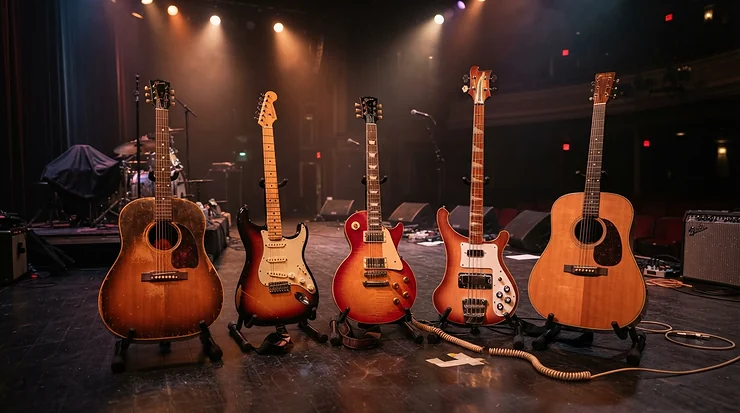
Why do telecaster guitars that look nearly identical on a shop wall land at such different prices? Guitar World’s buying guide points to the usual suspects: tonewood, pickups, hardware and neck shape. Each of those changes what the guitar costs, how it plays out of the box and how much work it asks of you afterward, so this 2027 plan sorts telecaster guitars by where the money is actually felt.
The findings rest on Guitar World’s reviews, retailer spec sheets, a Killer Guitar Rigs review and owner threads on Reddit and Thomann; no guitar was handled for this article, and prices appear as ranges because retailer figures move. Four picks follow: three finished guitars and one telecaster guitar kit for people who would rather build.
The quick verdict: three finished guitars and one project
A first-time buyer on a modest budget gets the most guitar from the Squier Classic Vibe ’50s Telecaster. The reasoning sits in the specs: a bone nut, alnico pickups and a light pine body in a price tier well below Fender’s. Someone planning to gig for years is better served by the Fender Player II Telecaster, since owners who have held both lean toward the Fender. The Squier Affinity Telecaster is the cheapest honest way to find out whether a Tele suits you at all. The Solo TCK-1 DIY Electric Guitar Kit is for people who want the building as much as the guitar.
Everyone else lands between those poles, and the next section shows how to place yourself.
Sorting Telecaster guitars by wood, bridge, pickups, neck and setup
Six checks, done in this order, narrow the field faster than a brand name does.
- Name the job. A first guitar, a stage guitar and a weekend project reward different things. Guitar Chalk describes budget Teles as suited to beginners, casual players and backup or practice use, while owners who recommend the Player II talk about a keeper they will hold for years.
- Read the body wood and the weight. Guitar World’s guide says ash tends to sound brighter and alder rounder. Guitar Chalk says budget Telecasters usually use poplar or basswood, and Killer Guitar Rigs ties the Classic Vibe’s light feel to its pine body. Weight still varies inside one model: one r/telecaster owner found a Classic Vibe too heavy, while another weighed theirs at 7.5 pounds. For the Affinity, zZounds lists poplar, though a couple of review blogs say alder, so the spec sheet of the exact listing settles it.
- Look at the bridge. A vintage three-saddle bridge is part of the classic sound, but Killer Guitar Rigs found the Classic Vibe’s three barrel saddles accurate out of the box and harder to adjust than a six-saddle design. Builders on Thomann’s page for a budget T-style kit went further, writing that perfect intonation is hard or impossible on three saddles, although some players prefer the tone. Mixdown’s reviewer calls the Player II’s six-saddle bridge easier to intonate.
- Check pickups and controls. Guitar World says single-coils are bright and clear, while humbuckers and mixed setups sound beefier. The Classic Vibe and Player II use alnico single-coils; zZounds lists ceramic single-coils on the Affinity, which Guitar Chalk says sound brighter and less dynamic than pricier pickups.
- Compare necks and fretboards. Thinner necks suit speed, thicker ones suit blues and rock, and a modern C sits in the middle, per Guitar World. Neck feel is also the most contested spec: zZounds lists a slim C on the Classic Vibe while Killer Guitar Rigs called it chunky. The ’50s Classic Vibe only comes with maple, a thread on r/telecaster points out, whereas the Player II brought rosewood back.
- Budget for setup. Guitar Chalk says budget Teles may need adjustments out of the box and make a good base for pickup, bridge and tuner upgrades. A new nut slot, a truss rod tweak or a bridge height change is cheap if you can do it and a tech visit if you cannot.
Anyone typing “telecaster best guitar” into a search box is really asking which of these trade-offs matters most to them, and the honest answer changes with the player.
Three ways a Telecaster purchase turns into a second purchase
Upgrade creep is the first. Several commenters in an r/telecaster thread say the Squier’s stock pickups and electronics trail the Player’s, so a swap would help, while others find the Classic Vibe great as it comes. One owner who held both sold the Squier and reports no regret about moving up. Killer Guitar Rigs puts the Fender Player at almost twice the Squier’s price, so pickups, a nut and a professional setup can close much of that gap before the guitar feels finished. That is a reason to compare the finished cost, not the sticker.
Kit optimism is the second. A builder on r/Luthier described a budget Tele kit as barely playable at first: awful intonation, cheap strings, uneven frets, high action and a bad nut. Builders on Thomann’s page for a Harley Benton T-style kit repeat parts of that story. Several found no shielding and a manual that never mentions it, which leaves pickups buzzing, and some found a plastic nut cut too high and holes drilled out of line, though others reported everything lining up. Different kit, same category of surprises.
Small costs and fit problems are the third. The Player II ships without a case, according to both Guitar World and zZounds. Killer Guitar Rigs warns that the Classic Vibe uses metric parts, so Fender-branded replacements may need new holes. And the maple-only fingerboard on the ’50s Classic Vibe surprises buyers who assumed every Tele could be had with rosewood.
Best telecaster guitars for each fix: four picks
Each pick below answers one of the problems above, and the order runs from lowest cost to most work.
1. Squier Affinity Telecaster — lowest-cost way into a Tele
Between $250 and $330 covers the Affinity in the retailer figures Guitar Chalk and zZounds publish, the lowest rung among the finished guitars here. The zZounds spec sheet describes a satin-finished maple C neck, a maple or Indian laurel fingerboard on a 9.5-inch radius, 21 medium jumbo frets, a synthetic bone nut, sealed die-cast tuners and a six-saddle string-through bridge.
Guitar Chalk is blunt about the trade: sealed tuners in this tier are less stable than premium ones, the guitar may need setup right away, and it works well as a base for later upgrades. The one buyer review shown on zZounds says it sounds much like the reviewer’s 1976 Fender and needed little setup, a single report, but it fits the pattern of a guitar that is better than its price when someone adjusts it. The six-saddle bridge is a real advantage here, since intonation is simpler to correct than on the Classic Vibe’s three barrels.
Check current availability of the Squier Affinity Telecaster on Amazon.com.
2. Squier Classic Vibe ’50s Telecaster — vintage spec at a mid price
For buyers who want the blackguard look without Fender’s price, this is where the spec sheet gets interesting. zZounds lists an all-pine body, a maple neck with a tinted gloss finish, 21 narrow-tall frets, a bone nut and Fender-designed alnico pickups, at around $400 to $450 in the retailer figures read for this article. The same page shows 5 out of 5 from 64 ratings, though only one written review is displayed.
Killer Guitar Rigs adds hands-on detail: low, buzz-free action from the factory, accurate intonation, a bright snappy bridge pickup and strong clean tones. It also notes the pickups are wound to Fender specs but not made in a Fender factory. The split among owners is real. In the r/telecaster thread, roughly a dozen commenters lean toward the Classic Vibe for value and about ten toward the Player II, and several mention inconsistent quality control, so inspecting the guitar on arrival matters.
Pros:
- ✅ Bone nut, alnico pickups and tidy fret ends, per Killer Guitar Rigs
- ✅ Lightweight pine body with low factory action
Cons:
- ❌ Neck pickup sounds somewhat muddy on its own
- ❌ Maple-only fingerboard, unbranded pots and metric parts
Spotted one you like? Take a closer look at the Squier Classic Vibe ’50s Telecaster on Amazon.com.
3. Fender Player II Telecaster — modern spec for stage use
No gig bag comes in the box, a small cost to price in before ordering. What you pay for is a Fender with alder, a maple neck in a modern C profile, a 9.5-inch radius, 22 frets, two Alnico V single-coils and a six-saddle block-steel bridge, as Guitar World’s Player II review lists them. Retail figures run between $750 and $950, depending on body wood and retailer, based on that review and a zZounds listing.
The reviewer found a very bright bridge pickup and a dark, woolly neck pickup, enough drive for punk and Tom Morello-style riffing, and no Telecaster-specific quality complaints; it will not reach full metal. Owners in the r/telecaster thread who had both guitars mostly preferred this one, one calling the Fender “noticeably nicer,” and commenters agreed Fender-branded guitars hold value better.
Experiences do differ. A single zZounds reviewer, who bought a blemished unit, reported rough fret edges and a nut that slid out, while Mixdown’s reviewer found no rough spots at all. Condition out of the box varies, so a setup check is worth doing either way. Left-handed buyers should know that Guitar World lists lefties only for the standard Player II Telecaster, not the Modified versions.
Check current availability of the Fender Player II Telecaster on Amazon.com, including which body wood the listing names.
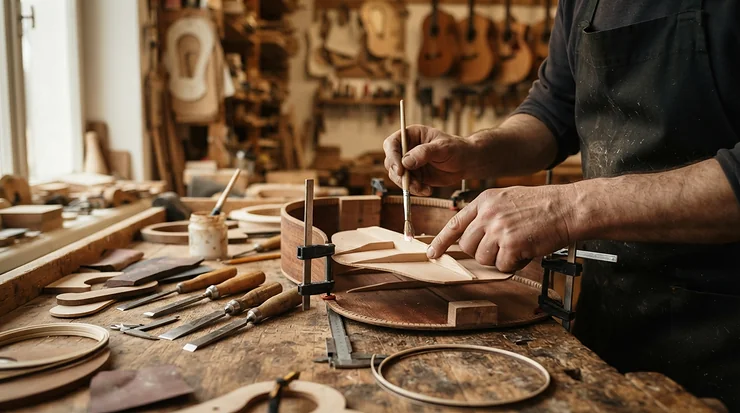
4. Solo TCK-1 DIY Electric Guitar Kit — a telecaster style guitar kit to finish yourself
Unfinished wood arrives at your door, and that is the point. Solo’s own page lists a sealed basswood body, an unfinished maple neck in a modern C with a two-way truss rod, a 25.5-inch scale, a rosewood fingerboard with 22 medium jumbo frets, ceramic single-coils, a top-loading bridge and Schaller-type tuners. Finishing supplies are not included, and the page recommends a separate bolt-on assembly kit. The page shows 4.73 out of 5 from 62 ratings.
A telecaster guitar DIY kit lives or dies on the build, and Guitar World’s build report is the most useful outside account. The builder worked from a semi-hollow version, found neck and tuner holes pre-drilled, the potentiometers pre-wired and frets leveled and dressed, then spent about a week letting stain dry. The neck took a day to settle under string tension, the pickups sounded good, and a heavier nut was the only upgrade suggested. His costs: around $130 for the kit, about $30 in finishing supplies and a few hours. Solo’s current page lists around $160, in Canadian dollars.
Not every reviewer on Solo’s page was as happy. Some report an incorrect wiring diagram and fit problems such as a reversed bridge hole layout or missing string-tree holes, and one replaced the tuners. A reviewer on a Solo Tele-kit page says they bought one through Amazon and found the nut installed backwards, an easy fix.
Pros:
- ✅ Frets leveled and dressed before shipping, per Solo’s page
- ✅ Tech support by email or phone, per Guitar World’s builder
Cons:
- ❌ Finish, soldering and drilling are all on you
- ❌ Reviewers report a wrong wiring diagram and some misdrilled holes
Take a closer look at the Solo TCK-1 DIY Electric Guitar Kit on Amazon.com if you are ready to sand.
Telecaster guitar DIY kit or finished Tele: what the time buys you
On Guitar World’s older figures, a kit plus finishing supplies lands near $160, against $250 or more for an Affinity that arrives assembled. That is roughly $90 of savings at the low end, by my arithmetic from the two ranges, and it buys several evenings of sanding and a week of waiting on finish.
What the time really buys is knowledge and control. A Thomann builder estimated about 90 minutes from box to playable for a basic assembly, an afternoon for a fuller job, with painting taking considerably more. Another described the build as harder than flat-pack furniture but good fun. Anyone who wants a telecaster style guitar kit as a platform for custom pickups or a bold paint job gets value there; anyone who simply wants to play this weekend should buy a finished guitar.
Telecaster guitars reviews: where reviewers agree and where owners split
Across the sources, three points hold. First, out-of-box condition is the least predictable variable: Guitar Chalk expects budget models to need setup, a r/Luthier builder’s kit needed work to play at all, and a zZounds reviewer reported nut trouble on a Player II. Second, spec decisions matter more than the badge on the headstock, because bridge type, fingerboard and pickups shape what you will want to change later.
Third, the Squier-versus-Fender call is genuinely divided. In one r/telecaster thread about a dozen commenters favored the Classic Vibe for value, about ten favored the Player II, and several said feel matters more than the model and suggested trying both in person. Neck comfort split reviewers as well: zZounds lists a slim C where Killer Guitar Rigs found a chunky one, and one commenter disliked the Classic Vibe’s gloss neck while another liked it.
The caveats are real. The Reddit evidence is a handful of threads, the Guitar World Player II verdict is one reviewer’s, and retailer ratings come with few written reviews. Treat the pattern as direction, not proof.
Squier vs Fender, kits and upgrades: straight answers
❓ Is a Squier Telecaster good enough to gig with?
❓ What is the difference between a Squier and a Fender Telecaster?
❓ Is a Telecaster a good guitar for beginners?
❓ Are Telecaster kits hard to build?
❓ Should I upgrade the pickups on a budget Telecaster?
The decision rule that settles it
Start from the job, not the headstock. If you want a first Tele that holds up, take the Squier Classic Vibe ’50s Telecaster; if you want one you will keep for a decade and gig on, take the Fender Player II Telecaster and add a gig bag to the budget. The Squier Affinity Telecaster suits a tight budget and a willingness to adjust things, and the Solo TCK-1 DIY Electric Guitar Kit suits someone who wants to learn how the guitar goes together. When you weigh telecaster guitars against each other, count the setup, the case and any upgrades before comparing prices, because that finished cost is what you will actually live with. Check current availability below and compare the finishes and fingerboards each listing names.
Recommended for You
- Tele Guitar: 7 Best Models 2025 – Expert Reviews and Buying Guide
- Flat top guitar: A Practical Guide (2027)
- Bass pickups explained: A Practical Guide (2027)
Disclaimer: This post contains affiliate links. As an Amazon Associate, I earn from qualifying purchases made through these links, at no additional cost to you.
Raise the action a hair, check the intonation, and a Tele that felt average on day one often starts to sing.