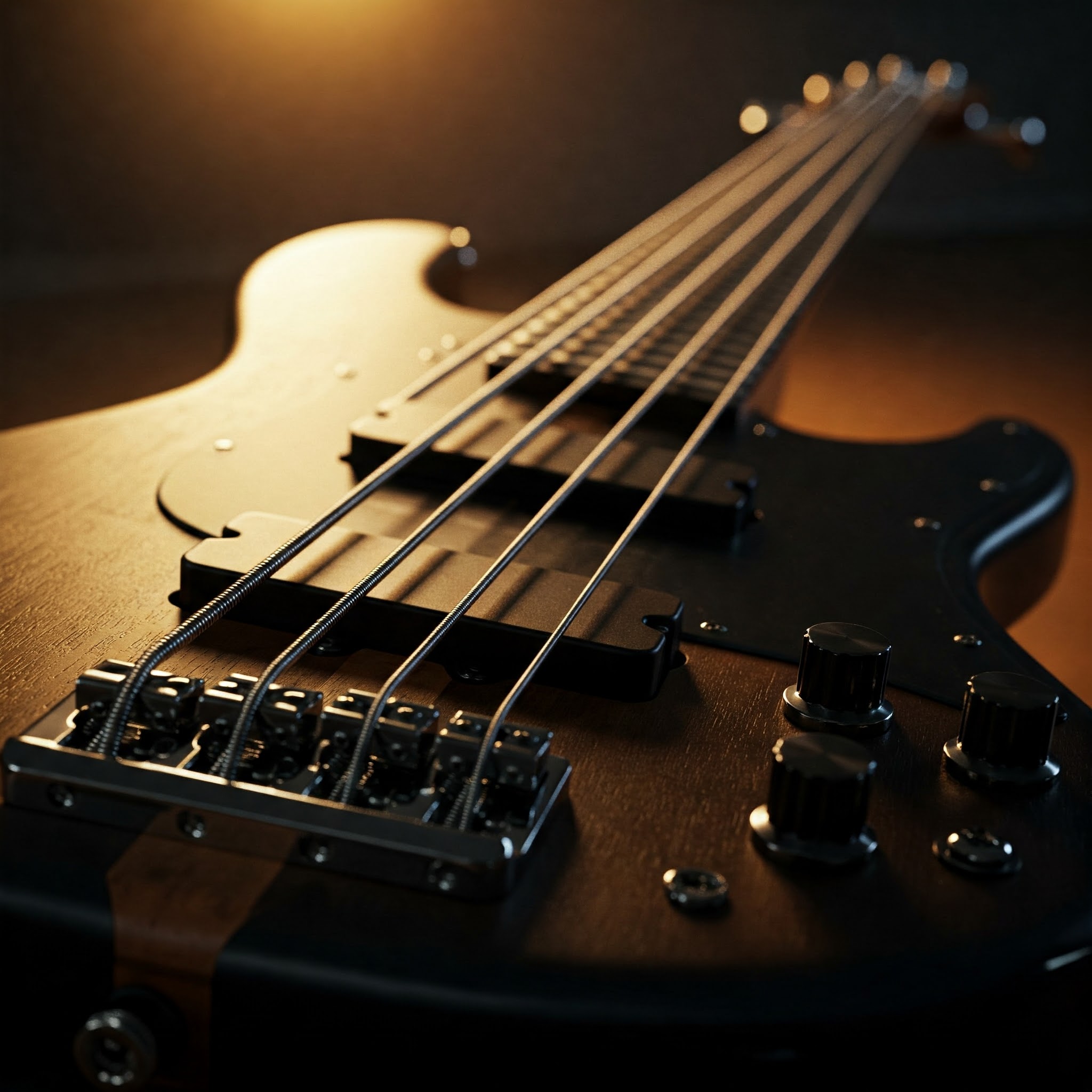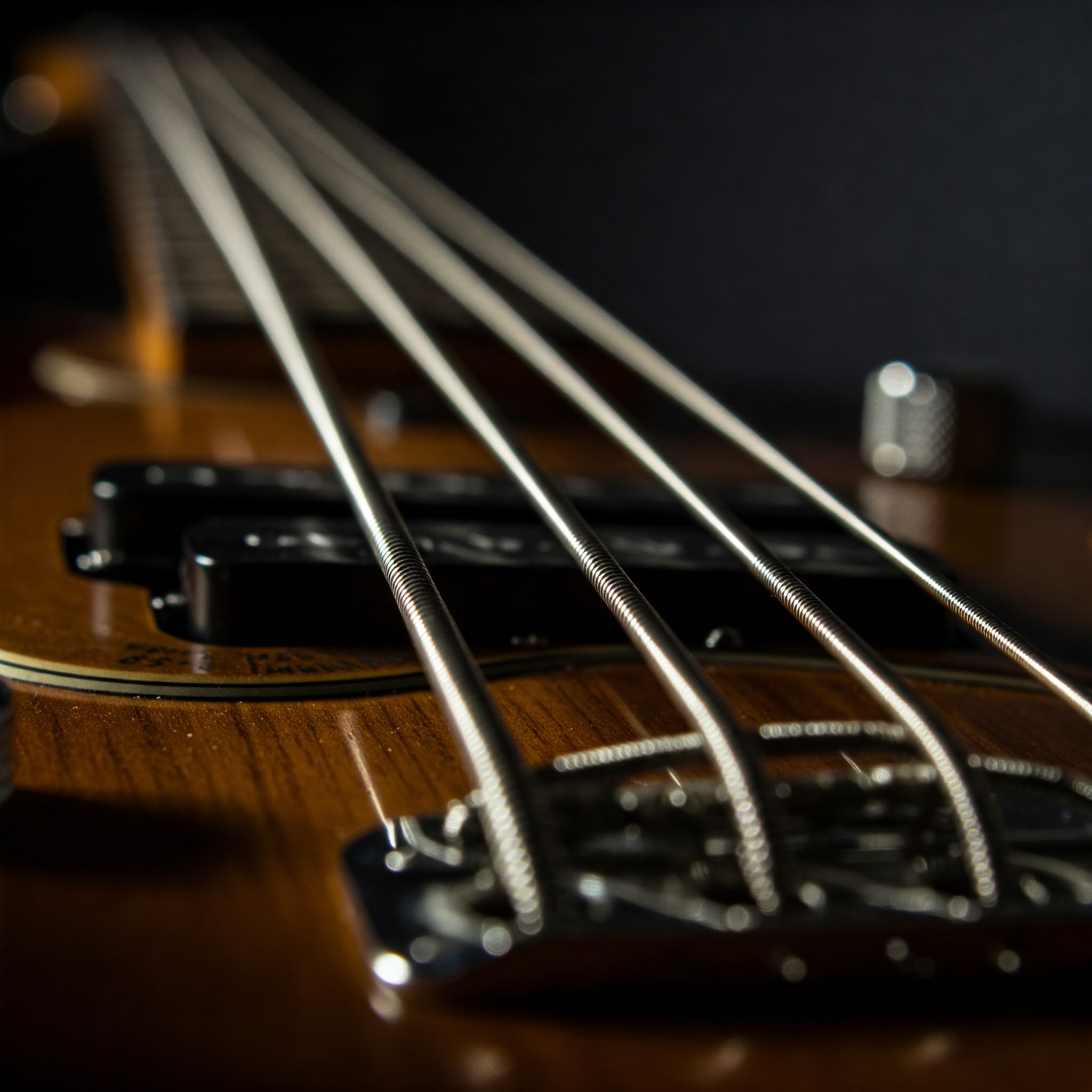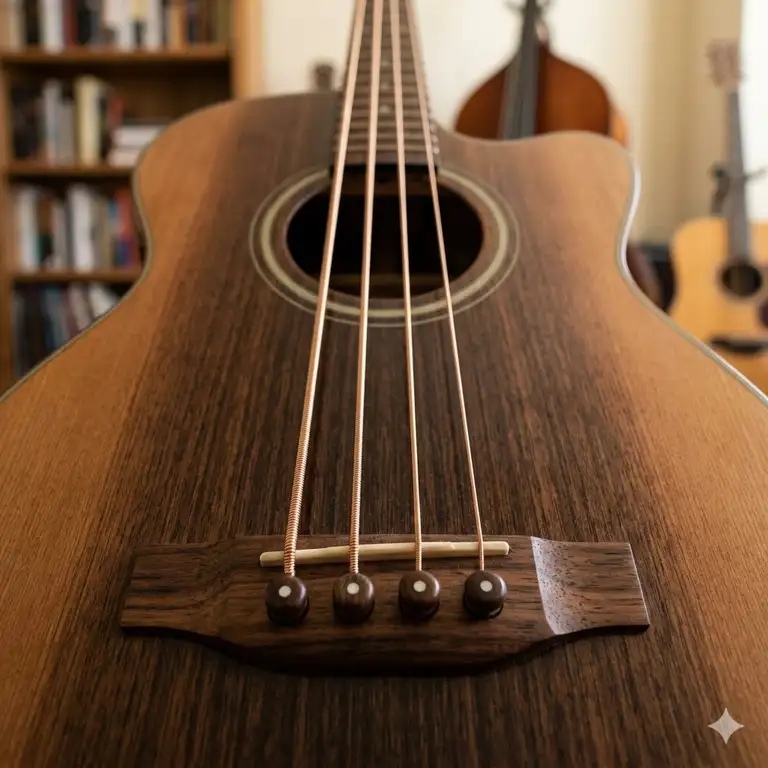
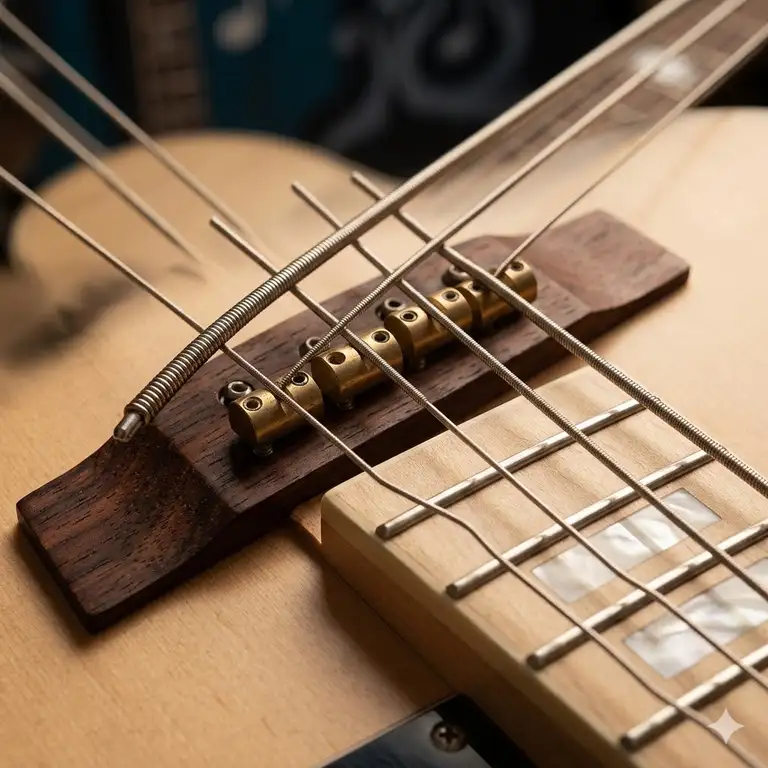
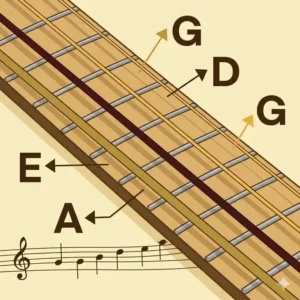
What is bass guitar strings and notes? In the simplest terms, this refers to the physical strings equipped on a bass guitar—typically four, though five and six-string versions are common—and the specific musical pitches they produce when plucked. For a standard four-string bass, these notes are E, A, D, and G, tuned in fourths. Understanding the relationship between the physical properties of your strings and the notes they produce is the “secret sauce” to achieving professional-grade tone and fretboard fluency.
Whether you are a seasoned session player or someone who just picked up their first Squier, the interaction between your bass guitar strings and notes defines your musical identity. In 2026, the technology behind string manufacturing has reached a pinnacle, offering players more variety in core shape, coating materials, and alloy blends than ever before. Choosing the right set isn’t just about what feels good under your fingers; it’s about how those strings translate your physical energy into clear, resonant notes that cut through a mix. This guide will walk you through the top-performing products on the market today and provide a deep dive into the theory you need to own the low end.
Quick Comparison Table: Top Picks at a Glance
| Product Name | Material | Best For | Price Range |
| Ernie Ball Regular Slinky | Nickel-Plated Steel | All-around Versatility | $20 – $30 |
| D’Addario NYXL45105 | High-Carbon Steel | Tuning Stability | $35 – $45 |
| Elixir Nanoweb Coated | Coated Nickel Plated | Maximum Longevity | $45 – $55 |
| DR Strings Black Beauties | Coated Black Steel | Modern Rock/Visuals | $30 – $40 |
| Fender 7250 Nickel | Nickel-Plated | Classic P-Bass Tone | $18 – $25 |
Expert Analysis: Looking at the table above, the Ernie Ball Regular Slinky remains the value champion for players who change strings frequently. However, if you hate the “dead string” sound but also hate changing them every two weeks, the Elixir Nanoweb justifies its higher price range by lasting up to three times longer. Professionals who require absolute pitch reliability for touring should lean toward the D’Addario NYXL series.
💬 Just one click — help others make better buying decisions too!😊
Top 5 Bass Guitar Strings: Expert Analysis for 2026
1. Ernie Ball Regular Slinky Bass Strings (.045 – .105)
The industry standard for a reason, these strings provide a balanced, bright tone that works across almost any genre.
-
Key Specs: Nickel-plated steel wrap around a hex-shaped steel core. This hex core is crucial because it allows the wrap wire to grip the core tightly, preventing “slippage” and ensuring the notes remain consistent even during aggressive slapping.
-
Expert Opinion: I’ve found that these are the “Goldilocks” of strings. They aren’t too bright, aren’t too mellow, and they have a tension that feels familiar to 90% of players. If you aren’t sure where to start with your bass guitar strings and notes journey, this is your baseline.
-
Customer Feedback: Users consistently praise the “out-of-the-box” zing, though some note they lose that brightness faster than coated alternatives.
-
Pros: Reliable tension; affordable for most; great “slap” response.
-
Cons: Lose brightness after 3-4 weeks; not ideal for heavy sweat.
-
Price Range: Around $22-$28.
2. D’Addario NYXL45105 Nickel Wound Bass Strings
Engineered in New York, these strings focus on high-output and incredible strength.
-
Key Specs: High-carbon steel core with a re-engineered nickel-plated wrap. The high-carbon steel means the string has a higher “break point,” allowing you to dig in harder without the string going flat or snapping.
-
Expert Opinion: What most buyers overlook is the “magnetic permeability” of these strings. Because of the specific alloy, they interact more efficiently with your pickups, giving you a slightly higher output. It’s like turning your volume knob to 11 without touching the bass.
-
Customer Feedback: Players love the tuning stability; many report staying in tune even after heavy van travel between gigs.
-
Pros: Stays in tune longer; higher mid-range presence; very durable.
-
Cons: Higher price point; feel a bit “stiffer” than standard slinkys.
-
Price Range: $38-$44 range.
3. Elixir Strings Electric Bass Strings with NANOWEB Coating
The king of longevity, Elixir uses a microscopic polymer tube to protect the string from skin oils and dirt.
-
Key Specs: Ultra-thin Nanoweb coating over nickel-plated steel. This coating isn’t just for feel; it prevents gunk from getting into the “windings” of the string, which is what usually kills your tone.
-
Expert Opinion: In my experience, these are the best choice for players with “acidic” sweat. If you find your strings turning black and sounding muddy after one rehearsal, the Elixir coating will save you a fortune in the long run. They feel smoother, which also reduces finger squeak.
-
Customer Feedback: Most reviews mention that these strings sound “fresh” for months, though some purists dislike the slightly “slick” feel.
-
Pros: Unmatched lifespan; reduced finger noise; consistent tone.
-
Cons: Expensive initial investment; coating can eventually “shred” near the picking area.
-
Price Range: $48-$55 range.
4. DR Strings Black Beauties Coated Bass Guitar Strings
Combining aesthetics with a unique “K3” coating, these strings are built for the stage.
-
Key Specs: Black-coated stainless steel on a round core. The round core is a vintage-style construction that makes the string feel more flexible and “bendy” compared to the stiffer hex cores.
-
Expert Opinion: Don’t let the black color fool you into thinking it’s just a gimmick. The round core provides a “thumpier,” more old-school resonance that is perfect for classic rock or soul. The K3 coating actually helps the notes ring out with more clarity than uncoated stainless steel, which can sometimes be too harsh.
-
Customer Feedback: Users rave about the look on stage, but also note that the coating helps the strings feel “warm” to the touch.
-
Pros: Stunning visual appeal; flexible feel; corrosion-resistant.
-
Cons: Coating can chip if using a heavy metal pick; harder to find in local shops.
-
Price Range: Around $35.
5. Fender 7250 Nickel-Plated Steel Bass Strings
The classic choice for Fender-style basses, offering a high-energy “growl.”
-
Key Specs: Nickel-plated steel with a focus on mid-range frequencies. These are often the “factory strings” on new Precision and Jazz basses, designed to complement the natural resonance of alder and ash woods.
-
Expert Opinion: If you are playing a P-bass and want that signature Motown-meets-Rock growl, these are the most cost-effective way to get there. They provide a massive “percussive” note attack that is essential for fingerstyle playing.
-
Customer Feedback: Buyers appreciate the “classic” feel and the fact that they are optimized for top-loading bridges.
-
Pros: Perfect for fingerstyle; very affordable; standard tension.
-
Cons: Can feel a bit rough on the fingers initially; plain packaging.
-
Price Range: $18-$24 range.
✨ Don’t Miss These Exclusive Deals!
🔍 Take your bass playing to the next level with these carefully selected products. Click on any highlighted item to check current pricing and availability. These tools will help you create authentic bass lines your band will love!
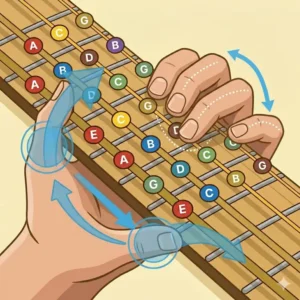
Transformation: A Beginner’s Guide to Learning Bass Guitar Notes
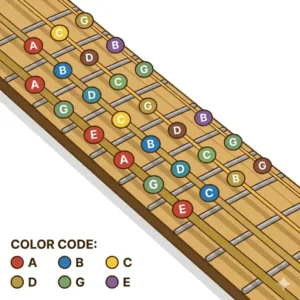
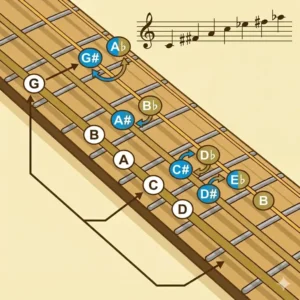
Mapping out the bass guitar strings and notes is the single most important hurdle for a new bassist. Without this knowledge, you are just moving shapes around without understanding the musical “why.” On a standard 4-string bass, the strings from thickest to thinnest are E, A, D, and G.
To master these notes, follow this 2026-optimized framework:
-
The Open String Anchor: Memorize E-A-D-G. A common mnemonic is “Eat All Day, Goober.”
-
The Half-Step Rule: Each fret on the bass represents a “half-step.” For example, if you play the E string open, the first fret is F, and the second fret is F# (F-sharp).
-
The Natural Note Landmarks: Focus on finding the “natural” notes (A, B, C, D, E, F, G) on the first five frets of every string.
-
E String: F (1st fret), G (3rd fret).
-
A String: B (2nd fret), C (3rd fret).
-
D String: E (2nd fret), F (3rd fret).
-
G String: A (2nd fret).
-
By learning these “anchors,” you can find any note on the fretboard by simply counting up or down. For instance, if you know the 3rd fret of the A string is C, you automatically know the 5th fret is D (because D is a “whole step” or two frets away from C). This transformation from “guessing” to “knowing” will immediately improve your ability to jam with other musicians. According to music theory resources like Wikipedia’s Bass Guitar entry, understanding this layout is fundamental to building scales and chords.
Transformation: How to Change Your Bass Guitar Strings Like a Pro
Most players wait until their strings are covered in rust before changing them. To maintain a professional sound, you should be changing your strings every 3-5 months, depending on how much you play. Here is a step-by-step optimization guide for 2026:
-
Step 1: The “One at a Time” Rule. Never take all the strings off at once unless you are cleaning the fretboard. Keeping tension on the neck prevents the truss rod from shifting unnecessarily.
-
Step 2: The Two-Post Cut. When installing a new string, pull it through the bridge and up to its tuning peg. Measure two tuning posts past the one you are using, and cut the string there. This ensures you have exactly 3-4 wraps around the post—the “sweet spot” for tuning stability.
-
Step 3: The Right Angle Bend. Before cutting a “round core” string (like the DR Black Beauties), make a 90-degree bend. This prevents the outer wrap from unraveling from the core, which can cause the string to go “dead” instantly.
-
Step 4: The Downward Spiral. As you wind the tuning key, ensure the string wraps downward toward the headstock. This increases the “break angle” over the nut, which prevents the open notes from rattling.
Pro Optimization Tip: Once the strings are on, “stretch” them by gently pulling the string away from the fretboard at the 12th fret. Tune it back up and repeat until it stays in pitch. This “sets” the string and prevents it from going flat during your first song.
Understanding the Relationship Between Bass Guitar Strings and Notes
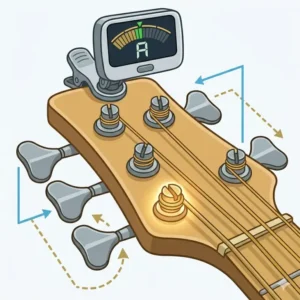
The physics of bass guitar strings and notes is a fascinating intersection of tension, mass, and length. To produce a lower note, like the low E, a string must either be longer, thicker, or under less tension. Since the “scale length” of most basses is fixed (usually 34 inches), manufacturers vary the thickness (gauge) to allow the strings to be tuned to different pitches while maintaining a comfortable feel.
This is why your E string is significantly thicker than your G string. If you tried to tune a thin G string down to a low E, it would be so floppy it would be unplayable. Conversely, tuning a thick E string up to a G would likely snap the string or warp your neck. When you understand this, you realize that choosing a “heavy gauge” set of strings isn’t just about tone—it’s a physical requirement if you plan on “drop-tuning” your bass for metal or hard rock. For more on the acoustics of stringed instruments, the University of New South Wales offers excellent deep dives into the science of sound.
How to Choose the Right Gauge for Your Playing Style
Choosing a string gauge is often a trade-off between “ease of play” and “tonal thickness.” In 2026, we generally categorize gauges into three buckets:
-
Light (.040 – .095): These are the “speed demons” of the bass world. They require very little finger pressure to fret, making them ideal for beginners or jazz fusion players who do a lot of fast soloing. The downside? They can sound a bit “thin” and are prone to buzzing if you have a heavy plucking hand.
-
Medium (.045 – .105): This is the “standard” for a reason. It provides enough resistance to “dig in” for rock and funk, but is still flexible enough for slap bass. Most of the top products, like the D’Addario NYXL, perform best at this gauge.
-
Heavy (.050 – .110+): Essential for “down-tuners.” If you play in Drop D or D Standard, the extra mass of a heavy string keeps the tension tight, ensuring your notes remain articulate rather than turning into a muddy mess.
Decision Framework:
-
Do you have a light touch and play fast? Choose Light.
-
Do you play a variety of genres? Choose Medium.
-
Do you play heavy metal or use a pick aggressively? Choose Heavy.
Nickel-Plated vs. Stainless Steel: The Battle for Tone
The material of your bass guitar strings and notes significantly dictates your “frequency profile.”
Nickel-Plated Steel is the most popular choice. It offers a warm, “musical” mid-range and a smooth feel. It’s the “all-rounder” that works for everything from blues to pop. Because nickel is softer than steel, these strings are also easier on your frets over time.
Stainless Steel, on the other hand, is the “brightest” option. It has a very high-end “zing” and a “scooped” mid-range, meaning the lows and highs are emphasized. This makes them a favorite for metal players who need to cut through wall-of-sound guitars. However, be warned: stainless steel is harder and more abrasive. If you play aggressively, you will notice more wear on your nickel-silver frets over several years.
Comparison Analysis:
While Stainless Steel offers more “bite,” most modern players in 2026 prefer Nickel-Plated for its versatility. If you find your bass sounds too “dark” or “muddy,” a switch to Stainless Steel can act like a physical EQ boost for your high-end.
Common Mistakes When Buying Bass Strings
Even experienced players make mistakes when navigating bass guitar strings and notes. Here are the top three pitfalls:
-
Buying the Wrong Scale Length: This is the most common error. If you have a “Short Scale” bass (like a Fender Mustang), buying “Long Scale” strings will result in the thick part of the string wrapping around the tuning post, which usually causes the string to snap. Always check if your bass is 30″ (Short), 32″ (Medium), or 34″ (Long).
-
Ignoring the Nut Slots: If you decide to switch from Light strings to Heavy strings, the thicker strings might not fit into the slots in your bass’s nut. Forcing them can crack the nut. You may need a professional luthier to slightly widen the slots.
-
Falling for “Cheap” No-Name Brands: It’s tempting to buy the $10 unbranded strings, but in 2026, the quality control on these is still poor. You’ll often find “dead” strings right out of the package, or strings that vary in volume from one to the next. Stick to established brands like Fender or Ernie Ball to ensure your bass guitar strings and notes are balanced.
Roundwound vs. Flatwound: Which One Do You Need?
The “winding” refers to the wire wrapped around the core.
-
Roundwound: The surface feels “bumpy” because the wrap wire is round. This is the standard for 95% of modern bassists. It is bright, sustain-heavy, and versatile.
-
Flatwound: The wrap wire is flattened, resulting in a string that feels like a smooth chrome rod. These produce a “thumpy,” vintage sound with almost no sustain. Think of the Motown sound (James Jamerson) or the Beatles (Paul McCartney).
Value Analysis: If you are playing modern rock, slap, or pop, Roundwounds are non-negotiable. However, if you are a jazz player or want that 1960s “thump,” Flatwounds are a “transformative” upgrade that will change your bass’s personality more than any pedal or amp could.
Long-Term Cost & Maintenance: Getting the Most Out of Your Strings
The total cost of ownership for bass guitar strings and notes can add up. If you change strings every month at $25 a set, you’re spending $300 a year.
How to Save Money:
-
Wipe Them Down: Use a microfiber cloth after every session to wipe the sweat off the underside of the strings. This simple 10-second habit can double the life of your strings.
-
Wash Your Hands: Playing with “pizza fingers” is the fastest way to kill your tone. The oils and salts from food and skin act like sandpaper on your strings.
-
The Boiling Trick (The Last Resort): In a pinch, you can “boil” your old roundwound strings in water for 5 minutes. This breaks down the gunk inside the windings and restores about 70% of the original brightness. However, the effect only lasts for a few days, so it’s a temporary fix at best.
Exploring Alternate Tunings and Extra Strings
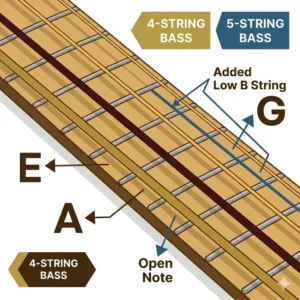
In 2026, more players are moving away from E-A-D-G. 5-string basses (adding a low B) and 6-string basses (adding a low B and a high C) are becoming the norm in gospel, metal, and jazz.
When you add a 5th string, the relationship between your bass guitar strings and notes becomes more complex. The low B string requires a much thicker gauge (usually around .130 or .135). The “B-string flop” is a common complaint among budget basses. If you find your low B sounds like a “wet noodle,” look for strings with a tapered core at the bridge, which allows the string to vibrate more freely, resulting in a clearer note.
✨ Don’t Miss These Exclusive Deals!
🔍 Take your bass playing to the next level with these carefully selected products. Click on any highlighted item to check current pricing and availability. These tools will help you create authentic bass lines your band will love!
Conclusion
Mastering your bass guitar strings and notes is a journey that blends physical technique with an understanding of your equipment. By choosing the right material, gauge, and brand—whether it’s the reliability of Ernie Ball or the longevity of Elixir—you set the foundation for your musical voice. Remember, your strings are the only part of the instrument you actually touch; treat them with the respect they deserve, keep them clean, and don’t be afraid to experiment with different types until you find the set that makes your bass feel “alive.”
❓ FAQs
❓ How often should I change my bass strings?
✅ For the average hobbyist, every 3 to 4 months is ideal. Professional players or those with “heavy” sweat may need to change them every 2 weeks to maintain a consistent, bright tone…
❓ Can I use guitar strings on a bass guitar?
✅ No. Bass strings are significantly longer and thicker to handle the lower frequencies and higher tension. Attempting to use guitar strings would result in immediate breakage and potential damage to your bass’s bridge…
❓ Why are my bass notes buzzing?
✅ This is usually a “setup” issue. It could mean your strings are too light for your playing style, your “action” (height) is too low, or your neck needs a truss rod adjustment…
❓ What are the notes on a 5-string bass?
✅ The standard tuning for a 5-string bass is B, E, A, D, and G. This adds a lower range that is essential for modern pop, gospel, and heavy metal genres…
❓ Do coated strings sound worse than uncoated strings?
✅ In 2026, the technology has improved so much that the difference is negligible. While some claim coated strings are slightly “darker,” the benefit of having that tone last for months far outweighs the minor loss in initial brightness…
Recommended for You
- 7 Best Soundhole Pickup Options for 2026: Expert Guitarist Review
- 7 Best Guitar bridge pins to Enhance Your Acoustic Tone (2026 Guide)
- 7 Best Guitar Picks for Electric Guitar: 2026 Pro Player Guide
Disclaimer: This article contains affiliate links. As an Amazon Associate, I earn from qualifying purchases. If you purchase products through these links, we may earn a small commission at no additional cost to you.
✨ Found this helpful? Share it with your friends! 💬🤗