Picking the wrong stand for a $500 microphone can cost more than the stand ever saved, a point a Broadcast Bridge writer makes after seeing mics damaged on concrete when cheap stands fell. Good microphone stands earn their price in sag, tipping and clutch wear rather than in looks, and the 2027 shortlist below sorts six of them by job.
Four of the six handle upright or desk work: a general-purpose boom, a budget boom, a heavy studio boom and a desk arm. The other two are low-profile stands for kick drums and amp cabinets. Specs and prices follow maker and dealer pages, durability notes come from named forum threads and review pages, and a couple of listings showed review counts without any review text, which is flagged where it matters.
The dividing line is boom reach against microphone weight. A MusicRadar roundup of mic stands warns that heavy mics on extended booms can sag or topple, so each pick below is described by how it copes with that load.
Mic weight, boom reach and floor space decide this
The second is the base. Tripods resist tipping but can become a trip hazard on a stage, while round and U-shaped bases take less room, according to MusicRadar. The third is how the height locks: a clutch that grips cleanly matters more than a long spec sheet.
Every pick here has at least two sources behind its specs, such as the maker or a dealer plus a tester or owner reports. The price ceiling is generous, because all six sit well under $350 at the dealers checked.
Height, reach and base: how the six differ
Model
Job
Height and reach
Base
Weight
Dealer price range
K&M 210/9
All-round boom
35.4 to 63.2 in; boom 17.1 to 29.3 in
Zinc die-cast tripod
About 6.8 to 7.1 lb
Between $100 and $150
On-Stage MS7701B
Budget vocal boom
36 to 64 in (dealers vary); fixed boom 30 to 31 in
23 in tripod
About 5.2 lb
Between $30 and $40
Ultimate Support MC-125
Heavy studio boom
52 to 83 in; boom 35 to 61 in
Large cast base with wheels
Not listed
Around $250 to $300
Rode PSA1+
Desk boom arm
Reach 32 to 37 in, by source
Desk clamp or insert
Not listed
Between $130 and $140
K&M 25950
Kick drum and amp
11 in; boom 16 to 28.5 in
Steel tripod
6.5 lb
Check the current price on Amazon.com
On-Stage MS7920B
Compact kick drum
8 to 14 in; boom 16 in
U-shaped weighted, 4.5 x 7.5 in
7.72 lb
Between $35 and $55
The spread in price is wider than the spread in jobs. The On-Stage MS7701B and the On-Stage MS7920B cost a fraction of the K&M 210/9 and the K&M 25950, and the difference shows up as clutch quality, base mass and warranty length rather than reach. The Ultimate Support MC-125 is the only one built around a true counterweight.
Thomann describes the K&M 210/9 as sharing its design with the maker’s classic Topline boom stand, with an extendable boom added, and Adorama explains the parts: a long-legged base plus a two-piece telescopic arm. Height runs from about 35.4 to 63.2 inches, and the boom reaches roughly 17 to 29 inches. The zinc die-cast tripod folds to about 39 inches long, the thread is 5/8 inch, and two cable clips come in the box.
MusicRadar scored it 4.5 out of 5 and called it solid and adjustable. Two reviewers on KPODJ’s listing praise the build in a line each, and one frames the cost as paying once instead of replacing cheaper stands. Adorama lists a five-year limited warranty, with ten years on spare parts.
No dealer spec sheet mentions a counterweight. That means a large-diaphragm condenser at full boom extension leans on the clutch, the exact situation Sound On Sound cautions about. Expect to pay between $100 and $150, depending on finish and dealer.
Pros:
Steel and zinc construction with a long parts warranty
Folds compactly for transport
Two-piece boom that reaches nearly 30 inches
Cons:
No counterweight listed
Costs three to four times as much as the cheapest boom here
K&M 210/9See current price, sizes and reviews on Amazon.
Between $30 and $40 buys the On-Stage MS7701B, a tripod with a 30-inch Euro-style boom, a midpoint clutch and a folding base about 23 inches across. B&H lists it at roughly 5.2 pounds, built from sheet metal and composite leg housings, with a 5/8-inch-27 thread. Dealers disagree on details: the height range appears as anything from 32 to 64 inches, and B&H lists no counterweight while maker copy on Redco and zZounds mentions a molded plastic one.
MusicRadar rates it 4 out of 5 and describes a traditional design with a solid boom clamp. The owner evidence is more mixed. The only written review shown on zZounds, dated 2006, says the boom spins instead of staying clamped when angled over a drum kit with a mic on it, and the listing averages 2.5 out of 5 from 83 ratings. On Sweetwater, buyers of the telescoping sibling, the On-Stage MS7701TB, report the stand tipping once a mic is on an extended arm, and one added weight to a leg to fix it.
A reasonable reading: this stand suits a light dynamic vocal mic at moderate reach, and a sandbag on the leg under the boom is cheap insurance. It is not the stand for a heavy condenser held far out.
On-Stage MS7701BSee current price, sizes and reviews on Amazon.
Mass is what the Ultimate Support MC-125 sells. Sweetwater lists an adjustable 5.76-pound die-cast counterweight, a 52-to-83-inch column, a 35-to-61-inch boom and a wide cast base on inline-skate-style wheels. MusicRadar gives nearly identical figures, calls it a solid studio workhorse and adds that it is not cheap. Pricing lands around $250 to $300 at dealers, and the maker’s limited lifetime warranty covers the original purchaser only.
Owners on a RealGearOnline thread give a split verdict, and the sample is small. Two posters report no problems, including one who uses a pair on drums. Two others describe a loosened or failed hub part, one reports a telescoping boom section breaking within a year of light use, and two say the counterweight must be balanced carefully or the arm drifts even when locked. One poster saw a stand fall over and blamed a high center of gravity where the column meets the wheels.
The takeaway is practical rather than damning: lock the wheels, balance the weight before tightening, and treat the lifetime warranty as part of the price.
Pros:
Largest counterweight and longest boom of the six
Wheels make repositioning easy in a studio
Lifetime warranty, with limits
Cons:
Highest price here
Owner reports of hub and boom-section failures
Ultimate Support MC-125See current price, sizes and reviews on Amazon.
Podcast desks and streaming setups are where the Rode PSA1+ earns its keep. It is a parallelogram-spring arm with a desk clamp that fits desks up to 2.16 inches thick, plus a threaded insert for a grommet-style mount, per Sweetwater, which prices it at $139. Expect between $130 and $140 across US dealers.
Sources disagree on two specs. Sweetwater lists 32 inches of horizontal reach and 33 inches vertical, while High Ground Gaming gives about 940 millimeters, or 37 inches, horizontal. Load ratings also vary: Sweetwater says broadcast-style mics between 1.5 and 2.4 pounds, Performer Magazine says up to 2.4 pounds, and High Ground Gaming says 94 grams up to 1.2 kilograms. The tester reports that the original Rode PSA1 needed a heavier mic to stay down in extended positions, and that the Rode PSA1+ held a 254-gram USB mic in every position he tried.
Motion is quiet. The same reviewer calls the arm completely silent, helped by dampened springs and neoprene sleeves, though those sleeves can’t be removed and may collect dust. Producer Hive reports no rattle when the arm is moved. A 3/8-inch to 5/8-inch adapter ships in the box, per Sweetwater.
Rode PSA1+See current price, sizes and reviews on Amazon.
5. K&M 25950 — a bass drum microphone stand that reaches in
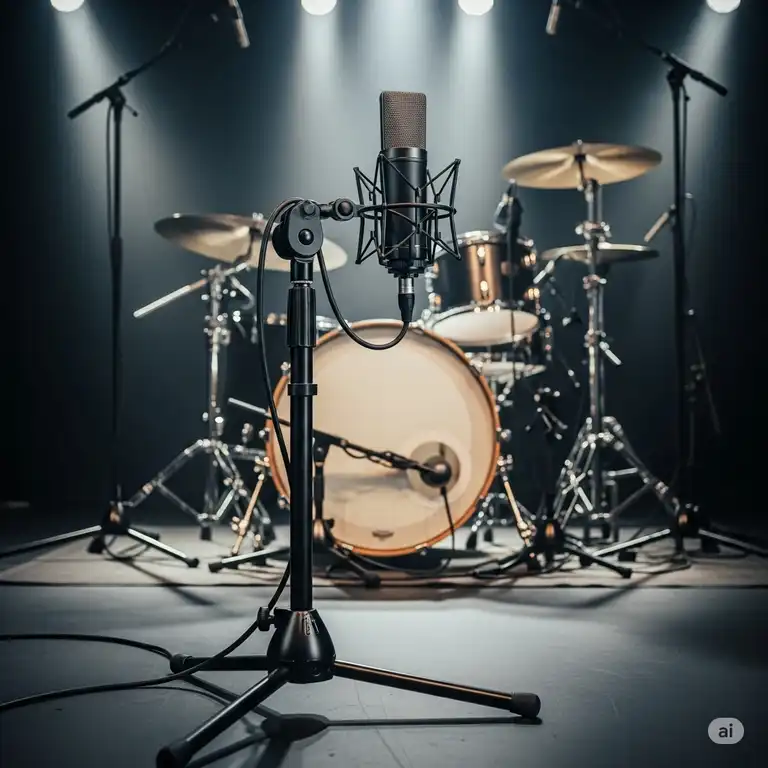
A bass drum microphone stand has to sit low and still get the mic deep into the shell, and that is what the K&M 25950 is designed for. Sweetwater lists an 11-inch tripod with solid steel folding legs and a two-piece boom that adjusts from 16 to 28.5 inches, at 6.5 pounds. Thomann describes it as an ultra-low stand with an extendable swivel arm for instruments near the floor, such as a kick drum.
MusicRadar rated it 4 out of 5. The five reviews on Sweetwater’s page are all positive: reviewers call it sturdy, one says it doesn’t feel cheap, and another calls it bomb-proof and worth the extra cost. One buyer reached for it after a stubby-base stand wouldn’t let the mic sit deep in the drum, and after improvised boom-on-stand combinations proved messy and a trip hazard.
A tripod base takes more floor space than a U-shaped one, so align one leg under the boom as the setup section explains. Dealers such as Sweetwater charge well over twice what the On-Stage MS7920B costs, so check the current price on Amazon.com.
Pros:
Longer, two-piece boom for reaching inside the shell
Steel legs fold for transport
Sweetwater reviewers describe it as sturdy
Cons:
Tripod legs take more floor space than a U-shaped base
Costs well over twice the budget kick stand
K&M 25950See current price, sizes and reviews on Amazon.
At roughly a third of the K&M 25950‘s dealer price, the On-Stage MS7920B trades reach for size. Sweetwater lists 8-to-14-inch height, a 16-inch boom, clutch and T-bar adjustments, a steel build and 7.72 pounds, with a weighted U-shaped base that measures 4.5 by 7.5 inches. Adorama gives a three-year warranty, and the price runs between $35 and $55 depending on the dealer.
The base is the design choice to understand. One Sweetwater reviewer, who bought it for a bass drum, says it can only face one particular way or it falls over under the weight of the mic and cable. Sweetwater shows 66 reviews for the stand but no review text on the page, so that complaint stands alone. From the 4.5 by 7.5 inch footprint, my reading is that the boom should point along the base’s long side.
Dealers listed it as backordered at times, so availability is worth a look before planning a session around it. It also fits amp cabinets and low desktop placement, per Sweetwater.
On-Stage MS7920BSee current price, sizes and reviews on Amazon.
Kick drum stands are a small field, and three more show up in dealer catalogs. The Gator RI-MIC-200 lists an 8-to-14-inch height and a 16-inch single-section boom, and Gator’s own page puts it in the high $30s. The Hercules MS120BPRO is taller at 12.5 to 16.75 inches, with a telescoping boom and an H-shaped weighted base that B&H says is sized to let the boom extend further while keeping a small footprint. The Audix Stand-KD was designed around Audix’s own kick drum mics, according to Sweetwater, which lists a weighted base and a price in the $50s.
They are worth a look when the two kick stands above are backordered, or when the drum mic is an Audix.
Microphone stands reviews: what testers and owners keep reporting
The same four complaints recur across independent write-ups and forums. Sag is the first: a Broadcast Bridge author says inexpensive stands gradually droop when positioned at extreme angles or with boom attachments. MusicRadar points to plastic joints as a common cause of droop and recommends steel construction.
The second is tipping with extended booms. A poster on a Jazz Guitar forum describes a round, weighted-base stand that was sturdy until the boom extended with a mic of a little over a pound, and then it tipped. In a 2013 Recording.org thread, one poster says most cheap stands tip because they are too light to support a mic at full boom length. These are single threads, so treat them as patterns to check, not proof.
Third is clutch and thread wear. The same Recording.org poster adds that cheap stands strip threads and break plastic knobs, and Sound On Sound adds that over-tightening a clutch wears it out and makes the boom droop even with light mics. Fourth is the missing counterweight, which Sound On Sound describes as the proper fix: balance the arm so the clutch only holds position.
When you read other microphone stands reviews or best microphone stands roundups, filter for the mic weight each reviewer used. A stand that works for a lightweight dynamic vocal mic tells you little about a 1.5-pound broadcast mic.
Microphone stand how to set up: five moves that stop the tip-over
Point the boom over one leg. A Sound House staff article advises always aligning the boom with one of the three legs, and notes this matters most for drums, where vibration is strong. A Sound House guide to using a microphone stand also suggests keeping the lower pipe off the floor so footsteps don’t travel up to the mic.
Open every leg fully, set the height, then lock it. Hold the inner pipe while tightening rather than twisting the mic holder, so the stand isn’t strained.
Balance the boom before tightening anything. Slide the counterweight or add weight opposite the mic until the arm holds position on its own, so the clutch only has to hold a position and not fight the leverage.
Keep the reach as short as the job allows, and keep the mic’s weight near the center of the stand, as MusicRadar advises.
Check thread and clip. MusicRadar notes that stands typically end in 5/8 inch while many clips use 3/8 inch, and for desk use a rubber pad on the clamp can cut typing noise.
Don’t over-tighten any knob. The Sound House article warns it can strip screw holes or break screws, and the same point appears in Sound On Sound’s clutch discussion.
Microphone stand under 350: what the money buys
All six stands here fall under $350, which makes the cap less of a constraint than the mic itself. The dearest, the Ultimate Support MC-125, sits around $250 to $300. Even a K&M 210/9 plus an On-Stage MS7920B together land between about $135 and $205.
The more useful budget question is what the stand is protecting. A Broadcast Bridge writer argues that cheap stands cost more over time, especially when a $500 microphone is damaged, and says the best basic stands exceed $100 while cheap ones cost a few dollars. In 2012, Sound On Sound’s technical editor put a stand costing £200 to £300 as worthwhile for expensive mics, since well-built stands last a long time.
Spend toward the heavier or more valuable mic. A $35 boom is a fair match for a light dynamic mic at short reach, and a studio condenser is where the heavier counterweight and warranty pay back.
Thread sizes, tipping and kick drum height: the details buyers check
What thread size do microphone stands use?
Most stands end in a 5/8'-27 male thread, while many clips and shock mounts use 3/8', so check whether an adapter is included. Dealer pages for On-Stage list 5/8'-27, and the Rode arm ships with a 3/8' to 5/8' adapter.
Why does my boom stand keep tipping over?
A heavy mic on an extended boom shifts the center of gravity past the legs. Point the boom over one leg, shorten the reach, and add a counterweight or sandbag. Sound On Sound adds that balancing the arm, not over-tightening the clutch, is the proper fix.
How tall should a bass drum microphone stand be?
Low-profile models cluster around 8 to 14 inches of pole height with a boom of 16 inches or longer, per dealer specs for the two kick stands covered here. Measure your drum's port height first, since the mic must reach it.
Do I need a counterweight on a boom stand?
Yes for heavier mics at long reach. Sound On Sound explains that without one, the clutch alone resists the mic's leverage and eventually wears or droops. A light mic on a short boom loads the clutch less, but added counterweight still gives margin.
Is a cheap stand fine for a light microphone?
Sometimes. A Sound On Sound answer says budget stands can hold even heavy mics upright without a boom. Booms are where cheap stands struggle, with sag and tipping, and a Broadcast Bridge writer says inexpensive stands gradually sag at extreme angles.
Which stand to buy, by mic weight and reach
The right pick among these microphone stands depends on one number: how heavy your mic is and how far out the boom has to hang it. For ordinary dynamic mics at moderate reach, the K&M 210/9 is the stand I would choose, and a tight budget points to the On-Stage MS7701B with a sandbag on the leg under the boom. Heavy condensers at long reach justify the Ultimate Support MC-125, desks belong to the Rode PSA1+, and kick drums split between the K&M 25950 for depth and the On-Stage MS7920B for price. Compare the exact model number on the listing against the one named here before you order, because dealers list different heights and counterweights under the same name.
Disclaimer: This post contains affiliate links. As an Amazon Associate, I earn from qualifying purchases made through these links, at no additional cost to you.
Know your mic’s weight and your longest boom reach before you open any of these stands on Amazon.